
Since 2010, in various publications, I’ve interviewed authors—mostly memoirists—about aspects of writing and publishing. Initially I did this for my own edification, as someone who was struggling to find the courage and support to write and publish my memoir. I’m still curious about other authors’ experiences, and I know many of you are, too. So, inspired by the popularity of The Oldster Magazine Questionnaire, I’ve launched The Memoir Land Author Questionnaire.
Here’s the 231st installment, featuring Danny Ramadan, author most recently of Crooked Teeth: A Queer Syrian Refugee Memoir. - Sari Botton
P.S. Check out all the interviews in The Memoir Land Author Questionnaire series.
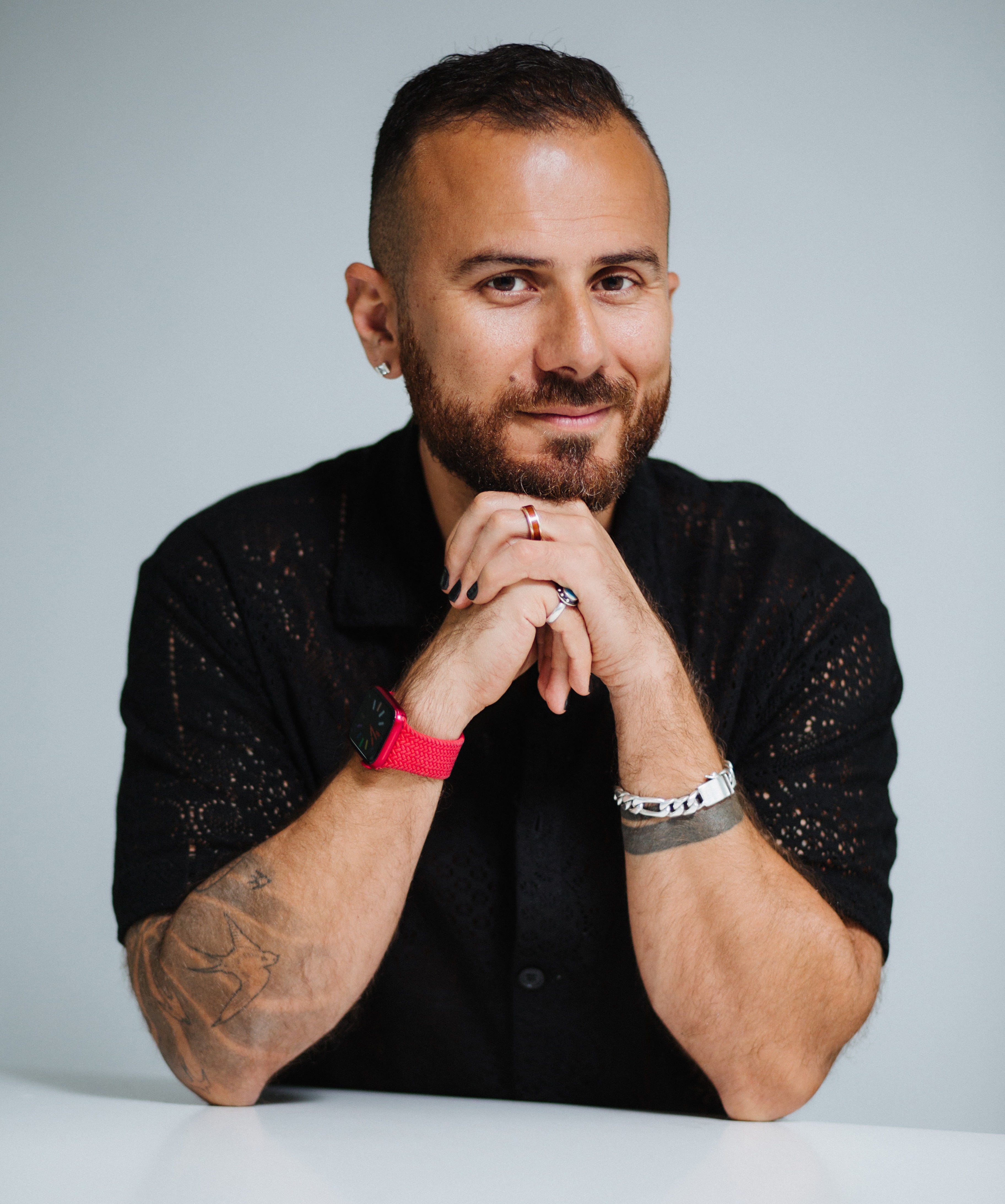
Danny Ramadan is a Syrian-Canadian author and a Canada Scholar. His memoir Crooked Teeth was nominated for the Governor General’s Award, the BC and Yukon Book Prize, and the City of Vancouver Book Award. He is also the author of the novels The Foghorn Echoes and The Clothesline Swing, along with the award-winning Salma children’s series. His books have won the Lambda Literary Award, the Publishing Triangle Award, and the Independent Publisher Book Award, and they’ve been translated into multiple languages. Since arriving in Canada, Danny has raised over $300,000 to support queer and trans refugees. When not writing, he can be found playing video games.
—
How old are you, and for how long have you been writing?
I am 42 years old. I published my first collection of short stories when I was 19 with an Egyptian publishing house, after winning a competition I was too young to join. Luckily, by the time the book was printed, I was old enough to tour with it.
I grew up poor and creative, so my only cheap artistic outlet was writing; all you need is a pen and paper.
What’s the title of your latest book, and when was it published?
Crooked Teeth: A Queer Syrian Refugee Memoir, which came out in Canada two years ago, and is being published by Soft Skull in the U.S. today, August 18th.
What number book is this for you?
Depends on who you ask: if you’re looking at my overall publishing history, including my Arabic-language books, then it’s my tenth book. If you’re only focused on my English-language work, then it’s the eighth. If you were to exclude my children’s writing, then it’s my third.
There is a concrete assumption in the North American collective viewpoint that refugees as a source of pity. Sympathy is rained upon us. I don’t know if I want sympathy. I don’t see myself as worthy of pity. Refugees are peaceful warriors who managed to accomplish the impossible of leaving much of their lives behind and coming to North America reborn new. Still, parts of my story call for sympathy.
How do you categorize your book—as a memoir, memoir-in-essays, essay collection, creative nonfiction, graphic memoir, autofiction—and why?
I would say that Crooked Teeth balances itself between memoir and creative non-fiction. The memoir portion comes from the retelling of my lived experience through a narrative-forward framing device. The creative non-fiction comes out in the parts where I regard the reader, pulling them in into a conversation style writing, and interrogate their role in the process of creating, and consuming, the memoir genre.
What is the “elevator pitch” for your book?
Crooked Teeth is a chill afternoon conversation between an author retelling his lived experience as a queer Syrian refugee, and a reader trusted as a friend.
What’s the back story of this book including your origin story as a writer? How did you become a writer, and how did this book come to be?
As I mentioned, writing has been my outlet and escape since a very young age. If we had glee clubs in Syria, I would probably be singing my heart out in a Broadway musical right about now. I don’t know if you can describe this as an origin story. It’s more like a response to creative scarcity.
As for this book, I struggled with the idea of writing a memoir. It felt quite daunting to me. I am a fiction writer: it pains me to write non-fiction, especially on matters related to my own personal experiences. I also am a former journalist (recovering journalist?) so the integrity of my non-fiction writing is paramount. I’m also a very private person (despite my instagram indicating otherwise).
Finding a balance between these three poles was a game of push and pull. The process itself became intriguing. Slowly, bringing a meta element to the memoir by using second-person narrative as a framing device allowed me to give respect to all three of my sides.
I would say that Crooked Teeth balances itself between memoir and creative non-fiction. The memoir portion comes from the retelling of my lived experience through a narrative-forward framing device. The creative non-fiction comes out in the parts where I regard the reader, pulling them in into a conversation style writing, and interrogate their role in the process of creating, and consuming, the memoir genre.
What were the hardest aspects of writing this book and getting it published?
There is a concrete assumption in the North American collective viewpoint that refugees as a source of pity. Sympathy is rained upon us. I don’t know if I want sympathy. I don’t see myself as worthy of pity. Refugees are peaceful warriors who managed to accomplish the impossible of leaving much of their lives behind and coming to North America reborn new.
Still, parts of my story call for sympathy. My relationship with my parents, my relocation across multiple countries in the Middle East, and my time in a Syrian jail.
The hardest part, I believe, in writing this book was finding a way to tell these more traumatic experiences while demanding respect and joy instead of pity and sympathy.
… then accept that the book will be living on the shelves of so many people for years to come.
How did you handle writing about real people in your life? Did you use real or changed names and identifying details? Did you run passages or the whole book by people who appear in the narrative? Did you make changes they requested?
I’m a firm believer that authors require no permission to publish stories about real people in their non-fiction narratives. The nuance of that is simple: No author out there claims that their writing is the absolute truth, it’s the truth according to their perspective.
So, if you don’t like my truth, feel free to write your own book about what went on.
I did however choose to change some names and identifying details. I did so mainly to protect the identities of other queer and trans people in my life.
Who is another writer you took inspiration from in producing this book? Was it a specific book, or their whole body of work? (Can be more than one writer or book.)
Carmen Maria Machado’s In the Dream House was absolutely the key I needed to write this book. Reading her writing felt like the permission I needed to engage with the writing form fully and with a much deeper sense of trust.
Also, a huge shout out to Alia Malek’s The Home that was Our Country which is a tour de force in writing complicated narratives about ourselves and the homes we connect to.
What advice would you give to aspiring writers looking to publish a book like yours, who are maybe afraid, or intimidated by the process?
We tend to look at our projects as a mammoth of work. How would I write this novel I want to write? It feels massive and unpredictable and somehow impossible. Also, what choices do I make about writing? Which way will my characters go? What drives them? This analysis paralysis is a creative killer. Don’t fall for the trap of this impossible perfection.
Instead, just write. It can be the most terrible writing you’d ever witness, but it’s writing, nonetheless. When you write, you have something that you can improve; something you can add upon. You’re the only person who will see it now. Don’t judge it. Accept it as the raw material you need to accomplish the goal you hope for.
What do you love about writing?
Writing silences the world around you. You escape the mundane and the overwhelming, and you become one with the work. It genuinely feels like a meditative out of body experience. The world comes to a hush; and the only god alive is you, creating new worlds.
What frustrates you about writing?
Writing in English as an additional language can be frustrating sometimes. The word is on the tip of your tongue, and you just can’t find it. Then, suddenly the Arabic jumps to mind, and it feels like another train pumping your writing off its tracks.
What about writing surprises you?
After a decent engagement with your characters, they suddenly take a life of their own, and start making their own decisions. A cliché, I know, but it’s truthfully a representation of how a well-design character can come up with its own path in the story as you write them.
Does your writing practice involve any kind of routine, or writing at specific times?
I’m a lone writer: I write like a banished wolf. I write mostly in the wee hours of the night, or the very early morning. I prefer silence and solitude over writing in cafes.
I’m also a planner: every idea must find its place on my writing board, before it is distilled into my outline, which in turn becomes my first draft. I cannot go into the writing mode until I have a clear outline of where I’m going.
I’m a firm believer that authors require no permission to publish stories about real people in their non-fiction narratives. The nuance of that is simple: No author out there claims that their writing is the absolute truth, it’s the truth according to their perspective. So, if you don’t like my truth, feel free to write your own book about what went on. I did however choose to change some names and identifying details.
Do you engage in any other creative pursuits, professionally or for fun? Are there non-writing activities you consider to be “writing” or supportive of your process?
I’m a big traveler that enjoys finding little corners of the world to hide in (I’m writing this from a hippie island called Koh Lipe in Thailand). I’m also a video gamer with a love for narrative driven games. Hopefully, one day I will write for video games. I would love that very much.
What’s next for you? Do you have another book planned, or in the works?
My next novel, A Saltwater Requiem (working title) comes out in April 2027 from Counterpoint in the US and Penguin Random House in Canada. It’s my first attempt at historical fiction: a multi-point-of-view family epic journey from the village of Saidnaya in Syria to Marseilles, London and across the Atlantic on the doomed maiden voyage of the Titanic, blending folklore, communal memory, and intergenerational trauma. I hope you’d pick it up!
Comments
Nothing yet. Say the first thing.
Sign in to join the conversation.