
Since 2010, in various publications, I’ve interviewed authors—mostly memoirists—about aspects of writing and publishing. Initially I did this for my own edification, as someone who was struggling to find the courage and support to write and publish my memoir. I’m still curious about other authors’ experiences, and I know many of you are, too. So, inspired by the popularity of The Oldster Magazine Questionnaire, I’ve launched The Memoir Land Author Questionnaire.
Here’s the 228th installment, featuring Rebecca Wright Stevens, author of Sisters of the Midnight Sun: A Murder in Arctic Alaska. - Sari Botton
P.S. Check out all the interviews in The Memoir Land Author Questionnaire series.
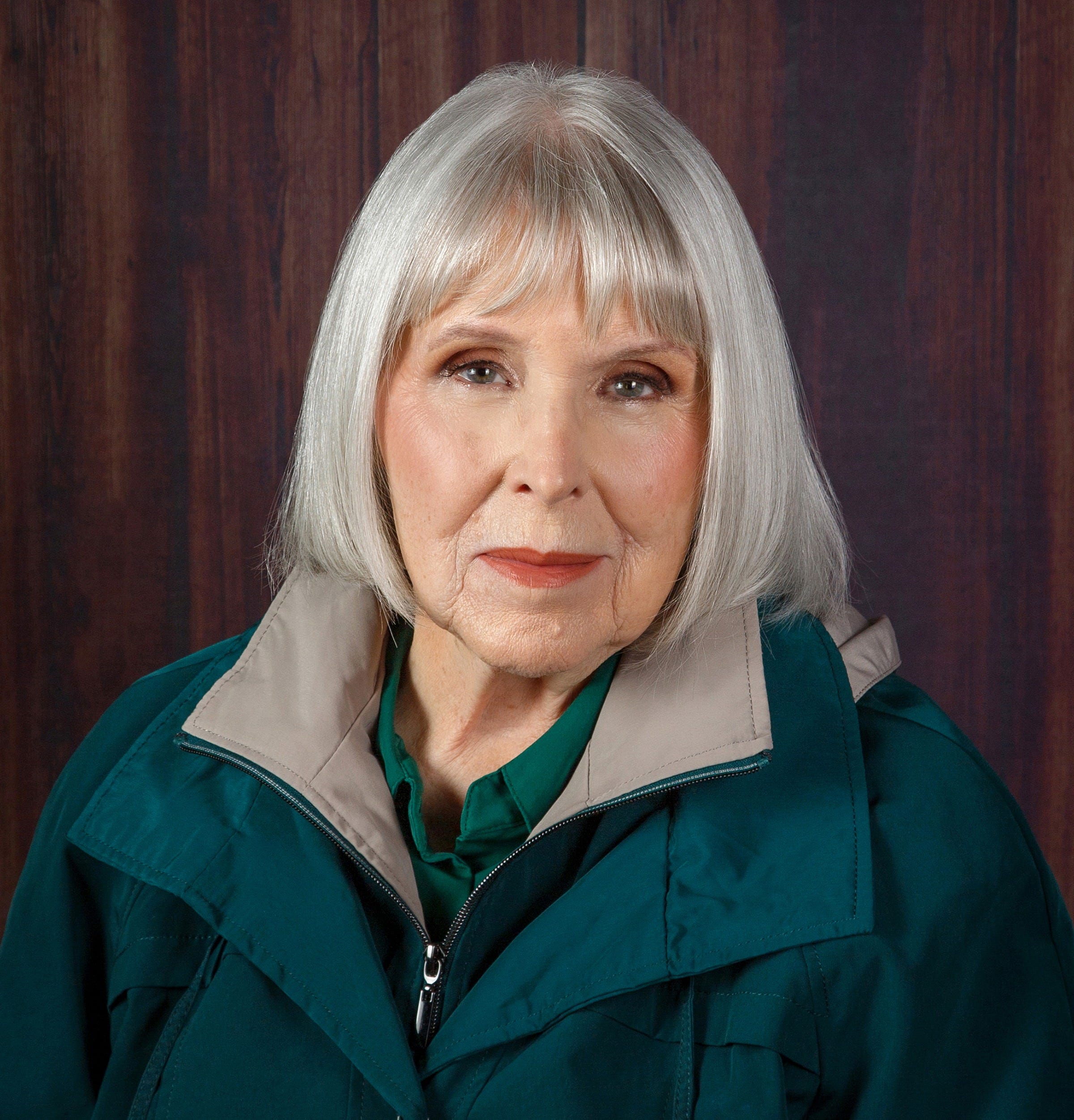
Rebecca Wright Stevens served as a public defender for 35 years in four states (Washington, Alaska, Kentucky, and Tennessee,) representing indigent defendants of many nationalities and ethnicities, as well as dependent and neglected children. Her daughter and son are also lawyers. She lives on a mountain in East Tennessee with her husband (a former prosecutor,) two rowdy but sweet-natured shelter dogs, and a 20-year-old cat.
—
How old are you, and for how long have you been writing?
I am 84, and I have been writing for 63 years.
What’s the title of your latest book, and when was it published?
Sisters of the Midnight Sun: A Murder in Arctic Alaska was launched July 14, 2026.
What number book is this for you?
Sisters of the Midnight Sun is my first published book.
Sisters of the Midnight Sun is about the murder of two sisters in Utqiagvik, Alaska, the northernmost community in the United States. I was the public defender appointed to represent the first defendant in the case, a Native man whom everyone thought was guilty because he had a record and was in town. But there was another suspect, and witnesses, confused by the time-bending Midnight Sun, couldn’t remember who was last seen with the victims. When Anglos failed to provide justice, some wanted to return to the Native system.
How do you categorize your book—as a memoir, memoir-in-essays, essay collection, creative nonfiction, graphic memoir, autofiction—and why?
During the long process of seeking an agent, then a publisher, the manuscript was sometimes rejected because it did not fit within a genre category such as memoir, true crime, romance or thriller. When it finally was published, some reviewers praised it for combining elements of different genres into an interesting whole.
I think of it as creative nonfiction, the result of trying to capture experience on paper.
What is the “elevator pitch” for your book?
“Sisters of the Midnight Sun” is about the murder of two sisters in Utqiagvik, Alaska, the northernmost community in the United States. I was the public defender appointed to represent the first defendant in the case, a Native man whom everyone thought was guilty because he had a record and was in town. But there was another suspect, and witnesses, confused by the time-bending Midnight Sun, couldn’t remember who was last seen with the victims. When Anglos failed to provide justice, some wanted to return to the Native system.
What’s the back story of this book including your origin story as a writer? How did you become a writer, and how did this book come to be?
The case kept me up at night. Utqiagvik has no roads connecting it with any other town. The only way in or out is by air, and public safety officers watched the airport. Why couldn’t we find the killer, who apparently was still among us? I began keeping a journal about the investigation.
When I retired from law in 2017, I decided to turn my notes into a book. The initial draft was rough, and the first agent willing to represent it was unable to find a publisher. Then Liz Kracht took it on, and we re-edited and re-polished it, and she was able to place the book with Counterpoint Publishing, editor Dan Lopez. The final version is a much better book than when Liz and Dan first looked at it—fifteen or sixteen re-writes ago. “Sisters” was included in recommended nonfiction reading lists on Oprah Daily and in The New York Times, and was reviewed in The Wall Street Journal. Ayesha Rascoe of NPR interviewed me about Sisters on the Weekend Edition for July 12.
What were the hardest aspects of writing this book and getting it published?
The sheer act of not giving up, of trying over and over to find the path to publication. I laugh when I read accounts of Harry Potter being rejected 12 times by publishing houses, Stephen King’s Carrie, 30 times, Gone with the Wind, 38 times. Those rejections took place when you still had to mail in a paper manuscript.
Contemporary writers can now submit online—and be rejected even more times. I sent out 200-250 query letters before finding an agent, and the query is only a first step in the process.
During the long process of seeking an agent, then a publisher, the manuscript was sometimes rejected because it did not fit within a genre category such as memoir, true crime, romance or thriller. When it finally was published, some reviewers praised it for combining elements of different genres into an interesting whole. I think of it as creative nonfiction, the result of trying to capture experience on paper.
How did you handle writing about real people in your life? Did you use real or changed names and identifying details? Did you run passages or the whole book by people who appear in the narrative? Did you make changes they requested?
I still worry on this score. For professional people such as judges, prosecutors and defense attorneys, I used real names. I used the actual names of some principal characters—Liz Kanayurak, my friend and our office manager, and Clair Okpeaha, the neighbor who saved my life when a polar bear came to the door. I changed the name of a significant other, to protect his privacy, and the names of two people who were portrayed negatively. I sent the manuscript to a few individuals who appear in it, and so far no one has requested changes.
Who is another writer you took inspiration from in producing this book? Was it a specific book, or their whole body of work? (Can be more than one writer or book.)
My writing idol is Willa Cather. Her work is so vivid that more than once I have found myself saying to a friend, “Oh, that reminds of the time we . . . “ only to realize that what I was about to tell as a personal anecdote was an incident from a Cather story.
What advice would you give to aspiring writers looking to publish a book like yours, who are maybe afraid, or intimidated by the process?
I don’t necessarily recommend the approach I used, which took decades—but it worked for me. As mentioned, I have written for 63 years, while I was otherwise engaged in raising children or practicing law. I wrote in basements, in attics, on the kitchen table, and in cars or hotel rooms—always at least two pages a week, no matter what, even if I were ill. Two pages may not sound like much, but over 63 years it added up to six file boxes in the garage—and the drafts of four books. Now that I am older and retired, I don’t write so much as I edit what I have written earlier.
My advice: Tell your stories. Someone needs to hear them.
What do you love about writing?
I love the experience of “flow” and losing track of time. When I sit down to write, I don’t feel that I really should be working on a case, mopping the floor, or keeping up correspondence, I feel I am doing what I should be doing. And every once in a while, it is a thrill to re-read something I have written that seems good.
“Sisters” has received some kind and perceptive reviews, for which I am grateful, but the greatest pleasure for me has been to see that people have requested the book in public libraries around the country. Libraries were a big part of my childhood, and now I feel I have contributed to them.
What frustrates you about writing?
Writing sucks up all the prime time, when supposedly I could be socializing with friends, catching up with research on cases, or keeping the house actually clean. If writing is your priority, you are not patient with interruptions, and you will damage some relationships.
Writing is tiring. Though you’re just sitting in a chair, it is as tiring as mowing the lawn, arguing a motion in court, or taking the kids to a zoo. One’s energy is limited.
Several times I tried to quit writing, but then would wake up at night with whole paragraphs in my head, thinking, “I really should write this down.”
Does your writing practice involve any kind of routine, or writing at specific times?
I only write one to three hours each day, noon to three, the time of day when I am most alert and capable.
I keep note pads in the living room, in the kitchen, and by my bed, to jot down the inevitable ideas and revisions my mind tosses up, before I forget them. It’s been my experience that generating ideas is involuntary, and writing them down becomes compulsive.
A habit that supports writing, and creativity in general: one day a week, without fail, usually Saturday, I “do” nothing. I sit on the couch and read, or listen to music, or shop, or surf the net, and eat only a fruit-and-milk smoothie. Sometimes I just look out the window. I selfishly and rigidly reserve this day in order to clear my head, which gets jammed up without it.
Do you engage in any other creative pursuits, professionally or for fun? Are there non-writing activities you consider to be “writing” or supportive of your process?
Good question. I didn’t realize there are so many of these until you asked!
Our house has an acre of woods. I borrowed money to fence part of it, to keep the dogs away from the road. Every afternoon we go there and I sit in an old canvas chair to watch the trees and clouds, study the flowers and mushrooms, and swat bugs. I never leave the woods worried about whatever was worrying me when I went in.
I have tried to make time for crafts (weaving, chair caning) and enjoyed them, but can’t find enough time to continue them.
I keep on hand simple ways of making music (dulcimer, various forms of autoharp) since I can no longer play the flute as I once did.
I would dearly love to learn to sketch (trees, primitively, like Rousseau,) and still think that some day I will make time to do it, and perhaps take lessons.
I almost forgot: gardening. Always, and everywhere—it never fails to delight, refresh and satisfy (so long as the tomatoes don’t have another dang wilt.)
A habit that supports writing, and creativity in general: one day a week, without fail, usually Saturday, I “do” nothing. I sit on the couch and read, or listen to music, or shop, or surf the net, and eat only a fruit-and-milk smoothie. Sometimes I just look out the window. I selfishly and rigidly reserve this day in order to clear my head, which gets jammed up without it. (Of course, if you’re younger than 84, you may not be able to set aside twenty-four hours.) The following day, ideas will flow freely.
What’s next for you? Do you have another book planned, or in the works?
I have already submitted another book to Agent Liz, and have a third almost ready. In addition to the three at hand, I plan one more, then a collection of stories, and finally, if allowed opportunity, a book about the process of dying, interspersed with passages about the beauty of my pre-internet childhood in Northern Minnesota, a childhood like children will never have again.
Comments
Nothing yet. Say the first thing.
Sign in to join the conversation.