
Since 2010, in various publications, I’ve interviewed authors—mostly memoirists—about aspects of writing and publishing. Initially I did this for my own edification, as someone who was struggling to find the courage and support to write and publish my memoir. I’m still curious about other authors’ experiences, and I know many of you are, too. So, inspired by the popularity of The Oldster Magazine Questionnaire, I’ve launched The Memoir Land Author Questionnaire.
Here’s the 232nd installment, featuring Rachael Maddux, author most recently of Life Expectancy: A Memoir. - Sari Botton
P.S. Check out all the interviews in The Memoir Land Author Questionnaire series.
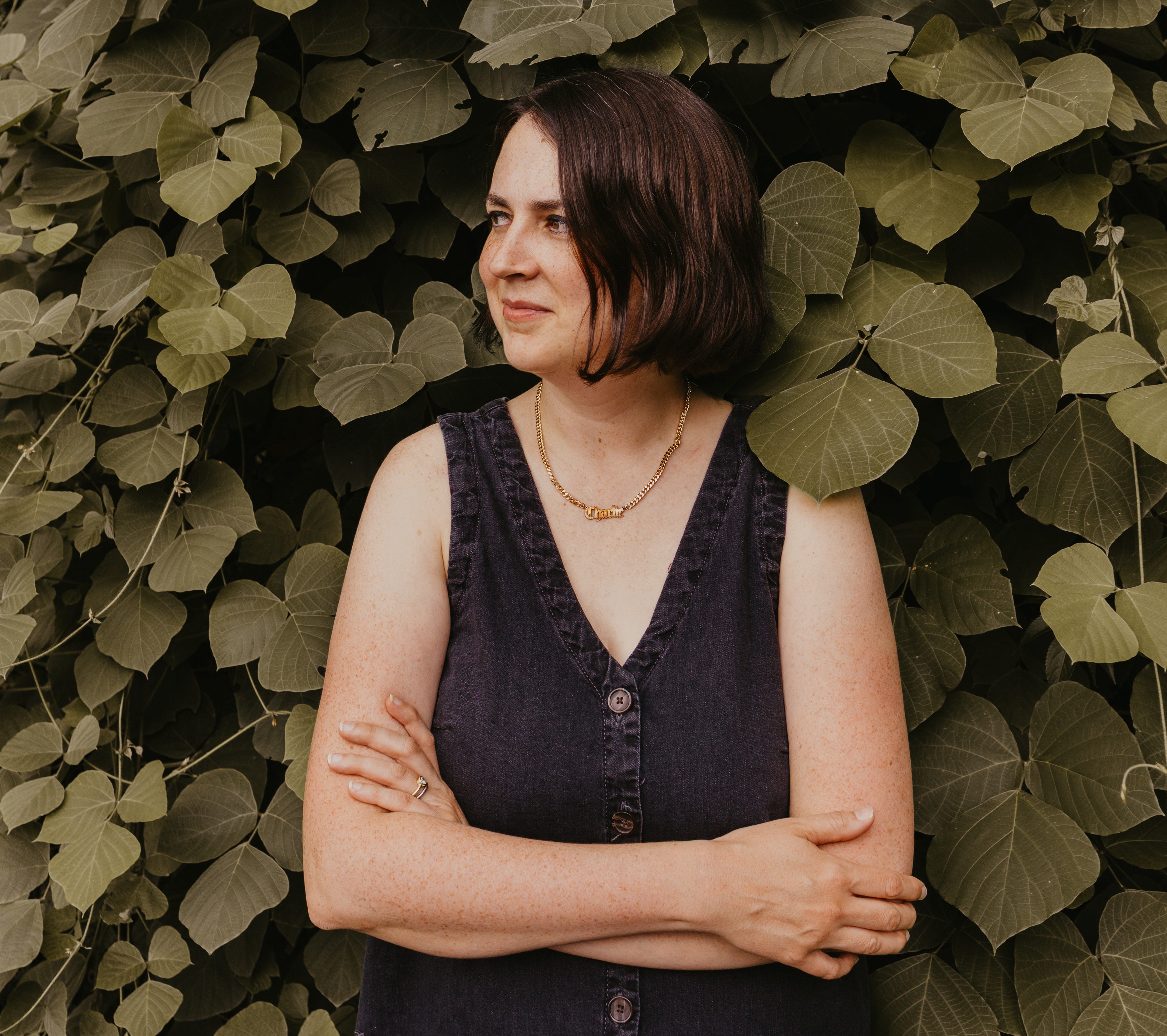
Rachael Maddux is the author of a memoir, Life Expectancy, and two short essay collections, The Void and Third Person. Her work has appeared in the Oxford American, Virginia Quarterly Review, Garden & Gun, and elsewhere. She lives in Chattanooga, Tennessee, with her family. Find her online at rachaelmaddux.com and instagram.com/rachaelmaddux, and subscribe to her newsletter at vanitas.me.
--
How old are you, and for how long have you been writing?
I’m 41, and for as long as I can remember.
What’s the title of your latest book, and when was it published?
Life Expectancy, and it came out March 24, 2026.
What number book is this for you?
It’s number one if you just count regular-sized books, number three if you count the two short essay collections I released last year to teach myself how to self-publish, and number who-knows-what if you count my various childhood opuses about a girl named Kayla whose mom married a man who drove a yellow limousine with thirty-two windows.
Life Expectancy is a coming-of-age memoir about growing up mortal in the American South at the turn of the twenty-first century, preoccupied with the question of how to live when you know you’re going to die—think Joan Didion’s The Year of Magical Thinking meets Greta Gerwig’s Lady Bird. (But that’s kind of a clunker to unload at, like, daycare drop-off. So sometimes I just say it’s a book about growing up and being afraid of death.)
How do you categorize your book—as a memoir, memoir-in-essays, essay collection, creative nonfiction, graphic memoir, autofiction—and why?
I’ve only ever thought of it as a straight-up memoir. Obviously there’s no universal objective definition to any of these modes, but memoir is the one that gave me the permission I needed to keep the story’s scope really tight, really personal.
I deliberately avoided pulling in outside research or cultural texts or too many other peoples’ voices; my own memories and perceptions (or, my memories of my memories and perceptions) were what I wanted to engage with. But I tried to carefully calibrate my own POV, too, only sparingly and tactically rising out of the narrative to analyze or intellectualize or offer hindsight-informed context.
If I’d approached it as an essay collection or a memoir-in-essays I would’ve felt a different responsibility to the world outside my head, I think, and the result would’ve been a totally different book—perhaps more sellable (oops) but not the one I wanted to write.
What is the “elevator pitch” for your book?
Life Expectancy is a coming-of-age memoir about growing up mortal in the American South at the turn of the twenty-first century, preoccupied with the question of how to live when you know you’re going to die—think Joan Didion’s The Year of Magical Thinking meets Greta Gerwig’s Lady Bird. (But that’s kind of a clunker to unload at, like, daycare drop-off. So sometimes I just say it’s a book about growing up and being afraid of death.)
What’s the back story of this book including your origin story as a writer? How did you become a writer, and how did this book come to be?
In Life Expectancy, I write about how I can’t remember when I first learned about death—the idea of it seems to have just always been in my head. The same is true for writing. It’s not that I always knew I would become a writer, it’s more like I always knew I already was one.
I was working as an editor at a music magazine in my 20s when I started to feel like, okay, it’s time for me to write a book. I was poking around for a subject when I was out with some friends one night—this was late summer 2012—and one of them made an offhand remark about how she’d been feeling anxious about death lately. I was like, lately? Until then it had literally never occurred to me that not everyone was as preoccupied with death as I had always been. My acute awareness of mortality was a load-bearing element of my existence; without it, my life would have taken a very different shape.
So what was the shape it had taken? Who had I become because of this powerful repulsion/attraction I’d always felt? What did I know, or what did I think I knew? What else had I taken for granted? These were the questions that started buzzing in my head that night. To answer them, I maybe should have put myself into therapy. Instead I started writing, and in time I realized I’d found my book.
What were the hardest aspects of writing this book and getting it published?
I think I began writing the book before I was really ready, but also I don’t know how I would have become ready without writing the book. Back then, I was deeply averse to drafting—a bad habit picked up in school, when my first-pass edits were reliably A+ material. But early in the writing process I realized that, if I really wanted to do this, if I wanted the book to be good and true and anything that anyone else might ever want to read, I was going to have to get over my former-gifted-kid bullshit and embrace this cycle of sucking-and-improving I’d always eschewed.
I started mucking around in a Google Doc called “big scrappy” in late 2012 and finally had something resembling a first draft in 2015. By then I was working full-time doing internal communications at a tech company, and freelancing a lot on the side, so the going was slow. I wrote a few more drafts before querying and signing with my agent in 2017, and then a few more after that with input from her and my beloved writing group. It was the ninth draft, I think, that my agent and I finally decided was ready to go out on submission to editors.
That was late spring 2021. The world was flush with COVID mRNA and optimism. Outwardly, our expectations were respectably calibrated; inwardly, I was like, Hot vax summer?! More like hot bidding war summer, baybee!!! And then… crickets. We got a few quick passes early on, but otherwise, as far as I know, it was just thudding silence all around. My agent assured me that some books just take a while to get picked up—six months, a year, even more. We just needed to be patient. So I was patient. Very patient. I was very patient for three years, until the summer of 2024 when we decided to officially pull it from submission, though it was less a matter of “pulling” than accepting its indefinite residence in the void.
In three years, so much had changed: I’d had a baby, quit my job, and managed my family’s move from Atlanta, where my husband and I had lived for many years, to Chattanooga, Tennessee, our hometown. But I still loved what I’d written, and my agent still loved it, my trusted readers still loved it. I hated the idea of shelving it just because it failed to please the notoriously fickle publishing marketplace at one particular point in time.
So—and this is majorly smoothing over so much angst and shame and ego-death—I decided to do it myself. I revised the manuscript for the tenth (!) time, hired a copyeditor, taught myself the ins and outs of self-publishing, and released Life Expectancy through my own imprint, Vanitas Books, earlier this year.
I was working as an editor at a music magazine in my 20s when I started to feel like, okay, it’s time for me to write a book. I was poking around for a subject when I was out with some friends one night—this was late summer 2012—and one of them made an offhand remark about how she’d been feeling anxious about death lately. I was like, lately? Until then it had literally never occurred to me that not everyone was as preoccupied with death as I had always been. My acute awareness of mortality was a load-bearing element of my existence; without it, my life would have taken a very different shape.
How did you handle writing about real people in your life? Did you use real or changed names and identifying details? Did you run passages or the whole book by people who appear in the narrative? Did you make changes they requested?
My baseline assumption is that it’s always at least a little bit strange to be confronted with someone else’s perception of you, even if it’s positive and suffused with love. I kept all names intact until the very last minute and then changed a few, mostly tertiary characters who seemed unlikely to be recognized but certainly didn’t ask to have my fuzzy adolescent perceptions of them published for all the world to see.
I shared the manuscript with my immediate family once it reached its nearly-final form, flagging the chapters I thought might be the hardest/weirdest for my parents to read (“skip if you don’t want to read a vague mention of your adult daughter having sex!”). I have a really solid relationship with my family and this was still the most nerve-wracking part of the whole process.
Only my dad suggested edits; most were minor fact-checks, though he disputed my memory of which of his college friends’ wives babysat me when I opted out of my grandfather’s funeral. I might’ve considered revising that passage except for the fact that one of those families had a Sega Genesis and the other had a Super Nintendo and I specifically remember feeling very sad while playing Super Mario World that day, so I chose to trust my tween-self.
Who is another writer you took inspiration from in producing this book? Was it a specific book, or their whole body of work? (Can be more than one writer or book.)
I probably stole a little bit from everything I read over the decade-plus it took me to write and rewrite the book. In particular, Annie Dillard’s An American Childhood and Jo Ann Beard’s Boys of my Youth gave me permission to go small—to focus on details, especially the textures of ordinary life, but also to take the memories of my younger selves seriously, to dig into and elevate the wavery recollections of my childhood as something perhaps even more vital than my adult understanding of the world. And when it came to putting out the book on my own, I was especially buoyed by the self-published nonfiction projects of Molly Young, Ann Friedman, and Eva Holland.
What advice would you give to aspiring writers looking to publish a book like yours, who are maybe afraid, or intimidated by the process?
In the very early days of figuring out the book, I emailed my pal Amanda Petrusich in an absolute tizzy and she sent back a characteristically wise, reassuring, and “dude”-filled message that included a quote from a letter John Steinbeck wrote to his teenaged son—advice about falling in love that’s also perfect for the terrifying first flush of a huge creative endeavor: “And don’t worry about losing. If it is right, it happens—The main thing is not to hurry. Nothing good gets away.” I wrote the words on a Post-It note and stuck it above every desk I worked at for the next decade. So “don’t worry about losing” would be my main advice, but also: it’s a long road, don’t go alone. Be vulnerable, be generous, find yourself a mantra.
What do you love about writing?
The endlessness of it.
What frustrates you about writing?
The endlessness of it!
What about writing surprises you?
Sometimes I’ll write whole sentences, whole paragraphs, even whole drafts, then read them back and realize, wait—it didn’t happen that way at all! I don’t believe that! I never thought that! I haven’t written fiction since high school (and it was wretched) but whenever my brain starts farting out these weird confabulations I wonder if I should give it another go.
Does your writing practice involve any kind of routine, or writing at specific times?
Whenever I was really locked in on writing the book, I would record either my daily word count or my writing session start/stop times on a janky little calendar in my notebook. For various reasons, including having a baby-now-a-toddler, over the last few years my writing practice hasn’t been much of a “practice,” but maybe one day. I’m tempted to get one of those old-school time clocks so I can literally clock in and out with a big ka-thunk. Seems very centering.
Only my dad suggested edits; most were minor fact-checks, though he disputed my memory of which of his college friends’ wives babysat me when I opted out of my grandfather’s funeral. I might’ve considered revising that passage except for the fact that one of those families had a Sega Genesis and the other had a Super Nintendo and I specifically remember feeling very sad while playing Super Mario World that day, so I chose to trust my tween-self.
Do you engage in any other creative pursuits, professionally or for fun? Are there non-writing activities you consider to be “writing” or supportive of your process?
Lately it’s a lot of reading and parenting and reading while parenting, and it’s all very informative. My daughter’s literary hyperfixations have given me a whole new appreciation for the subtleties of prosody. (I will never, ever forgive Llama Llama Meets the Babysitter—which at one point I was reading at least five times a day for days on end—for attempting to rhyme “samples” with “pineapple.”)
What’s next for you? Do you have another book planned, or in the works?
I’m maybe almost about to be in the process of starting to try and figure that out. The main thing is not to hurry, okay sure, but I really hope it doesn’t take another fourteen years.
Comments
Nothing yet. Say the first thing.
Sign in to join the conversation.