
Years ago, I woke up early to pick up my now wife from the airport. St. Louis’ airport is north of the city. As I drove north on I-70 just past the Arch, I saw a billboard. I nearly pulled to the side of the road to take a picture of its shocking content. In large print it read, “Babies need words every day.” With a tag line from the St. Louis Public Libraries. I looked up the campaign when I got home, its posters encourage parents to speak with their child every day, “try playing with them or maybe singing a song to them,” it reads. For those unfamiliar with St. Louis, north city and north county are extremely poor predominantly black neighborhoods. At my daughter’s daycare there reads a poster “1,000 books before kindergarten.” They hand out forms to log your books, and if you make it to 1,000 before you move on to kindergarten, they give you a little certificate and take your picture for the wall. We found our daycare through recommendations from the medical doctors my wife works with. The parents wear suits and ties, several wear scrubs with hospital ID badges. The parking lot is filled with luxury SUVs and trucks. These two campaigns capture the two different public-school experiences in this country.

In 2007 the St. Louis Public Schools (SLPS) lost its accreditation. At the time the graduation rate was a meager 55%. 60% of its tenth-grade students scored below basic on math and reading standardized testing. Its financial situation was as bad as its students’ test scores. SLPS was over 25 million dollars in debt. The troubled district would not regain accreditation for another decade. Today SLPS students score and average of 1100 on their SAT. Only 10% of students are proficient in mathematics, only 18% are proficient in reading. Their graduation rate has improved, up to nearly 75%, but only a fraction of those students moves on to college.
Hop on highway 64 westbound for only ten minutes and you will be in the Ladue school district. In 2023 Ladue School district was rated the best in the state. The average SAT score was 1460, well over the national average of 1028. Their graduates apply to ivy league schools. 98% of their students graduate high school. In short, it is a completely different learning environment.
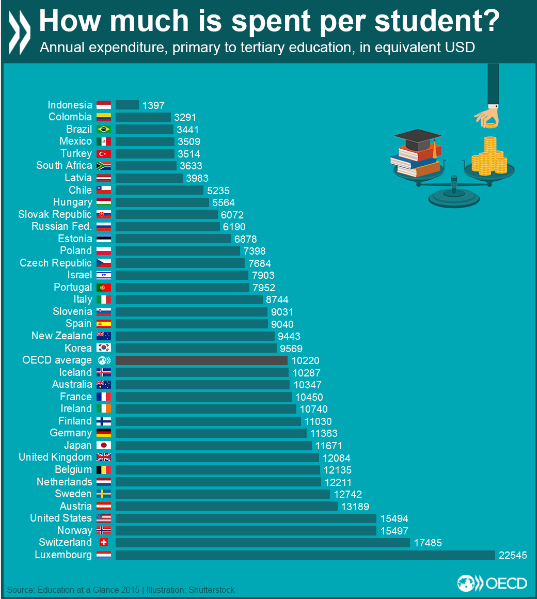
The common refrain to explain these differences is a lack of funding. The SLPS has a teacher to student ratio of 14:1. Spending per pupil is $18,168, 50% of which goes directly towards educators. Ladue’s school district has a teacher to student ratio of 13:1. Their spending per pupil is lower than SLPS’s, at $14,014. 58% of that spending goes towards educators. SLPS’s spending per student isn’t just higher than Ladue’s, its higher than every single country’s national average except Luxembourg’s. It’s nearly $3,000 per student more than the United States’ average.
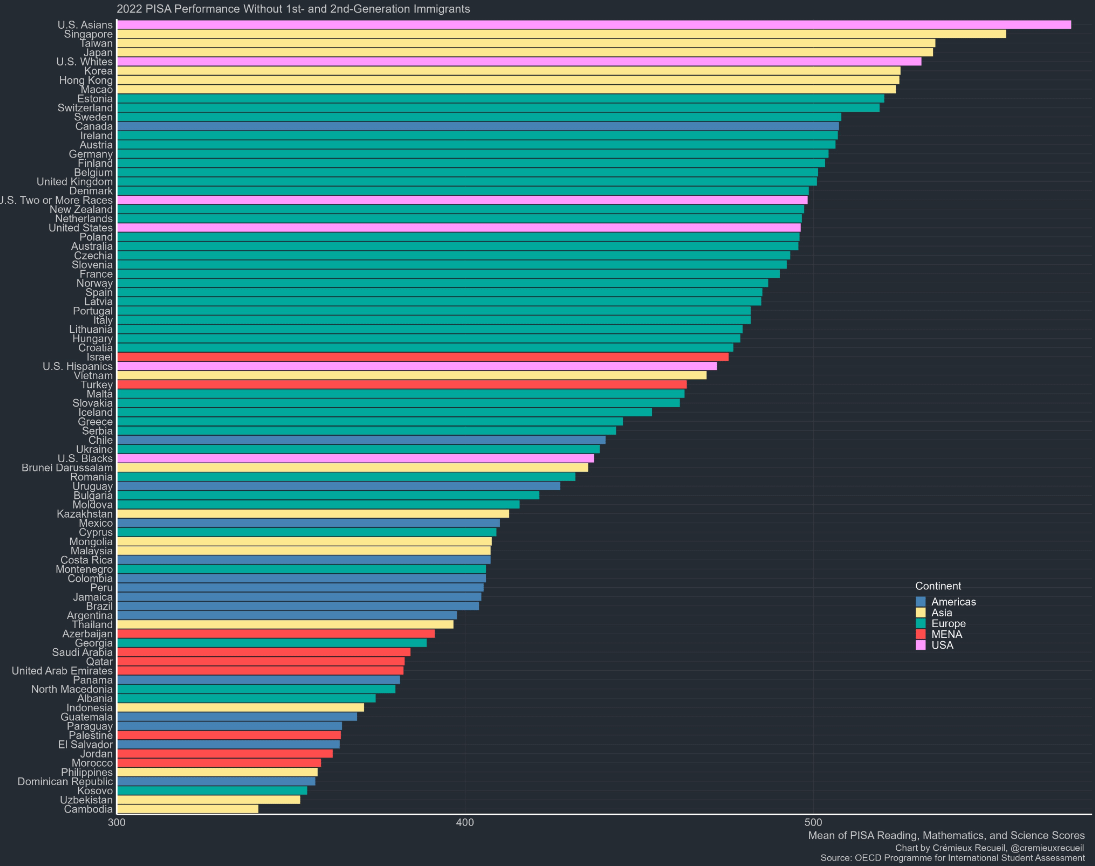
The Ladue SLPS divide is representative of the wider US education system. The US PISA scores, a standard test given across the world, are behind most countries in east Asia and western Europe, but American Asians’ and American Whites’ test scores are the highest and fourth highest scores respectively. Black student’s scores are considerably lower. A study done by Syracuse University on the 2018-2019 school year, found that black students on average attend districts that spend 6.6% more than their white counter parts, even when controlling for percent paid towards educators directly
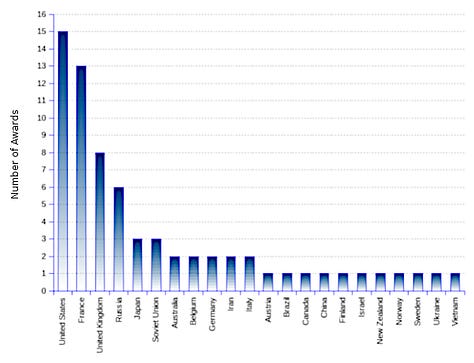
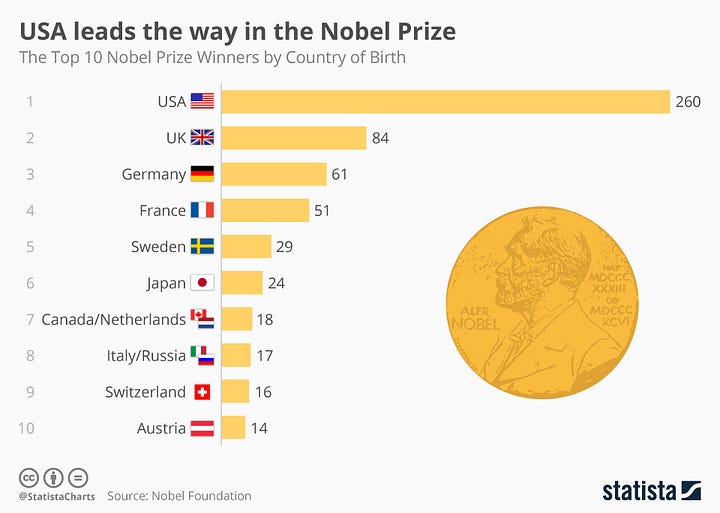
The US’s academic excellence does not stop at high school. Our universities are the envy of the world. We publish 17% of the world’s scientific papers, second only to China, which has an absurdly high retraction rate for falsified data and IP theft. The US has by far the highest number of Nobel Prizes. The US also leads all nations on Fields Medals, given for excellence in Mathematics. Russia still dominates chess grandmasters, but the US is the second leading country. The US economy is the primary beneficiary of these highly skilled students. Our tech companies outsize the rest of the world combined.



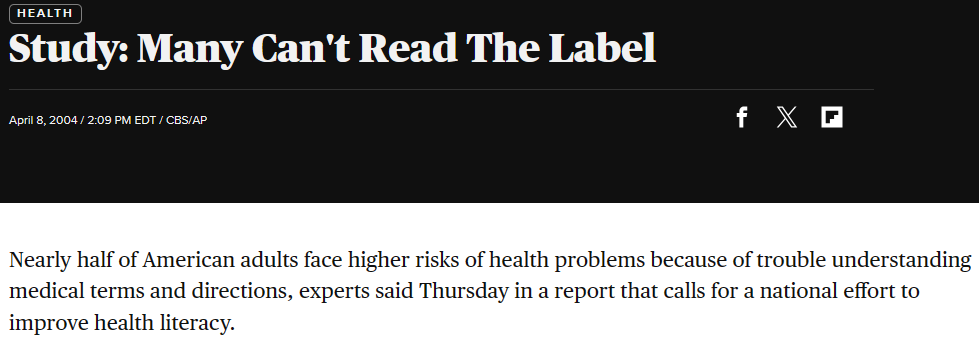
Despite these high honors the US has large populations that struggle with basic academic skills like reading. According to the National Assessment of Educational Progress (NAEP) over 60% of 12th grade students scored below proficient level in reading, nearly 30% scored below basic level. This manifests in 50% of Americans struggling to follow the instructions listed on their medication. Similar figures show Americans struggling with following recipes or following instruction manuals for putting together simple household items. Only 50% of Americans said they have listened to or read at least one book in the last year. The numbers are even more shocking when you dig into the racial disparities. The NAEP shows only 7% of 12th grade black male students are at or above their reading proficiency level. Despite these incredibly low scores the US high school graduation rate in 2022 was just over 91%, a fifty-point rise from 1960 where it was just over 40%. Illiteracy rates have also plummeted, from nearly 20% at the turn of the century to nearly nothing today. This test and poll data seems to contradict that.
Programs like the No child left behind act 2002- 2015 and its successor Elementary and Secondary Education Act, were directed at helping remove this disparity. The acts tried to hold schools accountable for failing students. The results were mixed. Some said the teachers began to just teach the test, not actually teaching the students the material they needed to succeed, but simply the questions they would see on the tests. Many schools lowered their criteria for advancing grades. One viral story of a Baltimore high school student who had a 0.18 GPA which put him above half of his classmates, found out months before graduation that he would not be able to walk. The mom, Tiffany France, was shocked. How could the school keep advancing her son to the next grade without him passing his classes? She of course felt no responsibility for her son’s academic failures, she was right about the school advancing her son though. These programs forced schools to advance failing students despite their performance or lose funding. The result is historically high graduation rates, and 50% of Americans that cannot follow simple written instructions.
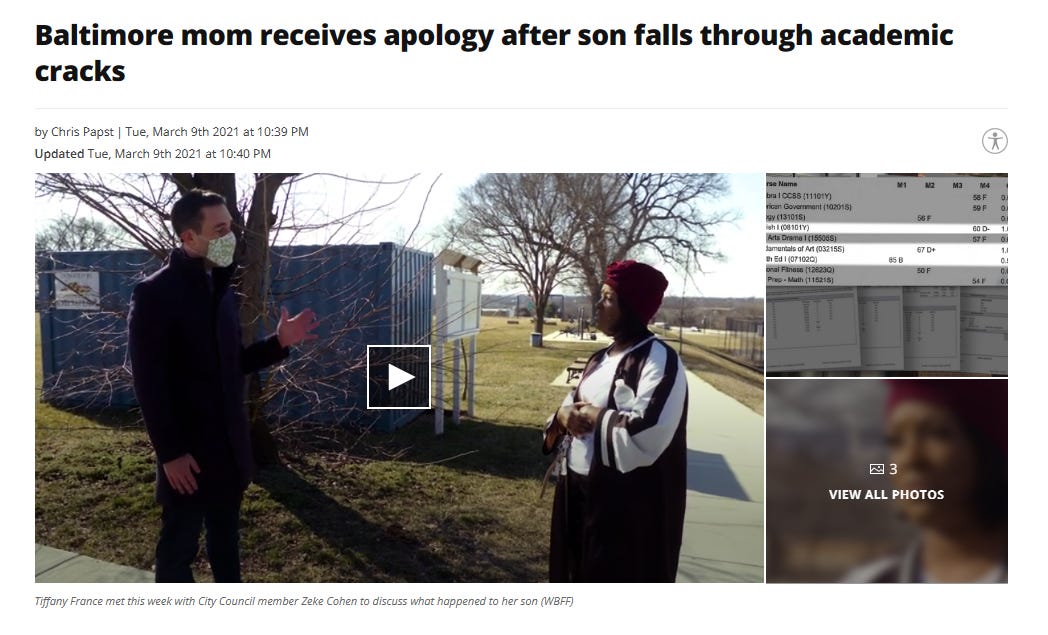
Tiffany France begins to explain why such a massive disparity in the US education system exists. For four years her son missed hundreds of days of school. She did not attend parent teacher conferences. Never once did she check her son’s grades. When it was finally discovered her son’s GPA of 0.18 was not enough to graduate, she blamed the schools. Indeed, across the political spectrum this seems to be the common play. The left blames a lack of funding or bad teacher to student ratios. The right blames viral woke teachers who ignore the basics of math and reading. But what of Tiffany and her behavior? How can a teacher teach a student who is not there. Teachers are not parents. They are not family therapists. They are not responsible for a student failing because he hasn’t been to class in months. A 0.18 GPA is because the student has a parent who doesn’t care about their kid.
The dichotomy of US public school’s performances can be found in those two early education development programs. One urging parents to read books to their child every night, the other urging parents to talk to their child at least once a day. One setting up children for a lifetime appreciation of learning and reading, the other pleading with parents to just give a shit about your child. It’s not about funding, it’s not about class ratios, it’s not about crazy woke teachers, it’s about having a mom or dad that cares about you and your future. No policy can force that relationship.
Thank you for reading Memetic’s Substack. This post is public so feel free to share it.
No posts
Comments
Nothing yet. Say the first thing.
Sign in to join the conversation.