
When my wife finished medical school, she had three months off before her residency program began. It was springtime, and she decided it would be the perfect opportunity to take up gardening. I have always loved the outdoors and my family kept a large garden, so this became a shared hobby. The plan came first. We laid out our vision of how our yard should be transformed. Chainsaw and wheelbarrows helped reshape the hard-scape. While frost was still in the air, seedlings were started indoors. I installed a rod iron fence and felled some trees. She tilled and amended the soil. We spent many of our Saturday mornings at garden centers picking out perennials and mapping their location in our yard. Every night we would do a “garden review.” A leisurely stroll through our creation, admiring the work, taking notes of what needs to be done.
Now, that dream has taken root. Our yard is home to a thriving garden that reflects hundreds of hours of work. It features well-established perennial shrubs, ornamental trees, a vibrant patch of season-long blooming annuals, and beds of herbs and berries. A winding stone path leads through the garden, tying everything together with intention and beauty.
We have created something beautiful together. It has brought us closer together. Enjoying the acts of labor and planning and finally the payoff of all the work. We do this because we like it. Because it’s beautiful. Because we get to do it together.
When planning a garden, you’ll quickly find yourself deep in online research: learning which plants thrive in which conditions, how much space each one needs, and what exactly “dappled light” means. But spend any serious time on these forums and gardening websites, and something else becomes clear: there are other reasons people turn to gardening.
One of the most passionate and organized communities in the gardening world is that of native plant gardeners. They advocate for using only native species in their landscapes, and their reasons are compelling. Native wildlife has evolved alongside these plants and depends on them for food, shelter, and reproduction. Non-native species, on the other hand, can be invasive, crowding out beneficial natives, disrupting ecosystems, and often requiring significant resources to maintain. Some exotics are even toxic to local wildlife or livestock. When invasiveness meets toxicity, the result can be an ecological disaster. At the heart of their movement is a grand idea: garden not just for beauty, but to make the world a better place.
The native gardeners aren’t alone. There exist a whole host of special interest groups for gardening. Urban Gardeners turning abandoned lots into rows of vegetables for the homeless or to introduce farmers of color to decolonize gardening! Suburban farmers turning their half acre into a working farm. Entomological focused planters such as the monarch enthusiasts planting nothing but milkweed (always at the edge of the garden to maximize the likelihood of the monarch discovering this plant so vital to its existence.) Group after group dedicated to making the world a better place through their gardening hobby.
These are noble aspirations. After all, who doesn’t want to make the world a better place? But spend enough time in these communities, and a more complicated picture begins to emerge. Sometimes, the high-minded ideals seem to be a mask for something else…
The native gardeners have a reputation for having wild looking patches of poorly maintained beds. One-part Black-eyed Susans, one-part crab grass, and one-part honeysuckle, not so much a garden as a patch of dirt they plopped an overpriced flower into last summer. Urban gardeners, too, talk about feeding the community and reclaiming space, but what they grow often isn’t particularly calorically dense, and rarely in quantities that could truly sustain a person, let alone a neighborhood. The suburban homesteader faces similar challenges. While they might harvest a satisfying basket of tomatoes or make an excellent batch of pickles or hot sauce, calling it a “working farm” might be stretching the truth.
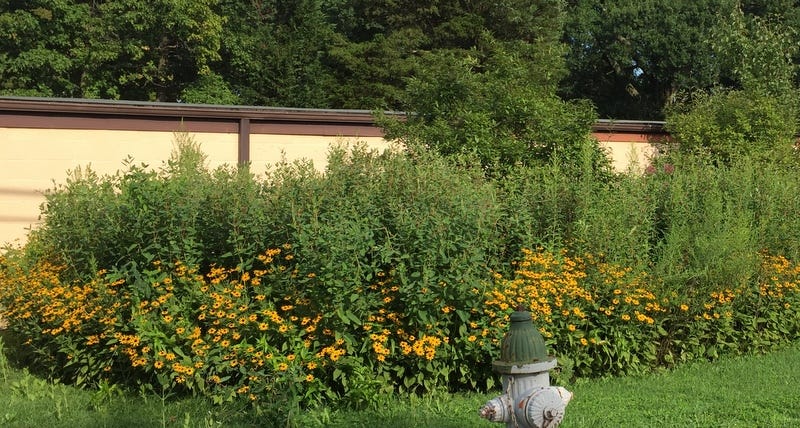
If their goals aren’t really achieved why cling so strongly to these labels? And cling they do. They will post their hearts out about the nobility of their causes. They will denounce others who dare do something as foolish as plant a Mexican Zinnia in a midwestern flower bed. The greatest sin to the urban and suburban gardener is a sinister patch of grass which sucks up resources and chemicals like some nightmarish suburban picket fence fever dream. It’s not enough that they’re making the world a better place with their gardening, they must also inform you that you are making the world a worse place.
We have arrived at the true reason for these groups. They don’t really want to make the world a better place, they want to feel like a good person. Good people fight bad people. They have a purpose, a noble goal. They are Don Quixote searching for an enemy, be they Zinnias or a lawn, they are a knight in need of a giant to slay.
It’s not just gardening, nearly every online hobby will have similar groups. Are you into croquet? Ok, but do you just make scarves, or do you make scarves for the homeless? Do you cook? Ok, but do you put left wing social messages on cakes and post them onto a social media account? Do you play video games? Ok, but do you play video games that center diverse gender and racial voices?
It’s not just hobbies either. Many people feel the need to find a career that helps them make the world a better place. I know a chiropractor who believes fully in her mission to help people break free of the confining ideals of western medicine. Sure, there is a bit of a marketing gimmick going on, but she really believes in this mission. I know another person who works for Caterpillar (the construction equipment company) in their HR department. Their corporate propaganda is all about “building a better world.”
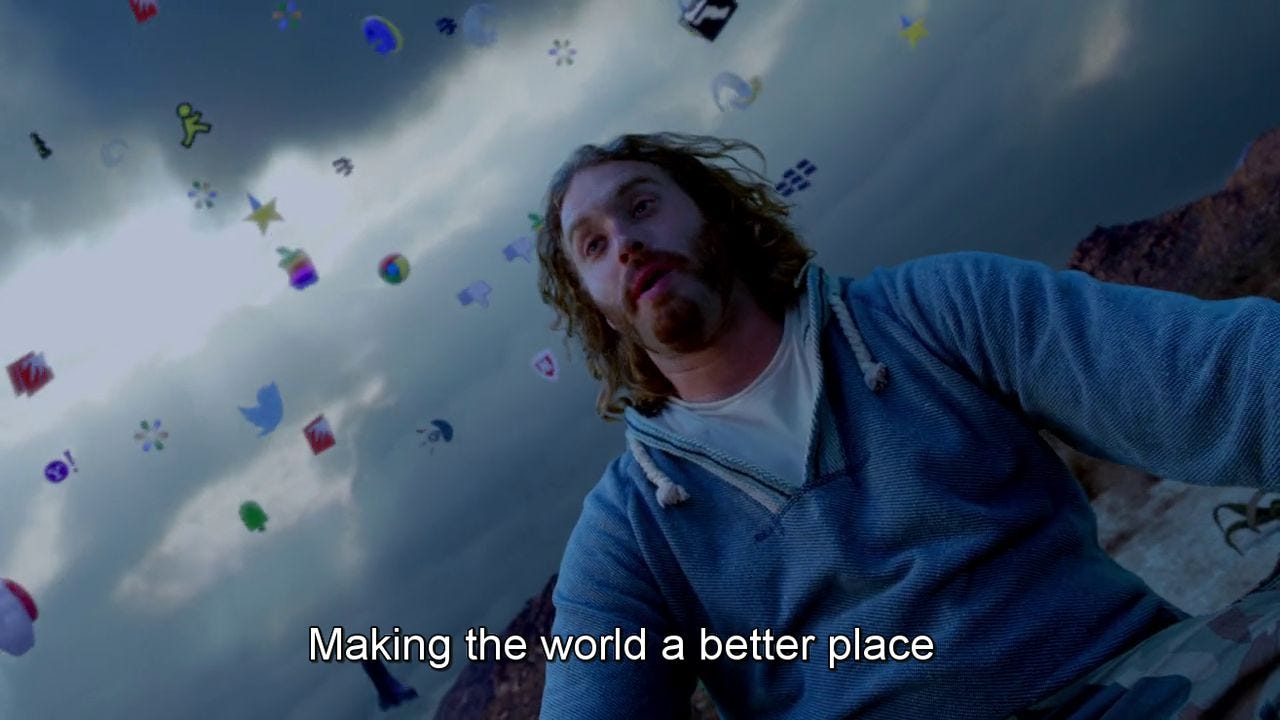
In one episode of Silicon Valley there is a montage of tech start-up pitches. Every pitch included the term “making the world a better place” through…. Data cloud optimization streaming capabilities… It didn’t matter what the company did, they all made the world a better place. A lampoon of a very real phenomenon.
One of the underrated side effects of our culture abandoning religion was a loss of purpose for many. There is a yearning in the human heart for a crusade. Not just being competent but being good. Not just for enjoying a hobby or pastime, but for making the world a better place.
Tilting at windmills may for a time scratch that itch. It may for a time fill you with a righteous sense of purpose. But the windmill is not a giant, and you have not saved the town. The purpose manufactured falls apart and the feelings of righteousness go with it. This is the cause of the outsized anger on the hobbyist message boards. That feeling of goodness associated with a purpose is fleeting, receding. To make up for it, the brave knights must demonstrate how dishonorable you are for not engaging in their crusade. For they may not be as good as they originally thought, but they’re certainly better than you: the heretic.
As for me, I find my purpose in my core identities as father, husband, Christian. I garden because I enjoy the beautiful creation I make with my wife. Because I enjoy the time spent on our common interest. You will find a Zinnea next to a Black-eyed Susan. Just behind it is a small patch of milkweed on the edge of my lawn. Further down the path you’ll find some berries and some dill used to pickle the cumbers grown elsewhere. My hobbies are not part of a grand crusade to make the world better, nor is my career. My hobbies are for me; my purpose lies elsewhere.
Thanks for reading Memetic’s Substack! This post is public so feel free to share it.
No posts
Comments
Nothing yet. Say the first thing.
Sign in to join the conversation.