
Over the past few years crypto art promised to pioneer a new digital avant-garde, but instead it has largely become an echo chamber of old memes and aesthetics. The latest NFTs on Ethereum, Tezos, Solana and beyond repurpose glitch animations, dreamy alt-girl collages, vaporwave palmpics, lo-fi cartoon meme formats and other “new” styles that already went viral on platforms like TikTok and Instagram. Once subversive or fringe in context, these tropes are now formalised, tokenized and sold in slick crypto-art auctions without any real critique or novelty. As one analyst observes, NFT “phenomena inherit the pleasure in the loss of the aura” – they celebrate “art whose value is… generated completely outside of itself, without any aesthetic value/judgment whatsoever, just like viral memes”. In short, crypto art today feels like a hyperreal simulacrum of Internet culture rather than a breakthrough of new forms.
Glitchcore and alt-girl visuals are now NFT mainstays, but they didn’t originate in blockchain galleries. On TikTok “glitchcore” is a frenetic youth subculture: creators drown their faces in grating VHS filters, strobing color shifts and chaotic edits set to hyperpop music. In this space digital “malfunction” is thrillingly intense, “the common denominator for glitchcore TikToks is overwhelming chaos… digital malfunction becomes thrillingly intense, less an irritating accident than a desired state”. These edits are about sensory overload, synesthetic surprise and in-community play. But in crypto spaces those same saturated hues and error aesthetics are simply marketable style. Instead of context and spontaneity, NFT projects mine them as design primitives. As one artist insider complains, many so-called “glitch” NFTs are really just a new crypto genre wearing the old name. Glitch’s original ethos, hardware tinkering and image decay, has been reduced to neon-colored “sauce” added for effect.
Perhaps nowhere is this temporal dislocation more evident than in the repackaging of the “liminal space” aesthetic—a genre that rose to prominence on TikTok, YouTube, and Discord communities in the late 2010s. Originally driven by a participatory, youth-led fascination with uncanny thresholds—empty school corridors, abandoned malls, foggy cul-de-sacs—these image and video edits often carried a genuine sense of poetic eeriness. There was a personal hauntology to them, expressed through vaporwave soundtracks, degraded VHS filters, and AI voiceovers recounting fictional dreams or half-remembered places. These weren’t artworks seeking institutional validation. They were affective moodboards, ritualistically shared between strangers, forming a dispersed digital folk art.
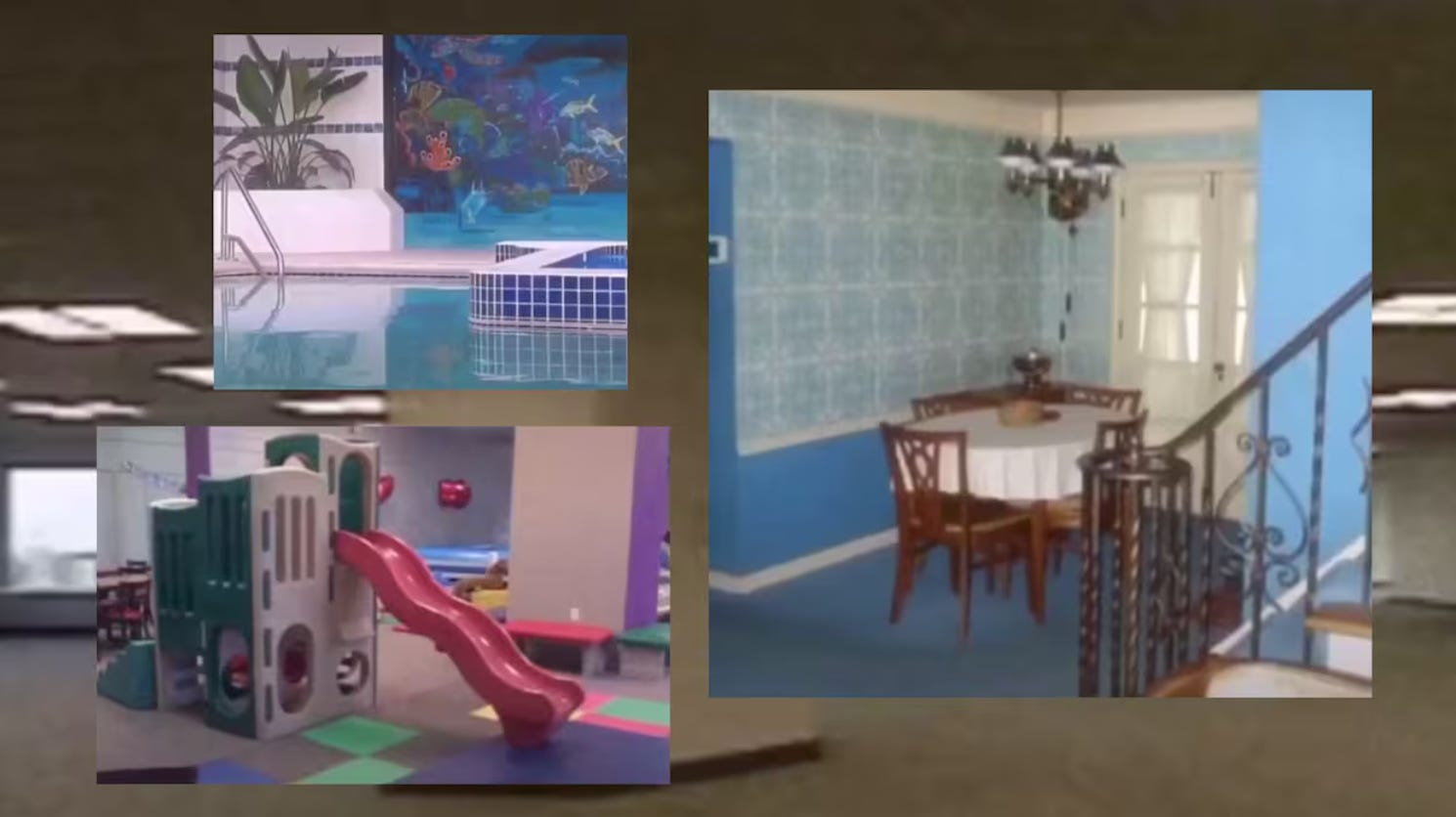
The crypto-art space’s delayed absorption of this aesthetic feels, by contrast, not only belated but fundamentally misaligned. As galleries, NFT projects, and even “conceptual” AI-art shows begin to showcase liminal imagery—now minted, catalogued, and sold—what once felt raw and transient is turned static and speculative. The emotional subtlety of liminal space becomes flattened into a visual trope. Where the original trend was driven by a participatory media logic (everyone could make or remix one), its crypto iteration demands scarcity, ownership, and authorial control—the very things the original vibe seemed to drift beyond.
More crucially, while the digital art world debates the legitimacy of “memes as art,” and attempts to backdate relevance through curatorial frameworks, the youth have moved on. On TikTok, the next generation is now deep into glitchcore, weirdcore, AI puppet horror, surveillance cosplay [not the one that legitimises it’s aesthetic like most crypto-art does], chaotic AR layers—entire visual microcultures that make the aesthetic conversations in crypto-art circles look comically out of date. There’s a tragic irony in watching the blockchain world belatedly mint a trend already deconstructed, memed, and remixed into extinction on other platforms. The joke, increasingly, is on the institutional actors. The new avant-garde isn’t waiting for gallery acceptance; it’s making dream-logic edits at 2AM on CapCut and deleting them in 24 hours.
This isn't to disparage attempts at serious engagement with internet culture in digital art. But the pace of art historical time in the crypto space is fatally mismatched to the temporal churn of net-native culture. In chasing old internet ghosts for marketable aesthetics, many artists and collectors alike appear detached from the present, more interested in legitimising digital art through references to past genres (be it glitch art, post-Internet, or media archaeology) than in actually engaging with the creative edge of now. It is not the meme but the temporal lag that reveals the deeper failure: instead of inspiring, the space is following. Instead of risking, it's certifying. And that, to a generation raised on infinite feeds, is the true uncanny valley.
A further symptom of this conceptual hollowing is the overuse of the term “storytelling” in digital art, particularly within the crypto sphere. Across NFT platforms and blockchain-linked exhibitions, artists frequently frame their practice as a form of "visual storytelling," promising immersive, multi-layered narratives. But often, the images themselves—stylised portraits, vaguely “dreamlike” landscapes, generative abstractions—reveal no discernible story at all beyond surface-level aesthetic gestures. When pressed to articulate the plot, character, or even thematic progression, the response frequently retreats into abstraction, suggesting that the viewer is meant to “project their own meaning” into the work. This tactic, while defensible in postmodern terms, begins to feel suspiciously like a pre-emptive deflection from critical scrutiny.
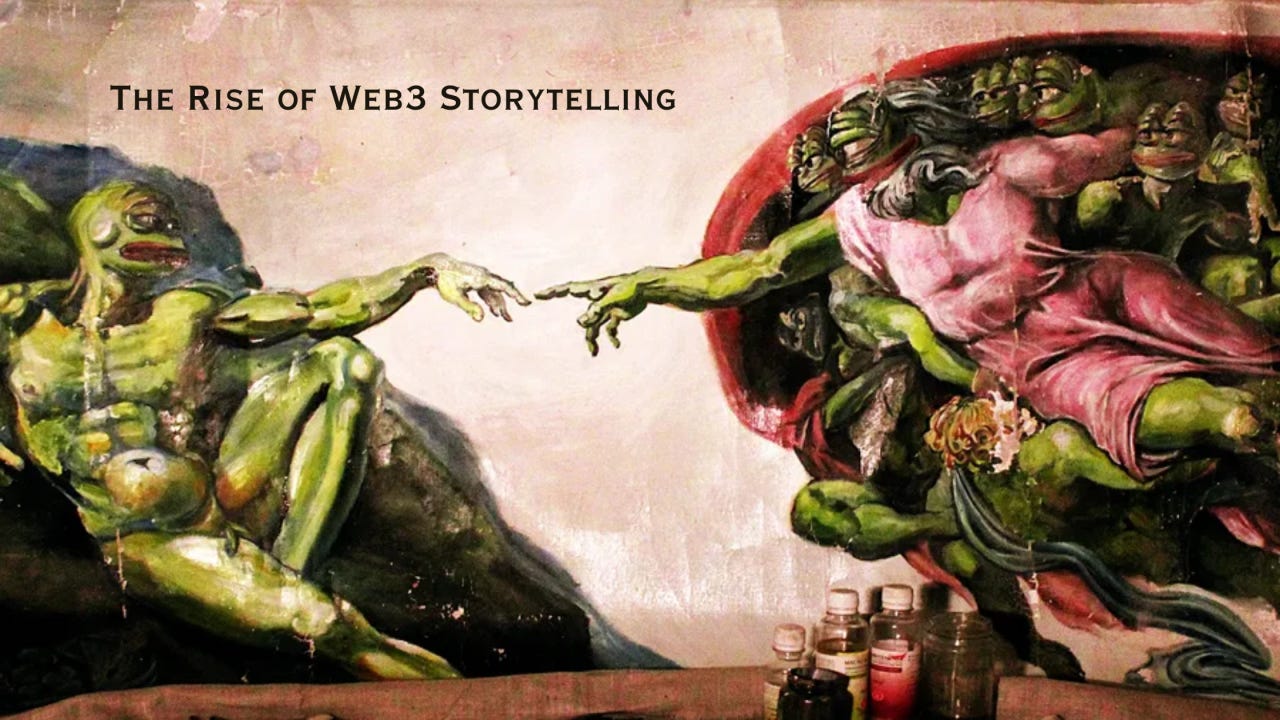
This rhetorical reliance on storytelling—with no accompanying narrative architecture—resembles what Baudrillard called the simulacrum: not a copy of the real, but a copy with no original. The “story” is not something embedded in the work, but rather a conceptual placeholder, a kind of narrative vaporware used to simulate depth in a space dominated by speculative value. It is storytelling not as plot or meaning, but as branding—a word that signals sophistication to collectors and curators while shielding the absence of content.
It is also worth noting that this tendency maps onto a wider shift in artistic self-presentation online. As content creators become “storytellers,” and every image is pitched as a “chapter” in an evolving world, the actual burden of narrative evaporates. The story becomes a vibe. And in the NFT space, that vibe is often little more than a foggy mélange of techno-mysticism, futurist platitudes, and vague notions of memory, decay, and selfhood—just enough conceptual scaffolding to fit into a Twitter thread, but not enough to stand up under real interpretive pressure.
This performative storytelling tends to emerge most clearly in artist statements, where we find familiar phrasing: “exploring identity in the algorithmic age,” “interrogating the boundaries of machine and mind,” “reclaiming agency in posthuman futures.” These declarations suggest weighty thematic engagement, but rarely manifest in the actual work. Without characters, structure, conflict, or formal experimentation that supports narrative, the “story” is merely an alibi. What we’re left with is a genre of art that talks like literature but acts like interior design—aesthetic presence with no epistemic claim.
Crypto collectors don’t so much demand fresh invention as they crave familiar sights. Fearful of untested styles, the market incentivizes “safe” bets: raring loops of VHS statics or pastel mangled idols that echo what’s already popular on social media. Sabato Visconti, a longtime internet glitch artist, explains that glitch-based work naturally “casts a wide net and [allows] me to produce a variety of works in different formats,” which in practice “makes it much easier to mint NFTs and adapt to a fast-paced and volatile market”. In other words, formats that easily yield endless variations [think iterative distortion loops, endless remixable patterns] get minted again and again. In practice the effect is backward-looking: instead of pushing visual boundaries, creators retrofit retro tropes with blockchain mystique. Many hot NFT series lean on nostalgia revivals – vaporwave sunsets, “soft grunge” anime girls, lo-fi cartoon memes – styles that circulated freely years ago.
This is not to say that appropriation or cultural recycling lacks artistic value. After all, Andy Warhol’s Pop Art also operated through the reuse of popular imagery—Campbell’s soup cans, Marilyn Monroe prints, Coca-Cola bottles. But the crucial difference lies in the reflexivity and contextual critique embedded in Warhol’s practice. His work was not merely imitative or celebratory of mass media; it functioned as a kind of semiotic sabotage. By repeating the hyper-familiar through silkscreen—a process that emphasized mechanical reproduction—Warhol unveiled the flattening effects of consumer culture itself. His pieces were not aesthetic reproductions, but conceptual detonations: images that performed their own death through repetition.
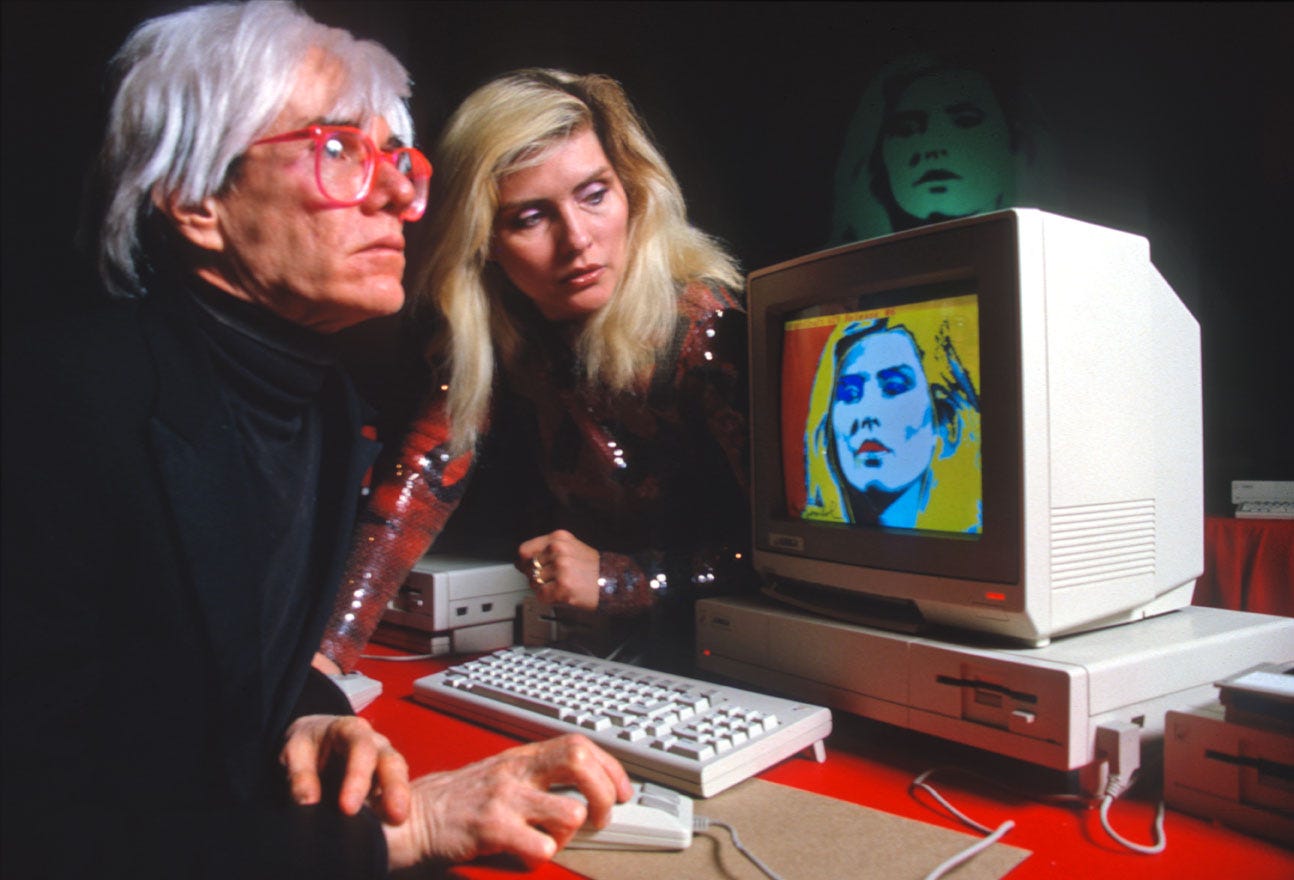
Crypto-art’s mimicry lacks this ambivalence. When TikTok phrases, meme templates, and nostalgic aesthetics are minted as NFTs, they rarely deconstruct or even acknowledge their origin. The context is not commentary but extraction—a move from cultural commons to gated commodity. Rather than illuminating the absurdities of internet culture, many NFT projects simply relocate them into a speculative marketplace, where the gesture of minting is confused with artistic transformation. What Warhol made uncanny, the blockchain often makes merely scarce.
Moreover, Warhol’s institutional critique had teeth: his work questioned the nature of authorship, originality, and even the ontology of the image. Today’s PFP collections and AI-generated memes, on the other hand, are often less concerned with interrogating media systems and more focused on deploying them for virality and resale. The blockchain doesn’t always elevate the material—it frequently fixates it, freezing circulating symbols into tradeable emblems without asking why. In this regard, the gesture is not Pop Art’s ironic re-use, but a kind of neo-kitsch minimalism, where aesthetic style is applied without any existential risk or conceptual dissonance.
This is not inherently a failure of the medium, but a challenge to the ecosystem. Crypto-art has the tools to generate genuinely new relationships between image, protocol, and value—but it must outgrow its dependence on nostalgia and trend-chasing. Until then, the Pop Art comparison flatters it too easily. Where Warhol made mass culture strange, crypto-art too often makes it merely saleable.
This recycling isn’t limited to the minor players. Even major NFT collections mimic prior internet cultures rather than chart new territory. Profile-Pic projects like Cool Cats or Bored Ape Yacht Club riff on cartoon pop art and playground hijinks that existed long before Ethereum – they are essentially the 2020s version of old greeting-card illustrations, now with provenance. Generative platforms like Art Blocks churn out endless colorful chaos, but many pieces look like mere algorithmic kaleidoscopes not tied to any blockchain-specific concept. As one curator puts it, instead of digital art exploring new systems, NFTs often “reproduce earlier forms of Art, such as ’90s net art,” only now selling them as unique tokens. By doing so, NFTs ironically reject the Internet ethos of infinite reproducibility. The blockchain’s “non-fungibility” fetish actually turns digital diffusion back into static cult objects – it re-coils back to pre-modern art-as-magic fetishes, as critics note.
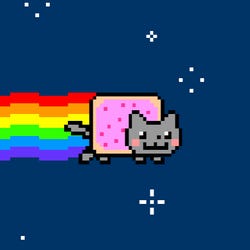
This aesthetic deja vu contributes to the stagnation that leaves many in the art world cold. Crucially, traditional curators and institutions often aren’t dismissing crypto art out of technophobia, but out of disappointed expectations. Buffalo AKG curator Tina Rivers Ryan bluntly wrote in Artforum that NFTs “sold digital artworks short” – they simply “reify ownership and platform capitalism” rather than advance any new conversation about art’s future.. When the analog prestige of collecting is welded onto reconstituted internet ephemera, it feels hollow. NFTs may fetch millions (Beeple’s collage for $69M, Grimes’ video series for $6M), but much of that comes from hype and tech novelty – not from radical aesthetic content. For instance, even the most famous “digital art” NFT sale (the Nyan Cat meme) was literally a YouTube cartoon cat sold for its provenance. That collectors can’t find bold new art in crypto is telling. “Collecting crypto art makes no sense!” one analyst confessed – it’s “risky” and abstract – yet people do it anyway, lured by buzz. In practice, as one NFT investor admits, buying is as much about clout and friendships (“patronage of my friends in the space”) and speculative flipping as it is about art itself. The result: an industry of pay-to-play nostalgia, where market stories and tokenomics often carry more weight than any genuine formal breakthrough.
From a theoretical standpoint, this mismatch of form and meaning perfectly illustrates Baudrillard’s simulacra. In Simulacra and Simulation, he argues that in hyperreality the representation becomes real and the original vanishes – “the image is its own pure simulacrum”. As Baudrillard quipped about Disneyland, what’s sold as the “imaginary” actually makes us accept everything else as real. Likewise, crypto art often prefers the facade of innovation over true invention. The blockchain ledger (the NFT) is presented as magic authentication, letting a recycled meme feel like a unique treasure. Yet this “reality” is empty, a copy standing in for the original cultural critique that birthed it. In crypto-land, the map precedes the territory: a digital image’s worth is increasingly “more real than the real,” divorced from any original context. The signifiers multiply while meaning dries up.
Today’s crypto art culture is thus a loop: it hoards the symbols of internet subcultures (from Tumblr glitch art to vaporwave nostalgia) and repackages them as on-chain status symbols. It’s worth noting that the original pioneers of crypto-savvy art often did aim at newness. Early projects like Autoglyphs (the first generative art on Ethereum) or the cyber-folklore of CryptoPunks were born from the blockchain’s protocols themselves, pushing into truly “protocol-native” territory. But for now the mainstream has largely chosen to retread the familiar. Traditional institutions remain unmoved not by the idea of NFT art, but by its current banality. If crypto art is to escape this aesthetic recursion, it will need more visionaries – artists and collectors willing to risk the unknown instead of cashing in on recycled styles. Otherwise the NFT world risks becoming, in Baudrillard’s terms, a desert of the real: a self-referential simulacrum that forever imitates the past, unable to break free into any genuine new frontier.
What becomes clear, after a few years orbiting the crypto-art ecosystem, watching conference panels, Twitter threads, Discord debates, and blockchain-curated gallery shows—is that most of this space isn’t about the future. It’s about catching up to a past that’s already evaporated. Many of the trends being “discovered” today—liminal aesthetics, glitchcore, dreamy meme surrealism have long been metabolised and discarded by younger artists who were never trying to be artists in the first place. They were making edits, jokes, micro-videos, niche formats, fragments of vibe. Most of them have already moved on.
At crypto-art events, this lag is painfully visible. You’ll often find yourself surrounded by well-meaning collectors, institutional curators, and blockchain evangelists, many 40+, some deeply sincere, many kind but clearly late to the cultural party. There’s no ageism in observing that these aren’t digital natives; they’re digital adopters. Many of them missed the explosion of net-native subcultures in real time, and are now trying to retrofit frameworks of “value,” “authorship,” and “storytelling” to phenomena that never asked for any of those things. In doing so, they confuse formalisation with innovation, and visibility with relevance.
To be clear, these aren’t villains. Some are often generous, curious people, friendly even as they look slightly lost in spaces flooded with neon nostalgia and Twitter-driven trend cycles. But friendliness doesn’t fix the core problem: institutional crypto art increasingly feels like it’s chasing ghosts, minting aesthetics that were never meant to last, and packaging them as scarce objects long after their cultural moment has passed.
Part of the problem is structural; today’s attention economy isn’t curated by institutions, it’s orchestrated by feeds. Twitter likes, algorithmic virality, and vibe coherence determine what becomes visible. Platforms like Zora and Foundation try to straddle both worlds, but the results often lean into self-referential design loops. Instead of curating new movements, many digital art gatekeepers end up ratifying what already worked on the timeline last month. And when everyone is playing catch-up, the actual avant-garde is somewhere else entirely, lost in a story that’s not being told, because it’s already been deleted, or never minted in the first place.
The most vibrant cultural experiments right now are ephemeral, remixable, and allergic to ownership. They live in shared folders, TikTok drafts, glitchy AR layers, AI mashups, and 2AM CapCut edits that disappear into scroll-oblivion. They’re less about making art and more about making presence. Crypto art, by contrast, often feels stuck in a PowerPoint version of digital life: a place where curators explain the meaning of memes, where JPEGs are “storied,” and where the blockchain stands in for insight. There’s no malice here, just a misunderstanding of time.
The crypto art space doesn’t need to catch up to youth culture. It needs to stop chasing it. It needs to risk failure, abandon the myth of legitimacy, and start inventing again, not by minting the past, but by learning from what was already thrown away. If not, the space will continue to grow older, wealthier, and more culturally obsolete, mistaking market success for artistic relevance.
After all, the next generation isn’t asking to be let in. They’ve already left.
No posts
Comments
Nothing yet. Say the first thing.
Sign in to join the conversation.