
A few weeks ago, someone asked why I stopped writing.
The answer to their question was really simple: I was tired.
Yet, being tired didn’t seem like enough of a reason. Did that truly justify my week-long break that turned into months? And then, over a year?
Even in the throes of debilitating fatigue and poor health, I treated rest like a project. Impatiently, I “rested” so I could get back to being productive.
Friends told me, “You’ve been through hell and back. If not now, then when?”
But the guilt hovered in the back of my mind. I couldn’t relax. I was waiting and waiting for permission to just… Chill the fuck out.
That permission took forever to arrive. And I didn’t have to look far to find the culprit of that delay.
Surprise, surprise, it was me.
— noun INFORMAL, noun: FOMO, definition: fear of missing out
Many things had to happen before I accepted the need for rest.
Out of them all, letting go of my own expectations was easily the hardest.
Ironically, most of them weren’t even my expectations to begin with. I was letting the voices of people I didn’t even know live rent-free in my head. Our definitions of health, wealth, success, and worthiness come from observations of other people — whether first-hand, on a screen or in a book. I genuinely believe that humans aren’t made for this sheer volume of exposure to the curated lives of others. The scourge that is social media is a never-ending, accelerating carousel of self-esteem-breaking comparisons and shifting goalposts.
So I stepped away even more than I already had.
Over 6 years ago, Facebook had been first to go. To this day, it remains one of the best things I’ve done for my mental health. No surprise when you find out that Facebook contributes to people’s FOMO the most at 72%.
Not long after, Twitter followed suit (11% FOMO guilty party).
Over the last couple of years, I have stopped posting on Instagram. (14% — I’m surprised this isn’t higher)
Then, most recently, unintentionally and somewhat reluctantly, LinkedIn.
I took a long break from observing the lives of others. And consequently, a long break from being observed.
The stats back up my decision: 90% of social-media-related FOMO emotions were negative (21% sad or disappointed, 30% jealous, 39% envious).
Well, damn. It’s no wonder axing social media helped.
Rest isn’t a group activity.
I mean, you can go to sleep at the same time. Wake up at the same time. But maybe only one of you (my husband) wakes up refreshed. The other person (me) feels even worse than before they went to bed.
Most who know me understand just how much of an extreme night owl I am. My ideal bedtime is 4am, and I’m rarely up before noon — and never willingly.
Despite 15% of the population being night owls, this world is built for early risers. So unsurprisingly, it’s always been difficult for me to get enough sleep.
Frustratingly, it’s just one of those things that people are oddly judgemental about. Many worship the early morning lifestyle. You know, the one you hear about with easy 5am wake-ups to start their day with a cold shower and a fasted meditation. I’ve lost count of the number of times I’ve been told: “the early bird gets the worm”.
Sleeping late and getting up late has a bizarre and undeserved stigma for being mere laziness.
It’s laughably ironic that I’ve had to work so hard to curate a life that allows me to actually sleep. To acquire skills to firmly shut down those who try coaxing me to bed earlier. And for my own health and sanity, to finally give up on trying to be a morning person.
It has taken years, but I count myself very lucky to be surrounded by friends and family who, thankfully, let me sleep.
Remember when the Danish word “hygge” took the world by storm?
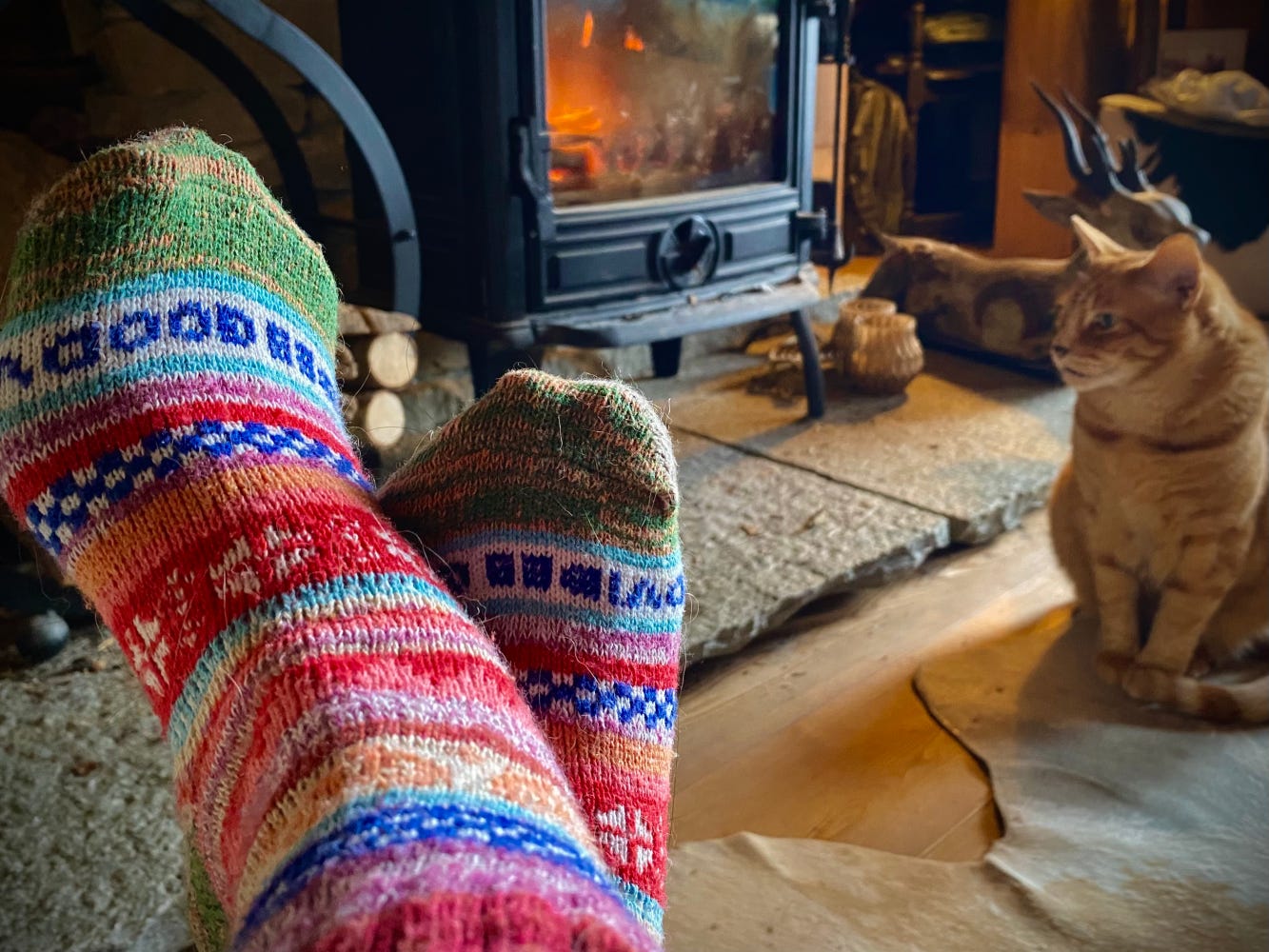
If you’ve ever experienced a Scandinavian winter, you’ll intuitively understand their embrace of a term that means to find your own contentment by curating your own cosy comfort. Picture a crackling fireplace, fuzzy wool socks, steaming hot chocolate and soft lofi music playing and you get the gist.
Or even more simply applied: in order to feel cosy and content, set the stage for it.
Similarly, you can’t truly rest and restore if your surroundings aren’t conducive to it.
We’ve been fortunate to have the flexibility to travel. To step away from the city’s rat-race chaos to find quieter places — a calm beach in the summer, snow-blanketed Alps in the winter.
Now, it feels good to put away the devices, grab the blankets and hot tea, watch the snow falling outside and enjoy the peace I’ve carved out.
This extended rest has taught me a lot.
It turns out if you don’t force rest for productivity’s sake, it naturally becomes productive. Who knew?
I’ve learned that life isn’t a race or a competition. And more importantly, that self-suffering isn’t noble.
I’m finally getting my rest. I hope you are too.
Comments
Nothing yet. Say the first thing.
Sign in to join the conversation.