
Howdy! Did you know there is now a podcast version of most essays that I publish here? Episodes come a week after each dispatch goes out, with a few archive dives and bonuses : ) You can find out more and listen here. I’d love for you to leave a comment or review of the show if you enjoy hearing my voice read to you!
Also, as usual before you dive in, rest assured this essay was written using 100% human intelligence. I do not use AI in my work. I’m AI Sober and it feels delicious. You can read my full AI Policy here.
I am not a self-taught artist. I went to a four-year college of art and design where I studied Painting and Creative Writing. With incredible luck, I had a half-tuition scholarship to study under incredible artists and writers to learn the craft of creative nonfiction and traditional representational painting. In the past I’ve focused critique on my frustration with how much debt I took on to get the degree,1 the increasing costs of art college, and how my program focused too much on how to contort to the traditional art world.
Today, to close out my essay series on the different cycles of creative practice2, I want to discuss the thing art school got right — the importance of the learning and research cycle. Studying Painting meant that I was evaluated in three ways: my participation in critique3, the quality and volume of my creative output4, and my research. Each semester we needed to present a digital or physical research binder, showing what we were reading, consuming, or considering as a basis for our work. How were we making things in conversation with the larger culture?
This practice never stopped, instead it has intensified. I am always in my own head. Staring off into space is one of the best activities that costs nothing and provides so much. It’s why I love hiking, why I wrote a whole class about this practice of essentially doing nothing, because it is what helps all the research come together and be ready to integrate in my mind, or be added to my meticulous digital garden. Nearly every book on my shelf is filled with copious notes, underlining, annotating, post its5. There is no better way to spend a Saturday night than reorganizing my stacks and reviewing annotations or going through many of the art books in my collection to deepen my relationship with my creative ancestors.
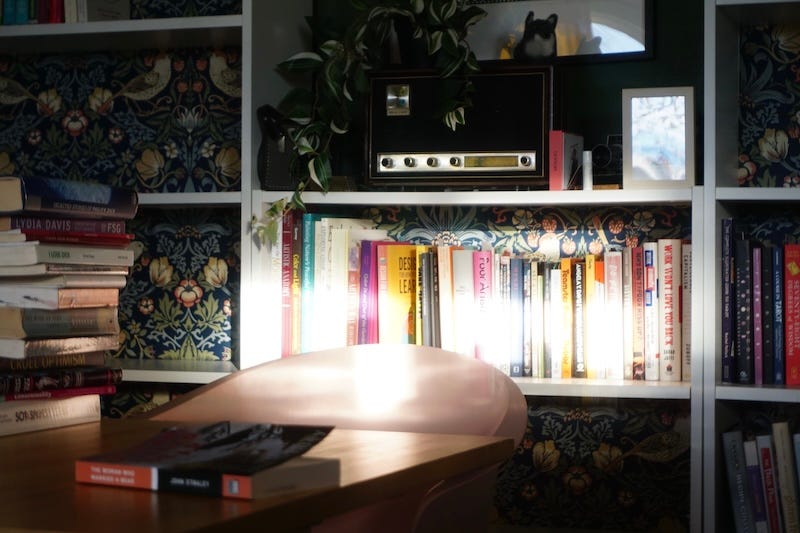
Honestly, cultivating this thirst for knowledge is what college should be for. Giving you an unquenchable desire to expand your capacity to stay curious. If the world were the utopian dream that valued human creativity and flourishing, university study would be free globally instead of an industry that saddles 17 year old kids with unpayable debt. Yet, I loved college. I wanted to be a professor. I know you don’t necessarily need college to have this kind of curiosity, but it is a vital threshold to starting. College helps you decode the language barriers that are hard to move past without context or classes on the word games some authors are playing.
Developing a deep practice of learning, research, and curiosity keeps us from becoming rigid, hard headed, and susceptible to propaganda. It’s made me a bad consumer, as I question every ad I see. It helps us know in our bodies how to love silence, long drives, walks in the woods, no-podcast train rides and walks, all to benefit the gardens of our own minds.
Art school also did warn me of the danger of research becoming the only practice. There are artists and writers I greatly admire who embrace research as the medium itself. Getting stuck in your head can work if you are moving towards to goal of being a writer or conceptual artist, but most of the students who come to me for support are craving a connection to their bodies through craft. We need periods of digestion and embodiment mixed in with the research in order to stay persistent in our work. It’s also necessary for me to stop with the research every once and awhile to just make things, opening myself up to the wonder and possibility that comes with creative risks and dancing with my work.
Learning and research is a fun cycle to be in, but we have to balance it with the other cycles of our creative practice. Each cycle supports one another by identifying our personal weaknesses or areas of opportunity to embrace change or learn new things as artists. I’m most afraid of stagnation in my practice, of becoming a machine who just makes the same thing over and over with no evolution forever.6 Again, remember that the cycles aren’t linear and each one should help you get back to the point where you are making your work.
What I see happen often, and what I witnessed all the time in art school, is students getting trapped in research, learning, and perfectionism as a reason to not move forward at all. A stasis trap, analysis paralysis! I have fallen into this many times, and it’s easy being a writer and an artist and a musician to let the fear of failure keep me from “messing something up,” or creating “bad or ugly art with expensive materials.” Plein air painting allows me to play with this discomfort anytime I setup my easel to work in the forest. It’s a process that teaches me to be more adaptive and embrace my attempts at simply noting what I see. Another new process I am working with to prevent this analysis trap is hanging paintings that are troubling me next to where I sleep so my unconscious can do some of the solving in my dreams.
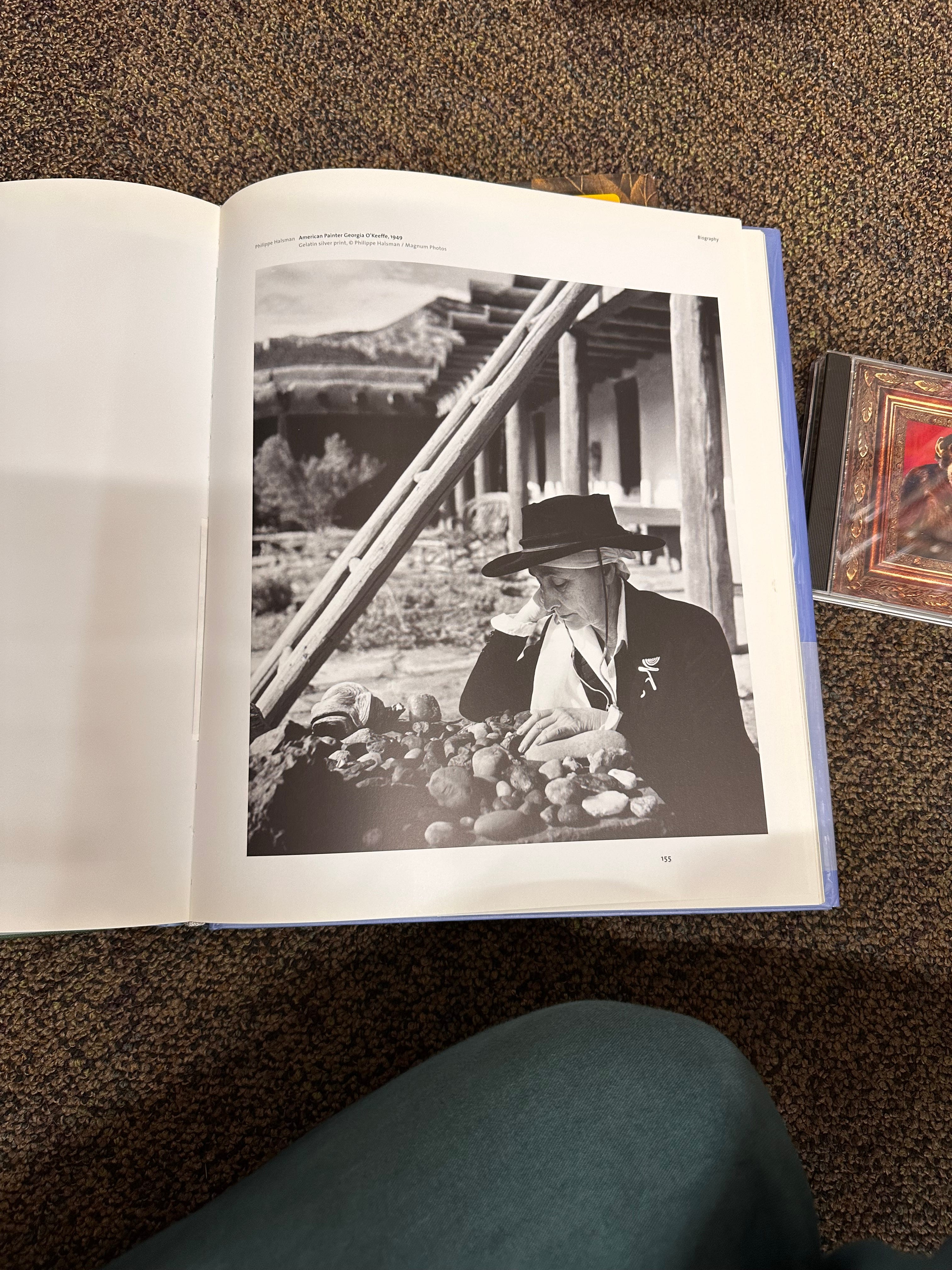
Likely as an artist, writer, musician, knitter, or otherwise creative person in another medium, you will hit a point where you are trying to do something and it is beyond your skill level. Because our culture is so fucking focused on results all the time, you’ll likely want to get through the learning ugly-duckling phase quickly, so you’ll sign up for a class, start to study other people’s work, and maybe even start doing challenges, like 100 heads, to get in the reps of skill building.
This is great, personal improvement through embodied practice is excellent. Seeking out tutoring, mentorship, or feedback from artists you admire will help build your confidence as you figure out your work and evolution. Trying to get feedback from a chatbot or social media is bad. Do not do this! It will not help you! In fact, I think it will make your practice worse and prevent you from developing an intuitive and bodily earth intelligence way of knowing that your work is quality or improving.
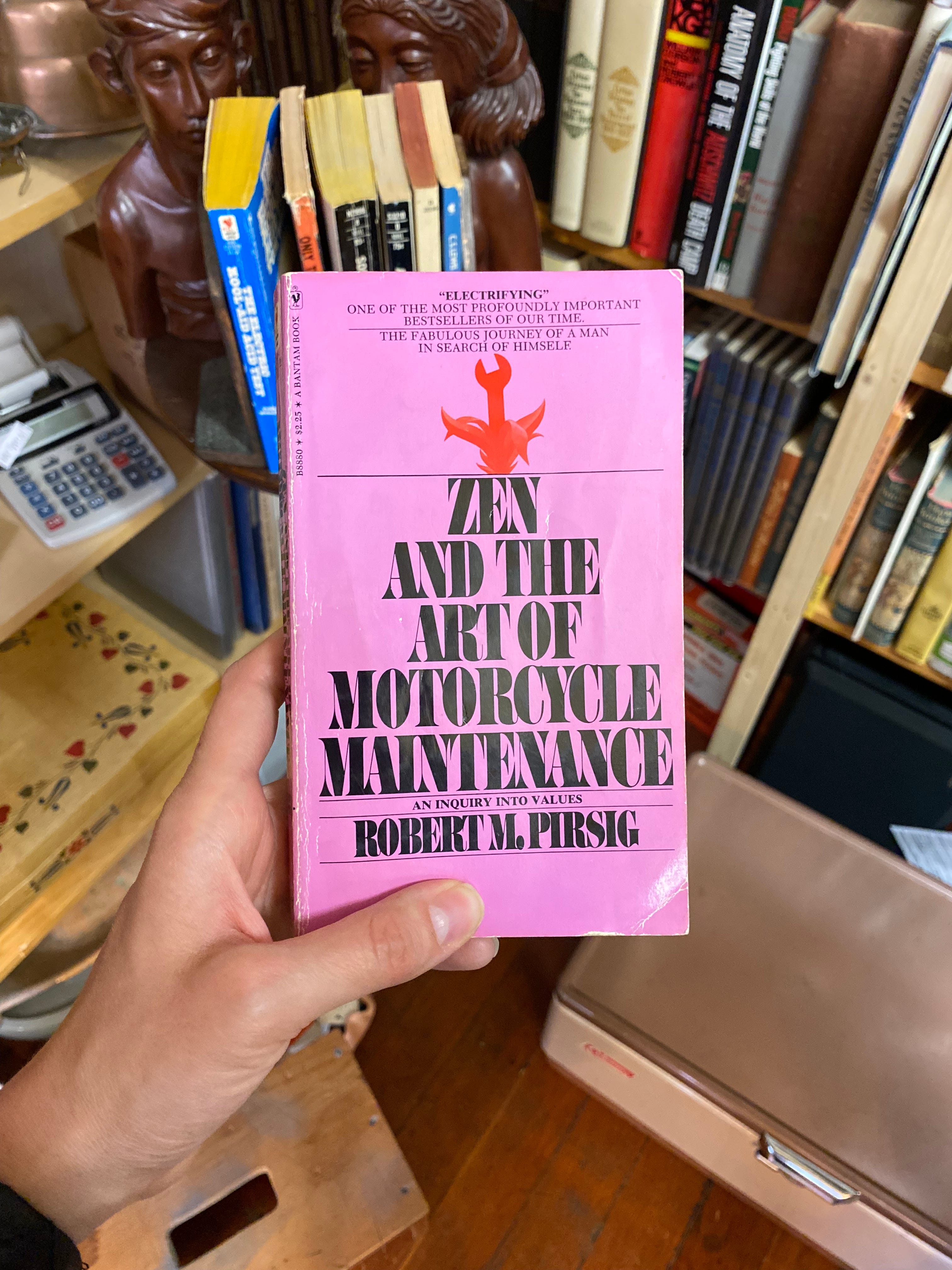
In Robert Pirsig’s Zen and the Art of Motorcycle Maintenance, he talks in depth7 about the problems we confront in our culture around Quality and around our relationship to technology itself. I read this book when I was getting back into cycling — my favorite way to exercise in the morning— and it taught me how important it is to hear and feel the different changes in my machine. I know exactly when my bike needs a tune up, when things need subtle adjustments and maintenance, just by listening. This is the knowledge we develop over time by learning to trust our own bodies, minds, and intuition. We learn to know the feeling, the smell, the subtle way things change in the light. It helps us know how to mix a color, and how to make a mark that is uniquely ours. These aren’t things that can be delegated to a machine.
Writing about this idea alongside me recently, one of my favorite fellow artist/writers Kristen Drodowski, said the following in her recent piece Finding fulfillment in research arguing that using AI for this practice should be avoided:
“When conducting creative research, it can be tempting to google something, read an AI summary, and feel like we learned something very efficiently! But wait, since when does learning need to be efficient? I want my learning to be long and drawn out. I want to never feel like I know it all. I want each piece to set me right back onto the edge of my seat wondering what comes next now. Efficient is much less fulfilling. When I look closely, the search results seem to be an amalgam generated by chance or convenience, with pieces pulled apart from original sources (people) and put together in a conglomerate (un)whole that might make just enough sense to pass as an answer we might consider trusting, but can we really trust with certainty, this?
You know what is most beautiful? Trust that is undeniable. Where does that kind of trust come from? Sincere personal efforts.”
More sincere personal efforts! More self trust! More magic! Pirsig would’ve been grossed out by the very idea of efficient learning, the denial of the body, and the degradation and undermining of trust with this optimized process. I want you to see learning as an act of developing trust with yourself.
This is the way I teach in my classes and when I work 1-on-1 with students in tutoring sessions. Developing an art practice also requires developing an even deeper relationship with yourself.8 This is the kind of embodied earth intelligence that AI is never going to be capable of giving you. Avoid deskilling and giving in to the optimization and efficiency of learning. We need to slowly connect with our processes and bodies over time in order to access Quality. Art school taught me that we make things because it is an act of immense pleasure that gives life meaning.
When I started running a gallery in my apartment in 2013, I needed to take a bit of a break from my studio practice to figure out what I wanted to make after art school. I knew I didn’t want to continue my thesis era body of work in the same way, but didn’t quite know how exactly I wanted to move forward. So, I started collecting a huge swath of images on tumblr. This was the beginning of my infinite scroll habit that still is a struggle for me to this day. I would scroll tumblr every night reblogging hundreds of images — sometimes thousands in a month. I was curating my aesthetic that I desired to embody, but I wasn’t making anything. It’s why I’ve been so keen on spending time investing in my digital garden because I need to be able to convert this craving for novelty into a practice of searching my own ideas.
I find this pattern comes up with folks I’ve taught over the last 14 years, we get pulled into the looking aspect of research and it becomes harder and harder to find a way to transform collecting into making. It is easy and fun to search Pinterest and make a board of all the artists we are influenced and inspired by. It is hard to sit down at our desk to make something — especially if we have neurodivergence that makes us feel like perfectionists9, or if we are doubting our own skills. This is usually where I find my students in our first couple of tutoring sessions, with a wonderful library of inspiration. We turn those collections into custom assignments, that adapt to their current skill level, and learning style, while also providing the accountability to finally do something with their collections and find their own authentic voice.
Book a Tutoring Session with Me
In 2014, I began drawing the things I reblogged on tumblr to challenge myself to take action. I was experimenting with new mediums like gouache and drawing on vellum. I was inspired by the incredible artists who were hanging their art on the walls of my home and I knew I had to take action and start making something with all that I collected. Finally transforming the research and learning practice back into making that would evolve my work once more.
One of my favorite video essayists, Zoe Bee, was discussing how passively consuming videos on how to make things or do things rarely results in us taking action or experiencing transformation because :
“Learning is a participatory activity, not a passive one, it requires friction.”
So, I ask you as you ferment10 in the learning and research cycle, where can you seek friction? Where can you get feedback and find safe opportunities to fail? Do you need the container of a class to carve out the time and accountability? Do you need a community of other artists persisting alongside you? Do you want direct support from an experienced artist to build assignments with accountability and give you human-centered, embodied feedback on your work? That is what I do with students in tutoring sessions.
Inviting studio visits, going to in-person craft or makers nights, sharing your work in small online communities, or hosting your own art meetups where you live are all beautiful ways to connect with others. The learning and research cycle, like the reflective cycle are places where we will reach for outside feedback, but social media’s stats dashboards are not another human grading and giving us feedback on our work.
These seem like unbiased and objective evaluations, but they are always biased in favor of the corporations that make them. Remember what I said earlier about grading in art school — there was a balance between a professor’s observations around volume and quality, weighed with what you gave to your community in critique, and rounded out with how you were learning and developing as a person. This is nothing that a chatbot or algorithm can provide for art. They might tell you how to blow up your views but will end up just blowing smoke up your ass.11 These platforms and apps are interested in user dependence and they work to ensnare people by convincing humans to contort and optimize their art until it’s a watered down facsimile of the bland average. This is not the way to freedom.
If we are in the tender, budding cycle of our art where we are discovering or rediscovering who we are and why we make what we make, we have to turn away from automation and algorithms so we can value how the relationships we develop with other humans. Because relationships are the real keys to persistence and avoiding stagnation.
Thanks so much for reading, until next time, stay creative and find your own ways to persistently bloom.
Despite scholarships, I still walked away with about 60k in debt for my BFA.
Which set me up to become an art critic for my town for seven years and start Informality
This was subjective as hell for sure, but I managed to almost always get A’s in studio unless a prof didn’t like that I had a day job, which was a reason given for lowering my grade by an old white man with an ego and tenure.
My spouse and I have a library instead of a television because we are absolute nerds. Both of us are just like this, always researching, deepening our curiosities, and having conversations with each other!
See, the tragic fate of Thomas Kinkade. When I watched the incredible documentary, Art for Everybody, I saw Kinkade’s beginnings and desires to make art accessible to working class people brilliant and rebellious. But the film gets into how capitalism itself slowly destroyed his intentions and his ability to experiment. It is a must watch if you can catch it at a screening near you.
Along winding mountain roads, which he notes, the wigglier they are, the better they are. True!
Honestly, it is a deeply personal and spiritual thing to be an artist. This video: there is no slop in heaven by sincere on main really digs into this. “the barriers are the point, or the truth, or the soul” Highly recommend watching, I am totally ordering one of the zines if they restock.
Hi, hello, it is I, this is me.
I want to be clear in using this word, I am trying to warn you not to stay in this cycle for too long! Imagine your research capacity is a bottle filled with fermenting kombucha, it needs to be burped or it will explode.
Jack Conte of the band Pomplamoose recently said “views are just empty calories” and that was a big motivating factor for quitting YouTube. Oh yeah, and Conte is also the CEO of Patreon.
Comments
Nothing yet. Say the first thing.
Sign in to join the conversation.