
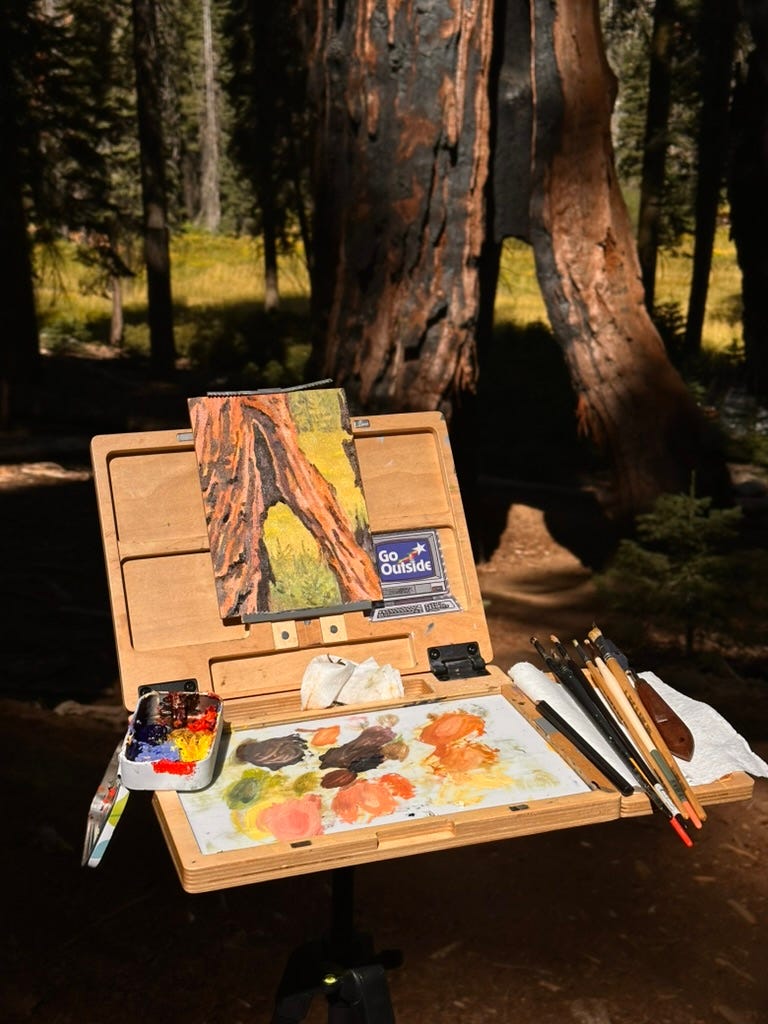
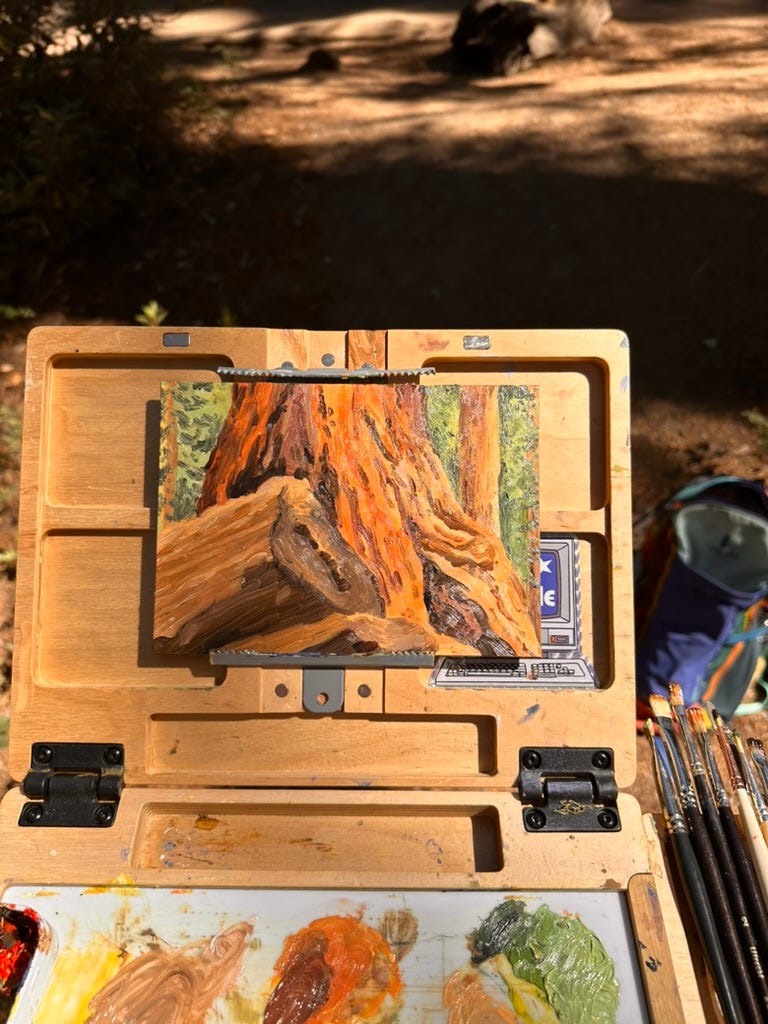
On this trip I was using an extremely limited palette — in both oils and gouache — out in the landscape. This is the one I plan to teach in the next iteration of my Watercolor & Gouache Class. Get on the waitlist to be first to know when registration opens in September.
Monday the 31st I am teaching an in-person workshop, Drawing 101: How to Start & Have Fun from 6:00 PM- 8:00 PM at Diablo Valley Art Supply in Walnut Creek, CA. Tickets are $65 and you can sign up here.
Last week I was part of the group that produced and supported this rad chat between Hamilton Nolan, Katie Gatti Tassin, and rayne fisher-quann, State of the Substackers: Labor, Creators, and What’s Next which you can watch or read here.
If you’re also writing alongside me on Substack and wondering what to do about your big feels around enshittification, AI “detection”, and how we can sustainably make a living here, sign up for this newsletter to find out about future Live events and what we’re working on.
A new episode of the Persistent Bloom Podcast is up, this one featuring my creative partner and spouse Wes Jackson. In it we get into the concept of being “stuck” and how finding and defining our creative home is the best way to come back to and persist in our practices. Listen on Apple, Spotify, or Patreon.
We’ve also got our first Book Club happening over in Emergent Classroom. We are starting off with a short classic, Art & Fear by David Bayles and Ted Orland. Super excited to lead people through this one and record some bonus episodes of the podcast talking through the ways this book has been an essential to return to. Join us this month!
Last month, my obsession with snags1 connected me with a wild opportunity. I got a DM from Jennifer Mamola, asking if I would be interested in joining her colleagues — researchers with the John Muir Project — in Redwood Mountain Grove to see the regeneration of the Giant Sequoias. A week of plans and projects were rearranged, and with the help of our friends and neighbors, we were able to make witnessing this magic happen.
Last year, Wes and I made a film about attention shot in one of the low-to-moderate intensity burn areas in Sequoia National Park. Once we felt confident ID’ing the baby trees, I was overcome with grief. There were so few to be seen. Most of what regenerated around Crescent Meadow2 was less than a foot tall, crowded out by huge White Pine and Incense Cedar regrowth that would most-likely kill off any Giant Sequoias that did manage to sprout. I left the forest asking two big questions:
Are we witnessing the beginning of the extinction of these incredible giants?
Was there anything out there that could help these giants grow again?
As it turns out, the answers to both of these questions are found in work the John Muir Project is doing right now. On our hike last Thursday, we came to the edge of a high-intensity fire patch where Fire Ecologist and Director of JMP, Dr. Chad Hanson, helped Wes and I cross a downed log and into a world of abundance and regrowth. Everywhere I looked in this high-intensity fire patch were resplendent green carpets of Giant Sequoia seedlings. My eyes filled with tears of joy.
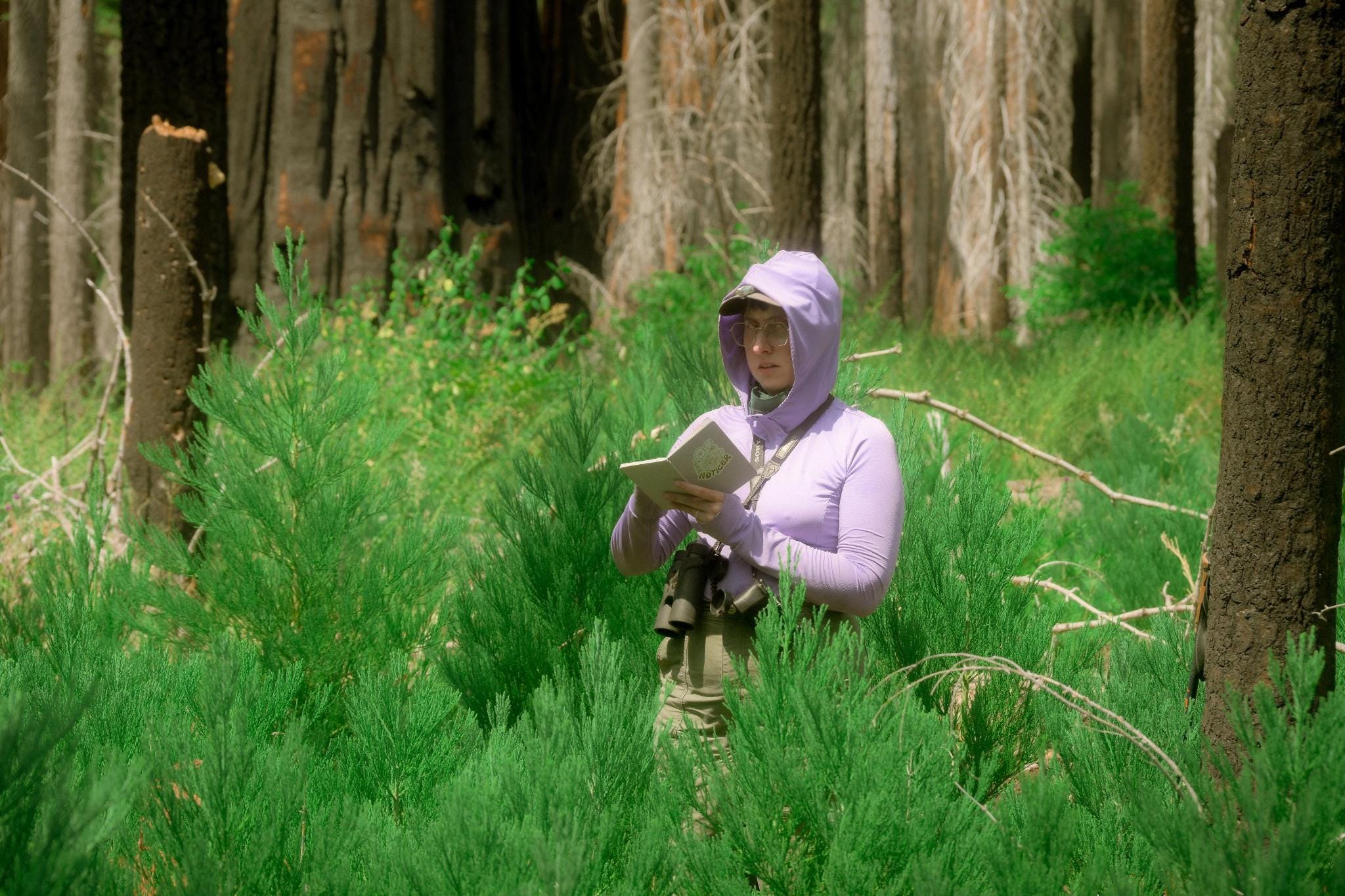
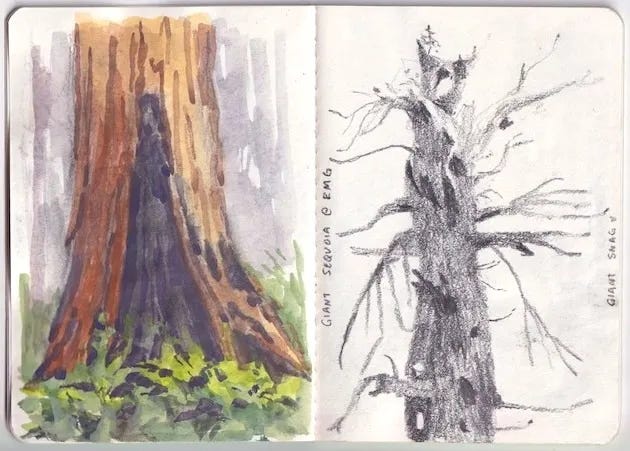
What we saw felt like a lucid dream. Snags towering above me with crowns shaped like animal bones, pearlescent cambium, golden-draped bark hanging from branches that remained, and a carpet of Giant Sequoia saplings. High intensity fires like this, where the crowns of giants burned and the fire was hot enough to make its own weather, are the exact environment the Sequoias needed to sprout once again, all on their own. The snags in these areas are surrounded by incredible density of baby Sequoias, feeding fecund life after death and providing habitats3 for Spotted Owls and California Condors.
The crew from JMP headed off to count and survey the number of Sequoias growing in plots for a new study. Wes and I hung back to witness what we could despite my back injury rearing its head once again.
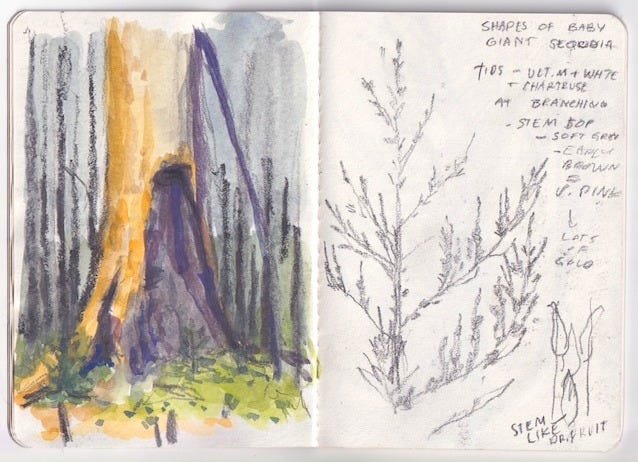
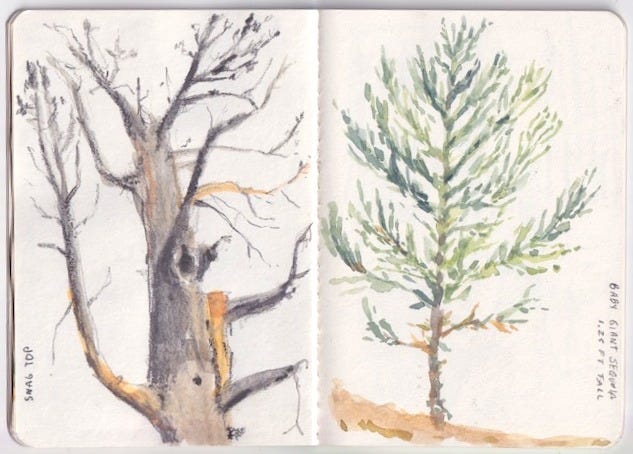
In the evenings after field-work the group of biologists gathered with us over dinner, sharing their findings and photos. It was a dream for us, as artists, to learn firsthand about the subject matter we both find so deeply captivating. The team shared their hopes for their research efforts, change policy to stop to logging, pesticide spraying, and manual replanting efforts that often fail.4 We learned the science of high-intensity fire: how rare fires like these are, the vital role of snags for the ecosystem, how they create a super fertilizer for the Sequoias’ shallow roots, and the ways crown fires give the right amount of sunlight for the species to thrive. To quote one of the team’s posts here on Substack:
We are still processing how incredible this trip was alongside everything we witnessed and learned from this group of ecologists and biologists. My heart is full of gratitude and inspiration. You can learn more about their work here.
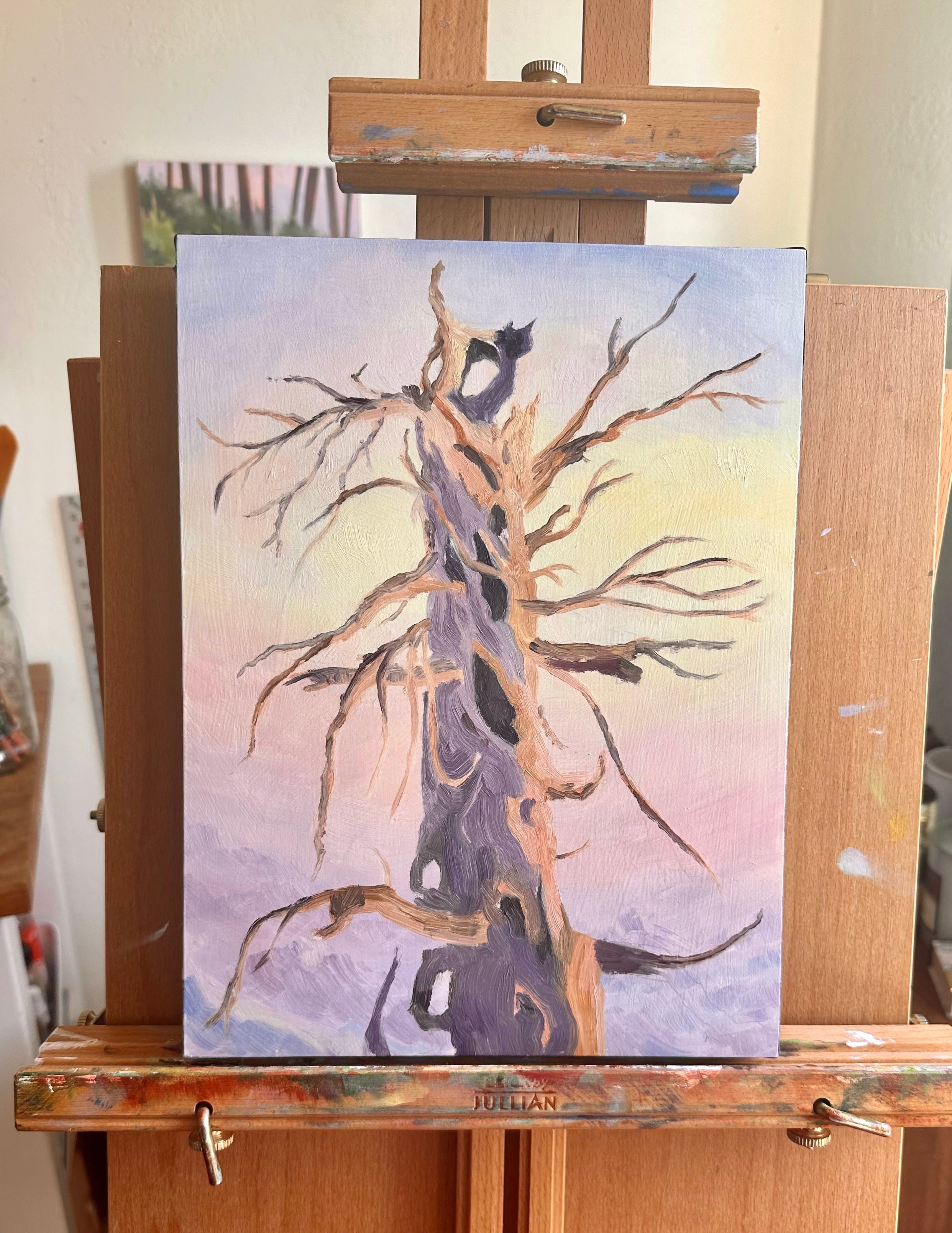
Snags are dead trees taller than a human. Despite no longer having living crowns, snags provide abundant nutrients to the forest around them as they naturally decompose. These are often mistakenly logged for being “ugly,” but are a rich part of the forest ecosystem. They are also a beautiful lesson in grief. Considering what the spirits of our ancestors give to us as we continue to live on.
a very flat but beautiful section of the Giant Forest that is partially accessible to wheelchairs and folks with disabilities like mine
We found threatened California Spotted owl feathers on the trail. Researchers let us know that groves further south are where Condors have been seen in snags.
Comments
Nothing yet. Say the first thing.
Sign in to join the conversation.