
This is Part II of a two-part investigation. Part I, How American Justice Was Rewritten, is here.
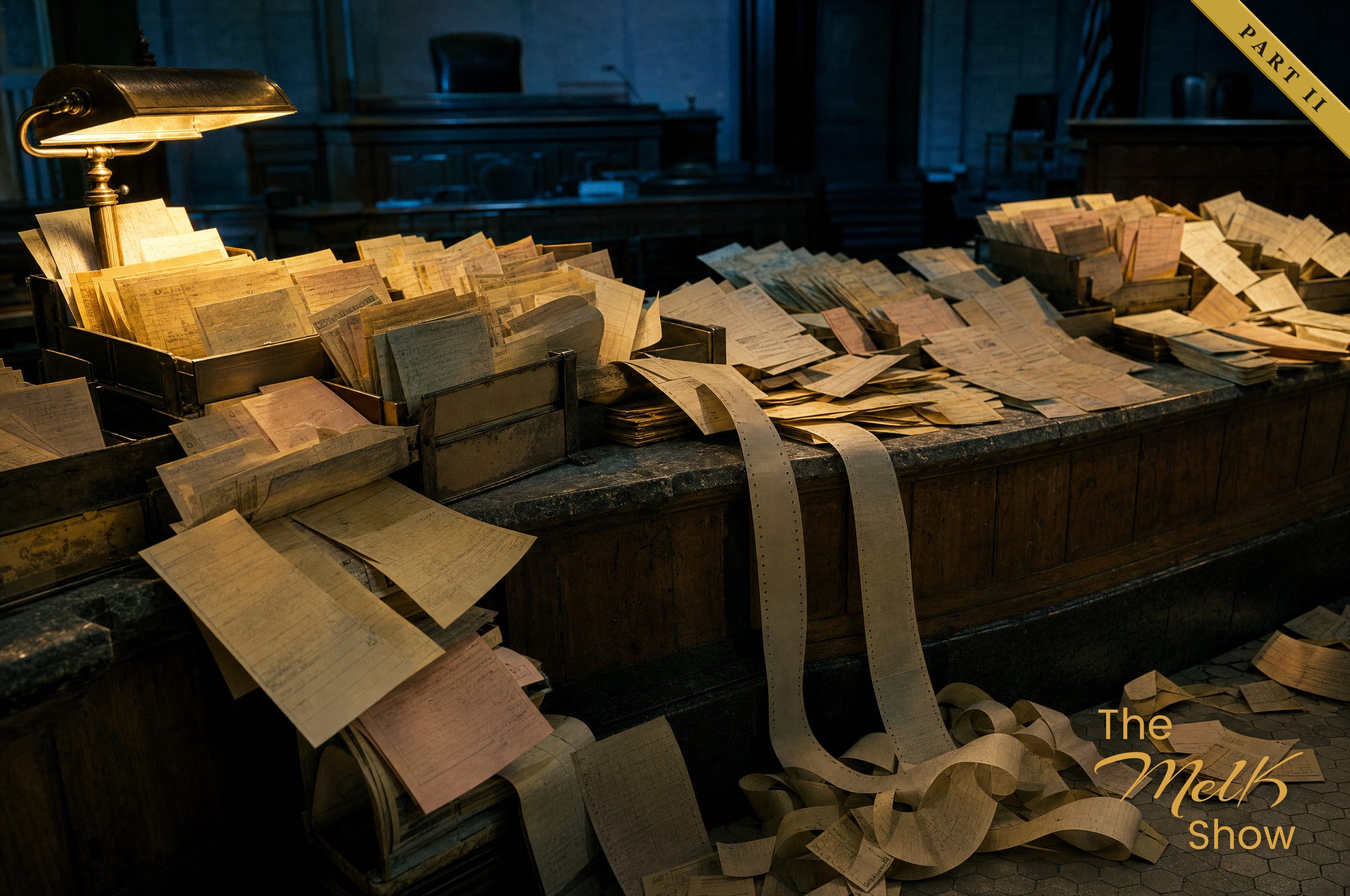
CONNECTING THE DOTS
Part I followed a door that closed in 1976. Washington v. Davis held that the Equal Protection Clause requires proof of intent, and because intent is almost never written down, the whole weight of federal civil-rights enforcement went looking for somewhere it could live without proving one. It found statute, regulation, and administrative guidance. Congress had already built the machine, across four decades, in daylight, with votes. What arrived later was not the apparatus but a vocabulary for running it.
This installment asks a different question:
What does that channel look like when you stand at the bottom of it?
It looks like a small city in Missouri, and a set of account books.
A COURT ASSESSED ON ITS YIELD
Start with a single sentence from a municipal budget document, because it does more work than any argument.
A city manager, urging that a municipal judge be reappointed, explained that the city could not afford to lose efficiency in its courts, or any decrease in its fines and forfeitures.
Sit with that. Not a prosecutor evaluating convictions. Not a police chief evaluating public safety. A city official recommending a judge on the basis of revenue, in writing, as an ordinary administrative matter, in a memorandum nobody expected anyone outside the building to read.
The Department of Justice found that sentence, and it found the system that produced it.
Comments
Nothing yet. Say the first thing.
Sign in to join the conversation.