
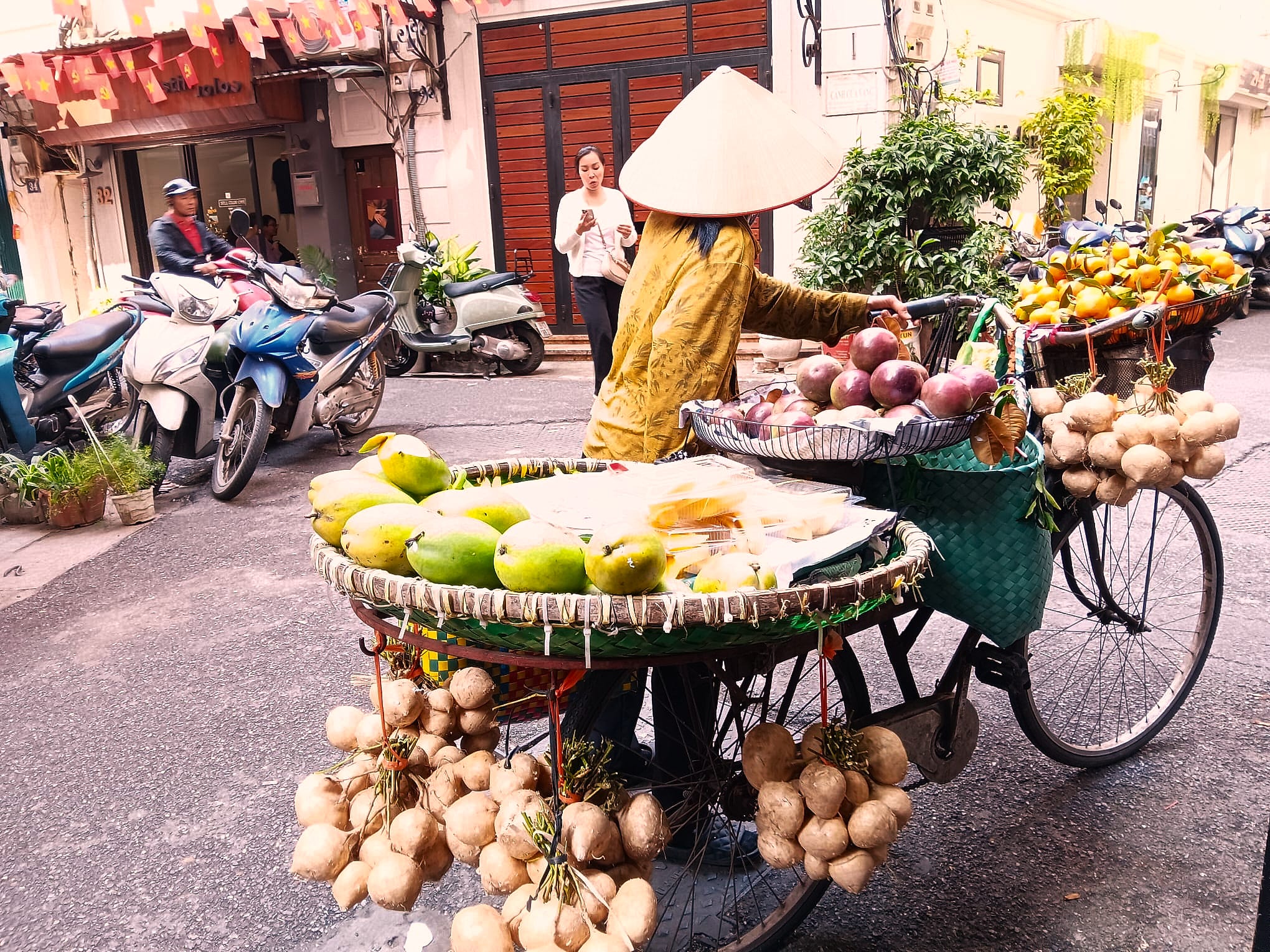
A friend just told me he’s coming to Hanoi to relax, which was the most hilarious thing I heard all day. The largest city in North Vietnam is anything but tranquil, being chaos on two wheels: even if you’re in a narrow alley, you’re dodging a sea of aggressively driven motorbikes; their non-stop cacophony sounds like this: “Beep-beep, beep-beep, BEEEEEP!” — the first “beep-beep” meaning “Outta my way!” the second meaning “I’m serious!” and “BEEEEP” meaning “You’re toast!”
Crossing the street, even at crosswalks when the light says green, is a panic attack-inducing ordeal for me.
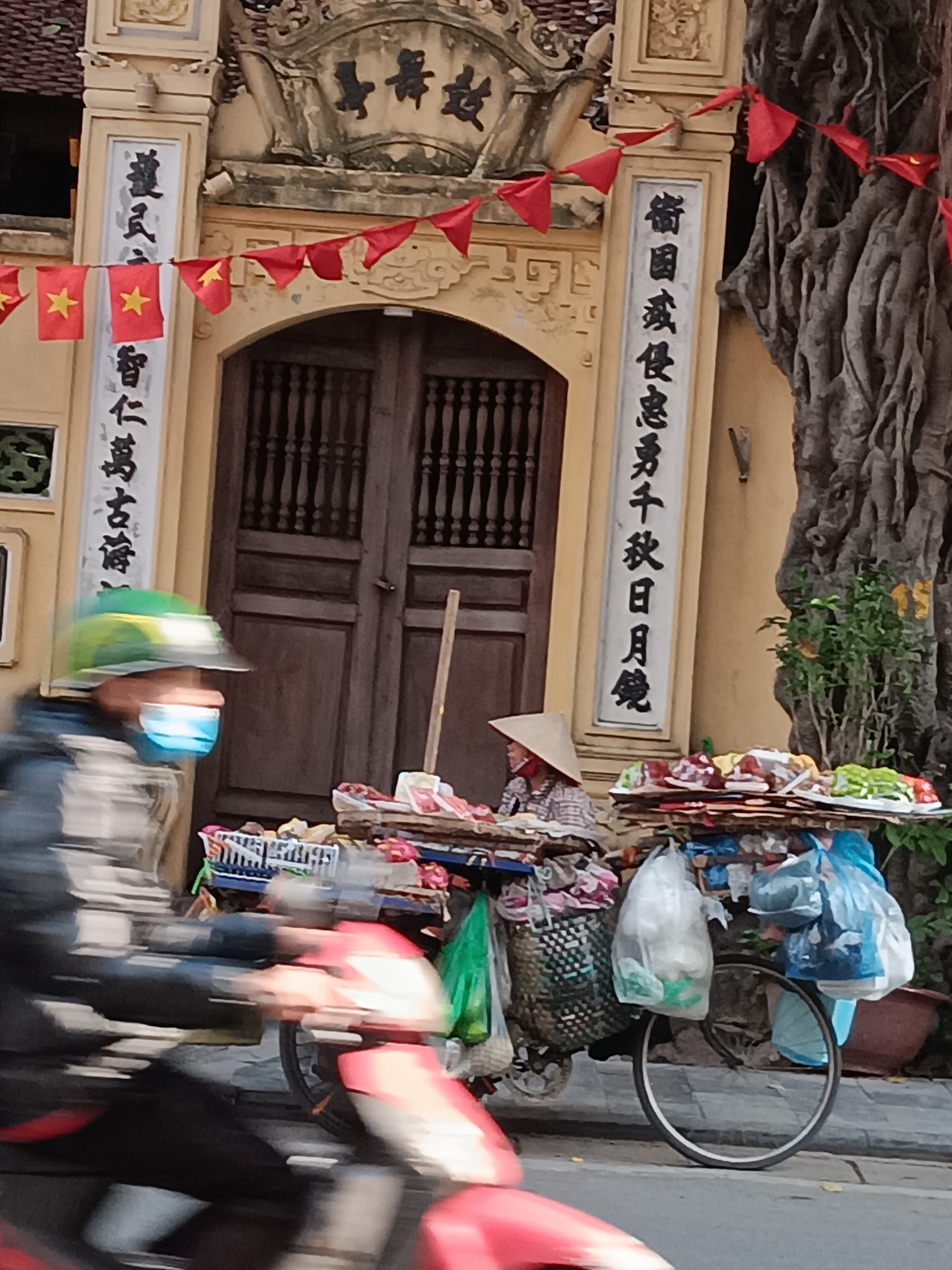
Having come in from Chiang Mai, Thailand, the epitome of chill, the frenetic pace of Hanoi shocked me — and the mayhem starts at the airport where you have to wait an hour to get through immigration. Hired drivers holding signs with names are here, there and everywhere in no organized fashion, so I couldn’t find mine, and the ATM wouldn’t work for my US bank card.
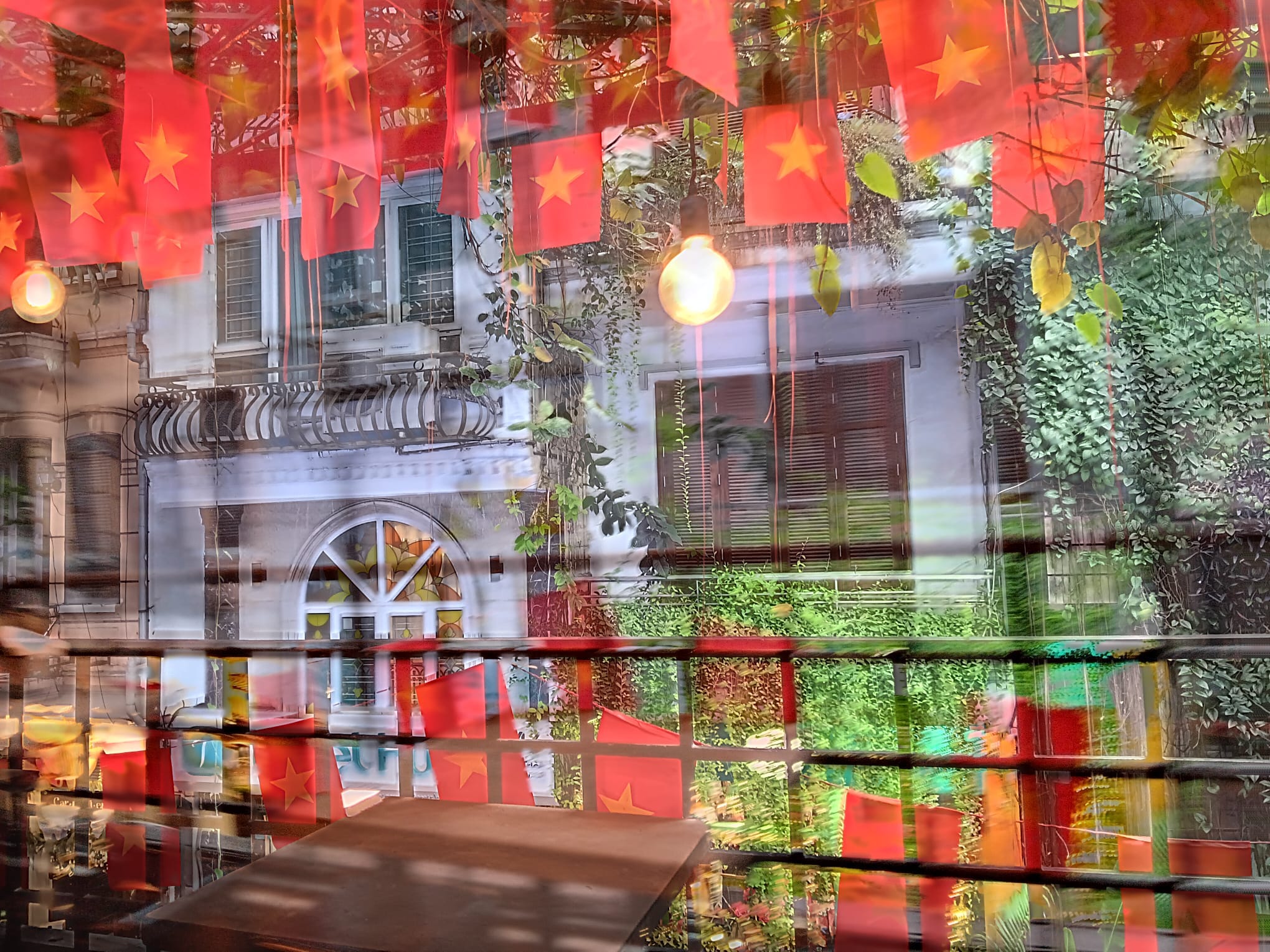
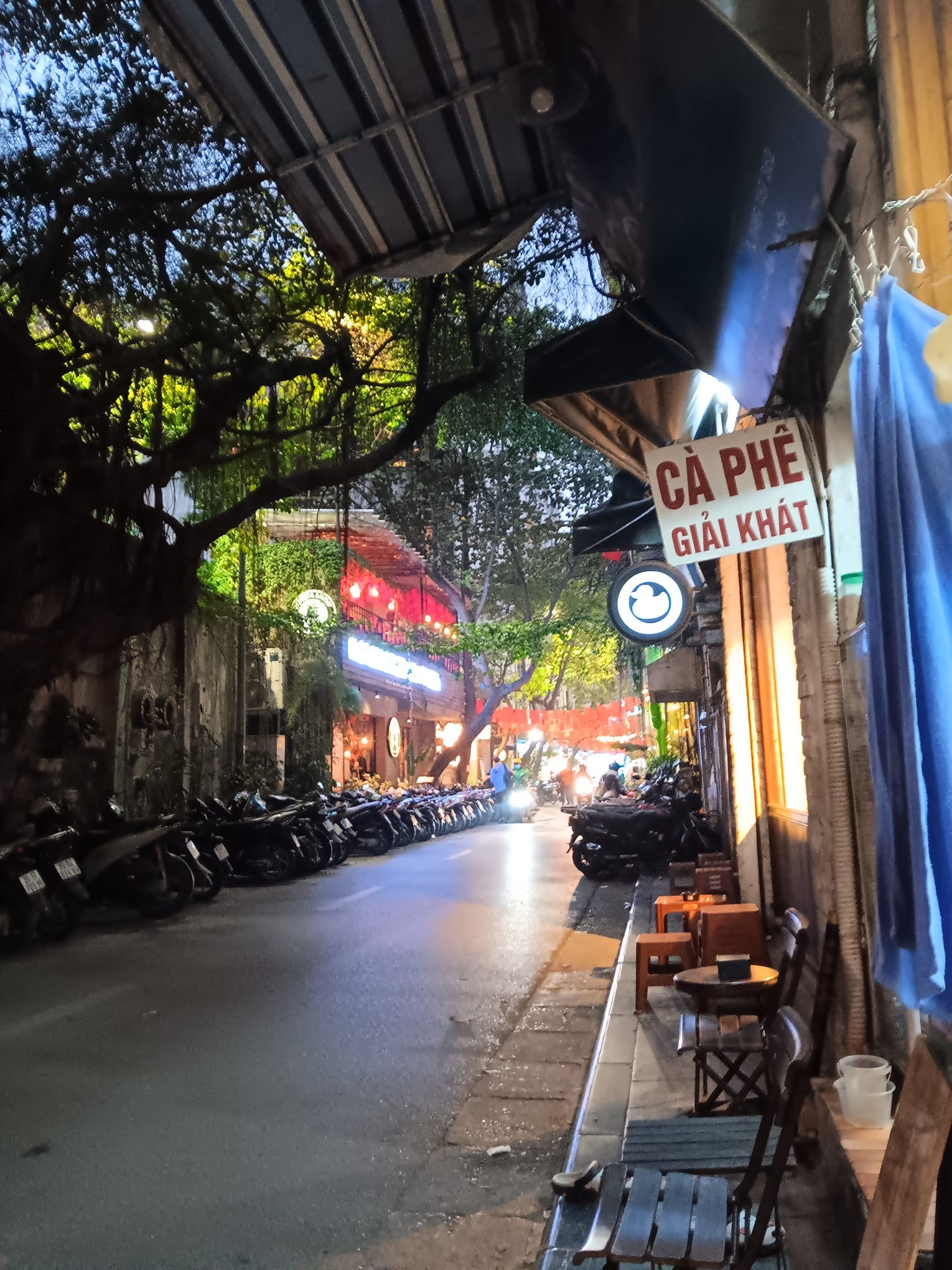
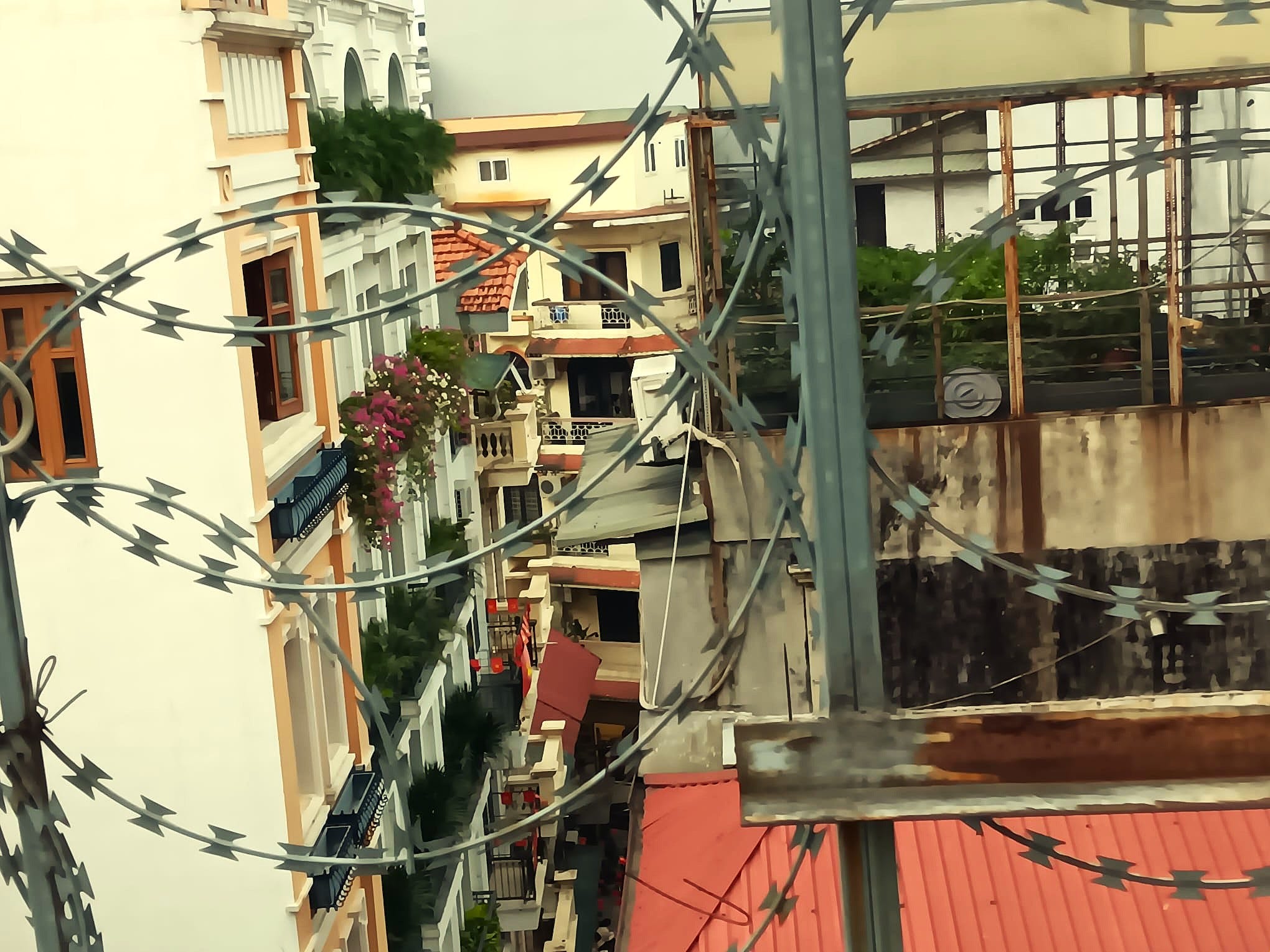
But when I finally arrived at my hotel in the beautiful and verdant Old Quarter of Hanoi, where plants spill over balconies and every rooftop has a greenhouse, taking a seat that evening on the alley terrace of a very cool tourist eatery called Dreamers and Seekers, I began being charmed and recalling why I held such fond memories of my visit here two decades ago.
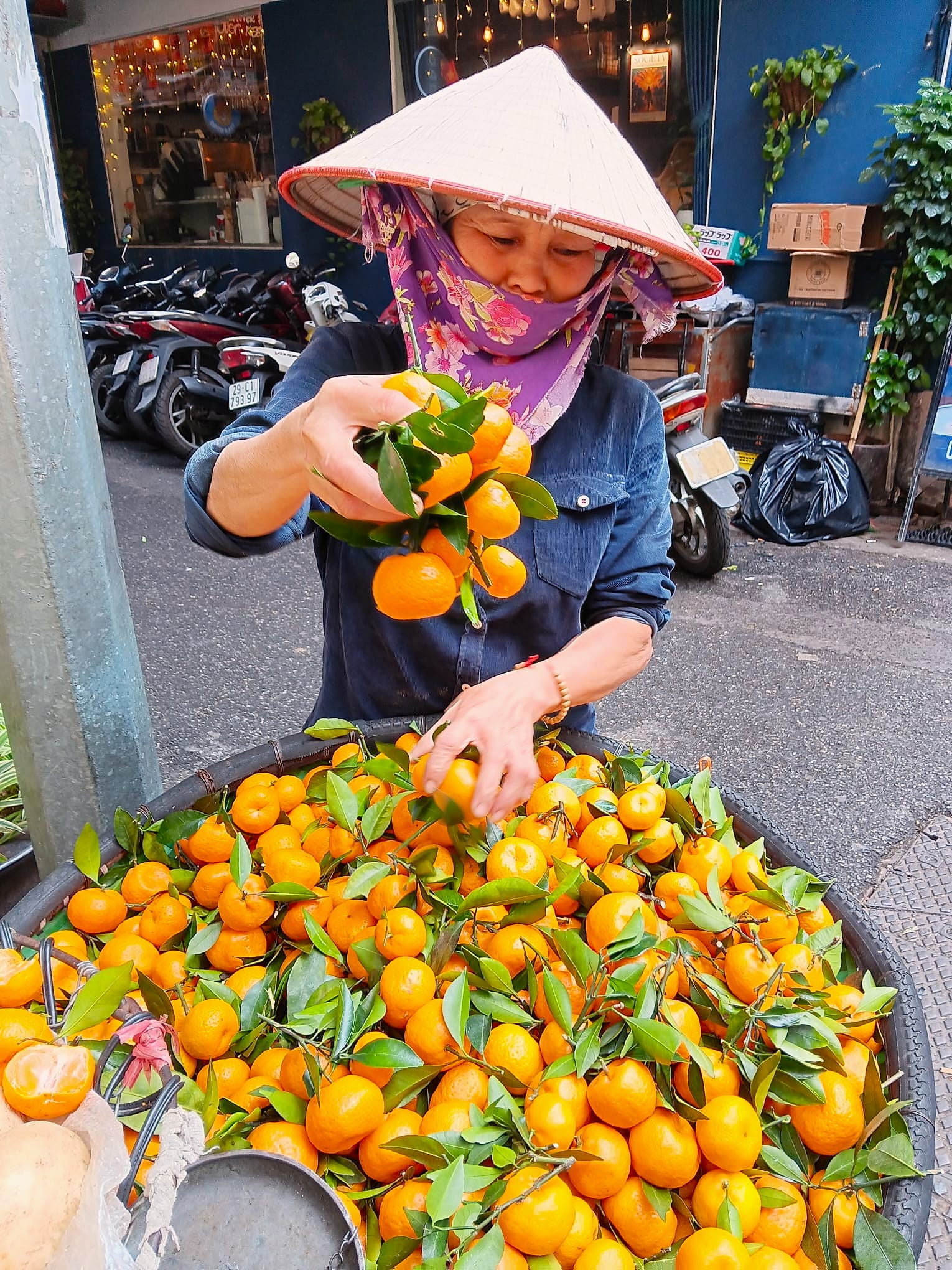
First a guy came by and polished my scuffed-up shoes for $2 — he gave me sandals to wear while he sat on a low stool and buffed them up — and then the owner of a souvenir shop delivered a bowl of tasty tangerines to my table — just to say hello.
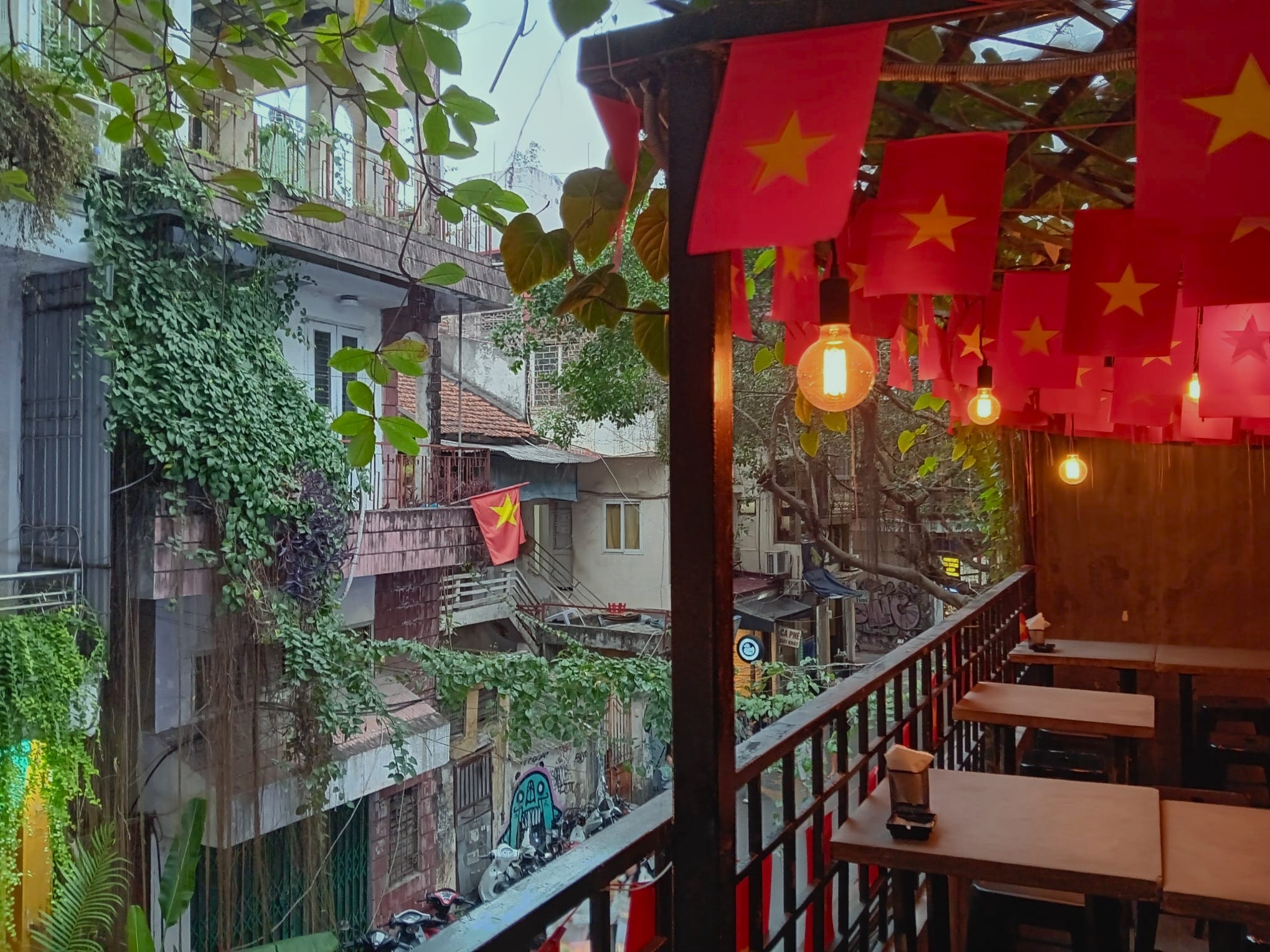
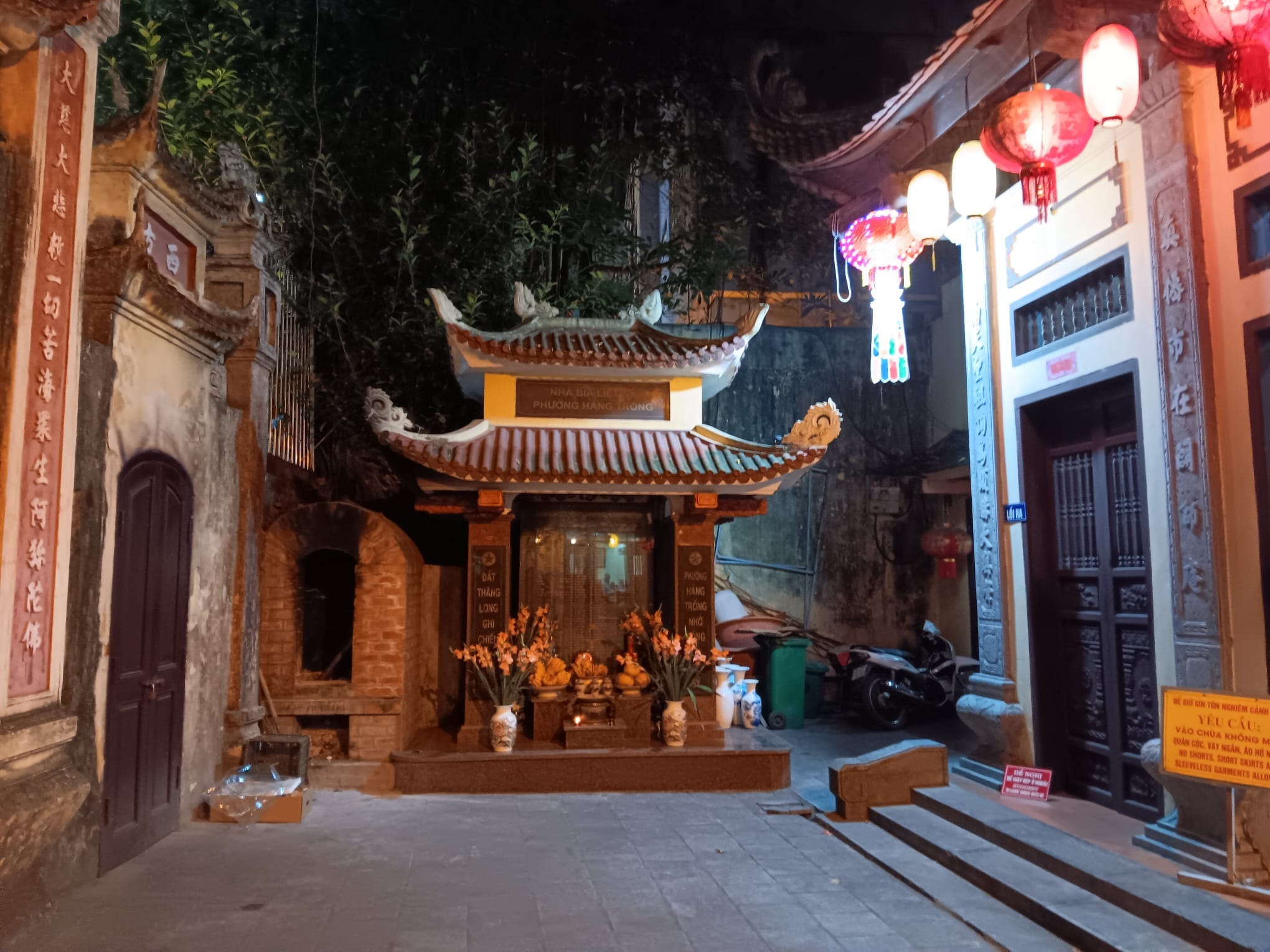
Sitting there, I started drinking in the red flags fluttering everywhere in the streets, and the architecture, a mix of the narrow Vietnamese buildings from the 1700s along balconied French colonial buildings — with Buddhist temples hidden away here and there — and the bells from the nearby Cathedral began chiming, and I was just blown away, not in a wave of bliss, like I so often feel in Thailand, but the mix of cultures and the “nowhere else would you find this” feel of it all.
I ventured out to a traditional, authentic phở joint sitting on an 8-inch high plastic stool, the kind you see everywhere on the sidewalk — learning that the locals eat the beef noodle soup for breakfast. Then I headed out toward the night market, almost being run down a few dozen times, and between taking in all the silk goods and the sidewalk bustle and crosswalk dangers, I had to stop at a cafe — again sitting outside on a miniature plastic stool. But the coffee, which has a hint of chocolate, was so deliciously strong — I passed on the popular “egg coffee” in which raw eggs and bourbon are mixed in — that my brain blew up and I had to take a taxi back to the hotel.
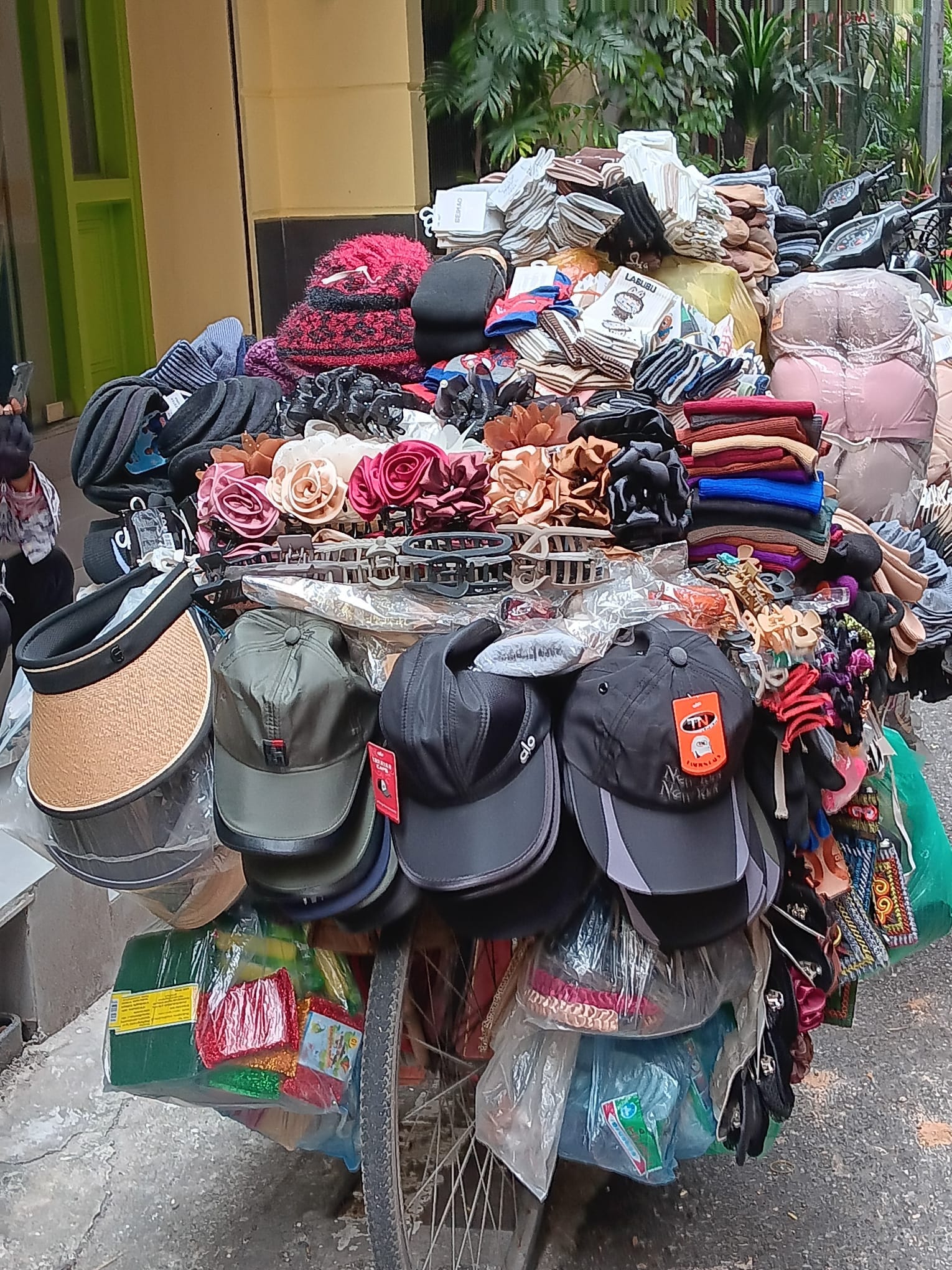
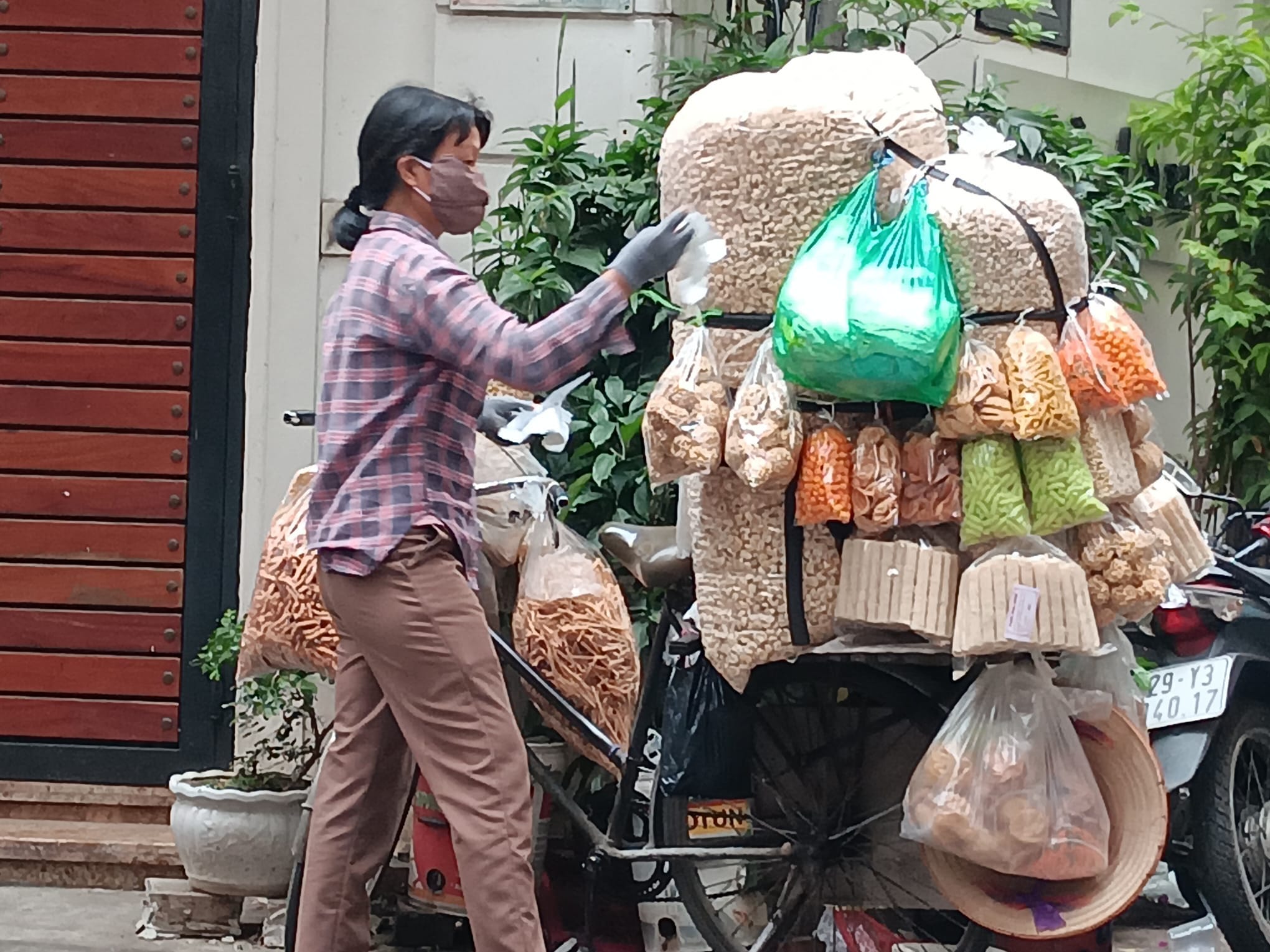
But I realized the next morning, dining on the world’s best poached eggs at Dreamers, that outside of the puppet theater, there’s probably no reason to leave the hotel’s hood — because everything passes right by. The vendors push by with their bikes loaded with strange-looking fruits and eggs and nuts or piled high with so many clothes you can’t see the sellers.
Others walk past carrying wood poles with trays — like balances — across their shoulders selling confections wrapped in banana leaves. The ladies pushing carts with donut balls are particularly aggressive — “You try!” they say with a smile, nearly pushing one in your mouth. And then a rooster will come jerking by with its strange bobbing stride. It’s a wild, crazy scene — all interrupted by “Beep-beep, beep-beep, BEEEEEP!”
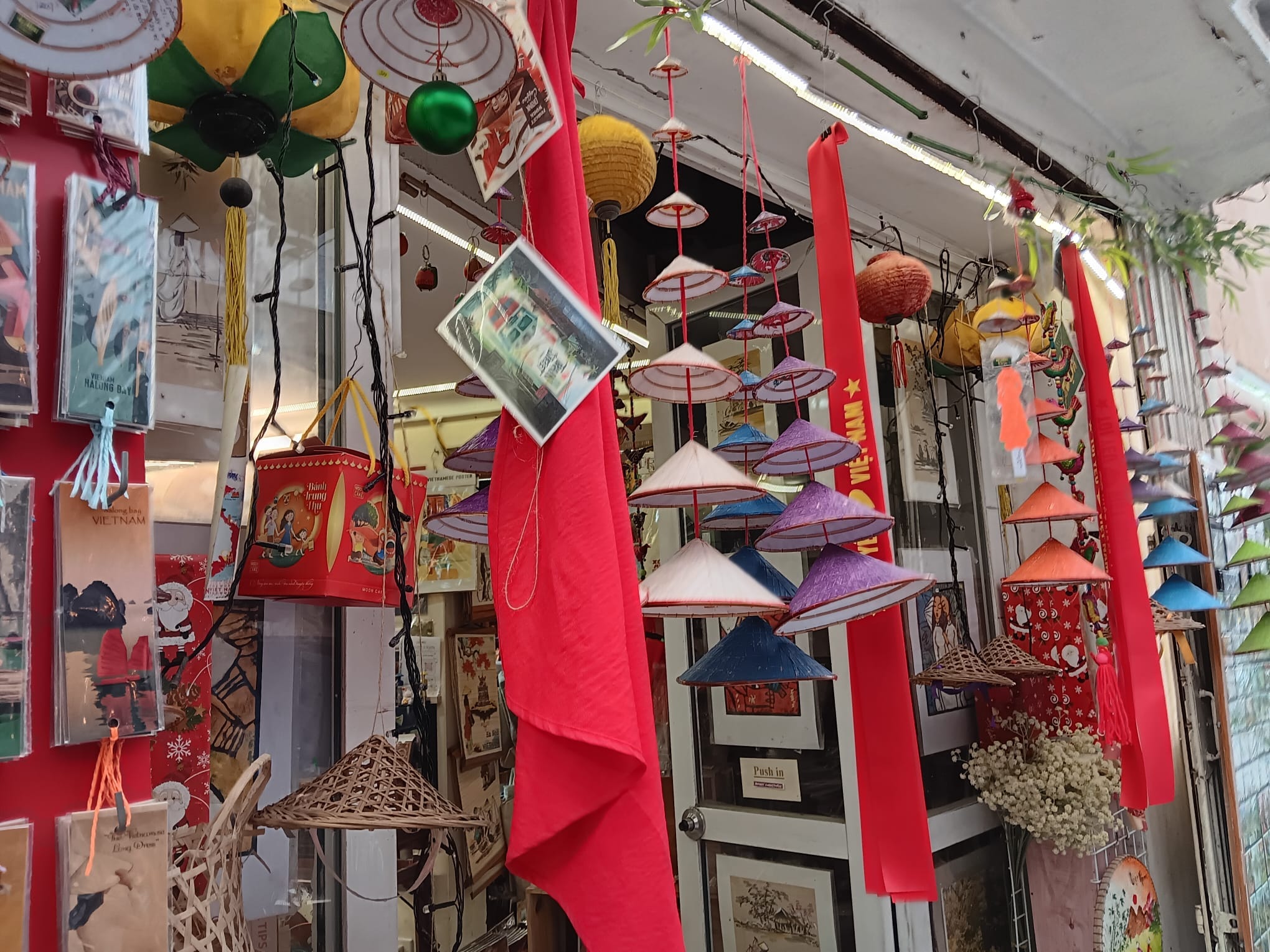
What’s more, the souvenir shop across the way, is thick with beautiful mobiles and stunning postcards and those conical bamboo hats, which so many locals wear and I could gaze at it for hours.
And then I discovered Pasteur’s beer pub, which serves up wonderful IPAs — I’m particularly fond of the jasmine and salty lime (which tastes like a margarita) — and fantastic Western-ish food (which for some reason is extraordinarily good in Hanoi) like a sirloin stirfry, studded with tiny and crunchy pickled eggplants (I think) and served with anise-flavored basil and other exotic greens.
And like at Dreamers, the waiters are all young Vietnamese hipsters, who are super-smart and speak gorgeous English — and with whom I am on first-name basis.
“So Giang,” I asked a porcelain-skinned beauty, a college student studying tourism, “what’s up with the 8-inch plastic stools on the sidewalks?” While it’s certainly good for the legs, I couldn’t figure out why they’re ubiquitous — at the sidewalk cafes, the beer joints, the eateries where they ladle out soup from a big pot heated right there on the street. She paused thoughtfully.
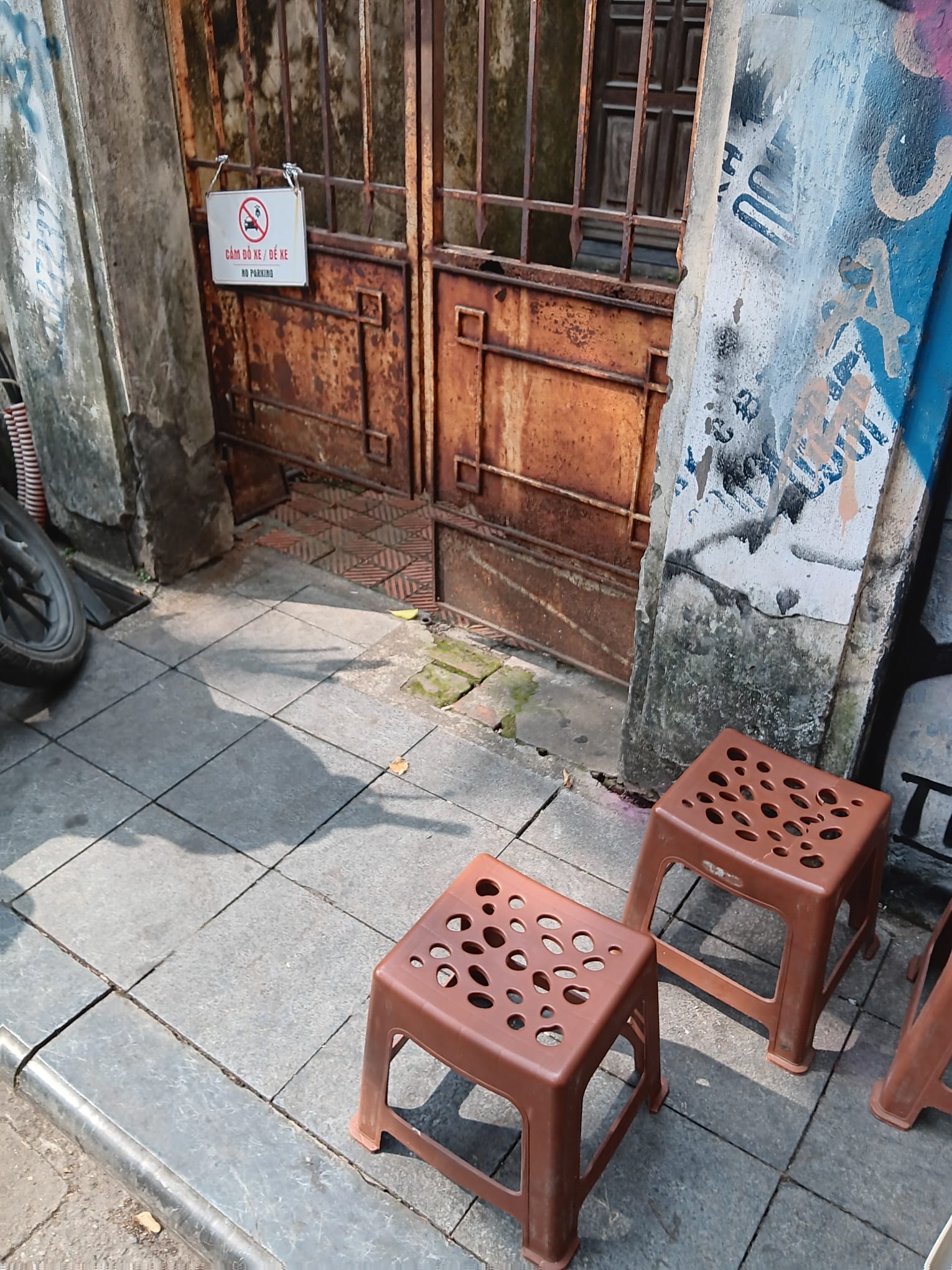
“Well, you know how the stools block the sidewalk and sometimes spill into the street?” she asked. I knew exactly what she meant: on Sunday morning, so many locals sat on the stools eating pho that it was hard to push through. “The police don’t like that,” she said. “So if the police are around, the restaurant owners can quickly pull all the stools inside and stash them.”
I laughed. “You’re saying the owners use those little stools to avoid getting in trouble with the police?” I asked. She nodded. “They’re easy, cheap and they serve a purpose.”
The next time she passed by, I posed a headier question. “So what do they teach you in schools about the Vietnam War?”
Giang said that in Vietnam it’s called the “The Resistance War” and “it was to regain our independence from the invaders.” By the invaders, she meant not just Americans in the 1960s, but the French who’d colonized Vietnam as “Indochina” for a century starting in the 1850s — and the Japanese who occupied it during World War II and the Chinese who were trying to snatch and control Vietnam for centuries before that.
But the US invaders were special, she said. “We’re taught that the US brought in heroin to make it easier to control us.” She paused. “I’ve thought about it a lot and I’ve done research on that idea,” she said. “I really think that’s what happened.”
My mouth dropped open slightly. I knew that a lot of Vietnam vets became junkies, but I didn’t know about the local effects. “So the Vietnamese became heroin addicts, too?”
She nodded. “The strategy was effective,” she said. “A lot of Vietnamese became addicted — a lot!” She said the government cleaned up the mess and sent the addicts to rehab; being a cynic, I wondered if more extreme measures were also employed.
I left pondering the other local repercussions of that war — the effects of Agent Orange, the psychological damage of the My Lai massacre — and realizing that the former heroin addiction of locals explains another aspect of how Vietnam differs from Thailand. Whereas pot shops abound in the “Land of Smiles,” marijuana remains very illegal in “zero-tolerance” Vietnam, where mere possession can land one in prison for life.
While I have barely scratched the surface and I keep hanging out at Western-style restaurants where the only locals are the waiters, slowly but surely I’m peeling back the first layers and coming upon some cultural truths; in the meantime, I am absorbing the street color while trying never to cross the street.
No posts
Comments
Nothing yet. Say the first thing.
Sign in to join the conversation.