
The FTC calls it “surveillance pricing” when it hits you as a customer. They call it “algorithmic wage discrimination” when it hits you as a worker. But it’s the same weapon pointed in two directions. It watches what you click, what you refuse, what you accept, your zip code, your medical bills, your credit card debt — and then it calculates not what something is worth, but what it thinks you can be made to tolerate.
Airlines are predicting what you can be squeezed for on a ticket. Grocery chains are swapping paper price tags for digital ones that shift the instant it’s profitable. Some stores are installing cameras to estimate your age and gender in the aisle. The FTC found pricing firms working with more than 250 mega retailers to build personalized profiles — individual by individual — to find the highest price any one person would actually pay.
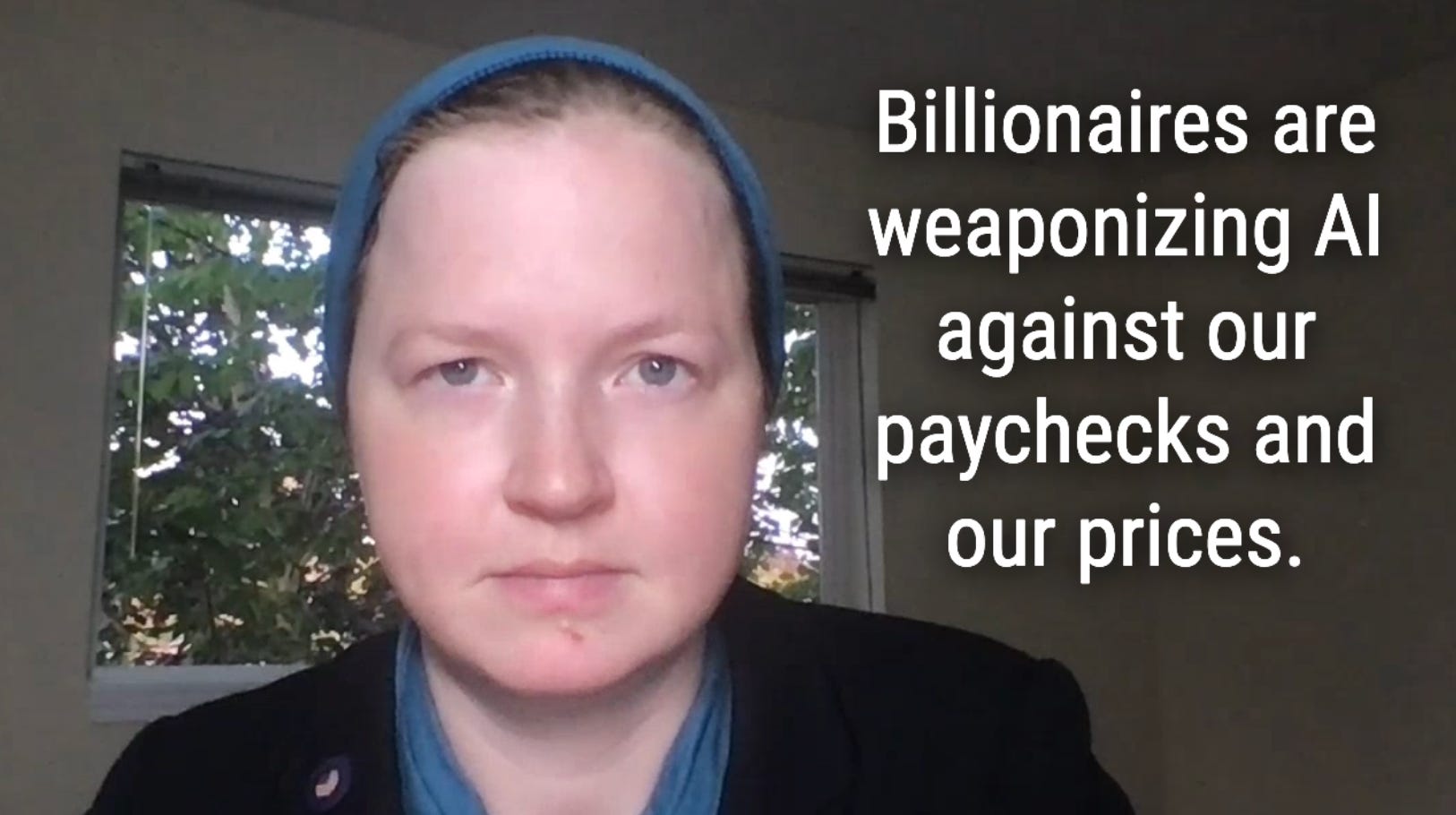
And it’s not just customers. The same technology decides how little to pay workers.
I know what this feels like from the inside. I drove for DoorDash as a broke college student raising a child alone. I worked UPS. I worked the Postal Service — where at least the system was legible. You knew your rate. You knew your route. Nobody was quietly A/B testing your paycheck.
Uber used to connect what a rider paid to what a driver earned. Now those are two separate algorithms with no relationship. Uber’s cut rose from roughly one-third to nearly half of every dollar — sometimes two-thirds. And the biggest pay cuts fell on the drivers who almost never turned down a ride. The system learned who could least afford to say no. The more desperate you were, the less it paid you.
Now that model has moved into healthcare. Gig nursing apps are buying data on nurses’ financial distress and using it to low-ball the ones who look most unable to refuse. Same license. Same shift. Same patient. Lower pay — because the algorithm read your credit report.
Uber’s CEO has personally admitted to this. DoorDash’s billionaire co-founder is a personal investor in one of these nursing apps. These aren’t faceless algorithms. These are specific human beings, with names, choosing to build systems that extract wealth from you at your most vulnerable.
This is not some unstoppable consequence of technology. This is a policy choice Congress is making right now by refusing to act. The FTC investigation was shut down when Trump took office. A bill to ban AI price gouging and wage fixing is rotting in committee. Maryland and Connecticut have already acted. But for crying out loud, this should be a national standard. Americans shouldn’t be protected or exposed based on their zip code.
Here’s what Congress must do: ban the use of financial distress data to set wages or prices. Require companies to disclose when an algorithm is setting your pay or your price and what data it used. Empower the FTC to finish the work political appointees tried to bury. And make single price, single wage enforceable in law — not just an assumption we all thought was the floor, until it turned out to be quicksand.
I’ve driven those routes. I’ve felt the app making decisions about me I was never allowed to see. I’m running for Congress because your need should never be turned into a weapon against you. Fair businesses strengthen countries. Predatory ones destroy the nation that enables them.
We need a fair price, a fair wage, and a government strong enough to defend both.
Care. Courage. The Constitution.
Full essay, with receipts:
Comments
Nothing yet. Say the first thing.
Sign in to join the conversation.