
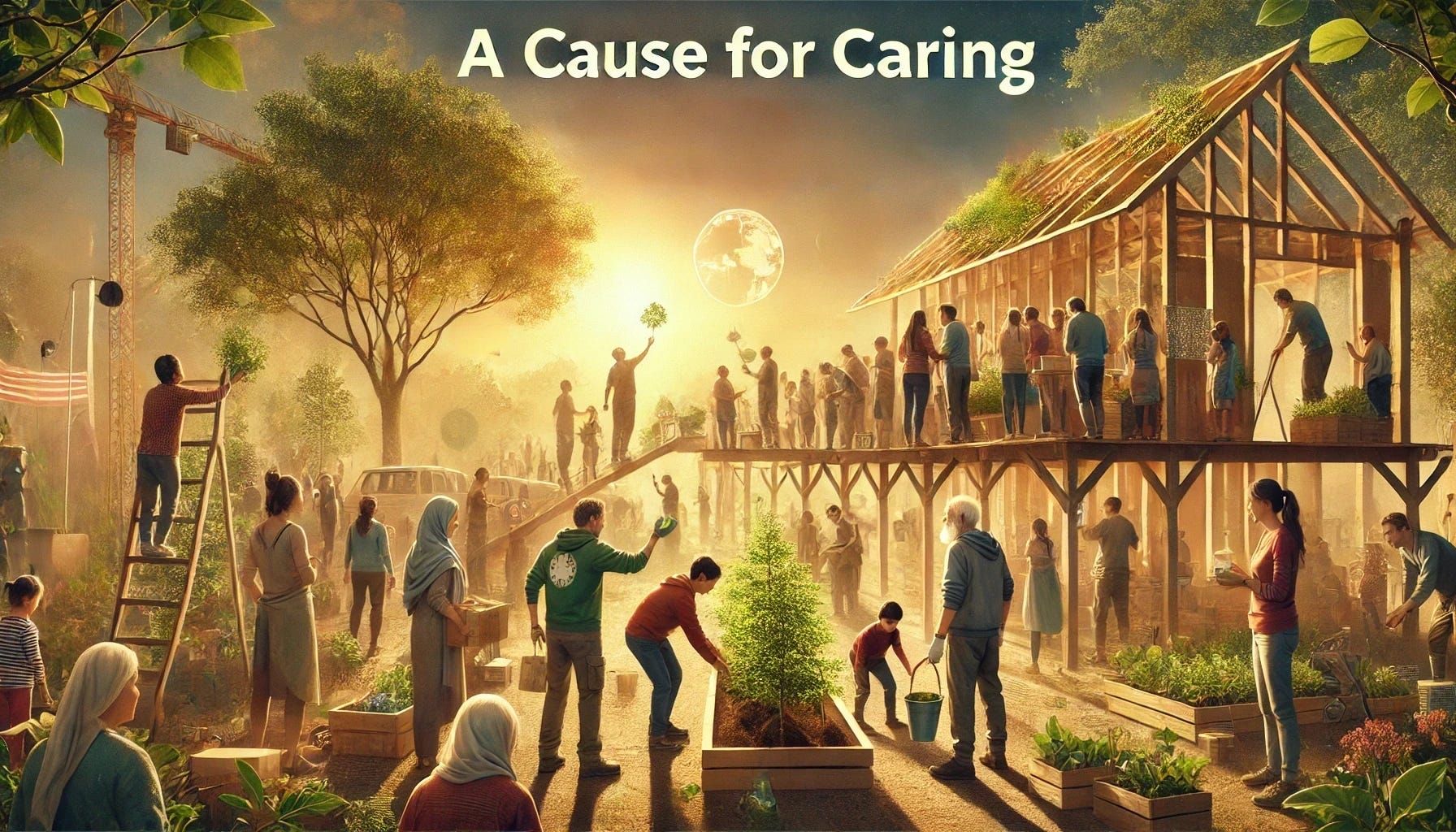
I've always been intrigued by utopias—the vision of a more perfect world. And it's no surprise that critics and pessimists love these books too, though for different reasons. They delight in picking apart all the flaws: That's ridiculous, improbable, there's no way group X would behave like that!
That's why my focus is on "meliora"—a Latin word that means "the better." It's not perfect, or even close, but it can be better than something much worse. As Voltaire said, 'Perfect is the enemy of good'. If we aim for progress, incremental improvements rather than unrealistic perfection, we might actually get somewhere.
Uncovering the Root Cause
What set of human problems can be traced back to a common cause or influence?
There are dark things that happen in the U.S. (where I live). School shootings, suicides, housing instability, poverty, incarceration, violence, incivility, bullying—there must be some common threads woven through these issues. For example, reports from the CDC (e.g., 'National Vital Statistics Reports') provide data on suicide rates, while the Department of Housing and Urban Development's 'Annual Homeless Assessment Report' gives insight into housing instability. Additionally, academic research on social determinants of health, such as Marmot (2005), helps illustrate the factors influencing these complex issues.
When we identify common factors across so many societal challenges, we can begin looking for ways to mitigate, improve, or prevent them from happening in the first place.
The Trap of Blame
One word of caution—I often find myself slipping into the blame game. It's so easy for our brains to divide the world into us vs. them, to point fingers and assign guilt, rather than looking for transformative solutions that uplift everyone. Perhaps it's part of how we're wired, tied to oxytocin, the hormone of bonding and group cohesion (Kosfeld et al., 2005; Feldman, 2012).
But blaming a segment of the population might itself be part of the problem. To move forward, we need to think differently, reframe the way we approach these challenges.
A Tough Reality
There's a common factor in many of the worst examples listed above— men.
If you've lived in the U.S. for a while, you know there's a segment of the population that loves guns. Restricting access to guns, or other things people want, has never played well historically in the US —as we saw during Prohibition (Miron, 1991), and as I believe we will see again with laws surrounding women's rights and body autonomy.
I share this because I don't believe that incarceration, castration, or elimination are viable solutions to males engaging in harmful activities. We need an approach that doesn't punish but transforms.
“Education is the most powerful weapon which you can use to change the world”
Nelson Mandela, 1990

An Investment Worth Making
I've experienced transformation personally. Two major experiences shifted how I view my role in the world.
The first was attending a unique high school where I designed my own curriculum in my junior and senior years. I took classes with first-hand accounts from women who had experienced rape, soldiers who faced traumatic and soul-crushing experiences, and people who had been jailed for protesting nuclear war. It gave me perspective, empathy, and a deeper understanding of the consequences of my actions. Most importantly, I learned that, as a man, I could improve the world—that I had a purpose aligned with my values.
The second transformation came when I joined Volunteers In Service To America (VISTA), a domestic Peace Corps year of service managed by AmeriCorps. I spent a year working with a junior college, helping faculty understand service learning and teaching students how to learn from their volunteer experiences while earning college credit. It gave me a deeper sense of service and connected me to a larger purpose.
“The best way to find yourself is to lose yourself in the service of others” Gandhi, 1925
A Vision for the Future
What if we invested in our young people in a similar way?
Imagine if all students, during their junior or senior year of high school, spent a year dedicated to community service. They'd go to national training centers for a few weeks, where they'd meet and live with other Americans, giving them a common experience and exposing them to ideas from across the country.
They'd learn skills like social work, conflict resolution, how to fill out forms for services, and suicide prevention. They could specialize in trades to build low-income housing or improve infrastructure. They could learn leadership and fundraising to contribute as nonprofit board members. Some might join faith-based groups to address rural poverty, or even the military or Peace Corps.
There's also the benefit of real social interactions. The training would not be done virtually (and may include a no phone zone), and would involve exercises that enhance collaboration, connection, and communication. For isolated individuals this may be an opportunity to build both friendships and the skills to sustain those friendships.
This experience would equip young people with useful skills and strategies to improve their emotional intelligence, making them less likely to resort to violence in conflict. It would also help them develop empathy by connecting them with people from different backgrounds—racial, gender, or otherwise—making it harder to hold prejudices against those groups.
Though this program would be voluntary, I envision it including a stipend and a bonus for college. Not only could this reduce violence, but it could also boost the GDP by producing high school graduates who are more capable, resilient, and socially connected, with valuable life experience under their belts.
A Call to Action
No one should be left behind by this opportunity to engage and improve our world. I dare you to find a way to volunteer, to be of service to others—find a way that inspires you, teaches you new things, or makes you feel aligned with your deepest values.
Here's a link to AmeriCorps, which aligns with my vision for the U.S.: AmeriCorps. It even has a Senior Corps option—it's never too late.
The inspiration for this article comes from a talk by Martin Luther King III and Craig Kielburger through LegacyPlus and WE. I currently strategize and work with Telecom4Good.
Together, we can give more people hope and a pathway to living better lives.
Thank you,
Brian
A Poetic Vision
A year to learn, a chance to grow, To serve, to give, to care & know.
To build a bridge from fear to hope, To find the skills that help us cope.
For when we serve, we learn to see, The bonds that make humanity.
To shape a world that's truly bright, With empathy, purpose, and shared light.
To strive for Meliora, hand in hand, To better our lives and heal this land.
With every step, we rise and care, Together onward, in dreams we share.
No posts
Comments
Nothing yet. Say the first thing.
Sign in to join the conversation.