
Dear Friends,
Earlier this month I turned 38. I almost forgot it was my birthday because 38 is not the most exciting number, and it’s been a busy summer! But I remembered just in time to keep my rituals alive. I have two birthday traditions: 1) celebrate somewhere new, and 2) make a wish on a candle.
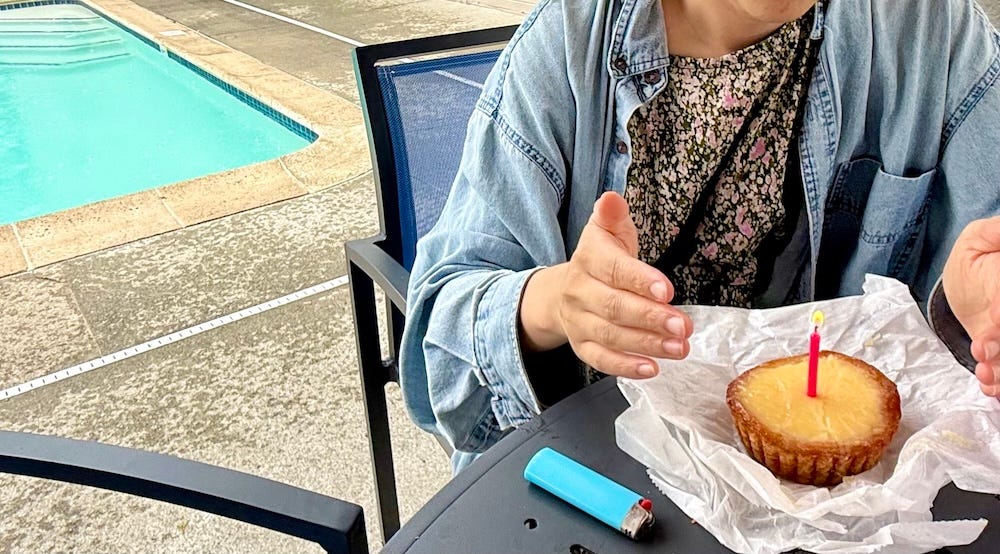
Whenever possible, I’ve tried to celebrate my birthday somewhere I’ve never been before. It’s an intentional way to expand my horizons a bit. “Somewhere I’ve never been” can be as simple as a new restaurant, or as adventurous as a foreign country. This year it fell somewhere in the middle.
We made last minute plans to drive out of the city and ended up in Mystic, Connecticut. Our first night started off with dinner at Mystic Pizza. A few people have since asked whether I’ve seen the movie Mystic Pizza with Julia Roberts. I have not. Should I? Coincidentally, that movie came out the year I was born, so maybe it’s time.
The next morning, one of my earliest childhood birthday wishes finally came true: I got to see beluga whales up close.
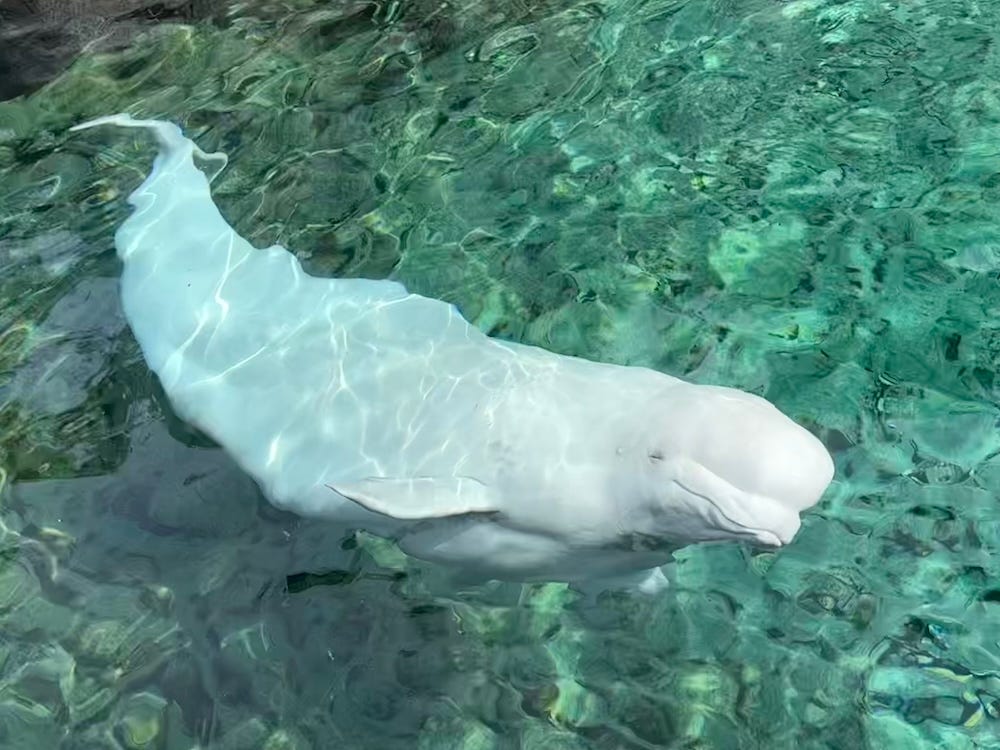
I’ll have to make a grown-up amendment to the wish: I hope to see beluga whales in the wild one day.
Apparently in the 70s and 80s, capturing wild whales for aquariums and amusement parks was common practice, which is super fucked up. Whales do not belong in captivity.
Several of the belugas at Mystic Aquarium came from Marineland, the now-defunct marine park in Ontario. There’s recently been a massive rescue effort to relocate nearly 30 whales to accredited facilities across North America. People are justifiably outraged that these creatures were ever in captivity, and many questioned why they couldn’t simply be released into the ocean.
Unfortunately, the belugas living in aquariums today are now generations removed from the wild, born and raised in human care. Having spent their entire lives dependent on people, they have zero survival skills. They don’t know how to hunt, migrate, or integrate with wild pods.
So it was a choice between relocation or euthanasia.
Is it better to be safe, or to be free?
This is a question I’ve been grappling with since my dad passed away.
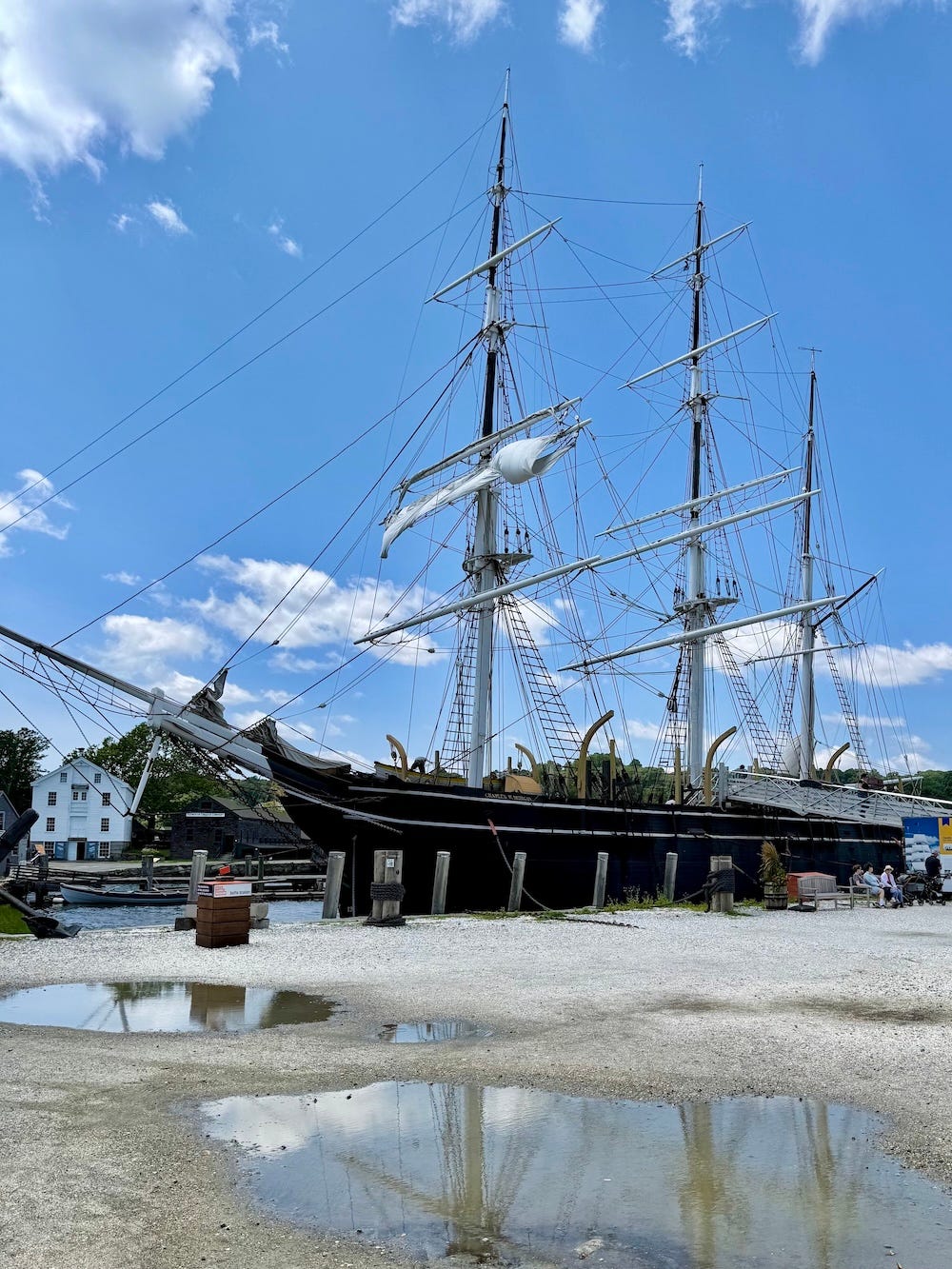
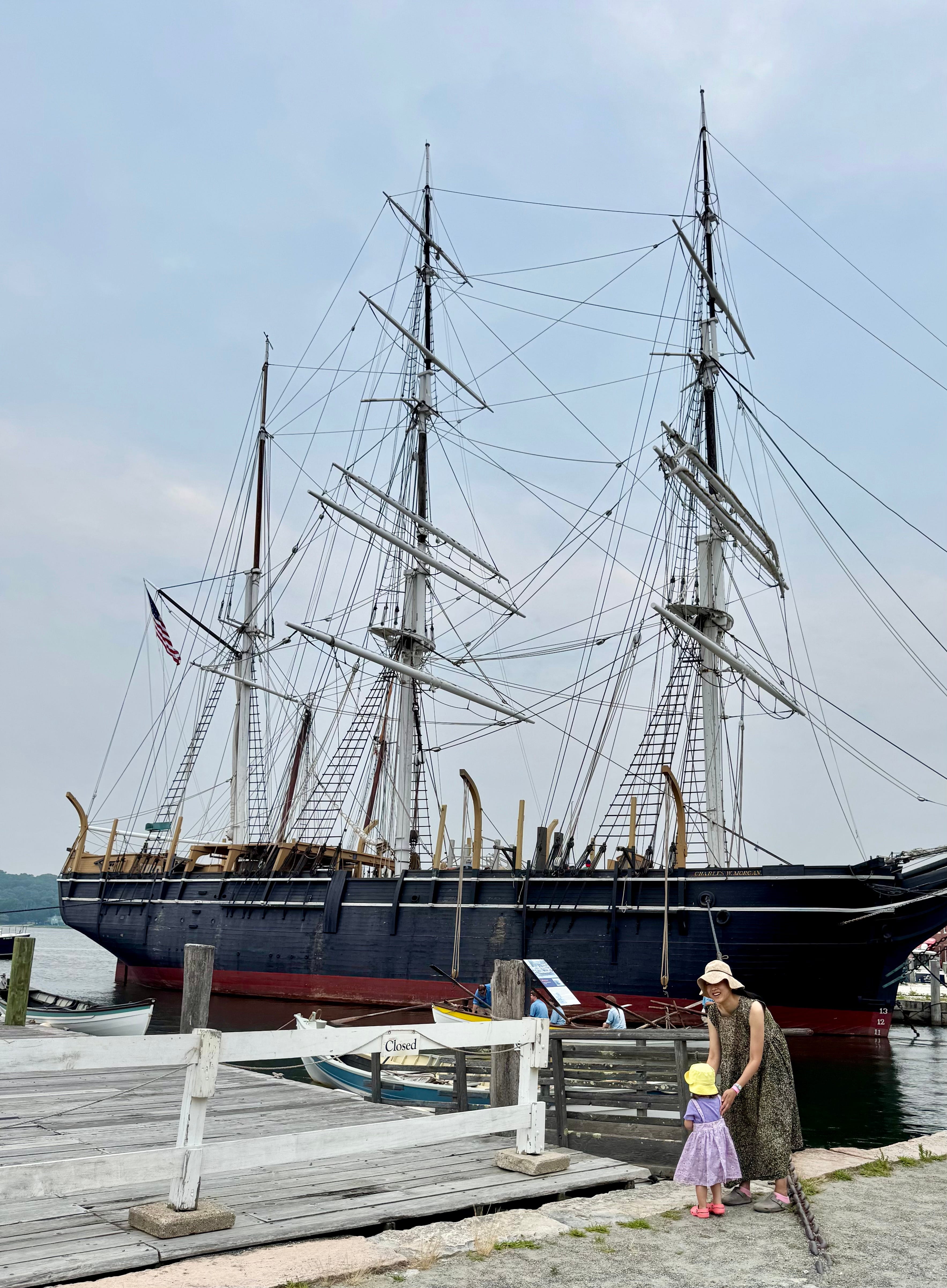
An unexpected highlight of the trip was a visit to Mystic Seaport Museum. With 19 acres of nautical history, it is one of the largest maritime museums in the Western Hemisphere. Highly recommend if you happen to have any boat nerds in the family. Highly recommend even if you don’t.
The person at the front desk informed us that the museum was having an 185th birthday party for their ship, the Charles W. Morgan that day. He explained that it is the last surviving wooden whaleship in the world. They even had a cake.
I lit up. “No way! It’s my birthday too! What are the odds?” I said. For a moment he stared at me with a degree of incredulity, then asked to see my driver’s license. After I proved that I was indeed telling the truth, he let me in for free.
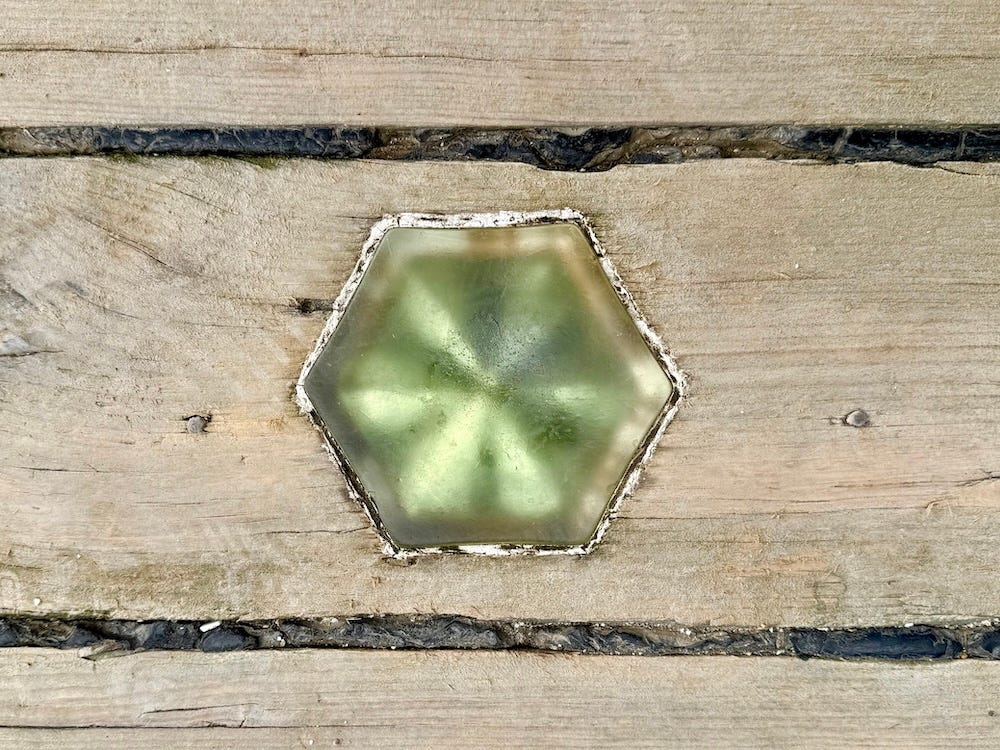
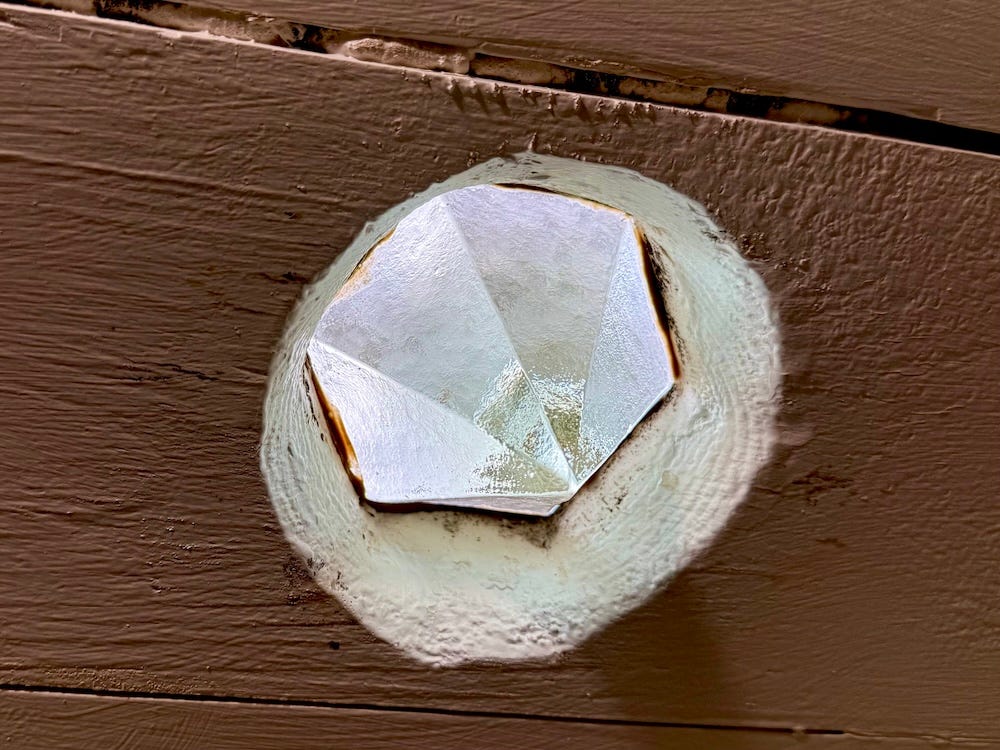
A detail of the ship that I loved was the use of deck prisms: solid blocks of faceted glass set into the planks of the deck, making it look as though it were lined with diamonds. This nautical bling helps to illuminate the space below, reducing the need for candles or oil lamps. Less chance of a fire on a wooden vessel out at sea. A small thing with a disproportionate impact.
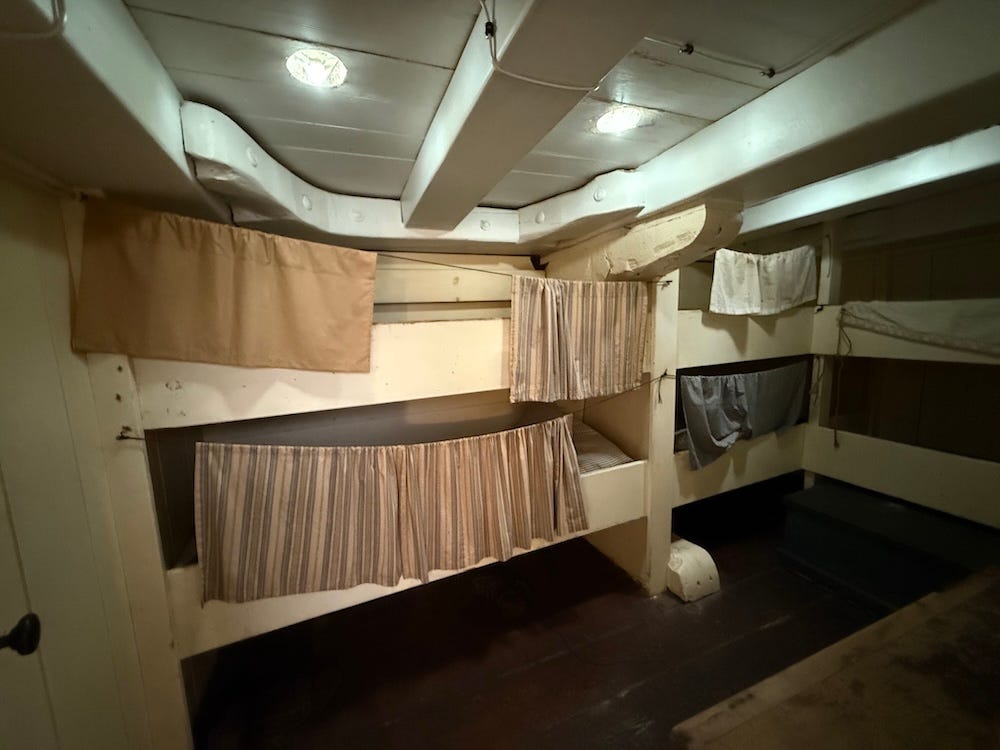
A fist-sized window wouldn’t let in much light. But a fist-sized prism refracts and spreads light in a way that makes it bloom in the darkness. In other words, witchcraft. There must be a metaphor in there about the power of being multifaceted.
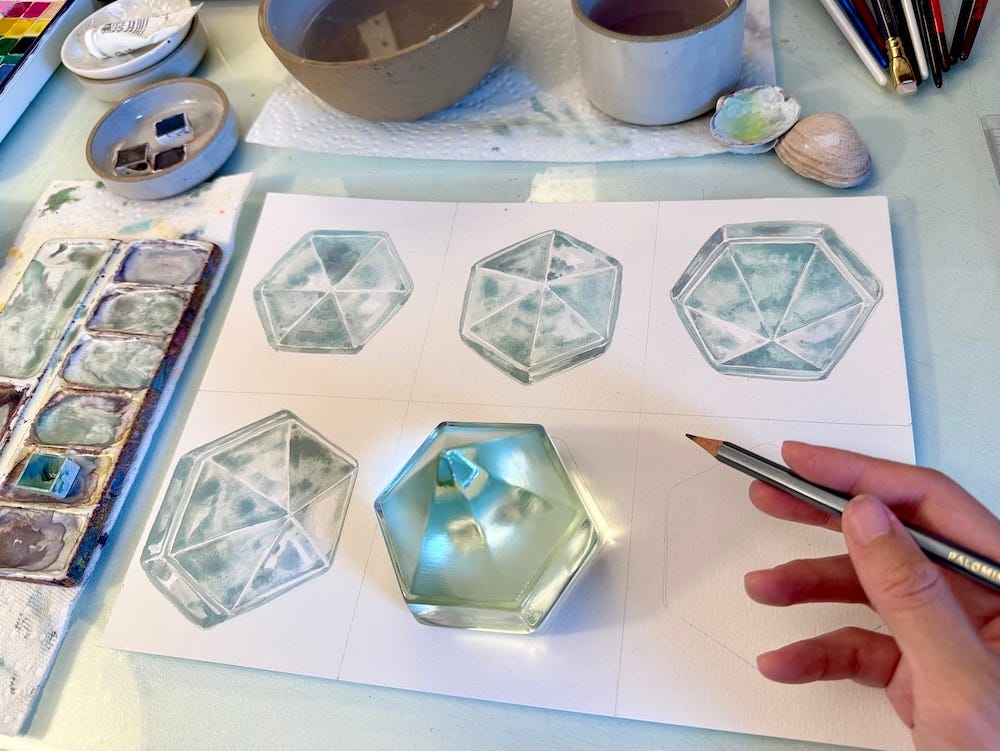
I brought one home and painted it.
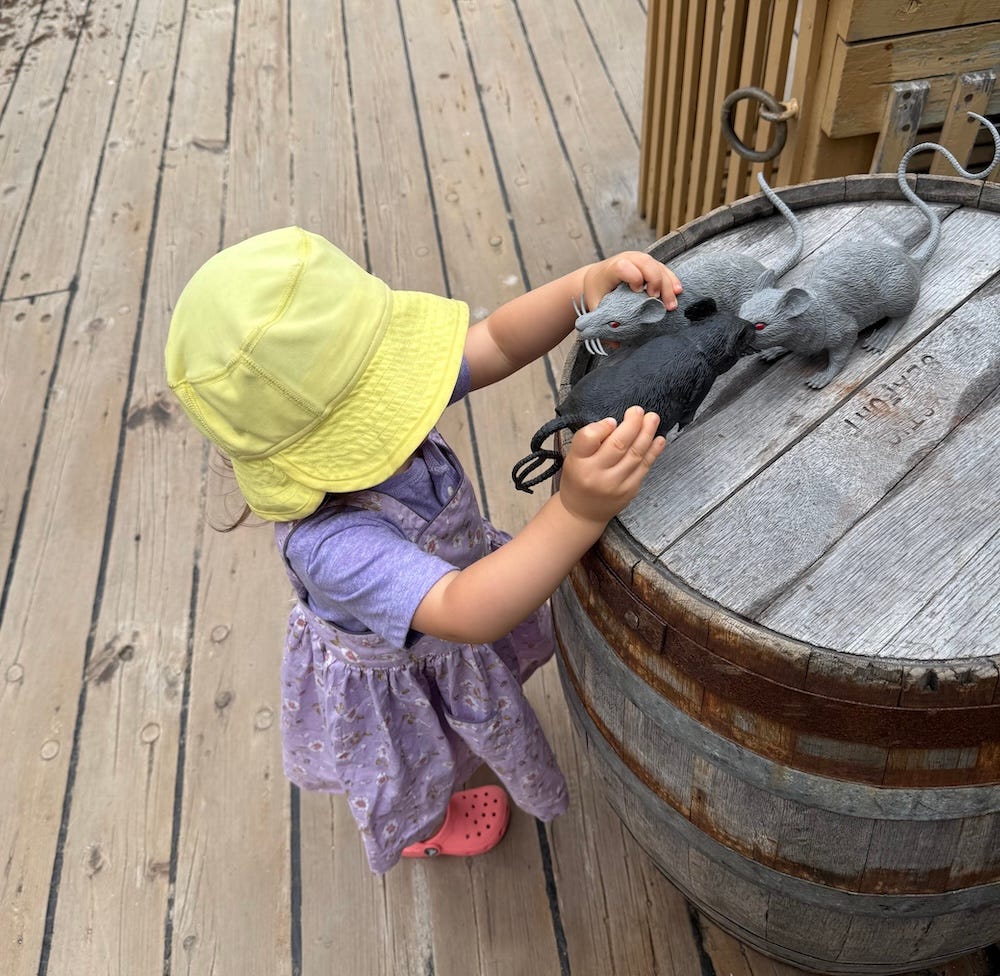
The museum utilizes the expansive grounds to recreate a fully functioning 19th-century seaport village. Next to the shipyard there is a blacksmith, a woodcarver, an old fashioned letterpress print shop, an oyster shack, and a vegetable garden. There’s even a tiny planetarium that shows you how they used to navigate by the stars.
As fun as it was to climb aboard all the vessels and pretend to be living in the year 1850, it was the artifacts inside the museum’s galleries that made a lasting impression on me.
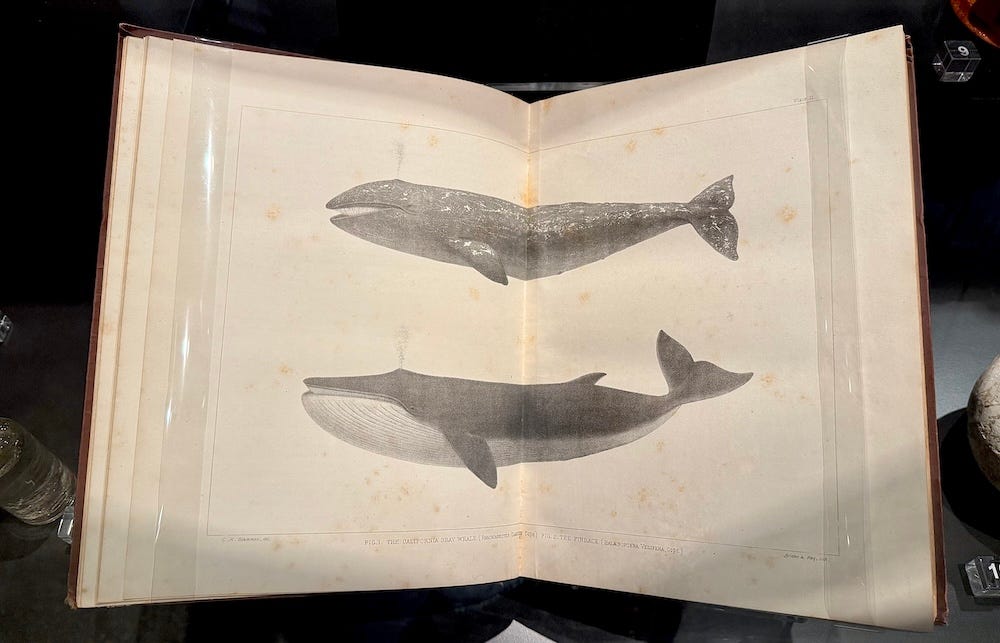
Mostly the engravings on whale teeth, aka scrimshaw.
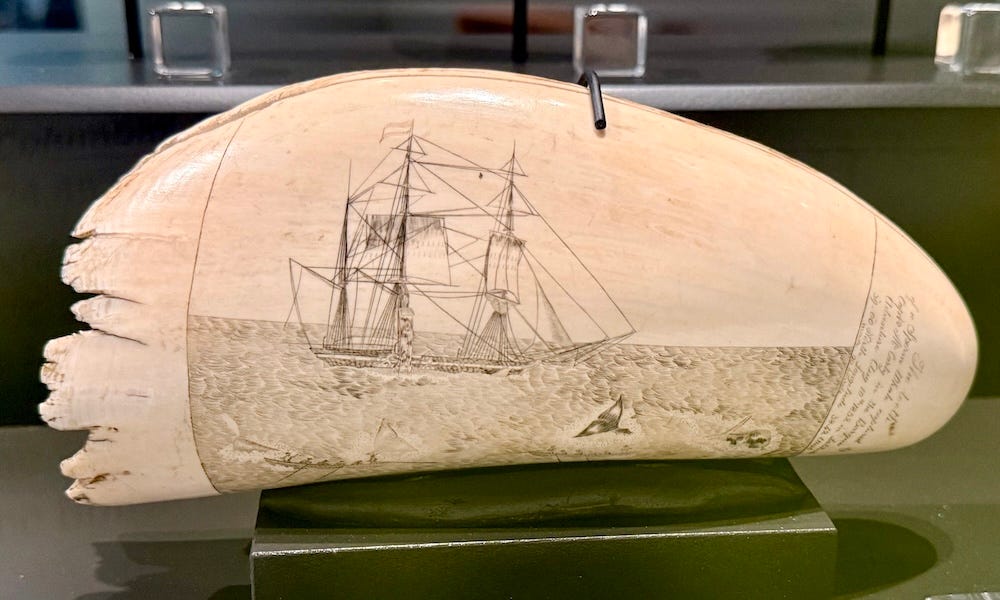
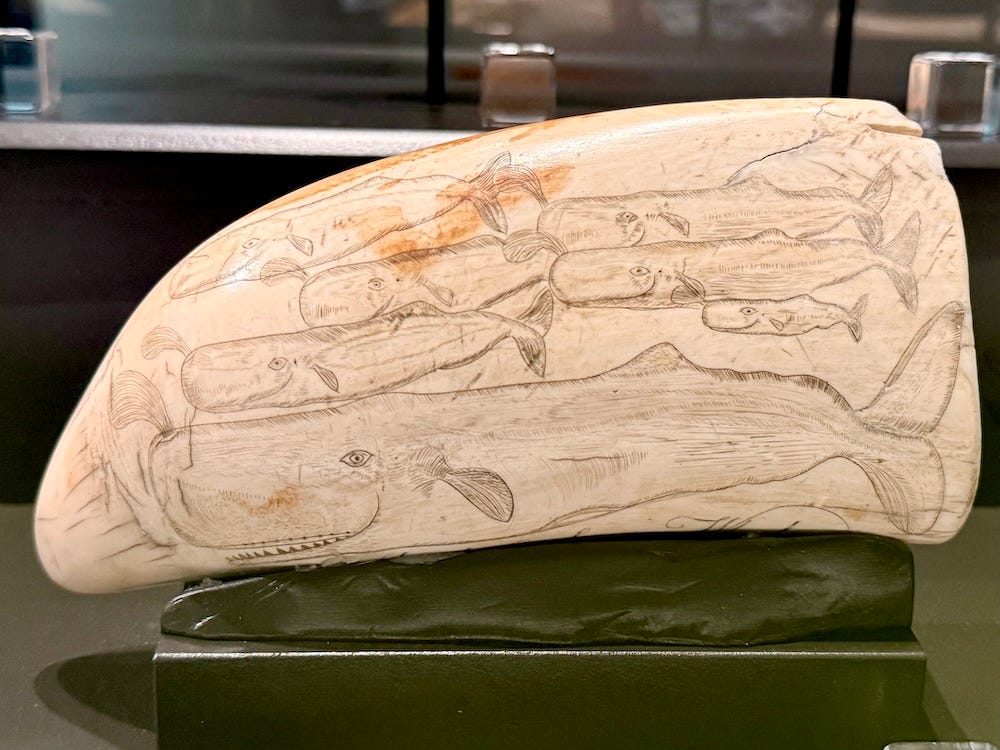
Scrimshaw is a form of folk art that developed primarily among 19th-century whalers, especially in the Atlantic whaling communities of New England. Sailors would scratch illustrations onto sperm whale teeth and bones during long voyages. Most of the teeth had depictions of boats, whale hunts, or women.
Further evidence that we don’t deserve whales. Imagine getting an image of how you perished etched onto your bones after you die. Or a caricature of you and your entire family. Or worse, someone’s girlfriend.
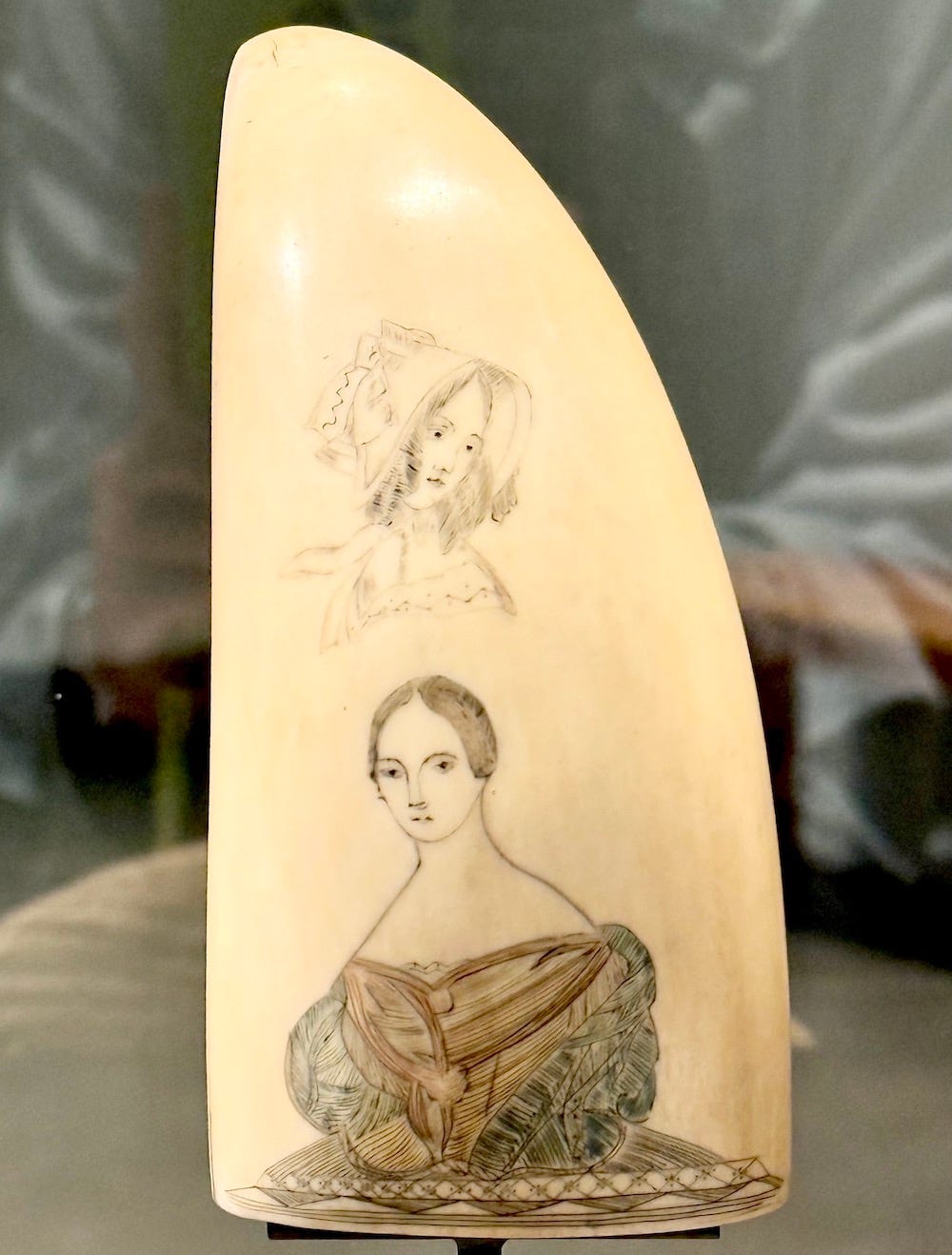
On some level it’s beautiful, on another level it’s also grotesque, and maybe that’s why I can’t stop thinking about it. The whale-tooth art that emerged from the commercial whaling industry feels different from other whalebone traditions, such as those of Inuit and First Nations.
Scrimshaw is like a sailor’s diary. A souvenir, or a symbol of conquest. Inuit whale carvings are often rooted in a relationship of survival, reverence, and cultural meaning. One emerged from a commodity industry, the other from a longstanding relationship with the animal and the land.
Regardless, humans have a long history of transforming what is available to them into expressions of creativity. If freedom is a whale’s birthright, art must be one of ours. I think about this constantly as I watch my child draw on our walls.
Next month I’ll write about how motherhood changed my art practice.
Stay tuned.
Love,
Melanie
PS: There was so much more I wanted to share from Mystic. I’ve picked out a few photos and one video as a special thank you to my paid subscribers:
Comments
Nothing yet. Say the first thing.
Sign in to join the conversation.