
This is maybe up there as the most “just trust me” Mehdeeka issue (of all time??)
A butter running primer and two opposing “trend report” views
How B2B can adapt consumer sentiment in our marketing
Some outside opinions on my thesis!
The internet is internetting with a lot of things going on at the moment. One of them happens to be runners making (amongst other things*) butter in their running vests simply from the motion of running.
*I’ve also seen an ice cream version which requires them to run with ice.
The first person I saw do ice cream is lost to the algorithm, but the first person I saw do the butter version was ireneykchoi on Instagram. Here’s her reel on it, in case you haven’t seen one of these. Her reasoning is basically “why not” and also, at the end of her run she has a snack. Win-win.
Not sure if I’ve revealed this on Mehdeeka before, bit of Kayla trivia for you, but I actually love cooking and have made a lot of things from scratch so I really did not think much of this other than “people knowing where their food comes from and how to make it is a good thing.”
Then I saw this take, also on Instagram:
The creator, who also has a substack cole and accompanying essay, makes the case that we’ve swung from overly polished creator content in the 2010s (think the high production YouTuber era with studio lighting, beauty guru drama [IYKYK], and on-screen bigger than life personas) to the rejection of that with authenticity (messy editing, vlogs, and Emma Chamberlain failing her driver’s license). After the early launch of AI tools in 2022, the direction from polish > unpolished continued into AI slop content, which for now is the antithesis to high production value.
We’ve reached the pendulum’s amplitude and are now swinging back into that apex position of “authentic” content. However, nothing will ever look exactly the same, so the new interpretation of authentic content includes:
Algorithmic changes, literally anyone can go viral now off one video
Macro-economic trends such as cost of living, multiple wars, and mass layoffs and swing away from hustle culture
The rise of AI and its three camps of staunch anti-AI, staunch AI-lovers, and the in-between
Before we get to my take on this, here’s an opposing view on the butter trend. SCAN 👀 CLUB, well known for its trend reporting, included this preview text to last week’s issue:
People are making butter in their backpacks and it’s making us uncomfy.
They didn’t actually expand on this take, but my first thought was what is there to be uncomfortable about? It’s not necessarily unhygienic or anything. In the opening text (and the last mention of th trend in the issue) they ask “is making butter while running a new recession indicator”
Admitedly, the internet has also turned “recession indicator” into a running gag. Sometimes serious, sometimes not.
Simultaneously to butter running, the internet has very much been celebrating unique uses of free will with comment sections regularly featuring “excellent use of free will.” People posting literally anything with a story around how they had an idea, realised there was nothing stopping them from doing it, and then just doing it because “why not” has been fun to watch.
So when I think about everything in this issue up until this point, the conclusions I come to are:
People want to experience a sense of pride and accomplishment from doing something in real life (so, vibe coding doesn’t count)
People are craving tactile sensations
Delayed gratification is often brought up as something Gen Z and below are lacking, this is them showing they do indeed have a sense of delayed gratification
Maybe you’ve heard of some businesses purposefully adding friction to their products to improve a metric. For usage-based products, it means giving away all the features for free but adding a usage cap, causing users to love the product and upgrade to paid.
Experiencing friction makes completing things in the real world more satisfying. A puzzle that drives you crazy, a Lego set with a thousand pieces, restoring an old car.
The butter running is just another form of this.
B2B trends follow B2C. Simple as that. One way we’re seeing the translation of this is the rise in B2B companies investing in community, the re-rise of in-person events (this can also be attributed to a post-covid world,) and campaigns focused on efficiency meaning you get to clock off on time and live your life because your work is finished on time.
Hubspot seems to have abandoned this messaging, but back in 2024 they were running a campaign around clocking off work early because Hubspot helps you get your work done on time. I took a photo of one of the ads and wrote down two of the tag lines:
Get promoted. Fly to Ibiza.
Shut your laptop. Catch the 5:05 home.
From this Mehdeeka:
This article details a campaign prior to this around marketers using the tool to a “Hubspot-powered utopia”, the campaign is kind of in line with the above.
But you know what I’d love to see B2B brands do? THIS:
Cigarettes, perfumes, and alcohol ads from the 90s were conceptual, sold an aspirational lifestyle instead of a product, and brands were built with association. They proudly proclaimed a certain type of person gravitated towards their product, and if you wanted to be that certain type of person, then well you better be seen with their brand.
Obviously this doesn’t work for enterprise or government. There’s so many layers of approvals and such large buying committees that Charlie Sheen smoking a cig isn’t what gets deals made.
So, here’s some modern, 2020's versions from B2B brands!
Goldman Sachs has multiple podcast programs (and they sell to enterprise and government, so maybe this is a route to consider if this is your target audience too.) Drift, Gong, Hubspot, and Intercom all also have podcast programs.
Podcasts are notably intimate. Listeners build a relationship with the host, and this 2022 report says 63% of listeners rate the hosts of podcasts they listen to as “trustworthy.”
An audio medium is tactile in a distinct way from consuming content on a screen. You might be getting someone while they’re walking, driving, cleaning, or other activity that means they’re not multi-tasking their cognitive attention, so you get their full attention. Very valuable in 2026.
High quality printed materials are in. Stripe Press books are focused on the topics business owners would want to read about, but they’re also premium books with lush fabric covers and delicious paperstock. Not exactly what you’d expect from a payments platform?
There’s also all the work coming out of the Dark Forest Collective (an online collective for people who think a lot about the internet) and the Office of Applied Strategy (a strategic agency that works on consumer brands such as Discord, Conde Nast, and even Ariana Grande’s r.e.m. beauty).
OAS drops occasional merch and impressive content only available in print, that you have to buy and is limited to only 1,000 copies.
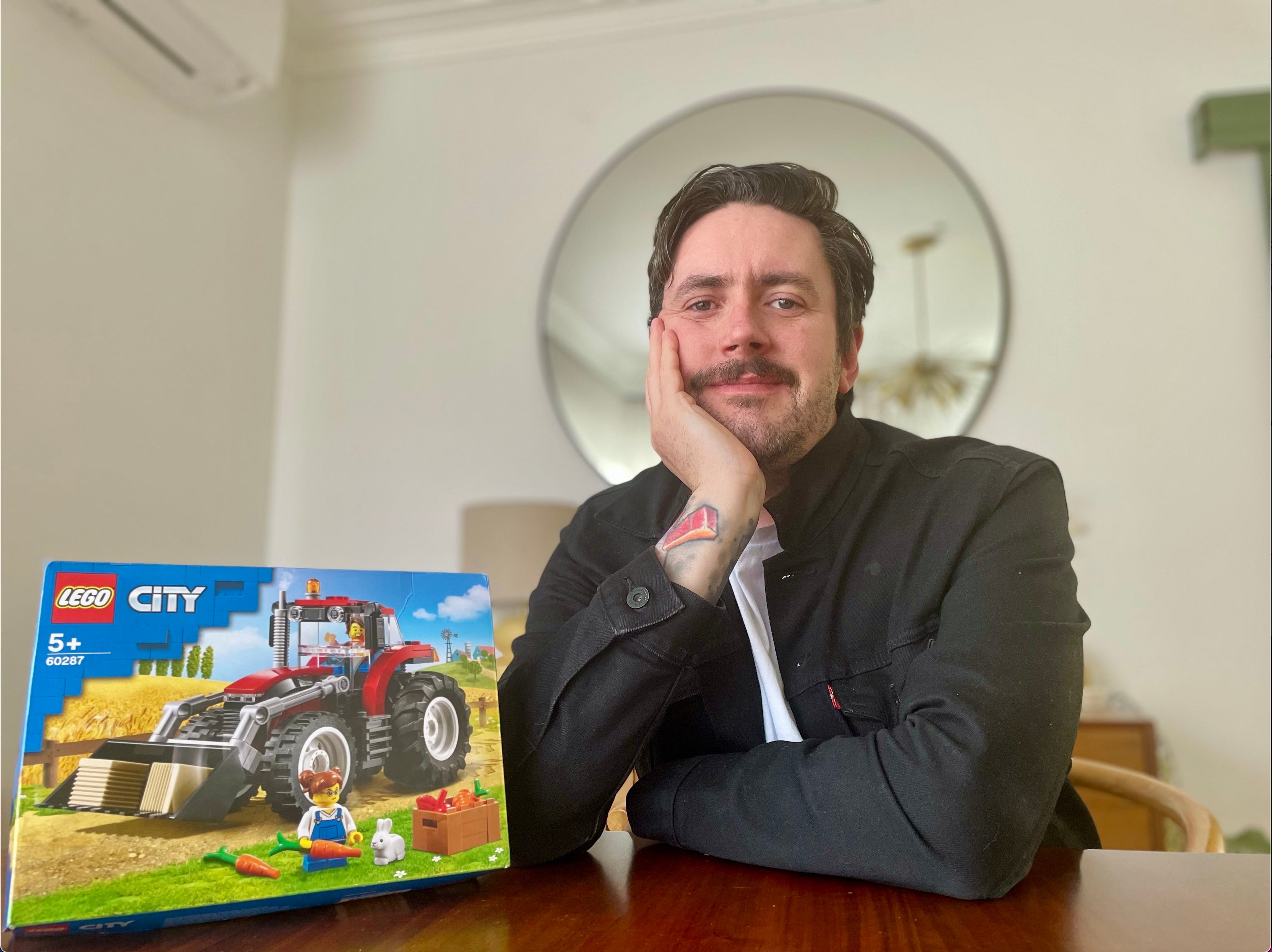
First up, we’ve got the Melbourne Merch Man, Gaz Williams of Group Group. I sent Gaz the draft of this issue and simply said “send me your thoughts” and here they are (regarding his work at Tractor Ventures, a debt and alternative funding company):
Thanks to Kayla for prompting me, I actually utilise this method regularly of contacting someone out of the blue for quick comment for a soon-to-be-published story, whether that be for something op-ed leaning, or something far more gonzo style.
The Tractor Ventures brand-building efforts was many different methods concurrently — weekly newsletters written with personality speaking directly to the core of how founders think about their capital and unit economics, or education focused events, or truly unique founder-led LinkedIn campaigns, or ambassadors, or respecting the reach of LinkedIn comments, or any number of other approaches not solely focused on ‘performance ads.’
But uniquely, the simple art of sending a LEGO Tractor set, worth $22 AUD, to founders funded by Tractor, was worth its weight in gold and directly contributed to companies converting in the pipeline. And massively increased social proof reach.
Never under-estimate nostalgia.
Our ICP grew up on this shit, as do their kids (most of those founders were parents who then posted back photos of them building it with their children)
And with Tractor funds essentially words and vapour, it proved a savvy way of being able to say a lot without saying much.
A car load full of newly purchased Tractor LEGO sets visually showed the growth.
A founder posting their newly received Tractor set indicated this was a founder who understood their unit economics and was using non dilutive capital as a business growth mechanism.
It was fun, and cut through continuously, and the building blocks analogy became a nice and subtle analogy for the different ways you grow a company, in a VC obsessed era.
Here’s a LinkedIn post where Gaz also wrote about this in case you want to read more detail.
The bold sentence is where I think Gaz and Tractor nailed building association. If you’re seen with a tractor Lego set, you’re signalling that you have a successful business which was funded using debt or alternative funds as opposed to VC funding where you’ve sold a portion of your ownership.
The message is “ownership dilution bad, Tractor funding smart.”
I did also reach out to cole and Scan Club for comment but they didn’t respond in time for publishing.
As stated in the issue about storytelling, it’s all the same. Have a stance, plant your flag, and back yourself.
It’s Nice That has a really great article about Ffern, an artisan perfume brand, makes their advertising feel more like cinema; “film practice is at the centre of its success in world building.”
ClickUp has started hiring actors and comedians to write and star in their social media content. Not only is it cheaper than an agency, it seems to be working. They’re creating in-world recurring characters, and are standing out with an angle
You don’t need the $20k a week ClickUp is spending. Do a day a fortnight of brainstorming, filming, and editing. Low cost (or lo-fi) could be the branding you go with to stand out. The smooth flat days of branding are over and texture is in, so your branding doesn’t need to be high production quality, it just needs to be consistent and distinct.
I hope this is motivational instead of demotivating. I made this newsletter for small teams and small budgets, but we can still look at what bigger brands with bigger budgets are doing for inspiration (just not always tactics!)
I’ll leave you with one last important question:
Keep it buttery,
Kayla
Comments
Nothing yet. Say the first thing.
Sign in to join the conversation.