
Fieldlings are short stories and essays inspired by nature, infused with the wisdom of the great outdoors.
A whole other season could have gone by, and we might have missed it.
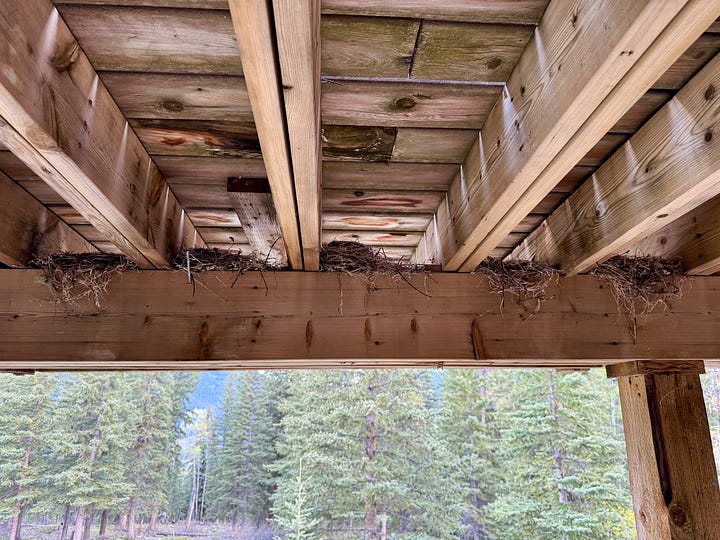
It was an ordinary Saturday when I ventured under my deck to install a lock box for the key to our shed. I scanned the support posts to find a good spot, marked the screw holes with a pencil and was about to start drilling when something flitted in my peripheral vision. Lowering the drill, I turned around, and there she was: an American Robin sitting on a nest she’d built on one of the crossbeams beneath the deck, several feet above my head.
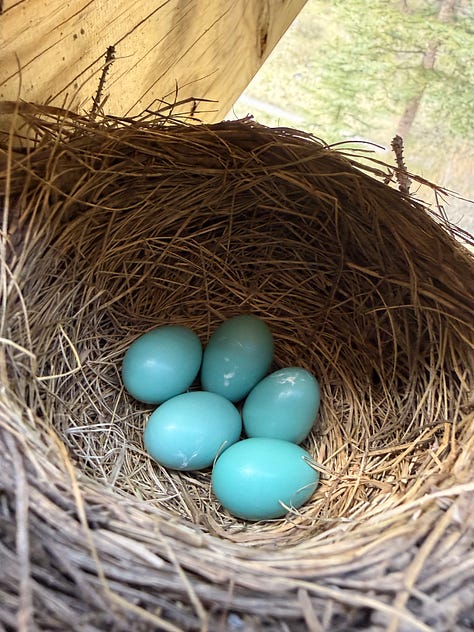
I didn’t drill that day — or any day since. For when she flew off, I snuck a peek at the nest. Climbing atop a chair, I held my arm above me, smartphone in hand, in photo mode, so I could see what was inside. The most brilliant blue eggs appeared on the screen. Stepping down from the chair, I took a closer look at the cross beam. There was not only one nest, but five.1
How long had this cycle been happening right beneath our feet?
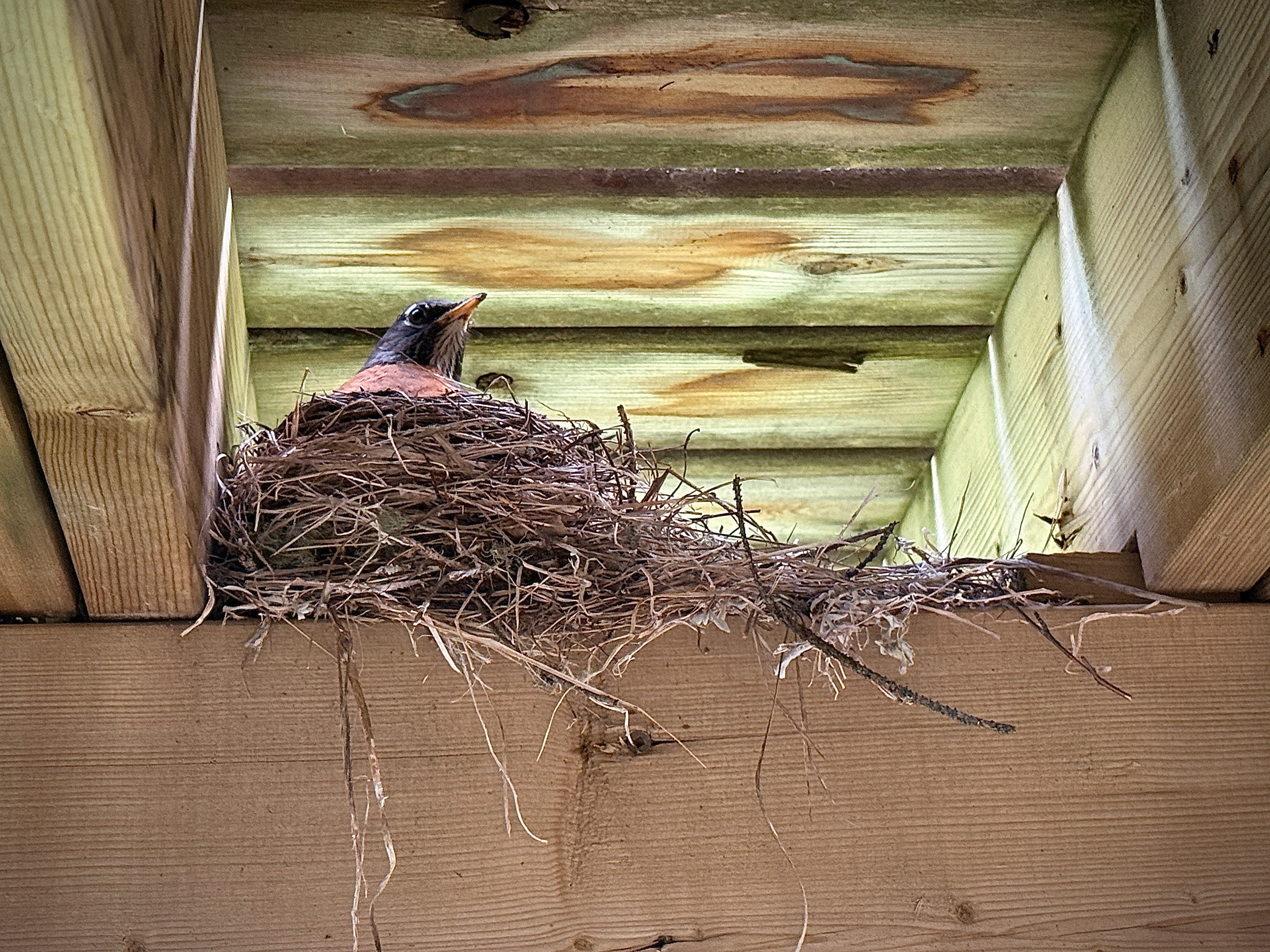
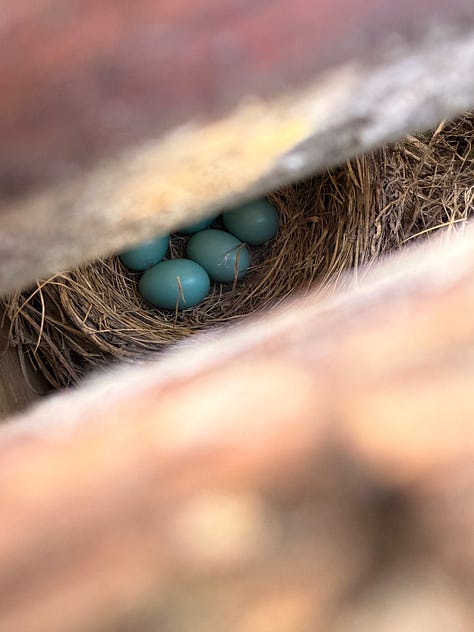
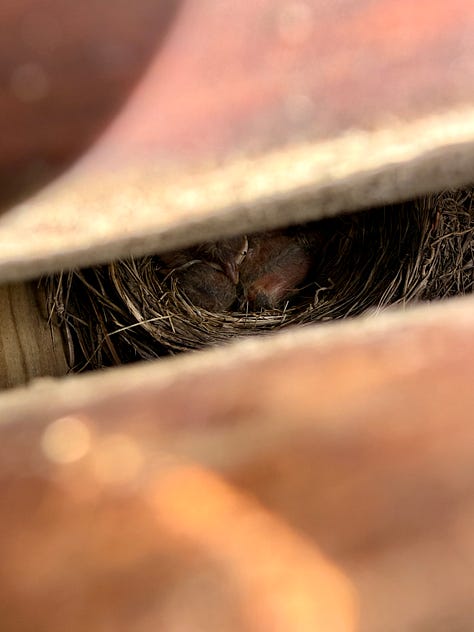
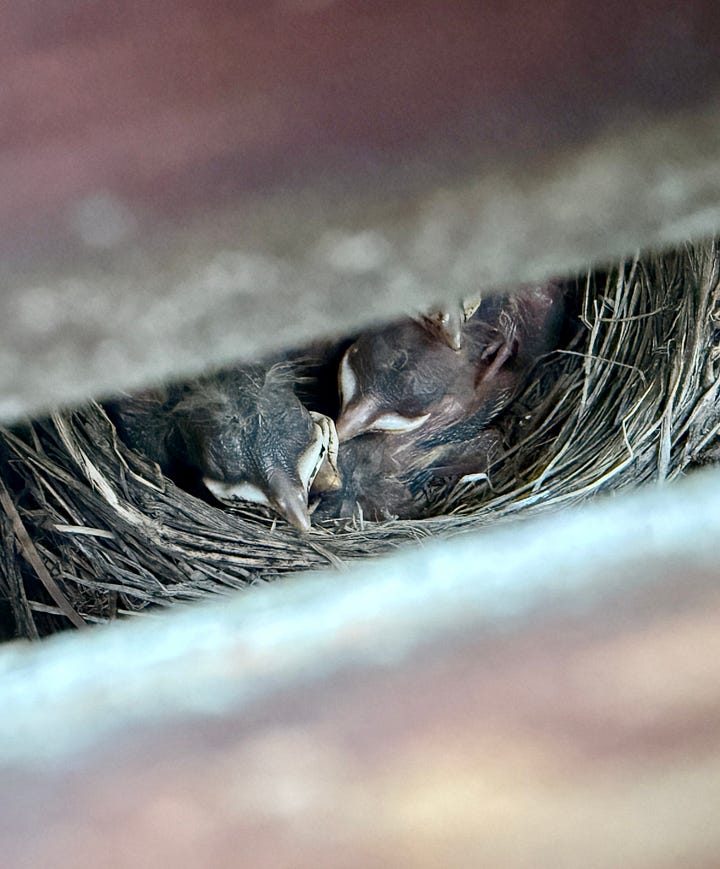
Once I showed my family the photo, we became invested in the story of this robin and her eggs. My daughter discovered you could see the nest through the slats in the deck from above, so, for several weeks, we have checked in daily. I began to read about robins to understand what we were observing. Then, one day this week, I was sleepily descending the stairs to our main floor when my youngest announced, “They hatched!” Sure enough, the turquoise eggs we’d become accustomed to seeing had been replaced by a mess of pink flesh and fuzz.
We’re already lamenting the day our little birds are ready to leave.
What has unfolded beneath our feet is a wonder of nature that has bonded our family. It began as curiosity — a peek between the floorboards as the coffee brewed — and turned into daily conversations amongst us. We are now stewards of our nest-dwelling neighbours, aware that we hold the power to protect or harm them.
This all could have gone on without our noticing. But I looked up that day, and we’ve been looking ever since. I wasn’t owed any of this, and I am grateful for the gifts that have come from this connection.
These miracles are happening all around us — the marvel is how many of them we miss.
Consider supporting this publication with a paid subscription:
You can also buy me a coffee:
💬 “Always be on the lookout for the presence of wonder."
— E.B. White
Meghan J. Ward is an outdoor, travel and adventure writer based in Banff, Canada, a Fellow of the Royal Canadian Geographical Society, and the author of Lights to Guide Me Home. Meghan has written several books and produced content for films, anthologies, blogs and some of North America’s top outdoor, fitness and adventure publications.
Thanks for reading FIELD NOTES! This post is public, so feel free to share it.
According to the Migratory Birds Regulations (2022) in Canada, “it is prohibited to damage, destroy, disturb or remove migratory bird nests when they contain a live bird or viable egg.” There are 18 species that have special year-round protections; the American Robin is not one of them. I’ve learned that Robins prefer to build a new nest each year. Once the birds have fledged and the nest is no longer in use, my understanding is that it’s safe and legal — perhaps also helpful — to remove it, to make space for new nests. I am just learning about this cycle, and appreciate any insights from readers.
Comments
Nothing yet. Say the first thing.
Sign in to join the conversation.