
We spend a great deal of time in the horse world talking about whether a horse is strong, weak, tight, braced, supple, fit, relaxed, or lacking engagement, and while all of those words can describe something real, they can also keep us focused on the most visible part of the problem rather than the organization underneath it.
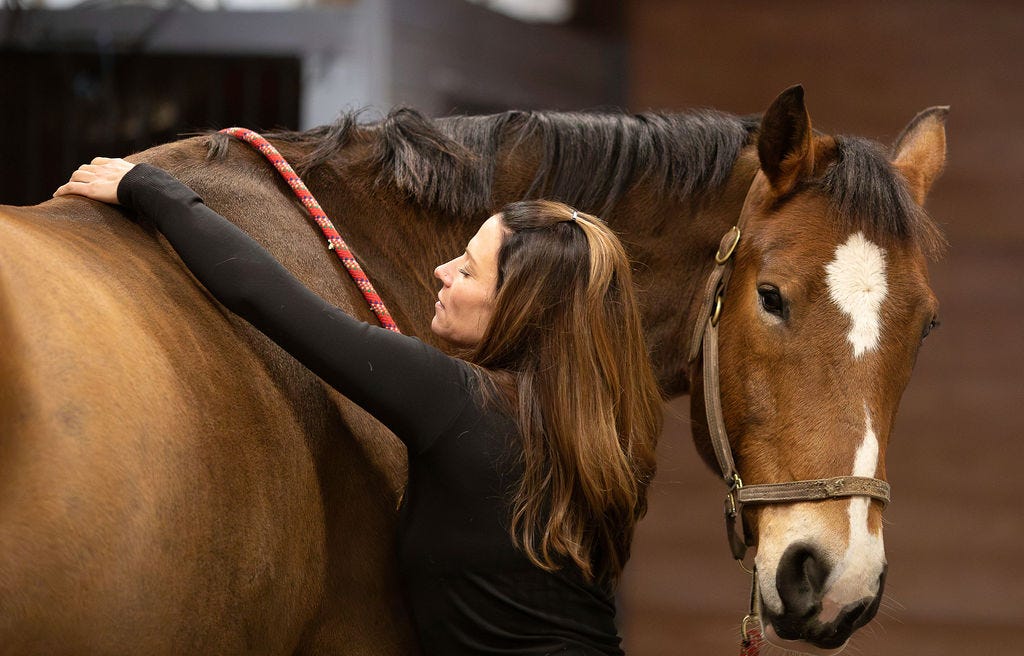
A horse may feel tight through the back, weak behind, heavy in the shoulders, resistant in one direction, or unable to maintain a movement that should be well within his level of training. Depending on who is looking, the answer may be more strength, more stretching, more bodywork, more conditioning, more lateral work, or more time spent teaching the horse to use himself correctly.
Sometimes those answers are appropriate.
But before deciding what the horse needs more of, I think we have to ask a more fundamental question.
How is this horse creating stability?
Stability is not a word we often use when describing horses in everyday conversation. We are much more likely to talk about strength, suppleness, fitness, relaxation, balance, or engagement. Yet stability sits beneath all of those qualities, because before the body can produce coordinated, expressive, or powerful movement, it first has to believe it can support and control that movement.
A horse cannot move freely through the back if the body does not feel capable of managing the forces passing through it. He cannot become genuinely supple through the ribs if the trunk does not feel supported. He cannot produce power from behind without enough organization through the pelvis, spine, and thoracic sling to receive and direct that power.
In that sense, stability is not the enemy of movement. It is what makes quality movement possible.
The problem begins when we confuse true stability with stiffness.
Comments
Nothing yet. Say the first thing.
Sign in to join the conversation.