
Everyone’s smelled Glossier You. Even if you think you haven’t, there’s little chance its woody, cloying scent hasn’t tickled your nose at least once before. And if you’re still sure you haven’t, take a walk through most any Lower Manhattan neighborhood in the spring or summer and I can guarantee you’ll catch its vaguely sweet tendrils trailing after at least one girl traipsing through Soho or the West Village.
For those truly unfamiliar (though, again, I sincerely doubt it), think of Glossier You as the training perfume for Le Labo’s Santal 33. The familiar hazy pink bottle is a well-known, well-regarded scent that smells intriguing enough to spawn a compliment, but also inoffensive enough to lend a mass marketability. At half the price as a bottle of Santal, You specifically has endeared itself to a demographic that skews budget conscious and just beginning to dip their nose into the overwhelming, unending Olfactory Ocean.
More importantly, as the name implies, it’s crafted specifically for you—or at least that’s how Glossier marketed it when the perfume launched in 2017. Touted as the “ultimate personal fragrance,” the make-up brand describes You as a scent that “wears close to the skin” and therefore smells “a little different on everyone.”
It was a smart business move for the make-up brand’s first foray into fragrances. The mystique of a “signature scent” that distinguishes its wearer from the masses has long tantalized consumers. The endless pursuit of it in large part keeps the fragrance industry churning. Not only had Glossier thrown their own scent into the ring for consideration, You seemed to give customers the very thing they’d been looking for in every other bottle before this one: individuality.
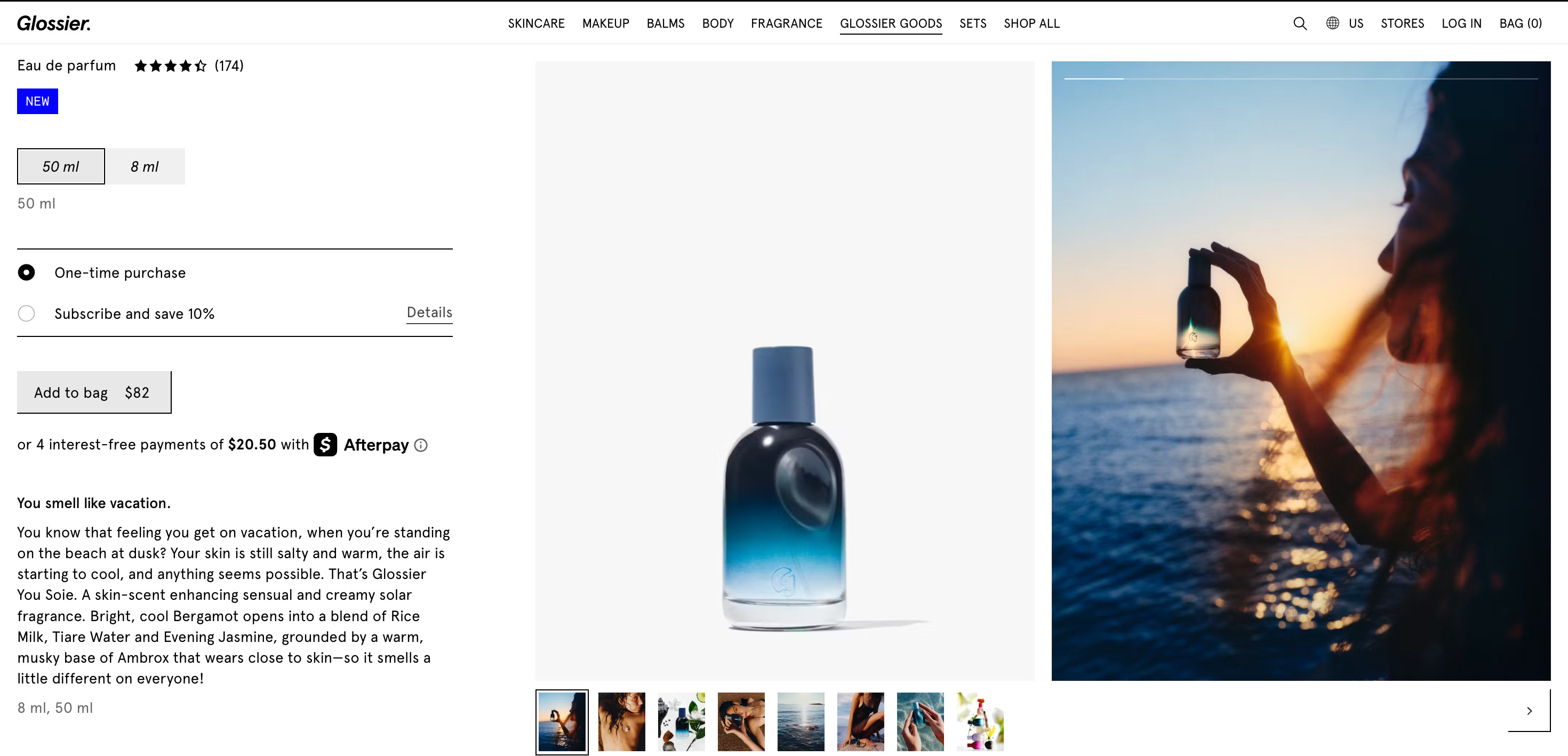
It was a recipe for success. A recipe Glossier replicated one, two, three, four five times over the course of the coming years, culminating in the brand’s most recent iteration—Glossier You Soie. Released just in time for warmer weather, the blue ombre bottle boasts notes of bergamot and evening jasmine to its wearers. Still, Glossier’s original You scent maintains it’s place at the top of the pyramid, the scent everyone’s quick to buy.
And everyone wears it wrong.
Because Glossier You isn’t just any perfume. It’s a perfume enhancer.
To understand what a perfume enhancer is, and where it fits into your scent wardrobe, you have to first understand a bit of the science around perfumes. (Which, unfortunately, is intentionally nebulous and vague—but, more on that in a second.)
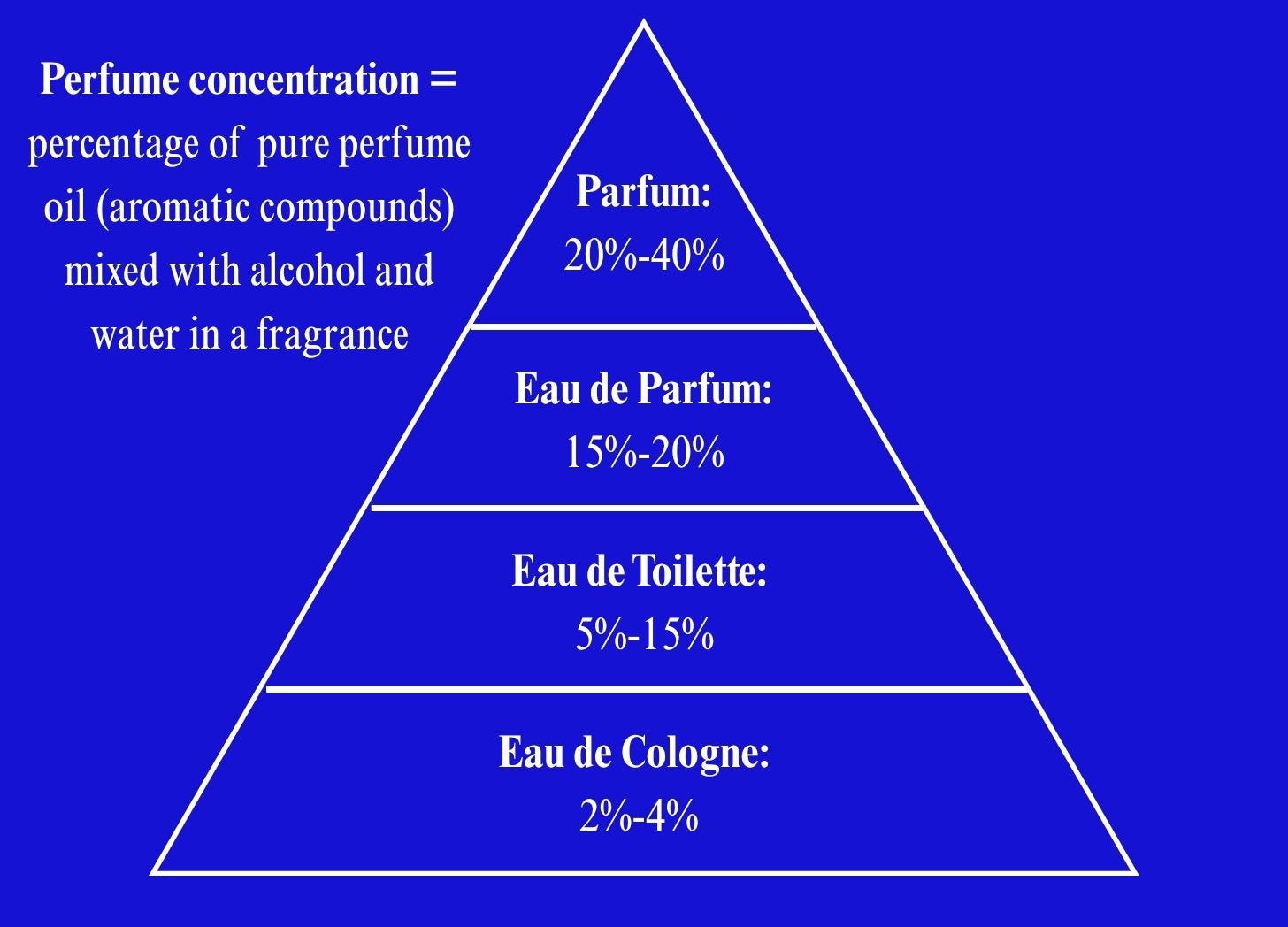
When I first started exploring fragrances more, I knew I wanted scents that smelled distinct and would last for a long time—emphasis on that last part. Tepid research seemed to indicate I could get that scent strength by buying a perfume with a higher fragrance concentration, or the percentage of perfume oil mixed with alcohol and water. The best way to tell concentration, according to my research, was through fragrance type.
The types were as follows: a Parfum was somewhere around 20% to 40% concentration, then came Eau de Parfum with 15% to 20%, Eau de Toilette was next at 5% to 15%, and Eau de Cologne rounded out the bunch at 2% to 4%. Those percentages capture the concentration, which offers a snapshot of a scent’s longevity and sillage (or projection). Or so I thought.
Unlike skincare or make-up, the FDA doesn’t require fragrances to list ingredients. Fragrances can’t be copyrighted, and so scents can simply label their mixtures as “fragrance” or “parfum” to protect trade secrets. This means a perfume can be labeled “Eau de Parfum,” but because we don’t know the ingredients—which would inform how the scent smells, the strength and projection of the smell, and a smell’s longevity—a consumer might never actually know what the labeling actually means. “It’s more of a marketing thing now than ever,” Ranger Station co-founder Steve Soderholm tells Get Rec’d of perfume nomenclature. “Really only the manufacturer and perfumer know how concentrated it actually is.”
As a buyer, Soderholm says the easiest and best way to account for this unknown variable is basic boots on the ground testing. But, if they’re available, he explains the raw ingredients of a perfume can also reveal its longevity and strength.
Most any perfume will likely have top, middle, and base notes. These notes all blend together to create the scent profile. Each note is made up of different raw materials, which will most likely be listed on the bottle and also help determine the concentration of a scent.
Think of a perfume’s scent profile like a pyramid. You sniff the top notes first. Typically made up of light fresh scents, like bergamot, these raw materials have small molecules that vibrate really fast, and therefore burn energy quickly. This means they smell strong, but that smell fades quickly. Top notes then fade into middle notes—well-rounded scents like jasmine, lavender, and rose. Supporting it all at the very bottom are the base notes: big, lazy molecules like ambers, woods, and musks (sometimes more commonly labeled on bottles as ambroxan or Iso E. Super) that vibrate at a low frequency. “Because of that, [base notes] are way harder to notice,” Soderholm says. “They’re sillage is low, their longevity is super high—they expend their energy really slowly, so they last all day long.”
The low sillage of base notes also makes them great for layering, and that’s where perfume enhancers come into the mix.
A perfume enhancer is essentially a scent comprised entirely of base notes. If perfumes and fragrances are like a wardrobe, then consider a perfume enhancer like a cardigan. You can wear a perfume enhancer on its own, but it’s also meant for scent layering—adding an extra foundation of base notes to a scent that can help it last a little longer while lending a dynamic smell.
“A lot of people will say you buy a perfume based on the top notes, and you repurchase that perfume based on the base notes,” Soderholm explains. The idea is that the top notes catch your attention first—but the base notes are what you fall in love with over time because it’s what stays with you all day long. “With these enhancers or perfumes that are only base notes, you’re kind of skipping that first part.”
So yeah, Glossier You is the ultimate personal scent. Not just because it smells differently on everyone who wears it, but because you’re meant to mix and layer it with your other perfumes to then create the ultimate signature scent. Sure, you can wear You by itself, but pair with a few other scents and you might just unlock something entirely distinct.
And Glossier isn’t the only one selling a perfume enhancer. D.S. & Durga sells a perfume enhancer—aptly called “I Don’t Know What”—made of bergamot, along with Iso E Super (a popular sandalwood molecule) and the amber molecule ambrox super. Soderholm’s Ranger Station also produces an enhancer called Two Trick Pony, which wafts through the air with the sharp, freshness of a summer storm.
However their subtlety also means there aren’t many perfume enhancers on the market. Though you certainly can wear any enhancer by itself, Soderholm explains that since their scent is harder to “notice,” and therefore harder to market and sell. Indeed, Glossier You’s demonstrates how a perfume enhancer works best when it’s marketed as a perfume—the consumer only noticing it’s an enhancer if they read the fine print. Sure, the benefits of an enhancer are numerous, but no one’s going to sit there and try to under the science of how it all works if they just want something they can immediately tell smells nice.
“A lot of people will say you buy a perfume based on the top notes, and you repurchase that perfume based on the base notes.”
But the best things come to those who wait. At the end of the day, as Soderholm says, the only way to really know how a perfume wears is by trying it on. Most of the fragrances I’ve liked have come from one-off spitzes I ended up buying because I could still smell the scent hours later. It’s a trial and error process. But get it right, and you’ll find a scent that can literally stop people on the streets. And a perfume enhancer might just help you get a little closer.

Emma Chamberlain designed and released a home line with West Elm at the end of March. Earlier this year, I chatted with Ally Doman of Doman Decors (the interior mind behind Love Island USA Kaylor Martin’s new Manhattan apartment) about Gen Z design trends. One thing Doman noted was Gen Zs loves to bring a Memphis-style funkiness to their space, introducing round and chunky silhouettes that bring shape to a room—specifically pointing to how West Elm’s furniture has shifted from streamlined, mid-century minimalism to something curvier and more retro. In light of this new collab from West Elm with perhaps one of the most Gen Z celebs out there, Doman said: “My takeaway on the collection actually shifts from my original observation that Gen Z is moving away from the midcentury modern-inspired homes that millennials were creating. It’s clear this collection has roots in that era—the two-toned woods, tapered legs, curved-meets-angular silhouettes, and even the telephone bench (hello!), while borrowing from some postmodern and contemporary influences, too. What makes it feel distinctly Gen Z, though, is the irreverence layered through the decor and textile elements of her collection: the earthy palettes and grounded materials are juxtaposed with playful, almost childlike elements. That contrast is what defines it. In a way, it mirrors postmodernism’s reaction to midcentury modern: a rebellion against rigidity and structure through humor, personality, and exaggeration.”
If you live in NYC and need a custom cake, then do I have some recs for you. My birthday’s coming up in a few days, and I wanted to get a custom cake. Asked the girlies (translation, made an IG story sourcing responses). Here’s what people said:
Loser (this was definitely a go-to for lots of people)
Earlier this week, genderless fashion brand Tanner Fletcher debuted a wedding capsule through Etsy.
Dolce & Gabbana co-founder, Stefano Gabbana, stepped down as chairman. He will remain at the brand in a creative role.
AmEx bought shoe and comfort apparelwear line AllBirds for $39 million.
Vogue wants you to know they’re in on the joke. When The Devil Wears Prada originally released 20 years ago, it was an open secret the movie was all about Vogue’s Anna Wintour—a real “IYKYK” moment that was gauche to openly acknowledge. Still, that silence spoke volumes. Now the fictional Devil is posing with the real Devil on the cover of the very magazine that spawned this whole story to begin with. Indeed, where Wintour and Vogue once silently (if begrudgingly) accepted the movie, now the magazine seems all too keen to capitalize on the very franchise that helped put its workplace reputation on the map. Some are worried what this might mean tonally for the sequel. The beauty of the original movie was that it critiqued the same institution it glamorized. Will that maintain when said institution clearly has the hands in the pie?
The Masters launched three “Taste of The Masters” packages full of their most popular concessions products on Goldbelly. Interestingly didn’t see a whole lot of chatter about this online. Augusta National Golf Club’s Masters Golf Tournament is notoriously one of the most exclusive (and super private) sports events out there: phones are banned during the tournament, CBS is only allotted four minutes of commercial time for the broadcast, etc. In other words, it doesn’t have that same “seen and be seen energy” as something like the U.S. Open. The Masters and Augusta National Golf Club have never bothered themselves with mass marketing, or making their event something for the whole world to participate in, because it’s never been a concern of theirs. Too gauche for a golf club that spends as much time, energy, and money on azalea bush maintenance as the Augusta National does. Aside from the golf, the food served at the Masters by the Augusta National Golf Club’s concessions stands is one of the most lauded parts of the tournament. Making it widely available on Goldbelly seems go against over 90 years worth of (literal) gatekeeping expected from The Masters.
Comments
Nothing yet. Say the first thing.
Sign in to join the conversation.