
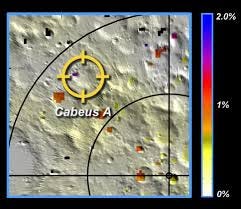
CABEUS — hello future. it’s me, kev. This month, America turns 300 years young. I am writing from the U.S. Territory of Cabeus, near the Moon’s south pole, where Earth hangs above us like a blue porch light.
Light and its absence built this place. Every day here is a negotiation between what burns and what endures. As editor of Cabeus Explorer, my job is to explain this territory to the 1,938 Americans and 323 residents from Artemis partner nations who live inside our dome — and to remind Americans on Earth that we are one with them.
At 86, I am just entering the second half of my life. Quantum-designed medicine pushed average life expectancy to 156. I remember when the country turned 250. We felt older then. We feel younger now.
Back in 2026, America was tired, angry, alone, and scared. We stood at the start of the Fifth Industrial Revolution, yet it seemed the only people achieving escape velocity were the wealthy and well-connected. Ordinary Americans could see the future coming. Too many were told to wait outside.
Then came the discoveries that changed everything. Life existed all around us in the Solar System — not little green men with weapons on Mars, but small, microbial lives hiding in darkness, enduring what should have killed them, swimming in the depths of oceans on the moons orbiting Jupiter, Saturn, and Neptune.
The discoveries reminded us that life is stubborn, defiant, resilient. The knowledge from those harsh worlds helped extend human life on Earth. We cured diseases our children will never know. If life could survive through the coldest, darkest times, maybe we can, too.
They asked me to say a few words about Cabeus during our Fourth of July celebration. I know most of you have heard this story before — but that is the point. Fifty years ago, almost no one knew how to pronounce this place. Cabeus (kuh-bay-us) is named after a crater on the Moon’s South Pole.
Unlike Earth, the Moon doesn’t rotate. Parts of the Moon’s South Pole sit in constant sunlight — perfect real estate due to solar energy. But constant sunlight means temperatures too hot for ice to exist.
Then, a few billion years ago, a giant rock whacked the Moon’s South Pole, creating ridges and basins and a result? Shadows. Shadows so dark that temperatures there are several hundred degrees below freezing… far colder than any place known on Earth.
The shadows keep the ice frozen. The ice provides the hydrogen needed for fuel and cooling mechanics to protect our data centers and nuclear reactors.
That’s the miracle of Cabeus: Here, extremes do not live far apart. They exist side by side, balancing each other. At Cabeus, survival depends on learning how to live between polar opposites.
Where the extremes coexist together is where the future waits to be found.
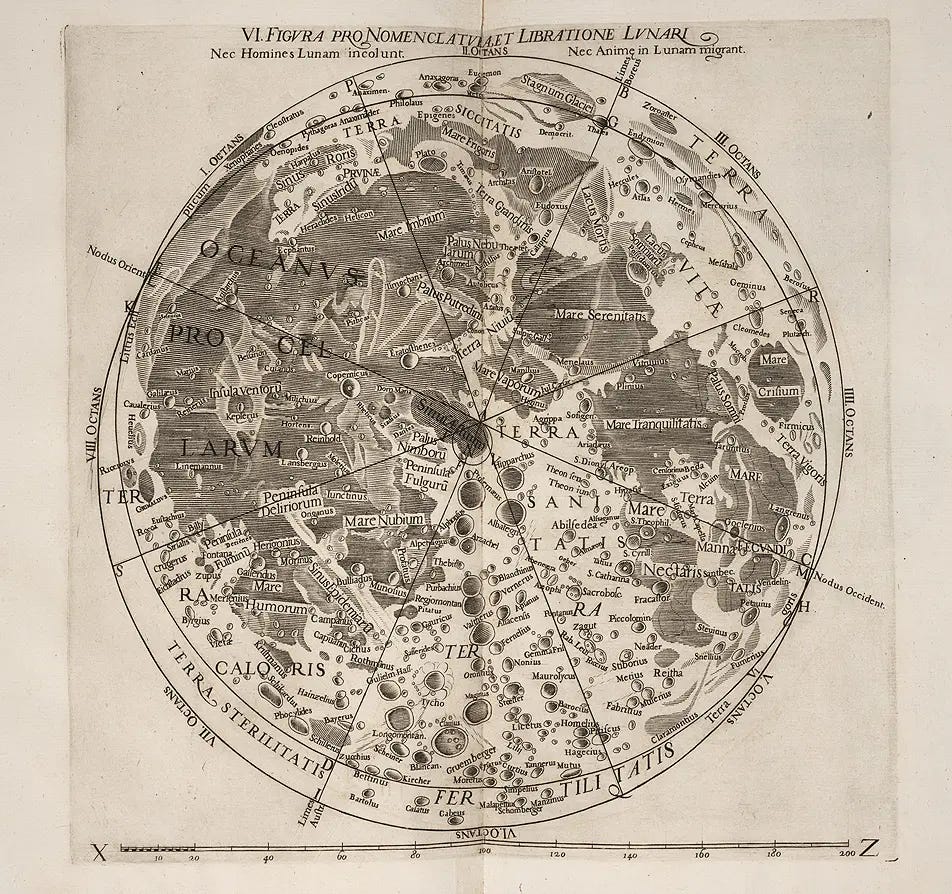
For centuries, Cabeus was just a name on a map — first appearing in Giovanni Battista Riccioli’s 1651 lunar atlas, and named in honor of Niccolò Cabeo, the Italian Jesuit astronomer. Then NASA found water ice here in 2009. After that came landers, labs, roads, a base, and finally a town.
That is how the future works. One generation calls something impossible. The next generation calls it home.
Growing up on Earth, the Fourth of July meant fireworks and hamburgers and corn on the cob and baked beans and hot dogs and watermelon. I am a grandson of the Greatest Generation, raised outside Philadelphia, the birthplace of the American experiment. I became a journalist who only ever wanted to be an astronaut. Because of the American dream, I get to be both.
As a boy, I remember dreaming up all sorts of space games with the kids on my street. Fifty years ago? My career would seem like science fiction. Today? It’s ordinary.
My parents died before this became normal. My father was an engineer at an oil refinery. My mother was a schoolteacher. They were Americans who worked hard and gave their kid a telescope because he would not shut up about aliens. They never saw Cabeus become a territory.
When I look up at Earth from my window on the Moon, I don’t see division. I see Mom and Dad. I see Christmas morning in Pennsylvania, unwrapping a red plastic telescope from Santa. I see Mom tacking glow-in-the-dark stars above my childhood bed. I see Dad on the Fourth of July, tired from work, adjusting that telescope after the fireworks ended, the air still heavy with charcoal, sparklers, and smoke, lightning bugs hovering like UAPs over the Philly suburbs. I see family. I see freedom. I see faith in a nation still trying to become a more perfect union.
This Fourth of July, we will not have fireworks. Up here, fireworks would be a very bad idea.
Instead, we turn off the colony lights and look up at Earth, the Milky Way itself becoming our star-spangled banner as we sing the National Anthem.
On my desk tonight is a postcard stamped Written on the Moon. Tourists write to the people they love. Some cards go home right away. Some are sealed in lunar vaults, so someone back on Earth can know a letter from the person they lost is still waiting to arrive from the future.
In an age when almost everything arrives instantly, a handwritten note from the Moon reminds us that some things are worth waiting for. Some things are worth believing in.
So is America.
Cabeus is American territory. We are American citizens. We are Americans in every way except the one that still matters most on paper. Our ask is simple: we want to vote. Really vote. We are not asking to leave America. We are asking to be counted fully inside it.
That, too, is America — a nation that builds the future while sometimes asking its own citizens to keep waiting for promises already made. We are Americans not because we were born on Earth, but because we inherited the same promise: that people can govern themselves, that freedom belongs to all of us, and that the future is not something we predict. It is something we create.
Here is what I am writing on my postcard tonight that I’ve asked to be delivered back to Earth on America’s 500th birthday:
Happy 500th birthday, America. From the brightest and darkest place we ever learned to call home, we still see you shining. We are still building. Still arguing. Still laughing. Still reaching for the next frontier.
And still writing home.
With gratitude,
Kev
— Kevin Cirilli is the editor of Cabeus Explorer, the largest media platform headquartered on the Moon.
Subscribe to HELLO FUTURE: iHeart | iTunes | Spotify | Amazon | Pandora
Comments
Nothing yet. Say the first thing.
Sign in to join the conversation.