
As I wrote the title for this post I realized that a large part of the joy in my textile practice is that all of it is experimental, I have never been attentive to keeping notes on my process. Each time I work with a new batch of fabric it’s an adventure in visual results, emotional connection to the plant I’m working with and energetic sensing of the role the plant will play in forming the next stages of the work. This week’s adventure was with some coral bells (Heuchera) from a neighbour’s garden, some small nootka rose (rosa nutkana) leaves from the roadsides near my home, and two harvests of smokebush flowers (Cotinus coggygria) from friends’ gardens.
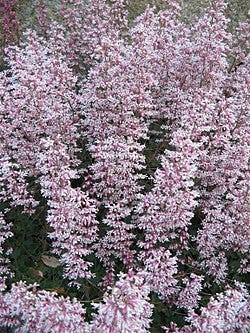
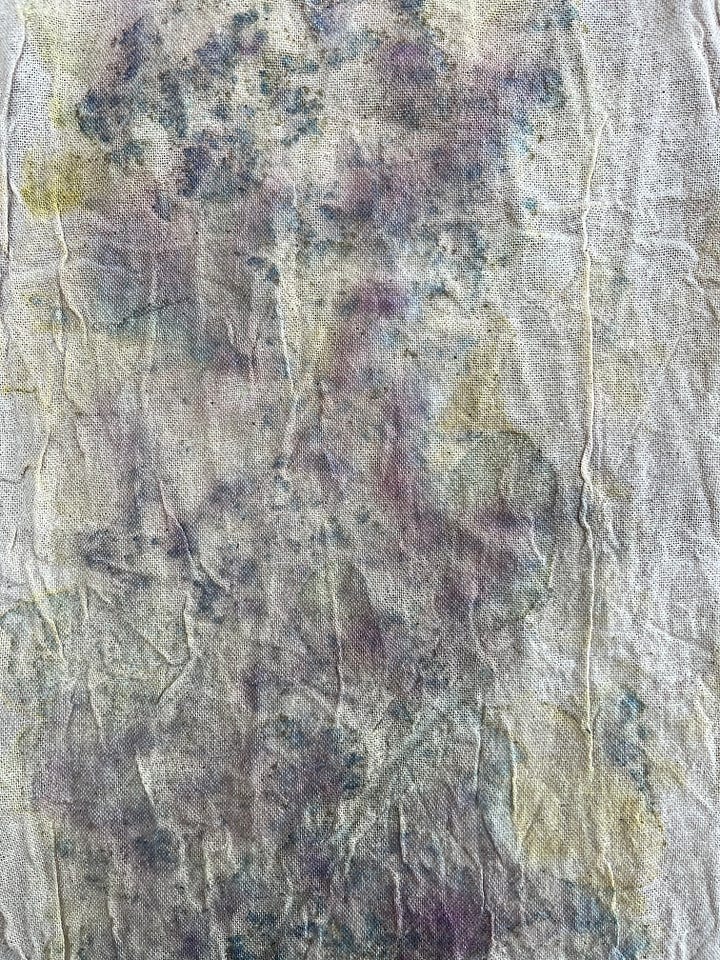
Coral bells are the long flower stems of the Heuchera plant a perennial found in many cultivated gardens, in many colours. This one has the dark burgundy foliage. I was intrigued by their similarity in form to Smokebush flowers and wondered if they would print as well.
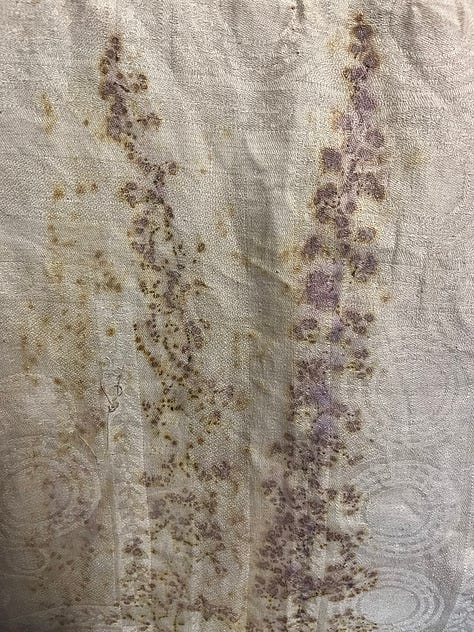
I worked with a lovely old damask linen tablecloth to print the coral bells. Subtle shades of mauve amidst yellows and tans came through. I laid a whole flower stem down and folded the fabric over twice rendering several versions of the print, all interesting options to collage with.
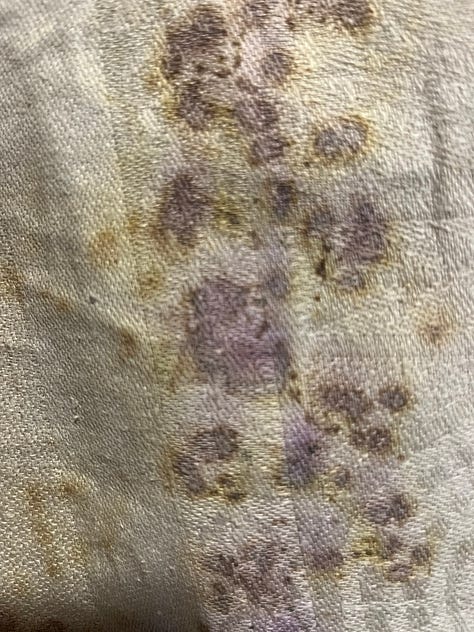
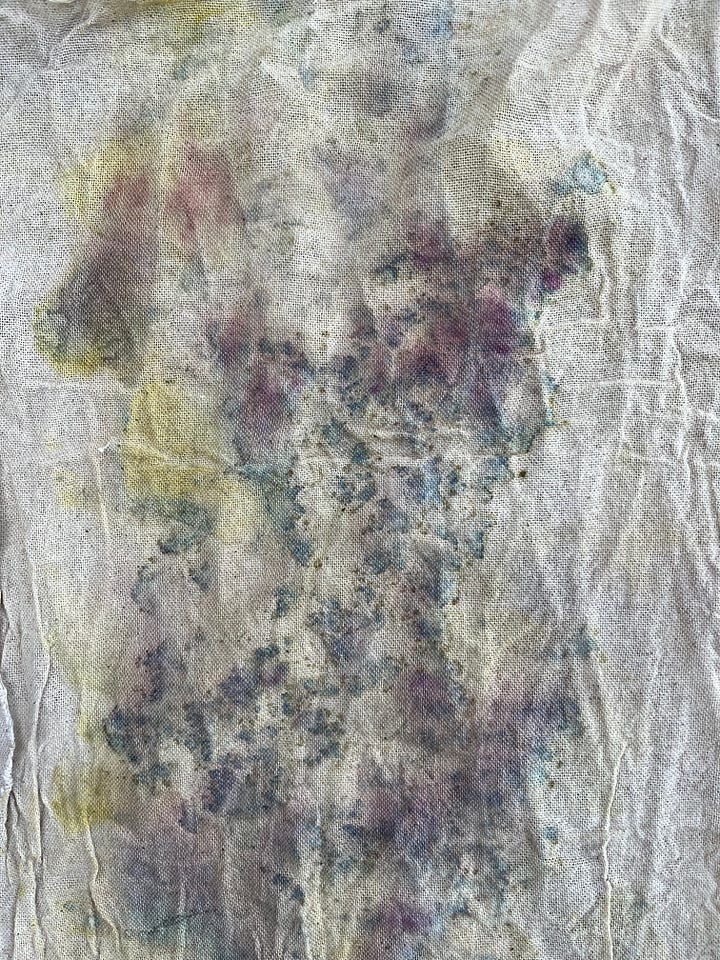
Nootka roses originate from North Vancouver Island and are abundant in this area.
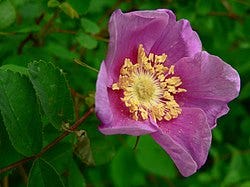
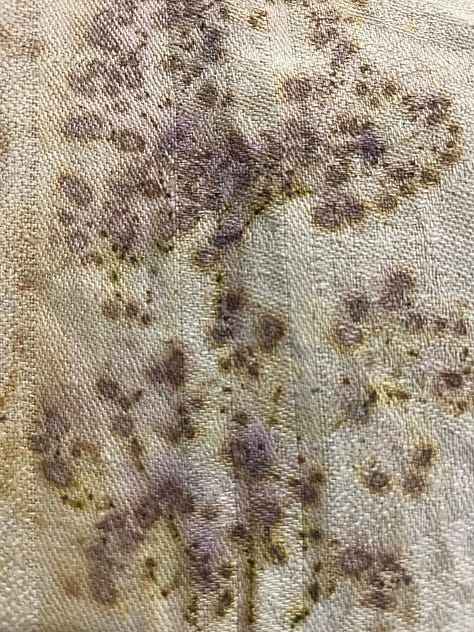
Their buds make a delicious rose tea, they bloom in May/June with delicate single layer pink flowers that have a delightful light rose scent, and are a great source of rose hips for vitamin C loaded syrups and jellies. I have also had success in the past printing rose leaves and hoped for some good marks with this batch. Another old table cloth, this one a light linen with some eyelits that I left in place for some addd interest. The marks rendered were a mixture of distinctive leaf shapes, and circular markings - I mixed some of the dried smokebush flowers with the rose leaves and was surprised to see some distinctive blue in the piece on the left.
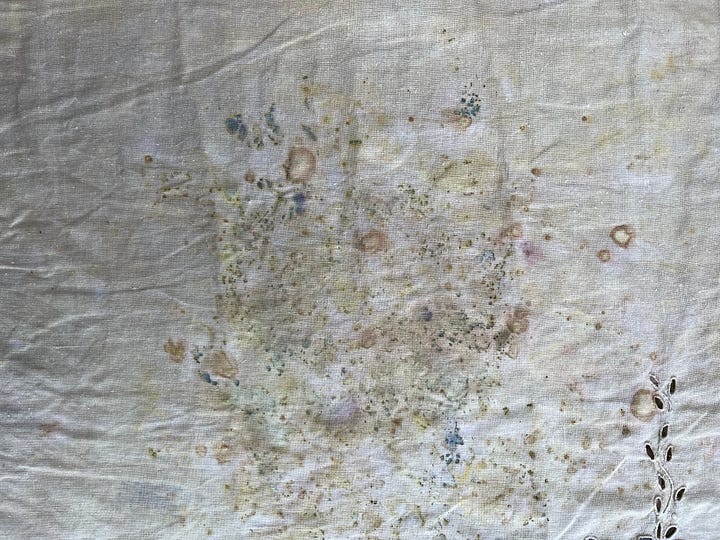
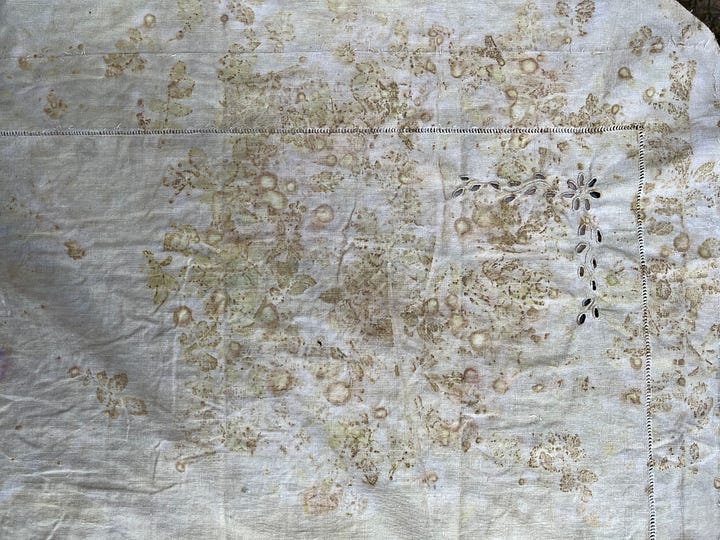
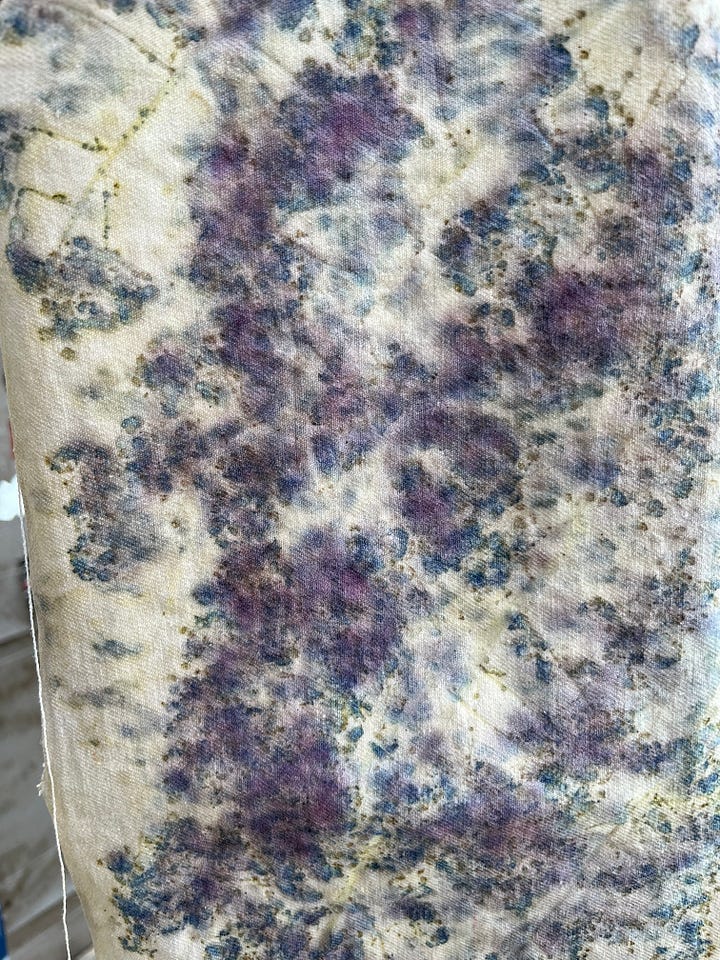
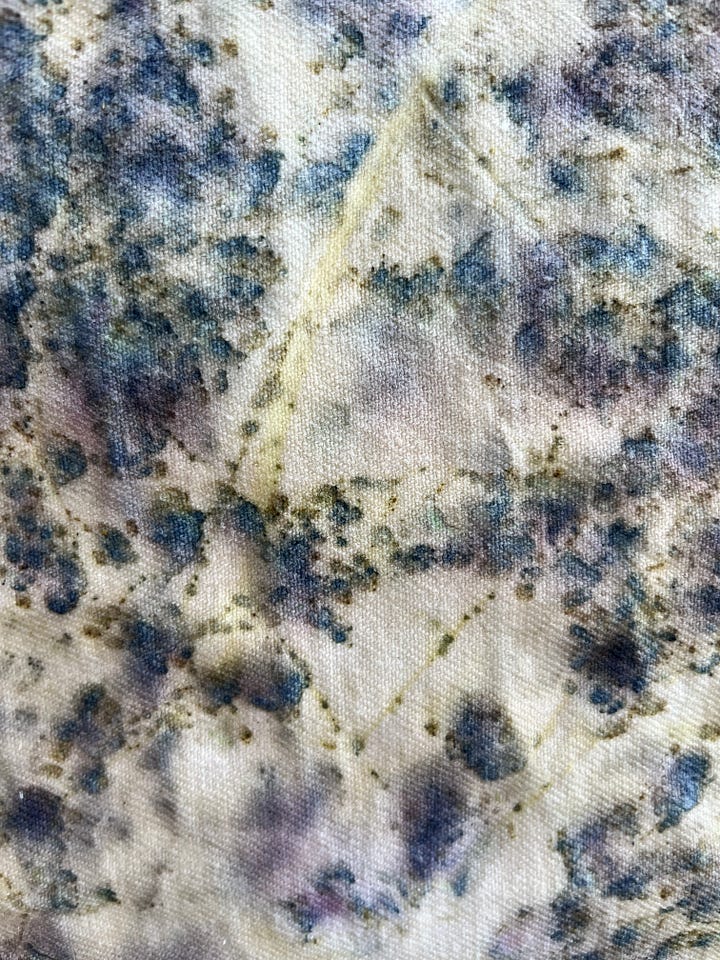
I’ve worked with smokebush flowers and leaves previously and love the marks they make.
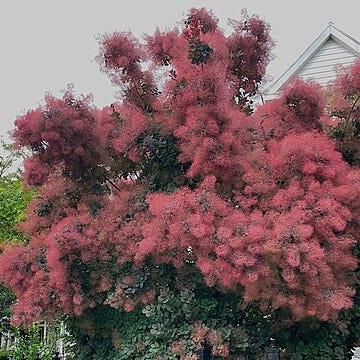
This time I worked with a fresh cutting of flowers and flowers about two weeks old that had dried. The dried flowers mark with less distinct colours (top two images) and a softer hue. The fresh flowers came through with strong purples and blues along with some interesting yellows that came from the stems.
On the list for the next while are experiments with reverse prints using ferns in an arbutus bark dye bath. More rose leaf prints this time with leaves from Rugosa roses which have printed well in the past. Rugosa roses carry the scent that always reminds me of distilled rose oil, their flowers are either deep pink or white, and they are almost over now in June. They are originally from Asia and are popular in part because they are very hardy and don’t develop the same leaf blights hybrid cultivated roses are prone to.
The other leaf print I’m planning for is the eucalyptus. Again not all species print well and fortunately there are several local trees in the area around my home which seem to be the right type - we shall see. From the herb garden I’ll harvest sage flowers and rosemary both of which render lovely marks.
This is a good time of year for creating a stock of printed and dyed fabrics to work with over the fall and winter months. I can do my work outside with the dyepot thus avoiding direct contact with the steam, and disposing of used materials is a simple matter of adding them to the compost to feed the next growth cycle. I make regular visits to the thrift shops for linens and cottons to work with, finding tablecloths, napkins and occasional linen towels. A small percentage of the materials I need for my practice are purchased new, these are mostly the threads, pins, needles and scissors although having said that I did find some needles today at the thrift shop - they are such treasure troves I never know what I might find. I had a big birthday party recently and found a good selection of large tablecloths for the dinner tables one of which was a very new pure cotton woven cloth that is now torn up in long strips, scoured and waiting for the mordant process.
While much of my inspiration comes from the time I spend in the natural world around my home, noticing the changes, observing combinations of shape, colour and texture, I occasionally treat myself to a gallery visit. I did just that recently on the spur of the moment when I realized that Naoko Fukumaru’s exhibit at the Art Gallery of Greater Victoria would be closing in a few days. I jumped on the ferry and spent an evening browsing “Beauty of Mending” featuring Kintsugi, the traditional craft of repairing shattered ceramics with lacquer and gold. Vancouver based Naoko Fukumaru’s personal story is one of finding courage to live life by her own desires when she learned Kintsugi after leaving a long term abusive marriage - very resonant for so many of us. The exhibit of her work followed her development of the craft from traditional mending techniques through using Kintsugi as an art form in its own right forming abstract extensions to ceramic sculptures. One feature that appealed was her use of thorn shapes evoking the local blackberry brambles. You can find out more about the artist here. In 2023 she was featured on an episode of CBC’s program Tapestry which you can find here. Yes I am a CBC fan and will boost their support any time I can.
Here are a few images I took at the gallery:
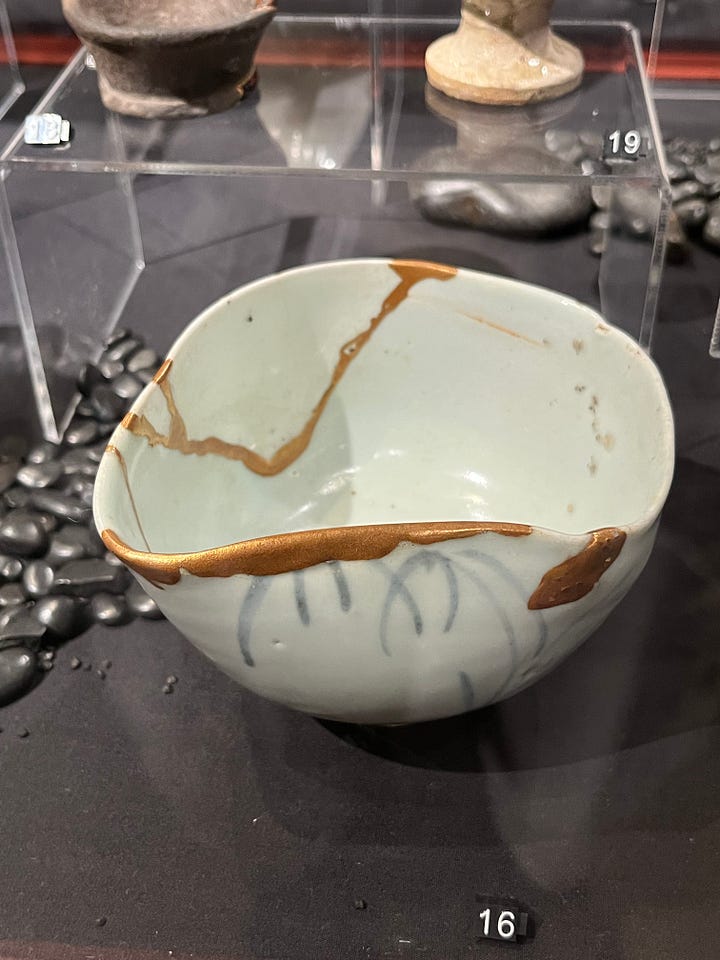
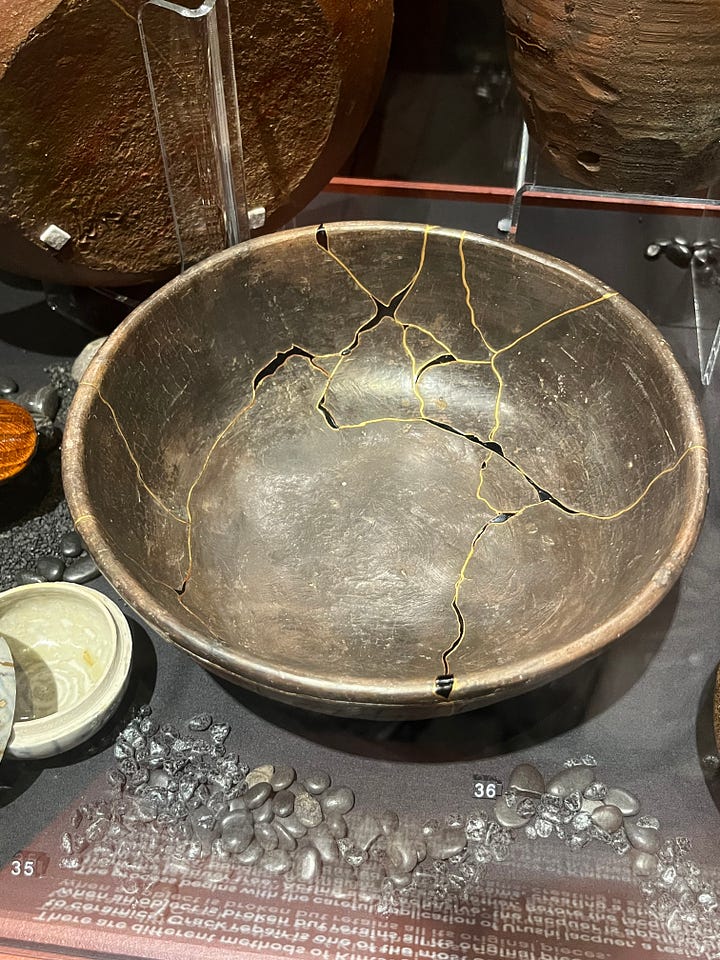
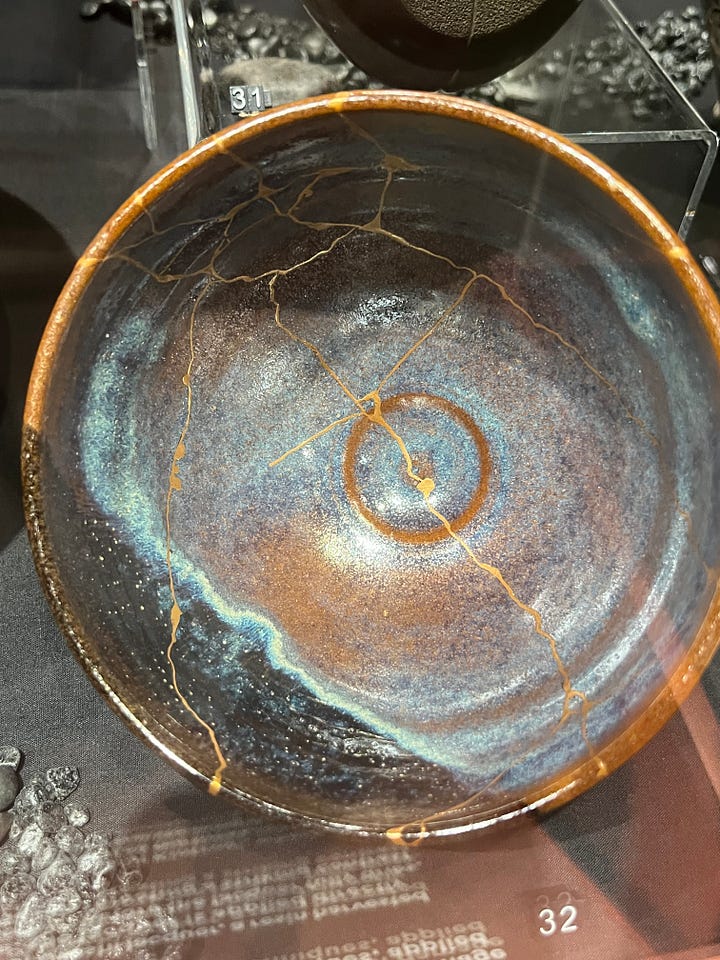
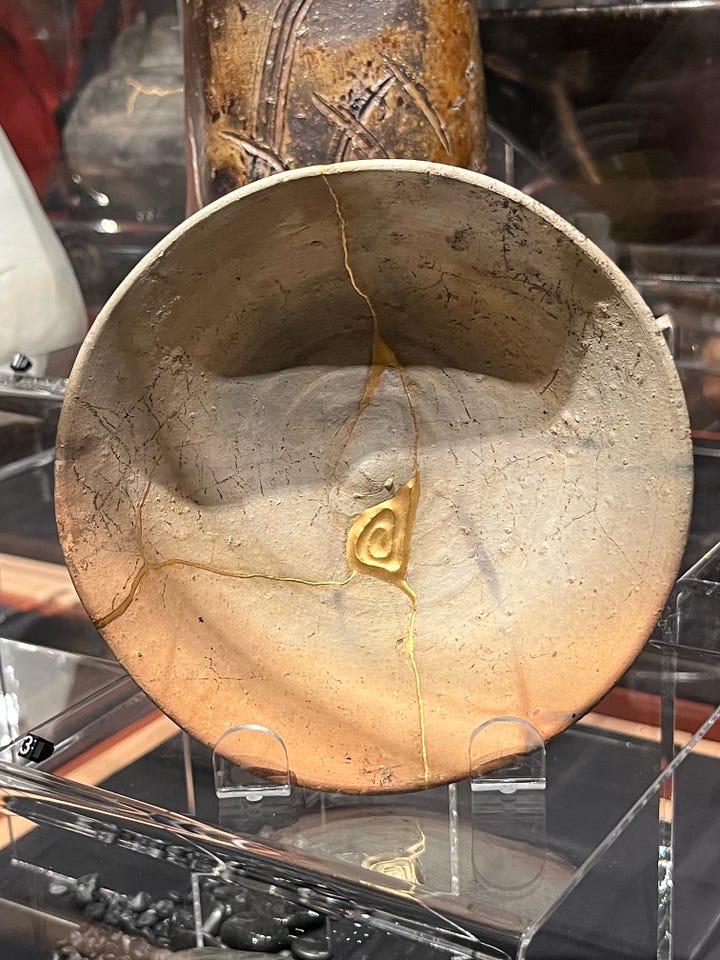
repaired bowls using gold and black to accentuate the beauty of the mending
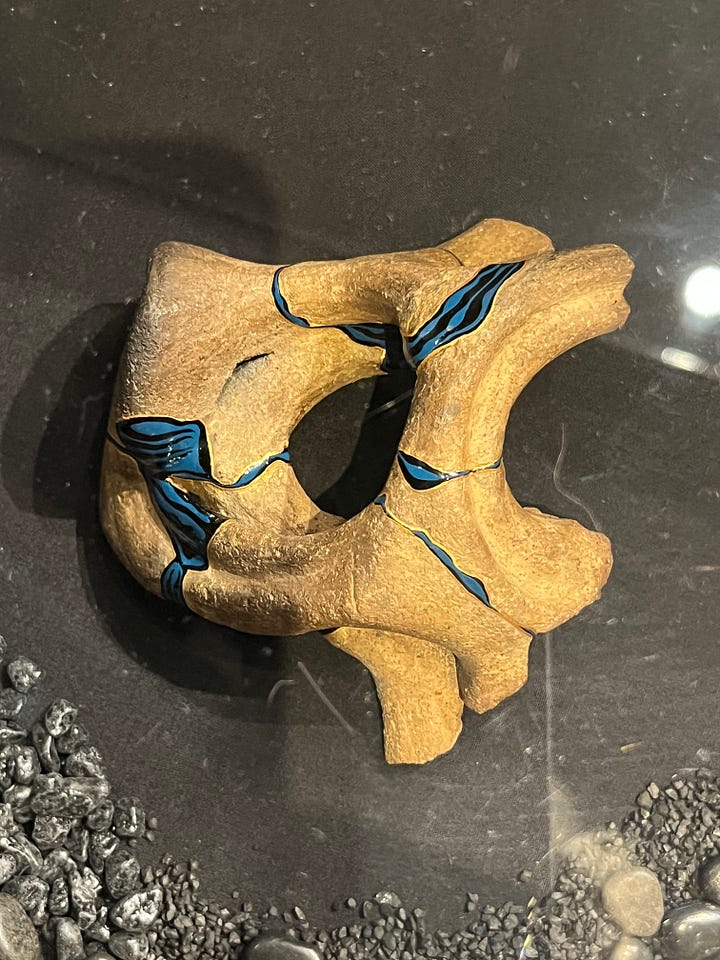
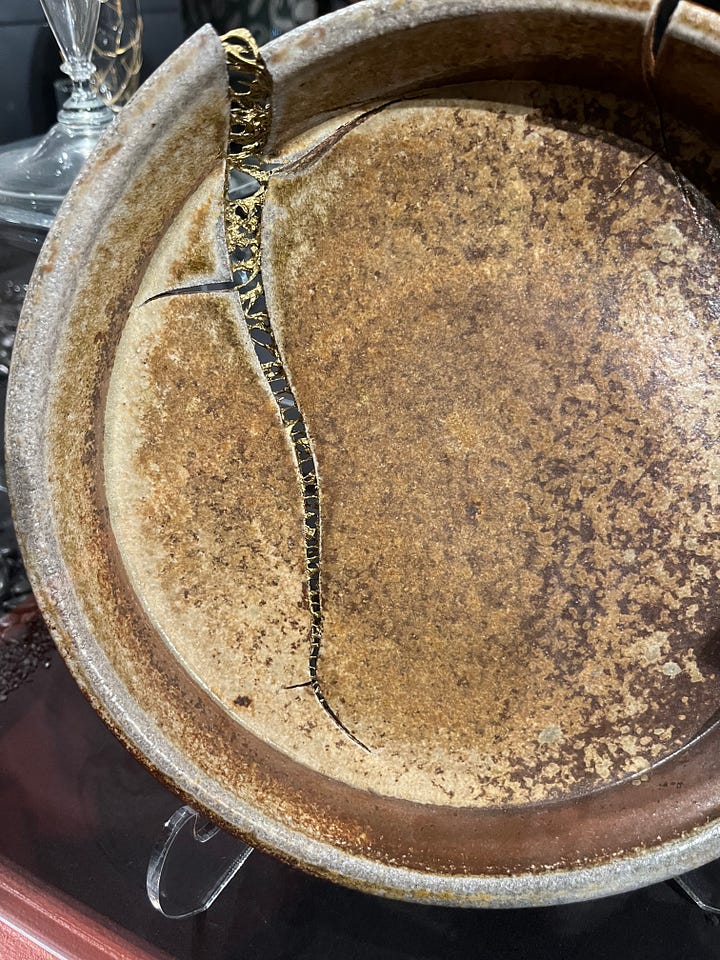
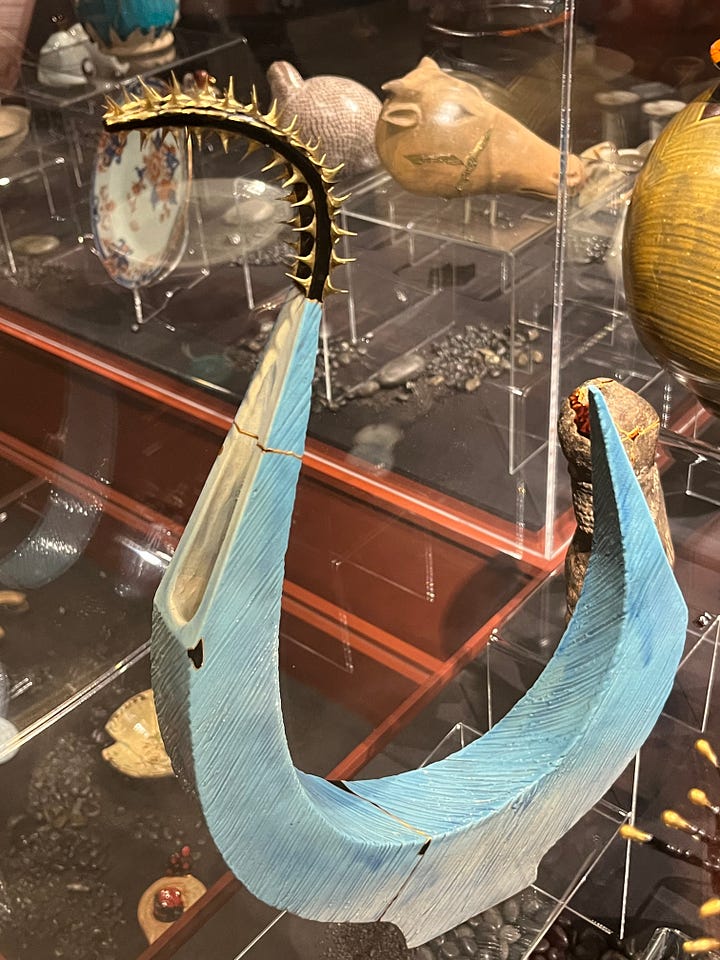
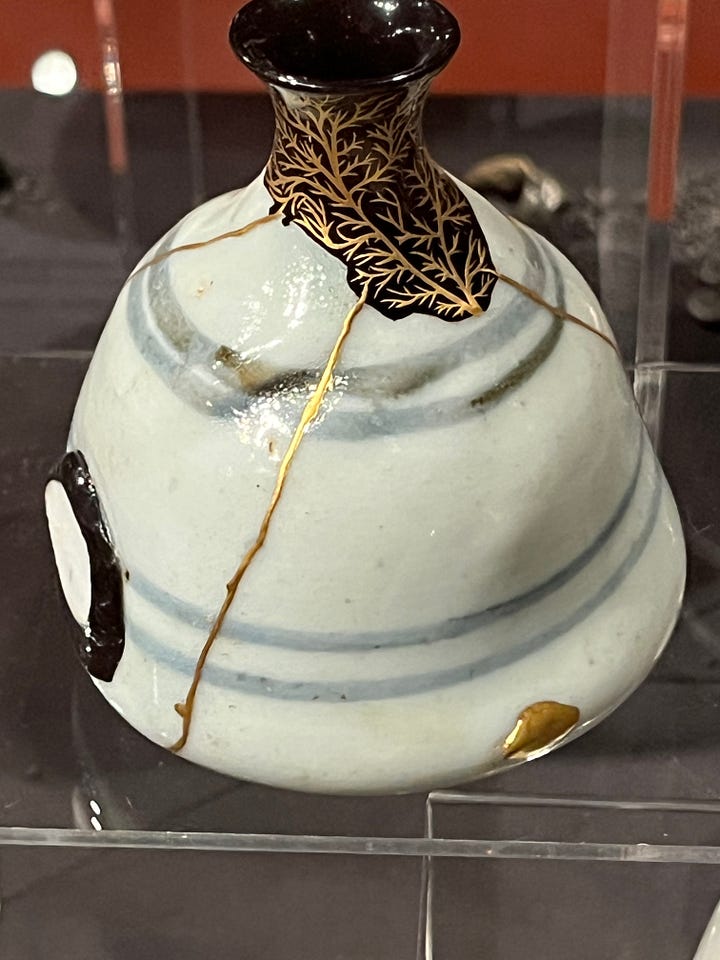
the skill of repair in many forms
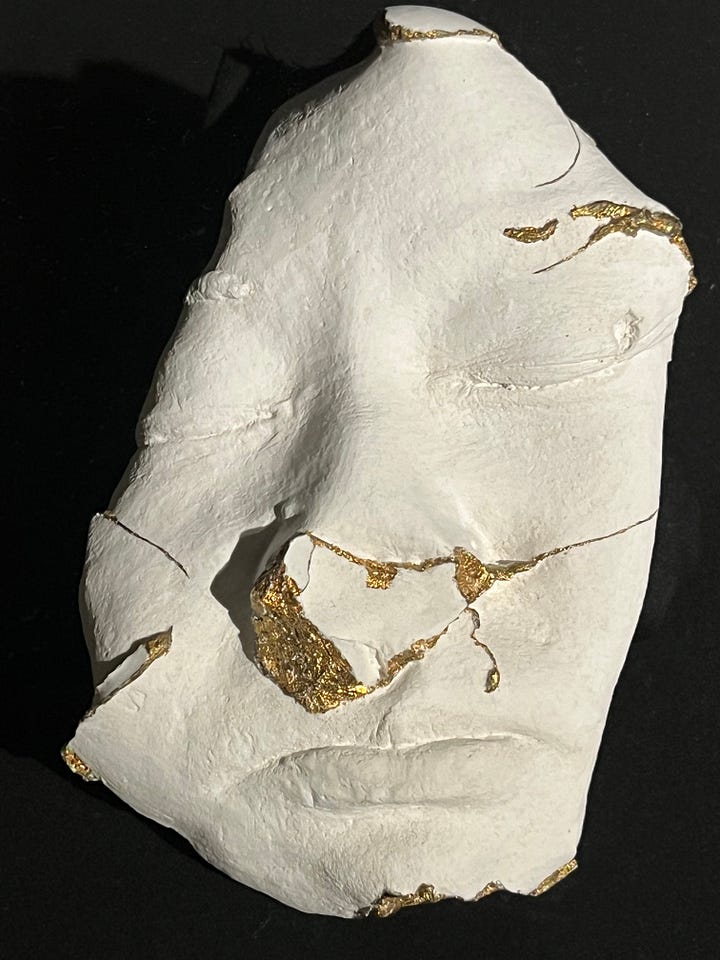
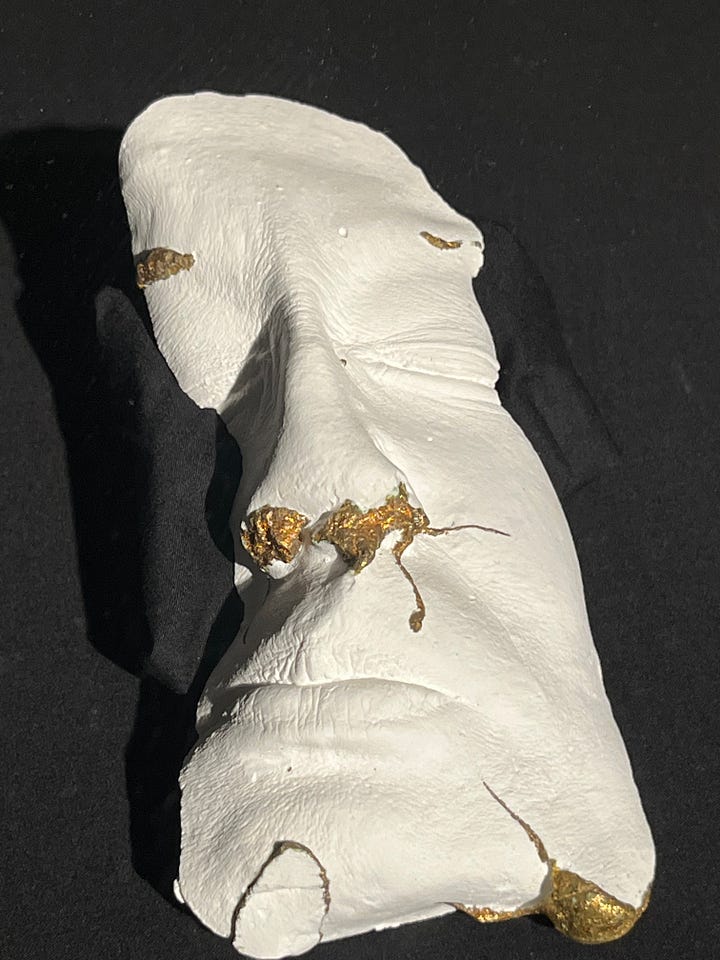
Naoko’s face mask with gold repair on scars of abuse
So I return full circle to marks and how they can bring us in touch with our own deeper emotions when encountering an artist’s rendition of form, colour, shape and texture.
With gratitude to the Hul'q'umi'num and SENĆOŦEN speaking people of the Cowichan tribes on whose unceded traditional lands I live.
With gratitude to Salt Spring Arts for their generous support of my practice.

No posts
Comments
Nothing yet. Say the first thing.
Sign in to join the conversation.