
Had a marvellous weekend at the Battle of Evesham festival, which has grown to epic proportions in recent years - if this goes on, they will be able to re-enact the battle with actual troop numbers.
My talk on the Welsh during the period of Evesham went down very well, which I am very grateful for. One of the fascinating elements is the behaviour of Dafydd, Prince Llywelyn’s talented, volatile and unpredictable brother - to quote Gwyn A Williams, Dafydd was ‘almost a parody’ of the eternally dissatisfied younger brother of Welsh legend.
In these years Dafydd was a staunch ally of the future Edward I, at great risk to himself. In November 1264 he fought and lost a battle at Chester on Edward’s behalf, and was chased back into Wales by the Earl of Derby.
A few months later he was sent to Northumberland by Simon de Montfort, apparently because Simon didn’t know what else to do with him. Dafydd was estranged from Llywelyn, and had no safe refuge in Wales; equally, his presence at court was an embarrassing reminder of his alliance with Edward.
There is no direct evidence, but Dafydd may well have fought on the royalist side at Evesham. He was certainly among the royal household at the siege of Kenilworth in 1266, when he obtained a pardon for a man named William Bolton, accused of murder. Why, we have no idea - the bald record gives no context. Another of the many queries and mysteries of his strange existence.
Modern historians have struggled to figure Dafydd out. Some view him as a hero, some as a traitor. Robert Thomas Jenkins, a prominent 20th century Welsh nationalist historian and writer, took a blowtorch to the subject. Quote:
“Pe byddai’n rhaid chwilio am un gwr, a rhoi’r rhan helaethaf o’r bai am golli “rhyddid” Cymru ar ei ysgwyddau, Dafydd yn sicr fyddai’r gŵr hwnnw. Fe werthodd ac ailwerthodd bawb o’i gwmpas, yn hollol ddiegwyddor. Nid “arwain” y mudiad Cymreig yn 1282–3 a wnaeth ef, ond gweled cyfle ynddo i’w ddyrchafu ei hun. Ac os oedd ar rywun ddyled drom i Edward (nid yw amcanion Edward yn hynny, na drwg na da, yn y cwestiwn), ar Ddafydd yr oedd y ddyled honno”.
(‘If one had to find one man to put the greatest part of the blame for the loss of Welsh “freedom” on his shoulders, Dafydd would certainly be that man. He betrayed and rebetrayed everyone around him, totally without principle. He did not “lead” the Welsh movement in 1282–3, but rather he saw an opportunity to aggrandize himself. And if anyone was heavily in debt to Edward I (Edward’s own motives, good or bad, are not the question here) then that was Dafydd”.)
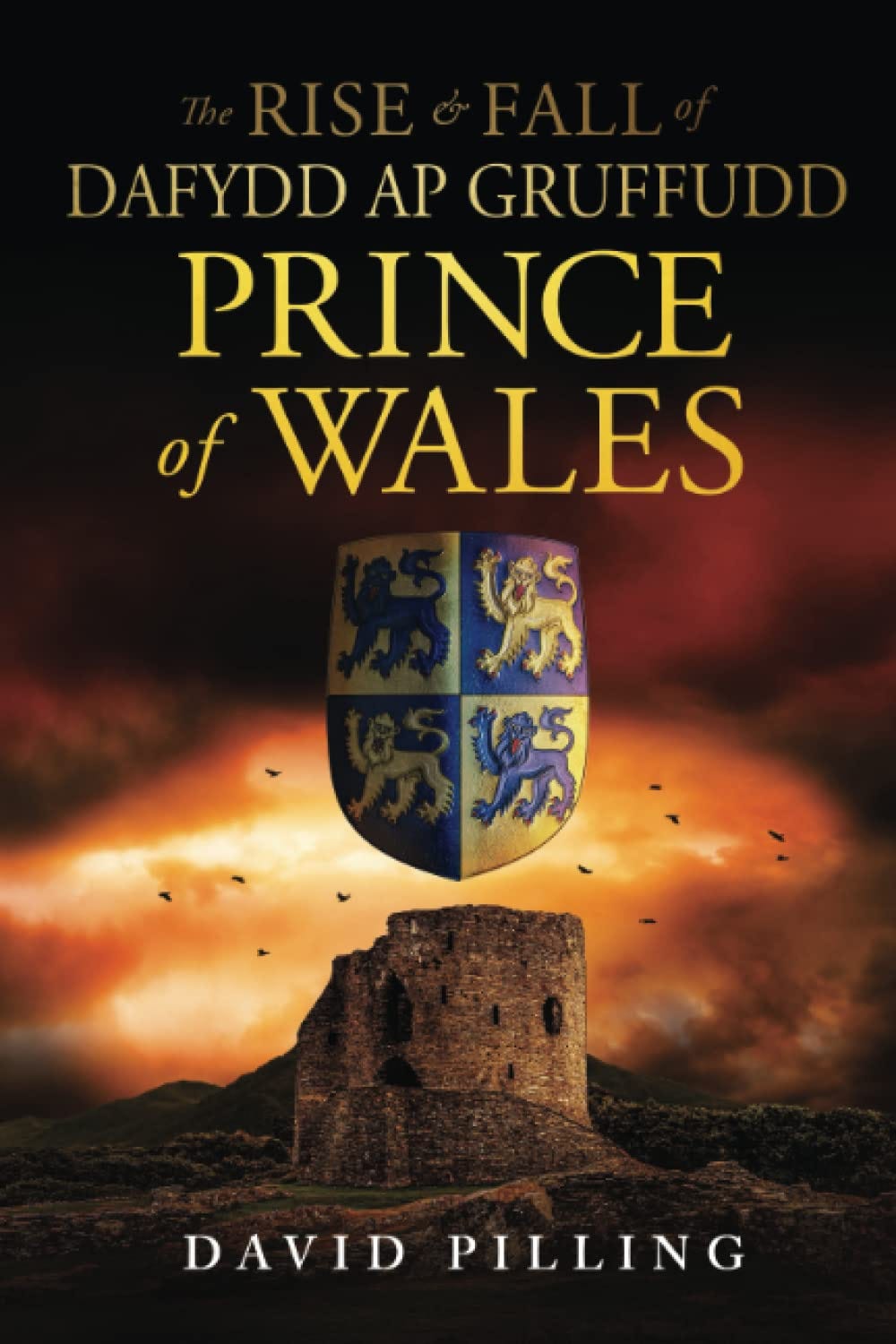
Attached is the cover of a short biography of Dafydd, by some vile Sais hack.
No posts
Comments
Nothing yet. Say the first thing.
Sign in to join the conversation.