
Recently I read a Substack post about a founder who paid her last $2,500 to a publicist and then she got a message she was never meant to see.
It was from her publicist who meant to send the message to someone else. It said: “I’ve reached out to everyone I can think of. I’ve spent twice the time I should have spent on this client. Nobody cares about this person. I don’t want to work on this any longer.”
After getting zero press, the founder decided to write her own story about her “why” and she posted it on Medium.
The story ended up going viral and investors read the article. Then she eventually got into Vogue, Forbes, Fortune, etc.
But here’s the lesson for every founder who’s been ghosted by editors: the story that got her attention was the one she wrote herself.
A lot of times founders think the only way to get press coverage is to get a journalist to interview you, when in reality that’s one of many ways.
You don’t have to wait for a journalist to interview you to get more visibility or to reach a wider audience. You can always write the story yourself.
I’m going to walk you through:
Why writing the story yourself is smarter than spending thousands on a publicist when you don’t have a big announcement.
How to create a consistent revenue stream from writing essays that simultaneously promote your business.
How to shift your mindset around press outreach. Most of the time it’s not that your story isn’t good, it’s that editors are busy and you need to position it as something they need.
Usually, when founders hire a publicist, they want more eyes on their business. The thing is… if there’s no big announcement, nothing timely, a publicist doesn’t have much to work with, that’s if you even have the budget for one in the first place.
And it’s harder than ever to get people to write about your business, because editors are understaffed and overworked. Getting an interview can still happen, but it doesn’t need to be the first or only way in.
That’s why I love the story I shared at the top.
There are tons of publications that accept guest articles and personal essays. If you write about something you know, something you achieved, or a story worth telling, they’ll publish it. And getting an article published under your name still gets you:
Credibility and authority: you wrote for a real publication
Their audience: they’re the ones posting it to their site and their social
SEO: you’re still getting mentioned on the back end
It’s very similar to what you’d get from an interview, especially when you don’t have the budget for a publicist.
P.S. No shade to publicists! The good ones are always worth it, but I know not everyone has that budget.
A lot of these publications will actually pay you to contribute your experience. They might not have a therapist on staff or have an expert in your niche on their team.
Once you build a relationship with an editor, it’s very possible to negotiate a standing arrangement like contributing essays two to four times a month, for example. As you’ve seen from being a subscriber to this Substack, the fee varies per publication, but I’ve paid expert contributors around $300 per story.
That’s an added income stream for your business, not just a press win.
It’s hard not to take it personally when an editor says no, or ghosts you, or passes. It can be deflating, especially when you worked hard on something you believe in.
But two things are almost always true:
It’s usually not about your story. The editor might be busy, understaffed, or they might have a backlog of stories to publish. There are a hundred reasons a pass has nothing to do with you.
It’s usually about positioning, not substance. A lot of times, the story itself is fine; it’s how it’s being told that needs work. The editor or publication doesn’t see how it benefits their specific reader. So you always have to think about the publication’s audience when you pitch, not just your own story.
The best way to do this: tell your story in headline format. Look through the publication’s actual headlines, then try to condense your story into one: this is what happened, this is what I did, this was the result. That’s how an editor sees the shape of the piece fast, especially if you’re pitching something you plan to write yourself.
An example:
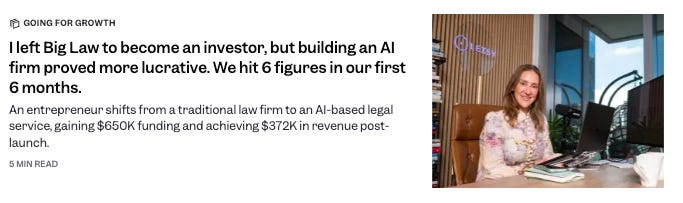
What happened: I left Big Law to become an investor
What I did: Built an AI firm
The result: We hit 6 figures in our first 6 months
MAKE IT SPECIFIC.
This last part (the angle) is where almost everyone gets stuck.
I’ve helped a lot of people publish their stories just by helping them see a new angle or creating one they didn’t see before.
One example: a client of mine got on Today.com from a conversation we had about something as small as the gifts she gives flight crews when she travels. Her brand is about travel and spreading positivity. That tiny, human story is what we pitched, not her list of recent awards.
Here it is:
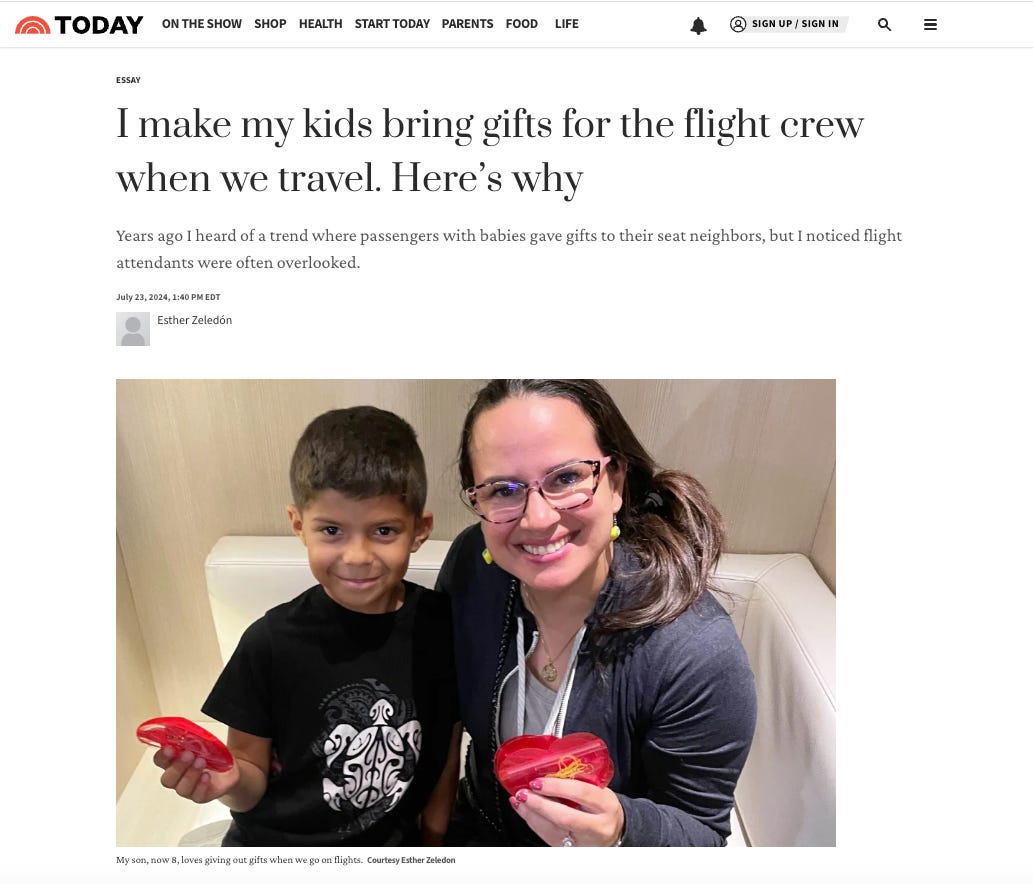
This was paid at $350, btw.
I’m hosting a 30-day pitching challenge starting in September. I’m hosting a 30-day pitching challenge starting September 1, and doors close next week.
Here’s what you get:
Your angles: we’ll find the specific story you have that’s the one you should be pitching, not just a list of your accomplishments or fluff to send to editors
A pitch list: publications that accept guest pitches and personal essays, ready to go
Real feedback: direct access to me to define and sharpen your pitch before it goes out
A community: weekly live calls with me and a group of founders doing this alongside you, plus a WhatsApp for support and accountability
A plan: by day 30 you will have 3-5 pitches sent out and a system to keep you going
30 days from now, your story could be on Today.com.
The spots are limited because I’m doing live calls and real feedback with this group, not just dropping lessons and disappearing.
👉 Doors close August 24.
No posts
Comments
Nothing yet. Say the first thing.
Sign in to join the conversation.