
AI companies want more content, but on what terms? This week on The Media Copilot, Pete talks with Newstex president Michael Ellis about what a fair AI licensing deal actually looks like, and why smaller publishers may have the most to gain.
We also want to highlight AI for Media, our upcoming live course for journalists, PR pros, and comms teams who want real, practical AI skills, not just clever prompts. More on that below, and also keep in mind our fast on-ramp, AI Quick Start, which is $49, takes about an hour, and always features the latest skills and tools.
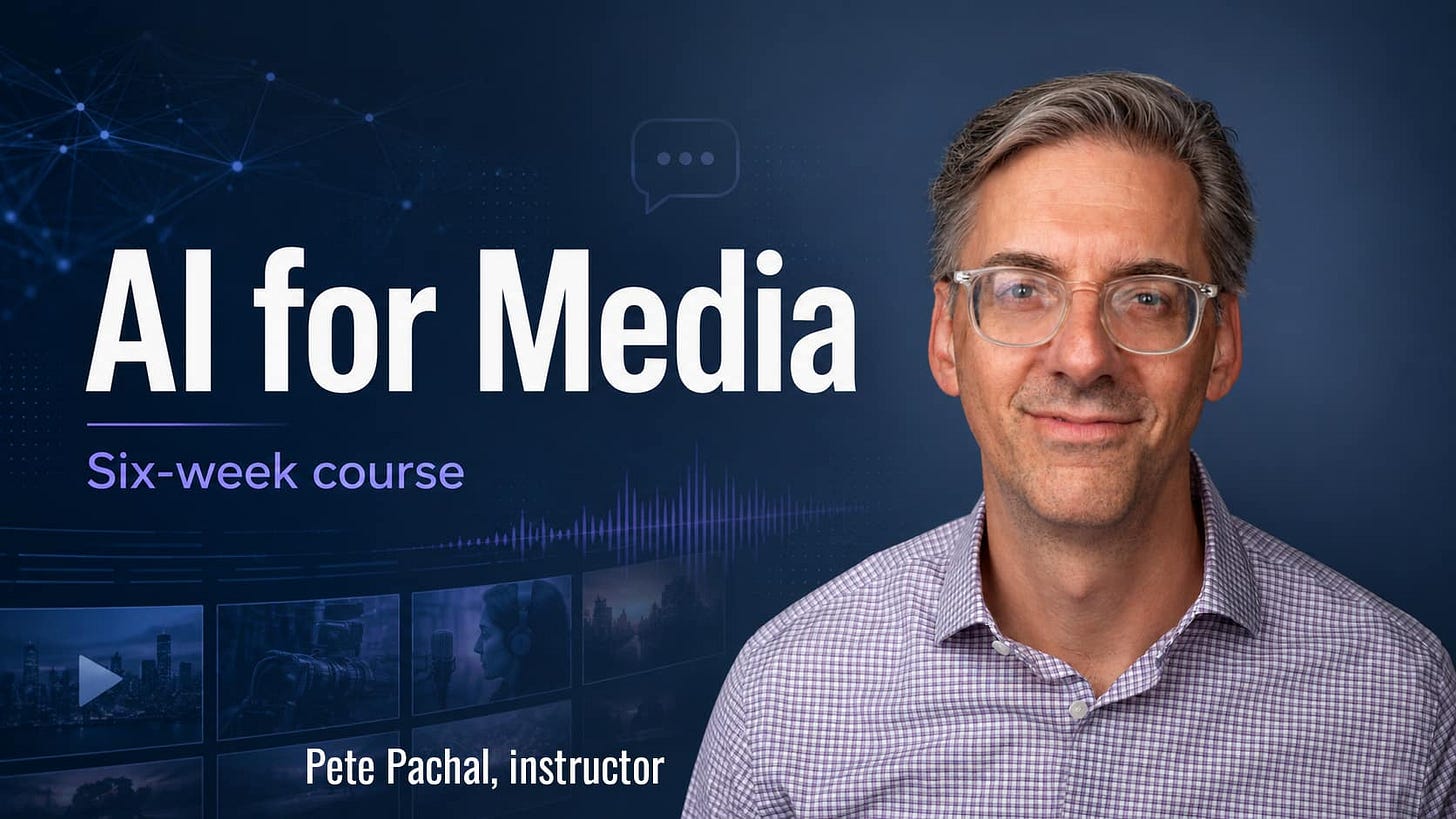
AI for Media is The Media Copilot’s live six-week certification for journalists, PR pros, and communications teams who want working AI systems instead of a chatbot habit. Fully revamped for the fall cohort.
Build custom assistants for pitches, beats, briefings and drafts that keep your voice instead of flattening it.
Run focused research with Gemini Notebooks and deep-research tools across filings, transcripts and large coverage troves.
Vibe code interactive pages and live dashboards for your reporting or campaigns, with no dev team required.
Deploy agents that handle media monitoring, sentiment tracking and the repetitive parts of your week.
You finish with a capstone tied to your own beat, accounts or organization, plus two 30-minute one-on-one coaching sessions with me.
📅 Tuesdays, Sept. 22 to Oct. 27, 12:00 to 1:30 p.m. ET
💳 $1,500, or 25% off with code EARLYBIRD25 through Sept. 11
📦 Includes prompts, recordings, course materials and a certificate
On this episode of The Media Copilot, host Pete Pachal sits down with Michael Ellis, President of Newstex, to explore one of the most important and least understood battlegrounds in artificial intelligence: content licensing.
Listen or watch:
As AI companies race to build smarter models and answer engines, publishers are asking a basic question: how should their work be used, and how should they be compensated?
For more than two decades, Newstex has helped publishers distribute licensed content to research platforms, financial information services, and now AI-powered products. Ellis explains why licensing is no longer simply about granting access to content. Instead, it's about defining purpose, preserving context, and ensuring publishers retain both value and visibility in an AI-driven ecosystem.
The conversation explores why high-quality, licensed content is becoming increasingly valuable as AI systems struggle with misinformation and low-quality "AI slop." Ellis discusses the growing importance of attribution, provenance, machine-readable metadata, and usage-based compensation models that reward publishers based on how their content is actually used.
Pete and Michael also examine how smaller and independent publishers can compete in a marketplace increasingly dominated by large technology companies, why collective licensing models may offer a path forward, and how platforms like ProRata and AskNews are building new approaches to attribution and publisher compensation.
It's not simply about granting access to content. It's about defining purpose, preserving context, and ensuring publishers retain both value and visibility in an AI-driven ecosystem.
Finally, Ellis shares both his optimism and his concerns for the future of journalism in the AI era, explaining why the industry must move quickly to build sustainable business models before the economics of publishing are permanently reshaped.
Why AI content licensing is about purpose, not simply permission
How Newstex connects publishers with AI platforms and research services
Why provenance and context matter as much as content itself
The economics of usage-based compensation for publishers
How smaller publishers can compete in an AI-first information economy
The role of metadata, attribution, and machine-readable content
AI-generated content versus trusted editorial content
The future of paywalls and premium journalism
How companies like ProRata and AskNews are changing content licensing
What publishers must do now to prepare for an AI-mediated future
The battle over AI and journalism isn't just about copyright. It's about who gets rewarded for creating trusted information. As AI becomes the primary interface for discovering knowledge, publishers face a defining moment. This conversation explores how licensing, attribution, and new business models could determine whether quality journalism thrives or struggles in the age of generative AI.
Produced by Pete Pachal and Executive Producer Michele Musso. Edited by the Musso Media team. Read the full episode notes at mediacopilot.ai.
No posts
Comments
Nothing yet. Say the first thing.
Sign in to join the conversation.