
Boat owners are people who own boats.
This doesn’t mean they necessarily make use of their vessels.
Then there are sailors: people who can sail.
They may or may not practice their skills regularly, and they may or may not own a vessel themselves.
Then there are cruisers, often referred to as people who usually own their own vessel, in which they spend periods of time onboard, cruising in certain sailing playgrounds.
Generally, these crews also have an earthly dimension—namely, a house and a life on land to which they come back to during the sailing off-season.
Then there are liveaboards. These are people who live on boats full-time but generally don’t cruise or sail at all. It is not uncommon to find, in every bay or port, a character or three who have stopped their nautical meanderings and decide to dig the anchor in even deeper—staying in one place indefinitely, growing barnacles on their hulls (and beards on their faces).
And then, there is another category in the sailing demographics:
The Internationals.
This one holds a special place in my heart. (I’ll get back to this.)
------
After leaving behind the bries and baguettes of tropical France, Tara pointed her bow towards the wild and lesser-known neighbour: Suriname.
The squalls we’d been spared during the Atlantic crossing came for us in force on this leg: gusty winds—rain, oh so much rain—and an overall uncomfortable ordeal.
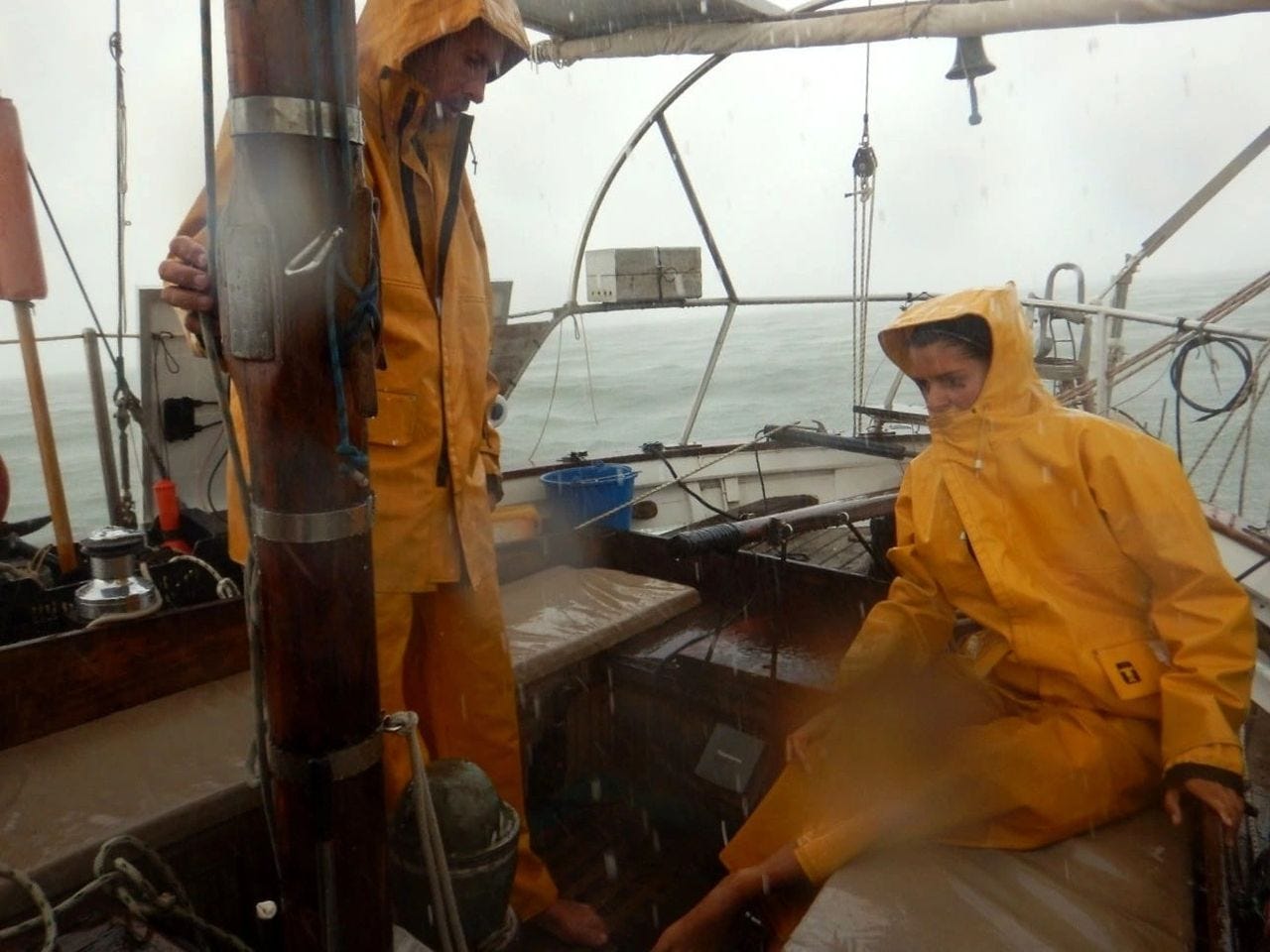
We came into the calmer waters of the Paramaribo River, in the depth of night, of course.
I’ll skip the part about how we very narrowly missed collision with a bunch of wooden poles that were erected and unlit, standing like dark silent totems, in the middle of the river.
That one is definitely not worth remembering.
Anchors down, Q flag flapping, I merge with my bunk in profound sleep.
The next day, things became clearer with the luxury of daylight and nurturing rest.
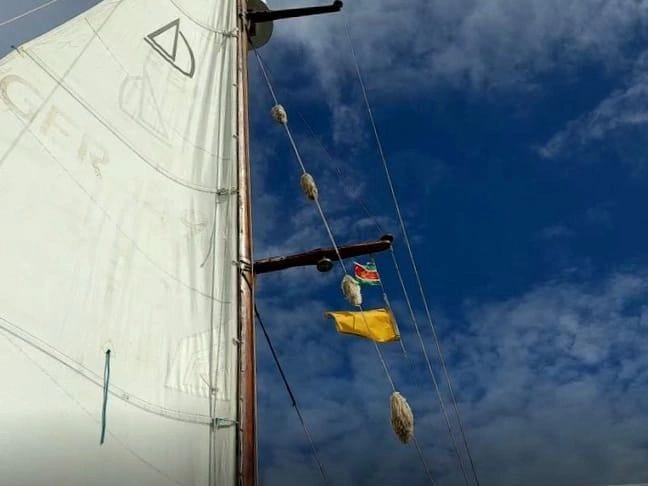
(I’ll also skip the part about how we started dragging out to sea in the early morning hours, pushed by the ferocious currents coming down from powerful Amazonia.)
Anchors up. We pressed on.
Our course was set for Domburg, a sleepy town upriver from the bustling capital of Paramaribo.
Taito climbed the mast to “make sure we’d clear the bridge” that connects the city’s north and south.
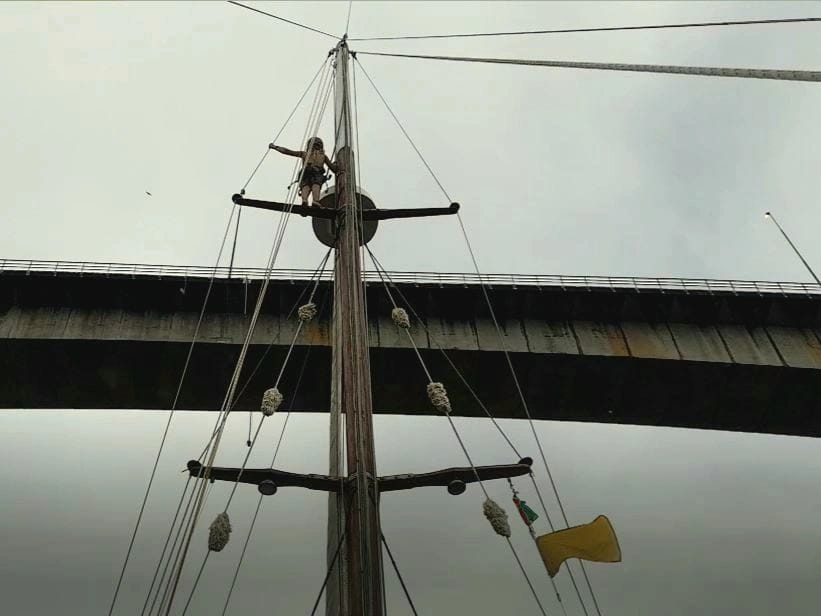
Eventually, we left behind the hustle and bustle associated with metropolitan port areas: cranes, trawlers, fishing fleets, containers, rusty ships, and murky waters.
We continued further.
Soon the chaos gave way to narrow bends and scattered homes.
We arrived in the sleepy town of Domburg, where a few yachts were tied to mooring balls distributed along the side of the river.
Here, yes, we were allowed to anchor—so we threw the hook and were greeted shortly after by a friendly South African man who was on a small yacht nearby.
What we didn’t know was that he would be greeting us hello on our arrival,
and we would be greeting him goodbye a few months later—
on his departure,
the ultimate departure.
(to be continued)
Comments
Nothing yet. Say the first thing.
Sign in to join the conversation.