
I want to take you back—in imagination—to the time when the upper echelons of society had utter confidence in their own rightness, rooted in rationality and religious rectitude. For centuries, the systematic mode had provided certainty, based on those illusory understandings of meaningness. I want to show you their shock, horror, and bewilderment as their justifications fell through beneath them.
Unfortunately, I cannot do that, because I am incapable of imagining such certainty. Probably you are too. I have lived all my life in a culture that constantly reinforces the message that meaning is a matter of perspective. People’s opinions about politics, ethics, aesthetics are a matter of choice, or personality, or based on individual experiences, or culture, or other arbitrary factors. Even supposed scientific truths, like about covid or global warming, are essentially contested and inherently uncertain. Contemporary Westerners may have our own strong opinions, but we literally cannot imagine what it would be like to live in a world where everyone takes for granted that there are well-known, generally-agreed-upon ultimate truths of such matters.
Leaders’ total confidence in society’s correctness contributed to the extraordinary achievements of the systematic era.1 That was shattered in the early 1900s, partly by a series of foundational crises in rationality and religion. This page explains the collapse of rationalism; I cover the disintegration of religion in the next chapter, on the countercultures.
The promise of rationalism was that everything can be known with certainty, and understood and controlled, by applying the eternally-correct methods of reasoning. This was true enough to bring about the Scientific Revolution, the Industrial Revolution, reasonably well governed democracies, great advances in health, life expectancy, living standards, human rights, and saner public morality. There was every reason to suppose progress would continue and accelerate.
Unfortunately, in the early twentieth century, rationalism delved too deep, undermined its own foundations, and awakened eldritch horrors. By the middle of the century, the inescapable conclusion was that rationality, science, and mathematics cannot supply the ultimate justifications that seemed possible in the 1800s. It is not true that everything—or even anything—can be known with certainty; nor fully understood or controlled. There is no absolutely correct method of reasoning. The promises of rationalist eternalism, which underwrote the optimism of the systematic mode, cannot be fulfilled by any means.
I believe this was a major factor in the breakdown of the systematic mode, and the several phases of disintegration of meaning through the rest of the century.2 Leaders of social and cultural systems were well enough educated to understand that rationalism had failed, although probably not the details of how or why. That induced a profound loss of confidence. When challenged by the anti-rational countercultures of the 1960s–90s, they could not justify status quo institutions, and relinquished power relatively peacefully.
The foundational crises proved that rationality does not always work. Unfortunately, the word “always” gets too often forgotten. Incoherent irrationality is typical of our present, atomized mode. Institutional failures during the covid crisis, combined with popular pseudoscientific resistance to even sensible public health policies, may be a foretaste of greater catastrophes.
Rationality works much of the time—not just in science and mathematics, but in many dimensions of meaning as well: in politics, ethics, and aesthetics, for example. Restoring respect for a relativized rationality will be key to our upcoming transition to the fluid mode. It may herald a new age of progress, not just material but in dimensions of meaning as well, outshining anything the systematic mode could imagine.

The end of rationalist certainty was not a single event. It came as a series of unexpected, unwanted discoveries, throughout the first half of the twentieth century. Here I cover only some key events: non-Euclidean geometry, Einstein’s general relativity, quantum theory, and the foundational crisis in mathematics caused by problems with infinities and in logic.
The Elements of Absolute Truth
For thousands of years, every educated Westerner understood that mathematics was the direct route to the Mind of God. That may sound absurd now, when religious people often revile technical rationality, but it was true from 500 BC until about a hundred years ago.
Many Ancient Greeks had a powerful religious certainty that everything in the material world must follow mathematical laws. It’s difficult to understand why, because they had only two examples, neither of which quite worked, and virtually everything else was a counterexample. The theory of musical harmony based on integer ratios of string lengths was one near-success,3 and the Ptolemaic scheme for calculating planetary motions was the other.4
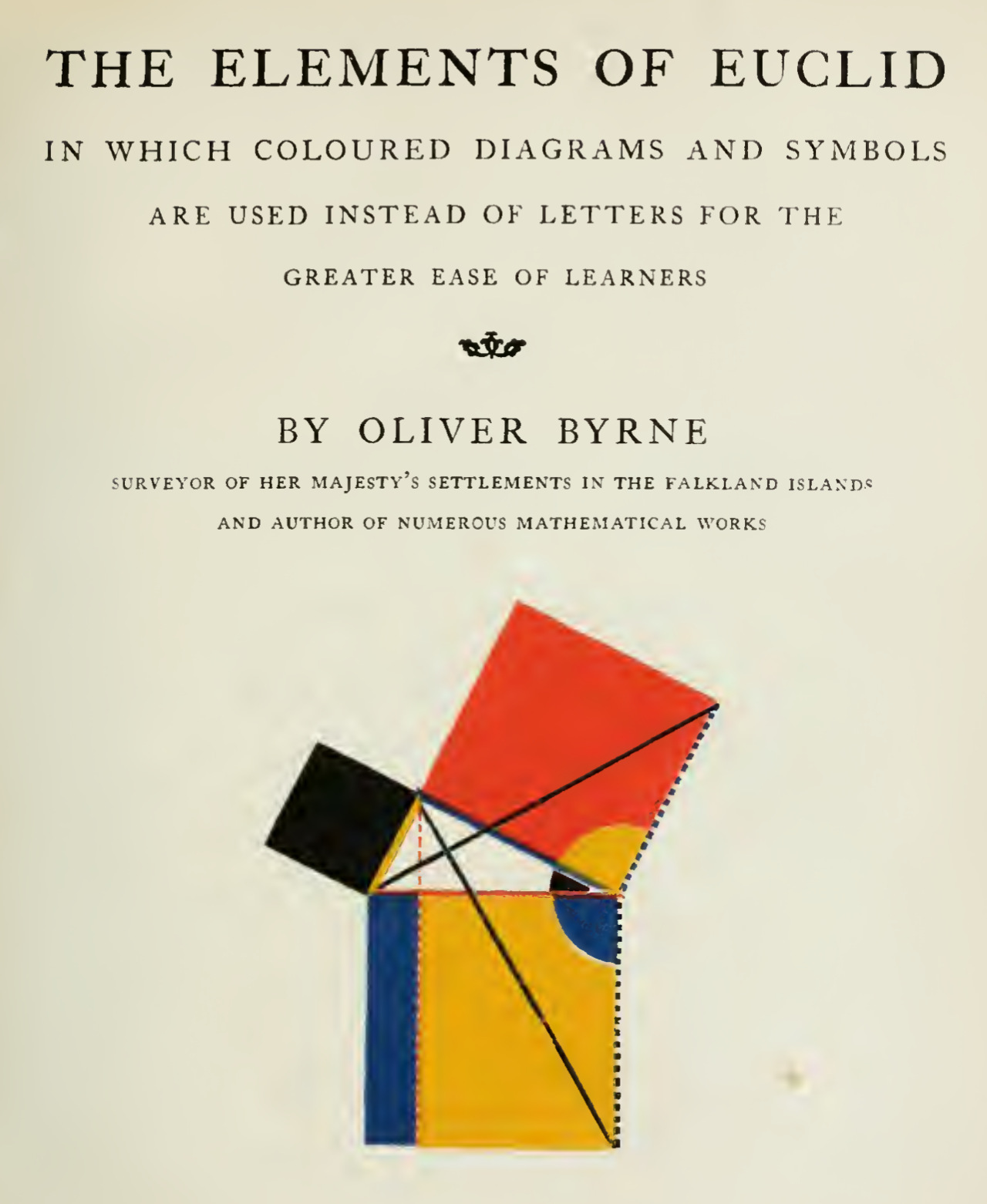
Fortunately, it seemed that mathematics can at least provide certainty about itself. Euclid’s Elements was the sacred source of rationality. It was the standard geometry textbook, used unchanged for two thousand years, up until about 1900. By definition, every educated European had to have read and understood the Elements.
The Elements taught the method of mathematical proof. Euclid started from ten simple, unquestionably true facts no one could argue with. From these “axioms,” he derived complex non-obvious insights. Each step in the proof was also simple and unarguable. Each compelled agreement, leading you down a path to an unexpected conclusion. Therefore, you knew everything in the Elements was absolutely certainly true.
The Elements became the standard of rationality in general, not just in mathematics. Starting from unarguable axioms concerning some topic, you perform a series of unarguably correct deductions that demonstrate whatever you wanted to prove: QED.
This was the ideal for all systems of meaning. If you wanted to justify political or moral or legal claims, for example, you tried to set them out in the form of Euclidean proofs. In the mid-1600s, Baruch Spinoza produced an ethical theory—still influential—that he modeled on Euclid’s Elements, titled Ethics Demonstrated in Geometrical Order. Two hundred years later, Abraham Lincoln, who grew up in poverty and was almost entirely self-educated, wrote:
In the course of my law reading I constantly came upon the word “demonstrate.” I thought at first that I understood its meaning, but soon became satisfied that I did not…. I consulted Webster’s Dictionary. They told of “certain proof,” “proof beyond the possibility of doubt”; but I could form no idea of what sort of proof that was…. At last I said, Lincoln, you never can make a lawyer if you do not understand what demonstrate means; and I left my situation in Springfield, went home to my father’s house, and stayed there till I could give any proposition in the six books of Euclid at sight. I then found out what demonstrate means, and went back to my law studies.
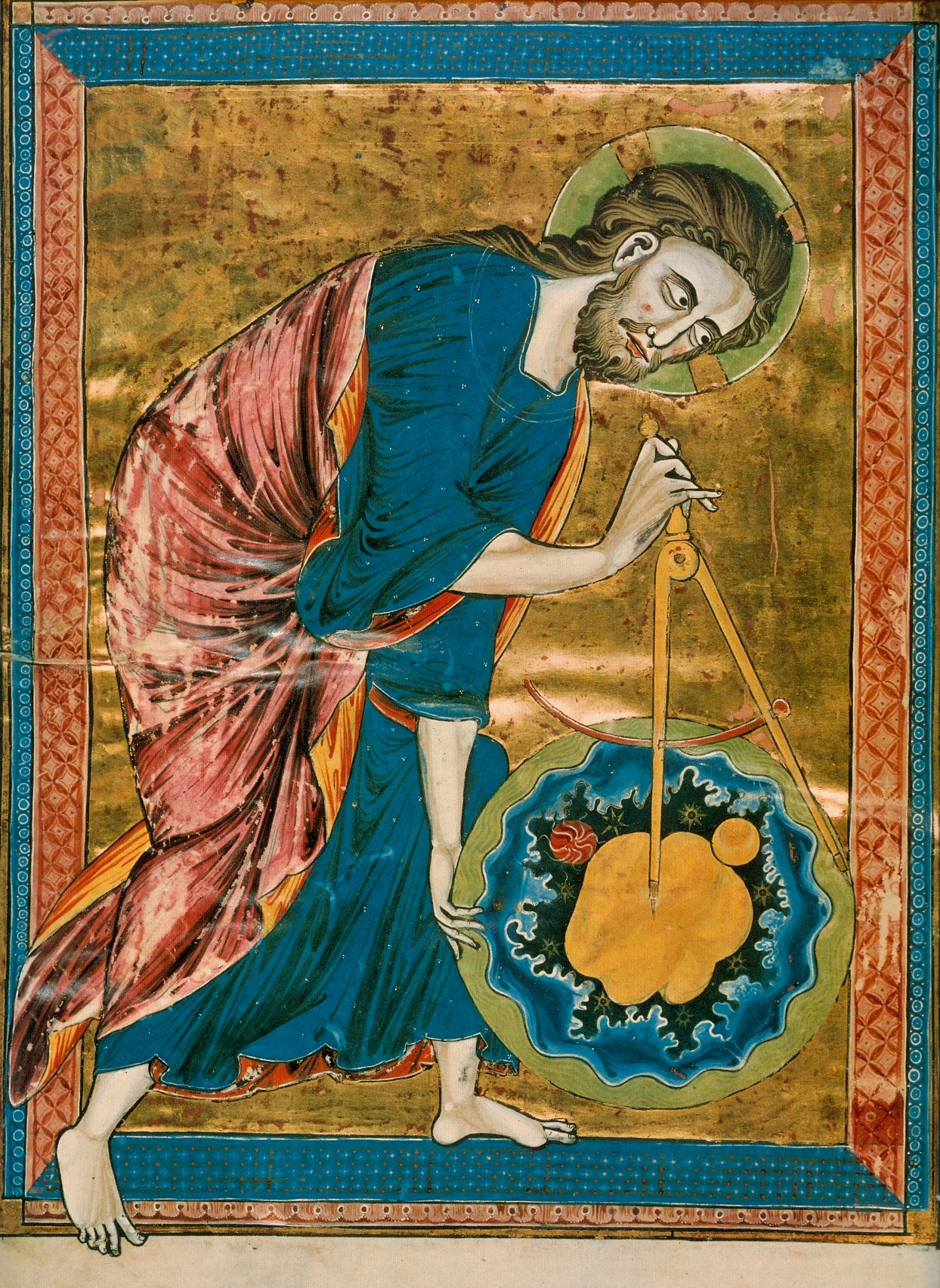
For many, mathematical certainty was also a basis for religious certainty. God was the Supreme Rationalist, who created the cosmos in accord with mathematical structures that exist eternally in His Mind, outside space and time. By examining His Creation, we can find its underlying logic. That gives us a view into the Divine Rationality, and therefore absolute certainty concerning the nature and intention of God. St. Augustine, whose synthesis of Biblical myths and Ancient Greek rationalism formed the philosophical basis for Western Christianity, wrote:
If you see anything at all that has measure, number, and order, do not hesitate to attribute it to God as craftsman. If you take away all measure, number, and order, there is absolutely nothing left.
Newton, more certain than God
Nature and Nature’s laws lay hid in night:
God said, Let Newton be! — and all was light.
—Alexander Pope, 1727
After two thousand years of all rational people knowing that mathematics must somehow explain everything, Isaac Newton finally proved that it did. Thank God!
Newton’s physics was based on Euclid’s Elements, and therefore was absolutely certain.5 He made extensive use of the Euclidean understanding of space, and the deductive methods of mathematical proof. Like Euclid, Newton’s physics is simple and elegant. Any reasonably bright high school student can learn the whole thing, and it all seems like common sense once you do.6
Mathematical physics gave, again, an unobstructed view of God: an understanding of His Will as manifest in His Creation. And, it seemed that it could explain everything. It was a complete theory of material existence. Or anyway, it should be one, and surely would be one, once the details got worked out.
Science and mathematics even became more certain than God. By 1800, many educated people doubted God, but no one could doubt Euclid’s geometry, nor Newton’s Laws of Motion. Those were absolute truths, true eternally and everywhere without exception. You didn’t need to believe anything, to take anything on faith: they were proven true by easy-to-follow logic that no one could possibly argue with.
Together with the Elements, Newton’s Laws became the prototype of systematic rationality for the European Enlightenment. If it works for gravity, why not for government, ethics, art, religion? And, to an astonishing extent, it did.
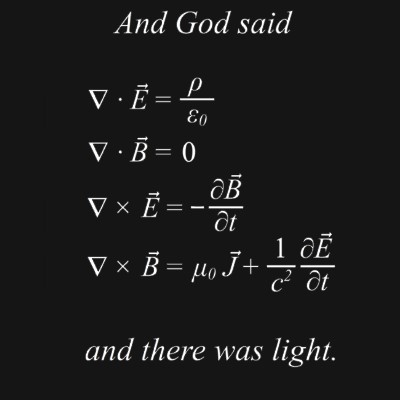
Newton didn’t fully explain light or magnetism, but that got done by the end of the 1800s. Or so it seemed! Four simple, elegant equations explained all known facts with perfect precision.7 As of 1900, physicists could confidently declare: “There is nothing new to be discovered in physics now. All that remains is more and more precise measurement.”8
With physics completed, explaining everything else seemed imminent. This was the fantasy of reductionism, that all knowledge should be applications of physics.
When parallel lines go bad
One of Euclid’s axioms was somewhat more complicated than the others, and less obviously true. It can be stated as: Given a line, and a point not on the line, you can draw only one other line that goes through the point and doesn’t intersect the original line. The new line will be parallel to the original one, so this is called the parallel postulate .9
The postulate is pretty obviously true, but why? For more than two thousand years, mathematicians tried to prove it true—and failed.
In the early 1800s, several mathematicians attempted a new tactic, the method of contradiction. If you want to prove something is true, you can pretend it is false, and use its falseness to prove as true something that definitely is false. That implies that your pretense was wrong, so the original thing must have been true.
So, let’s suppose the parallel postulate is false. Then either there is no line parallel to the given one, or else there’s more than one. Then something should go very wrong, and you’d know the parallel postulate was right.
But nothing goes wrong. You can do geometry perfectly well in either of these ways. Everything works fine. So these several mathematicians had accidentally discovered “non-Euclidean geometry.” Its horrific significance remained obscure for several decades, but by the late 1800s, a toxic unease seeped out into the culture. What if—surely not, it would not be possible—but what if it were not just a trivial oddity—what if it were not just a theoretical possibility with no relevance to reality—what if it were true?
Fyodor Dostoevsky’s 1880 novel The Brothers Karamazov was a foundational text for both nihilism and existentialism. It concerns problems of faith, free will, reason, and morality, driven by then-new conflicts between religion and rationalism, represented by two brothers with sharply differing views. In the philosophically central chapter, the rationalist brother invokes non-Euclidean geometry as an example of something that, like God’s creation, may be true but cannot be accepted by a rational mind:
If God exists and if He really did create the world, then, as we all know, He created it according to the geometry of Euclid and the human mind with the conception of only three dimensions in space. Yet there have been and still are geometricians and philosophers, and even some of the most distinguished, who doubt whether the whole universe, or to speak more widely, the whole of being, was only created in Euclid’s geometry; they even dare to dream that two parallel lines, which according to Euclid can never meet on earth, may meet somewhere in infinity. I have come to the conclusion that, since I can’t understand even that, I can’t expect to understand about God.
Space and time are bent. What??
After the “end of physics,” all that was left was more precise measurement. Unfortunately, one of those measurements went terribly wrong. It blew up physics, blew up rational certainty, blew up modernity, and nearly literally blew up the whole world with nuclear weapons in the Cold War.
It was the Michelson-Morley experiment of 1887, which measured the speed of light with unprecedented precision. Light is a wave, like waves on a pond. If you throw a rock in from a moving boat, the waves travel away faster behind than in front, because the boat is moving relative to the water. The earth is traveling through space, so light should likewise appear to travel away faster behind than in front. Michelson and Morley found it doesn’t. It travels at the same speed in all directions.
That answer couldn’t be right. It contradicted fundamental principles of physics, not to mention rationality and common sense. However, it was right, as several scientists found when they repeated the experiment.
Einstein’s theory of relativity solved that problem, but only at a hideous cost.
Relativity is based on non-Euclidean geometry. Space itself is warped, so the parallel postulate is not true. In physical reality, parallel lines can meet. It was bad enough when Euclidean geometry turned out to have alternatives in the abstract. Discovering that this one thing every educated person was most certain of was actually false was horrifying. What else might turn out to be wrong?
Well, Newton’s theory of gravity, more certain than God, was also false. Einstein published the theory of general relativity in 1915, but the catastrophe came to public consciousness only in 1919, with the Eddington experiment which showed that the sun’s mass bends space, so light from distant stars appears to be deflected as it passes by.
 ">23.Also from Franzén’s paper.
Comments
Nothing yet. Say the first thing.
Sign in to join the conversation.