

I’ve written so many course papers.
Countless words and pages and arguments, on everything from public policy in my University of Chicago undergraduate degree to philosophy for the online MIT courses I assign myself today.
Just this past month I wrote three for 24.01: Classics of Western Philosophy, and they all met the same fate: filed away in Google Drive, never to be looked at again.
That possibility has become a real motivator along my self-study journey. Knowing a paper might become the foundation of work other people read changes how deeply I engage with it. I get more excited about the ideas when I know they’re going to leave my house, and I can’t wait for the reader who disagrees with my argument in the comments or recommends a book I hadn’t heard of.
I think I’ve done this often enough now to have a few tips. If you’d like to try it, consider the options below for taking a course paper, no matter how old, and turning it into something people will actually read.
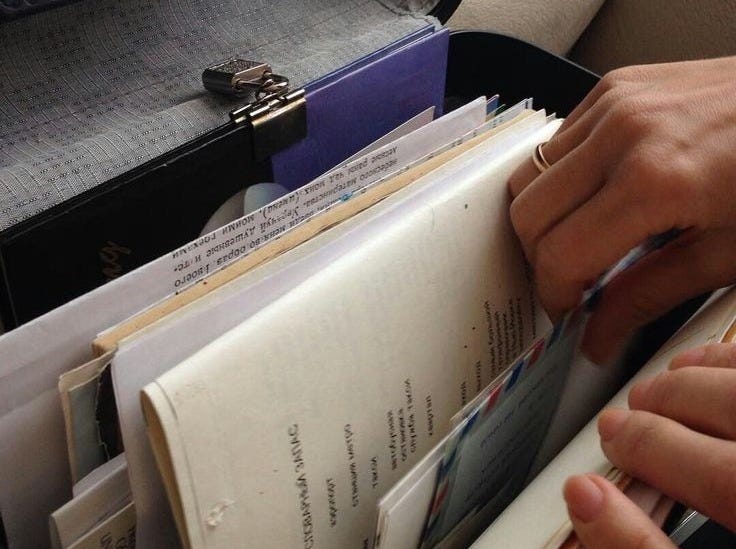
Everyone has a memory of that one class they couldn’t wait to get to each week, or the one topic that sparked an interest in a major or a career. Go back to those courses and papers you were excited about when you wrote them, and find the questions you cared about intrinsically. If you still have the essays, look for the paragraphs you remember writing fastest, or the ones you kept rewriting, and see whether something was at stake for you there.
That question can be rich fodder for a Substack post where your job will be to convince your readers to care. A writer who is genuinely interested in her own topic stands a much better chance of hooking readers.
Graceful provides us with a great example of this in her essay “Neurological vs. Literary Synesthesia.” Her interest in her own material is most evidenced by a line from her conclusion: “I could read about this for my entire life and be happy.”
An analysis of a 2,500-year-old philosophy is allowed to float free of the present, but a Substack post is for the living. Once you have your question, go hunting for where it’s being fought over right now.
I did this with a writing exercise from 24.01. The prompt asked for a reconstruction of Plato’s arguments in the voice of Socrates, but what captivated me the most was the machinery of the Socratic method itself.
How might the elenchus help us avoid falling for rhetoric today? I anchored this question with an analysis of a federal deposition a U.S. DOGE staffer who had been responsible for cutting millions in federal funding for DEI grants without being able to define DEI. This is probably a familiar scenario to anyone who has read the Socratic dialogues. The result was the post below, “On not being fooled by false knowledge.”
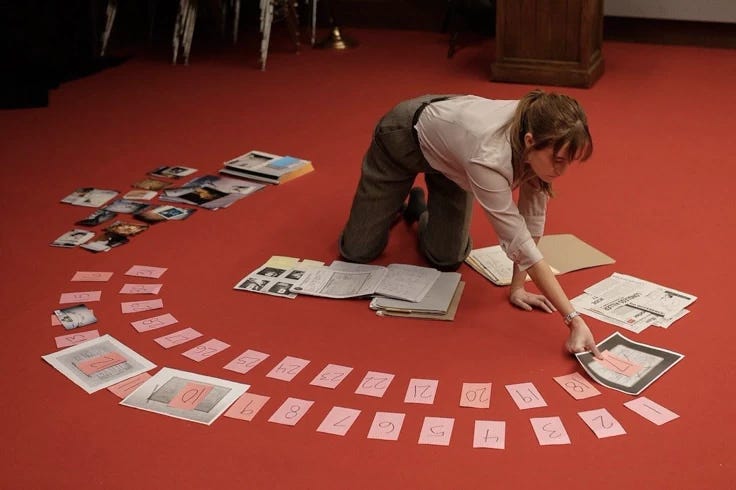
Academic writing asks you to fade into the background and use as few first-person pronouns as you can manage. In a Substack post, your opinions and your perspective come back in, and they become the connective tissue between the ideas. Tell the story of how the topic came to matter to you, or where it touches your own life.
One caveat: most readers dislike a diary entry repackaged as an essay, so the personal material has to do argumentative work. My rule of thumb is that an anecdote should either raise the question or test the answer.
A String of Pearly Thoughts has posted several Substack essays developed from or inspired by her own course papers, and she connects the topics deftly to her own life. I love the example below, from “The Philosophy of Soap,” which pulls the reader into the strangeness Pearl herself felt during the discussion.
Oftentimes, an essay is asking you to demonstrate not only your understanding the course material, but the ability to leverage a specific skill. A philosophy professor wants to see you analyze an argument; a literature professor wants to see you find hidden meaning in the text.
If you enjoyed the writing more than the subject, apply that skill to a topic your readers are already drawn to. Walk them through how you did the work, and tell them what you've learned about doing it well.
un/relearnings does a version of this in her “close reading of gwendolyn brooks.” She admits up front that she is testing tools from her literary analysis course, then applies them to a poetry anthology in a way that walks the reader through developing the skill themselves.
Everything above assumes the course paper is the hard part, and sometimes it is. However, anyone who’s been on Substack for more than 5 minutes knows that writing a public essay is its own craft.
For that reason, consider checking out a few of the writers below with an eye on structure rather than content. They don’t write about past courses, but they do a great job of covering everything in-between. I find them to be transparent about their processes as well as generous with advice and hard-earned wisdom.
The Stories Club (Lina) - the cozy place for writers. writing tips, guides, inspiration, and my own personal column
Escaping Flatland (Henrik Karlsson) - I write essays about relationships, thinking, and agency, sometimes with my wife. We live on a windswept island in the Baltic Sea with our two daughters.
Essay Architecture (Michael Dean) - Mapping the secret architecture of great essays
When you’re done perusing the writers above, consider which past courses lit you up when you took them, and how you might apply your old assignments to one or more of the five options.
Let us know in the comments which of your old papers might deserve to see the light of day. I can’t wait to read them!
No posts
Comments
Nothing yet. Say the first thing.
Sign in to join the conversation.