
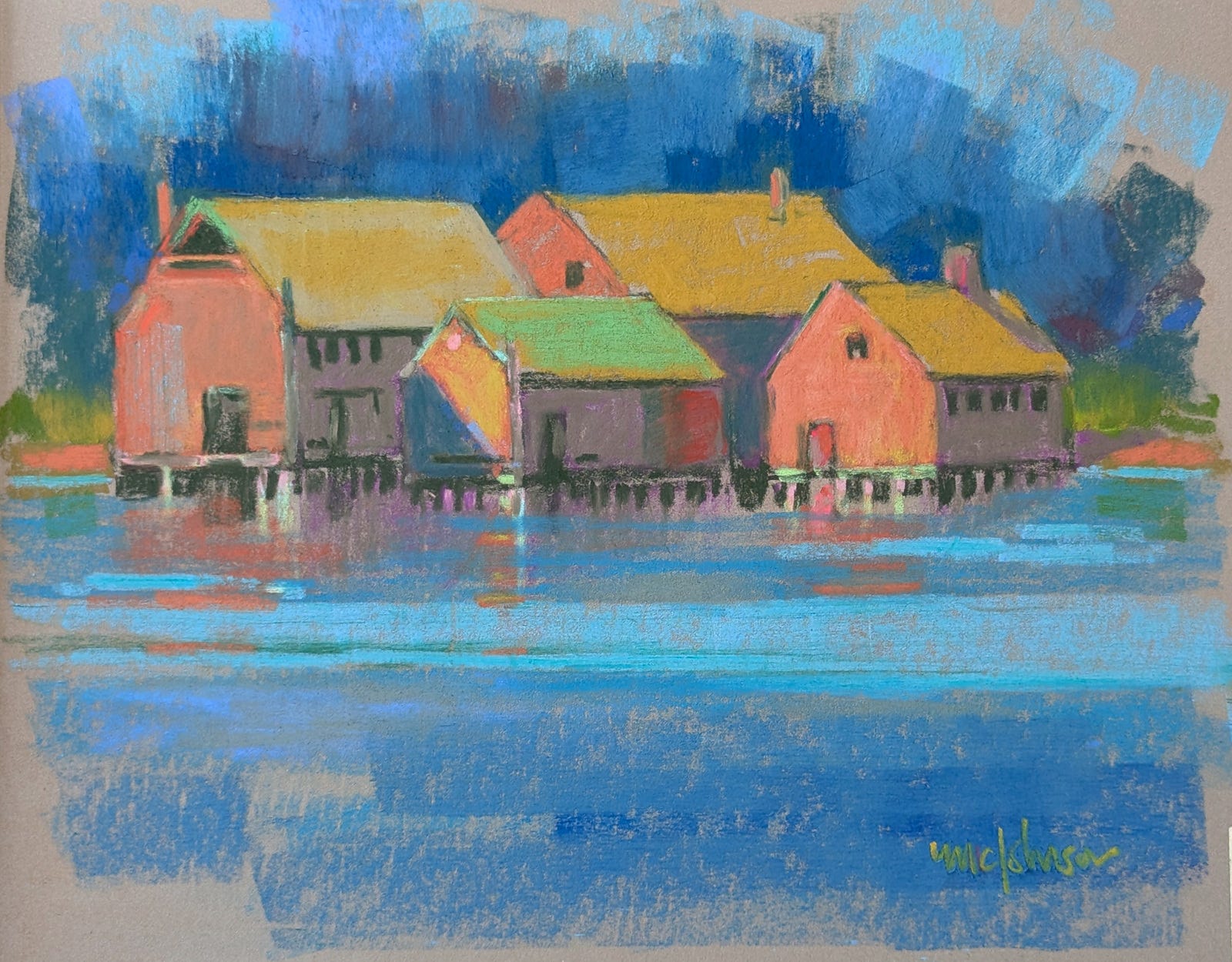
I’ve been painting in pastel for over a quarter-century, and in that time, surfaces for painting in pastel have evolved tremendously. “Evolved” is perhaps the wrong verb—“exploded” is more like it.
In my early days, I painted on a traditional pastel paper, Canson Mi-Teintes, which has so little tooth that any significant layering requires bursts of fixative to lock the pigment in place, and the legendary but now defunct Kitty Wallis paper, which offered a lovely sanded surface but required no fixative. (I still have a stash of that paper, and I treasure it like Smaug in his lair.) But today, there are many more options. A quick look at Dakota Pastel’s website shows 18 different brands, and that number doesn’t include the variations each offers.
I’ll write about my preferences—plus a recipe for making your own pastel surface and some close-up photos of different surfaces—shortly, but first, a little history.
Comments
Nothing yet. Say the first thing.
Sign in to join the conversation.