
“This 5K is your marathon.”
That may seem like a silly phrase, especially for some who are experienced in the world of endurance, but it was exactly what I told my mom a few years ago when we got her on a plan to do her first 5K. At age 62, she ran 29:10, and prior to training for it, she had never formally exercised a day in her life.
The first step
·
October 30, 2023
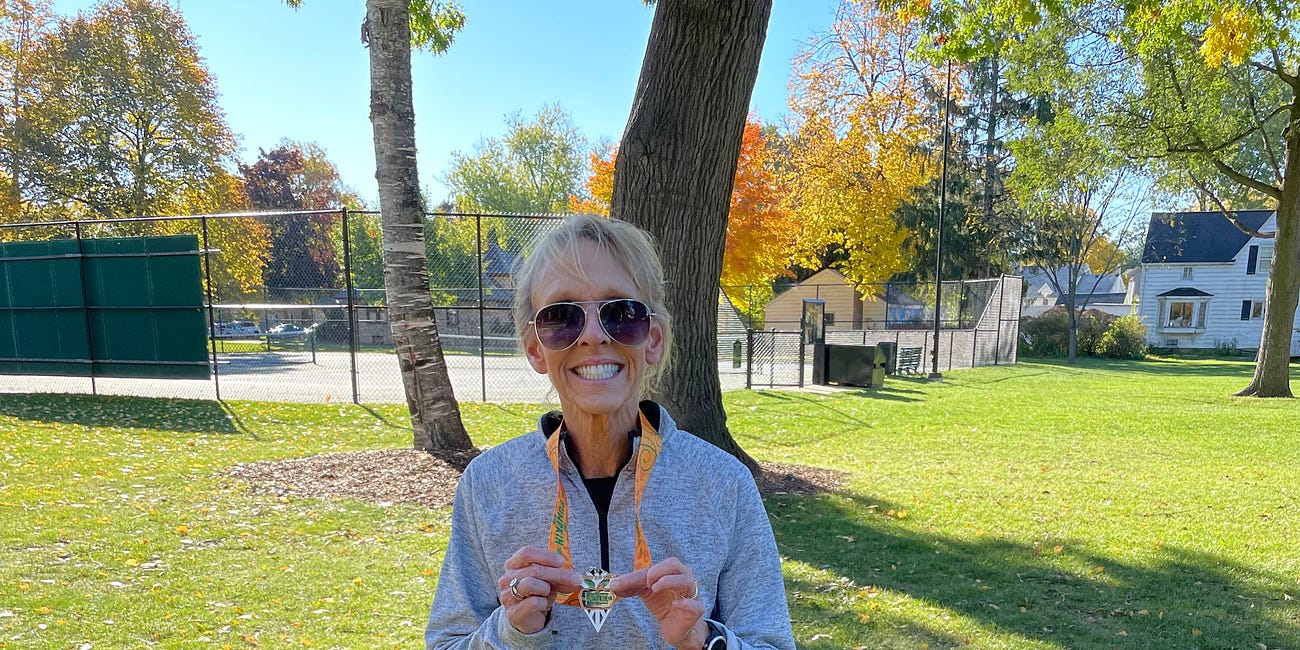
This week’s Study & Sport comes to you by way of a guest writer. Last weekend, my mom completed her first 5K and documented the process of going from never having run a step in April to completing a fast 5K in October. Her words are below:
There are many people in that same boat. They want to commit to a goal, but have never been active. They know exercise is healthy and good, but starting from zero is hard. Something like a marathon seems awesome but daunting…and wholly unrealistic to happen in the short term.
Running itself is no special task. If you try it and do not enjoy it, move on. I will not push you to be a runner. But if you get into it and start to like how it feels, it can be a fantastic activity to enjoy.
So much so that you might be keen to give a 5K a proper go. Not just finishing, but going at full effort for the entirety. With no formal background in exercise, the gap between nothing and a hard 5K needs to be considered. Especially for someone who is pushing 50, 60, or even 70 years old.
The following plan is designed for someone who has spent no time intentionally exercising. This will get you off the couch, on your feet, and into running if that is your goal.
There are a lot of benefits, physical and mental, when we operate a nudge above the recommended activity guidelines. That is some serious value.
Three phases make up the overall plan
Building habits
Run:Walk
Sustained run
You are going to want to budget yourself 4-5 months of training time to appropriately build a cardiovascular and muscular engine fit to handle a 5K best effort. That may seem like a long time for such a short event, but when exercise is absent from your lifetime curriculum vitae, this time course is essential to development. Don’t rush it.
Phase I begins by finding a way to get out the door every morning or evening. Commit to getting out for a 30-60 min walk every day for 30 days. This is not a leisure walk, but rather walking with intent. Power walking as it were.
While this is a conservative approach, the shock of running right away on day one can be either discouraging or damaging. If you can complete this first phase unscathed, you are ready to commit to more.
The physiology behind this phase is not the focus. You are merely setting up a trial run framework to see if you can stick to a stated goal for more than a few weeks.
The rubber meets the road in Phase II. It is time to start running. Most of the activity duration is going to be spent walking initially, but toward the end of the phase there are some substantial run portions. Some guidelines for the running portions:
Nothing faster than a conversation pace. Might be a trot.
Think “light on feet”
Open and close every session with walking. Never ripping it out of the gates.
Budget yourself 8 weeks for the following:
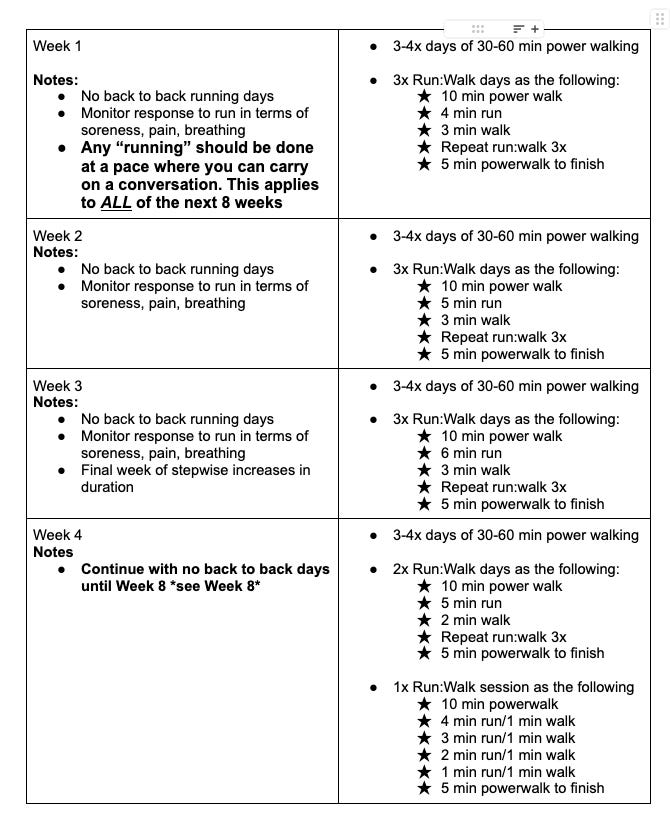
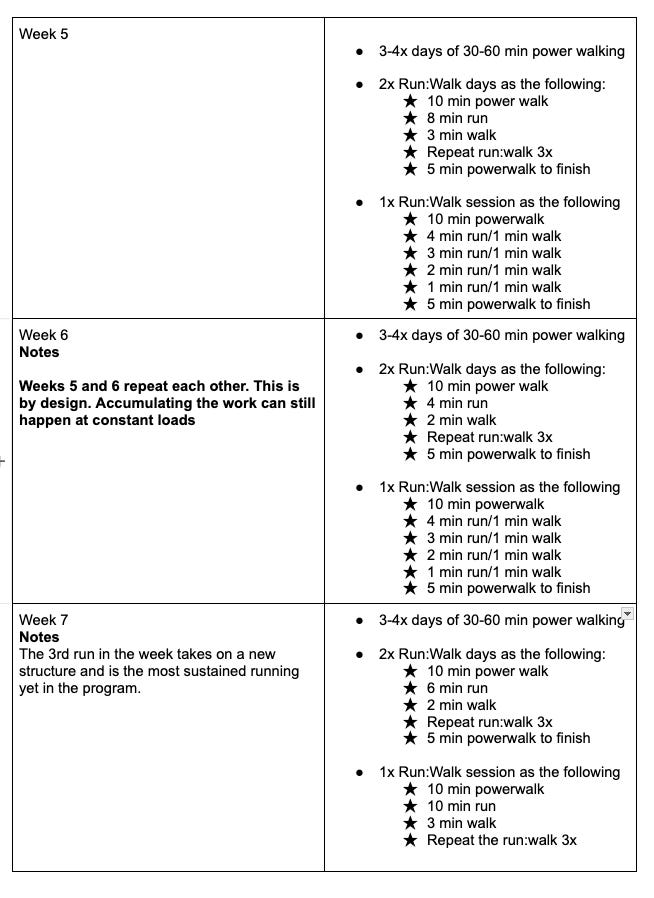
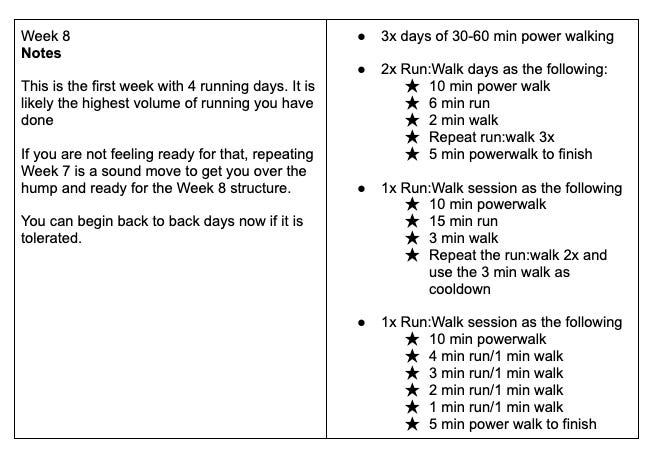
The finale of the program is not a long phase, but rather it ties up some loose ends. Covering the full distance of a race of this caliber before the big day is both safe and a confidence boost. I would not necessarily say the same about a full marathon.
This is also a good opportunity to open up the stride a few times to understand what pushing feels like. With completion as the goal, the meat of the work was done in Phase II to safely get you to this point.
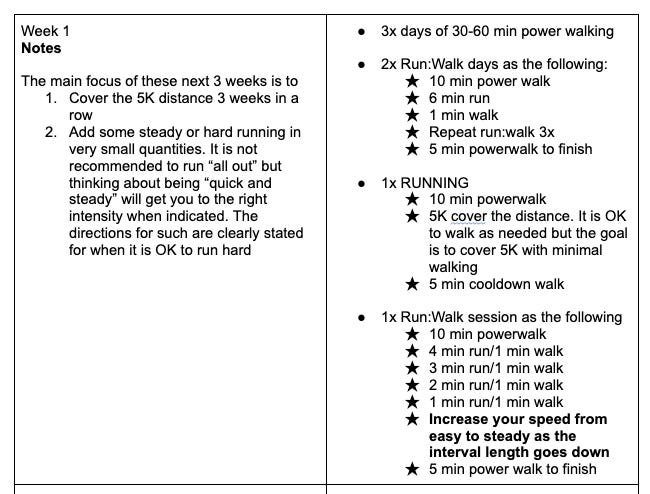
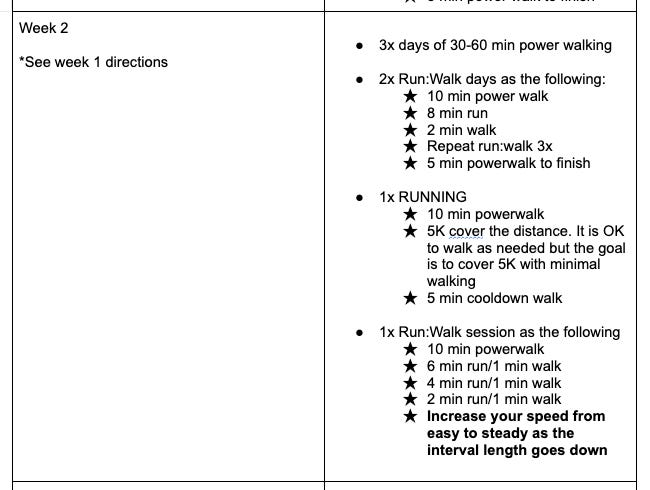
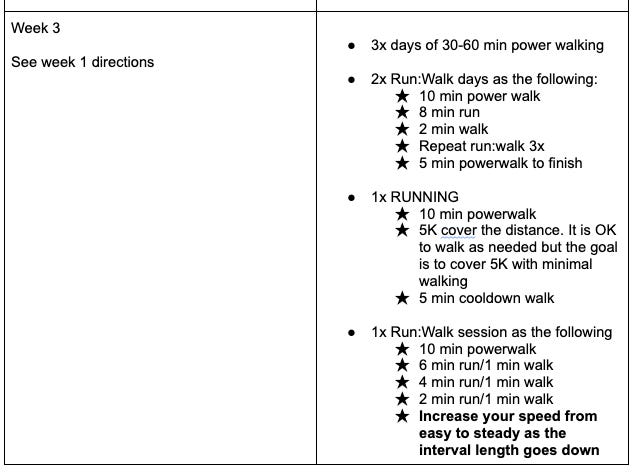
Week 4 of this phase is Race Week!
While this plan has detail and is progressive, it is reasonable to assume your mileage may vary. There may be days where you cannot get out the door or days where the body tells you it should be a walking day instead of a running day. Lean into these feelings and listen.
Switching some days around is how some of the best athletes keep the ball rolling. The same idea can work for you.
There is nothing about this program that is flashy. When you commit to showing up each day for a long period of time, nothing special is required. This is why Phase I is crucial to your success. Do not skip that phase.
You’ll understand what I mean when you are crossing the finish line of your first 5K.
No posts
Comments
Nothing yet. Say the first thing.
Sign in to join the conversation.