
(A version of this article was published in Chinese language on August 6 in Zaobao newspaper in Singapore.)
Over the past three months, a series of controversies in Indonesia’s arts and literary world have once again brought into sharp focus the fundamental tensions that continue to shape the country’s political landscape. From the ARTJOG contemporary art exhibition in Yogyakarta to the banning of documentary screenings to the popularity of novels of dissent, the contradiction is real . They are manifestations of a deeper structural contradiction—one that has defined Indonesian cultural politics since the New Order and shows no sign of resolution under the current political dispensation.
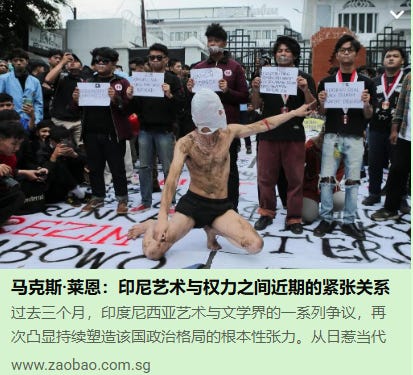
The most illuminating case is the controversy that engulfed ARTJOG 2026. ARTJOG is Yogyakarta’s premier annual contemporary art exhibition. The exhibition accepted strategic sponsorship from a foundation linked to Didit Hediprasetyo, son of President Prabowo Subianto. When artists discovered this, protests erupted. One performer dressed in black scattered flowers while shouting “literature is dead, art is dead” before being detained by security. Other artists displayed installations critical of the president’s policies—including one that depicted President Prabowo with his eyes covered and the words “Soeharto is not a hero” – a reference to attempts to have parliament designate the former President a hero.
What is significant about this episode is not the protest itself—artists have long resisted co-optation by political power—but the admission by ARTJOG director Heri Pemad about the underlying dynamics. He revealed that the festival had faced serious fundraising difficulties after organising a cultural reflection that criticised government cultural policies. In this context, approaching Didit’s foundation was seen as a way to open access to state-owned enterprises for sponsorship. This reveals a fundamental dilemma: in a political economy where state-linked capital dominates cultural patronage, artistic independence comes at a material cost. The ARTJOG controversy echoes an earlier episode ten years ago when artists rejected PT Freeport Indonesia as a sponsor. But the pattern has become more entrenched. The political cartel system that now governs Indonesia extends its reach not through overt repression but through the strategic deployment of patronage and the cultivation of dependency.
This dynamic is not new. Art and literature have historically played a crucial role in challenging political taboos in Indonesia, particularly regarding the mass killings of 1965. Under the authoritarian New Order, figures like Indonesia’s internationally recognised novelist, Pramoedya Ananta Toer used literature to keep alive a suppressed history. The pattern has been consistent: power seeks to control memory, and artists push back.
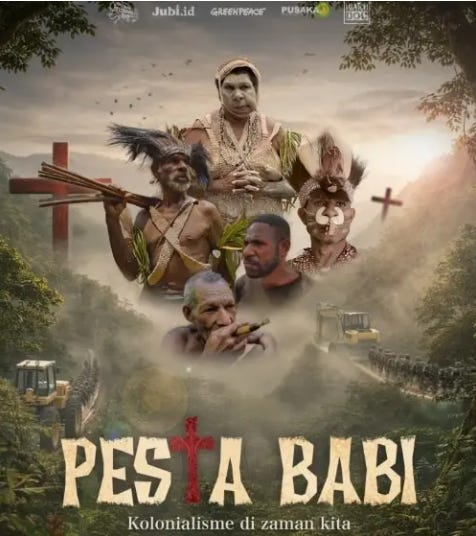
The recent controversies suggest this tension continues—but the methods have changed. Take the case of the documentary Pesta Babi: Kolonialisme di Zaman Kita (Festival of the Pig: Colonialisme in Our Era), which criticises a National Strategic Project in South Papua that activists say threatens indigenous land rights and the environment. In May 2026, public screenings were forcibly halted at several universities. Coordinating Minister Yusril Ihza Mahendra insisted the government had not issued a central directive, claiming the bans were merely about “administrative procedures”. Yet the screenings were stopped anyway.
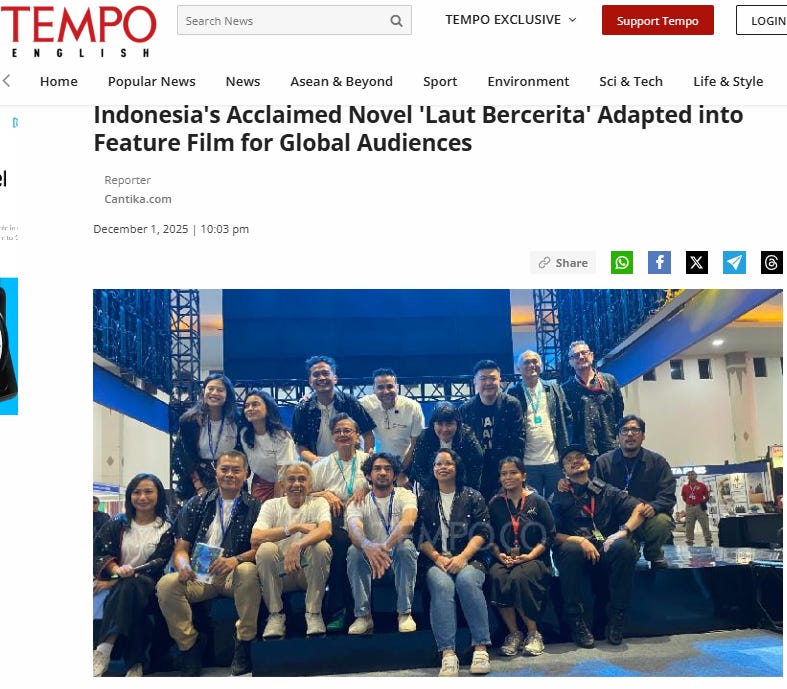
Meanwhile, the situation has changed in regard to book publication. Ten years ago in 2016, the Director of the National Library, Dedi Junaidi, publicly declared his support for the censorship of leftist books. “I agree. Because the presence of leftist books has become troubling. In the New Order era, these books were banned for distribution,” he told the press He went further, supporting military and police raids to find books with any hints of leftist ideology, claiming such books were “not in accordance with Pancasila”. However, after public criticism, he was forced to withdraw his comments and guarantee the safety of such books. In that period there were also regular raids on bookshops. However also in 2016, a novel by writer Leila S Chudori, The Sea Speaks His Name (Laut Bercerita), can have book banning as one of the things discussed, with its main character an activist fighting the 1980s ban on the books of Pramoedya Ananta Toer. can become a best-selling novel without suppression or even harassment. By 2026, it was reported to have been reprinted 120 times and is scheduled to be released as a film this year.
At the same time, proposed amendments to the Copyright Law in March-April 2026 included criminal provisions that activists warned could still restrict creative work. The Executive Director of the Legal Aid Institute for the Press, Mustafa Layong, noted that the vaguely worded clauses—covering material deemed contrary to morality, decency, religion, public order, defence, and state security—”potentially silences press freedom, freedom of expression, and also artistic freedom”.
The political cartel governance has shown itself adept at managing dissent through patronage, co-optation, and occasional localised repression. The past three months have demonstrated that the struggle over Indonesia’s cultural politics is far from over. Artists, writers, and filmmakers continue to test the boundaries of what is permissible as they have been since the fall of Suharto in 1998. At the same time, success of a book like Laut Bercerita, indicates that there is still a persistence in filling the democratic space available and expanding it, while there are other pressures to constrict it. What is clear is that the outcome will not depend solely on elite calculations but whether civil society – the social opposition, including its artists and writers – begins to take on a more direct political form to counter restrictive pressures.
(Zaobao version here https://www.zaobao.com.sg/forum/views/story20260805-9474993?)
Comments
Nothing yet. Say the first thing.
Sign in to join the conversation.