
I try, I really do, to keep up with this thing1 but other stuff2 gets in the way. I’ve been revising a textbook3 and I need this as a creative outlet. This is fun. As I’ve mentioned elsewhere, writing a textbook is not how I’d recommend you willingly spend your time. It’s all structure and procedure, order and editing, tedium and attention. Chasing figure permissions is my favorite form of self-flagellation—images just disappear into the ether, eve with the Wayback Machine.4 It’s kind of like doing your taxes while writing the tax code, it’s that much fun. Why do it, then? Well, here’s why.
I’ve been working on the fourth edition of Fundamentals of Forensic Science, the introductory textbook I wrote with Jay Siegel many years ago. Jay and I had been a team since I was a graduate student at Michigan State University back in the early 14th Century; for some reason, he hated me less than my other professors.
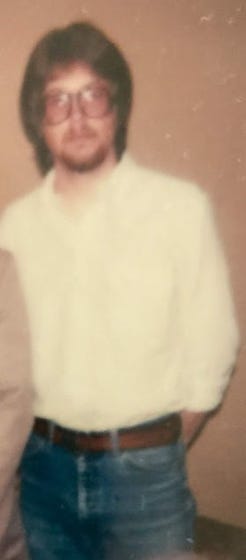
That’s me in 1983.5 I’m surprised Jay even talked to me. Anyhow, I’ve been working on the fourth edition, which is a big change-up and I’m looking forward to seeing it in print and online. I put some real thought into how to reorganize the book, what to put in, what to leave out, what to put online, what to keep in the book proper.6
Anyhow, as the text and figures and stuff have all be shipped (ie, emailed) off to production, I wanted to share the Preface of the book with you. It’s a very personal, hearfelt homage to Jay, whom I loved.
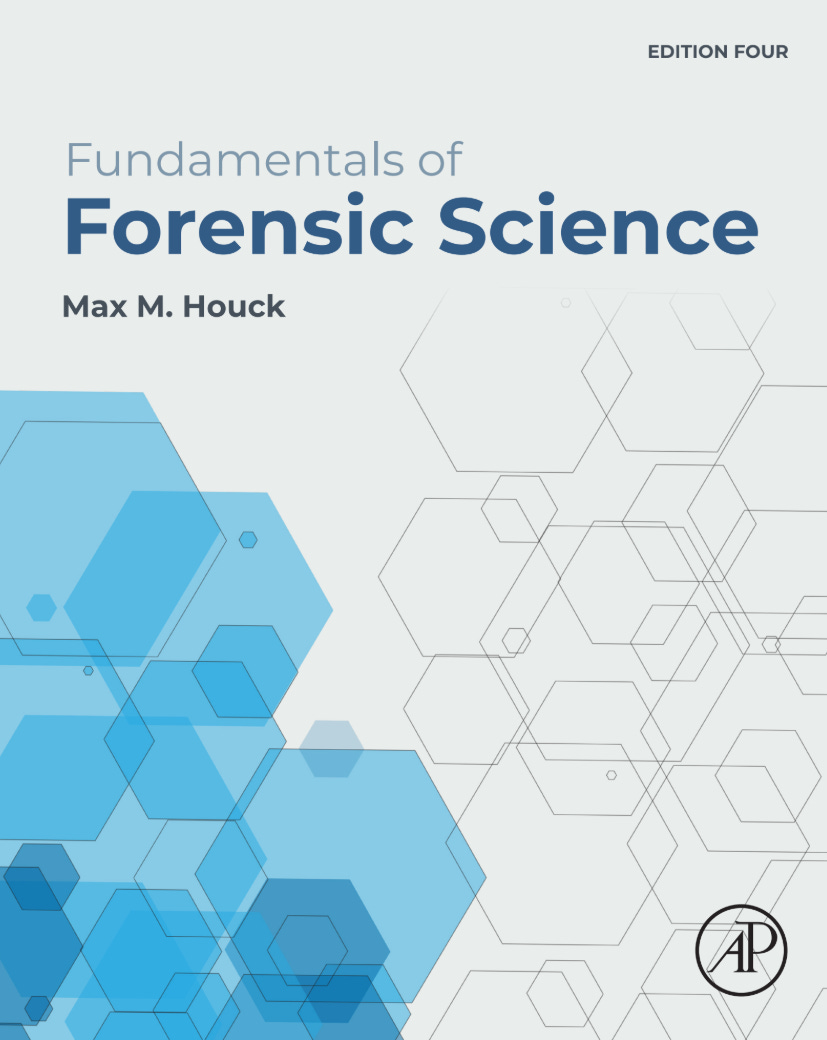
I promised myself I wouldn’t cry when I wrote this.
I met Jay Siegel as a semi-clueless anthropology graduate student who wanted to learn about toolmarks. My research topic was modern toolmarks in bone, which was little studied in 1985, and my graduate advisor, Norm Sauer, realized I needed schooling. He sent me to talk to Jay and convince him to let me take his graduate classes in forensic science. Jay, with his usual jovial sternness (you had to know him; I wish you had), said I had to audit his introductory class first and then I could take the graduate classes the following year. I agreed; what else could I do?
Jay immediately hypnotized me. He was an energetic lecturer, a great storyteller, and a master showman. Never a dull moment in the classroom the whole semester. I would see him during office hours occasionally to ask questions for clarity or to dig deeper. Jay was always generous with his time. My questions could be naive at times--I was an anthropology student, after all--but he was intrigued by the thought process that had been built into me by my discipline’s teaching. I think it started there.
I took his classes, excelled in them, and he asked me to be the teaching assistant for them the next year. Jay was on my thesis committee and, like all of his students, became my Number One cheerleader. My first job wasn’t in forensic science, but rather in the private sector at an instrumentation company that sold equipment to, among others, forensic laboratories. Jay told me not to worry: It was a job and my first one. Be patient. It was like that my whole career with Jay, he was always there, supportive, advising, listening, encouraging. After jobs at a medical examiner’s office in Texas and the FBI Laboratory Division, I got a chance to work in academia in 2001. I think it changed there.
By that point, Jay and I had progressed from teacher/mentor and student to friends. In academia, we bonded over a common purpose: Changing forensic science from the ground up. We realized it had to start with education, the bedrock of how any profession grows. At a conference in Seattle, we sat in a bar in the convention center, Jay with a glass of Australian red, me with a gin martini, solving all of forensic science’s woes. We were dissatisfied with the pedagogic materials available at the time. They undersold the science, they were relics of teaching police officers technical methods, they taught the metric system alongside spectroscopy (in small words). I said something along the lines of we should write a science textbook for forensic science. Jay’s eyes lit up like a super nova. “YES!” he roared so loudly everyone in the bar looked our way. I blinked at him, blank-faced. “What?” We then speed-talked the concepts for our textbook for the next hour plus. It was heady stuff, having your mentor treat you like a peer.
The phrase “labor of love” doesn’t do it justice. Writing textbooks is difficult and monstrously tedious. But we had a blast writing it together. Jay and I would talk weekly or monthly, depending, and set aside time at conferences to go over details in person. As the science expanded, so did the book. Three editions later, multiple international translations, we had more plans for the future.
And then Jay passed. I didn’t have the heart to do another edition without him. It was our textbook, not mine. I just couldn’t.
Then colleagues started asking about a new edition: When was it coming out? The third edition (2015) was getting dated but they were still teaching from it. I demurred, putting them off, making cowardly excuses to myself I knew Jay would chastise me for. More asked. And then one day it hit me: He’d be mad if I didn’t do it. He’d smack the back of my head and say, “Schmuck! I did all that work for you to give up?” And he’d be right. So, I called Maggie, Jay’s widow, and asked what she thought about me doing the book alone. I wanted to make sure she and their children, Samantha and Paul, were good with the idea; if they weren’t, I wasn’t. But Maggie was supportive, as always, and only wanted people to know about Jay’s contribution to the book. To me, that went without saying, but I said so, promising to make sure the readers knew how much of himself he put into the textbook. This was not a decision I made lightly; when we started this project, Jay wanted my name first because, as he said, “You’ll have to live with it longer than I will.” He was right, damn it, but this textbook is part of his legacy, which is why his name is still on the cover.
I hope you have somebody like Jay in your life. He was my teacher in and out of the classroom. Tough but fair may be a cliche but it was spot on accurate with Jay. Biggest heart I ever met: Jay always had time for his students. But he also spoke his mind, so you needed to be braced--words were not minced. Jay was my second father. And my real father knew that; he never went to college but made sure I did and he trusted Jay to see me through the things he couldn’t. Jay became my true friend and I know I loved him; I think he loved me. He trusted me, confided in me—as I did him—and we counseled each other on many matters over the years. Jay was a great man, in many ways, and I miss him every day. Jay gave me the greatest gift anyone could give another person, he believed in me.
Promise broken.
MMH
April, 2026
What is it? Do I call it a “Substack”? That sounds odd. A “blog”? How 90s. It’s not audio (god forbid; my voice sounds like Tom Waits after gargling on brandy stirred with a nail, but with more snark—a delight), so it’s not a “podcast.” Hmmm. I’ll get back to you.
I’ll get to it but it’s been three journal manuscripts, two book chapters, two textbooks, two book proposals, three really good ideas, and the usual nonsense of living, like groceries, yardwork, private cases, shucking for gigs, and the occasional round of golf.
I’ll get there, just hold your horses.
Those of us of a certain vintage remember the original Wayback Machine, the one used by Mr. Peabody, a genius beagle with a penchant for bow ties, and Sherman, his adopted pet boy (ahem), to travel back in time to visit important events in human history. It was an occasional segment on the The Adventures of Rocky and Bullwinkle and Friends (Yes, I’m old). It’s probably where my love of puns originated. Each episode ended with a groan-inducing pun about the historical figure they assisted to make sure history was corrected; for example, “Marie Antoinette could have avoided trouble by making an edict for the people to eat cake, but she could not have her cake and edict too.”
I’ll see myself out.
It’s a bad Polaroid, sorry. Yes, I had hair. A lot, apparently. Damn. I was an anthropology major and a contract archaeologist between years of college, which is why I look like that; I did get better glasses, however. I did the college-archaeology thing until I graduated with my masters. I can still drop a shovel full of dirt exactly where you want it, plus or minus one inch. It’s not a skill that’s in high demand but at least I have that going for me. Most anthropology majors look like disaffected hippies; we’re pretty easy to spot on campus.
Which means I’ll piss some people off…which also means I probably did the right thing: “If you’re not pissing someone off, you’re probably not innovating,” Philip E. Auerswald, Harvard Business Review.
Comments
Nothing yet. Say the first thing.
Sign in to join the conversation.