
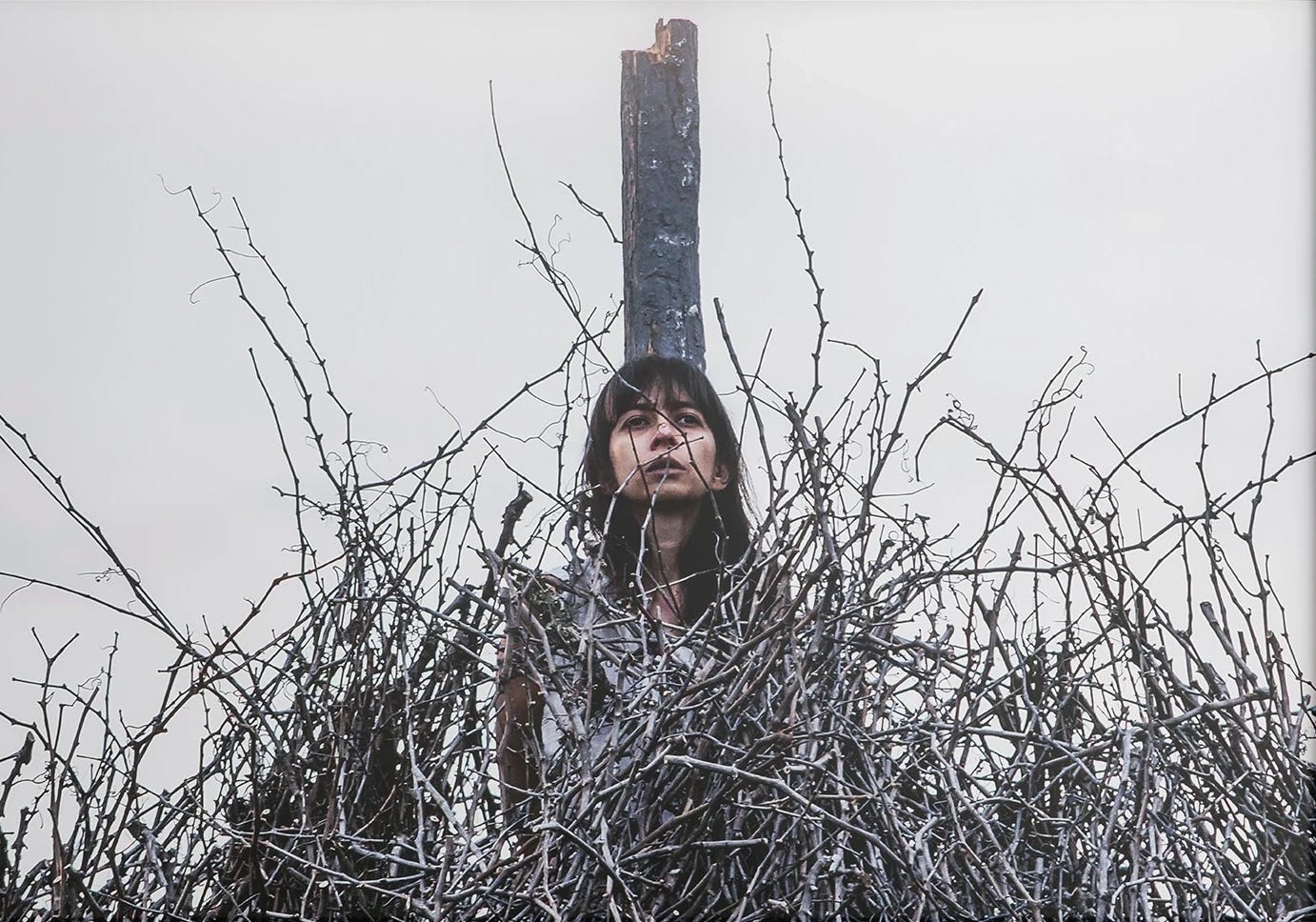
This week, I’m sharing an interview I translated for the latest issue of El Faro’s online monthly. If you’re not already subscribed to El Faro English’s newsletter and podcast, I recommend you do—it’s a great way to stay up on Central American politics and culture, and they publish some of the best original reporting from the region, translated to English. In the interview, which you can read here, Salvadoran journalist Ramiro Guevara speaks with Guatemalan performance artist Regina José Galindo about art, justice, and the politics of memory in country that has “normalized violence and acts of repressive power” and “does not live with the truth.”
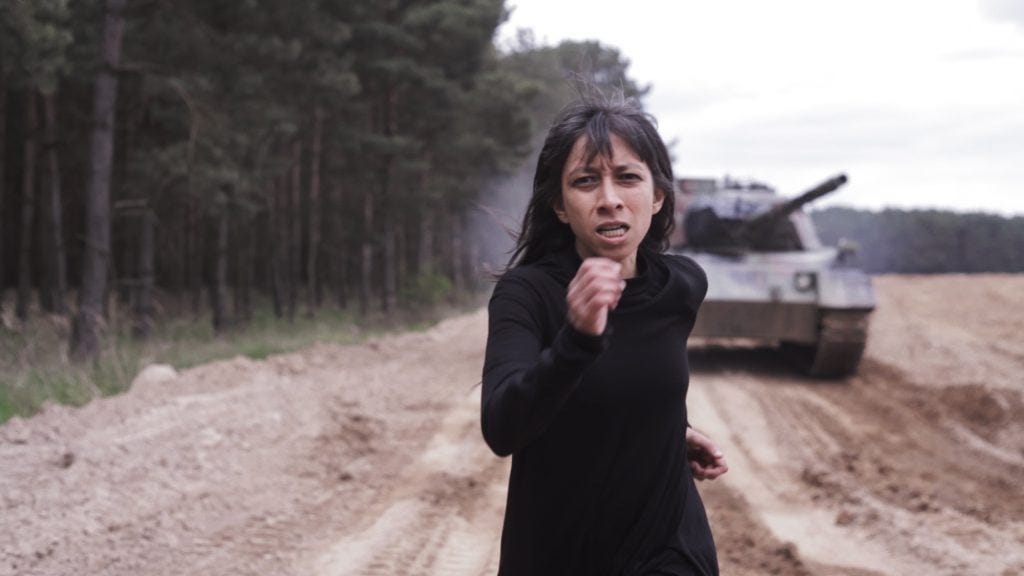
“I was born in 1974, during the worst years of the war,” Galindo says. “My generation grew up in silence. We normalized war. We saw the tanks, the soldiers, the military checkpoints in broad daylight, the bombings in the city center, the bodies dumped in ditches like it was the most natural thing in the world… We normalized all of that.”
Galindo’s art intervenes against this normalization of repressive terror, and against cultures of silence and forgetting. Her work is unsettling and painful, reflecting experiences of extreme violence with a blinding glare, like a mirror angled at the sun: If you look, the damage is permanent.
In a text accompanying her 2017 video-performance La sombra, she writes:
We cannot escape the horror
follows us
it is our shadow
This horror that shadows us is the subject of Galindo’s spotlight. Her art, which she often performs in public spaces as acts of protest, rescues memory from the hegemony of oblivion and implicates viewers as participants in a practice of confronting traumatic and destabilizing truths—and as historical actors with agency and, therefore, responsibility. Her art is a mirror, but it is also Brecht’s hammer, shaping society through dialectical force and being shaped, in turn, by society.
“I don’t give a voice to anyone,” she says. “The people living their lives on the street and suggesting ideas to me are the ones giving me a voice, because my work is rooted in the experiences of others. In the experiences of people who already have a voice, who have already spoken, who have already lived, who have already expressed themselves, who are already fighting. I don’t give a voice to anyone; I’m sustained by the voices of others.”
You can read the full interview with Regina José Galindo at El Faro English.
Comments
Nothing yet. Say the first thing.
Sign in to join the conversation.