
“One of the agency’s highest priorities is detained alien health care.” -Immigration and Customs Enforcement
So reads the opening line of ICE’s “Detainee Death Reporting” webpage, which goes on to assure readers that “any death that occurs in ICE custody is a significant cause for concern,” and that the agency “prioritizes the health, safety and well-being of all aliens in its custody, [employing] a multilayered, interagency approach when a detained alien passes away [and providing] comprehensive medical, dental and mental health care from the moment aliens arrive at a facility.”
Rest assured, concerned citizen, ICE prioritizes the wellbeing of all illegal alien terrorist scum in its custody.
In fact, ICE continues—smirking with barely suppressed supremacist glee—the people who suffer and die in the agency’s “facilities” should count themselves lucky: “Many aliens may not have received recent or reliable medical treatment for existing conditions prior to entering custody. For some individuals, this may represent their first access to comprehensive medical care.”
In a 2024 report based on consultations with independent medical experts, the ACLU and Physicians for Human Rights found that 95 percent of deaths in ICE custody between 2017 and 2022—during Trump’s first term and Biden’s first year, when conditions in the camps were arguably a bit better—“were preventable or possibly preventable had the agency provided clinically appropriate medical care.”
Is the Ministry of Truth lying? No, it must be the thousands of survivors, immigration attorneys, medical professionals, and human rights observers who are wrong.
***
This week, we learned of yet another person who died in ICE custody: Prisciliano Trejo Ricano, a 29-year-old man from Durham, North Carolina, who came to the U.S. from Mexico when he was three years old. Technically, though, Prisciliano died out of custody, in a hospital, shortly after being “released” from detention—while in a coma, succumbing to an aggressive case of Leukemia.
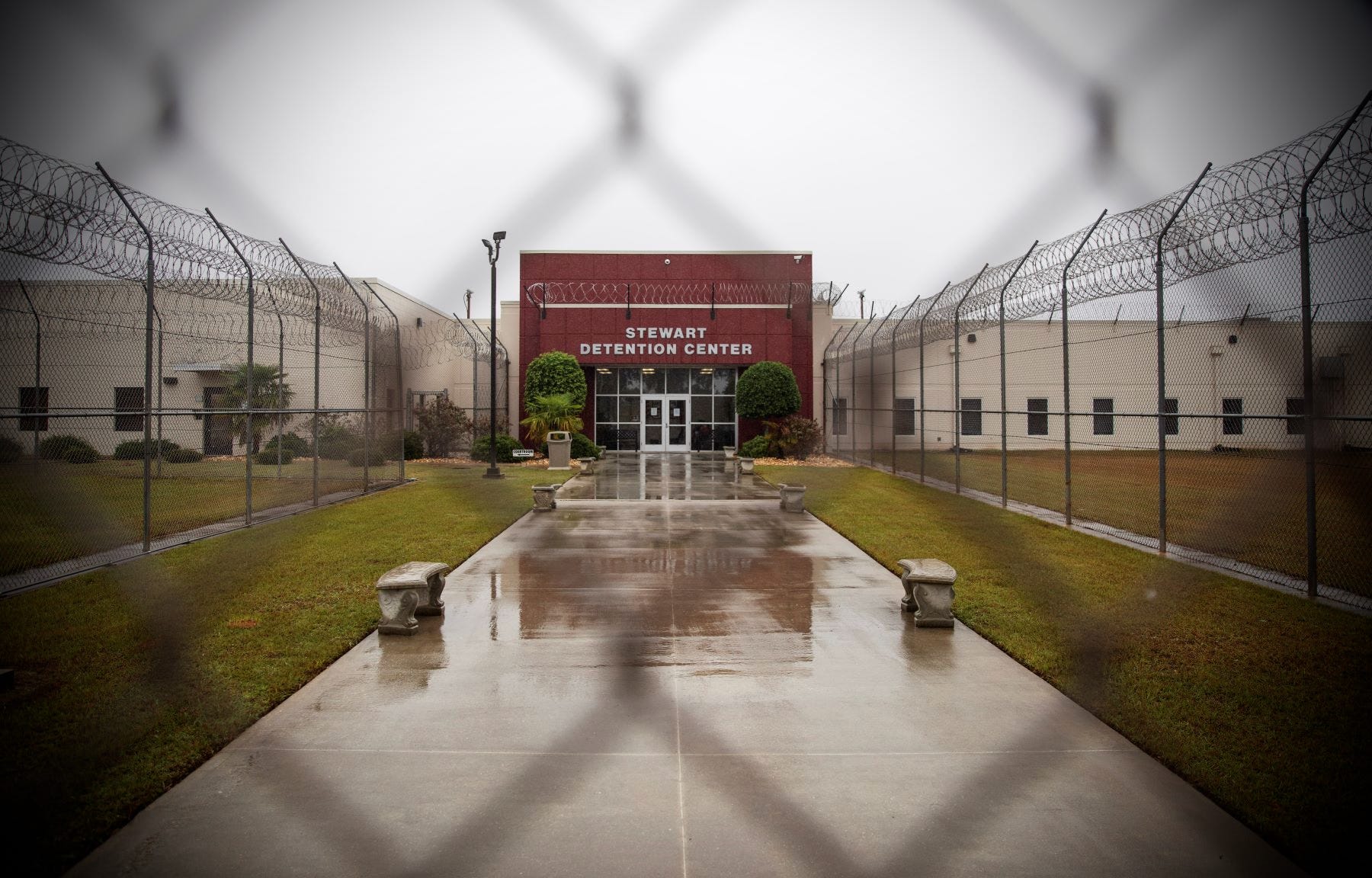
Trejo was arrested by local police in North Carolina in mid-June, then transferred to ICE custody and eventually to the Stewart Detention Center, a for-profit concentration camp operated by the private prison company CoreCivic. On July 6, he reported feeling sick and requested medical attention, but ICE refused to provide him treatment, and continued to refuse for eight days. On July 13, ICE finally took him to a hospital. Two days later, the agency contacted his family and released him—in a coma—from their custody. He died in the hospital on July 24.

Prisciliano is one of at least 34 people who have died at the hands of ICE and Border Patrol so far in 2026—a year that is well on its way to breaking all records. You can read the names and stories of the other 33 people here.
These are only the deaths we know about, of course, and the only reason we know about Prisciliano’s, which was first reported by Enlace Latino NC, is because his family told local migrant justice groups and journalists about it. Trejo’s name does not appear on ICE’s “Detainee Death Reporting” website, and it almost certainly never will: In early June, ICE rescinded a policy implemented in 2021 that had required the agency to investigate and report deaths of detainees that occur within 30 days after their release.
This is one of several ways the state attempts to undercount deaths in ICE detention. Earlier this year, in February, Border Patrol agents working with local police in Buffalo, New York, detained a 56-year-old Rohingya refugee named Nurul Amin Shah Alam. Nurul, who was nearly blind and had spent the past year in jail, was about to return home to his family after accepting a misdemeanor plea deal that he was told would allow him to avoid deportation. But ICE flagged him for detention, and before his release could be finalized, Buffalo police called Border Patrol to pick him up. Border Patrol quickly realized, however, that Nurul, a stateless refugee, was not “eligible for deportation,” so they dumped him on the streets of Buffalo outside of a closed Tim Hortons coffee shop, in near-freezing temperatures, with no jacket or warm clothes, still wearing his orange, county-issued jail booties. He was found dead a few days later.
Medical examiners determined that Nurul had died of “complications of a perforated duodenal ulcer precipitated by hypothermia and dehydration,” and ruled the death a homicide. His name also does not appear in ICE’s official death records.
Barring some major sabotage to the machinery of U.S. carceral power, we can expect more of these cases in the near future. It’s a convenient loophole for ICE, and undoubtedly a major reason the agency rescinded reporting requirements for deaths after release.1 If ICE suspects that someone in their custody is about to die—for whatever reason, but statistically speaking, most likely due to their own neglect and abuse—they can simply release the person and wash their bloody hands of it.
That is, if they can’t just deport them first. Deportation can serve a similar function as release (though it requires more logistical coordination). If someone in detention is sick and dying, ICE can fast-track their deportation, ensuring they die in another country and the agency never has to record or pretend to investigate their death. People die after being deported all the time, after all, and we rarely hear about it. Earlier this year, to cite one especially horrifying but by no means isolated example, ICE detained four women in Puerto Rico and deported them to Haiti; a few weeks later, their decapitated bodies were found near the country’s southern border with the Dominican Republic. Even this extremely shocking story barely made the U.S. news.
Another way that ICE hides the human cost of detention is by lifting immigration detainers after people die in jail, as Andrew Free details here. According to the Deportation Data Project, there have been at least 480 cases in which ICE issued a detainer—a request to local authorities to hold an inmate longer, until ICE can pick them up—then lifted that detainer because the person died in jail. According to Free, however, these numbers are also an undercount: “Because the years for which we’re missing data were ones in which ICE detainer requests and ICE detentions nearly doubled, according to federal statistics, I expect we’re probably missing between 100 and 200 additional deaths, based on numbers from other fiscal years.”2
***
On July 10, 2026, Prisciliano Trejo Ricano turned 29 years old in an ICE concentration camp. Writing on Facebook, he thanked his friends and family for their birthday wishes, and went on to described his experience inside:
“Here they treat you like a number or a placeholder for the next group of people who come and go.” This week I’ve been dealing with a severe sore throat, coughing up blood in the morning and at night, and very intense migraines, and I still haven’t been treated or given any medication. It’s not that I’m not holding on tightly, through faith and the support of my family and friends who know about this. That also doesn’t mean it’s easy. There were days when I cried and felt helpless. This is truly the worst feeling of my life. I pray for the people in this situation because it’s not easy. Most of these people aren’t even criminals. They’re either working or on their way home when they’re taken into custody.”
***
Prisciliano’s family is fundraising for funeral costs. You can donate here.
On the bright side—such as it is—this seems to suggest that the regime is sensitive to the growing public perceptions that ICE is administering literal death camps, and is managing its public relations accordingly.
Comments
Nothing yet. Say the first thing.
Sign in to join the conversation.