
How nitrate-rich foods, nitric oxide, endothelial progenitor cells, movement, and the glycocalyx work together inside your vascular repair system.
Someone watches one of my videos about nitric oxide and immediately asks me:
“So, Maurice, does eating arugula repair my arteries?”
I understand why.
We live in a health culture where everything gets reduced to one food, one supplement, one biomarker, or one mechanism.
Eat this food and fix your arteries.
Take this capsule and remove plaque.
Lower this number and everything is solved.
Biology does not work like that.
Arugula does not travel through your bloodstream and patch an artery.
Nitrates do not dissolve plaque.
Endothelial progenitor cells do not magically rebuild a damaged artery overnight.
But underneath all of this is something far more interesting.
Your vascular system has repair mechanisms already built into it.
And food, movement, nitric oxide, blood pressure, glucose, sleep, inflammation, and ApoB all influence whether those repair systems get a chance to do their job.
What I want you to understand is this:
The goal is not finding the food that “heals arteries.”
The goal is creating an environment where the artery is exposed to less injury while its normal maintenance and repair systems continue working.
That distinction matters.
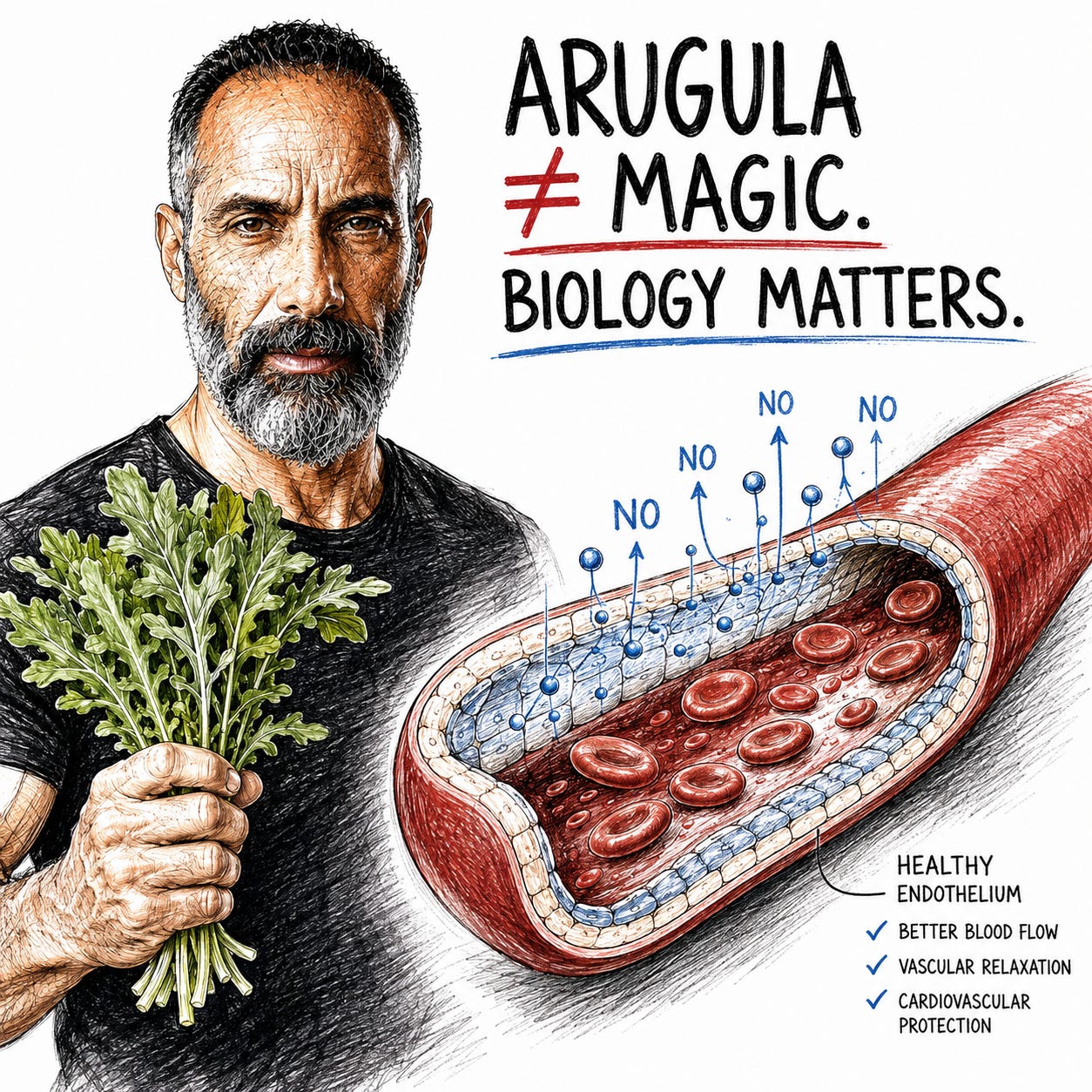
Most people picture an artery like a plumbing pipe.
Cholesterol goes through it. Plaque gets stuck. Eventually the pipe becomes blocked.
That picture is easy to understand.
It is also incomplete.
The inside of your blood vessel is lined with living endothelial cells.
These cells respond every second to blood flow, pressure, hormones, glucose, oxidative stress, inflammatory signals, oxygen availability, and molecules circulating through your blood.
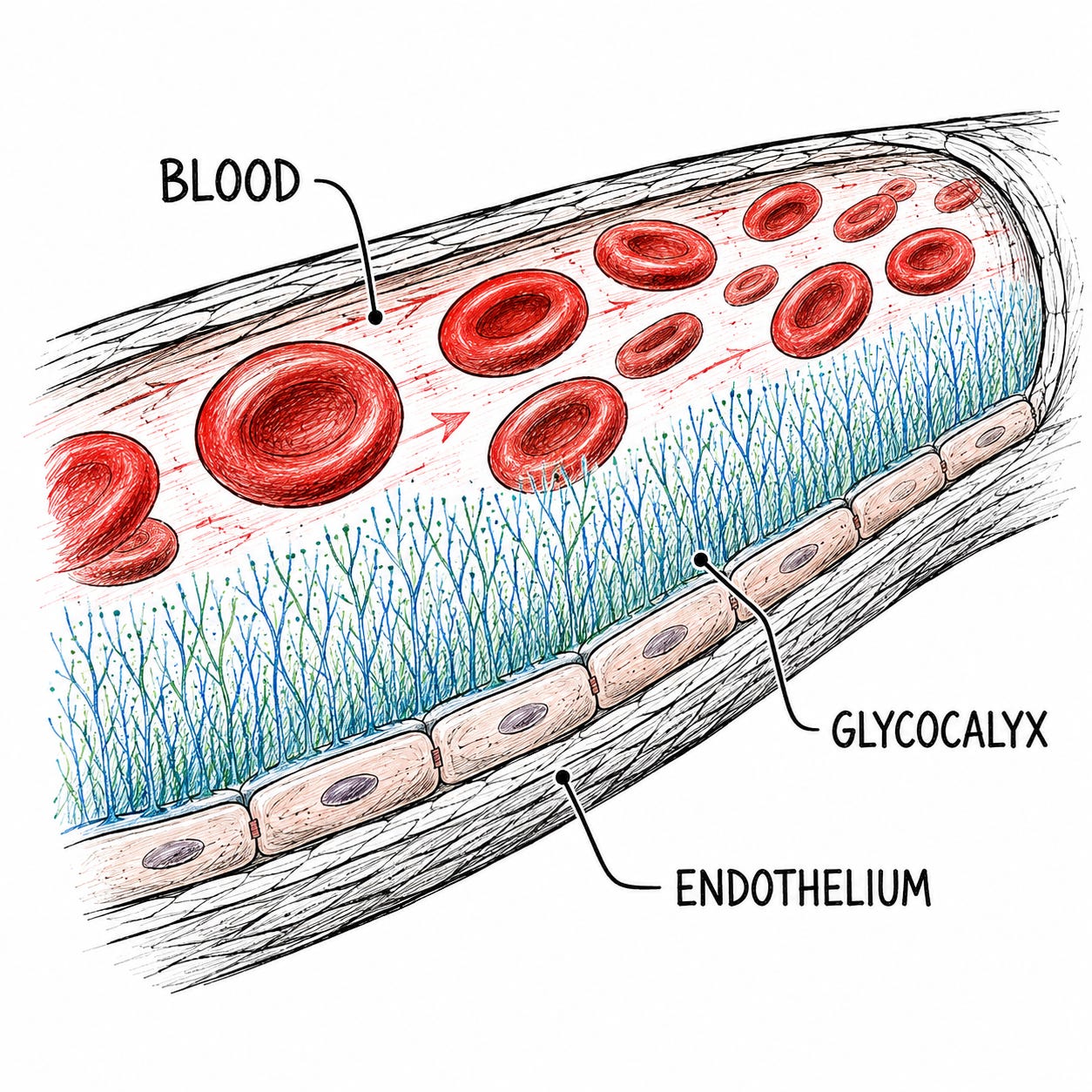
Sitting along the blood-facing surface of those endothelial cells is another structure I talk about frequently:
The endothelial glycocalyx.
Think of it as a delicate protective interface between your blood and the endothelial cell underneath.
It participates in vascular permeability, mechanosensing, coagulation, inflammation, and endothelial signaling. Damage to this structure has been associated with vascular dysfunction and disease.
So when I talk about protecting an artery, I am looking beyond the visible plaque.
I am thinking about the biological surface where blood and artery meet.
That is where a huge amount of vascular biology happens.
The artery is constantly sensing its environment.
And when the environment changes, the artery responds.
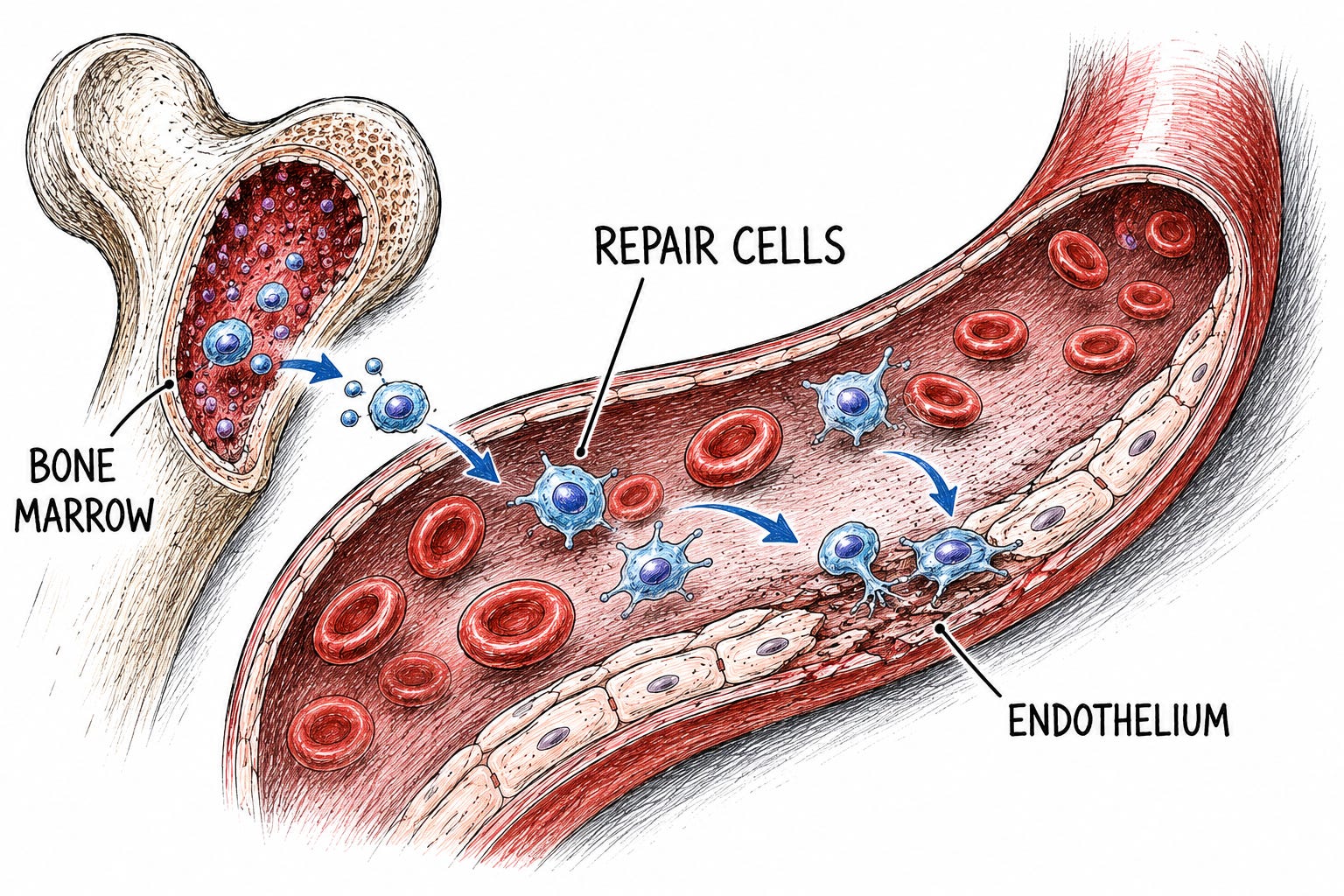
This brings us to endothelial progenitor cells, commonly called EPCs.
The terminology around EPCs has evolved because circulating vascular-repair populations are biologically diverse. The simple version is enough for our discussion.
Cells associated with vascular repair circulate in the blood and have been studied for their relationship to endothelial maintenance, angiogenesis, and cardiovascular health.
Some originated from bone-marrow-associated populations.
And here is where I want to correct an easy misunderstanding.
EPCs are not tiny workers carrying buckets of glycocalyx material to your artery.
They do not directly paint a new glycocalyx onto the vessel wall.
Their role is more closely connected with supporting endothelial repair.
Some cell populations may participate directly in vascular growth. Others influence repair through signaling molecules that affect endothelial survival, migration, growth, and new vessel formation.
The endothelial cells underneath the glycocalyx are ultimately responsible for maintaining their surface environment.
So I explain the sequence this way:
Damage the endothelial cell long enough and its protective surface suffers.
Improve the underlying endothelial environment and you give that surface a better opportunity to recover.
That is why focusing only on glycocalyx supplements while ignoring blood pressure, smoking, glucose, ApoB, sleep, inflammation, and movement misses the point.
The pattern matters more than the isolated intervention.
Now we get to nitric oxide.
Nitric oxide is one of the major signaling molecules involved in vascular biology.
Healthy endothelial cells produce nitric oxide through endothelial nitric oxide synthase, or eNOS.
Nitric oxide helps regulate vascular tone.
In plain English:
It helps blood vessels relax.
But nitric oxide biology reaches further than temporary vasodilation.
It participates in endothelial signaling, platelet biology, vascular remodeling, and the response to blood flow.
Research examining exercise and EPCs has also linked nitric oxide availability with the mobilization and function of circulating endothelial repair-related cells. Both acute and chronic exercise studies have reported increases in circulating EPC populations, although the response depends on exercise intensity, duration, health status, age, and how EPCs are defined.
This is why I keep coming back to movement.
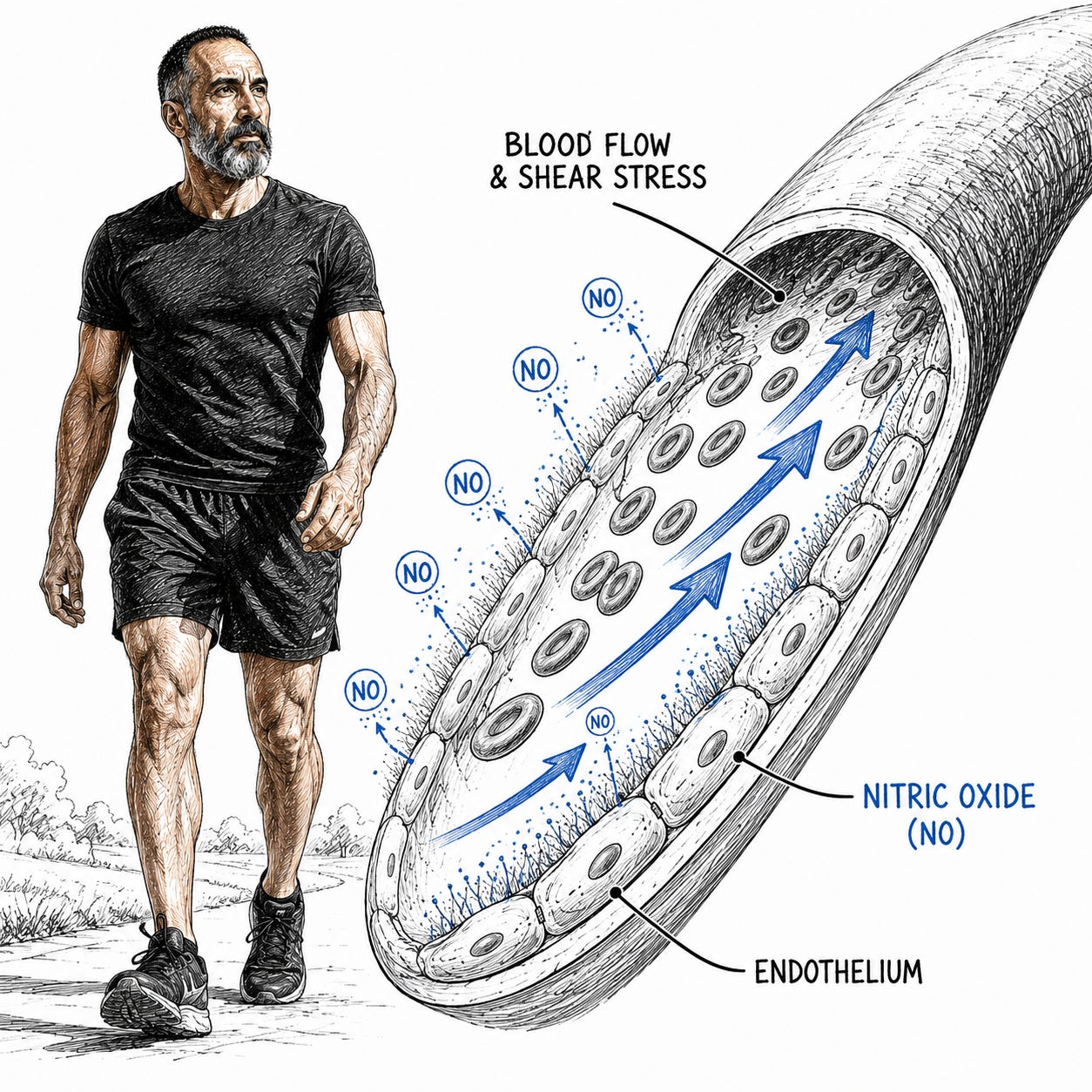
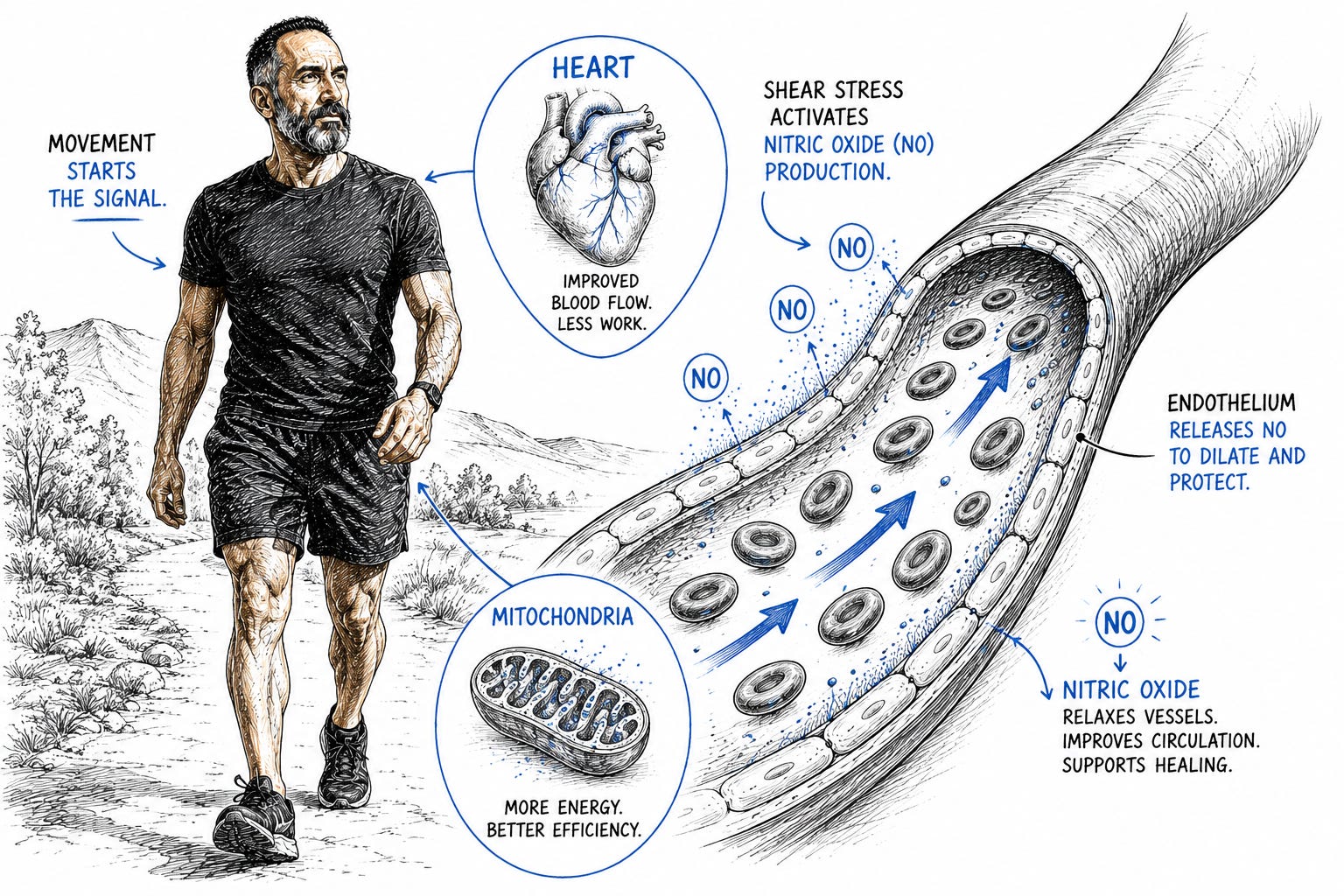
When blood moves through an artery, it creates frictional force along the endothelial surface called shear stress.
The endothelial cell senses it.
Regular physiological shear stress stimulates signaling pathways associated with endothelial nitric oxide production.
So when you walk, cycle, swim, paddle, or perform Zone 2 exercise, you are doing much more than burning calories.
You are changing the mechanical signal reaching the artery wall.
That is the part people miss.
Movement is biological information.
Now we finally get to the food.
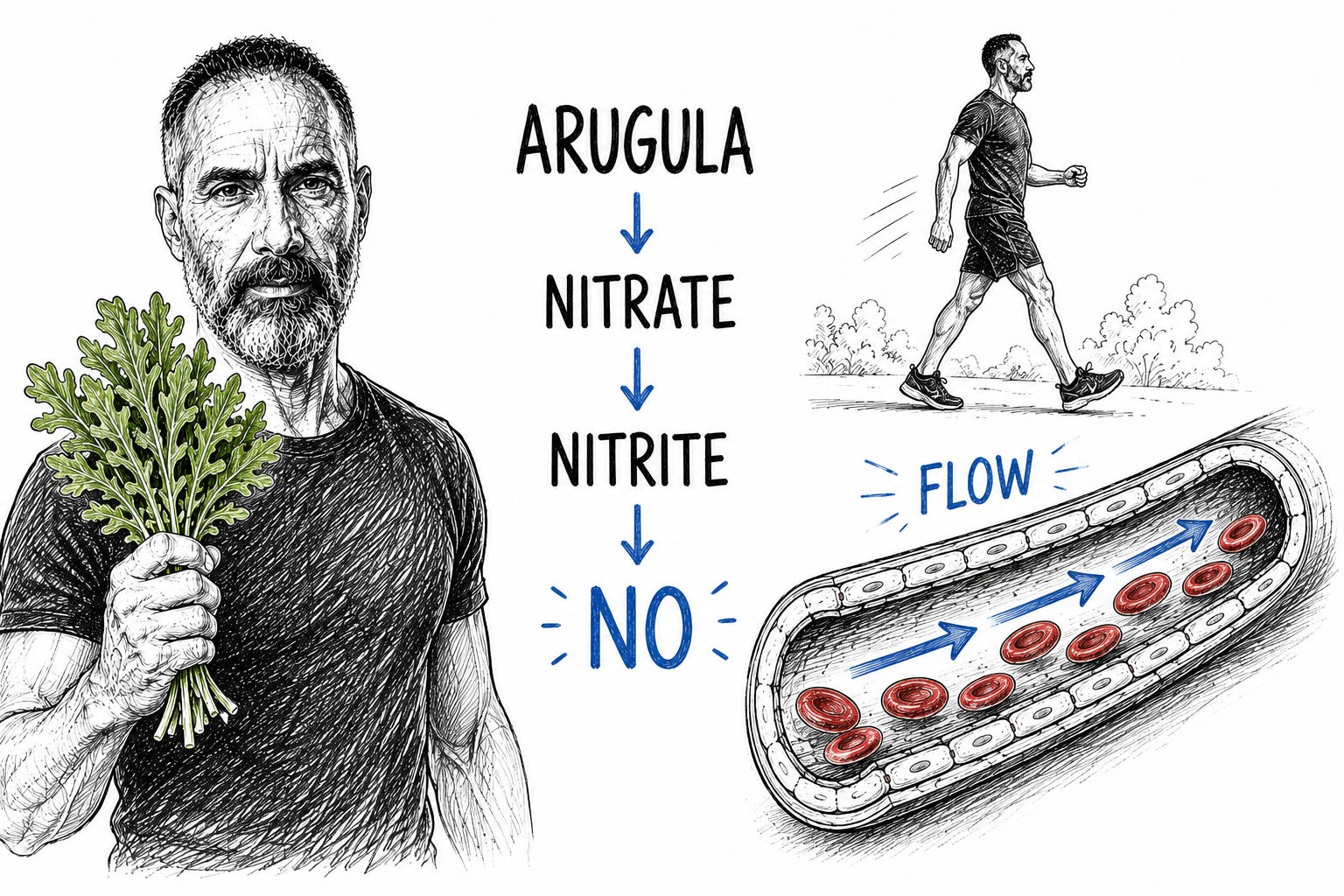
Arugula is naturally rich in inorganic nitrate.
Other nitrate-rich vegetables include leafy greens and beetroot.
After you eat nitrate, part of it enters an enterosalivary pathway.
Nitrate is concentrated in saliva.
Oral bacteria help convert nitrate toward nitrite.
After swallowing, additional chemistry contributes to nitric oxide-related signaling in the body.
That pathway gives us another route to support nitric oxide availability that does not depend entirely on endothelial eNOS.
This becomes particularly interesting when nitric oxide production is impaired.
Human trials and meta-analyses have found that dietary inorganic nitrate can influence blood pressure and endothelial function, although the magnitude varies substantially between people and studies. A 2026 systematic review and meta-analysis examining randomized trials reported evidence of improved endothelial function from inorganic nitrate interventions. Other reviews have reported blood-pressure reductions, while some analyses have emphasized substantial heterogeneity between trials.
That last sentence matters.
Nitrate is not a guaranteed blood-pressure treatment.
Arugula is not medication.
And a person taking blood-pressure drugs should not start aggressively increasing concentrated nitrate supplements without considering the combined blood-pressure effect.
But mechanistically, the relationship makes sense:
Nitrate-rich food → nitrate/nitrite pathway → increased nitric-oxide-related signaling → vascular effects.
Now connect this with movement:
Nitrate provides substrate through one pathway.
Exercise provides shear stress through another.
The vascular system receives both chemical and mechanical signals.
That is why I find this combination so interesting.
Not because arugula is magic.
Because the biology fits together.
This is where social media usually loses me.
Someone hears that nitrate supports nitric oxide.
Then nitrate becomes an “artery repair supplement.”
Then artery repair becomes “plaque reversal.”
Then suddenly someone is claiming a vegetable dissolves coronary plaque.
We do not have evidence for that claim.
An artery with established atherosclerosis is dealing with far more than nitric oxide availability.
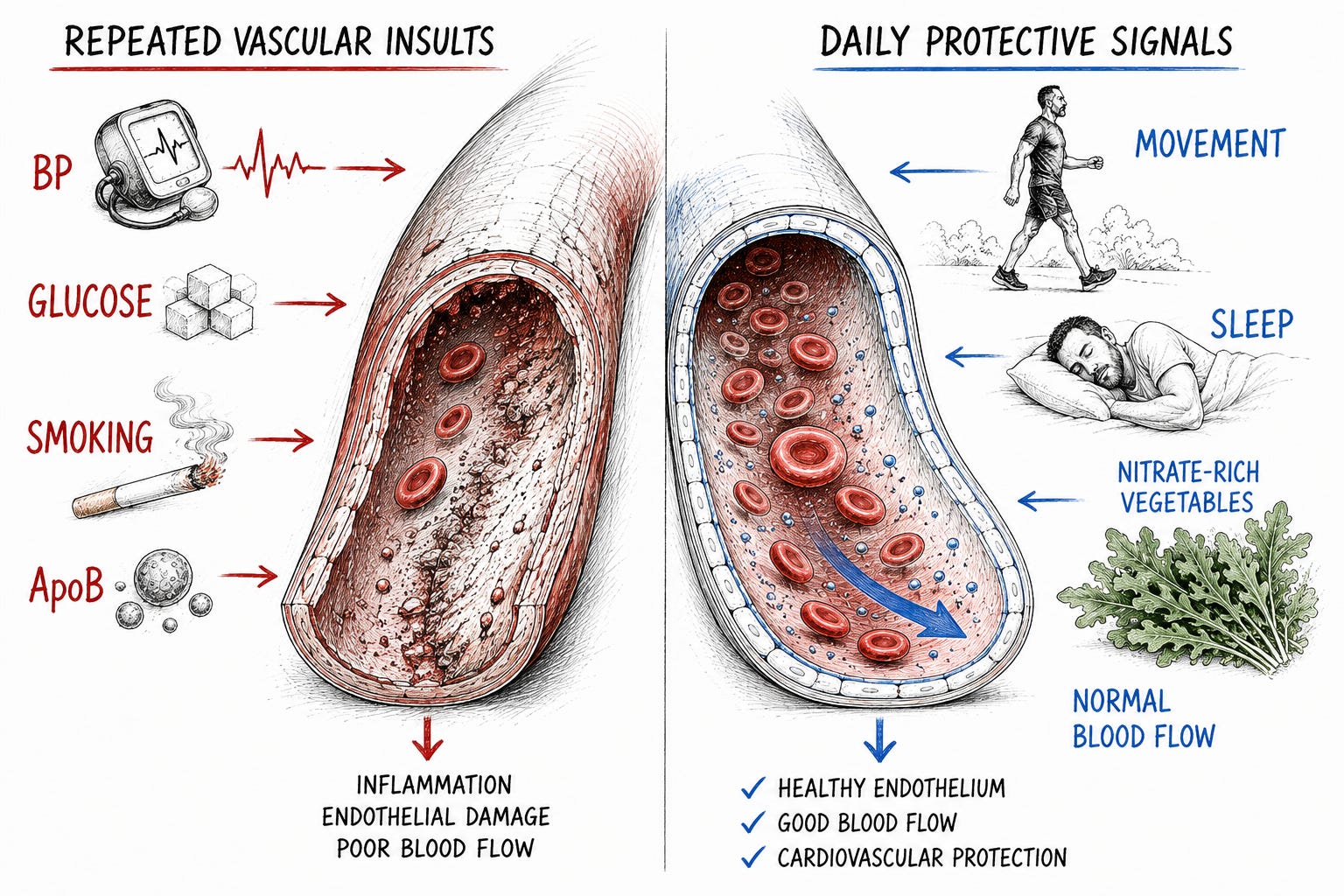
Think about the exposures occurring every day:
ApoB-containing particles repeatedly interacting with the artery wall.
Blood pressure creating mechanical stress.
Smoking or pollution increasing oxidative burden.
Poorly controlled glucose damaging vascular biology.
Chronic inflammation.
Poor sleep.
Sedentary behavior.
Metabolic dysfunction.
Age.
Genetics.
Kidney disease.
And dozens of additional factors.
You cannot continually damage the road and expect the repair crew to win because you ate arugula.
This is the central lesson.
Your repair capacity matters.
Your damage rate matters too.
If damage exceeds repair year after year, disease progresses.
So the question I ask is not:
“How do I produce the maximum amount of nitric oxide?”
The better question is:
“What is damaging the vascular environment, and what signals are supporting its normal function?”
That is a much more useful way to think.
Walking sounds almost too simple.
There is no expensive device.
No complicated protocol.
No impressive supplement stack.
But vascular biology responds to movement.
Exercise studies have repeatedly examined increases in circulating EPCs following physical activity, with nitric oxide proposed as one of the mechanisms connecting exercise with EPC mobilization and endothelial repair.
And cardiovascular benefit extends far beyond EPCs.
Regular aerobic activity influences:
Blood pressure.
Insulin sensitivity.
Mitochondrial function.
Cardiorespiratory fitness.
Endothelial function.
Autonomic regulation.
Body composition.
Glucose disposal.
Sleep.
So when I recommend walking or Zone 2, I am not doing it because walking is trendy.
I am trying to send the body a repeated signal:
Blood is moving.
The artery needs to respond.
The mitochondria need to adapt.
The endothelial cells need to sense flow.
Do that consistently and you are working with physiology rather than constantly trying to override it.
This is also why one huge workout on Saturday does not replace movement throughout the week.
Biology responds to repeated signals.
Food is a signal.
Exercise is a signal.
Sleep is a signal.
Stress is a signal.
Blood pressure is a signal.
The body keeps reading them.
If there is one thing I want you to remember from this article, it is this:
Your body is not sitting around waiting to fall apart.
There are repair, maintenance, antioxidant, immune, metabolic, and vascular systems working continuously.
But those systems have limits.
You cannot use “the body heals itself” as permission to ignore high blood pressure.
You cannot use a good triglyceride-to-HDL ratio to dismiss an extremely elevated ApoB.
You cannot take nitric oxide supplements while smoking and assume the two cancel each other out.
And you cannot eat arugula while sleeping four hours a night and call the vascular problem solved.
The body responds to the whole environment.
That is why my philosophy has never been:
Eat this one diet.
Take this one supplement.
Follow this one ideology.
It is:
Eat Based On Your Biology, Not Ideology™.
Find the signal.
Understand the response.
Then change what needs changing.
At this point, the main idea should be clear. Arugula does not directly repair an artery. It supplies nitrate that participates in nitric-oxide biology, while movement, endothelial health, vascular repair mechanisms, and the reduction of ongoing injury all interact.
The next question is practical:
How would I put those pieces together?
🔒 PAID SECTION, FULL PRACTICAL IMPLEMENTATION
The biology tells us why nitrate and movement matter. The paid section shows how I would put them together, what I would monitor, where supplements fit, and the situations where adding more nitric oxide support is not the right move.
Comments
Nothing yet. Say the first thing.
Sign in to join the conversation.