
The following describes the very basics of systems science seen through the lens of Systems Processes Theory–a definition of “systems process,” hierarching as an example of a systems process made up of systems processes, a bit about functions and pathologies, and a glimpse into possible future work.
In human life, a system is a series of activities to organize things and to prevent entropy–things falling into disorder.
A process is a series of activities leading to an outcome. Engineers use processes to design products. Specific sciences describe specific kinds of processes like photosynthesis, plate tectonics, and the formation of galaxies.
A systems process is a series of activities that, in interaction with others, emerge as a system. They can be found in systems in the various sciences at various temporal (time) and spatial (size) scales.
A few examples are networking, feedback, cycling, and evolution.
“Systems process” is not a standard name or definition. In systems or complexity science papers and texts, a systems process may be called a concept, pattern, archetype, characteristic, attribute, or behavior of a system.
In the 1970s, molecular biologist and systems theorist Len Troncale called them “systems concepts” and referred to them as isomorphies or as isomorphic. But by the 1990s he was seeing each as a series of activities.
This minimal model of a system demonstrates a few of them:
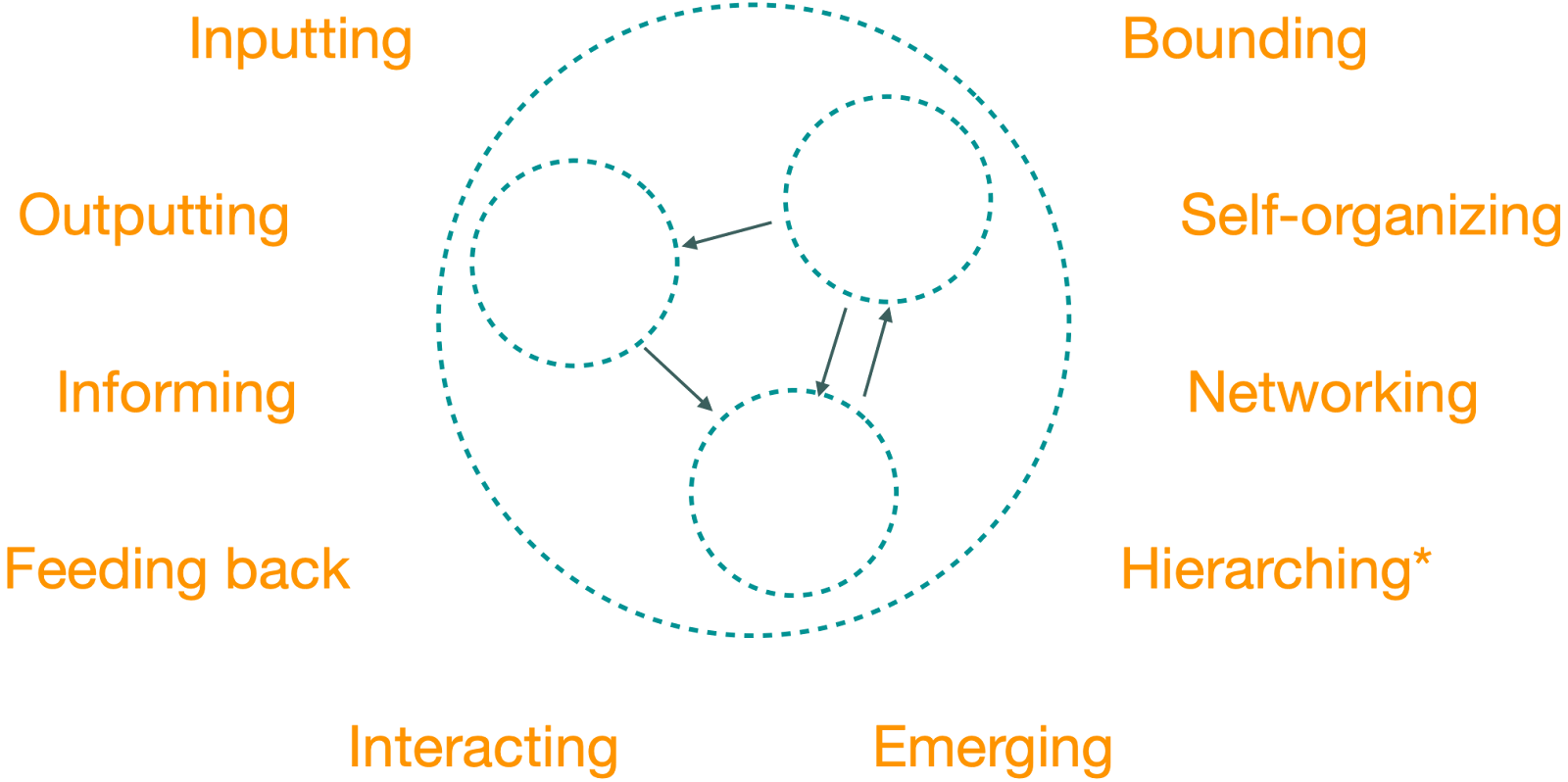
*Subsystems within a system within a systemic environment
Hierarching, as a systems process, is a series of activities. As you will see, it is a series of systems processes. The result is hierarchy as structure.
It starts with a system. Maybe an atom, cell, person, or star.
The system interacts with another system.

Interacting is a systems process that consists of systems processes: outputting, flowing, inputting, information, and feedback. (Information is the forming or change within resulting from input from the environment.)
Systems interact and emerge as networks.
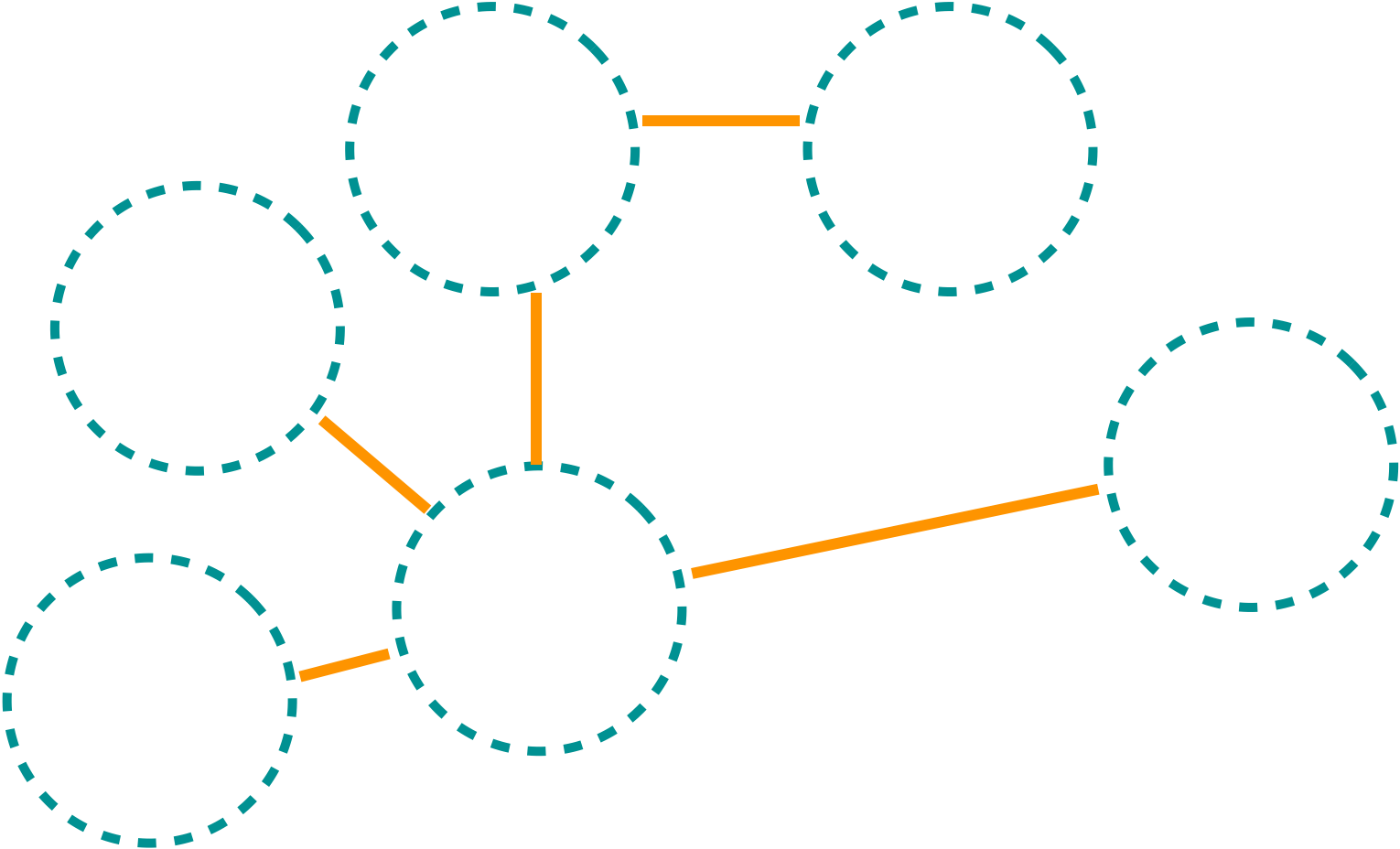
In networks, new nodes (systems) link (interact) with nodes with more links. Nodes with more connections/links are called hubs. Hubs connect into superhubs.
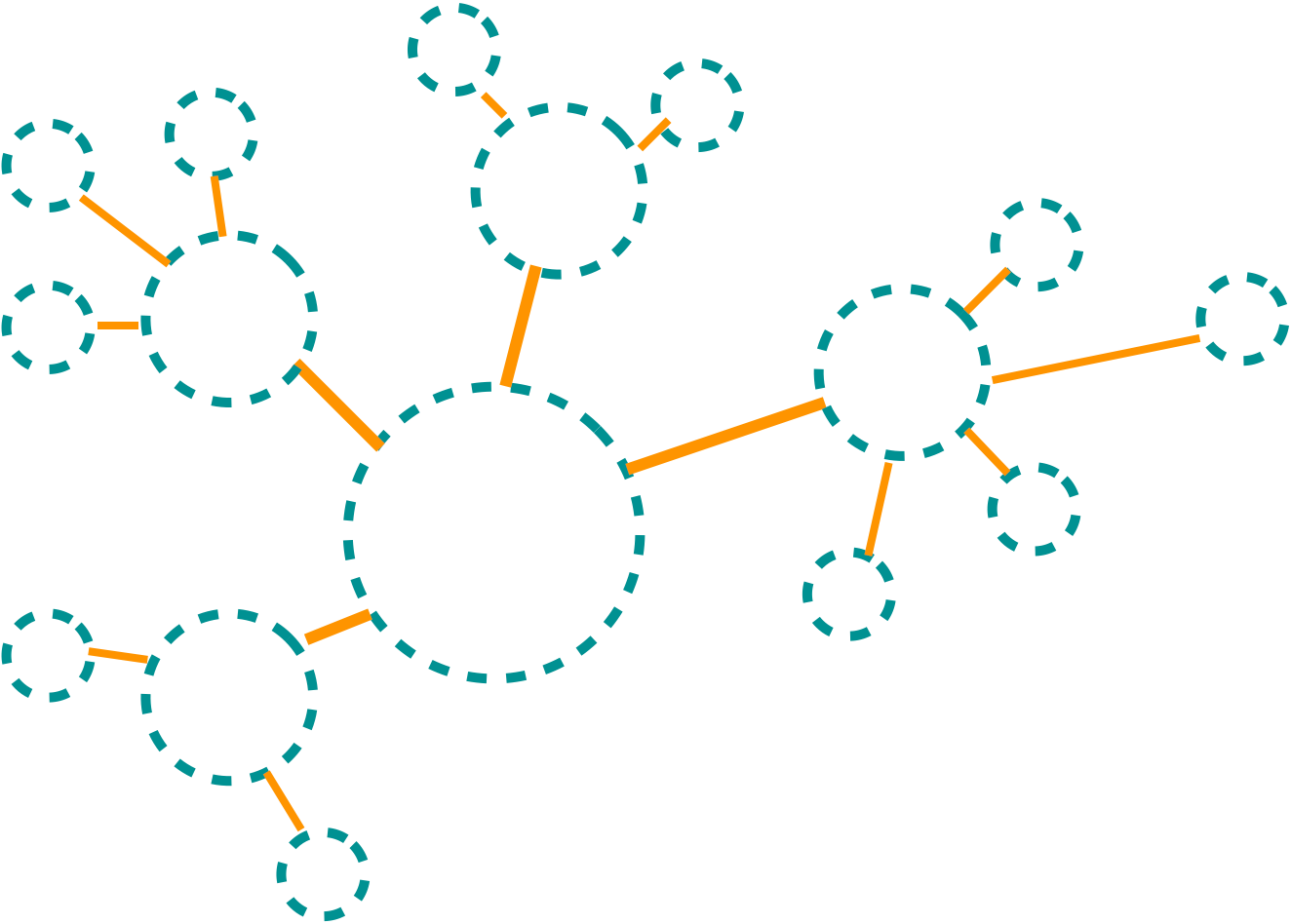
Nodes, hubs, and superhubs form a hierarchical structure.
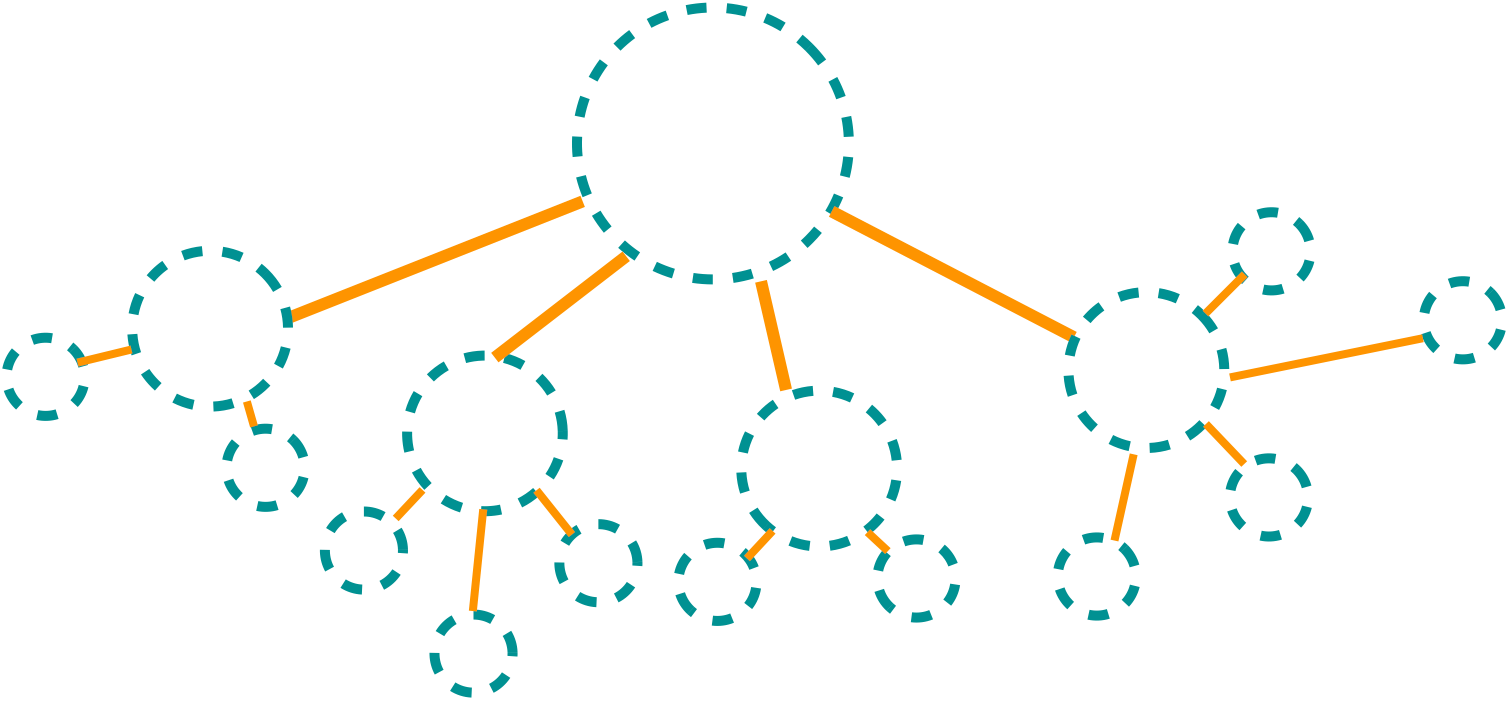
HIerarching is a systems process made up of systems processes. Hierarchy as a structure requires continual interacting, outputting, flowing, inputting, informing, feeding back, and networking.
Systems processes have identifying features and functions within and among systems and those activities can be blocked or go wrong.
For example, networking ensures flows of information, matter, and energy to all nodes.
Hierarching improves the flows, making them more efficient. It also provides the benefits of modularity. Parts can specialize and divide the labor. Parts can experiment without endangering the whole. In that way, hierachy aids in evolution, the adaptation to changing environments.
Hierarchy may have blocked flows or flows directed away from some nodes and not others. There may be not enough or too much interaction among nodes. There may be inadequate feedback between layers. Modules may be unable to experiment and adapt to change because of lack of feedback and flows, or inadequate communication with their systemic environment.
As described above, what Troncale called “systems processes” needs an agreed-upon name. Also needed is a recognized way of identifying and including candidate systems processes.
A next logical step would be the development of an ontology that contains the systems processes and their interrelationships, definitions of each, what they are called in the various disciplines, modeling and measurements, and features and functions within systems.
By seeing the functions of systems processes, we will see pathologies–how they–and we–go wrong.
Comments
Nothing yet. Say the first thing.
Sign in to join the conversation.