
Today’s article is all about photography style, as I’m launching ‘The Essentials’, my new Lightroom Preset Collection.
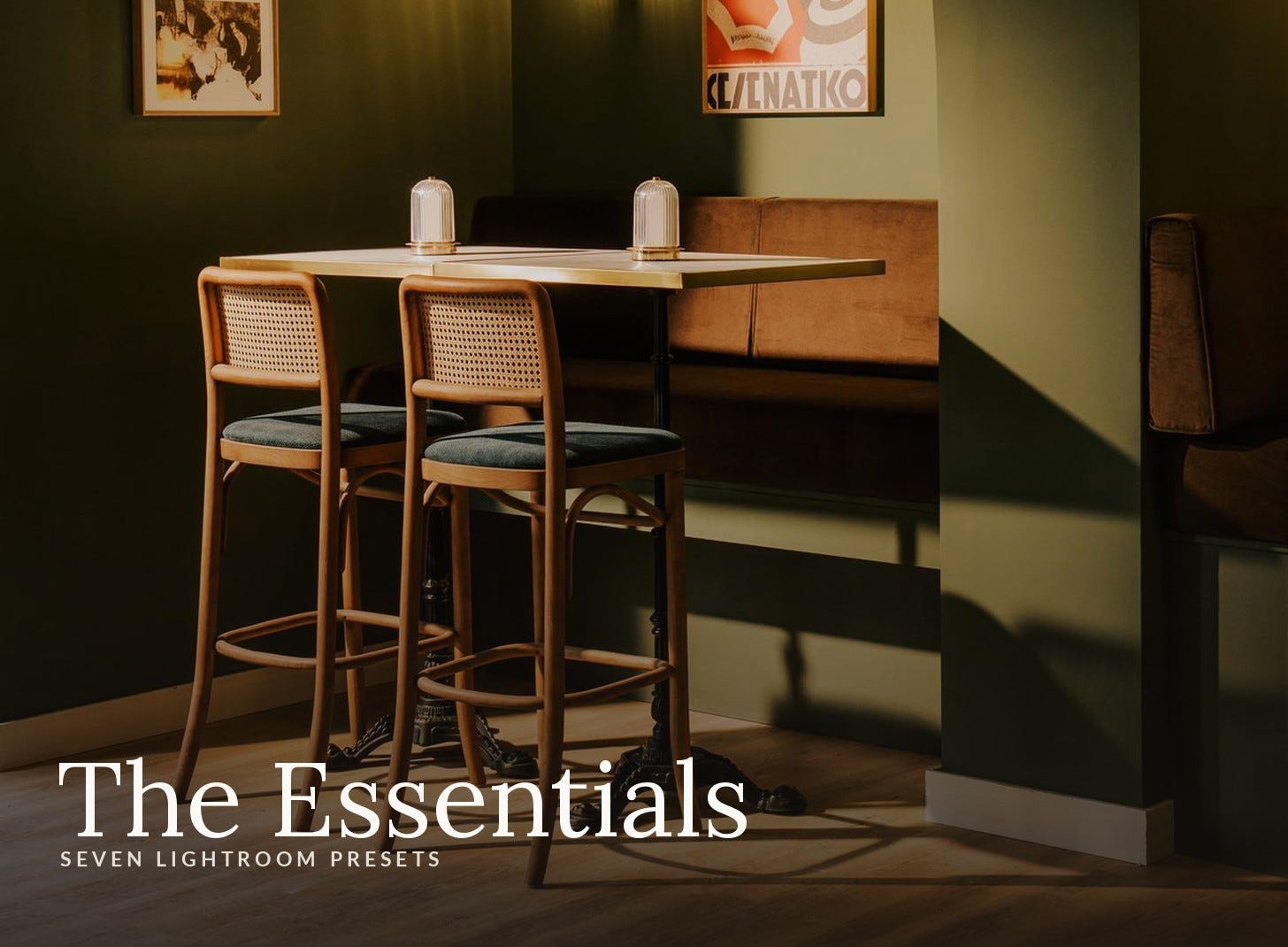
As a Substack reader, you can use the code LAUNCH30 for 30% off your order. This code is available until the end of the weekend.
Over the years, I’ve been through many evolutions of my photography style.
From moody, faded blacks to rich, vibrant colours, I’ve spent a substantial amount of time in Lightroom tinkering, searching for my vibe.
Looking back at those days, I’m so glad I stuck true to how I edited my work, because those images reflected who I was at that point in my life.
Now, in 2026, looking at my current portfolio, I’m confident in saying that I want my work to continue evolving in this direction.
But how do you navigate this? Well, that’s what today is about.
Let’s dive in.
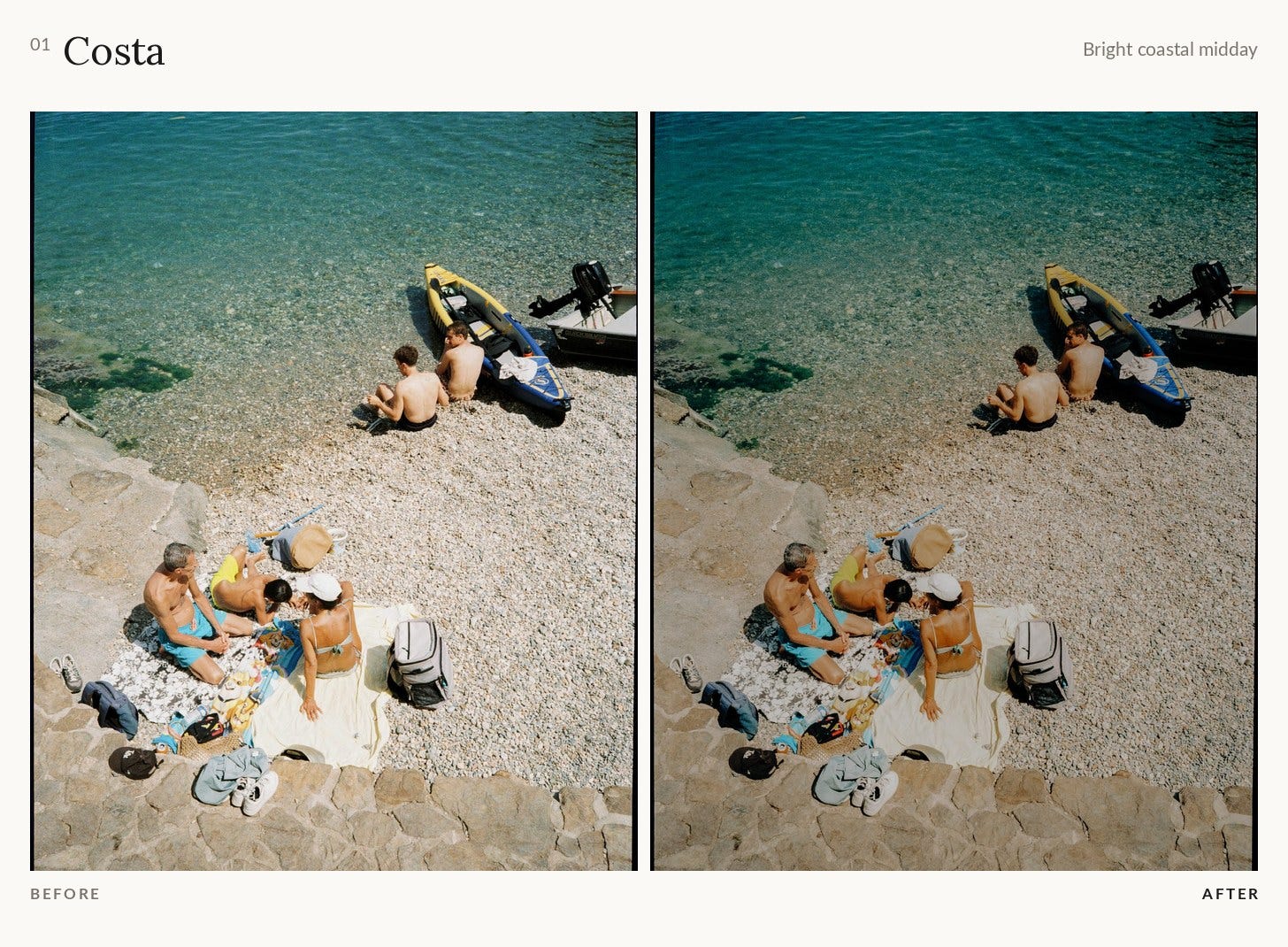
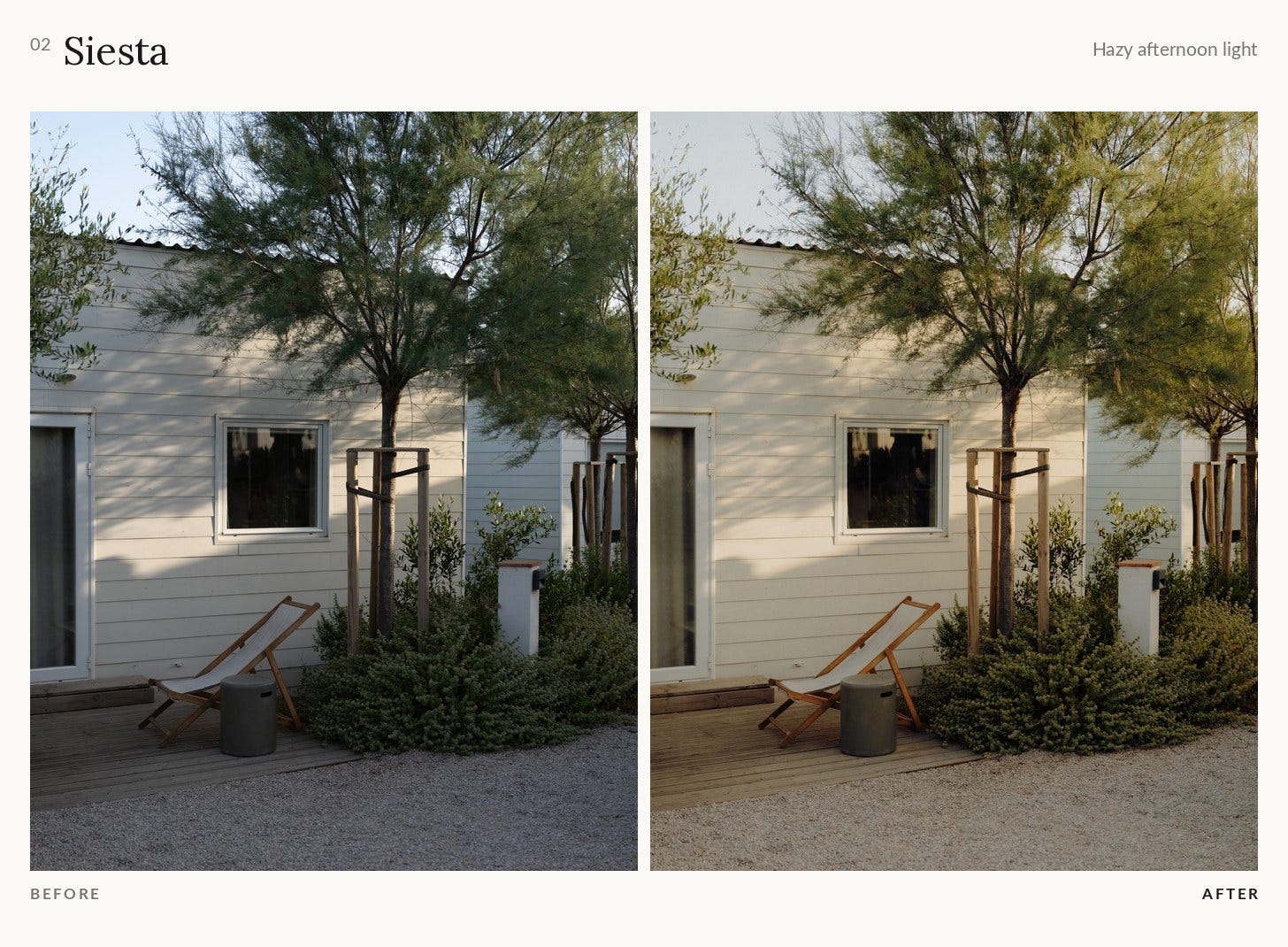
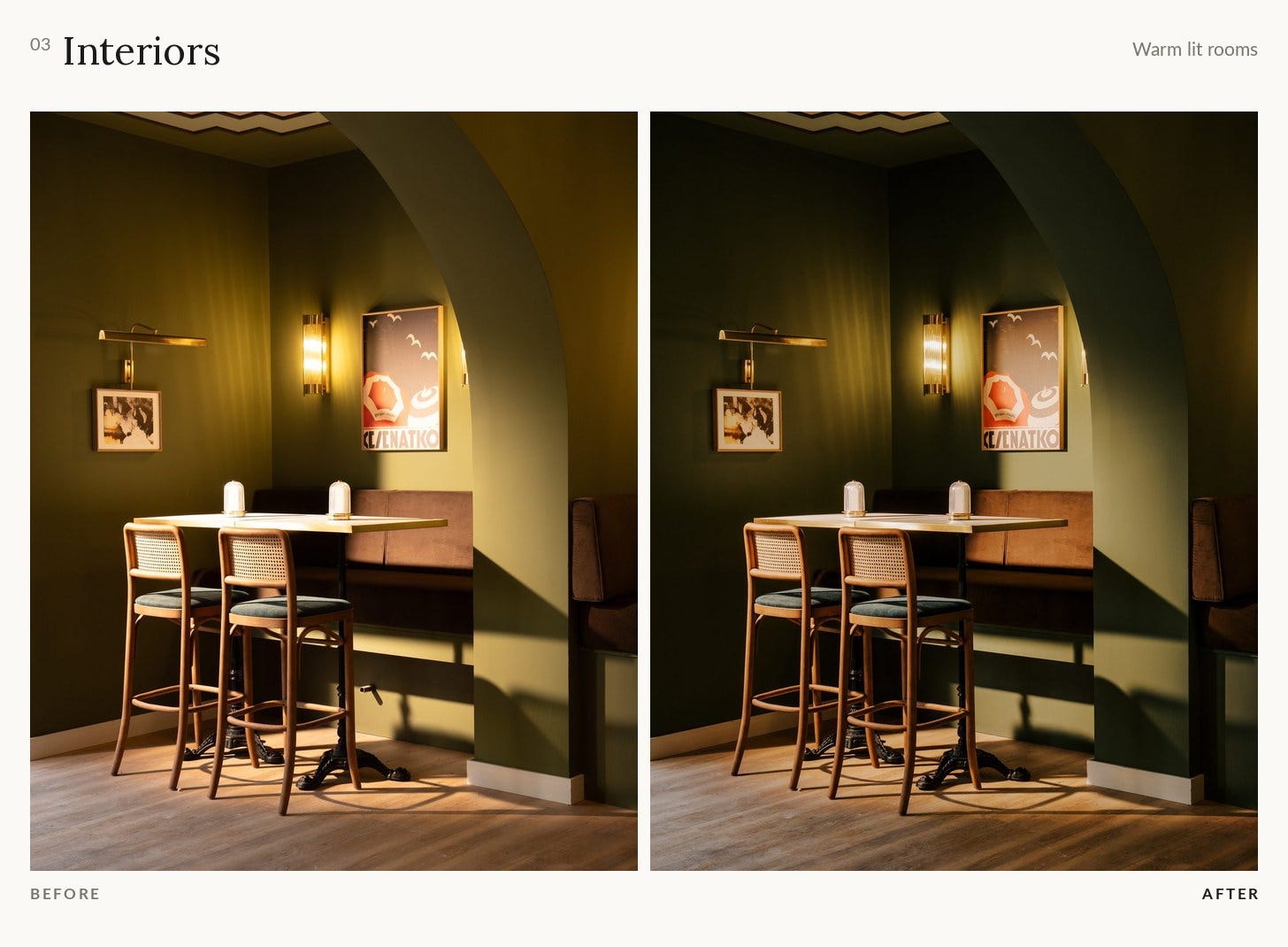
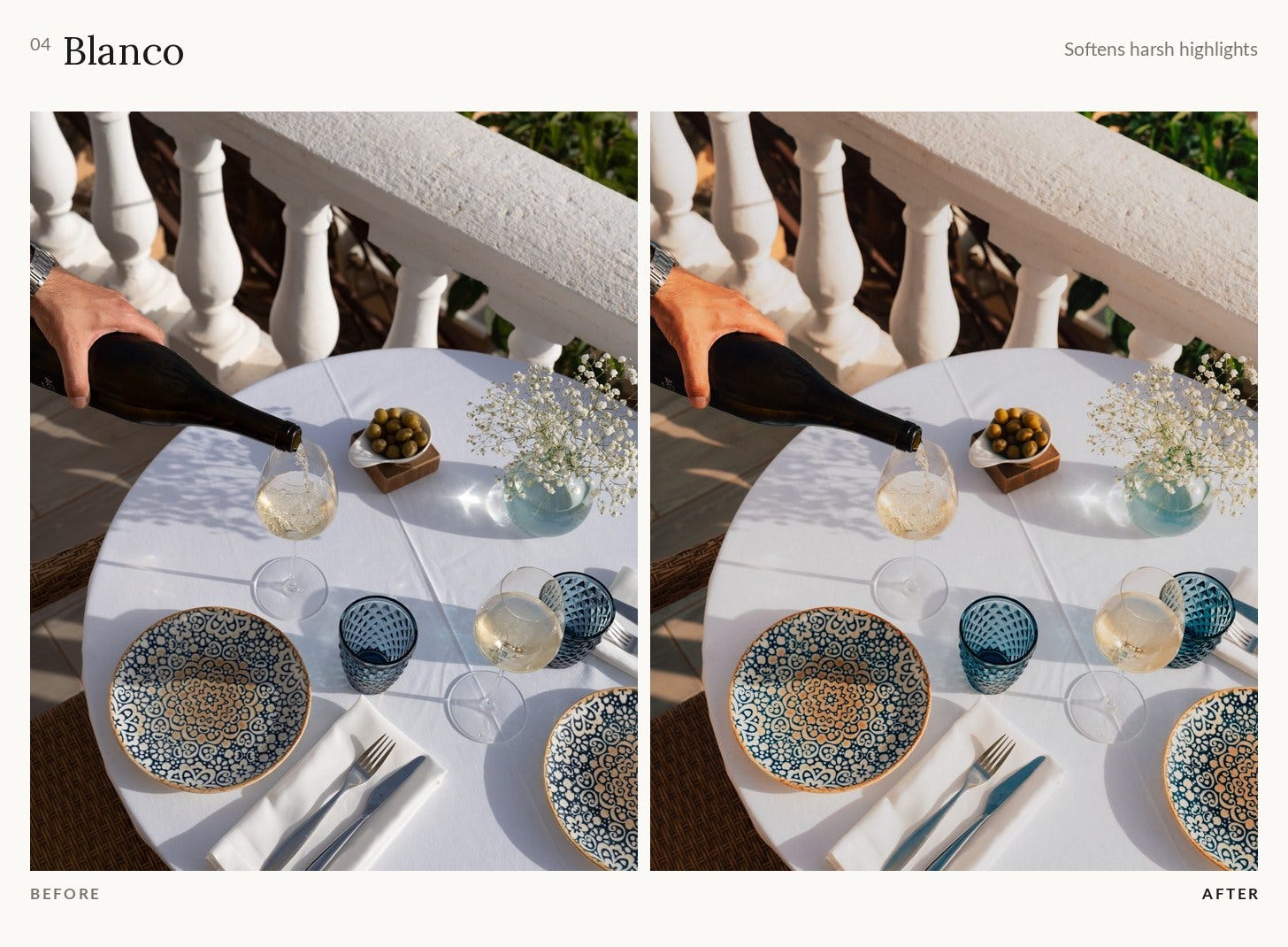
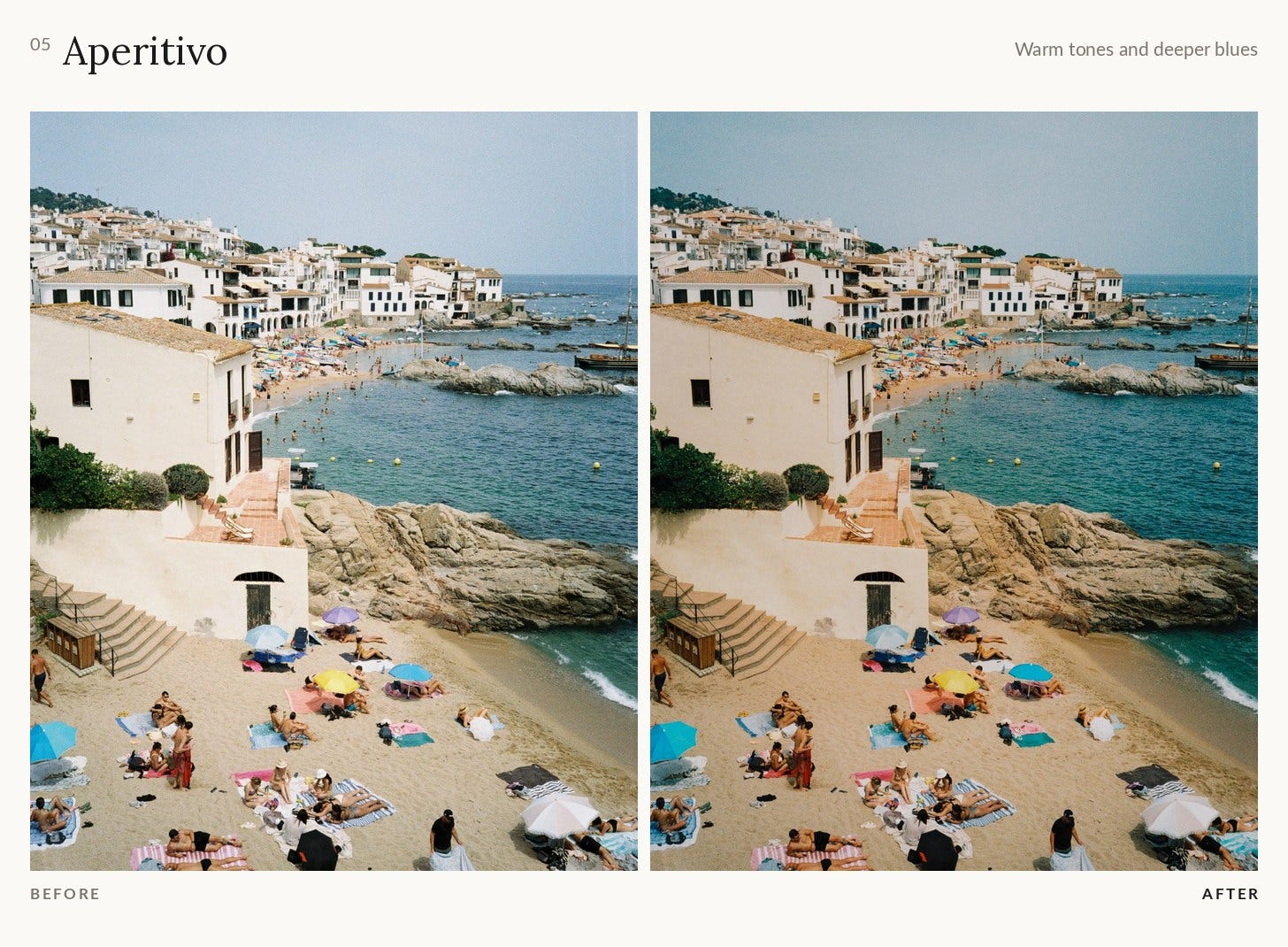
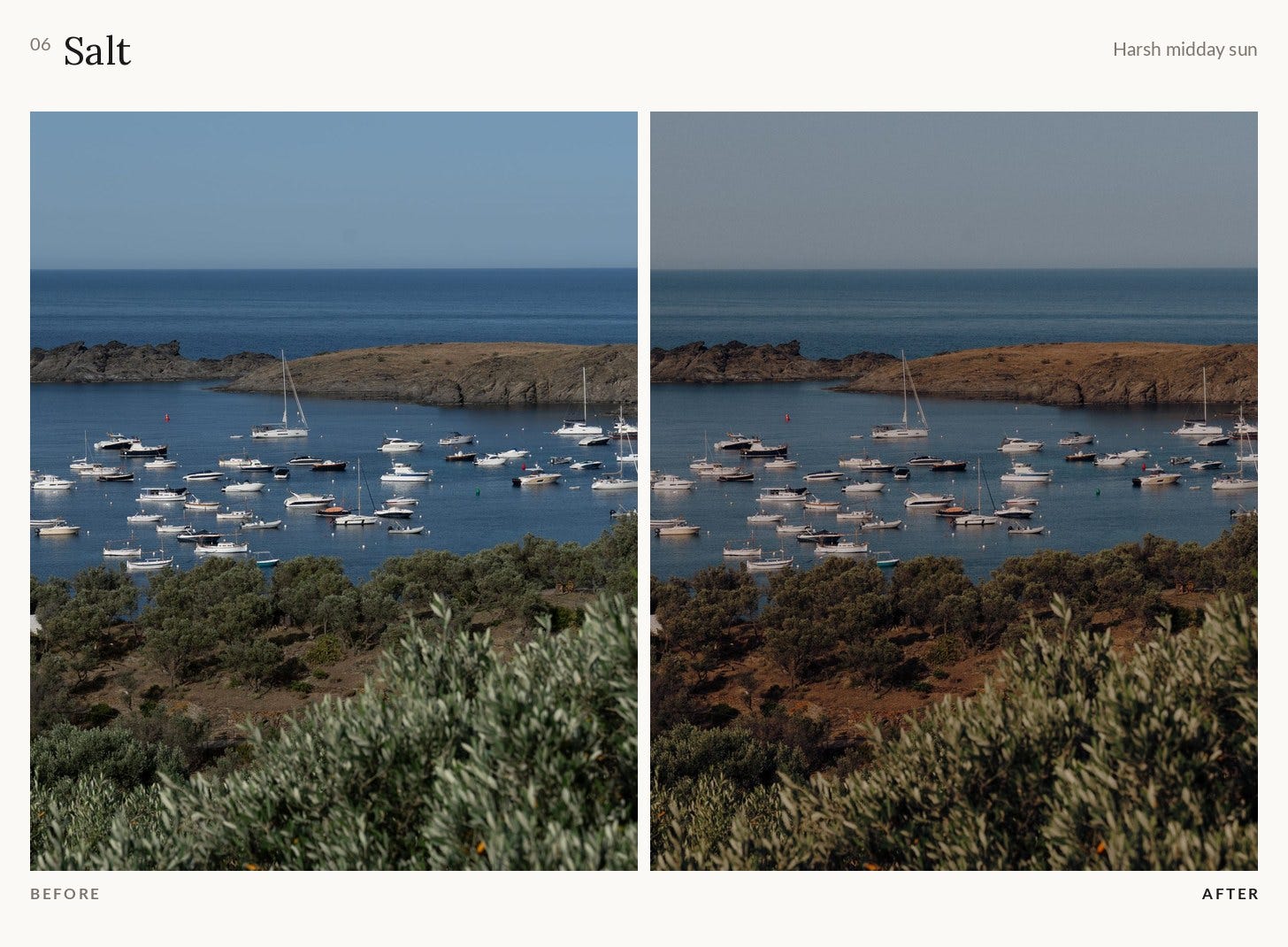
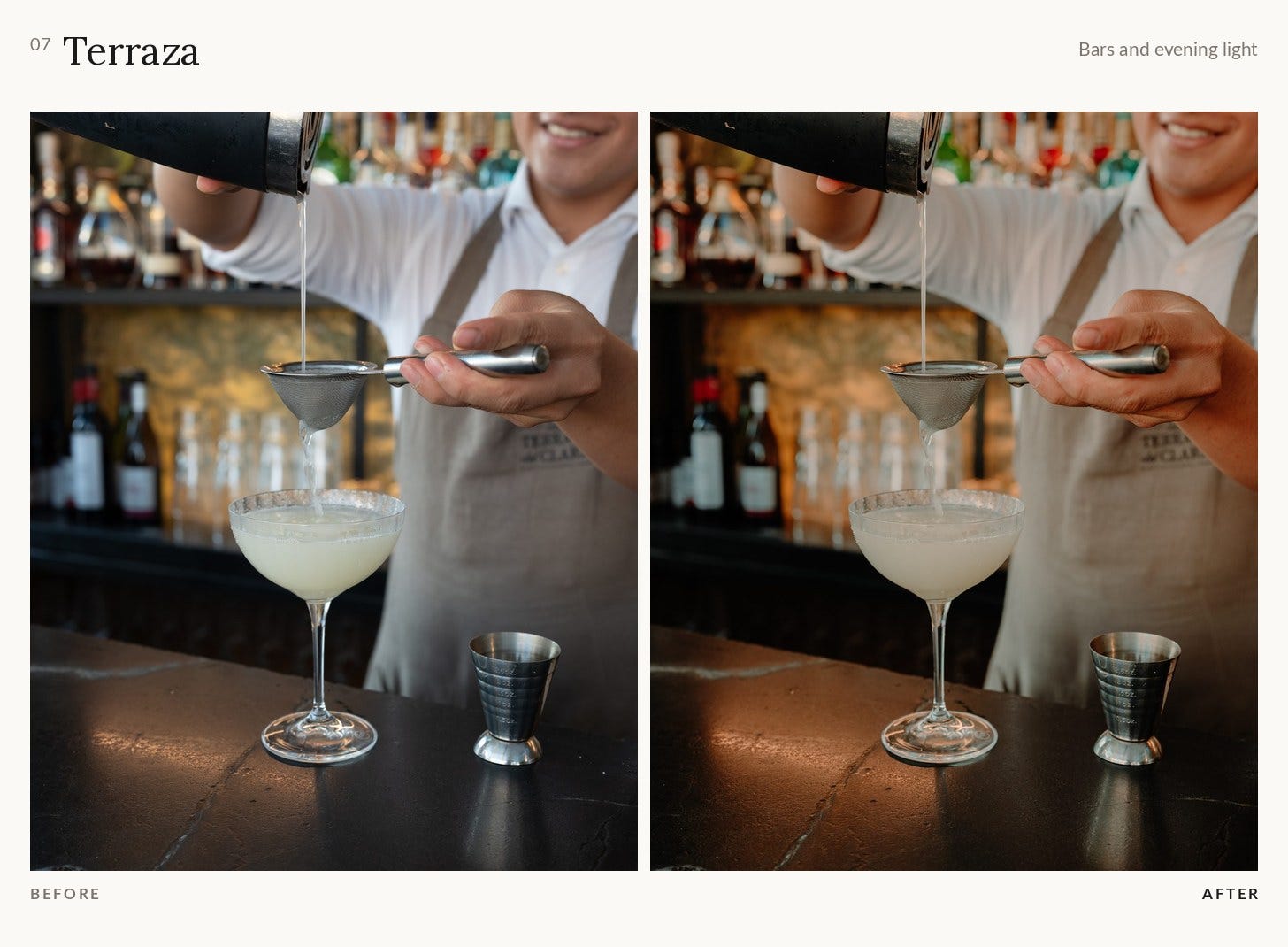
p.s. every image in today’s article is a before-and-after, edited with The Essentials
At the beginning of my photography journey, I consistently looked outwardly for direction on my style.
What was most popular on Instagram? How were the people in my city shooting? It was a constant search.
I would do shoots alongside photographers in Perth, see their photos afterwards, and feel that something was off.
Theirs was that classic ‘commercial’ style - lifted shadows, overexposed, fake colour - and it got me thinking that this was the correct way to edit (if I wanted those projects).
It left me feeling misaligned when it came to editing my own work… a voice saying, “Matty, if you want that shoot, you better edit it like the rest of them.” And I did, anyway.
It led to a patch of editing my own commercial work this way out of fear that it was what the work required of me.
Fortunately for me, I had the chance to explore and work abroad for a chapter of my life… and this opened my eyes to how others were not only editing uniquely, but succeeding equally.
To avoid my mistake of looking outwardly, the obvious next step is to look inwardly.
And not in a spiritual, metaphysical way (unless you’re feeling it), but in more of a “what do I like?” kind of way.
You are not me, and I am not you… so why the hell would we shoot, interpret light, or edit the same? It makes no sense.
For me, the process begins with moodboarding your visual direction. Take an app like Milanote and drop in your favourite images, the ones that ‘speak’ to you.
Not images that have gone viral, get a lot of comments or look ‘cool’, but images that make you feel something, or more importantly, images that would make you proud to say you took them.
From here I like to arrange them visually, in a way that lets me start to decipher patterns.
Colours, tones, crops, exposures: all of these elements make up a visual identity (along with many more) that you can begin introducing to your editing style.
Next, I would import this moodboard into Lightroom, along with a handful of images to practise on.
Using the Shift + R function, set the moodboard as your reference (left-hand side) and cycle through your practice images (right-hand side). Start to see if you can bring elements of what you love into your own work.
Now, I should say, this is going to be a challenge, especially if the photos on your moodboard were shot under different lighting conditions to your practice images or by photographers who have been shooting for decades.
It’s why I’d suggest going through this process with kind eyes, as it’s not going to match up as simply as adjusting a single slider.
As you continue, you’ll start to find patterns, and at this point you must begin noting them down.
For me, those things were: lowered contrast, lowered highlights, lowered clarity, lifted mid-tones, warmer tones and earthy hues, exactly what you’ll find in The Essentials.
For you, they might be different, but the only important part of this step is to find the ‘global’ adjustments that push your images closer to the look you’re after.
Early in my photography journey, I invested quite a lot of time and money into editing.
In all honesty, it wasn’t an intentional decision. I just found myself enjoying my time in Lightroom.
As a result, I invested in presets, courses and, most critically, time into finding out how the software works.
Learning how curves affect colour, or how exposure can impact the mood of a photo, all came from shooting and sitting in bloody Lightroom.
And like most good investments, the returns you notice come through compounding.
Constant input with consistent patience will eventually get you the visible results you’re craving.
And to help bring that time horizon a little closer, I’d recommend watching the following YouTube videos to give you a better understanding of Lightroom.
The Ultimate Guide For How To Edit In Adobe Lightroom (End-To-End)
Now, I intentionally titled this article photo editing style and avoided the term photography style.
The reason for this is one which I believe will help you unravel the mystery that so often surrounds photography (and photographers).
I’ve actually written about this before here, but if you’re new, it’s important to recognise that your photography style is made up of so many elements beyond editing.
The camera you use, the location you live in, the lenses you reach for and the lighting you favour (along with so many more) each account for small percentages of your overall photography style.
Much like these, editing is one portion of the formula, and should be seen as equal to the process of shooting.
You can look at that list and feel overwhelmed, or you can look at it again with kind eyes and see it as an opportunity.
These are all elements you can work on and improve upon, so adopt the student mindset (it will empower you, trust me) and start working.
The best part about your photography style (like your editing style) is that it’s constantly evolving and will change over time.
And it’s when you commit to being yourself and embracing your own interests throughout the process that you can look back at each chapter proud of your evolution.
Overall, your editing style (much like your personal style) is a culmination of all the inputs you give it.
It’s with this that I’m happy to share The Essentials with you today, as I’m confident it will add a new element to your style’s development.
Be sure to use the discount code before the end of the weekend, and as always, thank you for reading.
Happy shooting, and speak soon.
Matty.
No posts
Comments
Nothing yet. Say the first thing.
Sign in to join the conversation.