
I’m late.
Late to write this newsletter, based on the abstract time schedule I have imposed on myself. Given the part of the world I am in now though, that actually feels on par. It’s been hard to focus here. The days are a bit chaotic and the volunteer work I’ve been doing has not left me much in the way of time to think or time to write.
Chapter One - The Village
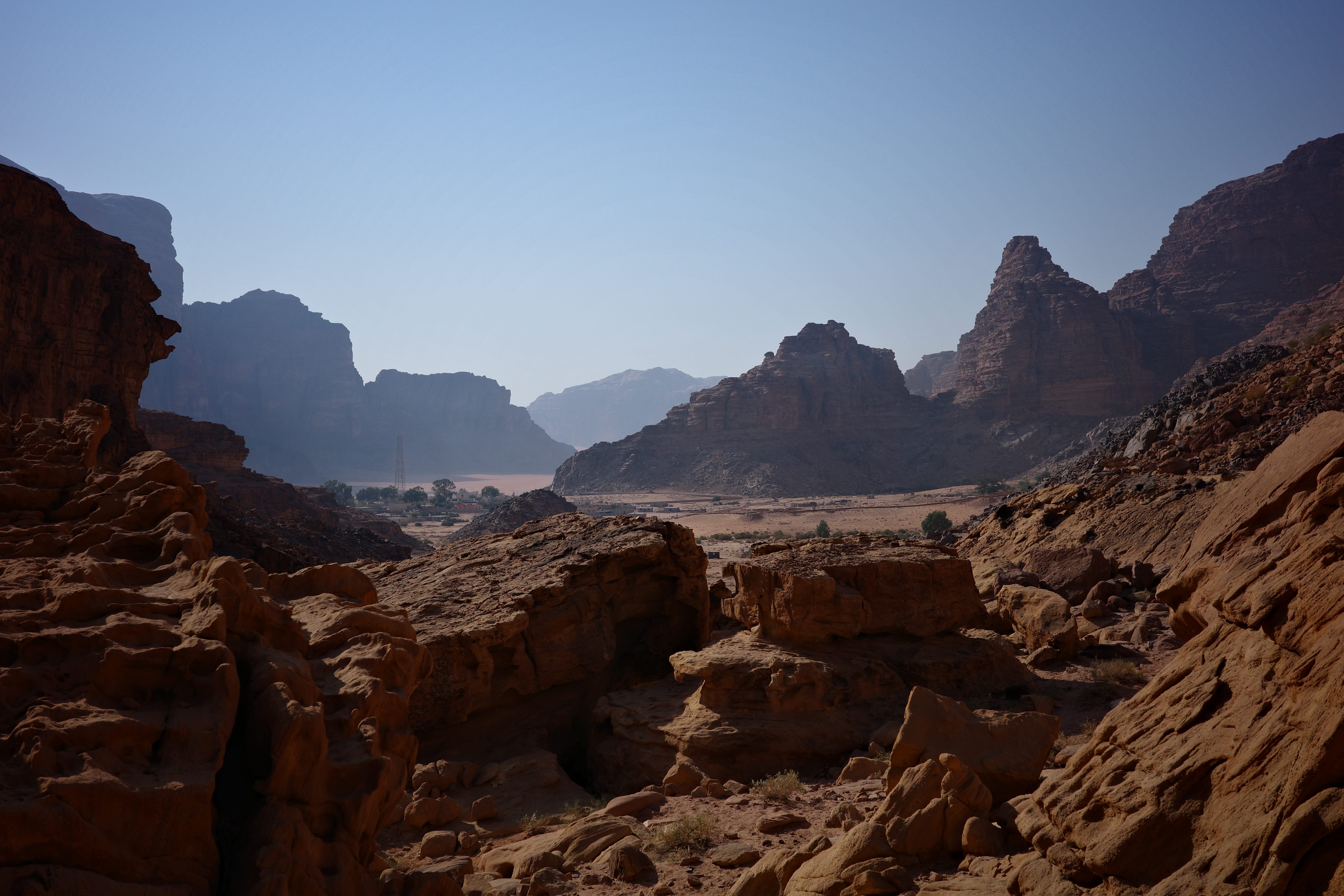
It’s probably the driest place I’ve ever been. The sand is powdery, red and fine, and it rolls gently between the towering, reddish-brown stone monoliths. Sometimes, on a still day, dust will hang in the air, like fog floats gently in a valley. It feels like a different planet. Perhaps that’s why so many otherworldly movies have been shot here. Dune, Dune Two: Electric Boogaloo, The Martian, Lawrence of Arabia, a couple of the new Disney Star Wars cash-grabs.
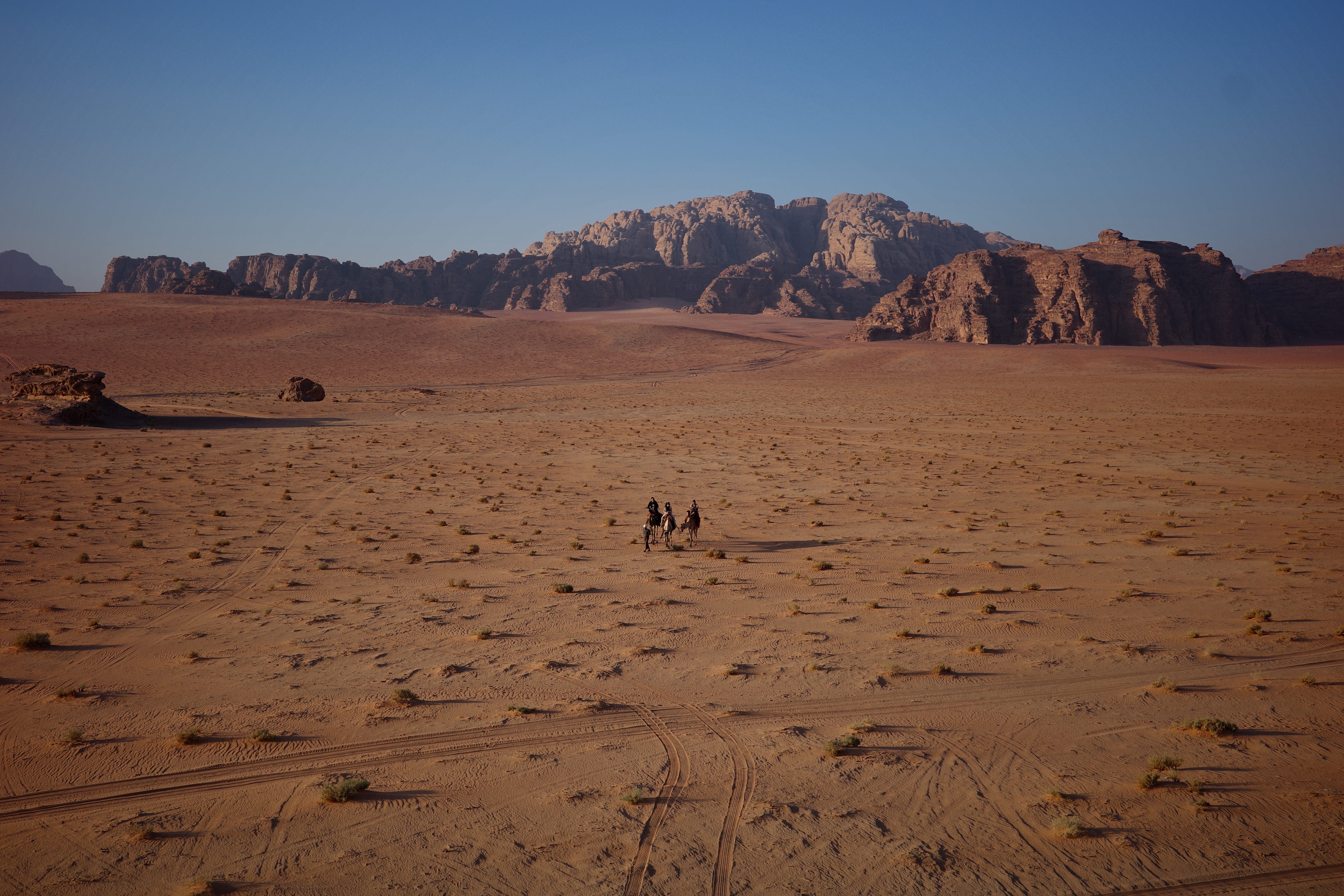
This is Bedouin territory. The Bedouins are still Bedouining around, but they’ve traded in most of their camels for Toyota Hilux pickup trucks. There are still some camels, but I get the sense they mostly exist for tourists to ride. Camels, while noble and strong creatures, do not go 75 MPH last time I checked. Sorry, camels. And damn, does Toyota build some bulletproof trucks.
A complex web of interconnection stretches between all the people who live here. This is a pretty isolated tribe, and they’re all descended from the same guy about 300 years ago, who came here from what is now Saudi Arabia. That’s what they tell me, anyway. Most of the people here were born here, and many have never been outside of Jordan.
My first Bedouin host picks me up from the bus stop. We’ll just call him Mohammed, half the guys here are called Mohammed. Mohammed guns the Hilux around a corner, sliding the back of the truck around and spinning the tires. “Allah likes it” he says, with a bit of a smirk. We cruise through the main village, which is not much more than a cluster of concrete houses stretching the equivalent of a few city blocks. There’s some little markets, a barber, a hardware store, even a petrol station or two, although not any ones that westerners would know how to find. We pull up in front of a concrete house that looks (to me) exactly like all the other concrete houses, but a man comes with some diesel in a big jug and a funnel. Mohammed pays him a few bills, a mixture of Jordanian Dinar and USD, and he puts some diesel in the truck.
The agreement I originally signed up for was to help out with this guy’s camel/jeep/hiking tours for a month and to stay half of the time at his hostel in town, and the other half at his camp in the desert. It turns out there’s no camp in the desert anymore and also no tourists at his hostel. A large part of this can be attributed to the political situation in the middle east, which is sub-optimal, to put it exceedingly lightly. I would also say that another big reason he doesn’t have tourists is that it is almost impossible to know his business even exists unless someone told you exactly where it was and how to contact him. There are tourists here still, but they are staying at places that I imagine have things like websites.
I started working on a website for him that evening. He tells me over some dinner cooked in the fire that he has some tour guide work to do for his cousin, and he will leave tomorrow and be gone for a couple days. I’ll be left in charge of his three sons (who by the way are all under 12 and speak only Arabic). I get it, times are hard, I would probably take the work too, if I were in his situation.
They’re nice kids. It’s difficult to communicate, though. As much as I do like kids, I didn’t really sign up to babysit, and it’s a bit hard to know what the expectations are, given that I’ve known all of these people for about 6 hours, and been in this country for about 18 hours. We make it work though, we play some soccer/football, we walk around the village a bit. They ask me some questions about where I grew up (through Google Translate) and show me how to cook authentic Jordanian instant ramen packets. The first couple days pass this way.
Chapter Two - The Desert
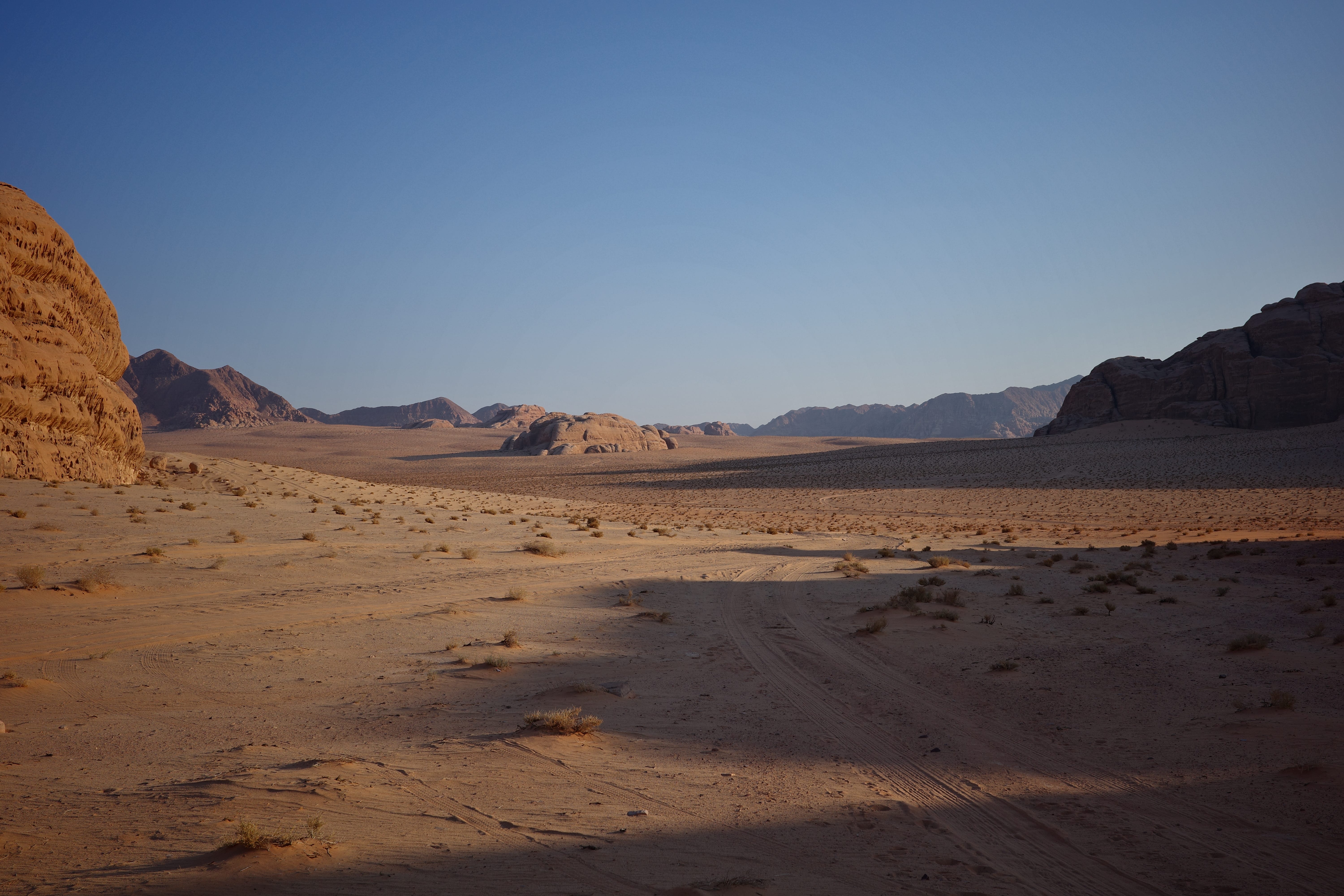
After a few days stuck in the village, we all get out into the desert. Mohammed drives very fast through the dunes, like he can already see what’s over the crest of the next one. It’s dusk, barely any light at all. He flies through the canyons with no headlights, and no more than a few inches sometimes between the truck’s mirrors and the red rock walls. He drives with the speed and confidence that only someone who has driven through this canyon a thousand times would have. Only someone who grew up here. He was probably riding in the back of his dad’s pickup truck when he was 10, as his sons are doing now.
I ride with them in the back of the truck. Some experiences transcend countries and generations. I rode in the back of my dad’s pickup truck too, when I was ten. I also felt like he could already see what was around the corner. Maybe he could.
Mohammed takes me a bit further into the desert the next day, he leaves the boys with a family member. I think I’ll not share too many details, but he’s going through a difficult time in his life right now. We don’t talk a lot about it, I think partially because his English is quite limited, but even if it wasn’t, he’s a pretty stoic guy. There’s only so much I could do anyway.
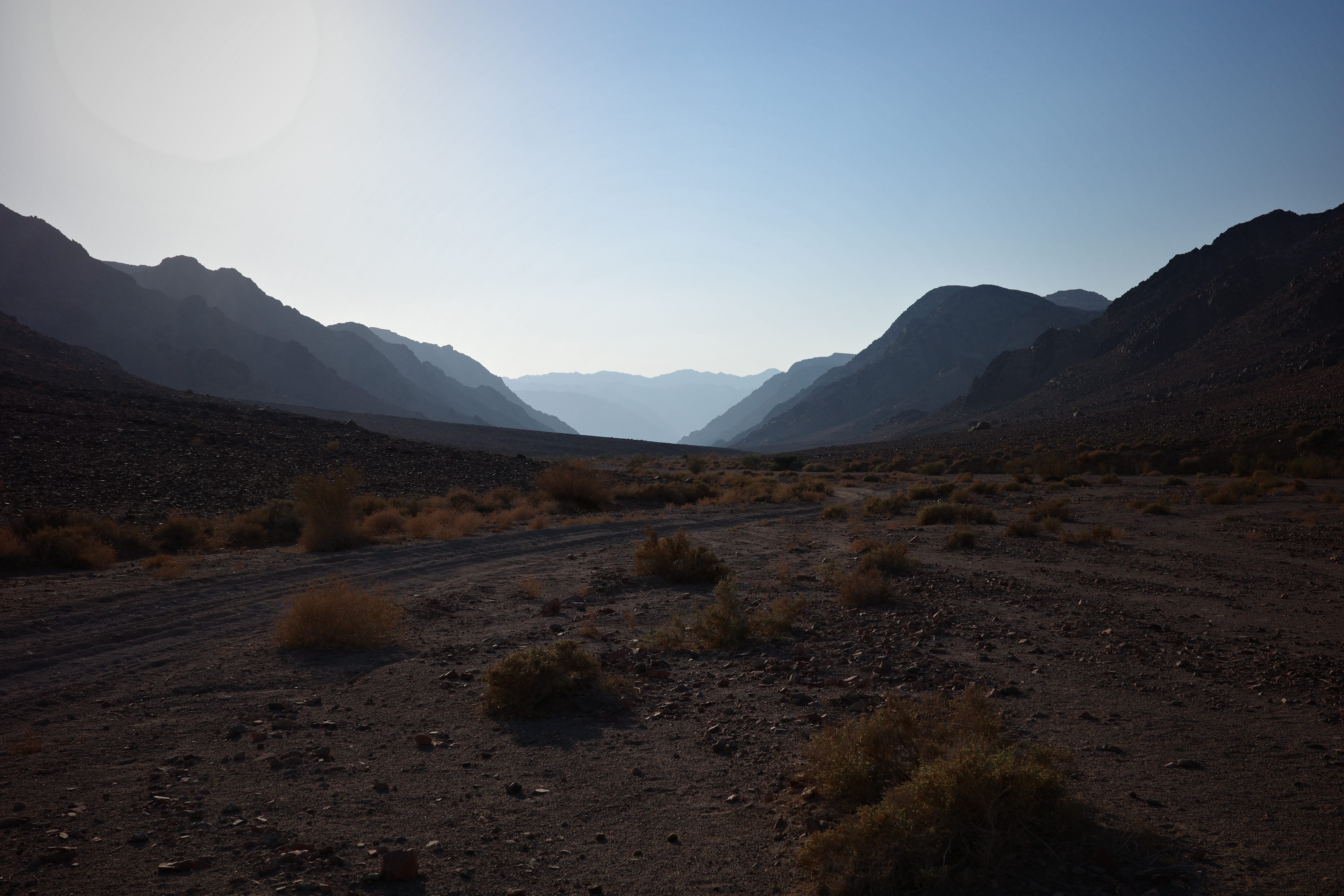
We spend a day and a half driving through some deep veins of the desert, which is massive. Most tourists only see a tiny percentage. Past the red rocks and sand dunes that you see in the movies lies a vast and diverse landscape, which extends through coal-black rocky hills and tan, wide, sun-bleached valleys into Saudi Arabia, where he says he can go easily but I cannot.
We stop a lot. He likes traveling slow, he tells me. “Unless there is reason, why go fast?” I can’t remember exactly how he said it. The Bedouins here are good at going slow. To some, that might sound like a slight, but it really is a skill to be able to go slow and enjoy life, one that does not come easily to everyone. We stop to make lunch, to make tea. We make tea at least two times per day here, often three. Bedouin tea is nice. Steeped in the fire, with black tea leaves from Asia somewhere, sage, and a ridiculous amount of sugar. It tastes sweet and smoky. Mohammed knows which herbs are good for remedies, and sometimes he makes additional digestive concoctions, depending on what’s available.
After a few more days spent in the village, I finish his website. I really came here to stay in the desert though, not the village. Too many squawking chickens and barking dogs for my tastes. I swear these roosters crow every 15 minutes starting from about 3 AM. Plus, I was hoping to interact with some other travelers and there aren’t any here.
After about a week I told him I wasn’t sure I wanted to stay much longer. He was a bit annoyed at first, but I think he thought I wanted to leave Jordan. Once I explained to him that I just wanted to spend more time in the desert, he perked up a bit, and said he understood. “No problem”, he says, “I have cousin who has tourist camp, maybe you go volunteer there”. Everyone here is one type of cousin or another, some close cousins, some not so close. So we went there, had some tea (necessary) and he chats with his cousin, and now here I am, working in a camp in the middle of the desert.
Chapter Three - The Camp
This camp reminds me of a modern Hollywood blockbuster. It’s very pretty, but a lot of the time you’re just trying to understand what is supposed to be happening and why.
Nothing is clearly defined, when the volunteers should be and where, what we should be doing exactly. Say you are somewhere doing the same thing at the same time as yesterday. Maybe you are late, maybe you are early. Maybe it’s the right thing and maybe the wrong thing. It depends on how the boss’s day is going so far, more than anything else.
Most days pass by cleaning. Cleaning rooms, cleaning bathrooms, cleaning the kitchen. Sometimes fixing a broken door or something. In the desert, many things are haphazardly repaired. It’s isolated out here, and people make do without much money or supplies, relying instead on a deep ingenuity, especially with the land.
There are many of these camps in this desert, all semi-permanent. There’s no grid out here, everything is powered by solar panels. The camps range from really lush glamping establishments, with hot showers and satellite internet, to a few old tents scattered around a fire pit. There are also still quite a few Bedouins who live nomadically in the desert, it’s not only tourism.
I meet another volunteer here, and that is a huge stroke of luck. I am no longer alone in my general confusion about everything. She has been here for three weeks already, so she knows what to do much more than me. We get along well, and it’s nice to have some camaraderie in this place which can otherwise be a bit exhausting sometimes.
There is a real resistance to modernization and optimization here, an attachment to a specific way of doing things that is in some instances very understandable, and in some instances hard to understand. On the positive side, I think many of the Bedouins I talk to are less likely to be snared by high fashion and credit cards. They exhibit a subtle happiness which to me is much more stable and real than the siren songs of materialistic joy that are sung so ubiquitously in big industrialized cities.
It’s hard to help improve the way things run, though. Little suggestions that would make things smoother are often dismissed without further thought. Suggestions like adding signs that answer questions tourists ask ten times a day, what tours are offered, the price of lunch, etc. One example of many. It sometimes feels like people here avoid change as a habit, more than a conscious choice. It’s frustrating, as a worker who has to deal with the results of poor or nonexistent organization.
The culture of this tribe is difficult to put a finger on as a foreigner, and I imagine that many tourists who come here are very far away from understanding them. Even after three weeks here, I feel as if I’m only beginning to understand tiny pieces.
Many Bedouin tour guides have managed to emulate a bit of English politeness, but I don’t think it comes naturally to them. Their kindness tends to be stoic, quiet, more likely in actions than in words. A glass of tea, maybe a little playful joke. Anglophone countries tend to conflate linguistic politeness with kindness, but they are not the same. Politeness can be kind, and kindness can be polite, but they’re not parallels.
The desert is tough, sandy, and stubborn. It doesn’t ask permission and it doesn’t apologize. It is only natural I suppose, that the people born of it would exhibit a similar toughness, a similar beauty and harshness.
Most of the tour guides I find to be truly kind, down-to-earth guys. They take their guests around in their trucks, have some fun, crack some jokes, and then they drop them off at the camp, sit down in front of the campfire, and stare pensively into the flames for several hours, smoking cigarettes and drinking tea, largely ignoring their guests. It feels authentic.
Not all of them are nice, though. There is one guide who I find to be a bit of a narcissist, playing for tips, reprimanding me if I talk to his guests too much. He lies a lot, about anything. It really bothers me when people are serially not genuine. I think the world would be a better place to live if we just said what we thought more. He wouldn’t annoy me if I didn’t have to deal with him so often. Patience has never been a strong suit of mine.
You can’t see the curve of the earth when you’re too close to the surface. You can’t observe the battlefield if you’re stuck in the trenches. Space and time bring perspective, and I have very little of either right now. This has been a complicated experience for me, truly lovely in many moments and also unpleasant in others.
For now, I will do my best to enjoy the deep beauty of this place, which is undoubtably worthy of some serious enjoying.
Chapter 4 - The City
I’m in Amman now, the capital. I like this city, and after a few weeks in the desert, it’s just fun to be in a city. Good food. Really good. I could spend some more time here. I love the street markets that go on for miles, full of dates, spices, tobacco. I love the moments throughout the day when Islamic prayers are sung through speakers spread all across the city. It’s lovely, these moments of rest and meditation in an otherwise chaotic landscape. I don’t know who is singing them, but he is the best singer out of all the cities I’ve stayed in so far. I guess it makes sense that they would use the best guy for the capital city.
I had a conversation with an Egyptian man yesterday who wants to work in Canada, and he asked me (in a slightly aggressive manner) if I would speak to the government and ask them to lower the visa fee for him. I tried to explain to him that the Canadian government doesn’t really work like that, and even if it did, I am not the right person to ask.
Life is always a bit of a gamble. We never choose the cards we’re dealt, but we do choose the cards we play. I chose to come to a country I’ve never been, to a part of the world I’ve never been, where they speak a language that I don’t, to work for a volunteer opportunity with the specificity (and accuracy, honestly) of a Facebook Marketplace used car advertisement. All things considered, I think it has all gone pretty well.
I am once again left with the feeling that in the process of some deliberate cultural exploration in the world, I understand a bit less than when I started. I would compare it to a flashlight in a dark cave. Traveling to new places is like turning on a brighter flashlight. You see more stuff, but you also realize that the cave was much bigger than you originally thought, and you actually see a smaller part of it. With a dim headlight, you can’t see how big the cave is, so you don’t think about it.
Sometimes we need a brighter light. Sometimes we feel lost in the dark, unsure if we’re moving in the right direction, towards somewhere we want to go. Sometimes we just want to see more things. Some people live for the details, the beautiful stalactites, the crystals, the colors in the rock. I consider myself to be one of these people.
All a brighter light does, though, is give us more information. It doesn’t show us how to use it, where to go, or how to get there. That part we have to figure out for ourselves.
Comments
Nothing yet. Say the first thing.
Sign in to join the conversation.