
This reflection is very different from my usual content, but it’s extremely important to me.
If you want to skip this read, I’m not offended. Not only is this different from my usual health & food content, but I ended up writing over 8,000 words because I care very deeply about this topic (don’t worry, I’ll return to our regularly scheduled programming next week).
Mental health is something that is always going to be extremely important to me, and as someone with a platform, I want to help erase the stigma that still exists around it, because we all struggle with something.
I want to share my personal journey with anxiety, how it completely snuck up on me (and terrified me), and what I have done to manage it.
Maybe you experience similar anxiety, and this write-up will provide some comfort. Maybe you don’t have anxiety, but someone you love does, and you want to better understand it. Maybe neither applies to you, but you’re interested in learning more about what anxiety is like.
In any case, I sincerely appreciate anyone who takes the time to read my story.
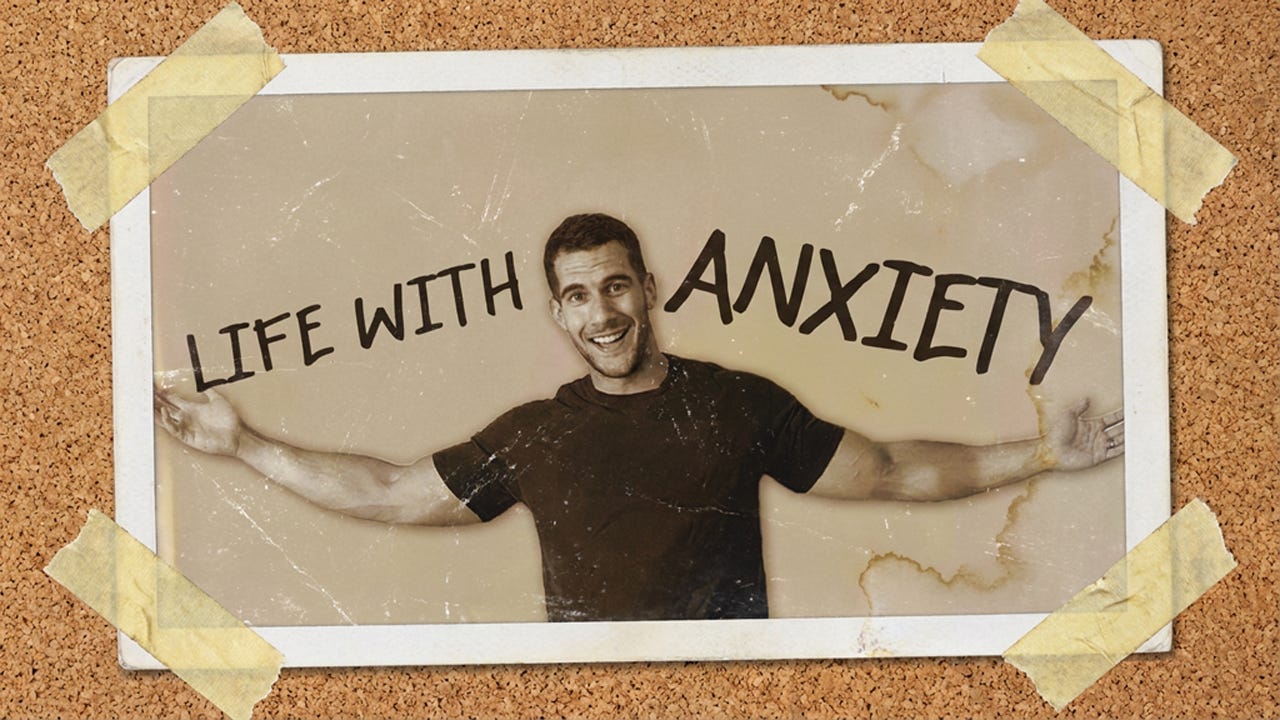
I was 18 years old, living on my own for the first time in my life. I was about a week into my first semester of college, and I was really enjoying my time to that point.
It was just like any other day, and I attended a class I had been to a few times before. About halfway through the class, a sudden feeling of nausea rushed over my body. My body felt flushed, I began to sweat, and I knew I was about to be sick.
I raised my hand, patiently waiting for the professor to call on me. “May I go to the bathroom?” I asked shyly. “This isn’t high school anymore; you don’t need to ask for my permission,” she responded, making me feel silly.
I rushed to the bathroom, closed the door behind me, and frantically fought off the nausea. I must have stood in that bathroom for 10 minutes, riding out that feeling, waiting for it to pass. I’ve always hated getting sick, and it was a fear of mine as a little kid, so I really fought it off.
Eventually, I started to feel a little bit better.
There were still 20 minutes left of my class. “What if I go back in there and the feeling comes back?” I thought to myself.

Instead of going back to class and risking it, I paced the halls for 20 minutes. I waited until I could spot my classmates leaving, because you don’t have the luxury of hearing a bell ring in college. Once I saw them leaving, I slipped back into the classroom, grabbed my stuff, and dashed out as quickly as possible.
I went back to my dorm to relax, assuming that some rest was all I needed to feel better. Whatever sickness I had would surely pass.
I didn’t know it at the time, but this was my first panic attack. Physically, there was nothing wrong with me. But mentally, this was the beginning of a battle that would last the rest of my life.
Throughout my entire life, I had heard people reference panic attacks in a joking manner. You know, “I’m having a panic attack about this test” or “I nearly had a panic attack trying to choose a flavor of ice cream.”
I knew panic attacks were a real thing, but it always seemed like something that someone with schizophrenia would experience. There’s no way something like that would ever happen to me.
After my first panic attack, I had no idea what had occurred. That same feeling came back every single day for the next week, and I assumed there was something physically wrong with me. I mean, how can someone get super nauseous every single day?
At the time, I was dating someone who was studying psychology. When I mentioned what had been happening with me, she said, “It sounds like you have anxiety.”
What?! Anxiety?? There’s no way- I’m not a crazy person.
She must assume that because she’s learning about it. People who have anxiety are worried about every little thing in life; that’s not me at all.
I decided to read up on the topic. To my surprise, what I was reading about was EXACTLY what I had been experiencing. It quickly became very obvious to me…
I have anxiety.

Learning you “have anxiety” is quite a gut punch.
I knew absolutely nothing about anxiety, but I figured there must be a way to cure it. I mean, this just developed out of nowhere, so surely there must be some way to get rid of it.
I soon learned that there isn’t a cure. You learn to live with your anxiety- you don’t “cure” it. The more you try to fight your anxiety, the worse it seems to get.
In my search for a cure, I must have read 10 different self-help books. I’m a self-learner, so the idea of reading up on anxiety and completing workbooks on my own seemed to be an effective route.
I was following strategies I read up on at every turn. Sitting in class, when a panic attack struck, I would start implementing my strategies: breathing techniques, writing exercises, visualization, you name it, I tried it all.
I still have notebooks full of notes I jotted down during classes trying to calm myself down.
I was trying SO hard, but it wasn’t working. I knew every single strategy out there, and somehow my anxiety kept getting worse.
How is this happening?
There was one book in particular that gave me a ton of amazing tools, and I just stumbled upon it by chance. It’s called Self-Coaching: The Powerful Program to Beat Anxiety and Depression, and I still own my copy 17 years later.
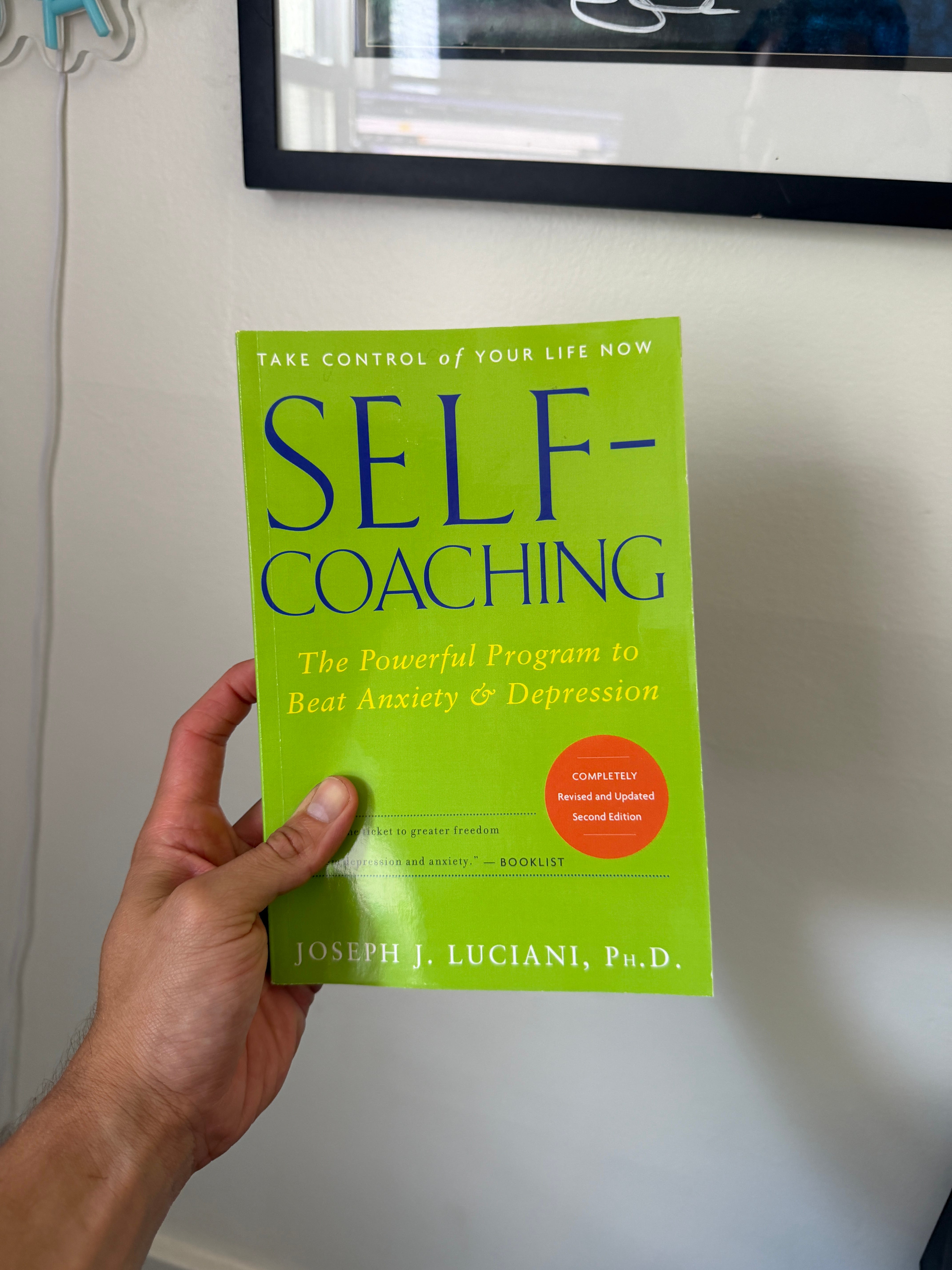
I took so much away from it, and I implemented what I read about every single day. I took diligent notes and was completing all of the mental exercises to help my anxiety.
I was confident that I knew every single foolproof strategy to beat this thing.
But it wasn’t working.
In fact, my panic attacks were getting worse.
I found the contact information of the author, Dr. Luciani, and decided to send him an email.
Why exactly, I’m not sure. But I felt like I was doing everything right and it wasn’t working, and I had nowhere else to turn.
I didn’t actually expect a response, but to my surprise, I received a response the very next day. I no longer have the exact email, but this is what he told me:
“It’s great that you are working so hard to beat your anxiety, but the problem is that you are actually trying too hard.
These strategies are all meant to help you get to the point where you can ultimately let go and live in the moment.
Your mind is a hamster on a hamster wheel right now. When you have a panic attack and implement all of these strategies, the wheel just starts spinning faster and faster.
You need to learn to get off the hamster wheel.”
Trying too hard?

This hit home for me. Here I was trying to use logic and reason to beat my anxiety. But anxiety isn’t logical. I mean, anxiety is essentially just excessive worry about things that are never going to happen. How can you expect to reason with something so unreasonable?
Anxiety is rooted in the future. We live in a constant state of worrying about things that we think are going to happen to us. So the answer lies in staying in the present moment and learning not to worry about the uncertain future (easier said than done, I know).
You see, there isn’t always a concrete answer to why we have anxiety. There was not necessarily a direct cause of my anxiety, so searching for “the answer” was a waste of time.
With the benefit of hindsight, it’s very clear that I was an anxious kid for my entire life, which can happen for any number of reasons. It never manifested into anything serious, and I would just experience moments of extreme nervousness. Nothing abnormal for a shy kid, honestly.
Going away to college was the first time I was on my own, and when you combine that with nerves, social pressures, stress, and a million other things, it just became the perfect storm for my anxiety to manifest into a panic attack.
After that, it just became generalized anxiety- being anxious about being anxious. A vicious cycle.
Living in the moment is the scariest thing to do as an anxious person. When you have anxiety, you’re living in a constant state of worrying about the future. Living in the moment means not thinking about that future, and when you’re accustomed to overthinking and constantly planning for what’s to come, that’s incredibly difficult to do.
Staying in the present moment and not planning for what’s next feels irresponsible and reckless at first, but it’s the single greatest change we can make to help our anxiety.
For me, my anxiety was always a fear of getting sick (vomiting) in public. Whether I was with one person or one thousand, I would freak out that I was going to be sick.
There’s no reason for that fear, either- I’ve never vomited in a public setting before. As a little kid, being sick was unusually traumatic for me (I vividly remember every experience), but I didn’t go through my day worried I’d be sick at every turn.
But my first panic attack manifested itself in the form of nausea, and then my totally irrational fear of vomiting in public was born.
For years, any public setting induced a full-blown panic attack. You can imagine that, as a college student, there were quite a few public situations in my life. Rather than risk having a panic attack in these settings, I just avoided crowds at all costs.

Avoidance is an anxious person’s best friend, but the kind of best friend that is actually a horrible influence on your life and you should stop being friends with immediately.
I skipped classes constantly. I bailed on presentations. I stayed in my dorm room instead of going to concerts or parties. It got to the point where I couldn’t even eat at the dining hall, and I had to resort to eating cereal alone in my room for dinner.
Even going down to the hall to do laundry became a dangerous situation, because how would I know how many people were in that laundry room?
It felt like I was doing the “smart” thing by avoiding these situations, because I was avoiding the potential danger and embarrassment. But when you look at my situation from your perspective, you can clearly see that there was never any real danger, and avoiding those situations did nothing but force me to miss out on fun.
When a situation wasn’t avoidable, I would do everything in my power to plan my escape route just in case.
I sat at the desk closest to the exit in every class in case I needed to run out of there. In lecture halls, I would make sure I always sat on the end of a row. I would find any excuse to drive myself places, because if I was in control of the car, I would be able to pull over at any time. If I went out to eat, the first thing I did was find the bathroom to be sure I knew how to get there quickly.
Sounds exhausting, doesn’t it?
Even if I wasn’t anxious, I was planning what to do in case I became anxious. There was never a break.
I was always able to think rationally about my anxiety, too. I would think, “What are the odds that I suddenly feel nauseous and immediately get sick at the dining hall? It doesn’t work like that.”
And then I would go to the dining hall, feel a hint of nausea, and all reasonable thoughts were thrown out the window.
No matter how much I tried to convince myself that it was all in my head, the danger became very real. I needed to immediately remove myself from the situation completely.
That avoidance continued for all 4 years of college. I changed my major to avoid classes that had major presentations and speeches involved. I turned down a great internship opportunity with a large company because I couldn’t handle the thought of being in an office. I worked with the athletic department and regularly skipped going to sporting events, claiming it was due to a group project running late… every time.
Yeah, college was rough.
I wrote a letter to myself a few weeks into that first college semester, and I still have it on my desk. Honestly, I hate reading it, but it gives me important perspective:
“I never understood how anybody could ever become depressed. I always thought life was too precious and amazing to be upset all the time. But now I get it. And it scares me…I don’t want to get it. I still don’t even know why I have all these feelings. I’m just scared.”
The craziest part of my journey with anxiety is that it is book-ended by complete opposite experiences.
I was always a shy kid, but I thrived in grade school. I was homecoming king in high school (I stand by the fact that it was a fluke, but it still happened), I loved giving speeches, and I even dabbled in improv.
Then anxiety snuck up on me in college and turned me into a shell of myself for many years.
Let’s fast forward to today.
I’m a content creator who is regularly watched by millions of people online, and I’m absolutely loving my role as a father to two incredible kids. If you had told me at the peak of my anxiety that this is where I was going to end up, I never would have believed you.
Don’t get the wrong idea: I still have anxiety, and I always will.
I know that’s not what anyone wants to hear, but anxiety doesn’t just disappear, and it’s okay for it to be there.
Once you learn to manage it (which does take some time and practice), anxiety becomes just another small piece of us. It becomes no greater piece than our fear of spiders, or our obsession with The Office, or our love of the outdoors- it’s a piece to our story, but it’s not the only thing that defines us. Not even close.
You are not anxiety. You have some anxiety, and that’s okay. I do too.
You’re probably thinking to yourself, “That sounds great, but how do you learn to live with your anxiety?” Trust me, I always thought it was impossible. But with a little bit of effort and patience, I promise you can get there too.

This silly analogy really helped put things into perspective for me, and I’m hoping it will for you, too.
When we have anxiety, we tend to try to control everything. We build our fears up so much that we will do ANYTHING to avoid them, so we try to plan out every little detail of our lives to avoid anxiety-provoking situations.
Let’s look at it from a different angle…
Imagine yourself driving down a quiet country road. It’s a beautiful day, and nobody else is on the road. You roll the windows down, turn the music up, and enjoy the beautiful open roads.
At any point, a squirrel can dash out in front of your car. Do you spend the entire drive looking out for squirrels and planning what you will do if one jumps out in front of you? No, you trust that if that situation occurs, you’ll know what to do and react accordingly.
With anxiety, we’re driving down the road as slowly as possible, looking out for squirrels with every passing tree. We’re not enjoying the drive, we’re not taking in the scenery, and we’re worrying for no reason.
You don’t need to plan what you’ll do if a squirrel runs out in front of you. You know that you’ll be able to react accordingly if it does happen, so you put those thoughts behind you and enjoy the drive. Assuming it’s going to happen is only going to ruin the drive.
Likewise, we don’t need to plan out every possible anxiety-provoking situation. We need to learn to trust ourselves to react if anything actually happens. In this drive we call life, we need to learn to roll the windows down, crank the tunes, and enjoy the ride.
If you have a vacation coming up in 2 weeks, but you’re nervous about flying, you have two options: you can think about that flight every single day, making yourself more anxious the closer you get to your trip, or you can try to stay in the present moment and not think ahead to the flight.
The flight is happening in 2 weeks regardless of which option you choose, so why not choose to take it day by day, enjoy the life you have right now, and “worry” about the flight only when the time comes?
It sounds way easier than it is, I know that. But you can get to that point, just like I have.
Before we dive into specific strategies I’ve implemented to help my anxiety, please understand that there is no one-size-fits-all formula. While I believe that these strategies can absolutely help anyone struggling, they’re not a guarantee.
Some people respond better to therapy; others may require medication; others may do well on their own with minimal help from others. It’s important to figure out what works best for your situation.
These are strategies that I believe are worth implementing in any situation. I can’t recommend a particular type of therapy or medication to you, because I don’t know your situation. If you’re questioning what your next steps should be, I highly recommend seeking out a professional opinion to help steer you in the right direction.
To me, meditation was always something I felt was best left to the monks. I always thought it was boring, silly, and just plain weird.
Here is what I learned about meditation, though: it’s just a tool to help us achieve mindfulness. What exactly does that mean?
Mindfulness is the state of being fully immersed in the present moment. You can practice mindfulness in any situation- if you’re washing the dishes, you can make yourself aware of every single sense and fully immerse yourself in that activity. You smell the soap, feel the smooth plates, hear the faucet running, etc. If you are fully immersed in the moment, you are mindful. When you practice mindfulness, you’re teaching yourself to be fully in the present moment.
Meditation is a tool to help you achieve mindfulness. When you meditate, you’re teaching yourself how to stay in the present moment. You don’t need to meditate with your legs crossed in the middle of a floor, either (but you can). I’ve practiced meditation while walking my dog. Meditation is a tool, much like intermittent fasting is a tool to help you lose weight. The goal is mindfulness, but meditation can help you achieve that.
Before I dove into meditation, I started doing mindfulness practices like the dishes example above. Every time I take a walk, I try to take 1-2 minutes to fully immerse myself. I grab a leaf off the nearest tree to feel it in my fingers to experience touch, then I go through every other sense one by one: I smell the fresh air, I listen to the birds, I notice the cars driving by… I don’t taste anything, but I suppose you could. Thoughts will enter your head, and that’s totally fine. Don’t fight them. Allow thoughts to come and go, and simply continue with the exercise. If you do that just one time, then congrats, you’re practicing mindfulness!
There are tons of great resources out there for meditation, but I love the app called Balance. It has a ton of amazing guided meditations for virtually every single activity and situation. All it takes if 5 minutes, and it walks you through exactly what to do. And yes, it’s weird at first. I’m a pretty restless person, so sitting still always feels a little unnatural. But once I started to notice how great I felt after those 5 minutes, it got easier and easier.
Again, you don’t need to meditate, but I highly recommend giving it a try. It took a little while for me to get used to it, but I came to really enjoy it. If you try it, be sure to prioritize it like you would a workout.
Working out once per month isn’t going to be super effective- you need to do it consistently. And like anything else, it gets easier the more you practice.
At the peak of my anxiety, it took people very close to me telling me “you’ve been miserable to be around” to make me realize I needed to make a change. Anxiety tends to make us feel isolated, stressed, and bitter. Needless to say, I wasn’t really a joy to be around. I wasn’t happy (I was downright miserable, actually), and I knew I needed to fix that.
I ended up picking up this book called “The Positive Dog” which is a really quick, easy read, but was very impactful to me. I’m a sucker for dogs, what can I say? I took 2 major lessons away from that book:
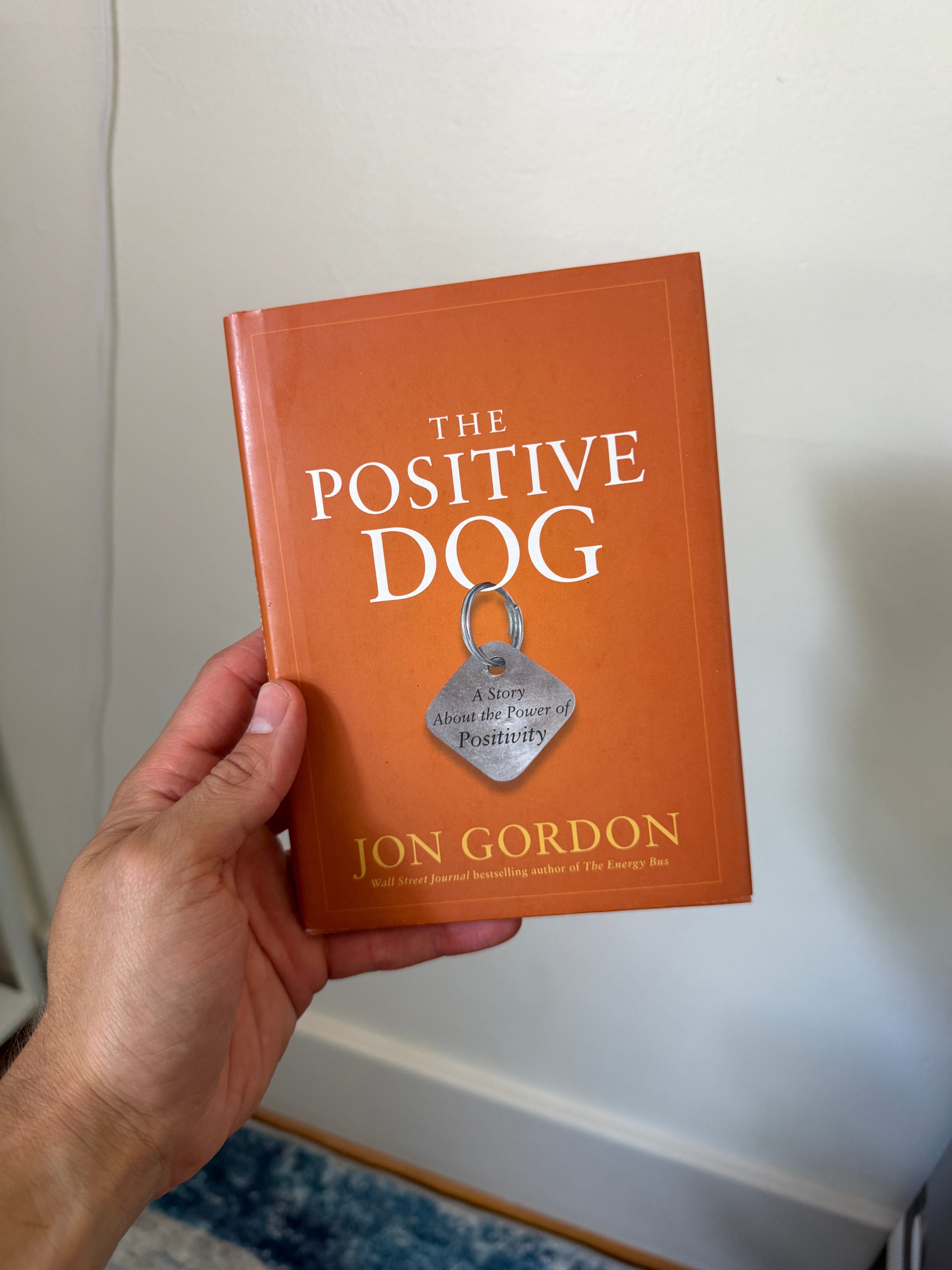
Children laugh about 400 times a day while adults laugh only about 25 times (and often much less). That’s just depressing to think about. We need to stop taking life so seriously and go back to having more fun!
When we smile, our brain releases endorphins, which make us feel good. Smiling and laughing reduce stress, which we can really use in our anxiety-filled lives.
Make it a point to laugh every day. Listen to a funny podcast, watch an episode of your favorite comedy, hang out with your best friend, look at silly memes- anything to bring a smile to your face. Laughing is also a great way to get us out of our own heads and to stop worrying, even if it’s only temporary.
We can’t be blessed and stressed at the same time. When we’re thankful, there is no place in our minds for stress.
Start the day with a “thank you walk.” Outside, in your living room, at work, it doesn’t matter. Simply take a short walk, and think to yourself all the things you are grateful for, no matter how small. You can be thankful for the shoes on your feet, or for being able to hear the birds chirping. Starting your day like this really sets you up to experience less stress in your day.
Something that I have personally implemented was creating a “victory jar”. At the end of every day, you simply write down one victory from the day and add it to the jar. If you had a particularly bad day and can’t think of any victories, it can be as silly as “I didn’t die today.” There’s always something to be grateful for! Whenever you’re feeling down, reach into the jar and read a few of your victories to remind yourself how awesome you truly are.
This is the advice that nobody wants to hear, but everybody needs to hear.
In order to truly learn to live with our anxiety, we need to desensitize ourselves to it.
Think of your anxiety as a muscle. The more we work it, the stronger it gets. If you felt your biceps were too muscular (blasphemy!), the only way to lose those muscles would be to stop working them out. The same goes for anxiety.
The key to this is facing our fears a little bit at a time. I’m going to walk you through exactly what I did to start facing my fears so you can see what I mean.
Backstory: I got married in January of 2018. As someone who has historically gotten panic attacks merely sitting in a room with other people, you can imagine that the thought of being the center of attention for an entire day was absolutely terrifying to me.
For years, I would think about my eventual wedding day and how there was NO WAY I would be able to go through with it. My secret hope was that I would be able to get married on a beach somewhere with nobody around to watch.
When real wedding planning began, it was obvious that the whole private beach thing wasn’t a realistic option. I knew a real wedding was coming whether I was ready or not.
In 2017, about one year before our wedding day, I made an appointment to start seeing a psychologist. I had gone to speak to someone before, but it had been many years, and I knew I needed to try something.
I mean, your wedding day is the most special day of your entire life, and I wasn’t going to let myself ruin that. I wasn’t sure if a therapist would be the answer, but I figured it couldn’t hurt to try.
Luckily for me, I found a great therapist (more on finding a therapist in the next section). She is the one who convinced me that I didn’t necessarily need to find an answer to my anxiety- I just needed to face it.
She taught me that it didn’t matter WHY I became an anxious person in the first place- what mattered was that I was willing to overcome it now.
Her strategy was to have me face my fears. She told me stories of past clients who overcame some truly irrational fears, like a woman with a fear of yellow flowers (for real). A slightly more relatable story- she told me about her own deathly fear of flying, and how she slowly took steps to face her fears to the point where she loves to fly now.
I’ll be honest, the thought of facing my anxiety was really, really scary. But I knew I needed to do it.
What was even scarier was that she told me that my “homework” every week was going to be to make myself anxious.
WHAT?!?!
Every week I was to put myself in an anxiety-provoking situation. On a 1-10 scale, 1 being no anxiety and 10 being a full-blown panic attack, she wanted these situations to put me around a 6 or 7. The goal was for me to be uncomfortable and to realize that I can live through it and be fine.
By learning to live with the discomfort, the hope was that I would begin to desensitize myself to it.
We started small. Remember, my fears stemmed from public situations, so there were a lot of opportunities. The first week, I was tasked with going to a store and waiting in a long line.
The second week, I was told to be a passenger in a car instead of driving myself. If I didn’t reach that 6 or 7 on the anxiety scale, then we found something else for the following week that would be slightly more difficult.
I absolutely dreaded it, but I had someone holding me accountable and knew it was in my best interest. I kept at it for weeks, and eventually it got to a point where I myself WANTED to be anxious.
Think about how insane that sounds.
I wasn’t reaching that 6 or 7 level that she wanted me to get to, so I felt like I wasn’t accomplishing what I needed to (but in reality, my anxiety was dissipating with each situation).
One day, after a few months of appointments, I took it upon myself to go to a Toastmasters meeting in my town. If you’ve never heard of Toastmasters, it’s a national organization that has meetings in practically every town across the country, and people attend these meetings to work on their public speaking skills. They give rehearsed speeches or take prompts and just go right off the top. The meetings are open to anyone, so I decided to show up to one.
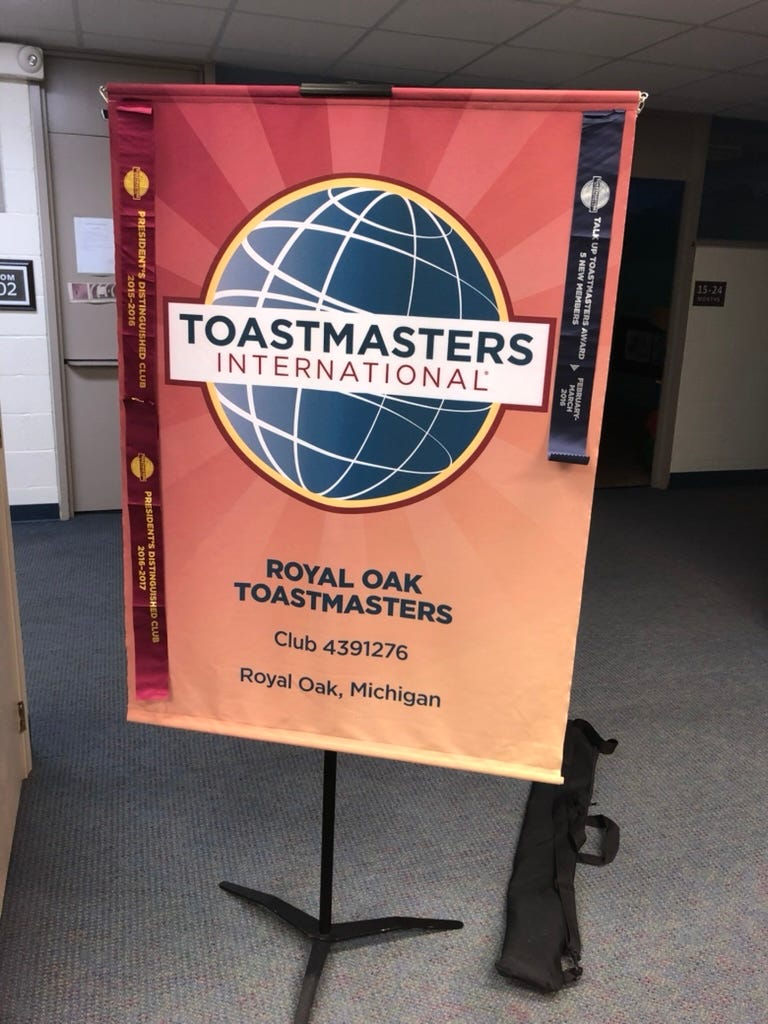
I sat in the back, as any anxious person would do. My plan wasn’t to give any kind of a speech, but to see what the class was all about and at least sit through a meeting for a couple hours. For me, just sitting there amongst strangers would be enough of a win.
But right when the class started, they asked for the “new faces” to introduce themselves. Suddenly, I felt a rush through my body. Great, here comes the anxiety. I was asked to stand up, introduce myself, and tell everyone why I was attending the meeting.
I stood up, and unfiltered honesty immediately spewed out of my mouth.
I told everyone how I’ve been battling anxiety for years, and how I wanted to be able to enjoy my upcoming wedding without anxiety. Yes, I got so nervous that I told an entire room of strangers about my most personal issue.
After about a minute of blabbing, I sat down. I was then approached by strangers congratulating me on how well spoken I was, and how they would have never known I was experiencing any kind of anxiety.
And in that moment, it felt like the biggest win I had ever experienced in my life.
I told my therapist about it in our next meeting, and she was so surprised and proud that I was able to do that on my own.
And you know what? So was I.
Back in college, I dropped out of a class because I needed to stand up in front of people and give a presentation. And here I was, standing in front of strangers on my own.
Granted, it was only for one minute, but the small victories can be absolutely monumental. Getting through that minute helped me realize that I’m capable of so much more.
To bring this full circle, my wedding day came, and it was indeed the greatest day of my life. Standing at the altar, there wasn’t a hint of anxiety. I was way too happy to even bother myself with anxious thoughts.
Throughout the wedding day, I would find myself thinking, “I can’t believe I don’t feel anxious right now!” But as I said earlier- you cannot be blessed and stressed at the same time. And on that day, I felt extremely blessed.
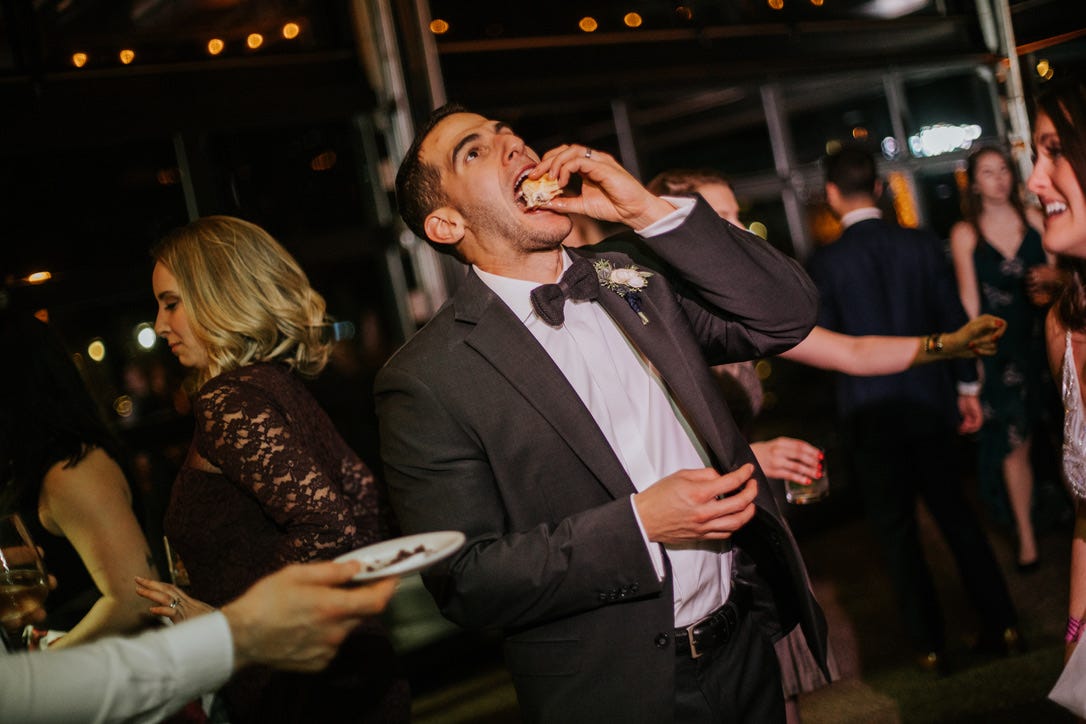
Two weeks after that, I was the best man at my friend’s wedding, and I had to stand up and give a speech. After my own wedding, I had that feeling of “if I can be the center of attention for an entire day, then I can give a speech for 5 minutes.” I delivered the speech with absolutely no nerves at all. And the craziest part- I actually had fun doing it.
I know it all probably sounds like a fairytale, but there’s no magic here. I faced my anxiety, and I was able to come out better on the other side because of it. You can do that, too.
Whatever your fear is, I advise you to face it. Let’s use driving as an example.
If you’re afraid of driving, then I would never recommend that you get in the car and try to force yourself to drive on a highway.
Instead, sit behind the wheel of the car in your driveway. Put the car in the reverse, but don’t actually move. That’s it. That’s your first win. You can do that a few more times until putting the car into reverse doesn’t make you think twice.
Once you’re comfortable with that, back out to the end of your driveway, but don’t go into the street. Continue with that strategy until you’re comfortable with it.
Keep doing this in baby steps- drive down your street, then around the corner, then 2 blocks away, then to the grocery store, etc, until eventually you feel comfortable enough to drive on the highway.
Baby steps is all it takes.
The important thing is to allow yourself to feel anxious. You want to feel a little bit anxious. When you continue to conquer these situations, they become easier and easier. And eventually, they won’t feel scary at all.
It’s terrifying. Trust me, I know it is.
That’s why we start really, really small. As time goes on, your confidence builds, your anxiety lessens, and it all gets easier.
I’m not going to dive too deeply into this one, but I do think it’s important to bring up.
The first time I saw a psychologist was in college, and I did everything in my power to hide it from everyone around me. I lied to my roommates about where I was going and made sure nobody saw me walking into the office. I was ashamed.
I went one time and never returned there. “I don’t need this,” I thought, “I can figure it out on my own.”
I felt like I was somehow failing by going to speak to a therapist. If you feel the same way, please understand that it’s actually the exact opposite. Understanding that a professional can help you is a winning realization, not a losing one.
Let’s bring it back to fitness, because that’s what I do best. You can go to the gym and build your own workout routine, which works for some people, but might not work for you.
If you’re confused and overwhelmed in the gym, then you can hire a trainer to help you so you don’t need to do it all on your own. There’s no shame associated with that at all- that’s what they are there for.
Likewise, there should be no shame in going to speak to a therapist.
As a teenager, I felt so embarrassed to speak to someone. Now, as an adult, I’ve come to realize that SO many people see psychologists. Even those with no real issues go to speak to someone regularly. It’s healthy to have someone to speak to. Professional sports teams even have their own psychologists for players to talk to! It’s incredibly common, even if people aren’t talking about it.
The important thing to understand about seeking professional help is that not everyone will be a great fit for you, and that’s okay.
I once went to a psychologist who practiced hypnotherapy, meaning he would have me close my eyes and would try to get me to visualize myself walking through forests and things of that nature, then ask me how I felt afterwards.
It was basically a form of guided meditation (although I didn’t realize it at the time), but I thought it was absolutely insane at the time. Instead of trying to find another psychologist, I just assumed that going to see a professional really wasn’t for me.
The therapist I found leading up to my wedding was amazing. I did some research to find her, and when I read her bio online, it sounded like she could be really useful for my specific situation. After our first meeting, I’ll admit I wasn’t totally sure, but I gave it another shot and realized she was a great fit for me.
If you seek professional help, understand that shopping around for the right fit is part of the process, and they know that! You can (and should) call a therapist to chat about your situation and learn about their strategies to see if it feels like a good fit.
Or, you can meet with them for a session, but decide you don’t want to reschedule for another appointment. They don’t take it personally- it’s part of the process.
You’re searching for someone to share you most sensitive insecurities with- I encourage you to be picky. Finding someone you are comfortable with will make all the difference.
Quick side note regarding medication: If you think medication might be for you, speak to a professional about it. I am in no place to speak on the topic because I never used medication for my anxiety. Medication is not a “cure” for anxiety, though. It can be incredibly helpful in helping your anxiety, but it’s similar to taking a painkiller after breaking your leg. The medicine helps alleviate the pain, which allows you to continue to rehab and get back to full strength. When it comes to anxiety meds, they help to temporarily alleviate the anxiety, which allows you to focus your efforts on dealing with anxiety using the things I’ve talked about here. View medication as a tool, not a solution.
I cannot stress enough how important this is.
You should never feel embarrassed to talk about your anxiety. I hope this article can spark a bit of courage in you to open up about it, but if it doesn’t, allow me to share a very short story with you.
Shortly after college, I decided that I wanted to reveal to the world that I had struggled with anxiety. This was before I had a large following on social media- I just finally wanted to put it all out there and hope that maybe my message would hit home with someone.
So, I wrote up a short article (I reposted it here if you are interested) and decided to post it to my personal Facebook page. I nervously hit the “post” button and shut my computer in total fear of the response (or lack of response) I would receive.
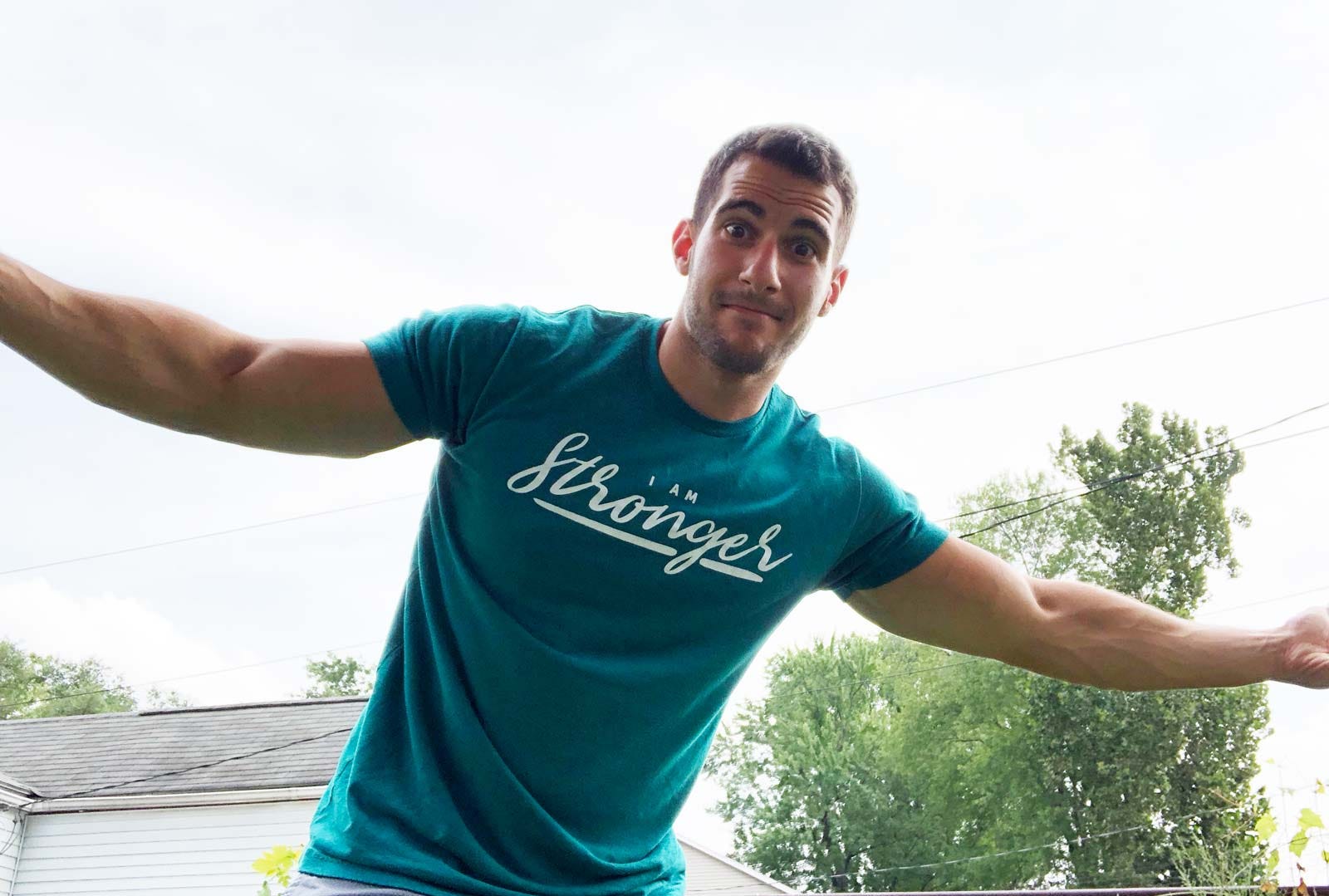
I vividly remember the exact moment I hit publish, where I was, and what it felt like.
To my surprise, I immediately had people reaching out to me thanking me for opening up. There were people from high school that I hadn’t spoken to in YEARS sending me lengthy messages about how they’ve been struggling too, and how much it means to hear that they’re not alone.
I was so happy I opened up about it, and I vowed from that point forward to never hide it again. I will happily talk about it now, because I know there are still so many people out there who feel alone in this.
When I first developed my anxiety, I felt alone too. I felt like nobody understood what I was going through. Now I know that I was never alone at all. In fact, it is far more common than I ever realized.
You don’t need to go and publish an article for the whole world to see, but watch how good it feels to open up about it. I hid my anxiety from my college roommate all throughout college, and he was surprised to hear what I had been through after the fact. He was my best friend throughout school, and looking back, he would have totally understood and been supportive if I had opened up to him.
If nothing else, open up to your best friend. If they love you, they’ll be supportive too.
You may have noticed that I haven’t actually discussed how to deal with panic attacks. Well, that’s because I learned that you really don’t need to deal with them directly.
You remember the hamster wheel analogy from earlier? That’s exactly what happens when we try to actively “defeat” our panic attacks. By trying to beat them, we begin to fuel them and make them worse.
When you’re in the midst of a panic attack, your body is in fight or flight mode, and fighting that fight is a losing battle.
That’s not to say that there’s nothing you can do when you begin to panic, of course.
Something that I have always found very useful is a simple breathing technique: take a deep breath in through your nose and count to five. Hold that breath and count to five again. Then slowly breathe out through your mouth, counting to five once more. Repeat this a few times.
By focusing on your breath and counting, it’s a way of bringing yourself back into the present moment and away from the worry (it’s a form of mindfulness, like what we talked about earlier). It might not make your worry suddenly disappear, but it’s a step towards getting your feet back on the ground.
Here’s something about anxiety that sounds insane, but is true:
Anxiety cares very deeply about you.
I know that sounds particularly crazy because our anxiety tortures us, but hear me out.
Anxiety creeps up whenever our mind perceives danger. Our minds convince us that there is a real danger out there (which is never true) and our anxiety comes to our rescue, ready to help us avoid the situation and get us the hell out of there.
Imagine your anxiety as a close friend who sees that you’re scared. They come up to you and try to hug you in an effort to calm you down. But instead, you push them away. They keep trying to give you a hug, becoming more determined with each try, but you continue to push them away while getting more upset each time. Eventually they give up, but not without first putting up a fight.
Instead of pushing them away, give them a hug next time. Put your arm around them and embrace them- they mean well.
Deep down, our anxiety means well, too. When you feel these anxious thoughts coming on, don’t fight it. Embrace it. Acknowledge that it’s your mind’s attempt to save you from a danger that it thinks is there. Allow the thoughts into your mind, acknowledge them, and let them pass.
Thoughts will always pass. So, why fight them? Allow them to come and go, and you’ll be well on your way to co-existing with your anxiety.
There’s a lot to unpack here. Anxiety (and any mental illness for that matter) is incredibly complex. If you take nothing else away from this reflection, at least read these last few points.
The anxiety and panic attacks I’ve experienced are totally unique to myself. Public settings and crowds have always made me feel sick to my stomach. You might get anxious about trying something new, and your anxiety might make you dizzy and lightheaded
Or, maybe you get anxious and overwhelmed by school and you break down in tears because of it. Anxiety is incredibly common, but our exact situations are unique.
But even though our symptoms might differ, our experiences are very similar.
When we experience anxiety, we begin to stress about situations that we feel are going to bring on that anxiety. Suddenly, we become anxious about being anxious.
If you’re like me, your anxiety becomes a constant state of being anxious about becoming anxious. It is absolutely draining.
But know this- the anticipation is ALWAYS worse than the anxiety itself. Think about any situation that has ever made you anxious- what was the outcome? Did the situation harm you in any way? Likely not- it just made you nervous.
But the weeks, days, hours leading up to it, you probably drove yourself crazy worrying about what was to come.
When the time finally comes, it’s never as bad as we anticipated.
It took me a solid 10 years from my first panic attack to get to a place where I felt I had my anxiety under control. That doesn’t mean it has to take 10 years, but it might. And that’s okay.
Some people have been battling anxiety for 40 years. Others for 40 days. No matter your situation, I want you to understand that it takes time and effort. Anxious thinking becomes a really strong habit, and like any habit, you can’t just break it overnight.
We can’t sit back and hope it goes away on its own- if we want to better ourselves, we need to put in the effort.
It has been 17 years since my first panic attack. That’s half my life. And I still have bad days.
I’m not immune to stress, and sometimes I feel completely overwhelmed by the stress and anxiety. Some nights I’ll lay in bed unable to sleep, body shivering from the anxiety. Sometimes that wave of nausea will come back to test me in the most random of places, even if I’m completely alone.
It happens. And it’s always going to.
That’s because our journey isn’t linear. Every single day won’t be better than the last.
We might feel great for a week, and then suddenly be struck with a panic attack. Some days we might not feel like ourselves. Some days might just be really difficult. But that is normal.
Even the happiest person in the world is going to have bad days. Don’t let the bad days get you down. Keep going.
I felt really alone when I first experienced my anxiety. I felt like something was seriously wrong with me. I didn’t think anyone would understand.
But I was never alone. As the years have passed, I’ve learned how common anxiety actually is, but people are still afraid to talk about it.
Men seem to especially want to hide it, because it makes them look “weak.” But you know what? Opening up about your struggles is showing your strength.
It’s proving to yourself, and to the world, that you’re willing to fight the good fight. That you’re not going to let your anxiety keep you down.
We didn’t choose to have anxiety. Nobody wants to deal with this. But the reality is that we do have anxiety. It’s part of our lives, but it doesn’t need to control our lives.
I know it’s hard. Sometimes it feels like you’re walking alone down a dark street. But you’re not alone. People are standing on both sides of the street with flashlights in their hands; you just can’t see them because they choose to keep their lights off.

I’m walking right beside you with my flashlight on.
The more you open up about what you’re going through, the more you’ll see that others are willing to turn on their flashlights and walk with you down that street. By opening up, you give someone else the courage to open up, too.
And the more we get people to open up, the brighter that street becomes. I hope that some day, nobody will have to find their own way down that dark street ever again.
We should all be walking together.
Whether you’ve been battling anxiety for your entire life, or you just developed it last week, there is no better time to start working on it than right now.
Wherever you are right now, sit back. Close your eyes. Just take one deep breath. And don’t just breathe and be done- really feel the air you’re breathing. We are always breathing, but we rarely take the time to really appreciate that breath.
Congratulations- you’ve just taken a step towards bettering yourself. Sometimes one breath is all it takes.
This life can get frustrating, disheartening, and lonely. But it’s not hopeless. YOU are not hopeless.
I promise you, it gets easier.
It will take some work, but it gets easier. And all of the work you put in will be 100% worth it.
If you had told me when I was 18 that I would be where I am today, no part of me would have ever believed you. I mean, I couldn’t go to the grocery store without having a panic attack. But now here I am, posting videos on the internet for millions of people to see, and sharing my story with anyone who is willing to read it.
This isn’t a fairytale story. I went through some really dark times, and I wasn’t sure things would ever get better. But I’m here now, and I’m truly happy.
I want that for you, too.
If you’re ever feeling alone in this journey and want to know someone is listening, you can email me at any time.
I strongly encourage you to open up to someone close to you, but I will always be here for you too.
You are not anxiety. You have anxiety, and that’s okay.
So do I.
Comments
Nothing yet. Say the first thing.
Sign in to join the conversation.