
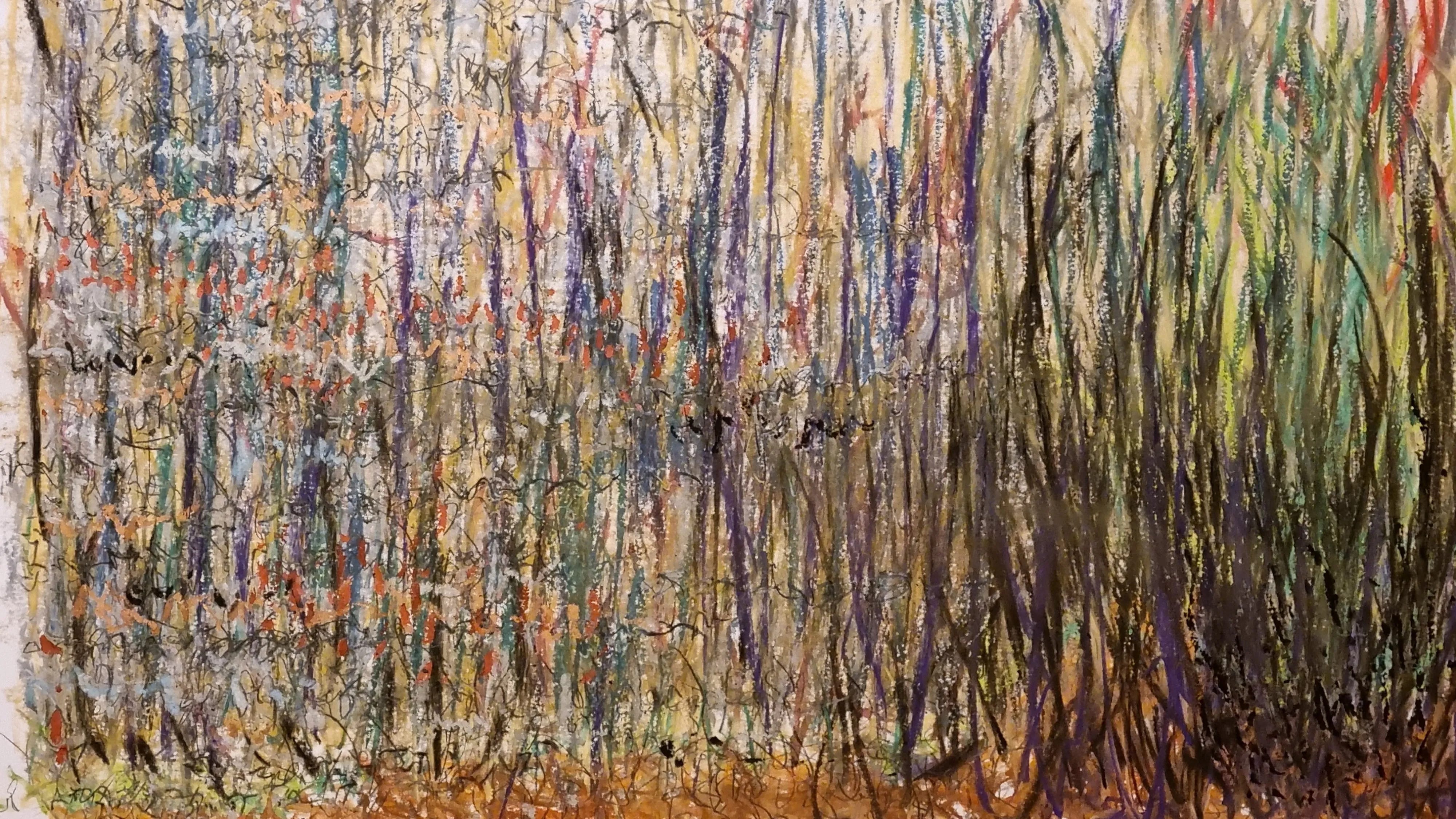
In the writing of two recent papers, one appearing soon in Current Biology (together with Christine Strullu-Derrien, an expert in paleoecology) , and one that has just come out in New Phytologist (and which is about a slightly different topic), I have pondered the origin of soils. Something that has been very surprising to me is that it seems to now be consensus that higher plants were about last to appear on the scene of terrestrial ecosystems, after animals and microbes. So plants definitely were not decisive for the earliest of soils, in sharp contrast to the dominant influence that plants have on soils now. Other primary producers delivered the carbon, like cyanobacteria.
I can’t help but wonder about two things: how many different versions of soil and soil processes were there initially, and which ones basically in some form ‘survived’ — not in terms of continuity at a location, but in terms of the processes that were taking place there? I am not sure if we can ever know the answer to these questions. But they are fascinating to me.
Soils I understand to be the confluence of weathering rock (mineral matter), air, water, organic matter (necromass) and life. It could have been microscopic. Some papers call these earlier soils proto-soils, but I think this ‘proto’ prefix is not necessary. Just because there are no plants doesn’t make this ‘proto’ in my opinion. Who is to say that plants are necessary for there to be a soil, just because this is the way it overwhelmingly looks like today?
So about the first question, how many different versions of soils would there have been, hundreds of millions of years before land plants arrived at the scene of terrestrial ecosystems? Maybe there would have been an incredible mosaic of different kinds of soils, highly localized, in tiny patches, with strong priority effects of whoever got there first by chance, as I would imagine that there was quite a bit of dispersal limitation, unlike today. Maybe there wasn’t even a primary producer in all patches, maybe just some piece of organic matter landed there, from the ocean, which then became or was already colonized by microbes that somehow eeked out a living and in doing so also started weathering some rock material. Given that this micro-scale patchwork, if it ever even was that, could have gone on for many millions of years, what kind of crazy combinations of microbes and processes emerged? What versions of nutrient cycles, like the nitrogen cycle, were there? Was there a myriad of different nitrogen cycles, all isolated from each other? When were the first soil aggregates formed, and how important was this process then; was it inevitable? How likely was it for these individual, likely quite isolated patches to go extinct? Why did they go extinct, did they run out of energy, did they not recycle carbon and nutrients efficiently enough, were they out-competed by other patches that grew outward, did they have incompatible sets of microbial colonizers, were they simply eroded away?
And this is related to the second question: maybe the patches that did persist had certain properties, had given rise to certain processes, and these processes have persisted in some way to today (dynamic persistence)?
Anyway, I don’t think we can ever know, but I still find it interesting to imagine what things were like at the very beginning of terrestrial ecosystems: they were just soil.
Comments
Nothing yet. Say the first thing.
Sign in to join the conversation.