
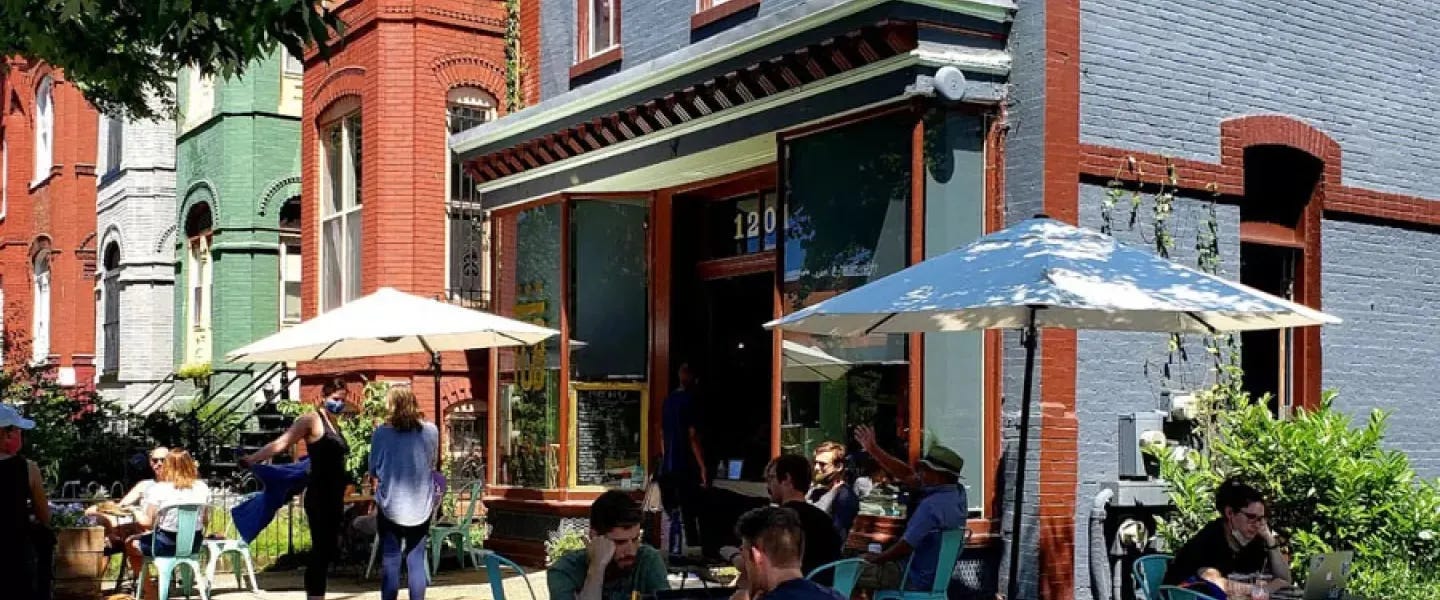
If I asked you where your community gathers, what would you say? Twenty years ago, the answer might have come easily. Maybe it was the local coffee shop where the same barista knew your order. Maybe it was a neighborhood bookstore, a family-owned diner, or the park where kids played until the streetlights came on. Today, that question is much harder to answer. Many of us spend our days moving between home, work, and the grocery store without ever stopping somewhere simply to exist alongside other people. We are more connected through technology than at any point in history, yet somehow many of us have never felt more isolated. I don’t think that’s a coincidence. I think we’ve quietly lost something essential: our “third places.”
Sociologist Ray Oldenburg coined the term “third place” to describe the spaces that exist outside of home, our first place, and work or school, our second place. They are the places where relationships form naturally. Coffee shops, libraries, local restaurants, parks, recreation centers, theaters, and neighborhood businesses all fall into this category. These spaces don’t require a formal invitation. You simply show up, spend time there, and eventually become part of the community. Third places create the conversations that aren’t scheduled, the friendships that aren’t forced, and the support systems we often don’t realize we’re building until we need them.
Unfortunately, these spaces are disappearing. According to data from the U.S. Census Bureau, the number of small businesses in many industries has struggled to recover following the pandemic, while large national chains continue to increase their market share. Local newspapers have closed at alarming rates, neighborhood diners have been replaced by drive-thrus, and independent bookstores continue to compete against companies capable of delivering almost anything to your doorstep overnight. Even when these places survive, many people choose convenience over connection. Ordering dinner from an app is easier than sitting in a neighborhood restaurant, but convenience rarely creates community.
Technology has also changed the way we interact with one another. Social media promised to bring us together, but it often replaces genuine interaction with passive observation. We know what someone ate for lunch or where they spent their vacation, yet we may not know if they’re struggling or need a friend. A comment section cannot replace eye contact across a coffee table. A group chat cannot fully replace laughing with people sitting beside you. Digital communities absolutely have value, especially for people searching for acceptance or support,but they work best when they complement real-world relationships instead of replacing them.
One of the reasons I care so deeply about this topic is because I have watched firsthand what happens when people intentionally build a third place. When I started Scratch Theater Company, our goal was never simply to produce plays. We wanted to create somewhere people felt like they belonged. Cast members grabbed dinner together, celebrated birthdays, helped each other through difficult weeks, and built friendships that extended far beyond closing night. The performances mattered, but the community mattered even more. Looking back, I realize we weren’t just creating theater. We were creating a third place.
That is why small businesses matter so much. Every locally owned coffee shop, bookstore, bakery, game store, music venue, and family restaurant has the potential to become a gathering place. These businesses aren’t just selling products. They are investing in relationships. The owner might remember your name. The cashier might ask how your family is doing. You begin recognizing the same customers week after week, and eventually strangers become familiar faces. Those interactions may seem insignificant on their own, but over time they become the foundation of a healthier community. Large corporations serve a purpose, but veryfew people describe their closest community as the self-checkout line at a big-box store.
Research consistently shows that communities with thriving local businesses experience benefits beyond economics. Studies have found that locally owned businesses recirculate more money back into their communities through local hiring, purchasing, and charitable giving than many national chains. They sponsor youth sports teams, donate gift cards for school fundraisers, and support neighborhood festivals. When a small business succeeds, the community often succeeds alongside it. Choosing to spend your money locally isn’t just a financial decision; it’s an investment in the place you call home.
The encouraging news is that rebuilding third places doesn’t require sweeping national policy. It starts with ordinary decisions made by ordinary people. Visit the coffee shop instead of going through the drive-thru. Browse the shelves at the independent bookstore before clicking “Buy Now.” Attend a community theater production, farmers market, or local festival. Spend an afternoon at your library. Strike up a conversation with someone while waiting for your drink. These choices may feel small, but communities are built through repeated small moments rather than one grand gesture. Every conversation, every familiar face, and every local purchase helps strengthen the social fabric around us.
As our lives become increasingly digital, I believe third places will only become more valuable. We all need somewhere to laugh, learn, celebrate, grieve, and simply exist with other people. Those spaces remind us that we belong to something larger than ourselves. They teach us empathy because they introduce us to neighbors whose lives look different from our own. They encourage us to care about our communities because we know the people who live there. If we want stronger neighborhoods, healthier friendships, and more connected communities, we cannot simply hope those things appear on their own. We have to show up. Sometimes the most meaningful thing you can do for your community isn’t making a grand statement online. Sometimes it’s as simple as opening the door to a small local business, saying hello, and becoming a regular.
William Sampson is a Junior at Timber Creek High School. He is active in his theater department, acting in numerous productions such as White Christmas, Kodachrome, The Laramie Project, and the Beaux’s Strategem. He is also an active member in Scouting America, and co-owns a non-profit theater company called Scratch Theater Co, working towards enriching theater education for youth in the DFW area.
No posts
Comments
Nothing yet. Say the first thing.
Sign in to join the conversation.