
Stephen King has always been an important part of my media diet. His name took up a lot of real estate on my mother’s bookshelf, growing up. Most of the books she owned meant nothing to me. The covers may as well have been blank. Among all the middlebrow crime fiction and cutesy romance was her Stephen King collection. These books sparked the opposite reaction: they enamored me.
I would ask my mom endless questions about these covers. “Why are the pets in a cemetery?” “Is that clown nice?” “Why can’t I read that book about a dog? I like dogs!” These books remained objects of fascination and fear until I was finally old enough to read one.
The Shining was my first, and it was off to the races from there. I definitely didn’t understand most of what I was reading. I didn’t at the time understand the nuances of concepts like addiction, grief, or domestic abuse. The old school references went over my head. But I just couldn’t put these books down.
One thing I’ve always loved about King’s writing is his ability to capture Americana, or rather, the ghost of Americana. His view of small-town America is like no other. He created a style on the page that was practically begging to be put on screen.
Stephen King’s name is synonymous with horror films. Even people who have never read a single word of his could name at least three of his stories. He’s been able to carve out a separate legacy through adaptations of his work. Today, I’ve gathered a few of my favorite horror writers to highlight the best of these adaptations!
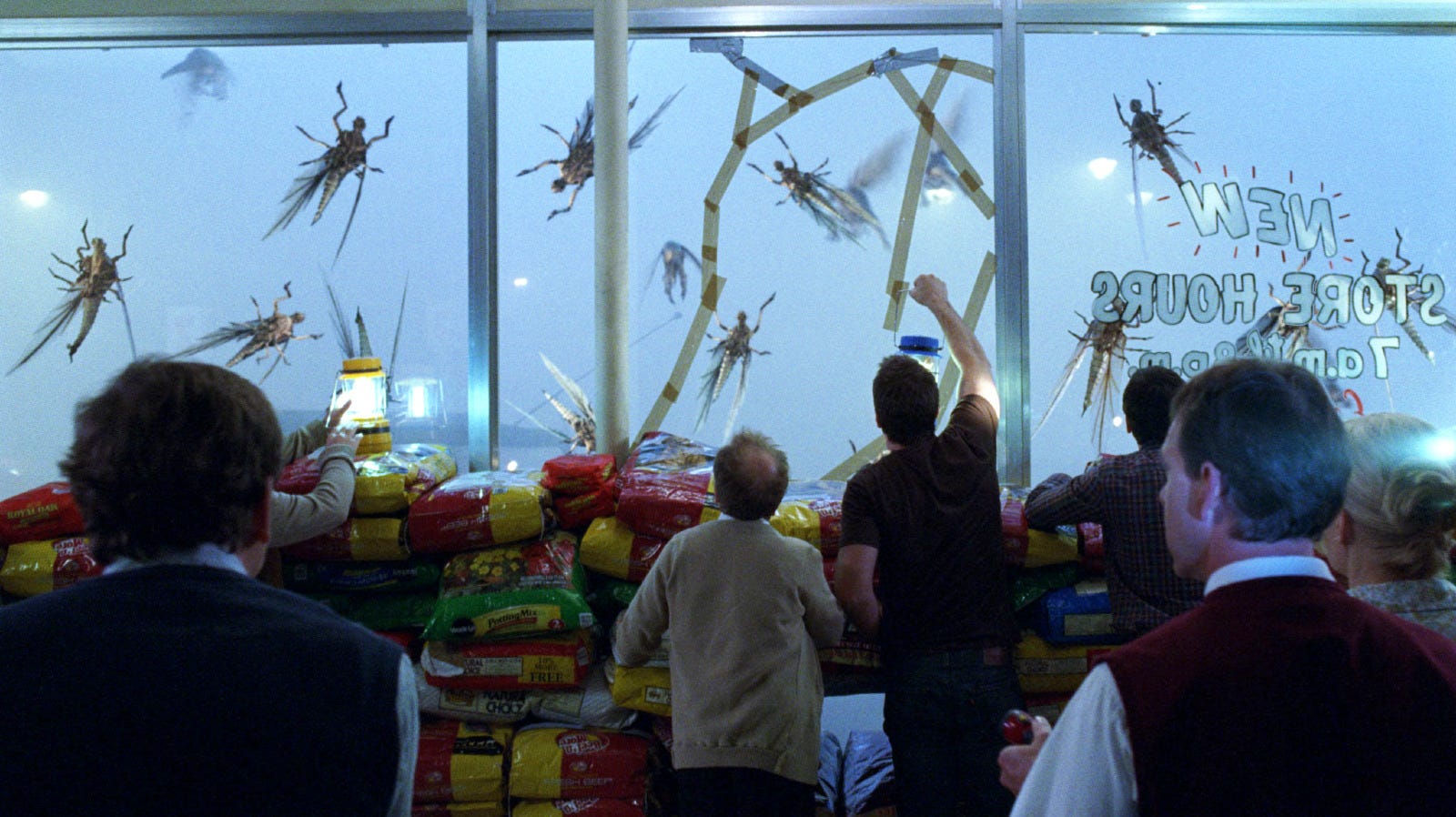
As a young kid, I had intense arachnophobia. Really, it extended to all insects, but spiders got an extra rise out of me. It didn’t matter what type of spider it was, black widow or daddy longlegs; I didn’t discriminate. I didn’t even care if they were poisonous or not. If it was a spider, it scared me. It got much better as I aged— by 12, I was basically over it. Then, my dad sat me down to watch The Mist. I’m still terrified of spiders to this day.
Stephen King is known for his prolific output and long novels, but that doesn’t mean he couldn’t keep it brief when needed. King’s short stories are among his most effective. The one that always stuck with me the most was his novella, The Mist. This might be one of the few instances where the film serves the story better than the original novel did.
Frank Darabont is the Stephen King director, as far as I’m concerned. He’s great at capturing the small-town aspect of King’s work. Before you get to the mysterious mist and the horrifying creatures it brings with it, you’re really immersed in this town and the small, petty conflicts that guide it day-to-day. A lot of apocalypse/invasion films forget this part. Life flipping on its head is a hell of a lot more effective when you know what life looked like for our characters originally.
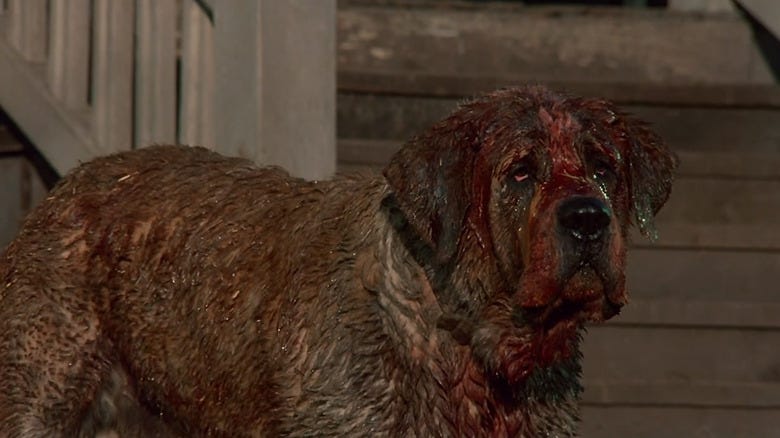
If we’re talking Stephen King adaptations that quietly wreck your nervous system, I’m picking Cujo (1983) every time. Not because it’s flashy, it isn’t. Not because it’s the most iconic, it’s not. But because it’s mean in the most mundane way possible.
A broken-down Pinto. A brutal heat wave. A rabid St. Bernard. That’s it. No haunted hotel. No psychic prom queen. Just a mother and her child trapped in a car while the world goes about its day.
What makes Cujo unforgettable is Dee Wallace. Her character Donna Trenton isn’t glamorized or framed as some polished action heroine. She’s sweaty. Sunburned. Panicked. Dehydrated. On the edge of collapse. And still…she fights. There’s something deeply unsettling yet strangely empowering about watching suburban motherhood stripped of comfort and illusion. No cavalry is coming. No husband bursting through the dust. No miracle.
Just instinct.
The horror isn’t the dog. It’s the isolation. The slow realization that help isn’t arriving. That survival depends entirely on the person everyone underestimates.
Cujo understands something brutal about women. Empowerment doesn’t always look cinematic. It doesn’t wear armor or deliver speeches. Sometimes it’s cracked lips, shaking hands, and a mother deciding she refuses to let her child die in the heat.
And that kind of ferocity is scarier than any monster.
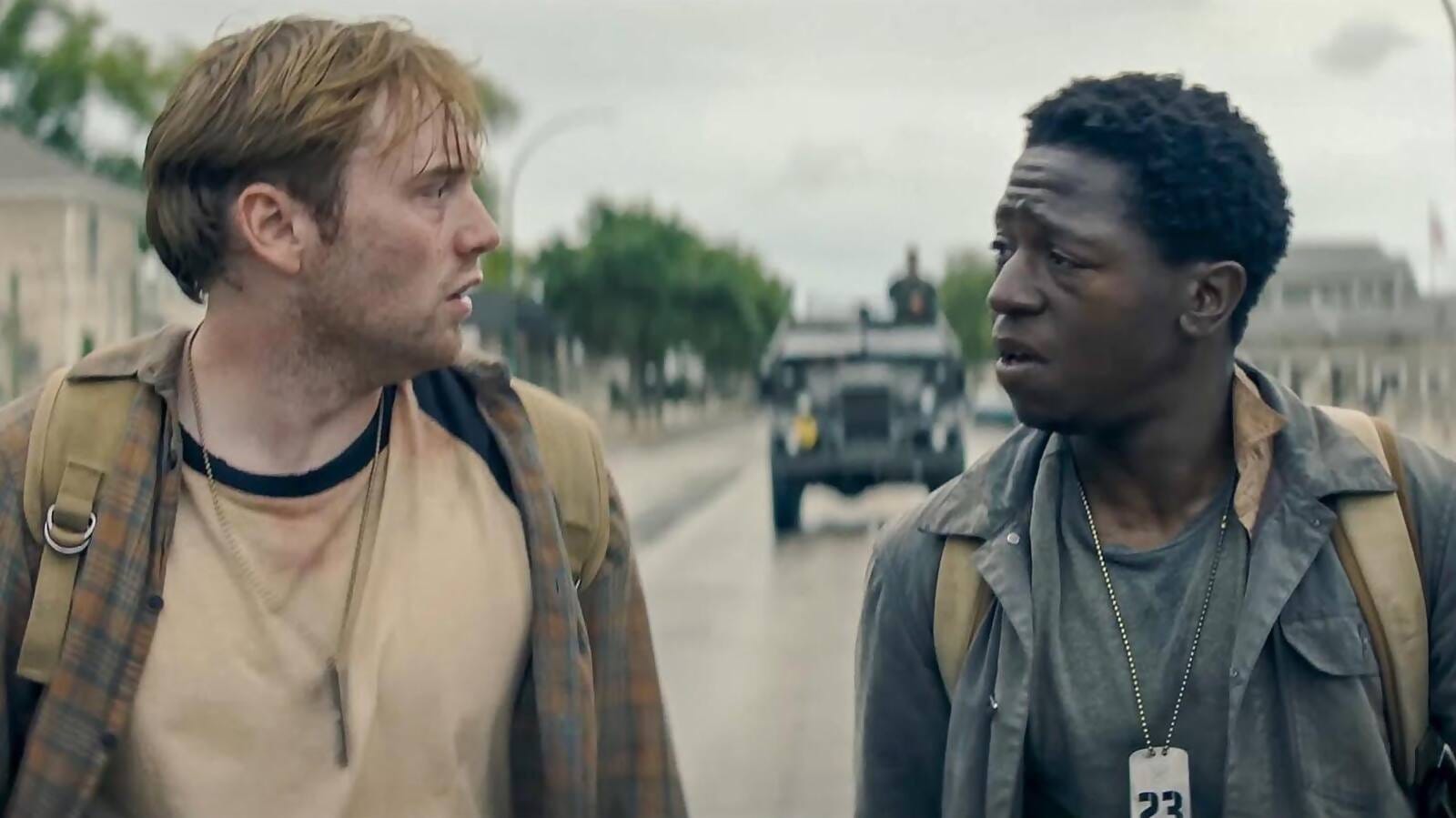
If Stephen King is hard to adapt, Richard Bachman is almost impossible.
For those unaware, Richard Bachman was a pen name that Stephen King wrote and published under from the late 1970s to the mid 1980s. The work published under Bachman was often meaner, grosser, and more confrontationally political in nature. King largely retired the Bachman name (though he brings it back sporadically) once Bachman’s true identity was outed by a bookstore clerk. These books have since taken on a mythical status among King’s readers.
There have been very few attempts to adapt Bachman, and honestly, for good reason. Thinner proved too strange and nasty for wide audiences, and The Running Man (1987) had to “popcornify” the source material and is essentially a different story. It’s really just an Arnold Schwarzenegger flick that borrows the death show premise. Since then, it’s been crickets — until 2025.
Last year, we saw two film adaptations of the Richard Bachman books. One was a thrilling, emotionally compelling tearjerker with committed performances and an important message that is being recommended on this list. The other is Edgar Wright’s Running Man.
This film is a hard sell, honestly. It’s brutally violent, prescient, and walking really does take up a majority of the runtime. This film is more than that. It’s a compelling look at a community born under the boots of authoritarianism; that’s a tale we could really use right now.
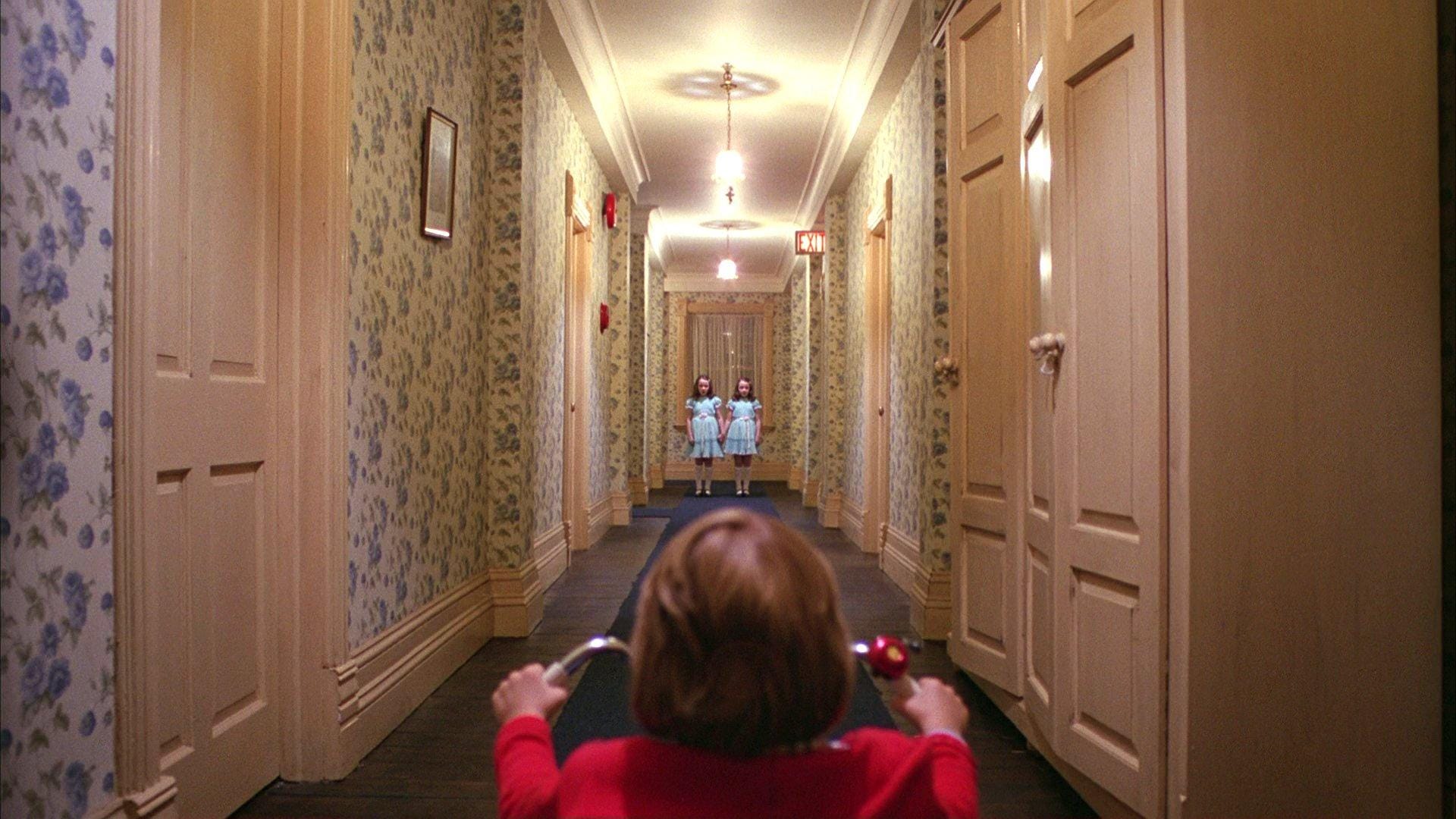
Sure, The Shining is the Stephen King adaptation we’ve all heard discussed into the ground. And yeah, plenty of King diehards still reject it, because Kubrick didn’t really adapt the novel so much as hijack it and rebuild it in his own cold, precise image. But whatever it “gets wrong” on a faithful-reader checklist, it makes up for by being unbearably effective. It doesn’t rely on jump scares or explanations. It manufactures dread like a slow leak you don’t notice until you’re already breathing it in.
I first saw this at age twelve because my dad decided I was ready. I wasn’t. No one really is. The Overlook isn’t a haunted hotel so much as a machine designed to trap you in your own anticipation, to make hallways feel predatory and silence feel loud. And Kubrick’s iconography—the carpet, the twins, that elevator of blood—lodged itself in our culture and rewired the language of horror for everyone who came after. That much is undeniable, no matter how anyone feels about it.
- Sean Mo
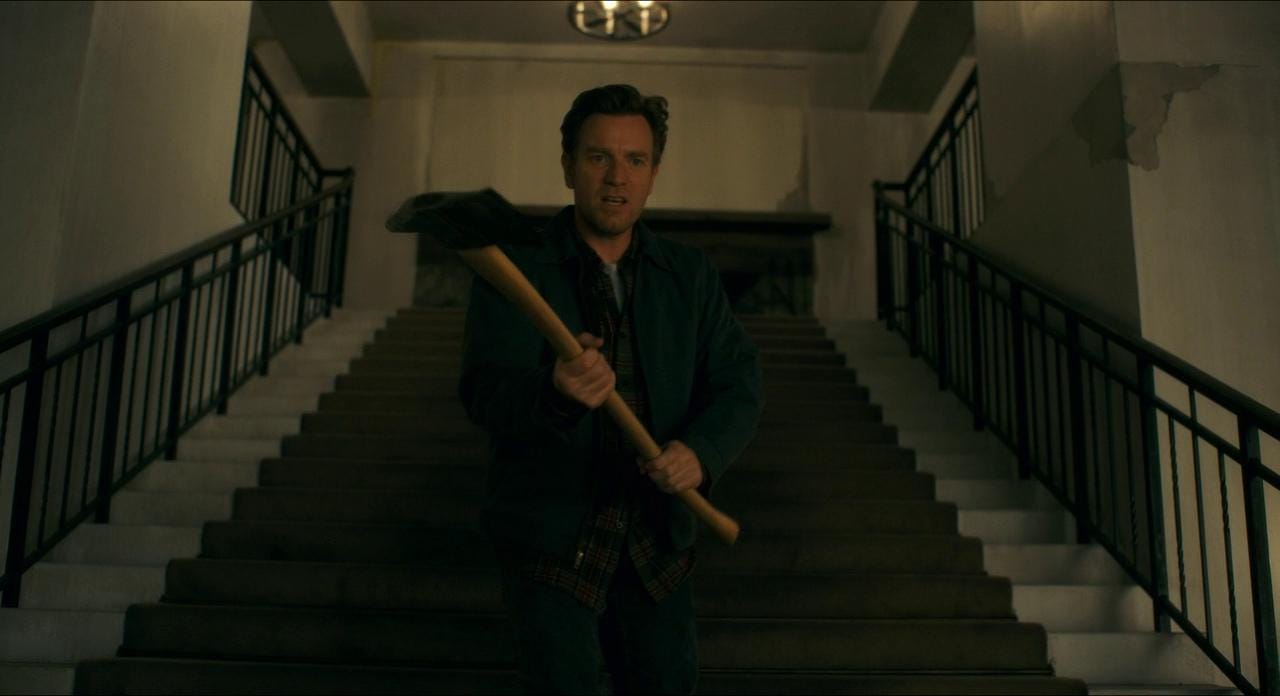
It would be enough to watch Doctor Sleep for its compelling story, brilliant villain, or the “shining” young heroine, but there’s another reason. It gives answers for the weirdos like me who watched Danny Torrance ride away from the Overlook and wondered if he stood a snowflake’s chance in hell of having even a moderately happy ever after. Well, no and yes.
Danny, like his father, tortured by his addictions and choices, runs. However, by luck, he finds support, quite literally on arrival, for both his struggles and his gifts. “Medicine” for Jack Torrance was alcohol. For Danny, it was accountability. In his role as Doctor Sleep, we see Danny shining with a new sense of purpose as he helps others to pass peacefully. Halloran shines in his role, which has shifted from guardian angel to stern angel on Danny’s shoulder. He reminds Danny, “You owe a debt.” Danny ultimately pays with his life, but it also brings redemption along the way. Like Halloran, Danny grows from (slightly awkward) mentor to the gifted Abra, to heroic rescuer.
I enjoyed seeing The Overlook, Ground Zero for so much of Danny’s trauma, become the place where he truly conquers his personal demons. Our Danny didn’t get a long life or the father-son moment he desired. What he did find was purpose, fulfilment, redemption, and support, including a touching gift in his final moments. He becomes a breaker of generational curses and takes up the torch of guardianship for Abra.
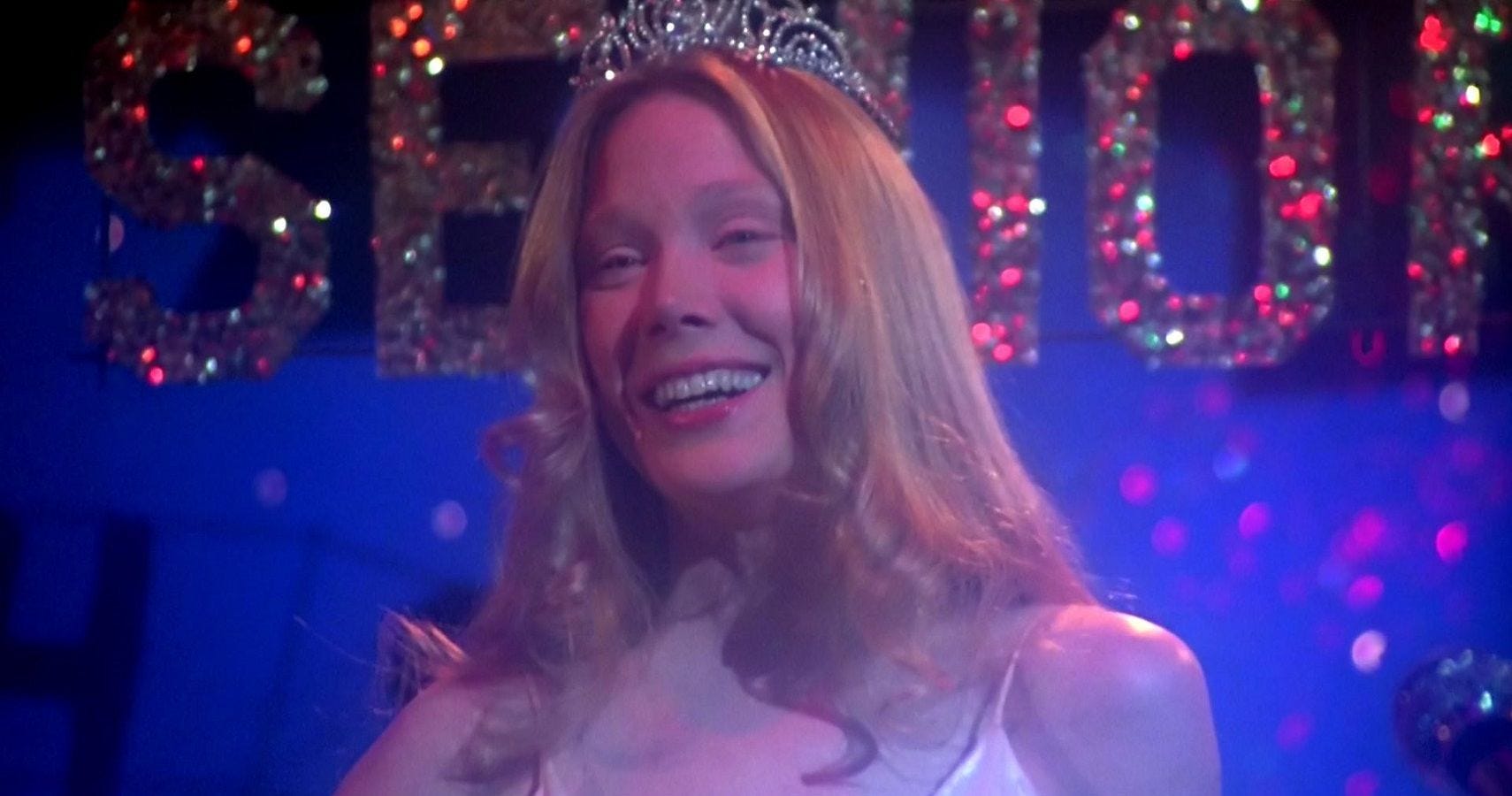
Stanley Kubrick’s The Shining gets a lot of credit for starting the wave of King Adaptations; four years earlier, Brian De Palma showed us the cinematic potential that sat within the pages of Stephen King novels. His adaptation of King’s first novel is empathetic and surreal. I love how much this film feels like a dream, especially the prom sequences.
While watching Carrie, it can be easy to forget that it’s a horror film. The coming-of-age conflict is great, and you really find yourself rooting for Carrie to have a great prom. When that happens, you’re so elated that the pig blood spilling all over her catches you off guard, despite the pig blood being heavily foreshadowed throughout the film.
Carrie may be the cause of destruction, but she is far from the villain of this story. It’s one of those stories that makes you root for the “monster”. Those can be tough sells, but not with Carrie. It’s not just typical Hollywood bully stuff either (though there is plenty of that). The subtle ways that the adults in her life minimize and disregard her are scarier than the high school bullies or the telekinesis.
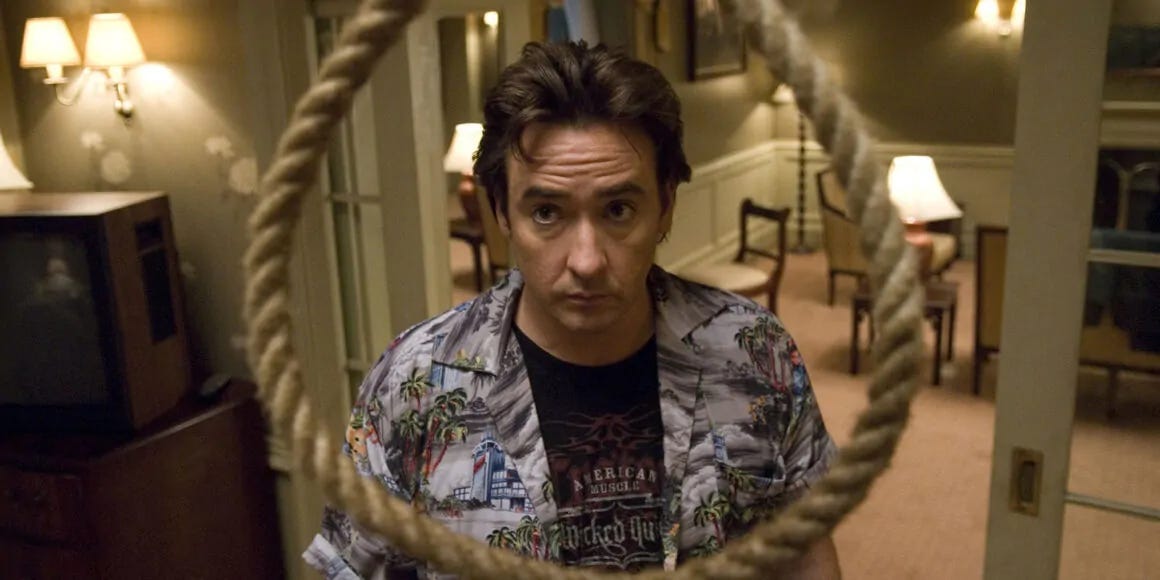
1408 isn’t about a haunted room. It’s about a man whose primary survival strategy is leaving.
When conflict intensifies, Mike Enslin exits. Cigarettes become permission, a socially acceptable way to end a conversation before it can turn back on him. He records instead of responding. He turns pain into material.
The room’s cruelty is precise: it removes exits. Doors lead nowhere. Windows don’t open. Accurate maps become useless. Even escape itself turns out to be another chamber. The film doesn’t argue with Mike’s skepticism; it traps him inside his own coping strategy and refuses to let him deploy it.
The real damage in 1408 isn’t supernatural. It’s relational. Mike can manage logistics, research treatments, and make decisions. What he cannot endure is sustained emotional need with no solution. That burden falls on his wife, Lily, the one who stays, who absorbs absence without spectacle.
The film briefly imagines redemption. Success, reconciliation, authorship restored. Then it retracts it. Survival hasn’t changed him.
The ending gestures toward heroism. Lily’s quiet refusal of his possessions says otherwise.
1408 isn’t about ghosts.
It’s about what happens when leaving has always been your last word, and suddenly, you can’t.
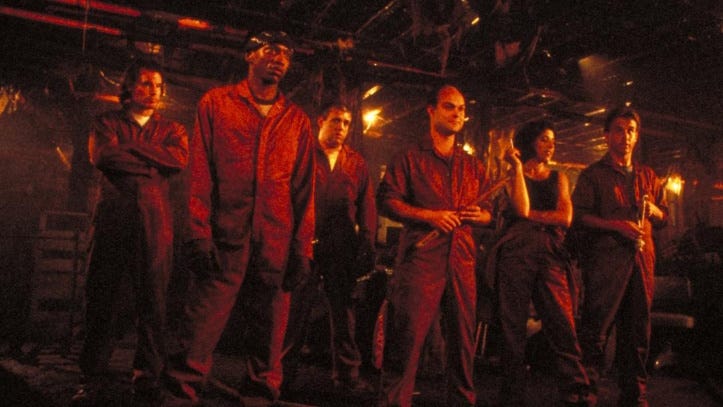
Following the critical and financial success of Mary Lambert’s Pet Semetary (1989), Graveyard Shift was quickly optioned and became the first Stephen King film release of the 1990’s. Based on a short story of the same name from King’s 1970 short story collection “Night Shift”, Graveyard Shift tells the story of a drifter named Hall (David Andrews/Stargate) who gets hired at an old textile mill infested with rats, in a small town in Maine. Warwick, the evil foreman running the mill, puts together a crew of employees to team up in the basement to rid the mill of the rats once and for all. As workers keep turning up missing or dead, we soon learn there’s something much larger and more monstrous than mere rats living under the mill.
Graveyard Shift, directed by Ralph S. Singleton, is not technically a well-made film or one of the stronger King adaptations. The acting is inconsistent, overall, and the story can be a repetitive drag in some sections. But for fans of movies of that era that contain some of that so bad their good qualities, mixed with some genuinely effective practical effects, a rad looking monster, and off kilter-go for broke performances, there is a lot to dig into. Stephen Macht (The Monster Squad), as Warwick, gives a menacing and eventually unhinged performance with a wildly uneven and bizarre New England accent. He’s fantastic.
But the major reason to dive into this leaky pit is my favorite actor, Brad Douriff (Child’s Play), thanklessly playing local exterminator, Tucker Clevand. Warwick hires Tucker, a sweaty, ponytailed Vietnam vet, to exterminate the rats, which leads to a scene with Hall, where Tucker recalls a POW experience during the war involving torture with rats that rivals Quint’s (Robert Shaw) USS Indianapolis speech in Jaws, for its harrowing reality of unflinchingly hopeless horror.
Douriff delivers his lines with a wirey draw complimented by cagey, restless movements, staring at Hall with wide, glassy eyes, that produce one solitary tear that rolls down his face during their intense talk. Douriff is Haunting. In the course of two minutes, he shows you deep-seated anger and the thinly repressed pain of regret, fear, and why Cleveland “seeks revenge” on vermin to fill a hole left by the brutal terrors of war. Douriff acts his heart out here as if he was in Jaws himself and not Graveyard Shift, elevating the film and everyone else, in what few scenes he has.
I give Graveyard Shift a light recommend. To catch this rat shit crazy flick on a lazy, fall weekend during a Stephen King spooky season marathon would be a pretty Horrorble time!
Thank you to Kimberly (X2), Shaman, Sean, and Kyle for your wonderful contributions to this piece! If you enjoyed what you read of them here, do yourself a favor and subscribe!
Thank you all for reading!
No posts
Comments
Nothing yet. Say the first thing.
Sign in to join the conversation.