
I was going to let it go after it happened once.
And when I say “it,” I mean a purely AI-generated short story winning a prize. But, of course, then it happened twice.
The two cases I’m talking about are Jamir Nazir’s “The Serpent in the Grove” winning the Caribbean Commonwealth prize, and “Back and Forth” by Kavyta Kay winning the Harper’s Bazaar Short story competition. This should signal an immediate sense of terror in all typical human prose writers. But here’s the thing that a casual oversight of the news doesn’t convey: AI still can’t write well. And both of these stories are incoherent.
She had the kind of walking that made benches become men
-Actual quote from The Serpent in the Grove.
What’s interesting about this, as a point of comparison, is that I’ve written a lot of weird shit. In fact, I’d be willing to bet that some of the things I’ve personally written are as legible to some people as metaphorical “benches becoming men.” But here’s the assumption: The cultured of the art world can tell the difference, right? They know when something is a deep, multilayered metaphor with intent and thought behind it, and when something is just a string of words.
Well, sucks to have believed that, because both of these stories won awards.
It dominated the corner like a matriarch
-Actual quote from Back and Forth.
Now, in all fairness, I don’t know Kavyta Kay’s life. I have no idea if matriarchal figures dominating corners is a thing in traditional folklore, or if it’s otherwise a simile that makes sense when we look at some aspect of human culture we might not understand.
Which is precisely what makes me, someone trying to be an open-minded judge of art, as well as all of the judges of these competitions, vulnerable to bullshit like this.
Because once someone points it out to us, we’re not so ignorant or stubborn as to deny it. I mean, come on, this is bullshit. Right?
But if I read into Kay’s story, in particular, and give it the benefit of the doubt, it’s hard to deny that I can conjure a convincing narrative that it is about the exploitation of a tree as a metaphor for the exploitation of women and indigenous people. And that therefore, the tree being a matriarch makes a sort of…sentimental sense? Even when matriarchs don’t really dominate many corners.
(This is something, by the way, that frustrates a lot of us when it comes to AI art. We assumed that the robots would be good at logic, bad at sentimentality. Instead, apparently, it’s the other way around. They’re terrible at the logistics of storytelling, but they are great at in-the-moment emotions, when you don’t read between the lines.)
Something becomes clear when I look at these stories: AI is not good at typical writing. It can’t imitate a romance novel without the characters coming off wrong, in certain ways. But what it can do, actually quite well, is imitate art that feels semi-experimental. In this case, literary fiction, which is more about the rhythm and flow of the writing, and vague themes being conveyed on a sentence-level. In which it’s quite easy to handwave idiosyncrasies away.
This is quite obviously what the judges did: They wrote off all the weird elements of these texts as interesting and creative choices from a human artist. Things that they might not have understood, but which they shouldn’t judge too harshly just because they didn’t understand them. “Benches becoming men” in particular means absolutely nothing, and I refuse to believe anyone read that line and got what the writer was going for, off the cuff. But that’s okay! It’s okay, to not understand at first! This is actually a perspective that I, myself, have defended. And my literal favorite movie, The Green Knight, is vibes-first all the way through, and cannot be understood in typical straightforward storytelling logic.
(Hilariously, just as I was writing that, I remembered that A24 is partnering with google to push AI in films in some strange, obscure way)
This is not the only reason why avant-garde art, as an institution, is flailing. We also face a modern politics that is overtly hostile to it, a future educated class that has been trained to care more about grades than their own actual education, and a growing lack of patience for anything that does not offer instant gratification.
I’m strange in this way. When Donald Trump won in 2016, I binged Portlandia, immersing myself in a parody of a hyperliberal city so as to exist in a world I felt was under threat. Now, in 2026, I feel like the anti-intellectual, anti-art wing of conservatism is the most prominent and powerful one. And so I turn to another familiar comfort, a piece of avant-garde art that is so self-aware it serves as a comedic parody of all other avant-garde art: Brett Gelman’s 1,000 Cats.
For those who aren’t familiar: Brett Gelman’s 1,000 Cats is a 2010 short featured prominently in the sixth episode of “Funny or Die Presents.” Now available only on HBO Max. It is, in my opinion, one of the greatest comedic shorts ever made.
Here, IRL Brett Gelman (and I will use the designation “IRL” throughout to make the distinction) plays a version of himself putting on a one-man show in which he pretends to be a thousand humanoid ‘cats’ one after another, who are all one-note stereotypes of human beings. It came out in 2010 and a lot of its more absurdist humor is clearly the product of the internet “lol so random” phase. But remember: the musical Cats actually exists. As well as weird, quirky avant-garde artists who put on one-man shows that they claim represent the “entire universe.” In this sense, Gelman’s ambition to play one thousand different characters is a perfect parody of artistic pretense: He thinks that he can literally depict a representative sample of everything and everyone in this seventeen minute musical stageshow, in a deeply meaningful way.
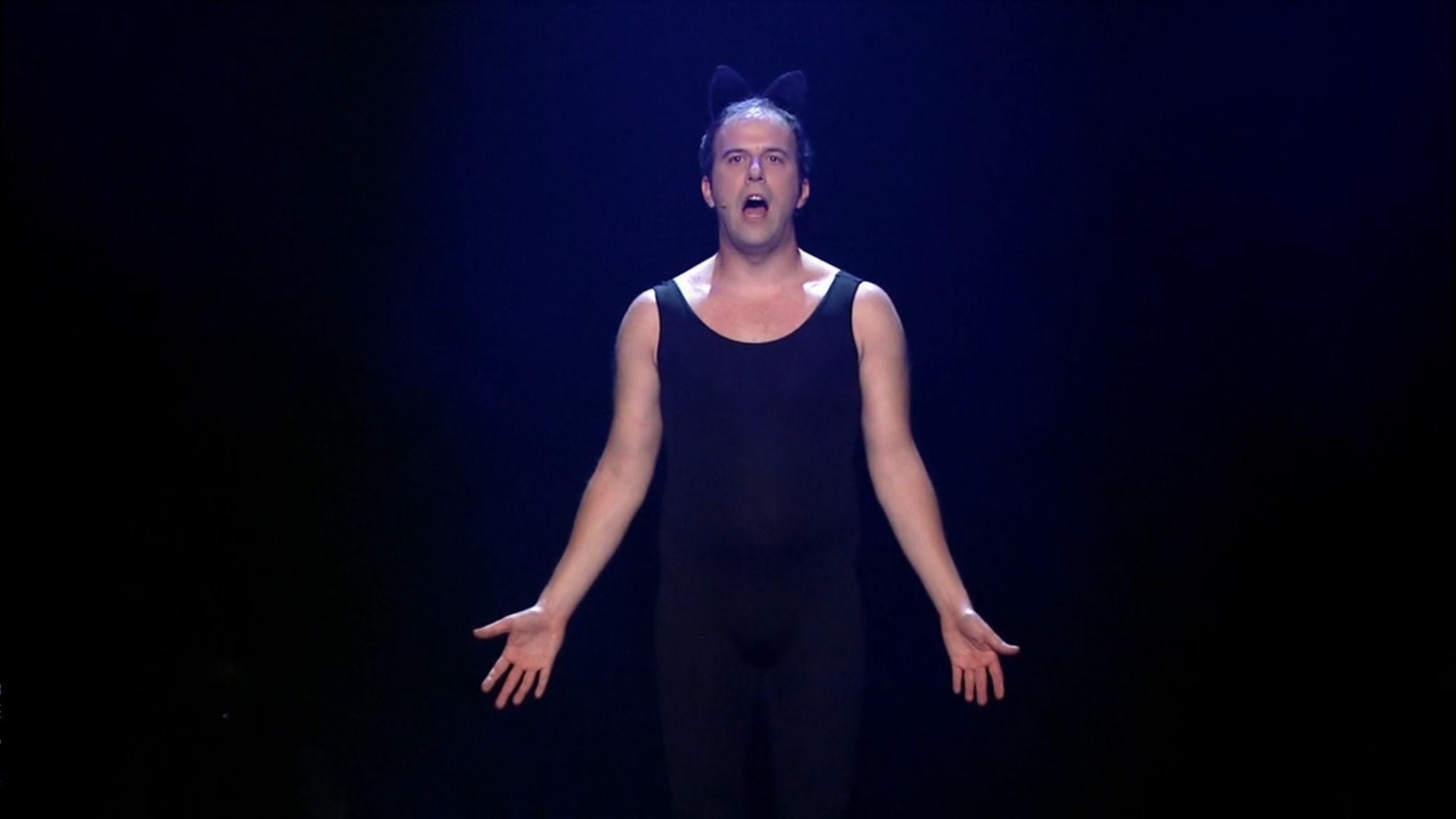
And not only does he fail, he fails spectacularly. If 1,000 Cats were a real One-Man show, it would (or…should?) be considered a spectacle of utter incompetence. Delirious and poorly sung, poorly performed, poorly acted, clearly vapid on a deeper level, it does not just fail to live up to its pretensions, but fails to be watchable.
At least, unless you have already convinced yourself that 1,000 Cats is the greatest piece of art a human has ever produced.
Because the incompetence of Gelman’s character when compared to his grand ambitions is only the first joke. There is a much deeper element of humor in 1,000 Cats than Gelman himself. He is, after all, just one weird dude. The characters that elicit the most laughter from me to this day are the audience.
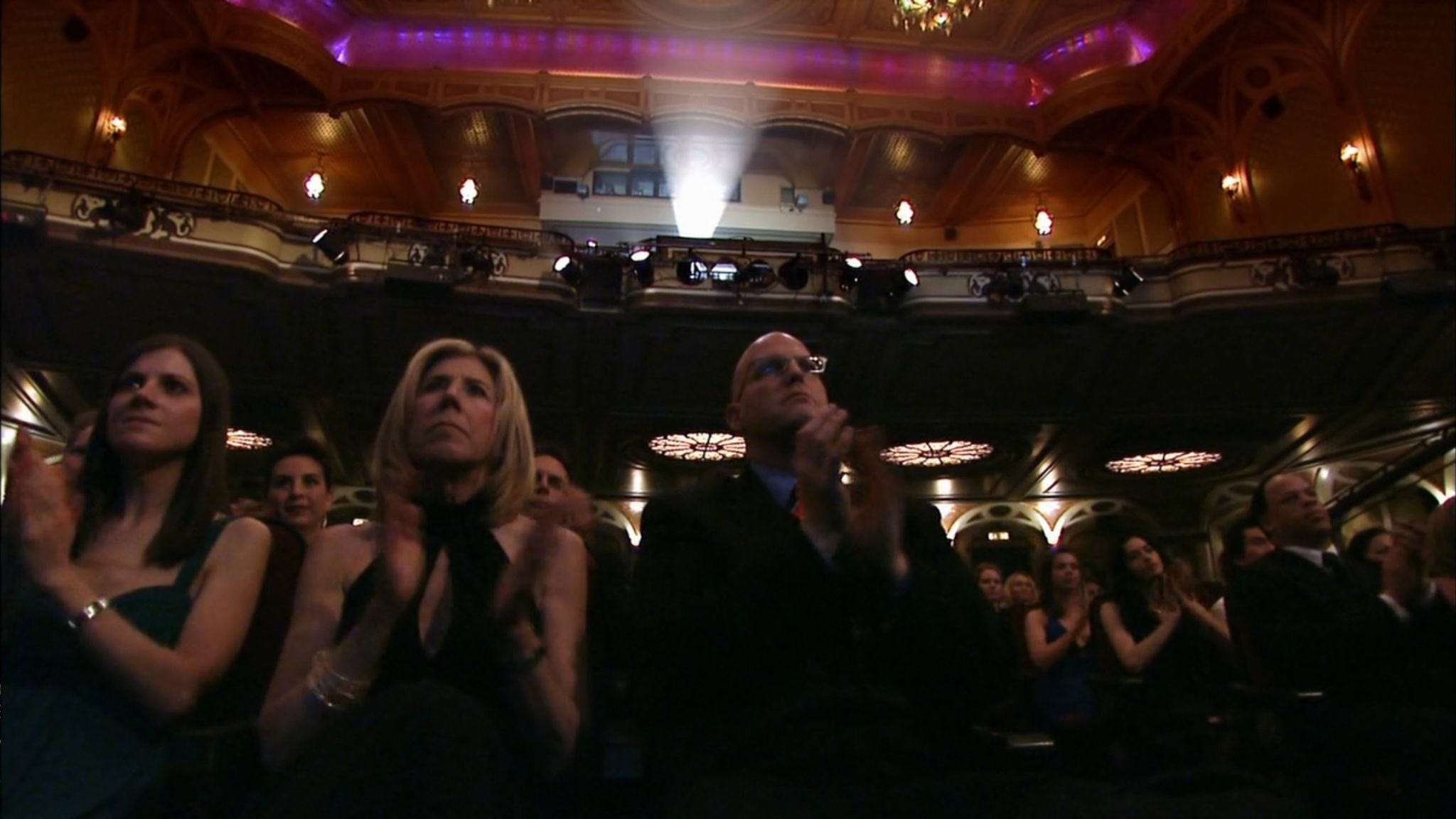
Frequently throughout the short, the camera cuts from Gelman to reveal well-dressed, high class people applauding frequently. Often with stoic seriousness on their faces during the most absurd moments. Now, in light of these AI-generated stories winning awards, I can imagine every one of these people thinking to themselves: There’s something here. I might not get it, but it seems like the person next to me does, so I definitely should, too.
It’s important to note that Gelman is not conning any of these people. He believes that what he is presenting to them is the greatest piece of art in all of human history. There is no comedic ‘straight man’ who calls him out, and so he remains the nexus of a collective delusion throughout. 1,000 Cats, to the mind of every character involved, is weird, different, and ambitious. And so it must be a masterpiece.
These AI stories and their accolades reveal to me how many of the judges of these artistic competitions have always been the audience from 1,000 Cats. Not getting all of it, but assured (assured!) that there is definitely something to get. That it is not all smoke and mirrors, but is actually much deeper than the more crowd-pleasing art of blockbuster movies or smutty novels!
And the reason they’ve always been like this is that it’s very hard to actually ‘get’ this stuff. And even once you do ‘get’ it, it’s still pretty subjective. The weirder art is, the more ‘subjective’ any judgment of it becomes. Who are we to say that Brett Gelman isn’t on to something? If we feel like he isn’t, aren’t we just close-minded?
Hedging their bets, then, not wanting to be seen as philistines, the judges and gatekeepers of the art world are instead quick to assume that the Brett Gelmans among us are exactly who they claim to be: artistic geniuses who will be remembered decades from now as visionaries. After all, who looks worse in retrospect? The critic who declares James Cameron’s Avatar to be a vivid and meaningful depiction of environmentalism and the colonization of indigenous peoples, or a critic who declares James Joyce’s Ulysses to be a vapid mess because it cannot be understood? One just really likes Avatar, and we can forgive this. The other is failing to appreciate something profound.
Well, in proper 1,000 Cats form, here is what I am about to do: Having told you that you can watch it on HBO Max if you want to, I will now not only spoil it, but break it down surgically, on a timestamp-dependent level. Not as if it were a comedic performance, but as if it were a serious avant-garde art piece.
00.01: 1,000 Cats is funded by a foundation. Specifically the “Esther and Samuel Woodman” Foundation, and “By Viewers Like You” Which means that what you are about to see both has wealthy private donors and the various other funding sources of public broadcasting. This type of funding has a lot to do with how art gets made, if you aren’t aware. Movies made for a mass-audience are often forced to compromise in order to appeal to that audience. But art that is publicly funded and/or has rich patrons behind it can afford to dial its weirdness up to 11, occasionally becoming self-indulgent in the process.
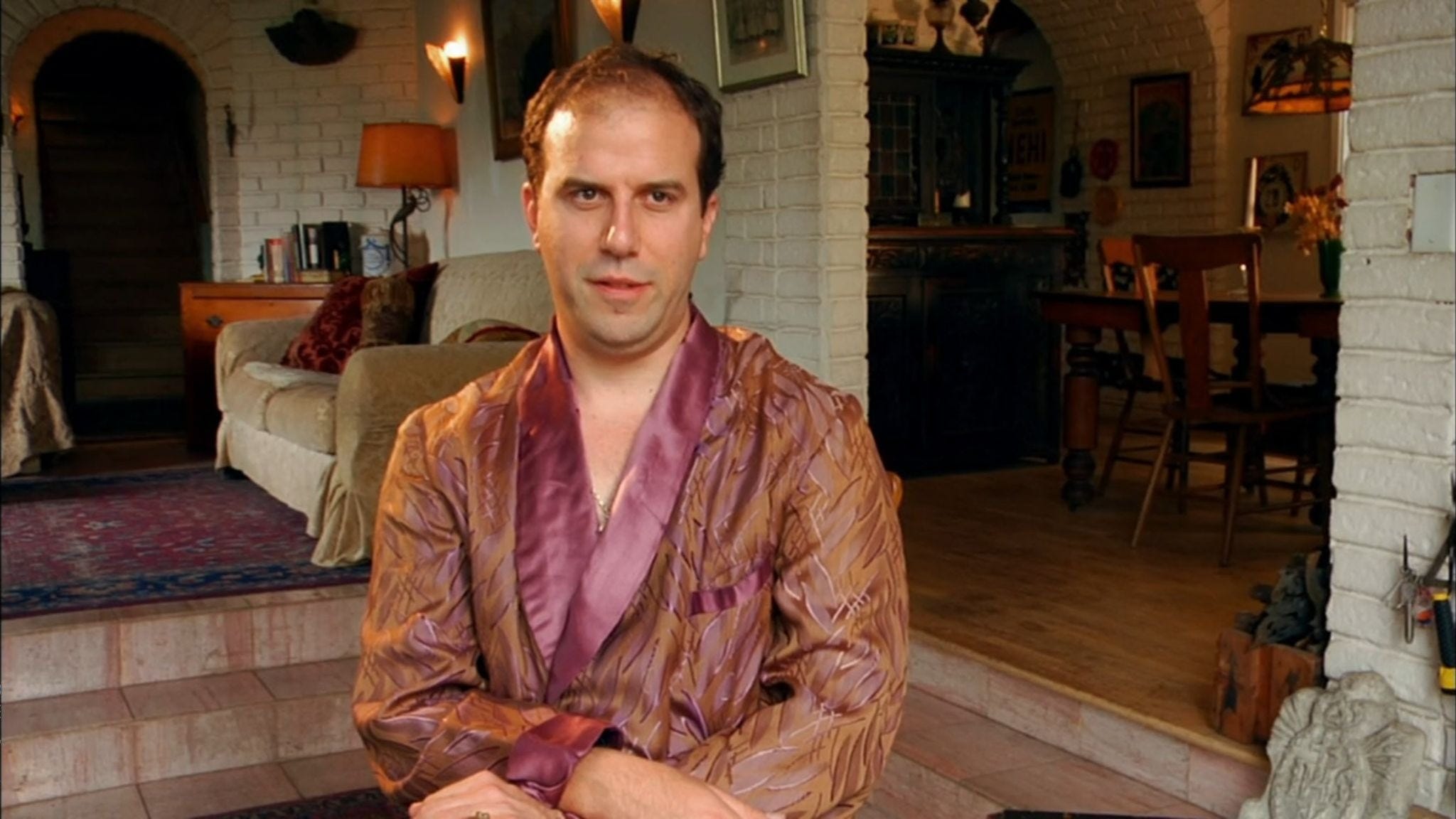
00.16: We do not start with the actual play. Instead, we start with Brett Gelman telling us why 1,000 Cats is so important. He starts by straight up saying: “1,000 Cats is not a play. It is not a musical. It is not even really a performance.” (things that it literally is.) “It is a universal consciousness that is physicalized through me.”
It’s important to note that this obsession with telling us why we should care is at the heart of a lot of art like this. There is an assumption that we will not get it. We absolutely need context for what we are about to witness. So of course we don’t start with Brett Gelman’s play itself. We have to start with the artist “explaining” the play.
But of course, Gelman cannot explain his play with any coherence. He ends by saying: “1,000 Cats doesn’t even exist, while, of course, 1,000 Cats is the only thing that exists.”
02.05: Gelman barely gets through the first section of the first opening number before the applause starts. The audience simply cannot wait to applaud him. They rush to be the first to ‘get it.’
02.54: We get our first shot of the audience applauding. Faces of absolute stoic seriousness. Deep frowns as Gelman flops around on the stage claiming that he is a drug-addicted cat, as if they are moved by the tragedy.
04.14: As Gelman’s voice breaks, we get the audience applauding again. The two possibilities are that they are convinced that he is singing well, or that they realize that he is singing so poorly that they now try to drown him out.
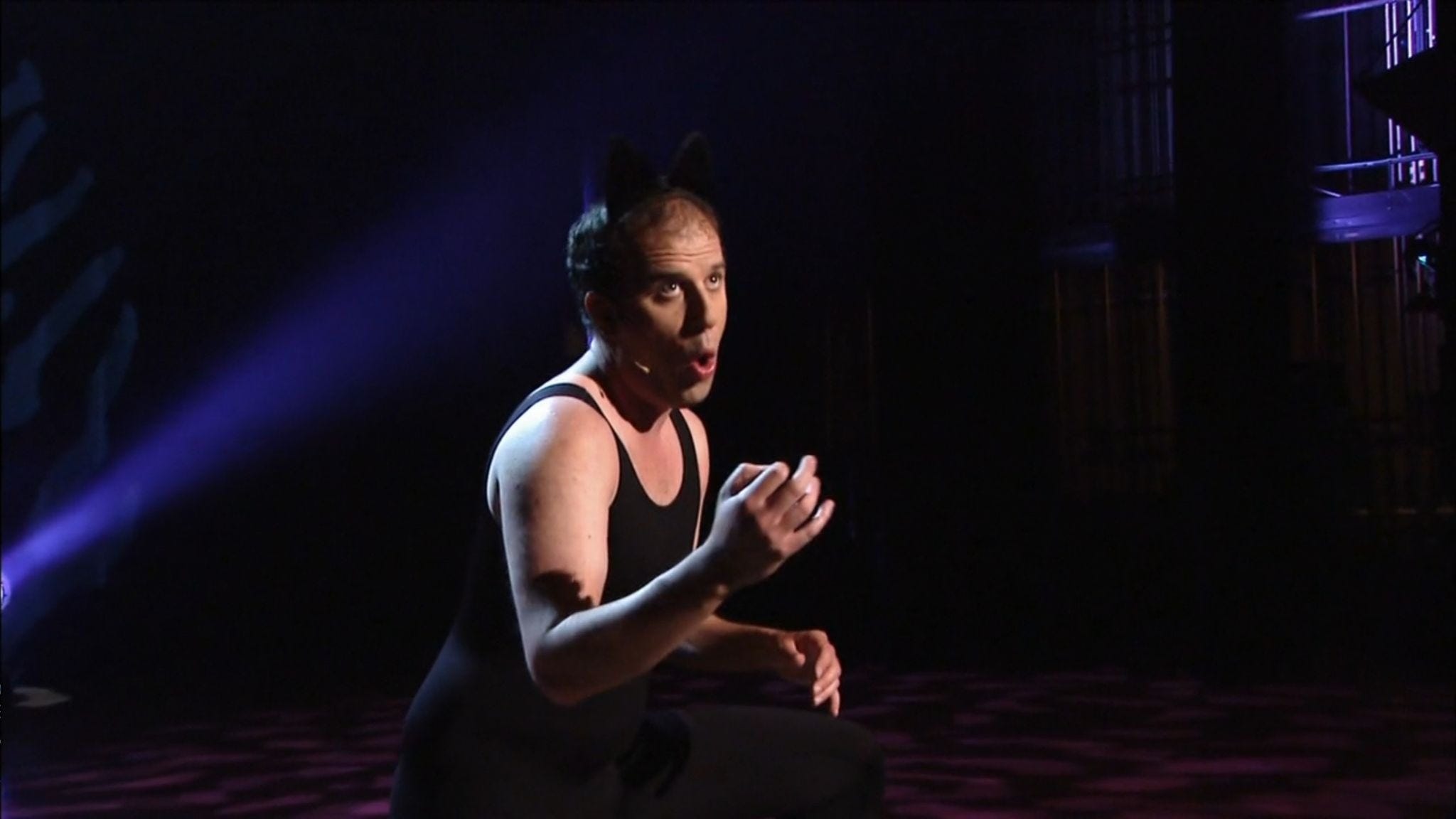
04.38: Back in the day, when Gelman sang out: “Rollerskating Ca-ATS!” This was my first laugh out loud, as well as my genuine transportation into the surreal mode of thought brought on by watching this.
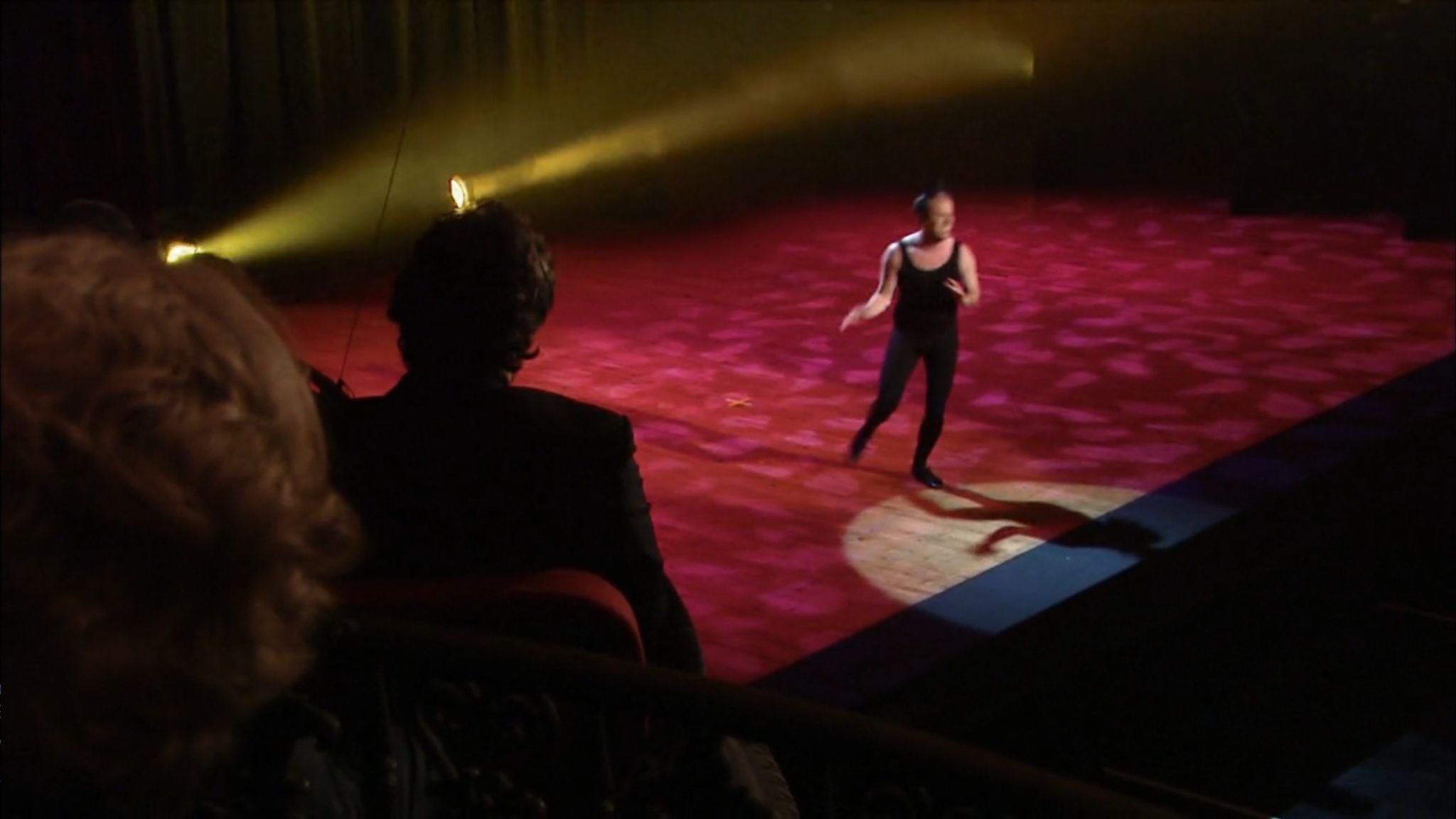
05.25: We just got another shot of the audience. It is impossible to overemphasize how much of a presence they have in this whole thing. A few seconds from now we will see the audience again.
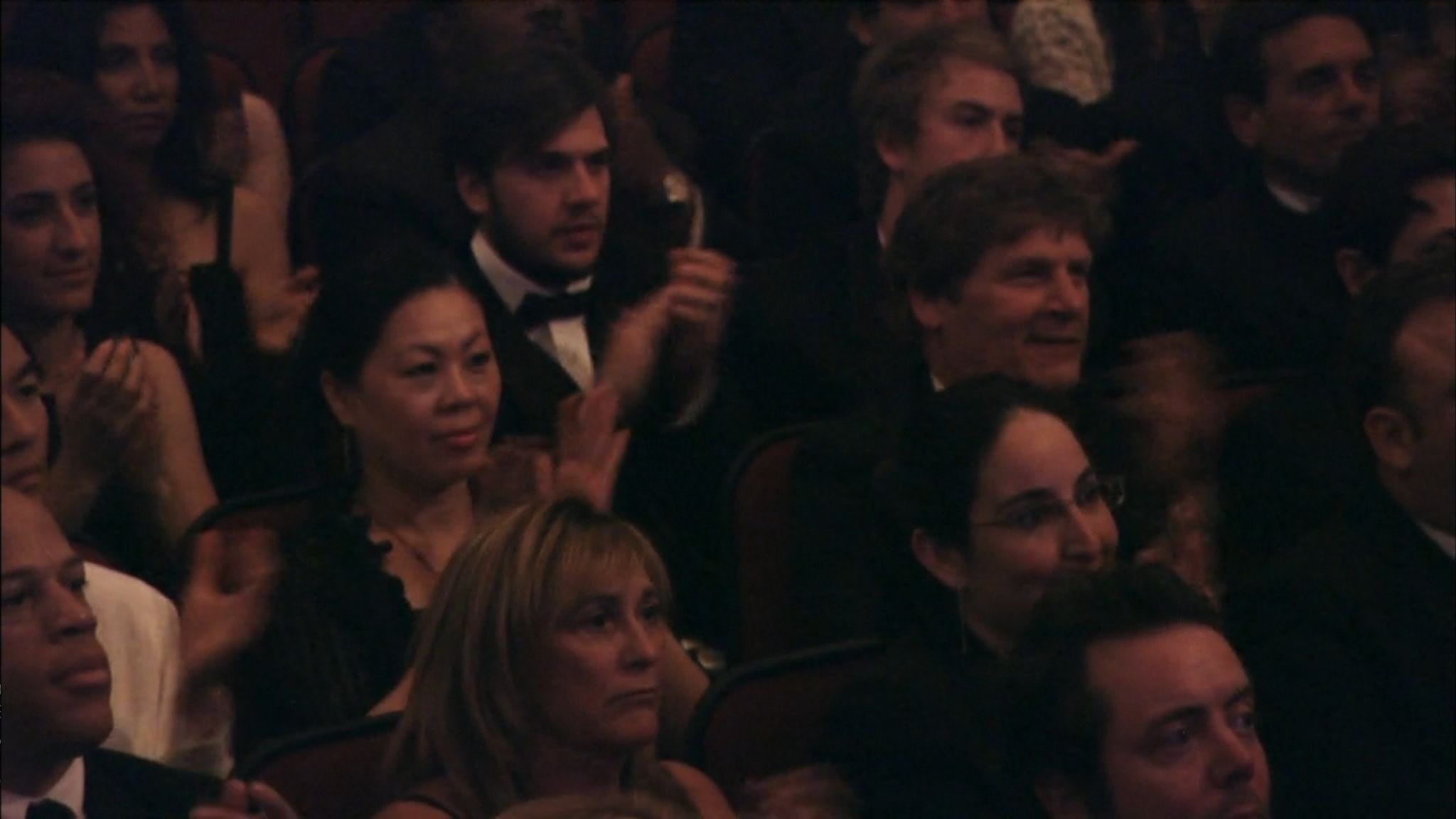
05.46: When Gelman sang “Baby Cats! Meow, goo-goo ga-ga!” more than once, that was it, my transportation was complete. I was entirely immersed within the world of “1000 Cats.”
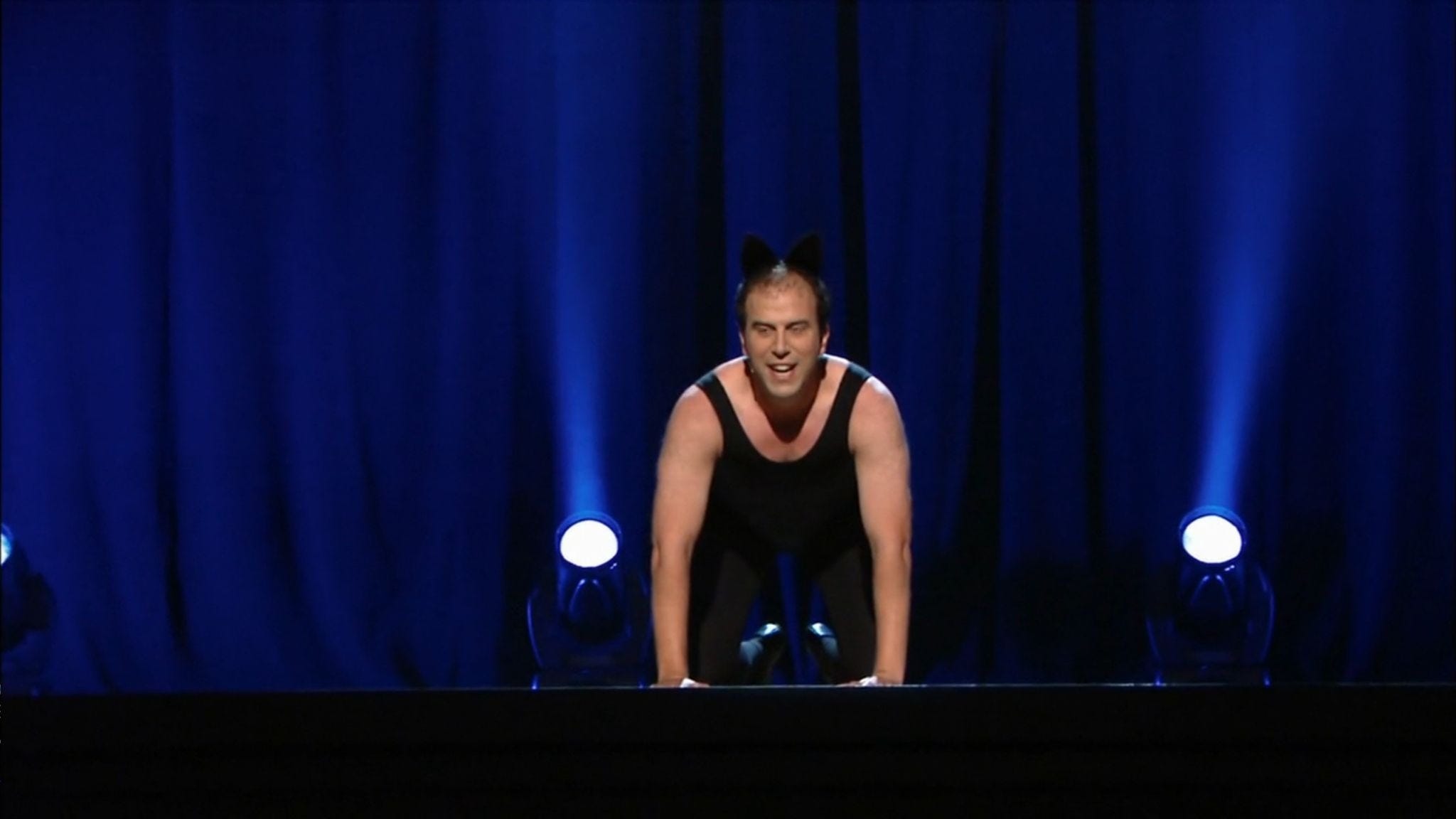
06.31: Gelman just went from explaining the baby cats, to the adolescent cat, to the father cat, and introducing the father cat’s mistress and wife. All of these characters come and leave so fast that it’s of course impossible to empathize with them or analyze their experiences in any depth. Somewhere deep in the past of every one-man show like “1,000 Cats,” there are dozens of comments from workshops that have been ignored. “You just don’t get what I’m doing, here.”
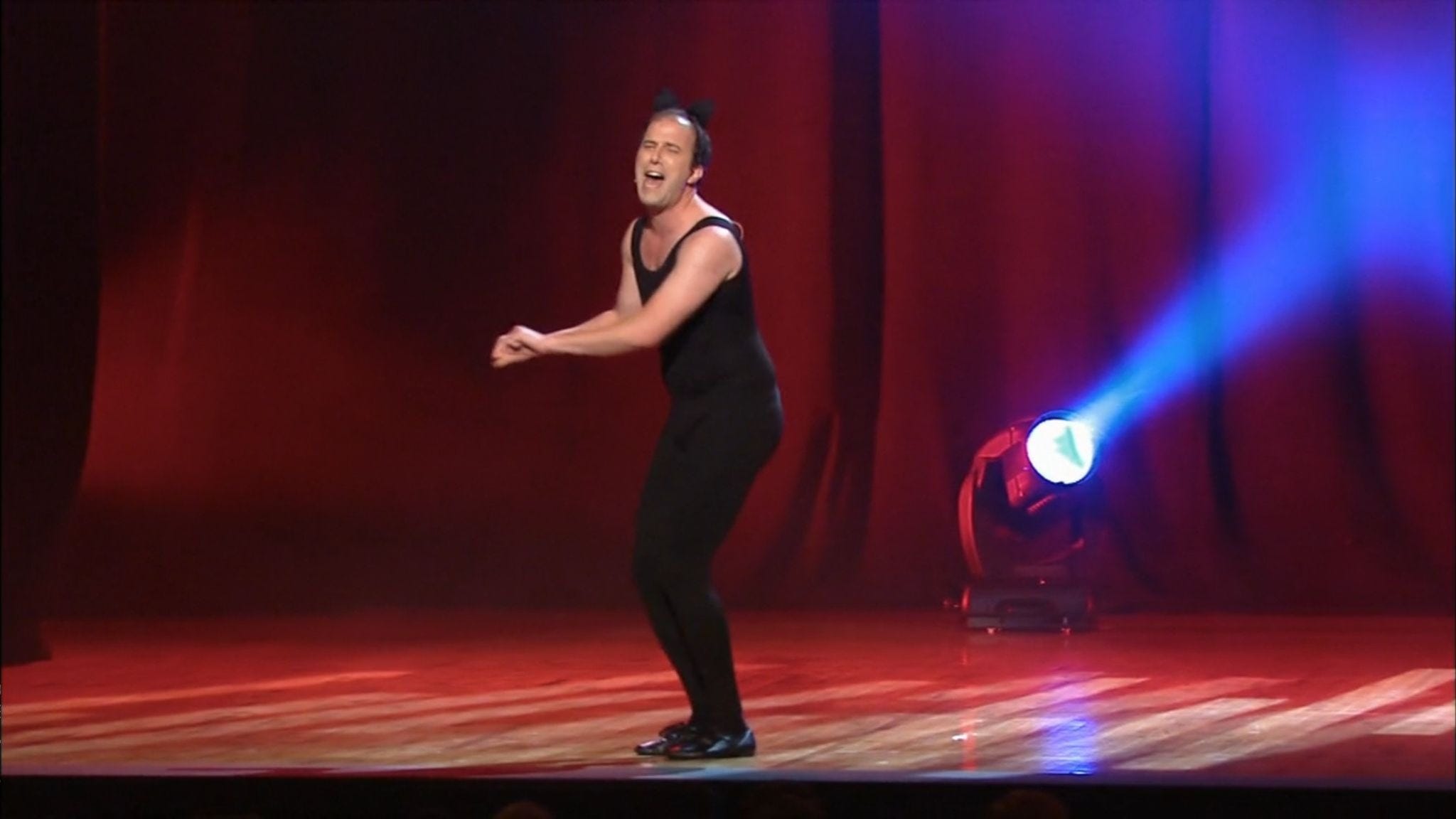
07.46: After introducing several cats that are just racial/national stereotypes, Gelman is now performing a very racist “dance ritual” of an African cat while animal noises play in the background and zebras are projected behind him. Many of the shows like the one Gelman is satirizing get away with racial/gender insensitivity in the same way that they get away with everything else. No one is willing to call the artist out on their bullshit.
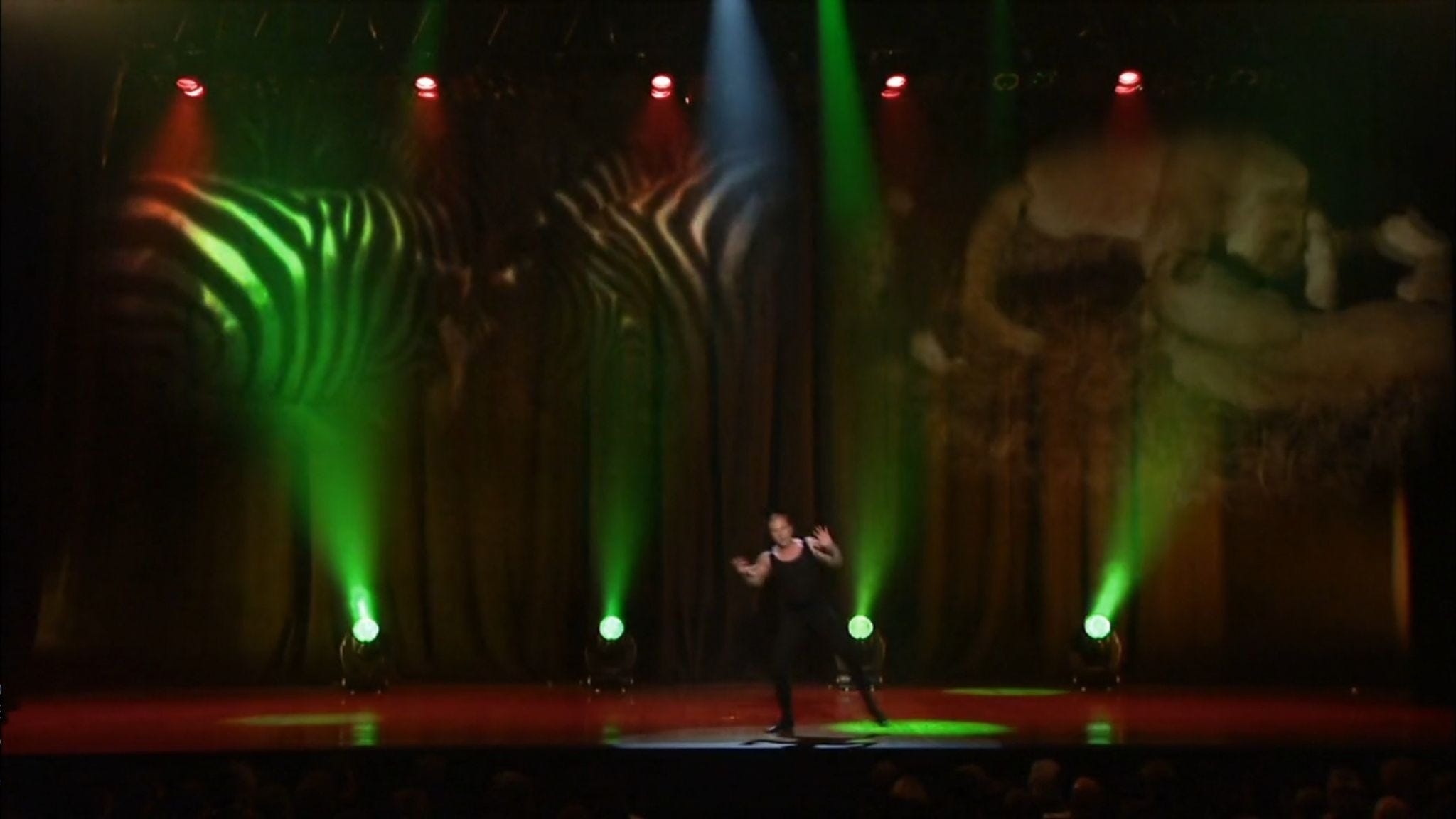
08.56: After implying that the Earth has been taken over by robot cats, Gelman comes in as God, declaring that the “machines shall be destroyed” to roaring applause. We are slightly more than halfway through the one-man show and he is doing Deus Ex Machina. What other proclamations does the God cat have to make? None. As God, Gelman repeats the line: “The Machines shall be destroyed. Right now.” Repeatedly. He then says, as the crowd applauds. “Yay! God has destroyed the robot cats!”
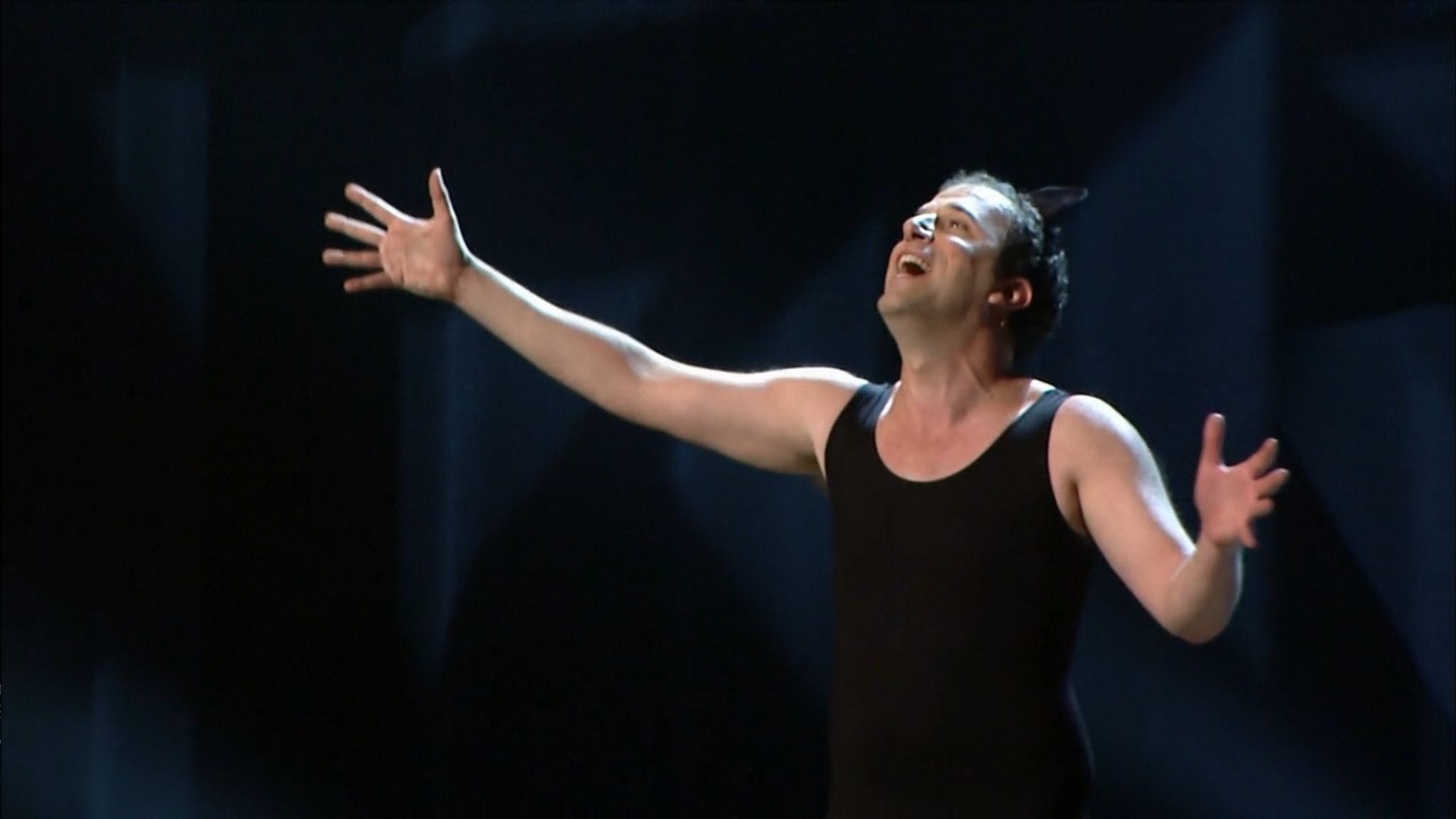
10.23: After pretending to be a group of military cats, who become nazi cats in a matter of seconds, Gelman speaks out against war, saying: “War does not enthrall me; it makes what have, what we had” and other trite statements against war. As all art does. This reminds me again of the famous Vonnegut quote about the Vietnam protests. Yes. Every artist has spoken out against war. What has come of it?
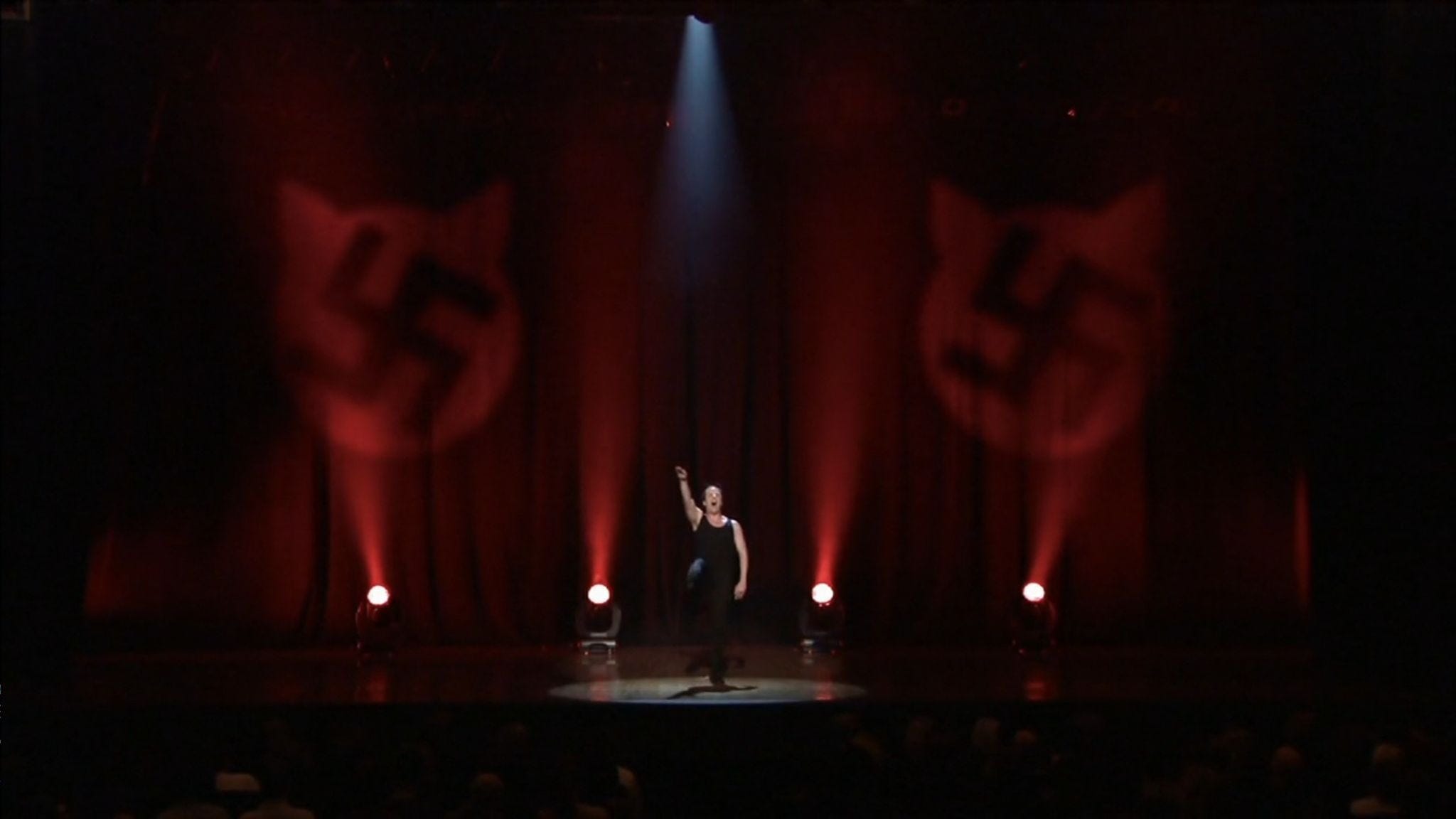
11.01: As it turns out: Gelman was pretending to be God again when he spoke out against war. A second instance of Deus Ex Machina is now occurring, in the span of roughly two minutes, after which Gelman immediately says: “Ohoo! God has ended all wars and there is peace!” to applause…then the devil shows up.
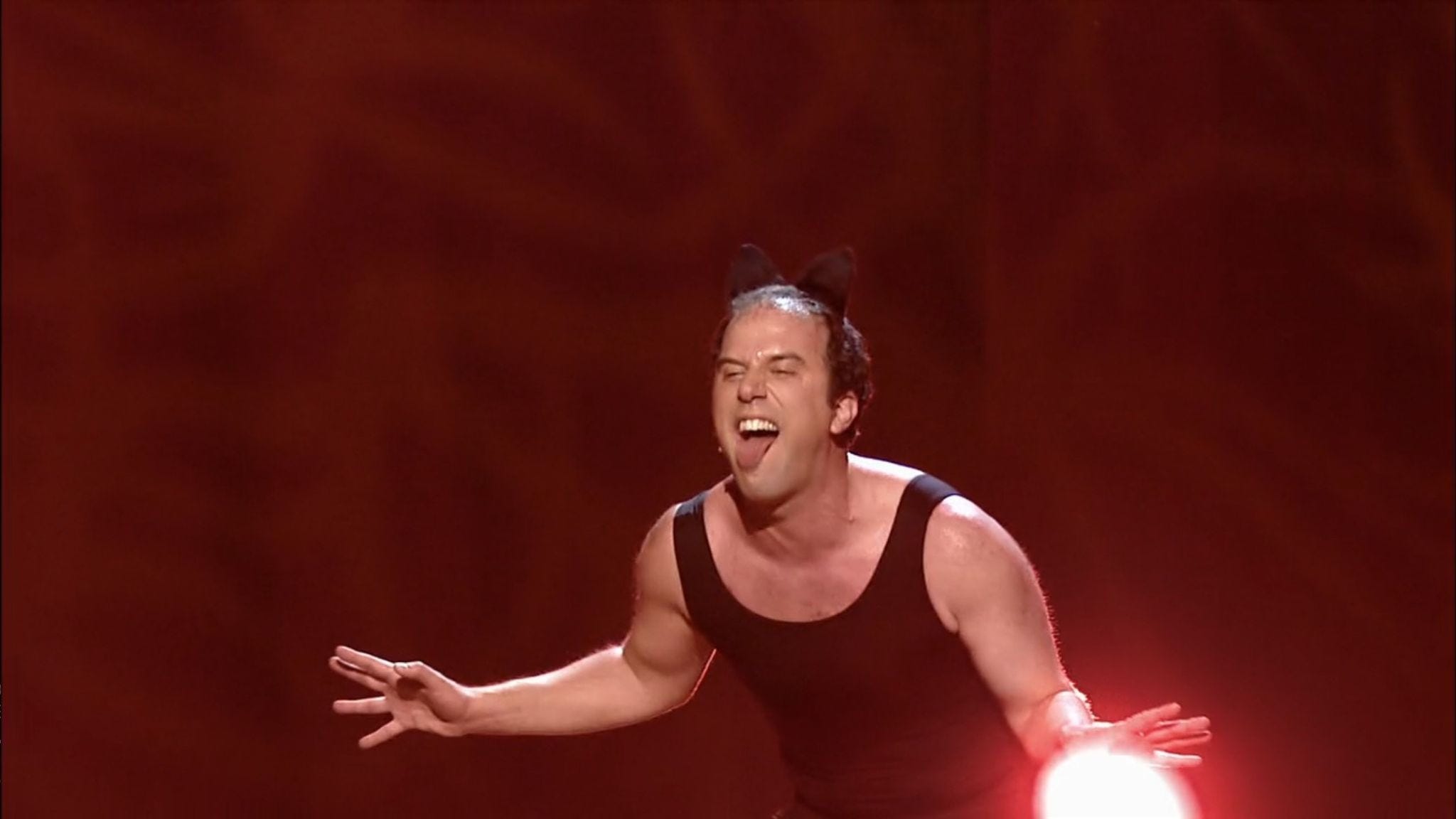
12.21: Jesus cat appears, and casts the devil cat down into hell. Which means that, yes, there is another instance of Deus Ex Machina. This is the third, in less than three minutes.
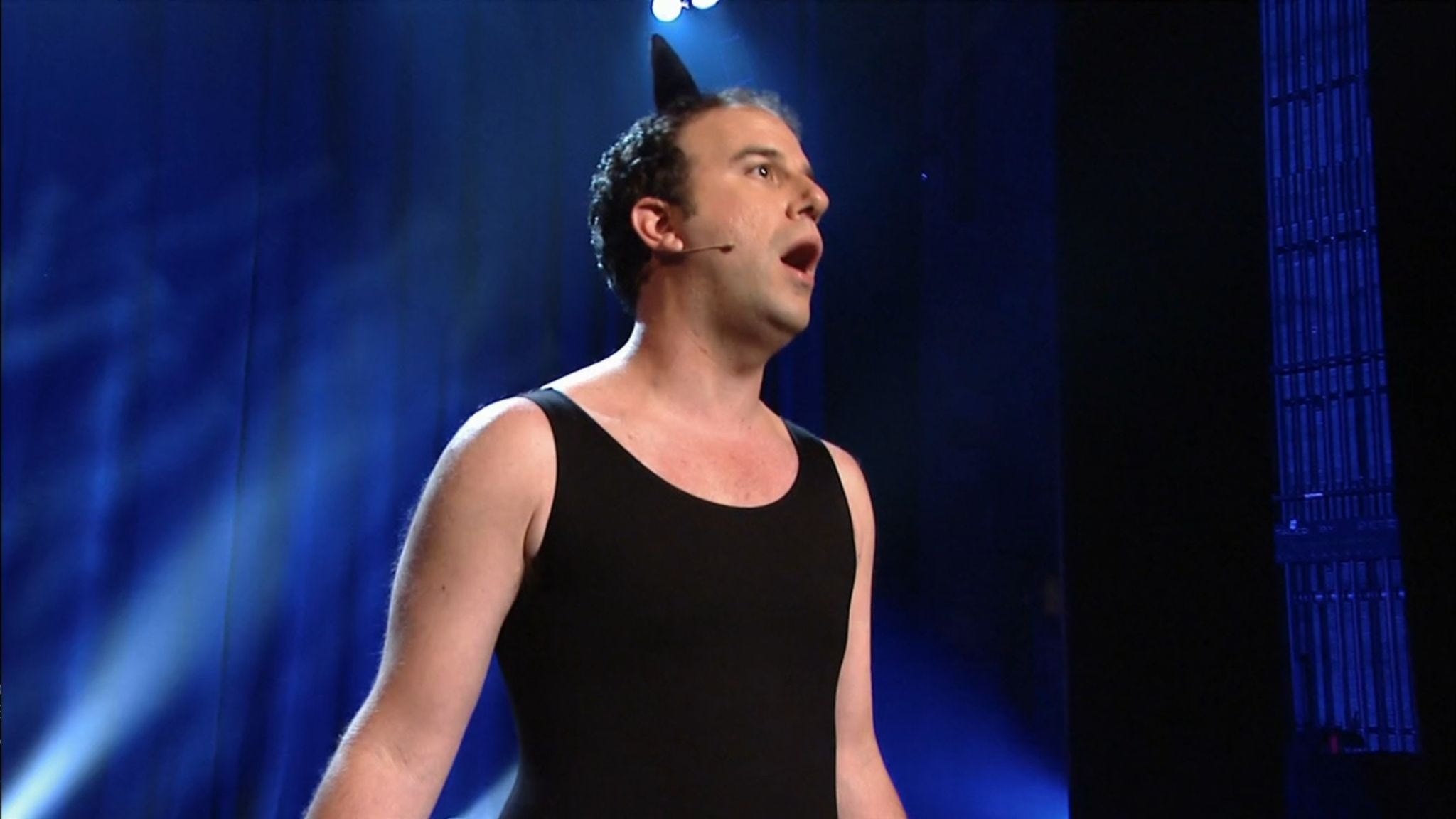
13.06: Gelman is now suspended in the air. He begins to tell the audience to put on the sunglasses they’ve received, and literally everyone participates. He begins speaking in tongues, slobbering before them. Alternating between this and repeating phrases like “I am you, you are me, we are we!” which are simultaneously trite, meaningless, and heavy with false profundity.
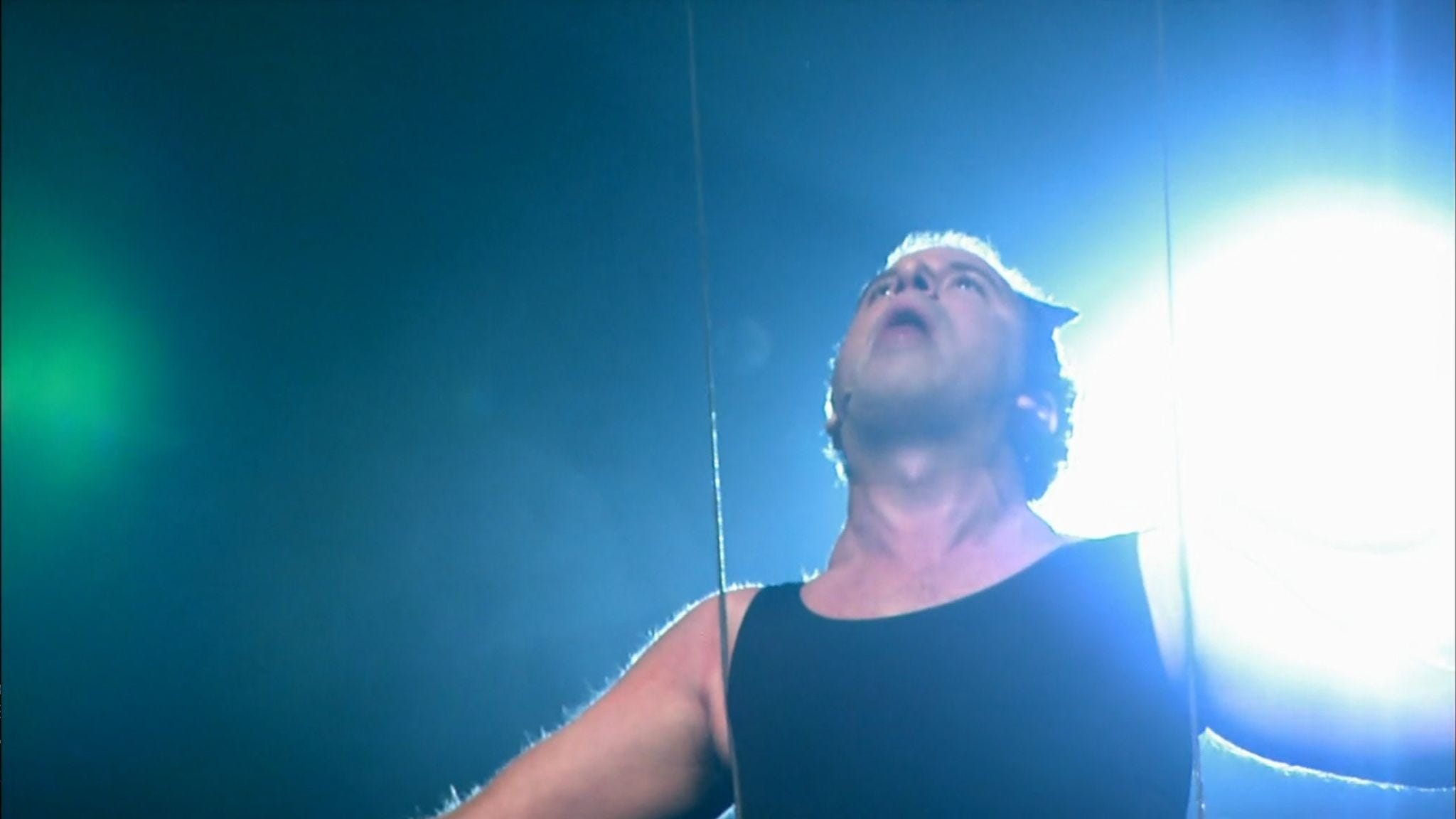
15:18: The audience is told: “I bet you were all wondering who the one thousandth cat is. Well, the one thousandth cat…is you.” After this, Gelman closes out the performance by singing the main theme of “1,000 Cats, one thousand stories, nine thousand lives” serenely. Moved, grinning, crying, cheering, the audience gives a standing ovation as he nods to them, curtain closes.
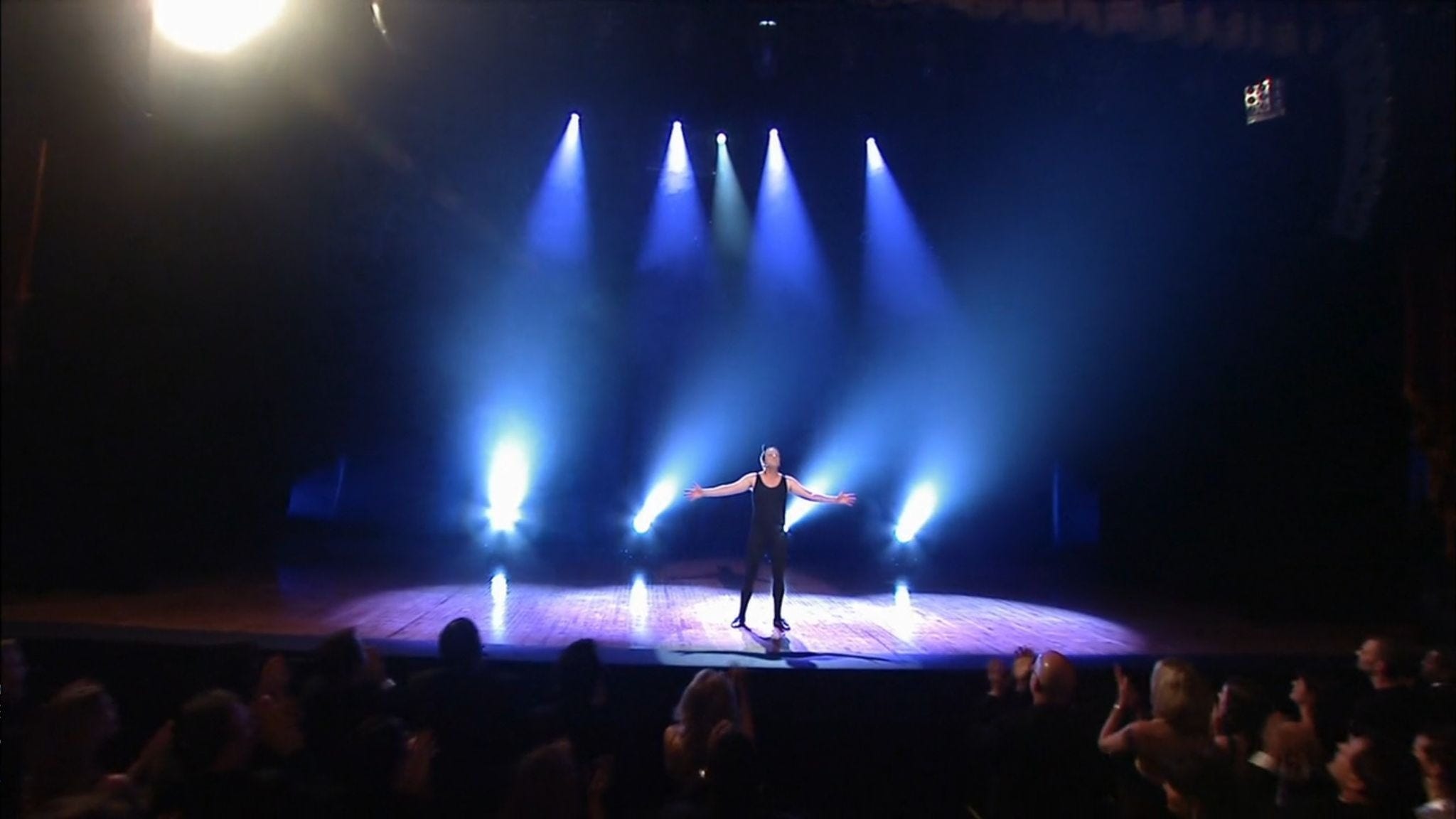
Just like when I binged Portlandia, I repeatedly watch 1,000 Cats feeling like something about the world that it represents is irrevocably gone. Once, the wealthy and powerful revered things like this, so much so that they’d give them accolades and donate to them when they weren’t even good. But we could forgive the success of bad art, because hey: it was still human, right? In all its messy and flawed ambition, we could still trust that a human soul was pushing itself to produce the work.
No longer.
And so I choose the word “apocalypse” deliberately.
It’s a word that carries weight beyond just destruction. In particular, a connotative rider seems to be the catharsis of watching societal “chaff” burned away. Once we’re forced to reckon with our excesses, and dispatch with them, what will remain?
Around the same era that 1,000 Cats was released, from roughly 2000-2015, there was a kind of thirst for the apocalypse. Zombie media that imagined the world overrun was all the rage. Apocalypse of all kinds became one of the most prominent video game settings. Some of the best post-apocalyptic novels ever written came out during this era, along with media mainstays like The Walking Dead and The Last of Us.
Don’t deny that there was a kind of dark escapism to it. A desire for it to actually happen. Listen to the lyrics of Muse’s Apocalypse Please, from their 2003 album Absolution.
Muse - Apocalypse Please (Lyrics)
“And it’s time we saw a miracle
Come on it’s time for something biblical
To pull us through
And pull us through”
Even going back to this “biblical” way of conceptualizing the apocalypse, note the title of the Bible’s final book: Revelations. Throughout, we are meant not only to reflect on the destruction itself, but what is revealed in the destruction’s wake.
So if this is the creative-intellectual apocalypse, what is being revealed?
Well, mostly, it seems, we’re forced to reckon with the reality that some of this pretentious human-made art has always been bullshit. Maybe most of it.
I’m not defending AI. It’s the opposite, actually. I believe, strongly, that the value of art is in its human ideas being communicated, and the extent to which AI is involved compromises those human ideas.
And so: If a machine can so easily imitate your weird, uniquely human art, and get across your weird uniquely human message just as effectively, was it really so worth communicating?
Look above at “Back and Forth.” Like it or not, this story reveals something: post-colonial writing is now so widespread that a machine trained on human ideas can imitate it with a metaphor novel enough that it appeals to a panel of well-read judges. It can do this even if some of the less significant, textual metaphors make no sense. It reveals that what we think of as ‘good writing’ has a cadence, that cadence is imitable, and might be even more important to our estimation of quality than whether there is a human message being sent and received.
It reveals, above all else, that we are not as good receptors for those human messages as we think we are. That we can hype ourselves into believing that art is profound when it is really just an imitation of profundity. It is the final, actual revelation that purges the delusion of the fictional audience of 1,000 Cats, and all real audiences like them. It shows how, all along, they really were clapping for bullshit.
But, then…what is bullshit, and what isn’t?
This is where I remind you that an apocalypse, in all its revelations, is still a bad thing. 1,000 Cats is a demonstration of how absurd avant-garde art can be, but not all of it is absurd. Say, for the sake of argument, a human had written the exact same text as “The Serpent in the Grove.” And one could. Would it have meaning, then? Why? All the words, the actual meaning-making-mechanics, would be the same.
This haunts me. It’s a tension that I cannot resolve, because art is not just art, and due to our terrible collective miseducation, many of us fail to understand how important art even is. So bear with me: Art is the purest distillation we have of the human mind trying to make its mark upon the world, for no other reason than it desires to.
If we believe: Art never had any innate human meaning, it’s about whether or not it functions. We must, by necessity, also believe: All human processes can be understood as a matter of function or dysfunction, like anything else. This means: People are machines. Which begs the question: Why do you, as a human, have any more value than the AI agent you’ve asked to do these intellectual tasks for you?
If you believe in any inherent value of the human mind or soul, AI art that appears profound demands that you reforge it on a different basis, or abandon it entirely.
And I think a lot of us know the truth: AI is really just one more straw on a camel’s already-broken back. There are many elements of modernity that compel us not to care about other people, let alone consider them sacred, and there are many people we encounter in our day-to-day lives who lost that sense of value long before LLMs existed. In particular: Do you think that Donald Trump, JD Vance, or Elon Musk believe that a human being has any inherent worth? Do Mark Zuckerberg or Jeff Bezos? It probably isn’t something they even think about.
In 2026, the most powerful people on earth are those who do not have any care or regard for the human race. And all of these people who I mentioned above are pushing AI, pushing it ideally with as few regulations as possible. Motivated entirely by a selfishness so profound it appears at least semi-solipsistic: Fuck humanity as a whole. Fuck the entire world. This will benefit me.
Or, art like 1,000 Cats. And the world we live in, now, is the world in which such pretentious works of art have been defeated. This is what that world looks like. And the people in power are the kind of people who “defeat” them.
There is a kind of rage that, in the years leading up to our current moment, kept being expressed at people who majored in the arts in school. Or at books or movies that were strange and difficult to understand. Or at anyone who asked to look at an important issue in a nuanced way, instead of immediately taking a side.
That, the above impulse, is the product of a culture barreling toward fascism. A culture that already thinks in a fascist way, and that only has a few steps to go before it puts fascism into political actuation. Fascists appeal to the masses through a warped version of anti-elitism. They reframe the elite as a cultural institution rather than a materialistic one.
In this view, the educated pretentious artist who thinks they’re better than you (Or: Brett Gelman) is the elite, whereas actual trillionaire Elon Musk is a practical-minded self-made genius, helping you fight these elitists. Once this rebranding is complete, and the “elite” are creatives, intellectuals, activists, and the eccentric of all stripes, fascists are able to appeal to the lower classes through a shared hatred of the ‘decadence’ that these cultural ‘elites’ produce.
If you’ve been reading up to this point, and reading between the lines, I hope you already understand why AI art has become the aesthetic of fascism.
But in case you need further elaboration: GenAI exploits artists, and fascists either have no problem with exploitation, or actively enjoy the power of it. GenAI art is simple, standard, bland and easy to understand, and that’s exactly how fascists like it. They proudly do not sport complex or sophisticated views, as such things are the spoils of a decadent society. Everything is black and white, and the elitists the fascists hate are evil.
Going back to the term “apocalypse.” The fascination and escapism of it was always fundamentally conservative. “When it happens” so many books and movies preached in their subtext, “the weak chaff of humanity will finally die off. Only strong men will survive” (Gender emphasis intentional.) This doesn’t mean that there’s no such thing as woke apocalypse fiction, of course! And a lot of media, woke or otherwise, mourns the apocalypse and considers it a tragedy. But there is a certain tone present in elements of the overall fanbase. Conservative yearning. It’s not hard to find.
And in at least one way, with the LLM onslaught tearing down our conceptualizations of what is sacred about the art we find so profound, this pro-apocalypse lobby is finally getting what it wants.
It’s 2026 and I am again watching 1,000 Cats.
As I watch 1,000 Cats, I reflect that I laughed at it alongside people who weren’t laughing good-naturedly. Who hoped for a future of: One day, we’ll wake up, and see that shit like this isn’t important. We’ll force losers like this to get a real job.
You couldn’t tell them that the closest analogue we have to a ‘post-apocalyptic’ society is a precivilized one, of course, and that indigenous people produced incredible amounts of art, musical performances that the entire tribe would be involved in, that blew away the anthropologists who went to research them.
Because I’d imagine that anthropology, the study of the human race, would also be ruled as ‘decadent,’ and therefore anthropologists should not be listened to. After all, what kind of job can you expect to get with it? How much are you spending on that degree?
I think, after almost a year of writing on this Substack, I’m finally getting to why I chose the title that I chose, because it made sense to me in a distant way, now becoming increasingly more concrete. It ties into why I’m doing this in the first place, and if you’ll indulge me, please, I’ll go just slightly more mask-off. Authentic. Human.
Writing this is my act of resistance.
On Substack, right now, AI-written accounts are accumulating thousands of subscribers. Do me (and yourself) a favor, and run your favorite substack creator’s posts through a pangram checker. Please. This new crisis, though, is just one other on top of algorithmic curation that subtly stops people from seeing posts questioning people in power. I will be very surprised if this 1,000 Cats post gets over 1,000 views, no matter how much I share it.
And yet, nonetheless, it exists.
We are absolutely surrounded on all sides by AI slop algorithmically catered to us and designed to break down everything meaningful that humanity produces, then repackage it as something meaningless and inhuman, and to cause us to question human meaning as a whole. I said it above, but it bears repeating: The creative-intellectual apocalypse is not just apocalyptic for creatives, or for intellectuals. It is a resounding shudder across any institution or principle that claims that people matter.
In this current environment, the continued production of this blog. The things that I am writing right now are fundamentally absurd. From a materialistic perspective I can’t imagine myself gaining anything from this, I can’t imagine a significant enough population in the AI-awash substack community finding this worthwhile. I have gone in strange, perhaps errant directions with this journey. I started it weeks ago. Kept writing, changed my conclusion. Came back. Couldn’t find a good thesis (I still don’t know if I have one) and still hammered this out, and now this is what it looks like.
This post is not optimized. I did not look at which topics were currently trending. I did not consult a marketing firm or a PR guru. I did not even run it through grammarly to check my spelling and grammar. It meanders and goes in a dozen different directions and maybe I could edit it down to something less messy.
And yet it exists, in this form. It was an authentically bad idea to put it up. A human one.
I think that, in a post-creative/intellectual-apocalypse world, this must be the first thing we reconsider: What sentiments we put into our creations. What messages are too ‘mask-off,’ too personal? Too irrelevant to a mass-audience? Perhaps even self-indulgent? Those are the things that AI will never do, because they are the things that require a self to indulge, and also the things that supposed messaging experts warn against. AI will eventually optimize away its nonsensical metaphors and perhaps even its hallucinations. But for the reasons I’ve given, it will never write anything that I put in this conclusion, because in trending toward optimization, it will inevitably optimize away things like this.
I want to thread one last needle to close, because one of my comparisons requires nuance, and perhaps it will be a good place to end. 1,000 Cats is not really similar to these AI-written stories, is it? AI can write “The Serpent in the Grove” and it can write “Back and Forth.” And the judges can call them ‘moving.’ But in being moving they are also understated, dry, optimized to be moving to these judges. 1,000 Cats is big, loud, absurd, messy and ugly and funny and breaking commonly-held storytelling rules when it barely even has a story. It does this all while being a parody. Which is a whole other layer that AI would have to crack, in order to imitate it.
I’ve said this before: There is some art that AI will only properly copy if it achieves some level of sentience. And if that happens, the creative-intellectual apocalypse will have to move aside. We might be in for a much bigger one.
No posts
Comments
Nothing yet. Say the first thing.
Sign in to join the conversation.