
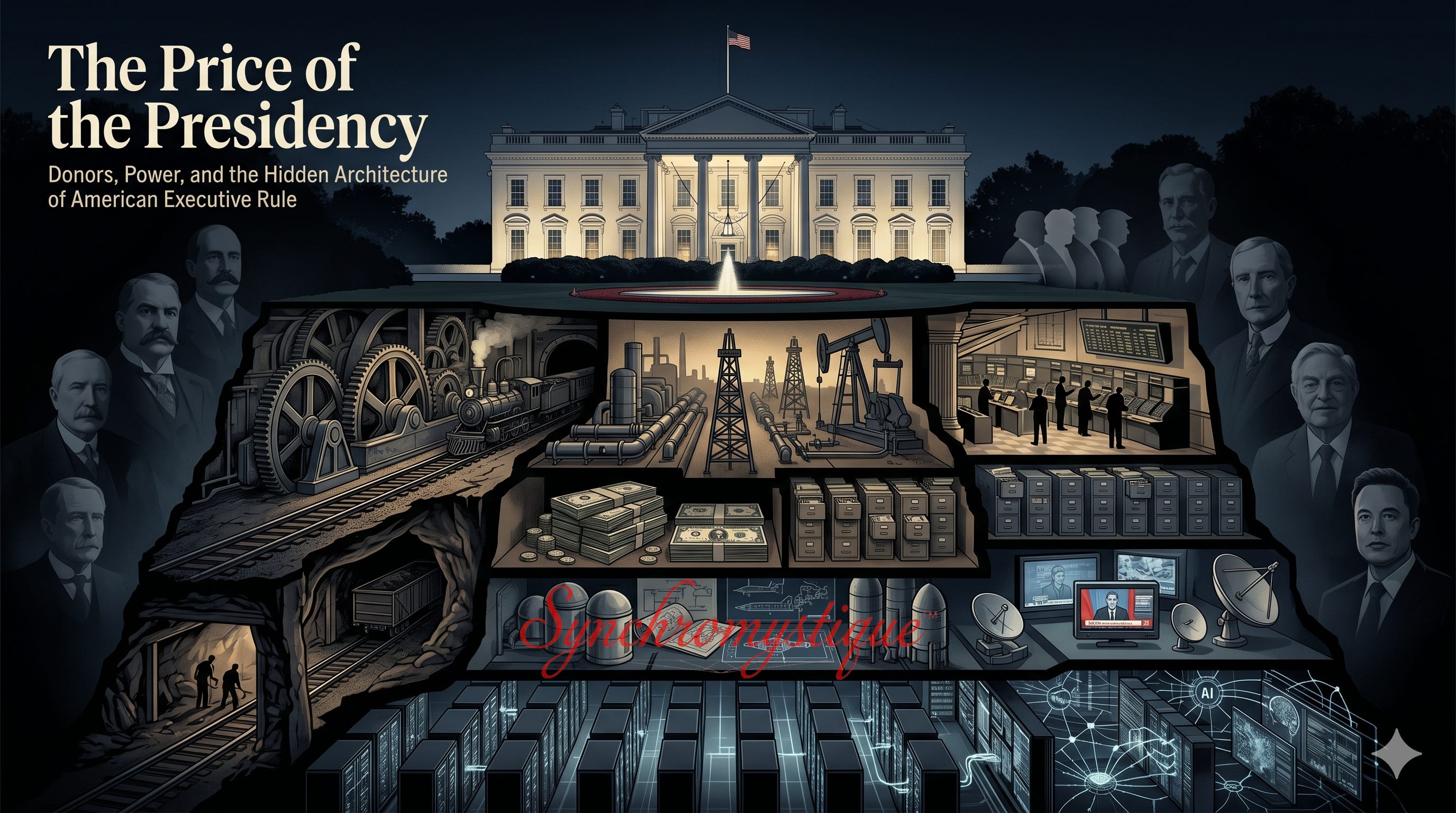
We know the presidents. Their names dominate our “news” reports and history books. Fewer people ask who paid for them — or what their payments ultimately purchased.
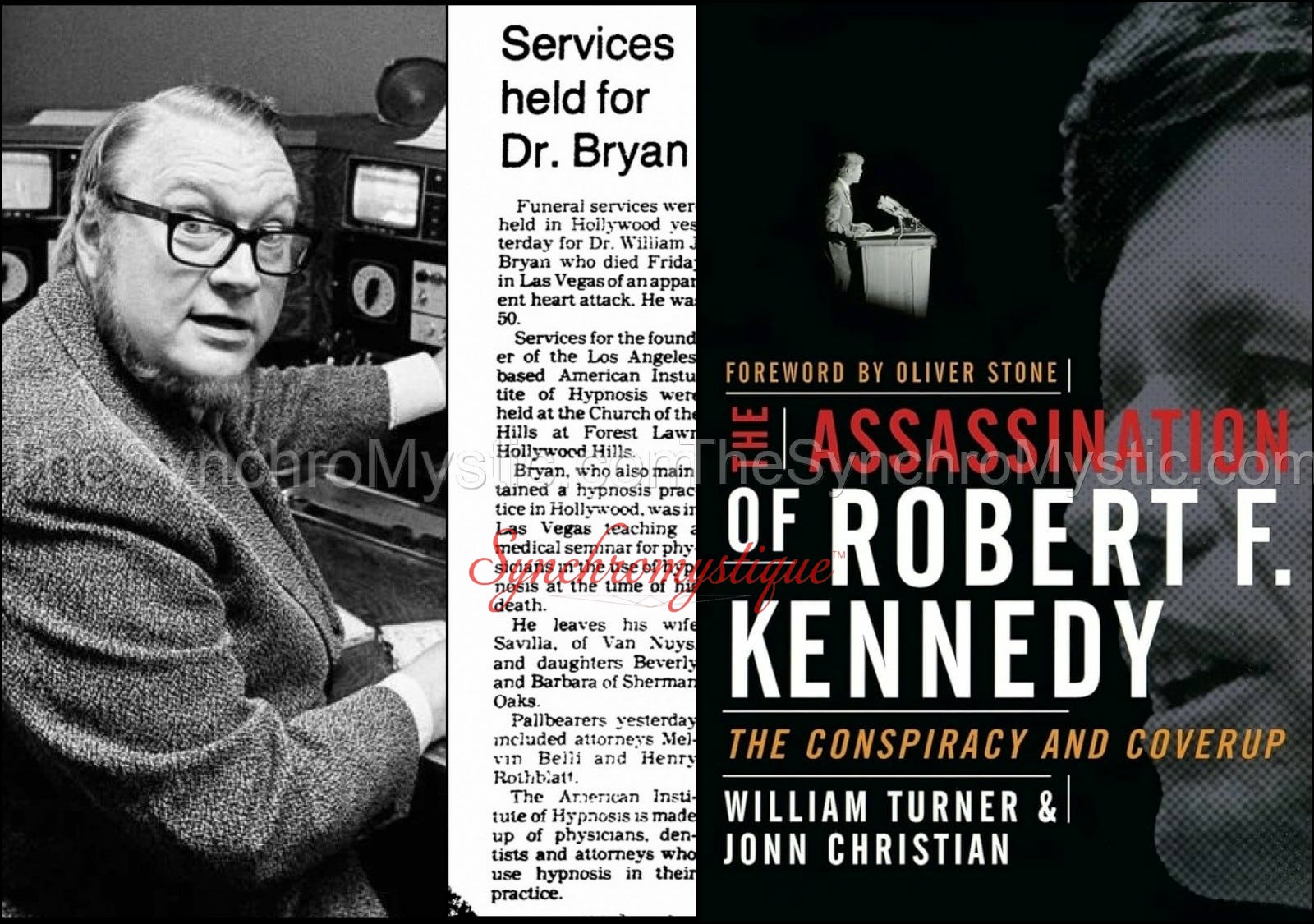
There is a line — perhaps apocryphal, but truer than most documented quotations — attributed to Mark Hanna, the industrialist who engineered William McKinley’s political ascent in 1896. Asked what was required to win a national campaign, Hanna replied: “Two things. The first is money. I forget what the second one is.”
Whether or not he said it, his career attested to it. And in so doing, Hanna introduced a cancer into the body politic — one that grew into a cluster of tumors… and then metastasized.
In this presentation, we’ll trace this infection — not simply as a catalog of donors (that’s been done before), but as a structural inquiry into how systematized financial patronage can create institutional control mechanisms that alter, envelope, and ultimately generate executive power.
The deeper question we’re angling towards is not just who funds presidents? — but whether presidents ultimately govern, or are governed by, the systems that bankroll them.
Of course, there are limits to this inquiry. How far back can we push things? Could we, for instance, trace presidential donors to George Washington? Well…
These are interesting questions. By way of a possible answer, one thinks immediately of the English-born, Pennsylvanian merchant and politician Robert Morris, Jr. who has been termed the “Financier of the Revolution.” But, even though we can find the names of people — others were Polish-Lithuanian-born Jewish-American merchant Haym Salomon and Colonial-Virginian-born merchant Richard Conway — who gave money to causes that they believed in, it would be anachronistic to project modern electoral dynamics back to that early period of British-American history — not least because Washington twice “ran” for president essentially unopposed.
Let’s test your history knowledge. Who was the one other president — besides Washington — to gain office uncontested? Reply in the comments. And… no “Googling.”
Another reason we should take some care here, is that, while it is true that early American politics was influenced by agricultural and mercantile interests — planters, merchants, regional machines — it lacked something crucial: systematic financial documentation.
This even applies to Andrew Jackson’s 1828 campaign, which is often called the first “modern” popular campaign (because he democratized participation, expanded popular voting, and included elements of grassroots organizing and campaigning aimed at the “common man.” But even with Jackson we nonetheless encounter organization without any real “transparency” (as we’d call it today).
We can identify the outlines of factions; we cannot reliably enumerate individual financiers — at least, not the way we’d expect to find them written up in a report from the Federal Election Commission (which wasn’t created until 1974) or on the website OpenSecrets.org (which came into being in 2021, though its roots evidently extend back to the early 1980s by way of a group called the Center for Responsive Politics). Or, if you like, we could say (borrowing a phrase from Judge Andrew Napolitano) that while the “donor class” existed, the paper trail did not.
But then we get to the late 19th century. Firstly, industrial capitalism produced immense fortunes (emblematic examples would be Andrew Carnegie, J. P. Morgan, John D. Rockefeller, Cornelius Vanderbilt, etc.). Along with these came the felt need (by possessors) to “protect themselves” (and their oftentimes ill-gotten gains) politically. At this point, money becomes more centralized, decisive, and (to some extent) traceable.
And everything arguably changes with McKinley.
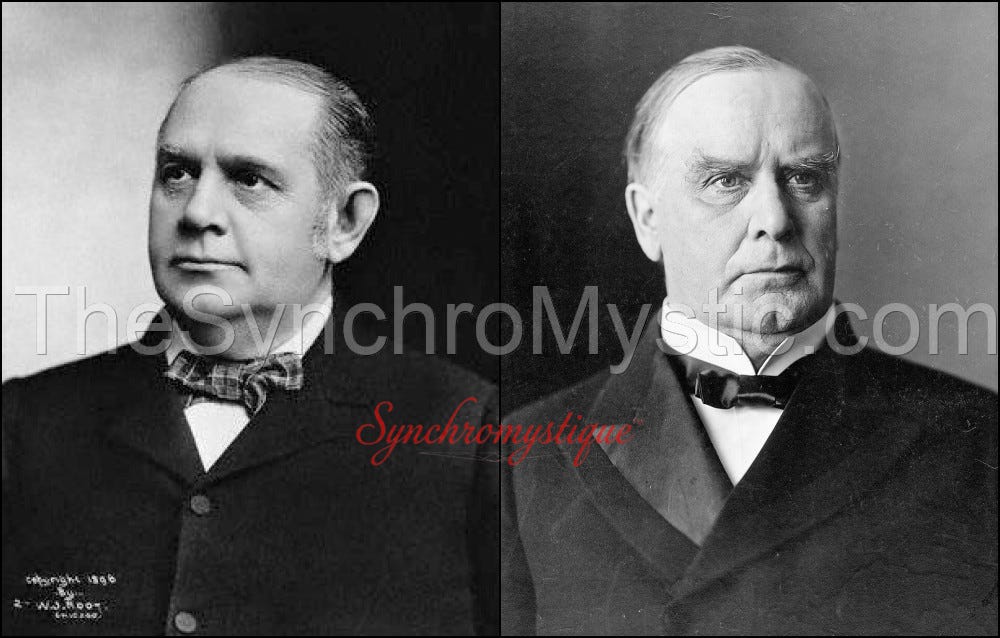
Behind William McKinley stands the aforementioned Mark Hanna. But, behind Hanna, stands a familiar syndicate some of the major “Robber Barons” mentioned earlier: John D. Rockefeller, J. P. Morgan, Andrew Carnegie — the financial-industrial nervous system of Gilded Age America.
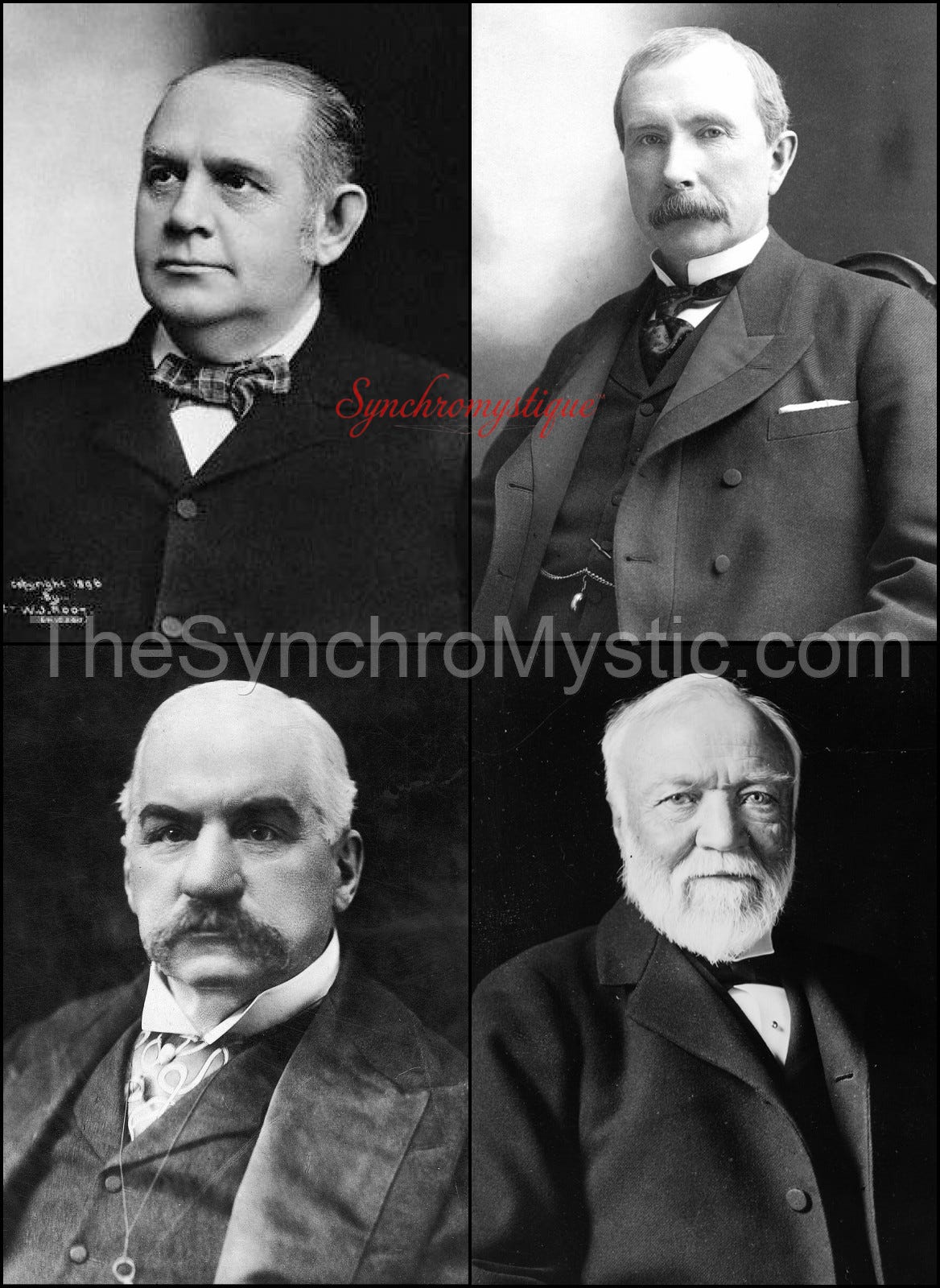
Hanna did not merely raise funds. He created a system for extracting funds.
Railroads, banks, steel firms, insurers — each dispensed money in proportion to its (perceived) stake in the electoral outcome. The result? The first presidential campaign that was funded at an industrial scale.
This was the moment when the presidency became — unmistakably — a capital-intensive enterprise.
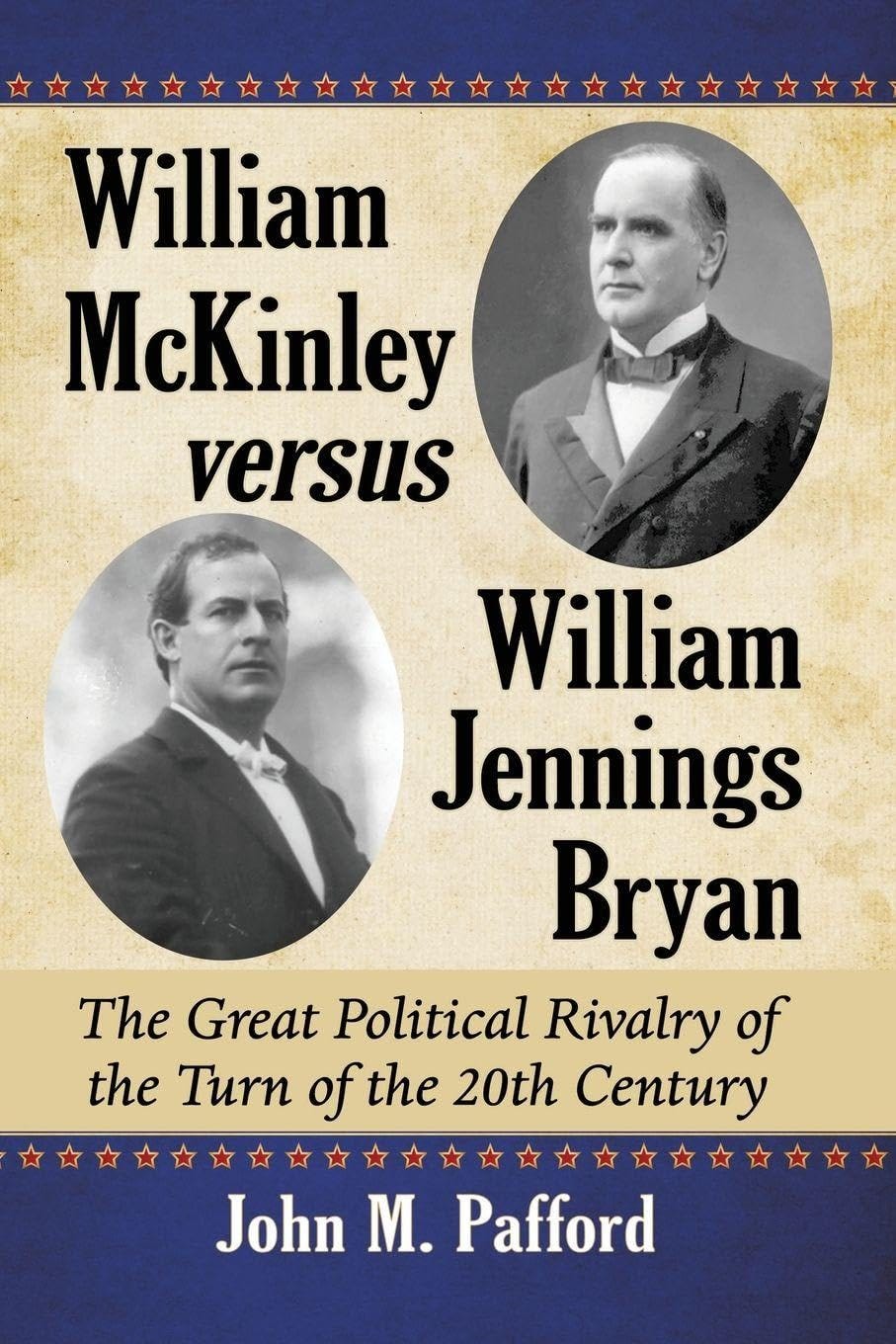
McKinley’s opponent, William Jennings Bryan, barnstormed the country, delivering hundreds of speeches. But, in the end, his captivating rhetorical energy couldn’t match the kingmaking clout of concentrated capital.
Money did not just assist McKinley in his victory. To hear the History Channel tell it: It basically bought the presidency.
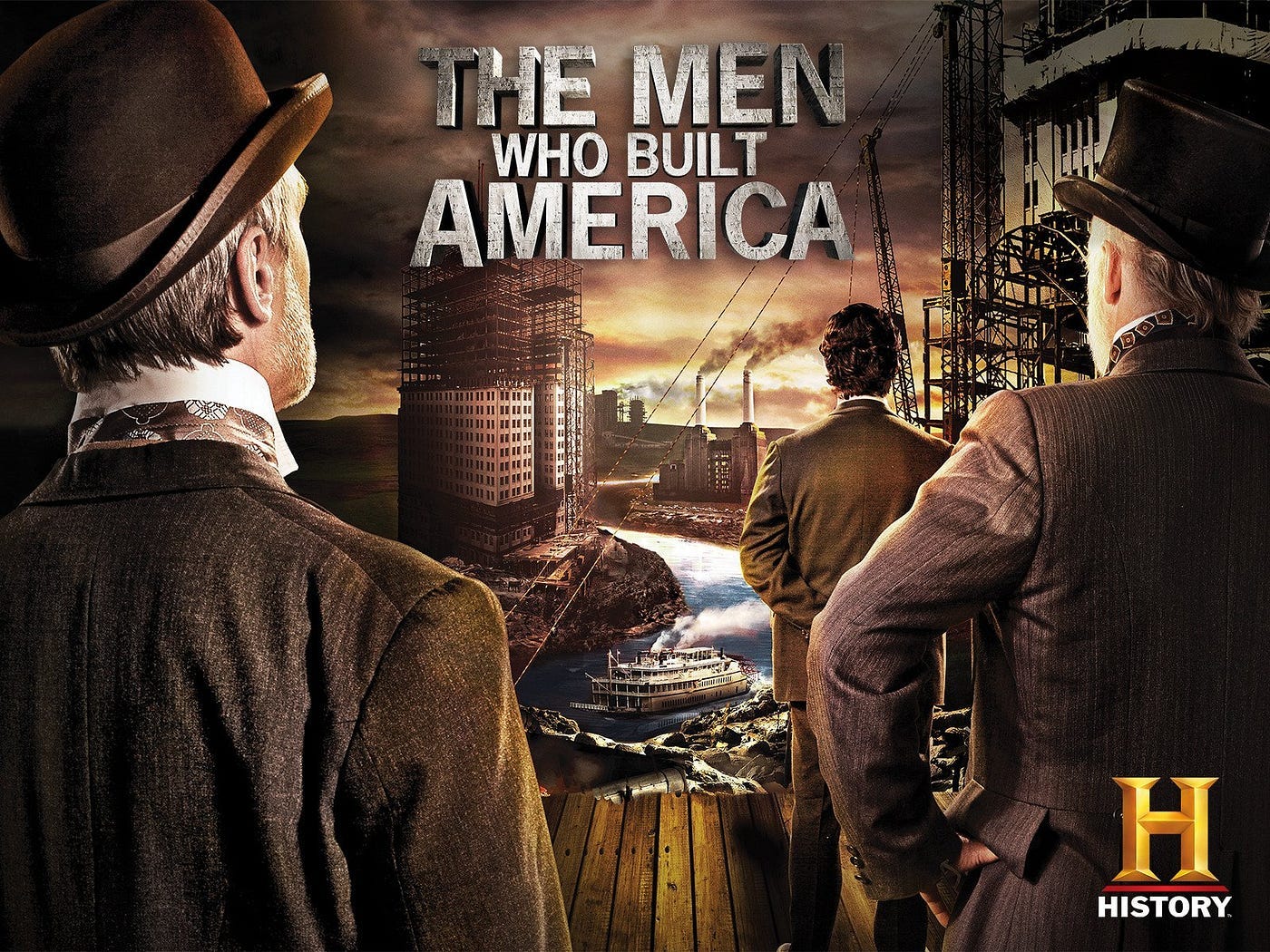
Arguably, it wouldn’t be the last time. The Hanna-McKinley duo sort of (re-)structured the conditions under which victory became possible. In today’s lingo: They changed the game.
From McKinley forward, the donor-presidency relationship has oscillated between three — call them — “modes”:
Alignment — donors and presidents share objectives (e.g., Ronald Reagan arguably represented a compelling modern example of a president who was simpatico with his major donors and “fusionist” ideological allies);
Tension — presidents partially resist their backers (such as when, e.g., Herbert Hoover gradually drifted toward interventionism — both in terms of business bailouts and public works projects like the Hoover Dam and the Emergency Relief and Construction Act — which latter his Republican and corporate backers opposed as a betrayal of limited government);
Transaction — support is exchanged for access, influence, or policy (Donald Trump is perhaps the purest example of this in the history of American politics — which, let’s face it, has a long history of transactionalism; but others like Bill Clinton, Richard Nixon, and the pair of Warren G. Harding and Calvin Coolidge present interesting case studies also)
Harding’s relationship with Andrew Mellon is an early, almost laboratory‑pure specimen of transactionalism.
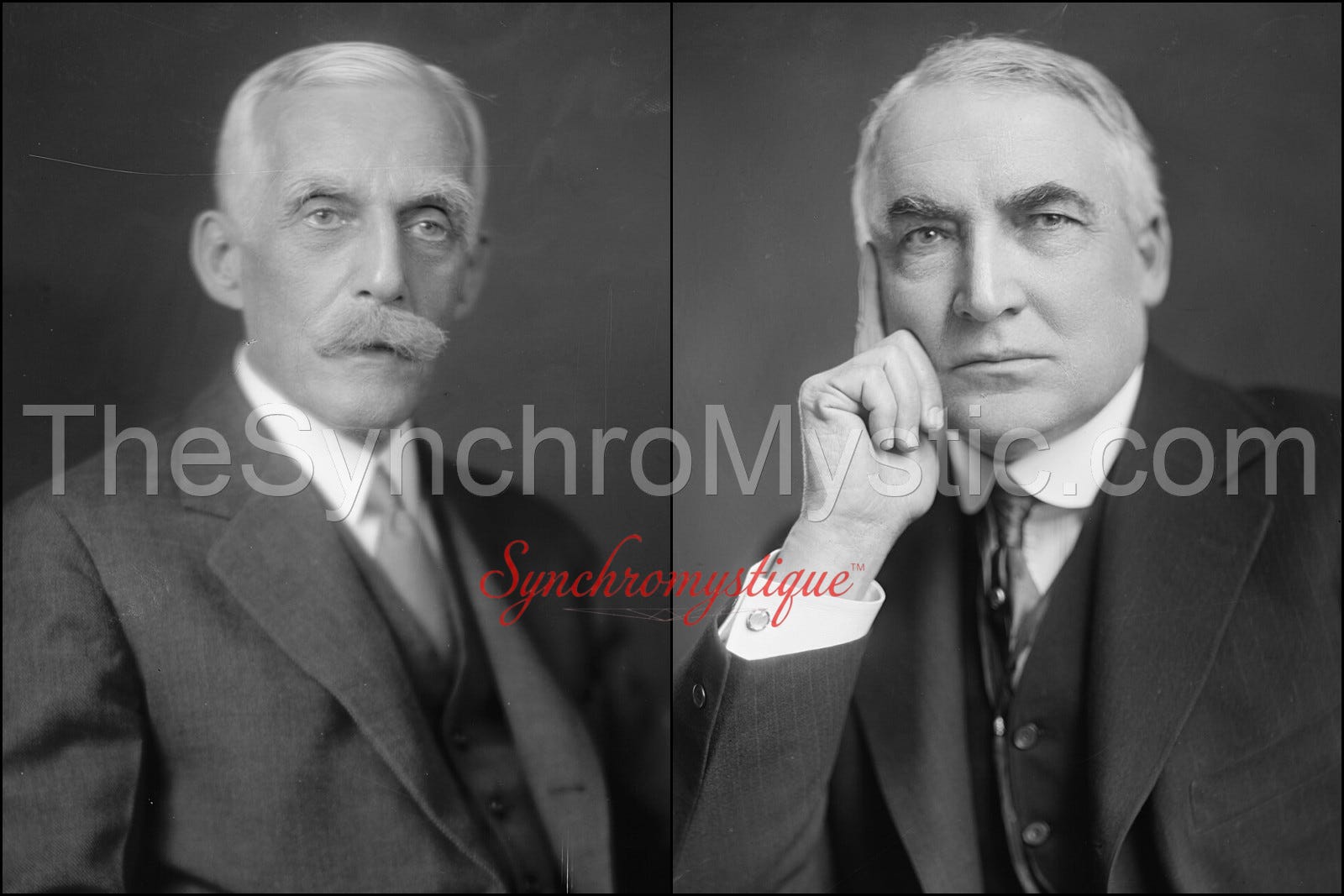
Mellon erased the GOP’s 1920 campaign deficit, and Harding repaid him with the Treasury — an eleven‑year perch from which Mellon slashed tax rates, protected his own industrial interests, and effectively turned fiscal policy into a return on investment
The operative word is “oscillate.” And this occurred not only among presidencies, but inside or within each one as well.
Consider Theodore Roosevelt. The so-called “trust-buster” was funded, paradoxically, by trusts. Roosevelt’s rise to the presidency was heavily financed by the very corporate trusts — especially Standard Oil — that he later became so famous for fighting, with Mark Hanna’s fundraising machine channeling large-scale corporate money into the McKinley-Roosevelt ticket.
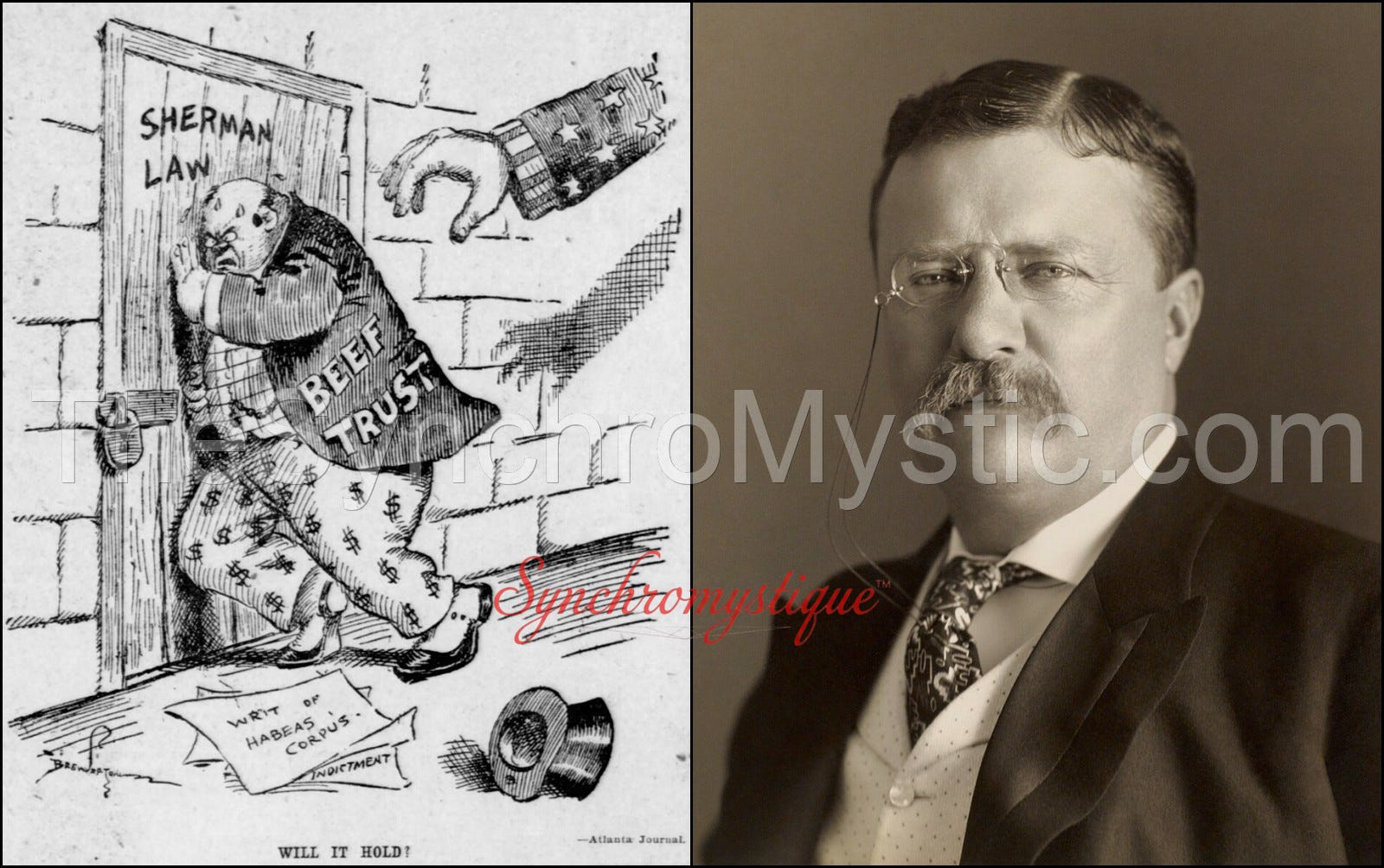
Roosevelt allegedly “turn” against Wall Street — for example, when he initiated a lawsuit against J. P. Morgan and James J. Hill’s Northern Securities Company in February 1902.1 In a striking irony, the system that elevated him to power ultimately backfired. Teddy Roosevelt first benefited from trust money, then “turned against” it, a reversal that culminated — somewhat dramatically — in the eventual breakup of Standard Oil itself.
And yet… In the acclaimed History Channel miniseries “The Men Who Built America,” the now-late Senator Jay Rockefeller (John D. Rockefeller’s great-grandson) explicitly details how the forced dissolution of Standard Oil in 1911 turned out to be an astronomical financial windfall for his family. The historical reality is that the Progressive Era’s ultimate “punishment” for the monopoly actually unlocked unprecedented wealth for its founder and his heirs.
We’ll let you ponder the question of whether that was a “whoopsie,” or if it was a probable case of a policy whose real intent differed from the way it was advertised.
Or there’s Woodrow Wilson, who — through his anti-monopolistic “New Freedom” platform — attempted to limit corporate funding, but governed within a system increasingly shaped by it.
We won’t mention how Wilson narrowly won re‑election in 1916 on the slogan “He kept us out of war,” positioning himself as the candidate of peace. Yet within weeks of his second inauguration, he reversed course — asking Congress to declare war and recasting intervention as a moral crusade to “make the world safe for democracy.” (Oops; I guess we did mention it.)
By the 1920s — under the Republican triumvirate of Warren G. Harding, Calvin Coolidge, and Herbert Hoover — the donor-president alignment became fully reciprocal and nearly seamless in a quid-pro-quo sense.
Business financed government; government protected business.
And when that alignment became too explicit, scandal emerged, revealing what is usually concealed — as with “Teapot Dome” under Warren G. Harding, which we touched on in one of our past videos. I think it was “Presidents in Secret Societies.”
And then came Franklin Delano Roosevelt, or “F.D.R.”
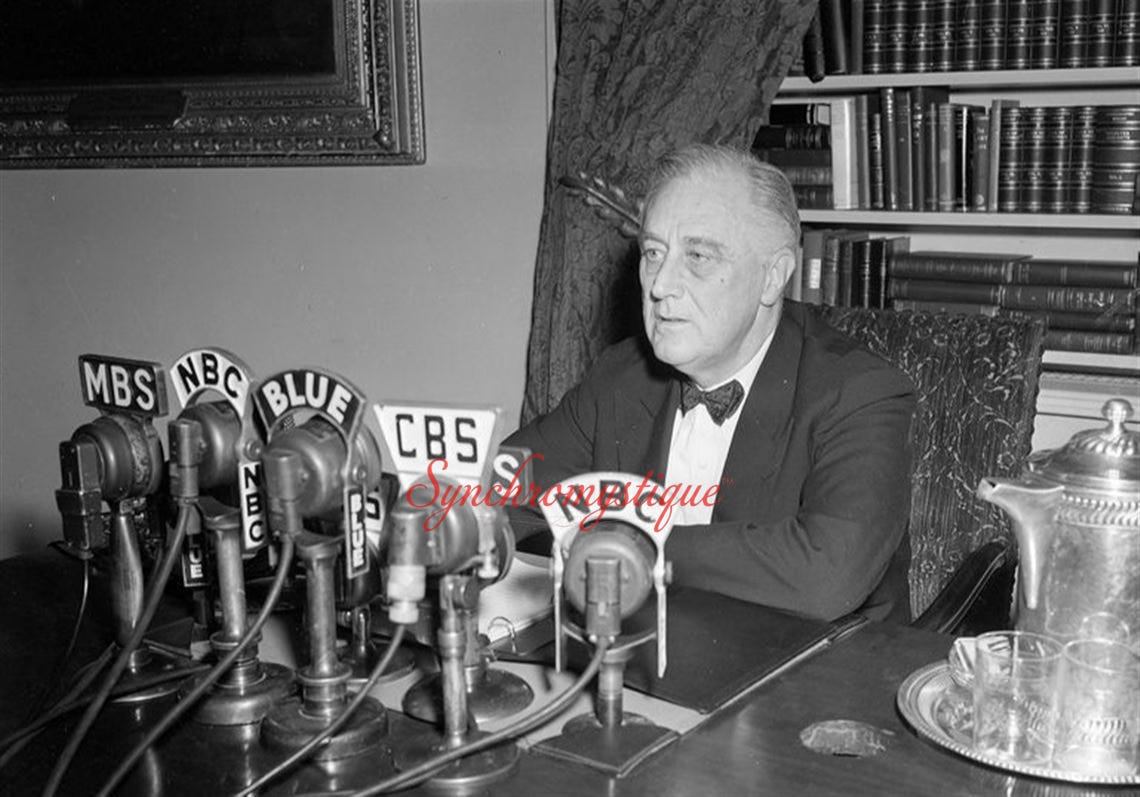
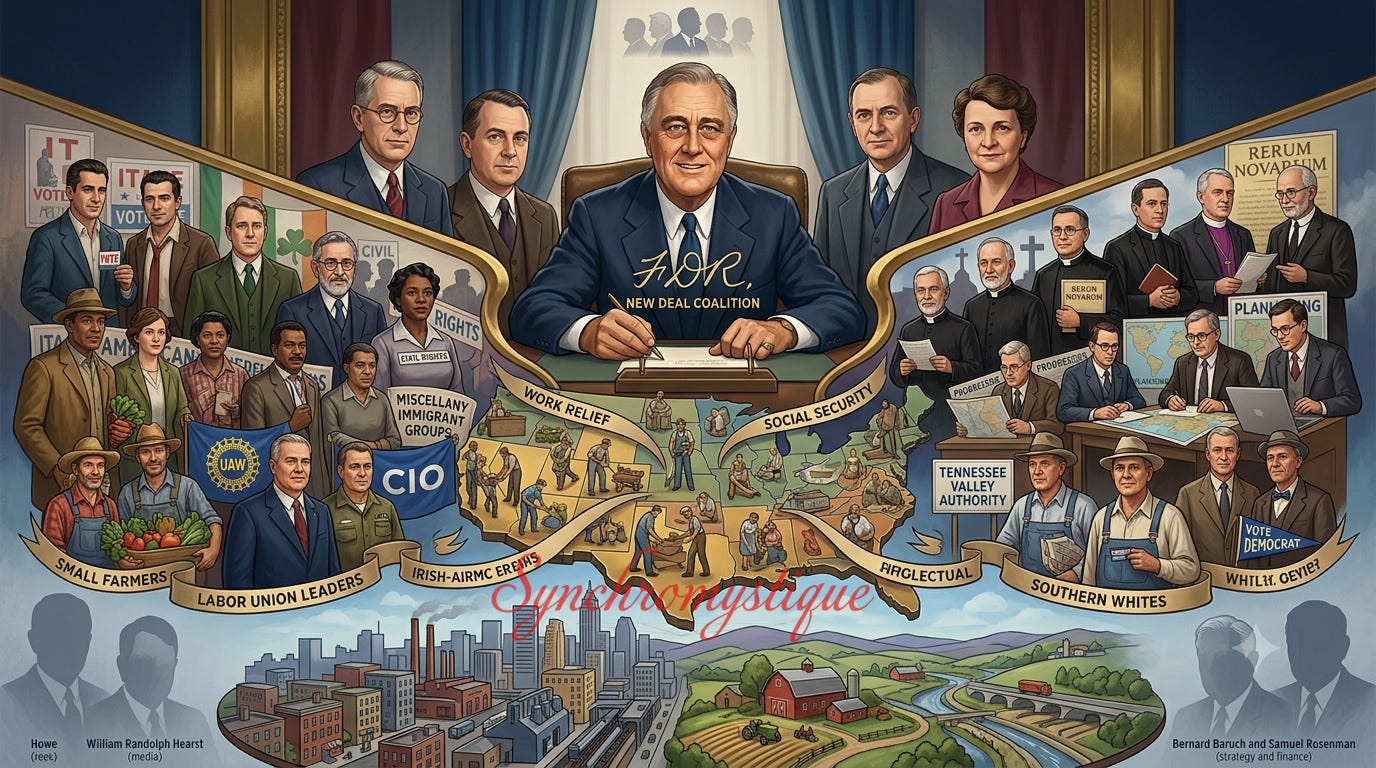
One of the most striking features of FDR’s unprecedented four electoral victories was the broad voting coalition that made them possible.
Correspondingly, FDR was not dependent on a single patron. Instead, he assembled a multi-source funding ecosystem.
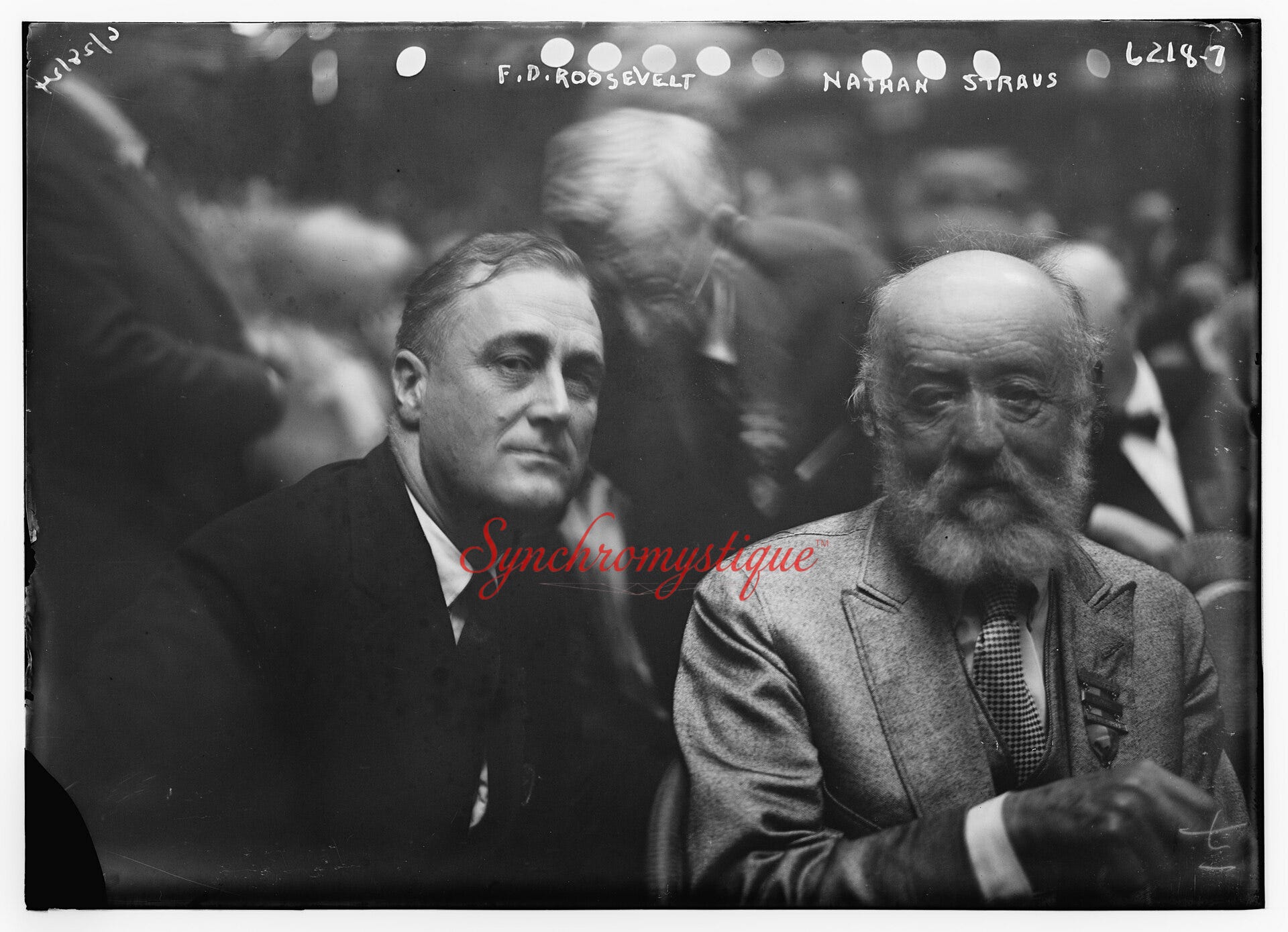
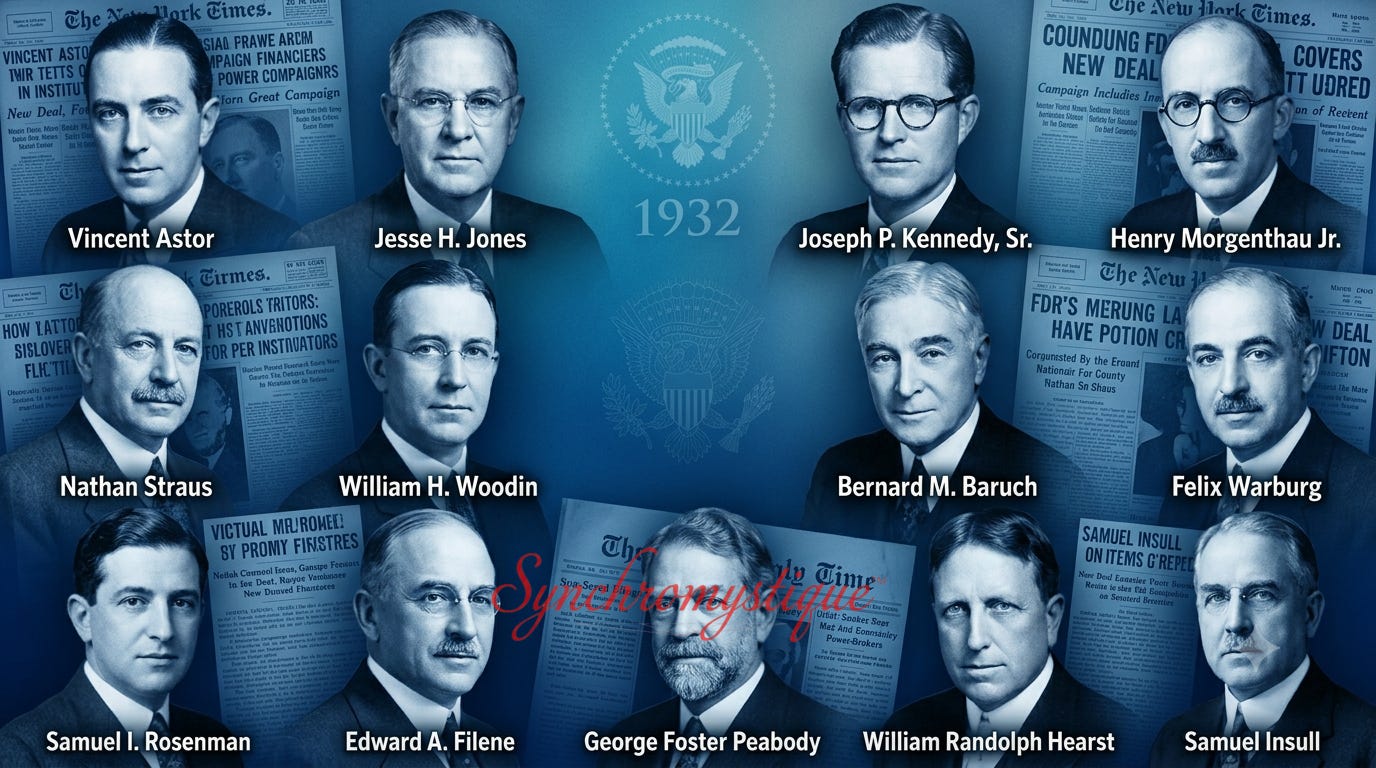
Sure, he had wealthy allies like Vincent Astor, Jesse H. Jones, Joseph P. Kennedy, Sr., Henry Morgenthau Jr., Nathan Straus, and William H. Woodin.
But …he also had labor unions
And urban political machines
This diversification diffused donor power — but did not eliminate it. It transformed the donor from kingmaker into a coalition component.
Roosevelt’s donor ecosystem was diversified, but it wasn’t exactly non‑transactional. FDR rewarded his élite backers with power commensurate to their support: Vincent Astor received a bespoke intelligence‑coordination post; Joseph P. Kennedy Sr. was cycled through the Securities and Exchange Commission, or “SEC” (a U.S. government agency that regulates financial markets and supposedly protects investors), the Maritime Commission (which was tasked with modernizing the Merchant Marine, a fleet of civilian-crewed commercial ships that handled imports/exports during peacetime and acted as auxiliary naval troop transports during wartime), and finally the Court of St. James (i.e., ambassador to the U.K.); Jesse H. Jones was given command of the federal credit system and, for a time, arguably had more practical authority over the economy than any man except Roosevelt himself; Henry Morgenthau, Jr. was elevated to secretary of the Treasury Department, where he financed both the New Deal and World War II — not to mention helped design the postwar financial order — and William H. Woodin was given the nation’s steering wheel during the 1933 banking crisis.
Incidentally, Astor wasn’t the only civilian magnate to receive a presidential license to run what amounted to a semi‑autonomous intelligence shop.
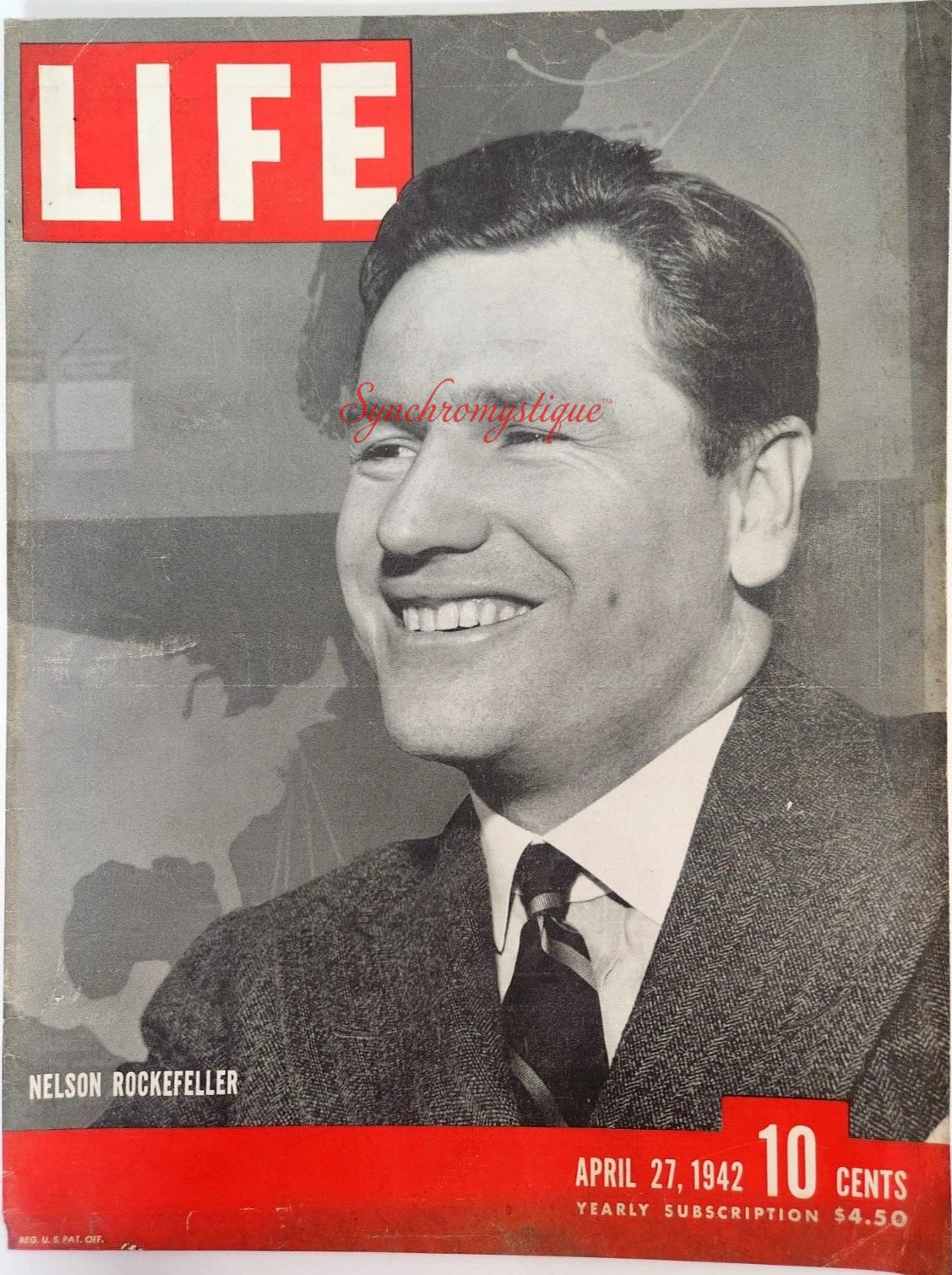
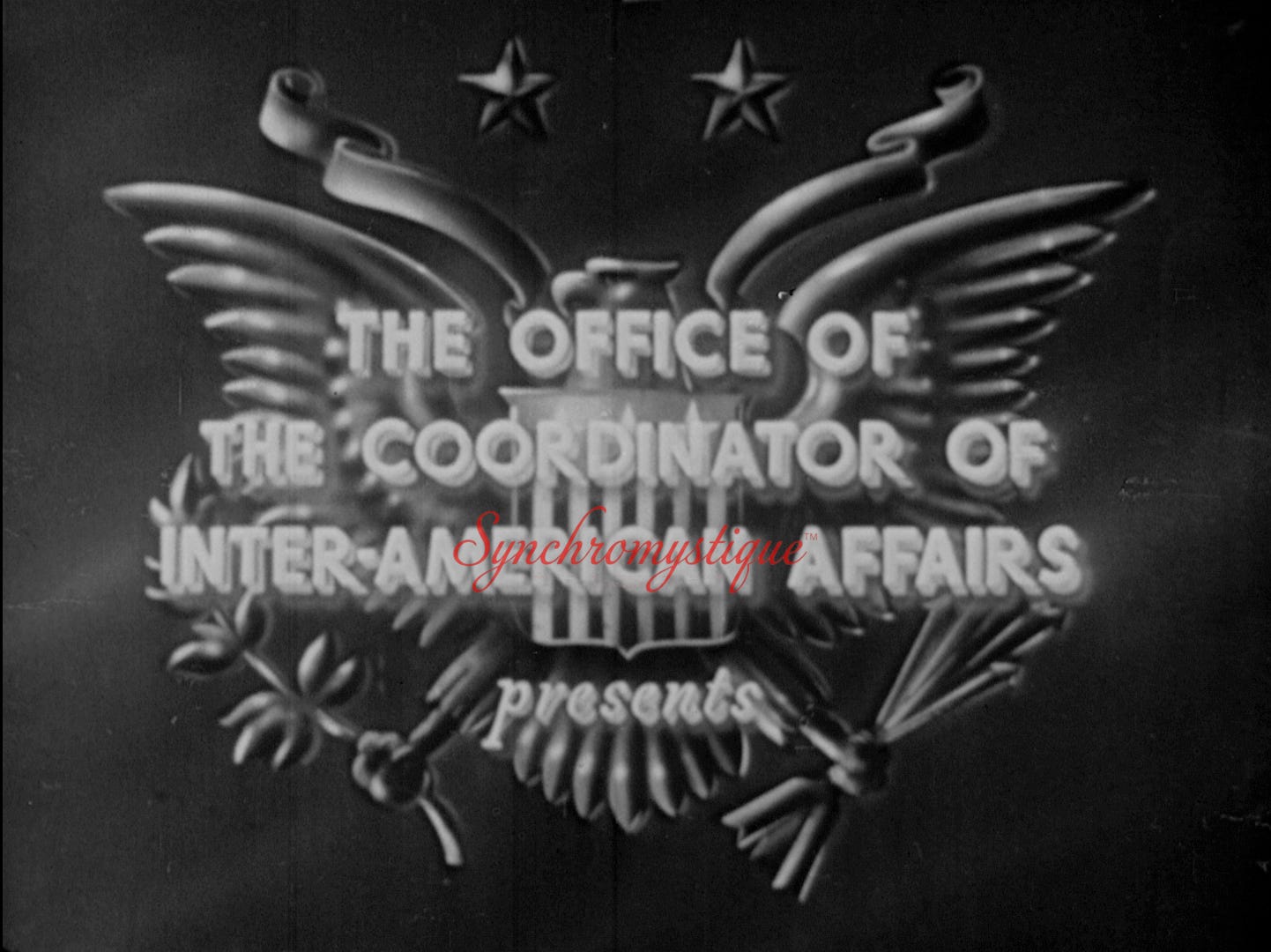
As we explored in an earlier Substack essay (titled “Psyocracy”), Franklin Roosevelt would later authorize Nelson Rockefeller — then a Republican who had opposed FDR in 1932 — to build and operate his own hemispheric-wide intell-gathering and influence network. Rockefeller’s “conversion” to a New-Deal sympathizer came only in 1940, after a fact‑finding trip to Latin America convinced him that German National Socialist (“Nazi”) penetration of the region posed a strategic threat to his oil and other concerns. Rockefeller brought his worries directly to Roosevelt, who responded by appointing him to head the newly created Office of the Coordinator of Inter‑American Affairs. In effect, FDR empowered Rockefeller to run a pro‑business, pro‑American information-and-propaganda apparatus across the Western Hemisphere — and he did so before the establishment of the more famous Office of Strategic Service (“OSS”), the precursor to the Central Intelligence Agency (“CIA”).
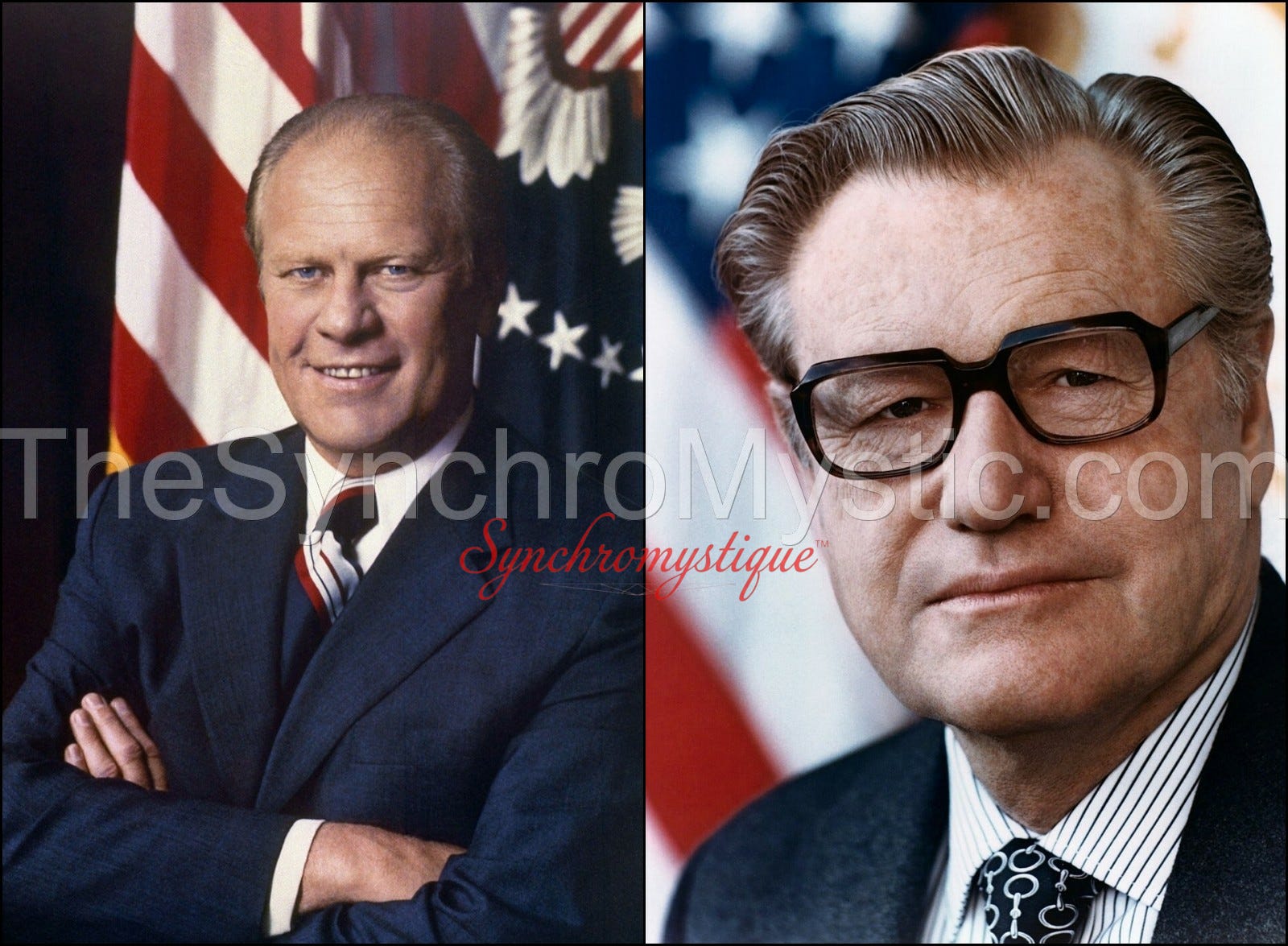
It was yet another instance of Roosevelt’s distinctive pattern: reward élite allies — not merely with titles, but with operational domains. So, we see that influence wasn’t eliminated — it was redistributed across a broader coalition.
After World War II, donor influence fused with something more durable: institutional continuity.
Eisenhower’s 1952 ascent was backed by a durable, institutional donor machine — what contemporaries simply called “the Gang.” It fused corporate wealth, Eastern‑Establishment networks, and a moderate (New‑Deal‑tolerant) Republican ideology that sought to steer the party away from conservatives aligned with “Mr. Republican,” Robert Alphonso Taft, Sr.
The core “Gang” consisted of investment banker Clifford Roberts; media and Coca‑Cola executive William E. Robinson; oil magnate W. Alton Jones; lawyer‑lobbyist George E. Allen; banker and former military governor Lucius D. Clay; and Studebaker/CED leader Paul G. Hoffman. Senators Henry Cabot Lodge Jr. and Prescott Bush — father and grandfather, respectively, of later U.S. Presidents George Herbert Walker Bush and George Walker Bush — served as political conduits linking these business interests to the nomination fight.
To this group we can add Herbert Brownell Jr., the corporate lawyer who engineered the “Draft Eisenhower” movement; Thomas E. Dewey, whose Eastern‑Establishment network supplied the institutional backbone for Eisenhower’s nomination; and Sidney Weinberg of powerhouse investment bank Goldman Sachs — one of the most influential corporate fundraisers of the mid‑century, and a major Eisenhower backer whose Wall-Street connections proved invaluable. Together, they created a postwar template: donor networks that were no longer episodic but institutional—an enduring financial architecture that outlasted any single campaign.
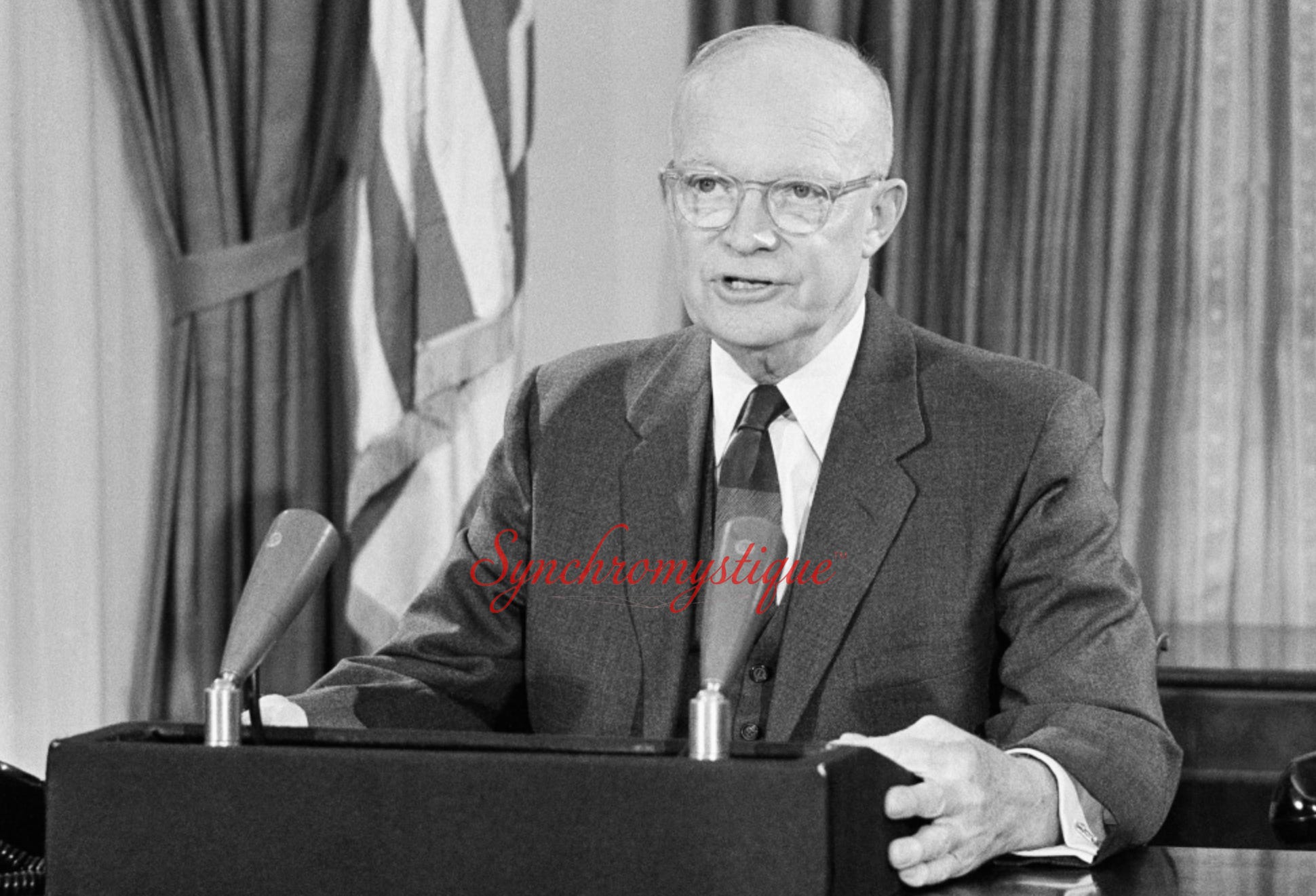
Under Dwight D. Eisenhower, corporate, oil, and defense interests converged into what he himself would call the “military-industrial complex” — of course, only after spending World War II and two terms in office presiding over — and benefitting from — its expansion.
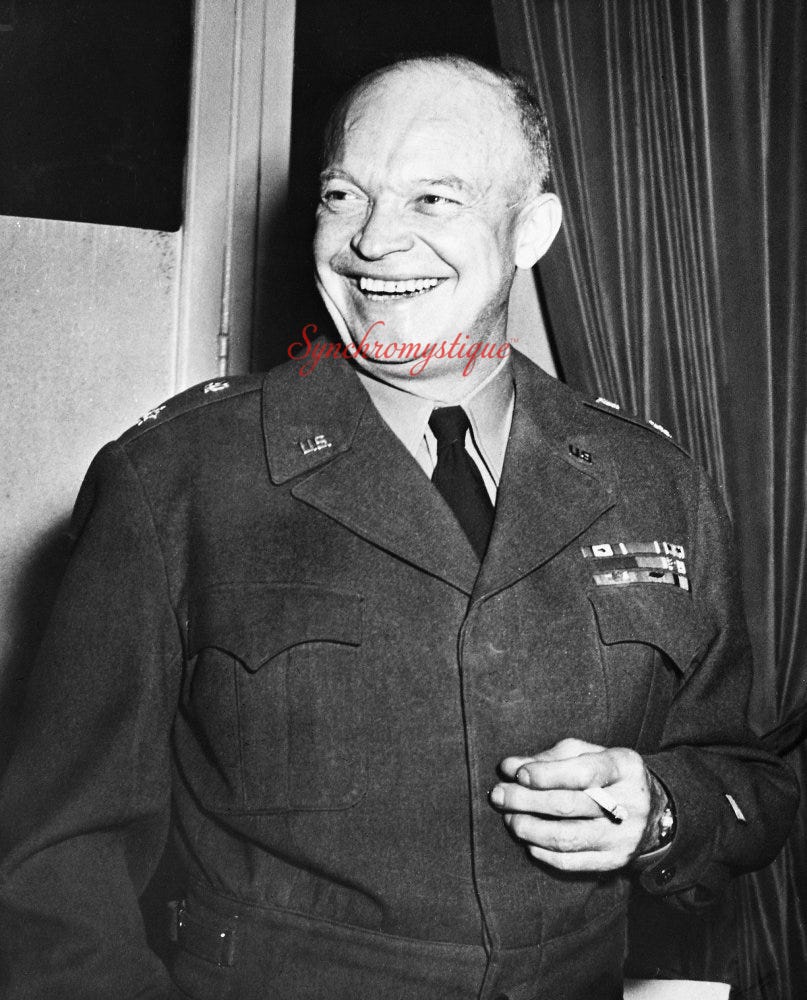
It’s furthermore noteworthy, according to at least one writer, that President Eisenhower “…had originally intended to include Congress in …[his 1961 farewell-address] indictment and deliver a blast at the ‘military-industrial-congressional complex.’ At the last minute, he struck out ‘congressional.’ It wasn’t for a President to berate Congress any more than it was his business to berate the Supreme Court.”2
In any case, figures like Walter Annenberg eventually emerged (under Ronald W. Reagan) — not just as donors, but as long-term political investors, spanning administrations.
You want to think about that for a moment. For a certain crop of well-heeled élites, paying for the installation of a president is akin to providing venture-capital for a “tech start-up.”
With John F. Kennedy, the model shifts again: wealth becomes internalized. The donor is not merely external but paternal — Joseph P. Kennedy, Sr. and Rose Fitzgerald Kennedy financing not just a campaign, but a dynasty — including such notables as Eunice Kennedy Shriver; Robert F. Kennedy, Sr.; Edward “Ted” M. Kennedy; Sargent Shriver; Joseph P. Kennedy II; Kathleen Kennedy Townsend; Patrick J. Kennedy; Caroline Kennedy; and, perhaps most recognizable on the contemporary scene, Robert F. Kennedy, Jr., who crossed his family’s party line and supported Republican Donald J. Trump during the 2024 election.
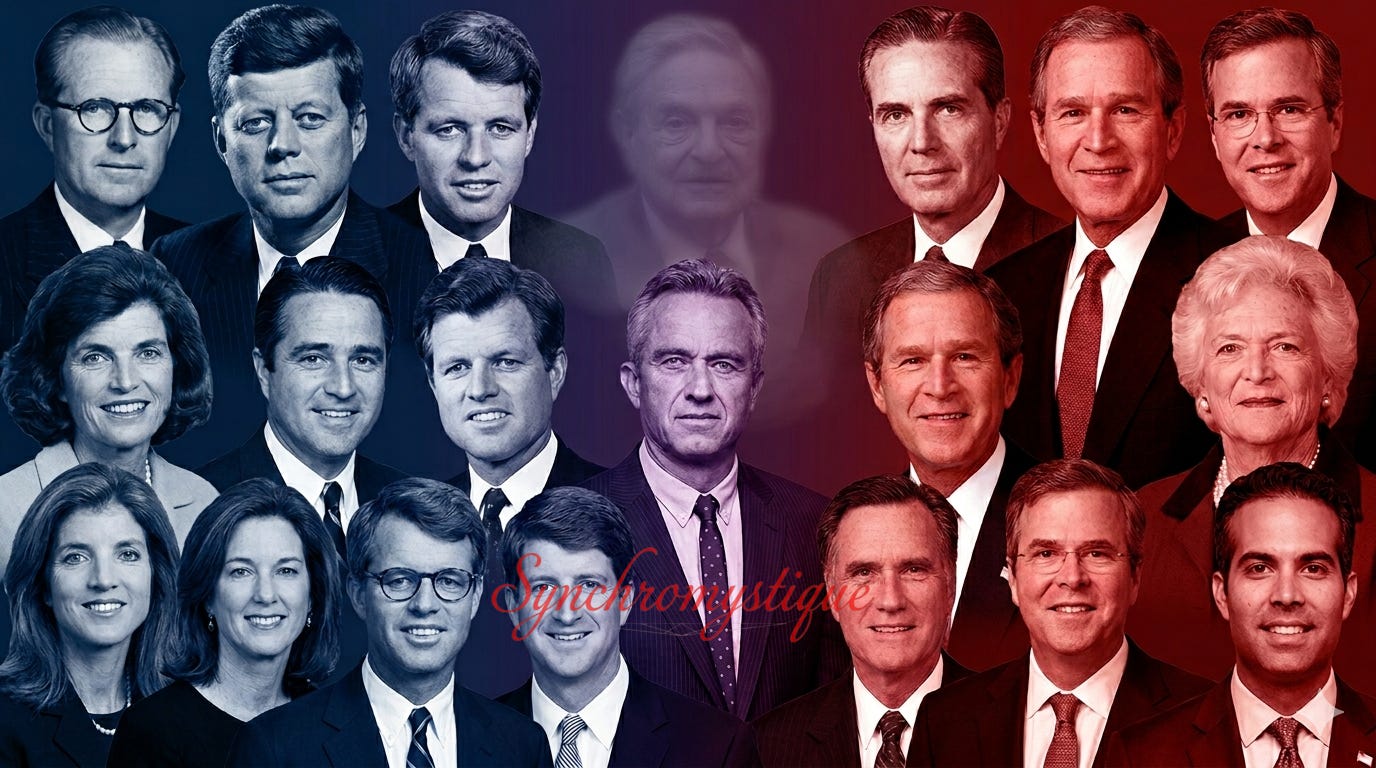
And, as we have hinted, this isn’t limited to the Kennedys. The Roosevelts — including Teddy and FDR, but also the likes of Kermit Roosevelt, Jr. (the architect of Iran’s 1953 CIA overthrow — would later be joined by the Bushes — who not only produced two presidents, but also Governor John Ellis “Jeb” Bush, SECURACOM / Stratasec (security company for the ill-fated World Trade Center in New York City) board of director (1993-2000) Marvin Bush, and Neil Bush, friend of Scott Hinckley (who was the brother of John Hinckley, Jr., the man who attempted to assassinate Reagan in 1981).
(Not to mention the preceding Prescott Sheldon Bush, Barbara Bush, and, most recently, Texas Land Commissioner George Prescott Bush. According to some genealogists, Mormon politico Willard “Mitt” Romney is distantly related to the Bush family — a 10th cousin once removed to George H. W. Bush, and twice removed to George W. Bush — through Anne Marbury Hutchinson, an early New England settler and religious freedom advocate.)
Under Lyndon Baines Johnson (known as “LBJ”), regional capital — Texas oil and construction giants — anchored presidential power in localized economic blocs.
And then came Richard Milhaus Nixon, whose fundraising excesses and scandals — especially, but not exclusively, during his 1972 Campaign to Re-Elect the President, derisively lampooned by the acronym “CREEP” — produced something unprecedented: regulation.
Of course, the creation of modern campaign-finance law does not eliminate money’s influence. It just renders it more visible — which prompts it to become more subtle (which I’m trying to say neutrally so I don’t have to choose between “insidious” and “sophisticated” — which you’re free to substitute, depending on how you view it).
When Congress tightened campaign-finance rules in the wake of Watergate, the reforms created an unintended side effect: they made Political Action Committees (PACs) newly attractive. Under the revised law, corporations and unions were still barred from writing checks directly to candidates — but they were permitted to cover the administrative costs of a PAC that solicited voluntary contributions from their employees or members, then pooled those contributions and delivered them to favored campaigns. The PAC itself could give up to $5,000 per election to any single candidate — a figure that dwarfed what an individual could contribute directly. The result was predictable. Rather than reducing the influence of organized money, the reforms simply rechanneled it: the number of corporate PACs exploded through the late 1970s and 1980s, as industries discovered that a well-funded PAC offered collective clout that no individual donor, constrained by personal contribution limits, could match on his own.
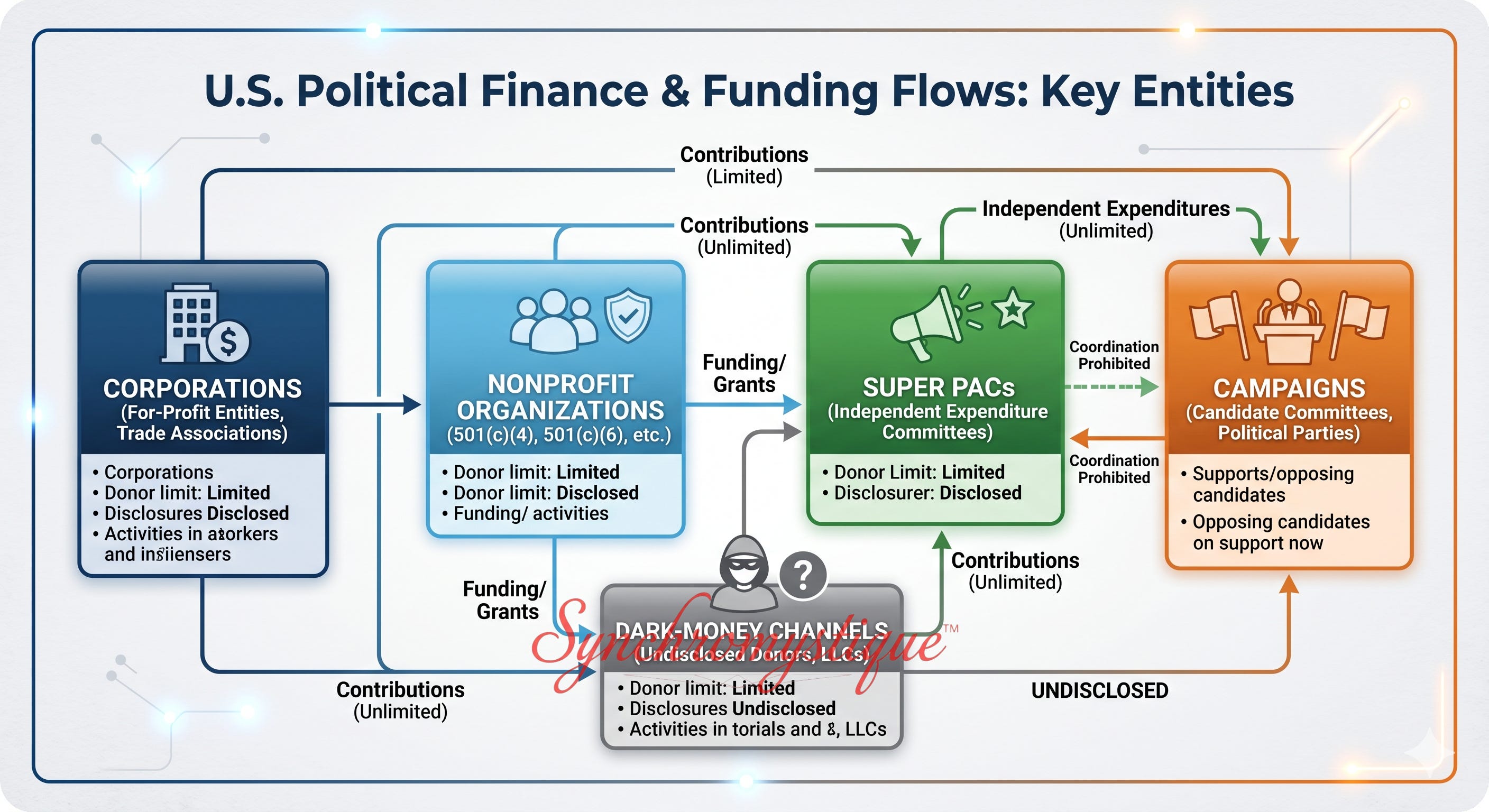
The 2010 Supreme Court decision in Citizens United v. FEC blew a gap in whatever remained of those post-Watergate walls. The Court held that independent political spending — money not directly handed to a candidate — constituted protected speech, and therefore could not be capped.
A subsequent federal appeals court ruling translated that principle into a new vehicle: the Super PAC, which may accept unlimited contributions from individuals, corporations, and unions alike, with no ceiling whatsoever. The one formal constraint is that Super PACs may not coordinate directly with campaigns — a rule widely regarded as porous in practice, since former campaign staffers routinely run them. More consequentially, Super PACs can receive unlimited funding from 501(c)(4) nonprofit organizations, which are under no obligation to disclose their own donors.
The practical effect is a two-step laundering of donor identity: the Super PAC dutifully reports that it received millions from a nonprofit; the nonprofit reports nothing. This is the arrangement critics have labeled “dark money” — and it represents, in the eyes of many observers, the logical endpoint of a decades-long process in which each successive wave of regulation was met with a correspondingly creative wave of circumvention.
By the time of Ronald Reagan, the donor class evolved again.
Figures like the previously named Walter Annenberg, the Joseph Coors family, and Richard Mellon Scaife did not merely fund campaigns. They bankrolled:
Think tanks
Media ecosystems
Policy pipelines
This was a decisive shift.
Donors no longer just supported individual candidates. They pre-constructed the intellectual environment in which candidates operated.
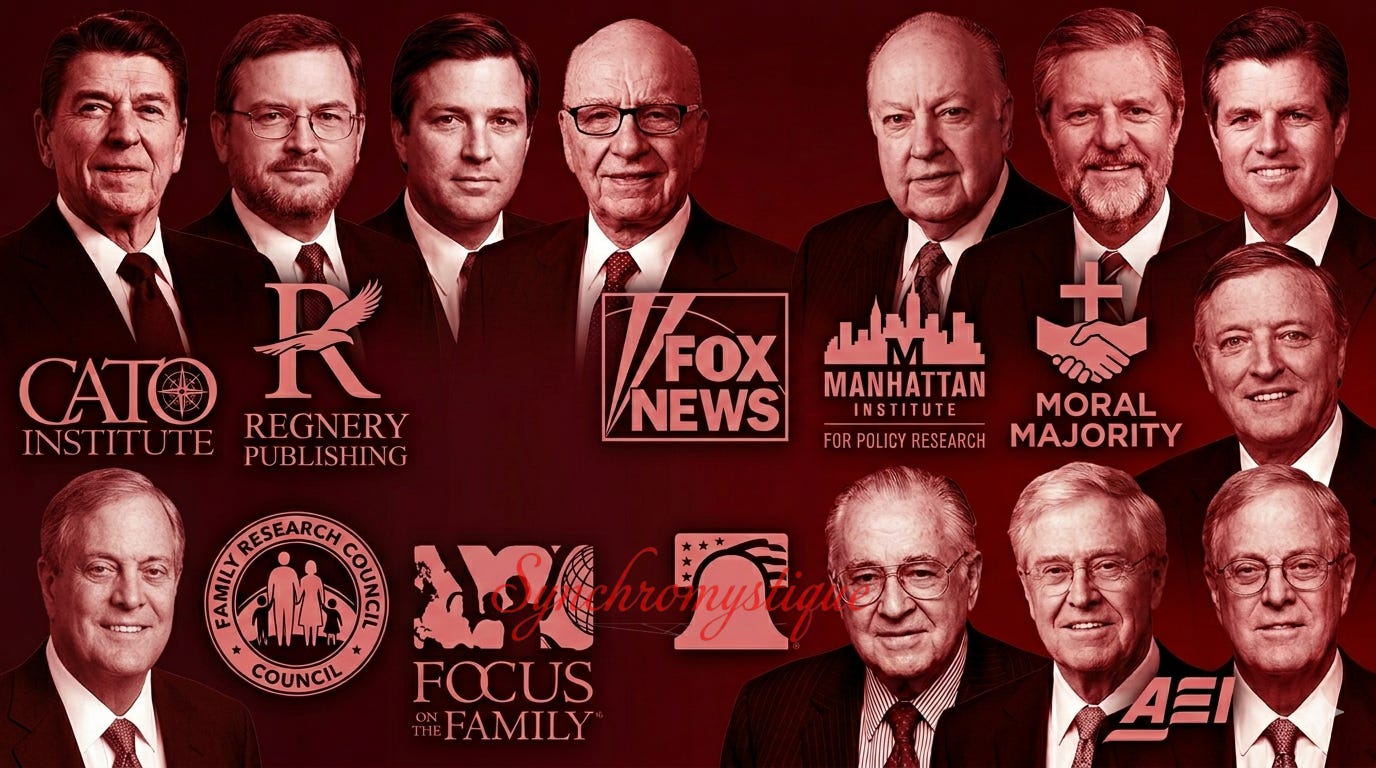
What we’re describing is the construction of a worldview‑shaping machine — a set of ideas, narratives, symbols, and emotional cues — that donors, media institutions, and political actors continue to cultivate and tap into long before any specific policy fight.
Don’t get us wrong: This is by no means limited to “right-wingers.”
It’s a veritable idea‑producing machine, with numerous forerunners, such as: —
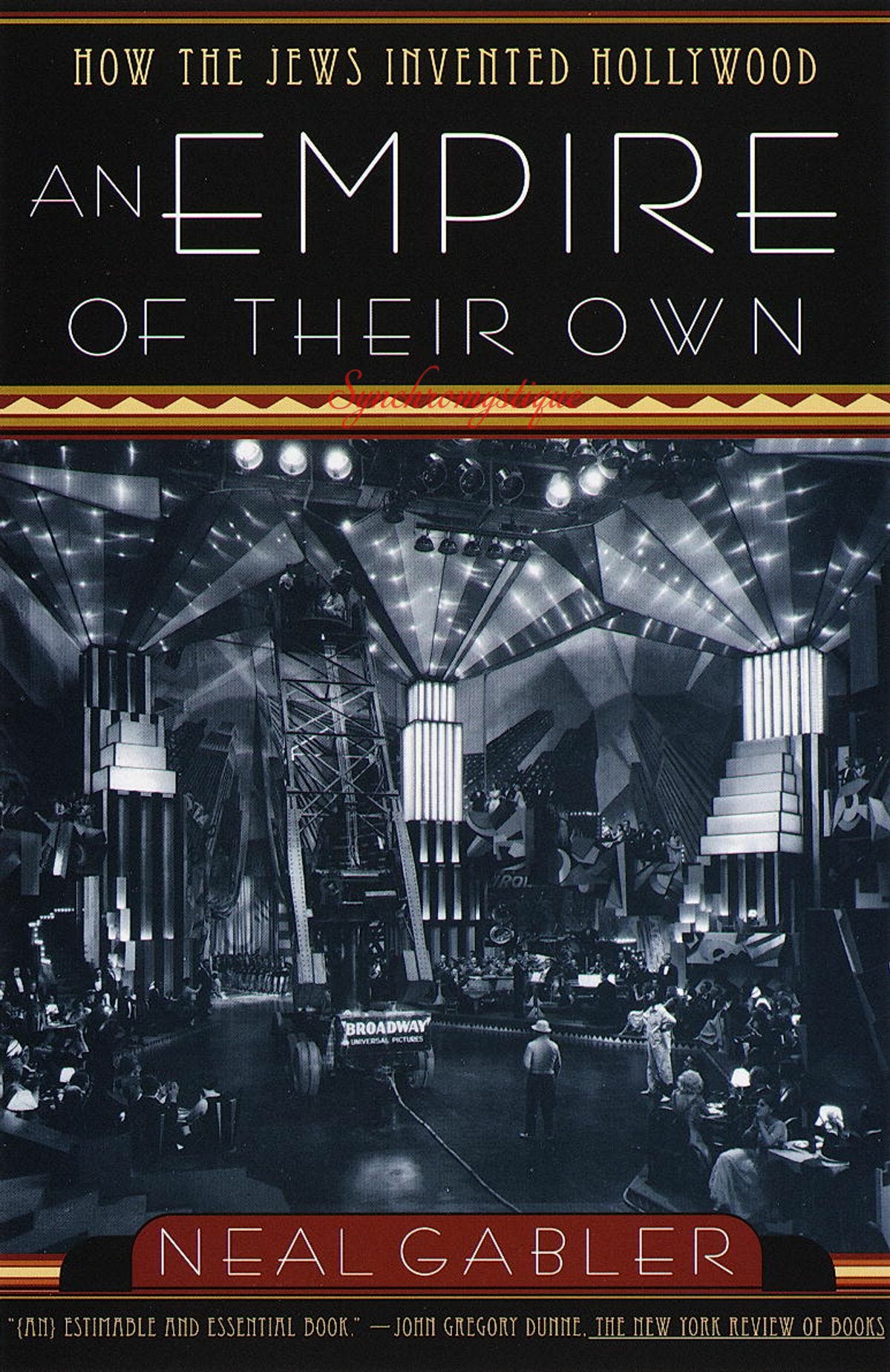
The creation of Hollywood, as an Empire of Their Own, in Neal Gabler’s sense: built by ambitious Jewish-immigrant moguls in the early 1900s-1920s who crafted the studio system and projected an idealized, assimilatory vision of America on‑screen. Through the mid‑20th century this empire remained firmly conservative and corporate — anti‑union, Republican‑leaning, and later central to the Blacklist (Google: “Ronald Reagan FBI Informant”) — before giving way, from the 1960s onward, to a landscape where conservative stars still wielded influence but the creative class increasingly embraced the so-called “New Left.” By the 1990s and into the present, the balance had flipped: while conservative moguls and production houses persist, Hollywood’s dominant public identity has become one of liberal activism, Democratic fundraising, and progressive cultural politics. In recent years, this liberal dominance has drawn counter‑efforts from the political right, including Donald Trump’s informal elevation of Mel Gibson as a kind of Hollywood emissary, the mobilization of conservative industry networks like the now‑defunct “Friends of Abe,” and broader MAGA‑aligned attempts to cultivate a parallel entertainment ecosystem capable of nudging the industry’s cultural orientation back to the right.
The founding of Regnery Publishing (1947), which has operated since as an openly ideological conservative press — first nurturing the intellectual foundations of postwar conservatism, later shifting toward mass‑market political polemics, and today functioning as a home for high‑profile right‑leaning authors rejected by mainstream publishers. Across these eras, it has consistently cast itself as a counterweight to what it sees as the much-bemoaned “liberal dominance” in American media and publishing.
The environmental movement of the 1960s gives yet another example. This would include everything from Rachel Carson’s book Silent Spring; to David Ross Brower’s changing the Sierra Club from a California-based hiking club into a nationally recognized political-ecology organization; and on to the rise of climate‑focused non-governmental organizations, or “NGOs.”
Don’t forget the “Great Society” and “War on Poverty” programs of Lyndon Baines Johnson (LBJ) that were built on the post‑WWII Keynesian consensus — the same social‑liberal framework that treated government spending, economic management, and welfare expansion as legitimate tools for promoting broad‑based prosperity. But Johnson extended this paradigm. He conjoined it with a new moral‑political vocabulary of “social justice,” “civil rights,” and “anti‑poverty” activism. And, ultimately, he transformed the older economics of social liberalism into a more ambitious project of state‑driven “equality,” “opportunity,” and “racial inclusion.” The Great Society was both the culmination of mid‑century Keynesianism — which Richard Milhaus Nixon was tasked to halt — as well as a pivot toward the rights‑based, justice‑oriented progressivism that would define “liberal politics” after the 1960s (and which was opposed by Buckleyite Fusionism).
After Watergate, the model became systematic.
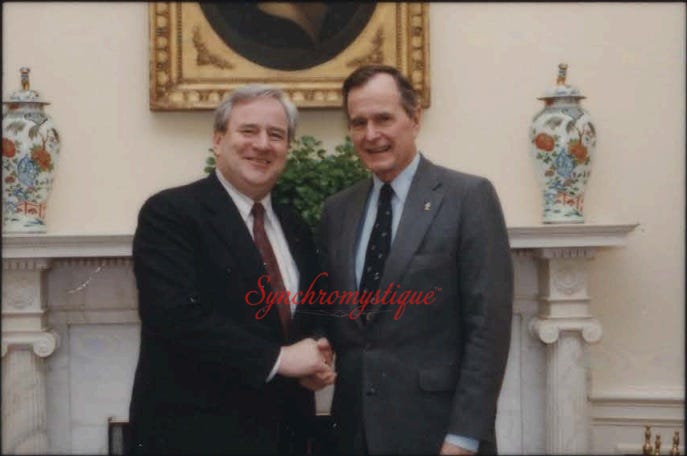
By the late 1970s and 1980s, you saw the creation of the “Moral Majority” — brainchild of fundamentalist-Baptist pastor Jerry Falwell, Sr. and political operative Paul Weyrich.
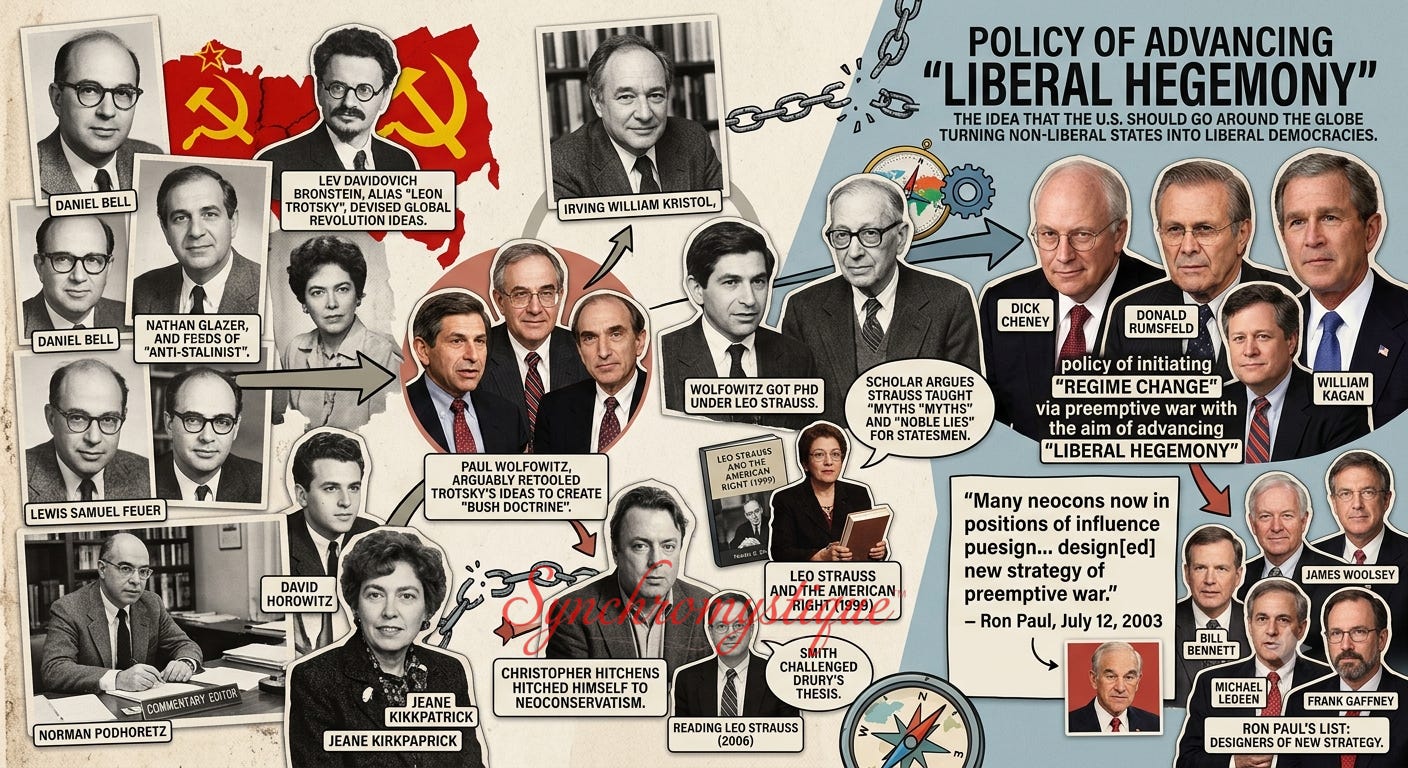
You had the emergence of so-called “Neoconservatism,” principally associated with people like the ex-Trotskyite Irving Kristol and Norman Podhoretz, which was supported by a network of donors and institutions. These two movements are case studies in building interpretive worlds: sociocultural for the former, geopolitical for the latter.3
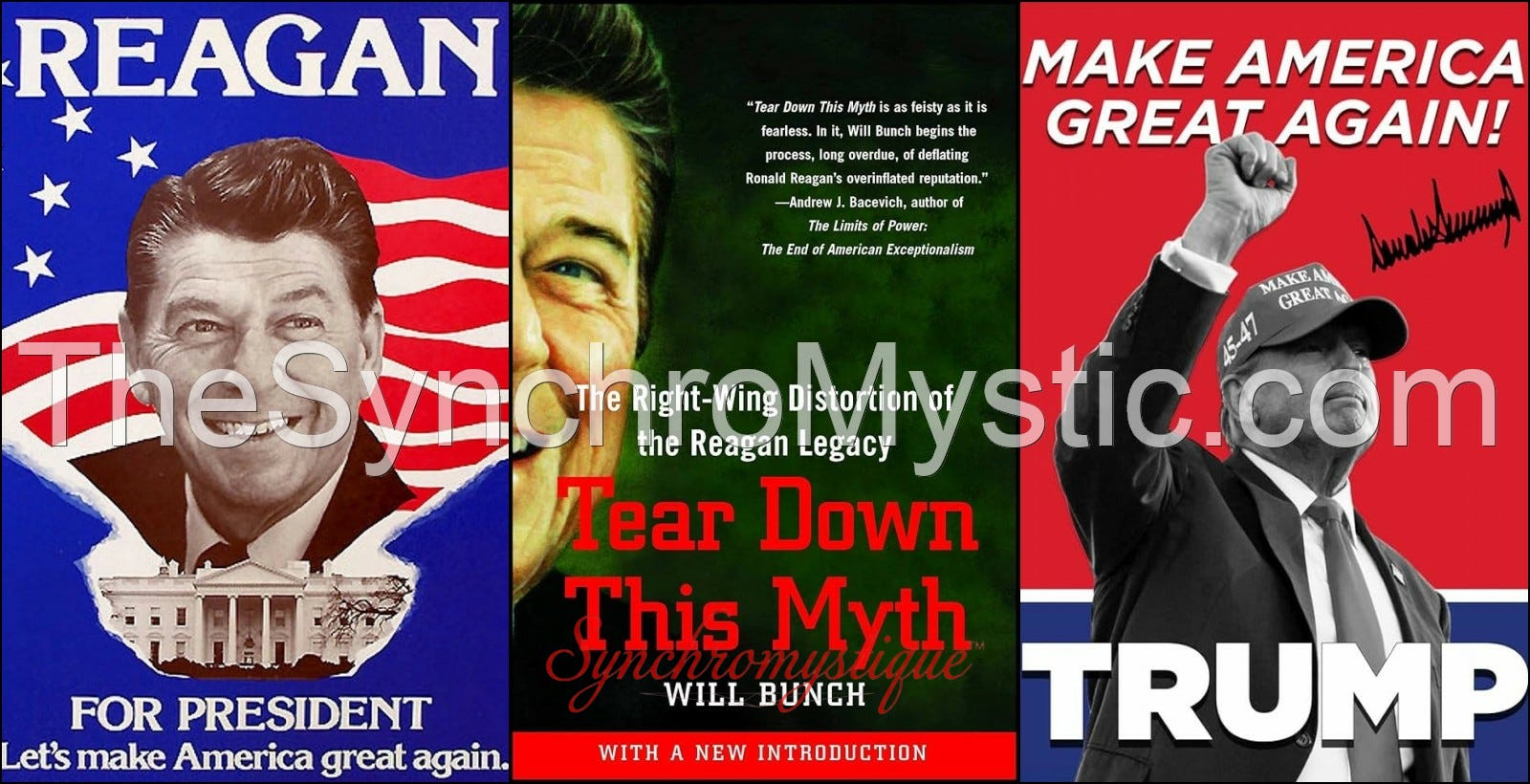
Then you come to Reagan’s original “Make America Great Again” rhetoric in 1980, through which he positioned himself as a bulwark against national decline and a catalyst for so-called “economic restoration.” (In reality, it gave the green light to Neoliberal dergulation, financialization, privatization, securatization, and corporate-raider-style vampirism.)
All this was amplified by think tanks (such as the American Enterprise Institute, the Heritage Foundation, and the Hoover Institution) and media outlets that had already been constructing a conservative intellectual environment for years. These included publications like the American Jewish Committee’s Commentary magazine, Human Events (founded by Frank Hanighen, Felix Morley, and Henry Regnery), and William F. Buckley, Jr.’s National Review.
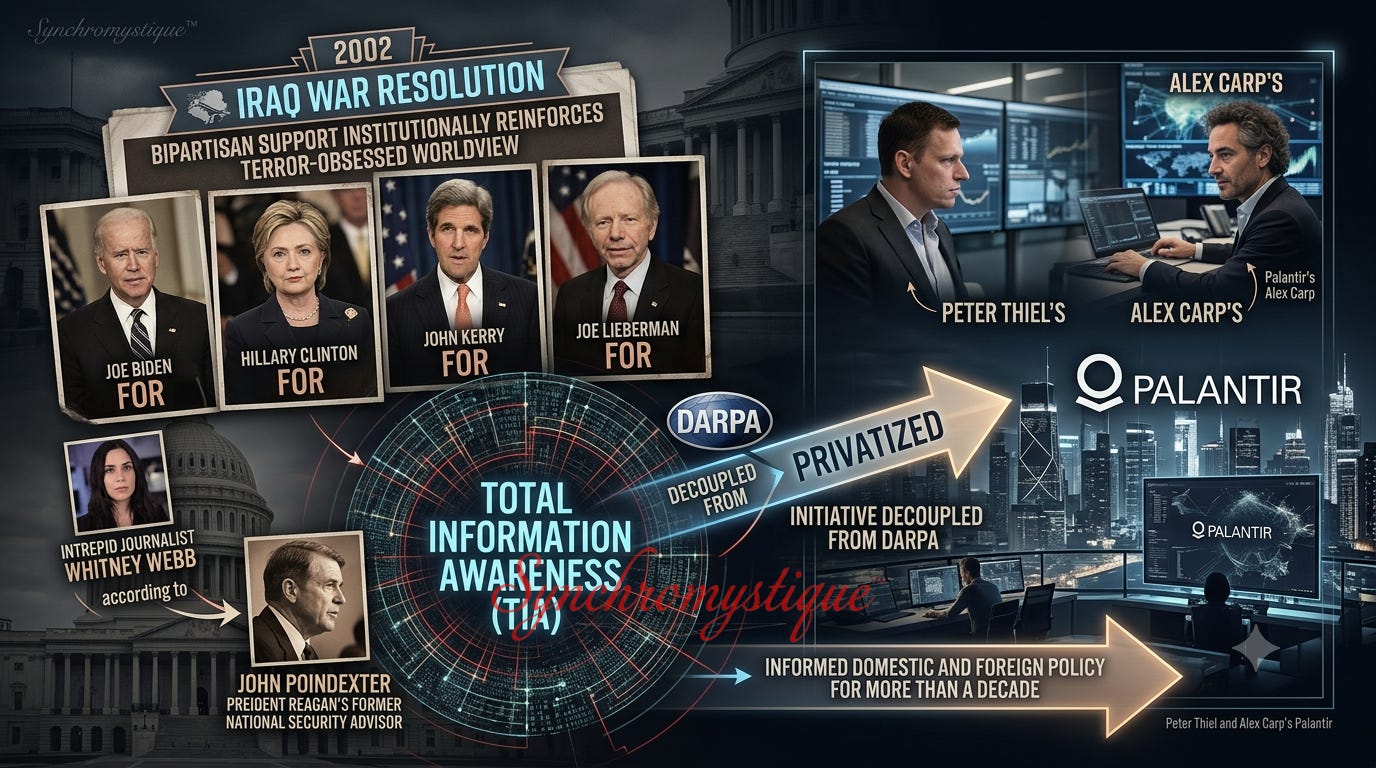
In the 2000s, the George-W.-Bush/Dick-Cheney “War on Terror” narrative became another example. Here, you want to remember that it was — at least early on — a bipartisan affair, with Senators Joe Biden (then-Chairman of the Senate Foreign Relations Committee), Hillary Clinton, John Kerry, and Joe Lieberman voting in favor of the 2002 Iraq War Resolution.
Despite later backpedaling, their support helped institutionally reinforce a “Terror”-obsessed worldview that informed both domestic and foreign policy for more than a decade and — with the help of President Reagan’s former National Security Advisor John Poindexter (according to the intrepid journalist Whitney Webb) — launched the Total Information Awareness initiative that was decoupled from DARPA and “privatized” via Peter Thiel’s and Alex Carp’s Palantir.
Later movements such as the Tea Party, Occupy Wall Street, Black Lives Matter, and the more recent iteration of “MAGA” under Trump 45 and 47 illustrate the same basic mechanism: each created a self‑reinforcing ecosystem of grievances, interpretive cues, and symbols that shaped how millions of Americans understood the country and their place within it.
We’re witnessing the architecture of perception-modification, built and maintained by networks of communicators, funders, and institutions, who understand that controlling the reference frame often matters more than controlling one specific policy or other.
By the time of the rise of Bill Clinton (birth name William Jefferson Blythe III), the system was fully hybridized: global capital literally merged with regional patronage. Clinton’s early backing came from investment banker and oil tycoon Jackson Thomas Stephens, Sr. It ballooned into a coalition of the wealthy ranging from East-Coast Wall-Street types like Kenneth D. Brody (who Clinton appointed to head the Export-Import Bank) and Goldman Sachs executive Robert Edward Rubin (later Clinton’s treasury secretary), telecom kingpins like Haim Saban and Bernard Schwartz, to West-Coast Hollywood big shots such as David Geffen, then-Disney studio chief Jeffrey Katzenberg, then-MCA-president Sidney Sheinberg, and film director Steven Spielberg, to say nothing of actors like Richard Dreyfuss, Morgan Fairchild, the now-ostracized Kevin Spacey, Sharon Stone, and heavy-hitter Barbra Streisand.
With George W. Bush, the donor class became networked through so-called “bundlers.” In this context, these were well-connected volunteer fundraisers who aggregated individual campaign contributions from their social networks and delivered them in large “bundles” to the campaign.
For “Dubya,” the key “Architect” was Karl Rove, who created a two-tiered influence aggregator composed of “Pioneers” (who could raise $100k) and “Rangers” (a level introduced in 2004 and occupied by those who managed to cobble together $200k) — bragging rights attained by one Ray Willets Washburne Republican functionary and restaurateur.
Contributors included then-businessman-lobbyist and now convicted-felon Jack Allan Abramoff; one-time Enron executive and also convicted-felon Kenneth Lee Lay (though, in Lay’s case, his charges were posthumously “vacated”); and Texas oil heir, Ray Lee Hunt (not a felon, Ray was the half-brother of the both now-deceased Nelson Bunker and William Herbert Hunt, whose failed and scandalous attempt to corner the silver market in the late 1970s and early 1980s prompted “Silver Thursday” and complicated their own public association with “conservative” causes and mainstream Republican figures).
By the way, we mentioned this silver scheme in our past Substack article: “Free Silver, Fake Money, and the Fed.”
Continuing with Bush-43’s donors, we have the unlikely Antonio Rodolfo “Tony” Sanchez Jr., a Texas oilman and Democrat who nevertheless donated over $350,000 to Republican George W. Bush’s gubernatorial and presidential campaigns, making him one of Bush’s top career patrons. Despite his Democratic affiliation, this support was driven by a combination of personal business interests, pragmatic politics, and a strained relationship with Texas Democratic leadership.
Somewhat in the same vein was Roy Michael Huffington, yet another oil-industry Texan — and, incidentally, former father-in-law of Arianna Huffington, co-founder of the leftwing website the Huffington Post. Arianna had been married to Roy’s son, Michael Huffington (1986-1997).
With Barack Hussein Obama — whom we also mentioned in “Presidential Name Changers” — the narrative shifts toward “small donors.” (Supposedly, in 2008 some 60% of Obama’s funds came from individuals giving less than $1,000 — totaling over $427 million.)
But …the reality remained hybridized.
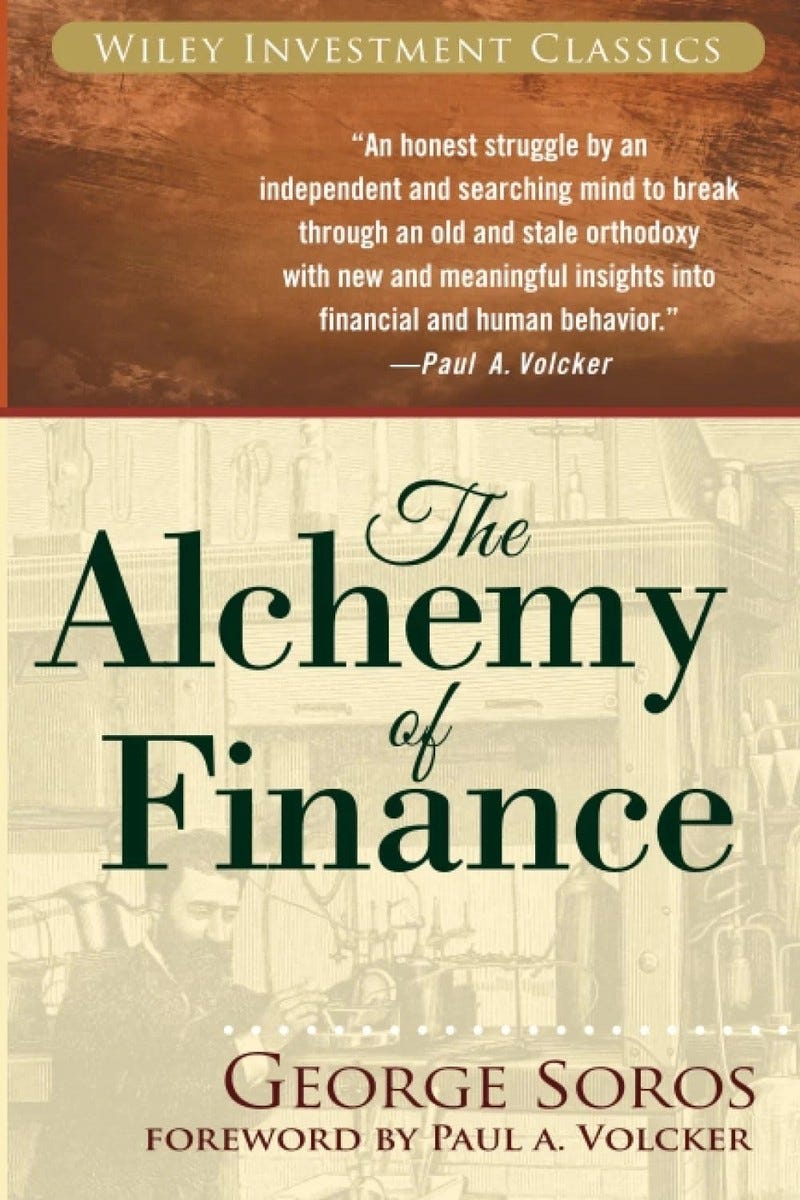
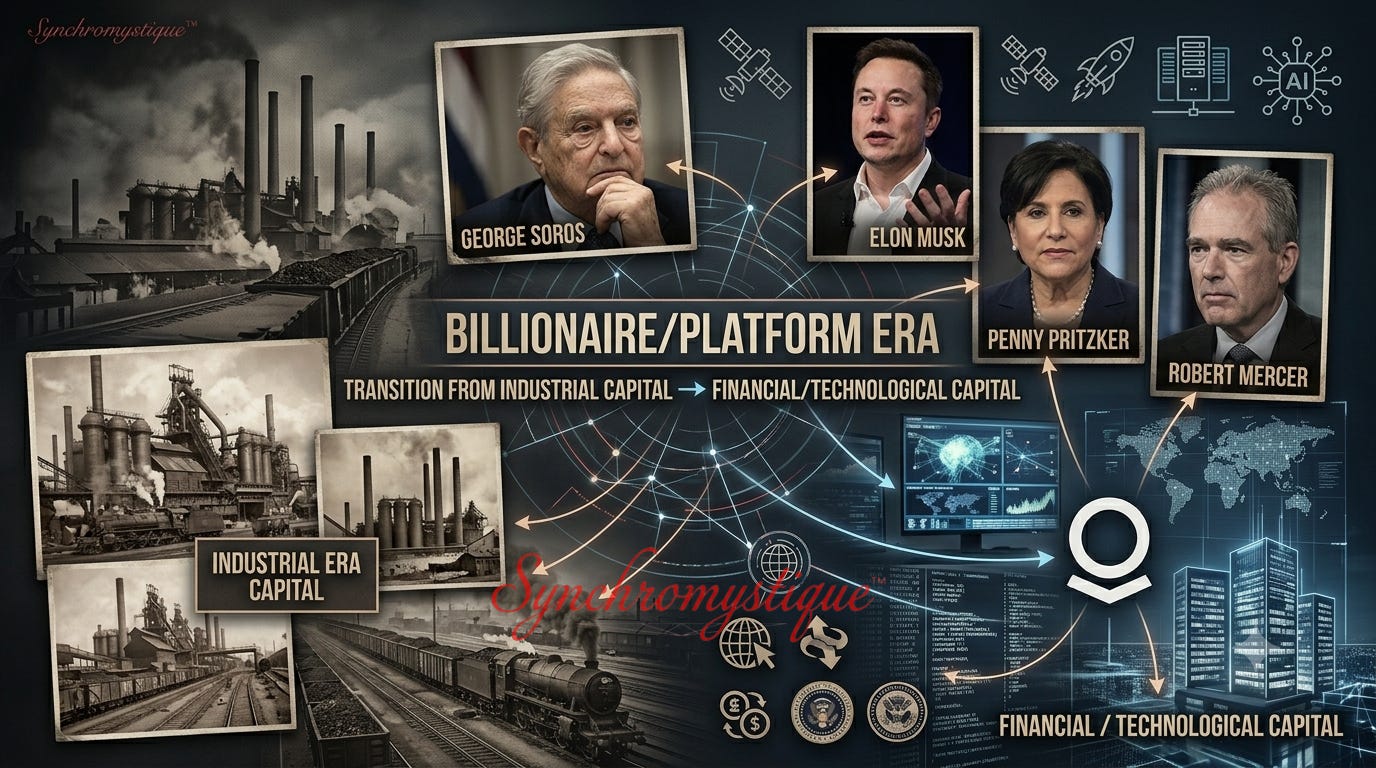
Yes, the grassroots were mobilized — through activist efforts underwritten courtesy of élite capital from Big Finance. And no figure better embodied this fusion than George Soros (born György Schwartz), whose Open Society Foundations — the world’s largest private funder of democracy‑oriented groups, which hovers somewhere between astroturfing and bona-fide citizen deployment — has long specialized in seeding activist networks and staffing civil‑society infrastructure across dozens of countries.
Beyond Soros — the perennial bogeyman for rightwing-media consumers — we’re talking about people like the supposed “Oracle of Omaha,” Warren Edward Buffett (of Berkshire Hathaway); hedge-fund manager James Gerard “Jamie” Dinan (York Capital Management); private-equity raider Mark T. Gallogly (Centerbridge Partners); ex-Major League Baseball player-turned financier Mark David Gilbert; hedge-fund manager Orin Stuart Kramer (Boston Provident); investment banker Eric Mindich (Eton Park); investment banker Robert Wolf (Salomon Brothers, UBS); and… hedge‑fund billionaire Glenn Russell Dubin (Highbridge Capital Management; Dubin & Co.), a major Democratic donor whose otherwise conventional Wall-Street profile has since been overshadowed by his long‑running social and financial ties to Jeffrey Epstein — ties documented in court filings and public records, including disputed allegations by Virginia Giuffre that Dubin has (naturally) “categorically denied.”
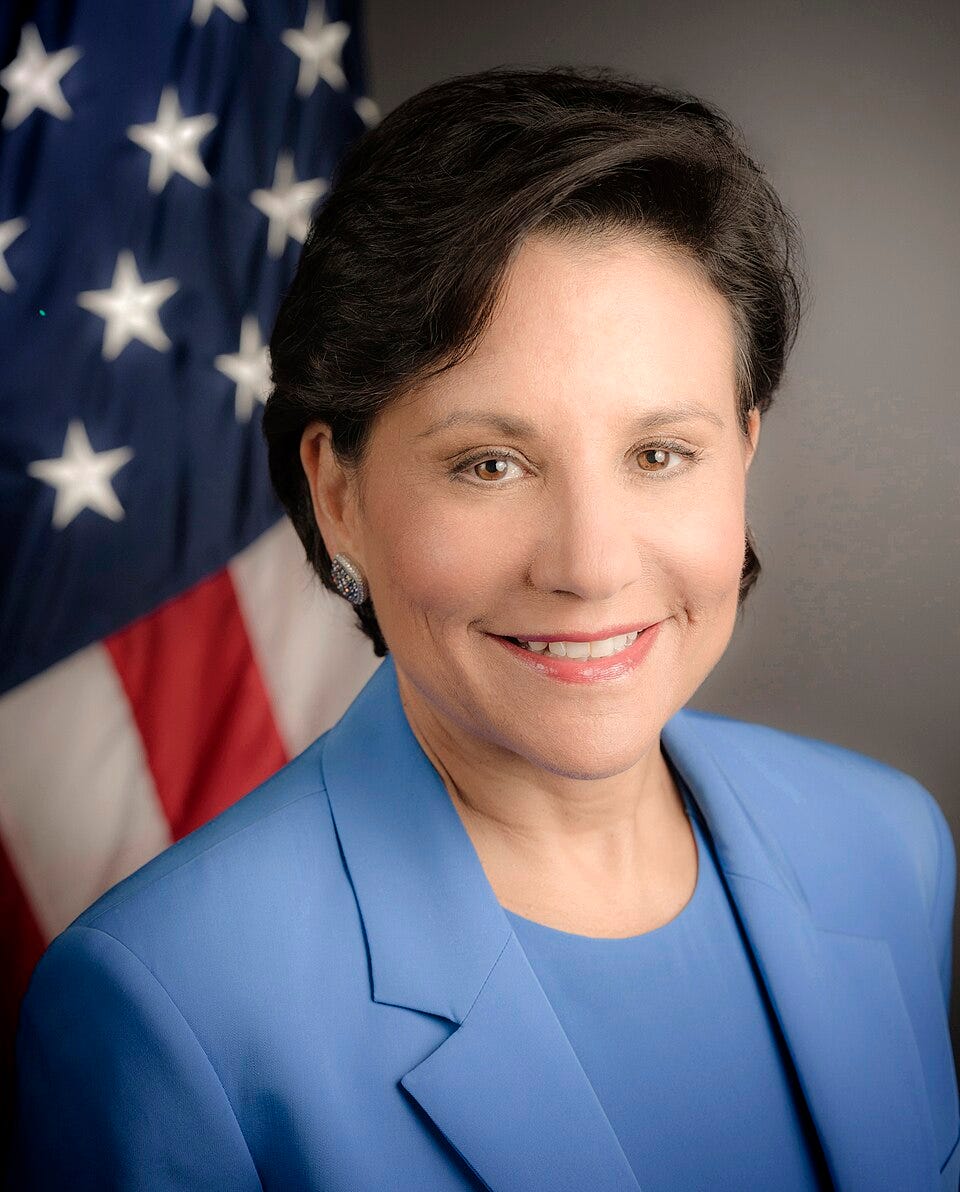
Of course, all the money was collected under the steerage of Hyatt Hotel heir and PSP Capital Partners chair Penny Pritzker, who oversaw the coffers during the 2008 campaign — and was awarded the Department of Commerce in 2013.
But… we also can’t forget to mention the watershed Citizens United v. FEC ruling — which we discussed at some length in our Substack article “SCOTUS Pocus.”
From this point forward, the scale becomes effectively unbounded. The ruling directly enabled a new era of corporate-backed electioneering.
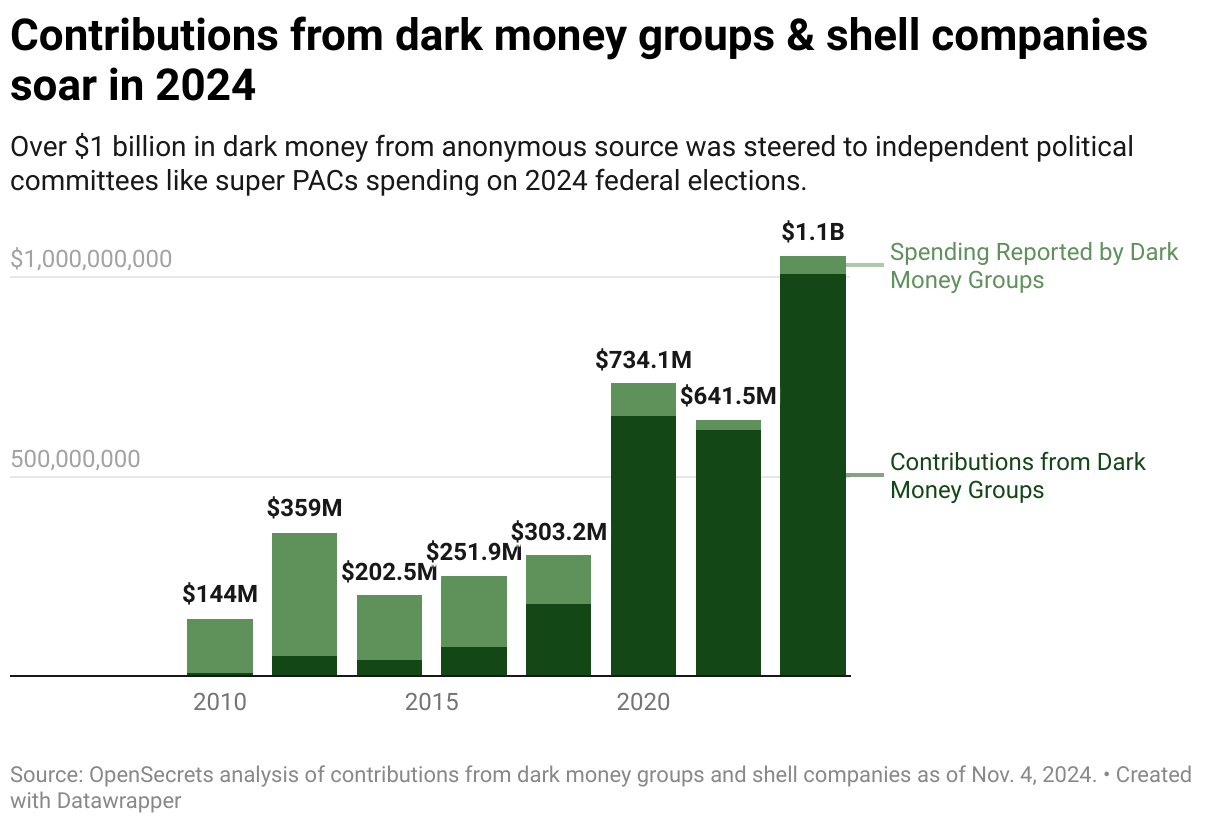
Under Donald John Trump — whose three presidential campaigns and two electoral victories were arguably made possible because of the unlimited corporate spending and influx of “dark money” courtesy of Citizens United — figures like über-Zionist casino heiress Miriam Adelson (née Farbstein) and artificial-intelligence-developing hedge-fund manager (Renaissance Technologies) Robert Leroy Mercer exemplify the super-PAC era: formally independent, functionally decisive, and funding their preferred candidates with vast sums of money.
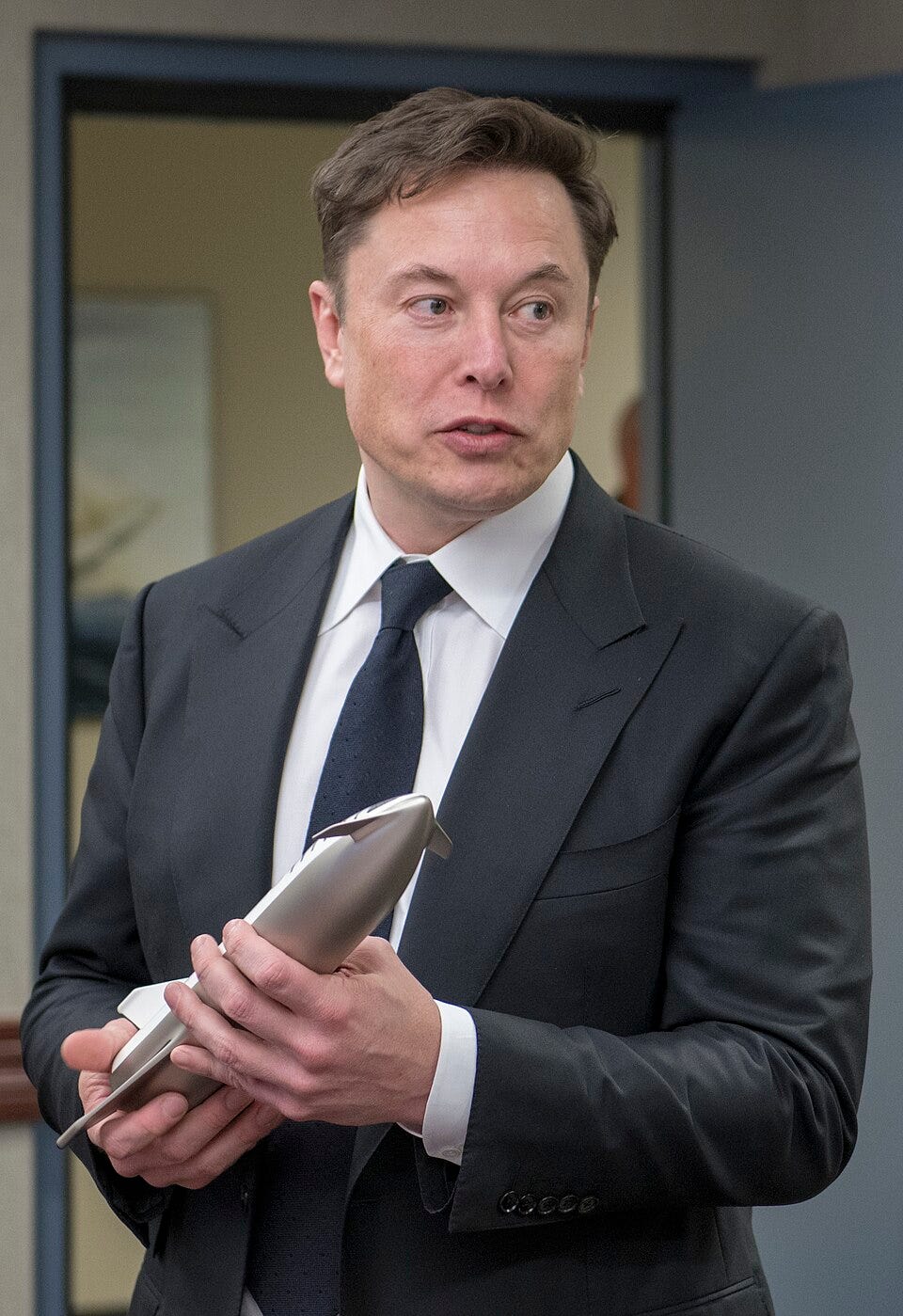
By 2024, donors such as Elon Reeve Musk and banking scion Timothy Mellon — grandson of Andrew Mellon — push contributions into the hundreds of millions.
Under intermediate Joseph Robinette “Joe” Biden, Jr., the coalition expanded further: tech, finance, labor, and cross‑partisan capital aligned around specific outcomes rather than stable party loyalty — drawing in Silicon Valley figures such as Wilmot “Reed” Hastings, Jr. (Netflix) and Eric Emerson Schmidt (former Google CEO); Wall Street and private‑equity donors including Marc Lasry (Avenue Capital Group) and Deven Parekh (Insight Partners); major labor organizations like the AFL‑CIO, the Service Employees International Union (SEIU), and the American Federation of Teachers under Rhonda “Randi” Weingarten; and even traditionally Republican‑leaning business leaders such as Margaret Cushing “Meg” Whitman (former eBay and Hewlett‑Packard CEO) and James Jacob Murdoch (younger son of media tycoon Keith “Rupert” Murdoch), whose contributions and public statements reflected a broader cross‑partisan realignment around specific policies and institutional priorities rather than long‑term partisan identifications.
Money is no longer merely influential. It is literally atmospheric — the medium within which politics occurs.
At this point, it’s worth posing the deeper question.
If donors build the financial scaffolding of presidential power — and, increasingly, the intellectual scaffolding as well — what remains of the presidency itself?
Here we’ll gesture toward a distinction between strong and weak presidencies.
Not defined by personality or rhetoric, a “strong presidency” is — let’s say — one that imposes its own interpretive framework on the governing system — deciding what problems exist and how they are understood.
A “weak presidency,” by contrast, governs within a framework it did not create.
This framework — variously described as the “Blob” (by Obama advisor Benjamin J. “Ben” Rhodes), the Cryptocracy (Michael Hoffman), the “Power Elite” (after C. Wright Mills) — is not dismissible as a “conspiracy.” To invoke another Chomsky-ism: The analysis, here, is structural.
We’re talking about a constellation of background players who share:
Assumptions
Institutions
Incentives
And… Investments
This network — perhaps most frequently termed the “Deep State” (or the “Cryptocracy,” the “Establishment,” etc.) — persists across administrations.
And, crucially, it is funded — well-funded.
This “donor class” does not just “influence” or “sway” elections. It helps define the boundaries of the thinkable.
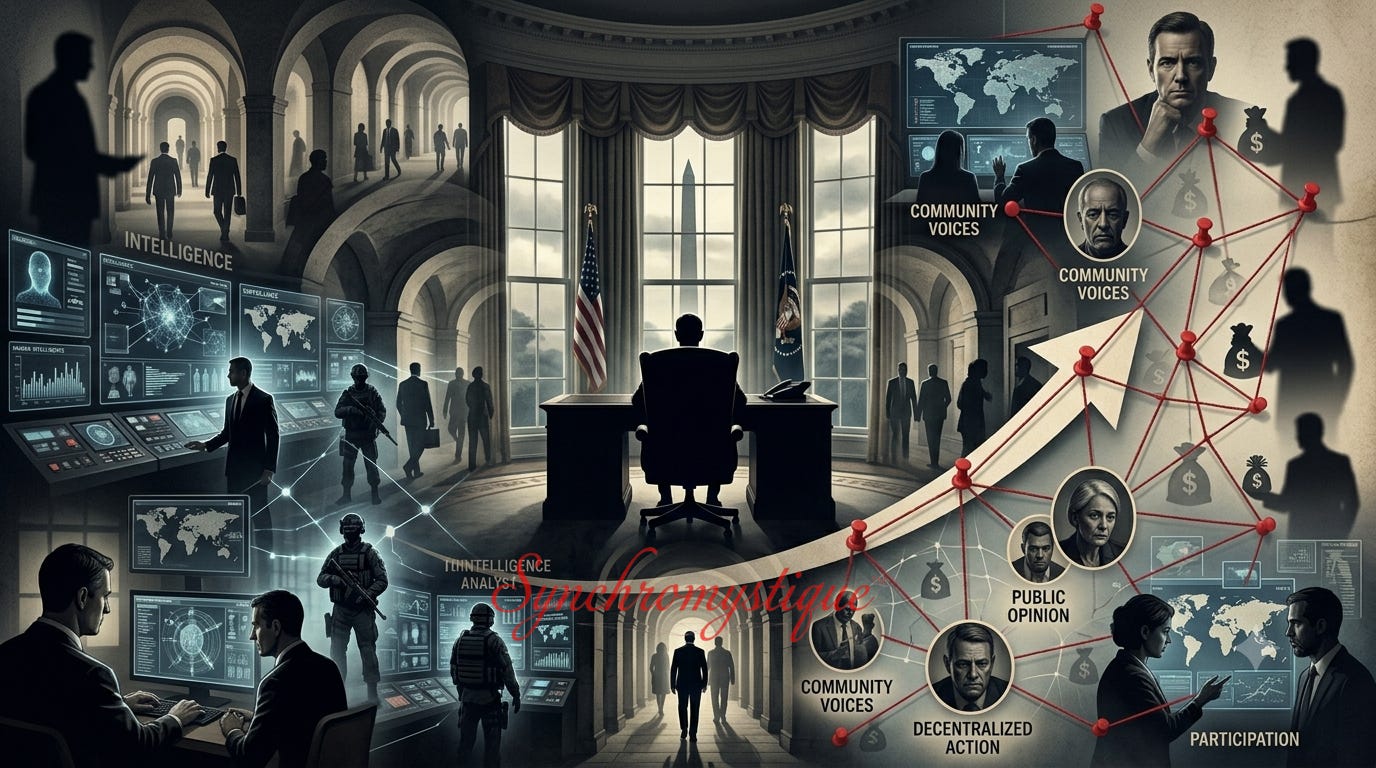
We’re faced with something of a paradox.
Presidents who are backed by powerful segments of the Deep State often appear strong because they’re aligned with their benefactors — even though, as likely as not, they are overshadowed by them; whereas…
Presidents who resist these networks — however feebly or infrequently — often appear “weak,” because their resistance triggers institutional friction (they don’t “get as much done”) — even if they may be acting on their own hooks.
In this sense, the difference between strong and weak presidencies has less to do with the individual in the Oval Office, more to do with the structure of the Washington political apparatus, and may be determined before any inauguration even unfolds.
So, all right: Across 125+ years, what can we glean?
1. Money scales over time. From millions to billions — each successive era seems to expand the operative financial thresholds. This is all the scarier since we’re evidently on the cusp of the world’s first trillionaire.
2. Donors change as the economy changes. Historically, it’s roughly gone from railroads, to big oil, to finance, to tech — now it seems, including “AI,” “data centers,” “Palantir,” “predictive markets,” and on and on. Along the way, of course, there are also periodic infusions of cash from generational inheritors of wealth, some of whom are associated with dynasties less in the limelight (the Cargills, Duponts, etc.).
3. Loci of influence migrate upstream. What may have begun as mere “campaign funding” morphed into idea production and then into flat-out perception-shaping or reality-definition.
4. Transparency technically increases — but so does complexity. So, maybe we see more, sure. But, by many accounts, we understand less.
And, bear in mind that high-level investors typically track their investments with mathematical precision. We might ask, then: At the end of the day, just who’s the transparency really for, anyway?
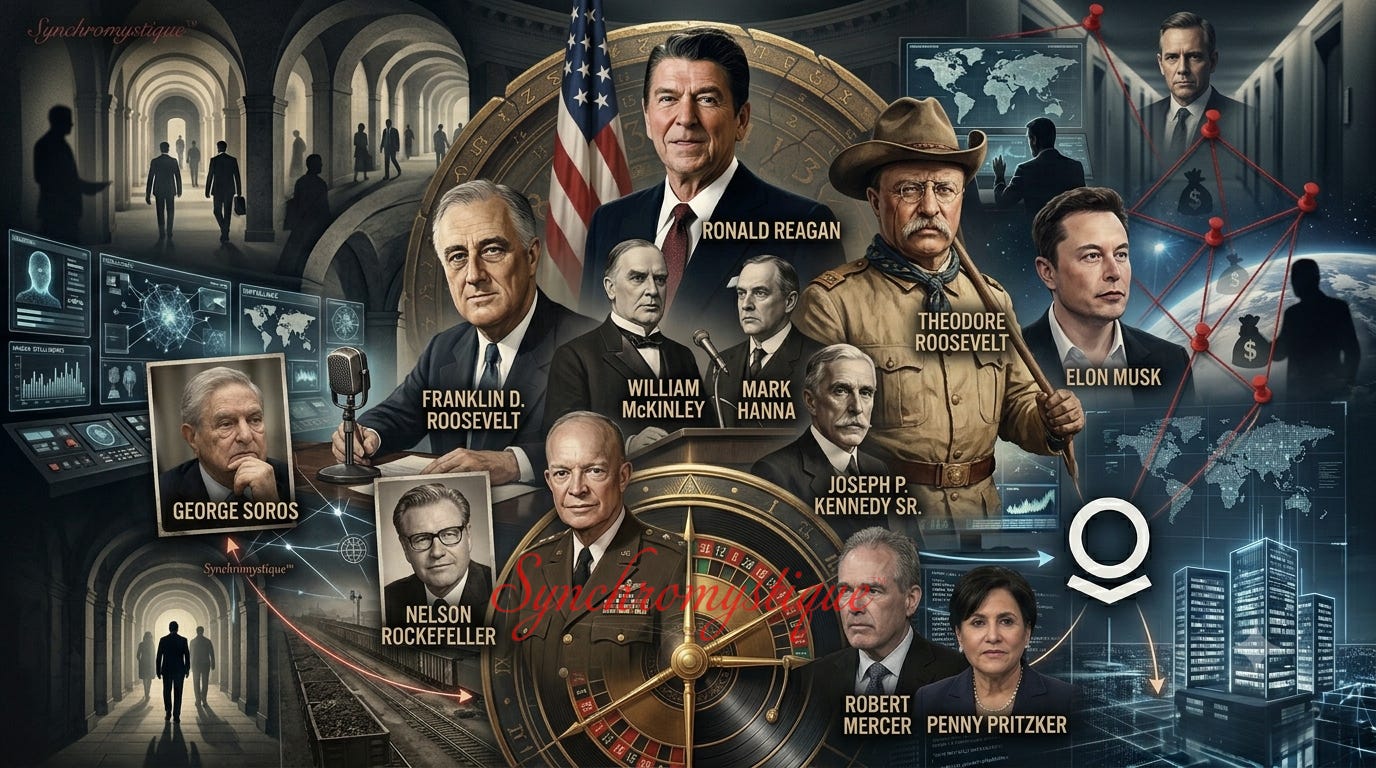
What Mark Hanna understood (and conveyed) in 1896 evidently remains true — only it’s been magnified seemingly beyond all comprehension.
The presidency is not merely “won.” It is financed. And financing is seldom, if ever, “neutral.”
Behind every administration, therefore, lies a network of money-élite patrons with their own pet assumptions, institutions, and preferences that precondition and restrict what governance is or can be.
Strictly speaking, presidents may sit visibly at the apex of federal power — we still parrot aphorisms like the “most powerful man in the world” — but the architecture beneath them is vast, durable, and only partially discernible. Periodically, a careerist functionary becomes momentarily more prominent — like a J. Edgar Hoover or an Anthony Fauci. But, usually, it’s at the tailend of decades of influence that are, for all intents and purposes, a fait accompli.
The correct question, then, is not whether money “influences” politics. Of course it does! It is whether, at some point along this trajectory, money ceases to influence power — and begins to literally constitute it.
And if so, does the presidency remain the seat of decision? Or has it become “penumbral,” or perhaps, merely the true, hidden power’s most conspicuous expression?
If this reduces the presidency to a handle on the levers of the Republic, we might well conclude by worrying: Where does that leave us, the good ol’ We, the People?
Fuhgettaboutit.

Some of the links in this post may be affiliate links — meaning that I may earn a small commission if you buy through them (at no extra cost to you). Please know that I only link to products that I genuinely find useful or to research materials that pertain in some way to the topics we explore. As an Amazon Associate, I earn from qualifying purchases. Your support is appreciated! — And it makes possible articles like this. Thank you!
End Notes:
This would inspire other, similar actions and become hallmarks of the Progressive Era. After utilizing the St. Louis’s political machine — controlled by “Colonel” Ed Butler — to become a Democratic circuit attorney, later Missouri governor Joseph Folk did an about-face and prosecuted the city’s “boodle ring” (for that was the local slang term for the pay-to-play system).
Many prominent “Neoconservatives” like sociologist Daniel Bell, political theorist James Burnham, Lewis Samuel Feuer, sociologist Nathan Glazer, journalist Irving William Kristol, and ‘Commentary’ editor Norman Podhoretz themselves started off as radical leftists (Marxists, Trotskyites, etc.). Later, the early architects were joined by erstwhile “New-Left” activist writer David Horowitz, former Democrat Jeane Kirkpatrick, as well as self-professed “ex-liberal” political theorists Elliott Abrams, Richard Perle, and Paul Wolfowitz. (Even the leftist Christopher Hitchens hitched himself to Neoconservatism.) Some of these anti-Stalinist thinkers arguably retooled Soviet kingpin Lev Davidovich Bronstein’s (alias “Leon Trotsky”) ideas of world-Communist revolution to create the so-called “Bush Doctrine.” This is, essentially, a policy of initiating “Regime Change” in U.S.-declared “Rogue States” via preemptive war with the aim of advancing “Liberal Hegemony.” This is the idea that the U.S. should go around the globe turning non-liberal states into liberal democracies. A sidelight is the influence of Jewish-German expatriate Leo Strauss. Scholars – such as the Egyptian-born Canadian political scientist, Shadia B. Drury – have argued that Strauss taught the practical necessity of statesmen using “myths” (in the mold of Plato’s “noble lies”) to deceive their constituencies. See , e.g., Drury’s Leo Strauss and the American Right (New York: Griffin Trade Paperbacks, 1999). Although Drury’s thesis has been challenged (cf. Steven B. Smith, Reading Leo Strauss, Chicago: Univ. of Chicago Press, 2006), it was popularized by numerous people such as physician-politician Ronald Ernest “Ron” Paul, who wrote that: “Many neocons now in positions of influence in Washington can trace their status back to Professor Leo Strauss of the University of Chicago. One of Strauss’ books was Thoughts on Machiavelli. This book was not a condemnation of Machiavelli’s philosophy. Paul Wolfowitz actually got his PhD under Strauss. Others closely associated with these views are Richard Perle, Eliot Abrams, Robert Kagan and William Kristol. All are key players in designing our new strategy of preemptive war. Others include: Michael Ledeen of the American Enterprise Institute; former CIA Director James Woolsey; Bill Bennett of Book of Virtues fame; Frank Gaffney; Dick Cheney; and Donald Rumsfeld.” Ron Paul, “We’ve Been Neo-Conned,” Antiwar.com, Jul. 12, 2003, <https://www.antiwar.com/paul/paul69.html>.
No posts
Comments
Nothing yet. Say the first thing.
Sign in to join the conversation.