
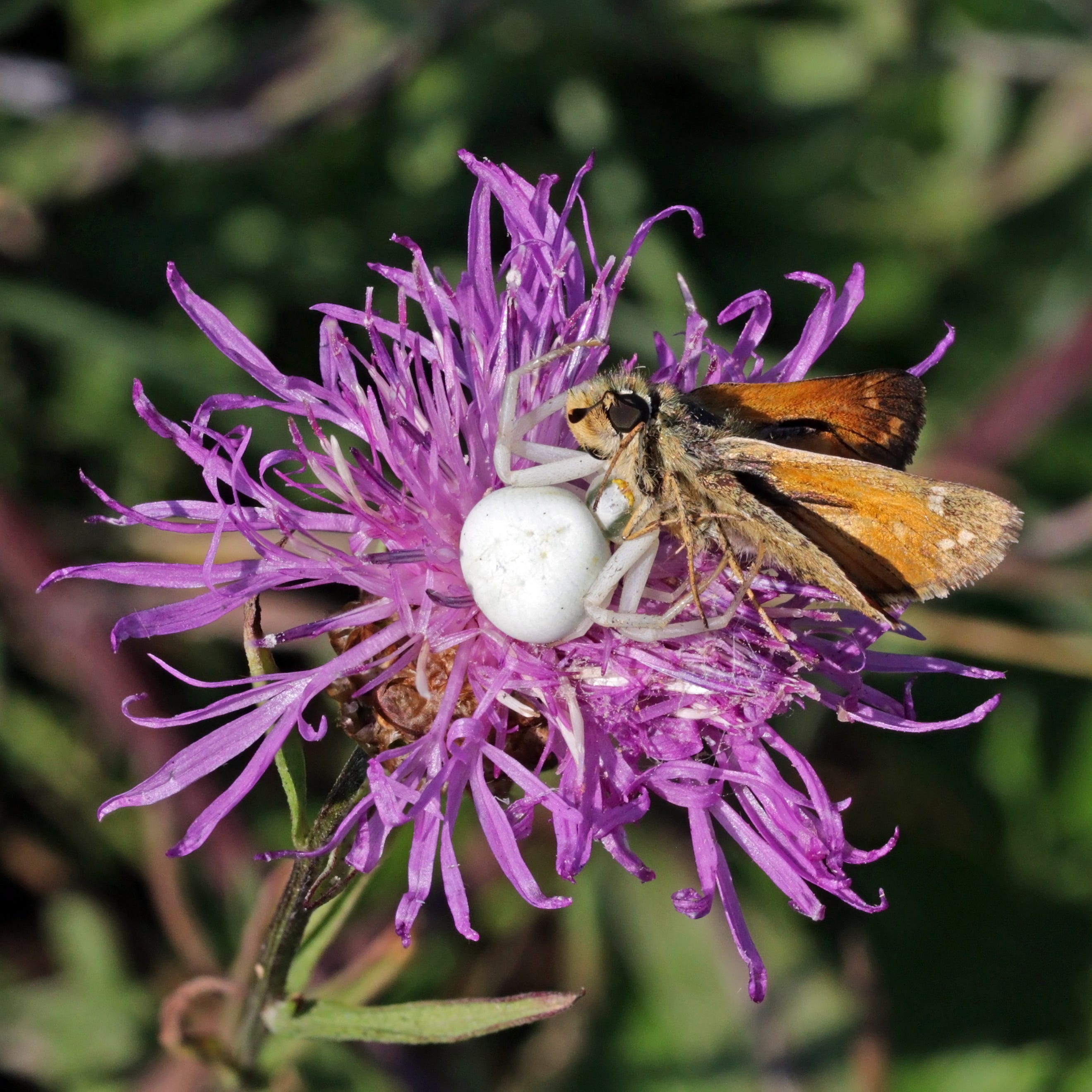
This is my editorial for the summer issue of Arnoldia, the magazine of the Arnold Arboretum, which comes out later this month. It’s full of good things: landscapes as archives, trees as elders, islands as forests, and the high-wire conservation of a spectacular Balkan conifer. Join the Arboretum today and we’ll mail you a copy!
Spend enough time in botanical gardens and arboreta and eventually someone will tell you that they aren’t “natural.” They are “designed landscapes,” and thus have none of the wild in them. Nature, according to this view, exists only in “intact” ecosystems. There is a history to this notion; we catch it in Thoreau and Muir. It comes into its quintessence with Aldo Leopold, who made the fine balance he observed among living things an ideal of stability. To be “stable,” to be “intact,” was for Leopold the essential quality of the living world.
I find this perspective unsatisfying, however. It pushes nature to the margins, into reserves and refugia (paradoxically making it another kind of garden).
Recently, I walked the grounds with someone who knows this place well. It was the turn of spring, the landscape moist and hushed, the dull roots stirring. And dotted here and there, smudges of rabbit fur—the traces of killings amid the plantings. Great-horned owls haunt the shadows of the trees; as spring ripens, young coyote make their way through the collections, keeping the secrets of their provenance. Soon, monarch butterflies will flit among the milkweed that hosts their caterpillars, which is found in abundance throughout the landscape. There is an element of design in this—our horticulturists foster herbaceous communities that include milkweed. These plants are not sited and planted, however, but turn up where conditions favor their flourishing. In a sense, milkweed’s presence is not so much a product of design as a revealer of its limits and horizons, and an indicator of the generous and generative ways in which the horticulturists care for this place—not as a walled garden, but a porous pattern, which other lives enter on their own terms.
There’s this poem by Robert Frost called “Design.” It’s troubled me for years. It opens on a “dimpled spider, fat and white,” perched on a “white heal‑all” (Prunella vulgaris, a common roadside and old-field plant), holding aloft the severed wings of a moth. Frost asks what purpose or meaning might be detected in this tableau:
Text within this block will maintain its original spacing when published
What drove the spider to that height,
Then steered the white moth thither in the night?
What but design of darkness to appall?
If design govern in a thing so small.
If design govern in a thing so small. Perhaps the universe is designed, Frost seems to speculate—but not for the little ones. Frost is posing a question in what theologians call theodicy: the problem of evil in the world. For all our modern sophistication, predation prompts a visceral response, as it has for humans in many times and places. So much of life is suffering. In a good universe, what role do death and cruelty play?
And yet even Frost’s macabre scene, when looked at from another angle, becomes porous with possibility. The “moth” Frost seems to have observed might actually have been a butterfly—in particular, a clouded sulphur, Colias philodice, which often appears in white form, and for whom the heal‑all serves as a larval host. Perhaps before the spider took her, Frost’s “moth” had set her eggs gently down among the froth of the heal‑all. And what steered her there? The Darwinian imperative of reproduction, yes—but we know that impulse well enough ourselves to recognize its thickness and exultation.
Spider’s feast, owl pellet, coyote scat: the landscape proliferates with the marks of cruelty at every scale, uninvited, undesigned. The question, for gardeners as for theologians, is whether such scenes indicate a design flaw or instead, perhaps, resist the overreach of any design to banish contingency, whether in the form of death and decay or weedy flourishing.
Father Józef Tischner, the chaplain of Poland’s Solidarity movement, defined work as a “conversation in the service of life.” Writing about Tischner in his new book Solidarity: The Work of Recognition (Bloomsbury), Rowan Williams explains that labor is conversational to the extent that it is “a constant adjustment of meaning under the pressure of making practical sense of communal life.” (I thank the writing of scholar Alan Jacobs for the reference.) I would venture a definition of design in this same spirit: the shaping of making, planting, and tending in the service of life.
“It is perhaps a stretch of the imagination to speak about a ‘conversation of labor’ with the non‑human environment,” Williams continues. “But this is not nonsense: learning the intelligible patterns of the embodied life around us, learning what threatens it or enhances it, is at the very least analogous to conversation, analogous to the process by which we create an identity that is new, in which we and other material substances or agencies may find a co-operative mode of living together.”
A “designed landscape” maybe hopes to keep the cruelty at bay. A garden, however, with its hawks and rabbits, milkweed and monarchs, spiders and butterflies, is a landscape that has learned to listen—to accept that nature, for all its suffering, is fundamentally good, and that our creativity is truest when it cooperates with the good in all its fullness. The trees kept here keep this kaleidoscopic goodness, tell that story to the generations. I think of the forest in W. S. Merwin’s poem “Rain Light” rising beyond a garden whose flowers all “are forms of water”—the trees upon the hillside alight with “the washed colors of the afterlife,” which “lived here long before you were born,” and which “wake without a question / even when the whole world is burning.” Opening the conversation of design to the living world, we find our own horizons enlarged. And we are not appalled.
No posts
Comments
Nothing yet. Say the first thing.
Sign in to join the conversation.