
People usually consider walking on water or in thin air a miracle. But I think the real miracle is not to walk either on water or in thin air, but to walk on earth. Every day we are engaged in a miracle which we don’t even recognize: a blue sky, white clouds, green leaves, the black, curious eyes of a child, our own two eyes. All is a miracle.
— Thích Nhất Hạnh
Fourteen years ago today, my partner and I moved into our eco-home, a straw bale house. Completely coincidentally, it was April 21, Earth Day. I’ve always thought that was a fitting and rather sweet synchronicity.
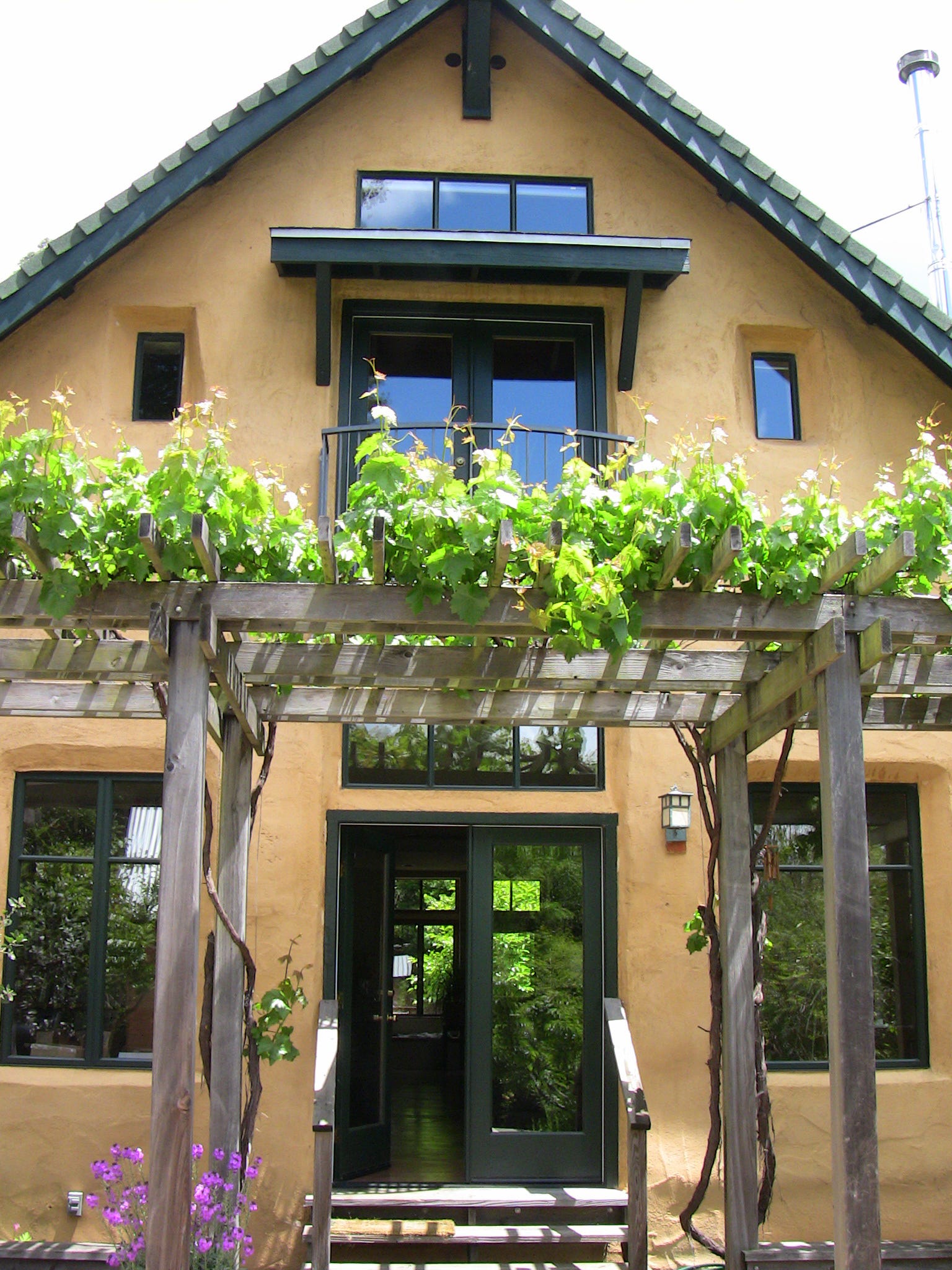
Most of our walls were built with bales of leftover rice straw, about two feet thick, then covered with chicken wire and stucco, which makes for wonderful insulation. The house is heated with radiant water pipes. The roof insulation is recycled newspaper. And we get a good chunk of our electricity from solar.
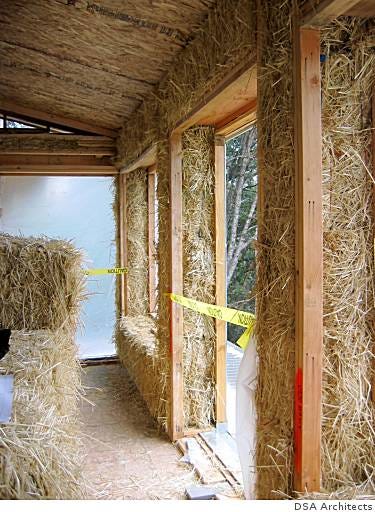
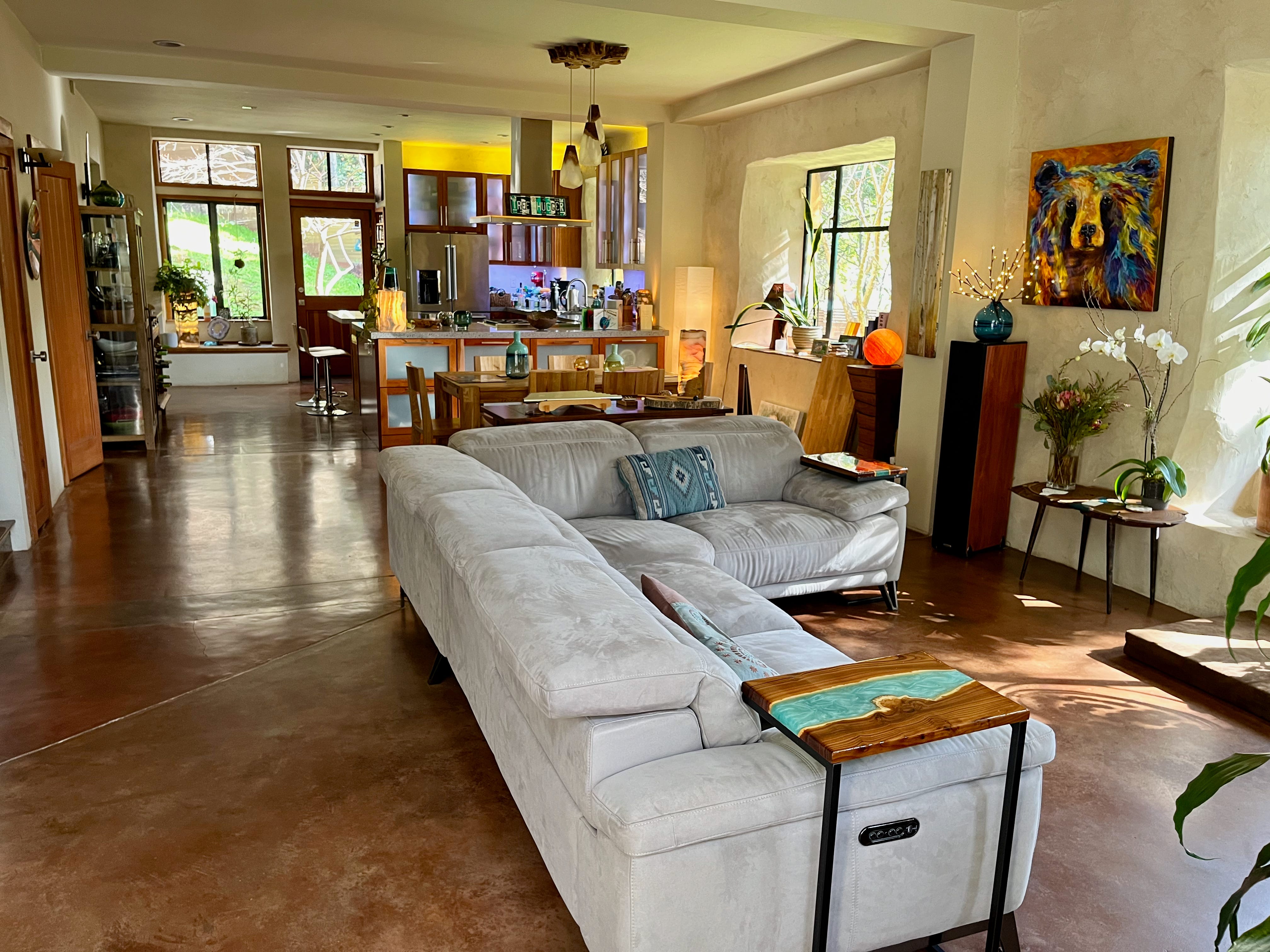
I am sharing a few photos not because I think personal choices like this are enough, but because this house has long felt to me like one act of partnership with the Earth. Living here has only deepened my awareness of how dependent we are on a stable, living planet, and how recklessly we have treated that gift.
On this Earth Day, I find myself thinking about our precious and poorly treated home, and about how close we may be to some very intense and destabilizing times as climate change accelerates.
Just this past week, scientists released a deeply concerning report on the Atlantic Ocean current system known as the AMOC. It was already understood to be at its weakest point in 1,600 years because of the climate crisis. While scientists had been watching it slow, many believed we might still have decades before a full shutdown became a serious near-term possibility. Now they are warning that it could come much sooner than expected.
If that happens, it would not be some distant or abstract ocean event. It could be one of the most devastating climate disruptions we face, with catastrophic ripple effects across food systems, rainfall patterns, sea levels, and human communities.
As The Guardian reports:
“The research found that if carbon emissions continued to rise, 70% of the model runs led to collapse, while an intermediate level of emissions resulted in collapse in 37% of the models. Even in the case of low future emissions, an Amoc shutdown happened in 25% of the models.
Scientists have warned previously that Amoc collapse must be avoided ‘at all costs’. It would shift the tropical rainfall belt on which many millions of people rely to grow their food, plunge western Europe into extreme cold winters and summer droughts, and add 20 inches to already rising sea levels.”
It is hard to take in language like that. Hard to hold it in the body. Hard not to want to look away.
But this crisis is not being driven by fate. It is being driven by human choices, above all our continued dependence on fossil fuels and the political failure to act at anything close to the scale this moment requires. And that means our choices still matter too.
This is also only one example of what is before us. We are already living amid rapidly shifting climate patterns that are wreaking unprecedented havoc across the globe. Fires. Floods. Drought. Crop loss. Displacement. Ecological unraveling. None of it is theoretical anymore.
And yet, this is not a call to despair. It’s a call to seriousness.
It is not too late to prevent some of the worst that could still unfold. But we have to stop playing dangerous political games with this crisis. We need public policy that matches the scale of the threat. We need leaders willing to stop new fossil fuel expansion, accelerate the transition to clean energy, protect climate science, invest in resilience, and act as if the future is actually at stake, because it very much is. And these actions will not only help some distant future. They can improve life right now through cleaner air, cleaner water, and a more stable climate that brings fewer extremes, less devastation, and greater safety for all of us.
Earth Day cannot just be appreciation. It has to be allegiance. Allegiance to truth. To science. To our future generations. To a living world that makes our lives possible.
Yes, let Earth Day invite our wonder. Let it remind us of blue sky, white clouds, green leaves, and the miracle of being here at all. But let it also summon our courage. Because loving the Earth now cannot just be a feeling. It has to become a form of citizenship. A form of moral action. The Earth is our home, and defending it is one of the most necessary responsibilities of our time.
Matthew Albracht is the Board Chair of The Peace Alliance (www.peacealliance.org), a U.S. based NGO which advocates for domestic and international peacebuilding priorities. His writing has appeared on CNN, Newsweek, Salon and HuffPost, where he contributed regularly, among other outlets.
His Substack writings explore how we heal—from the inside out and the bottom up—personally, politically, and culturally—with a particular focus on the intersections between them all. Weaving together politics, psychology, and personal growth, grounded in systems thinking and trauma-awareness.
No posts
Comments
Nothing yet. Say the first thing.
Sign in to join the conversation.