
Spirit Halloween is a chain retailer that operates hundreds of seasonal costume stores across America. True to their theme, these stores tend to haunt derelict property. In 2021, Spirit caused a stir when it temporarily occupied the abandoned Barney’s department store, which had recently declared bankruptcy, filling the former temple to cutting-edge fashion with wigs and sexy SpongeBob SquarePants costumes. This was a high-end example of Spirit’s business strategy, moving into an empty K-Mart or Toys-R-Us at cut-rate rents for spooky season pop-ups. The founder of the chain described some of their early tactics in an interview with 99% Invisible
Mike remembers getting creative to win over one possible landlord with a suite of available spaces, by sending a severed arm as a gag. “I stapled it to a piece of cardboard, put my business card on it, and then right there the gentleman’s name, ‘Hey, lend me a hand. I need your location here.’”
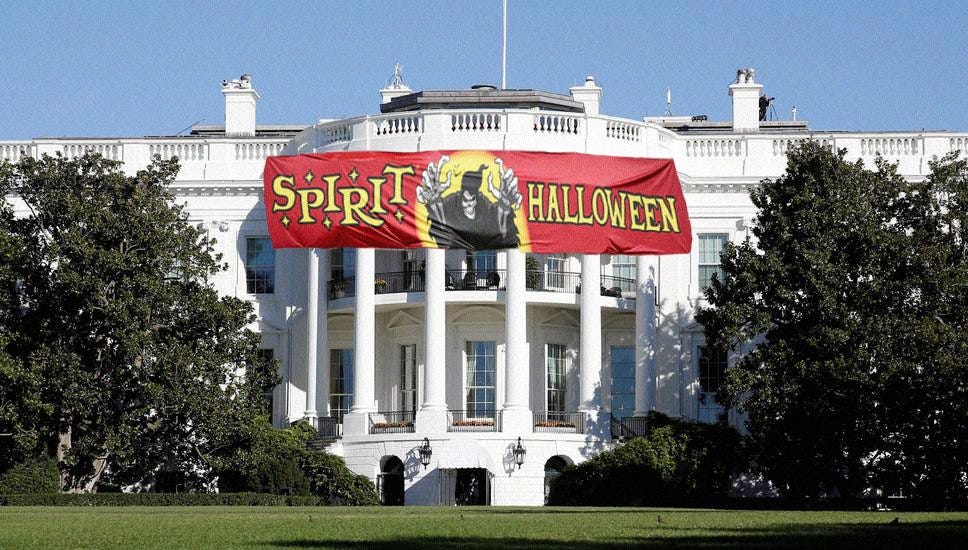
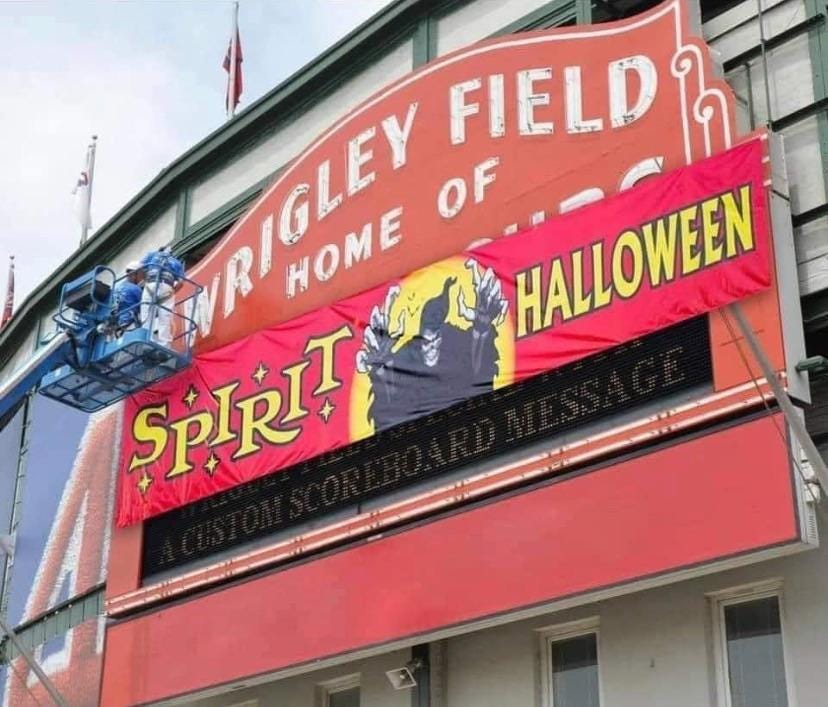
There is even a meme where people photoshop (or, in some cases, literally stage) Spirit’s banner to bring a “going out of business” vibe to various buildings.
Vacant buildings are powerful symbols; a shuttered store or empty building isn’t just a fact on the ground, it tells you something about the direction a neighborhood is going in. I often think about a lecture I attended in planning school by Matthew Carmona, where he listed his eight dimensions of urban design. One dimension that has always stuck with me is time, the temporal dimension of cities. The same place is different during the day than at night, tree roots slowly crack pavement, populations grow and then decline, and changing tastes and economic factors end some businesses and start others. The management of temporal change is in many ways the driving force of urban planning.
But change is hard to manage with inflexible tools. Two years ago, there was a big fuss over the closing of Crest Hardware in Williamsburg. The store had stood for 62 years in a rambling, low-rise plot on a busy avenue. Besides dispensing hardware and advice, Crest also hosted the occasional art show and fashion event. The site was bought by a well-heeled developer with a plan to turn the building into a mid-rise apartment building. Last weekend, gazing at the back of the store from my friend’s balcony, the site looked exactly the same as it did two years ago, except it was empty. Why? The developer has to apply to demolish the old structure and get their plans for the new one approved before anything can actually happen — a process that can take years. Even if the developer wanted to do something with the building while they were waiting, they would be hampered by strict zoning laws. When something goes out of business, its zoning doesn’t change overnight. You can’t just move a store into an abandoned house or vice versa. One of the things that makes Spirit special is that it is one of the few high-profile examples of rapid building reuse, but even Spirit is limited to occupying former retailers because it is itself a retailer.
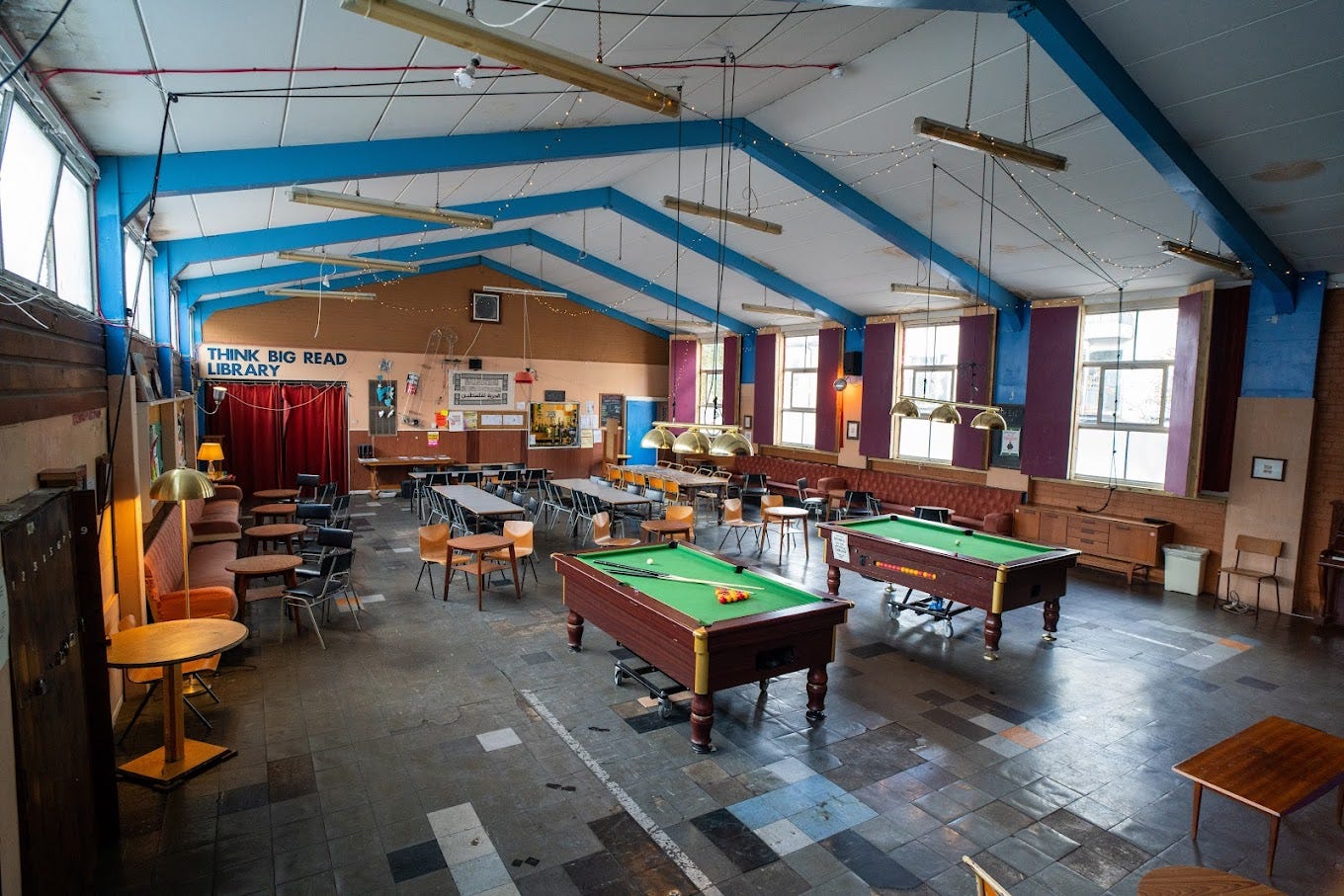
I’m always skeptical of the “why don’t we just build Paris here” style of urbanist shit-posting, but if I were going to import one idea from abroad to NYC, it would be what’s commonly known as meanwhile-use. The idea is simply to let properties that are waiting for something to happen to them — demolition, redevelopment, repair — be something else while waiting. One of the first Street Stack posts was about the cultural organization SET, a London collective that uses vacant property for affordable artist studios and cultural events. SET has taken over several abandoned buildings to fashion makeshift artist studios, and set up a community center and venue in a former church, pictured below.
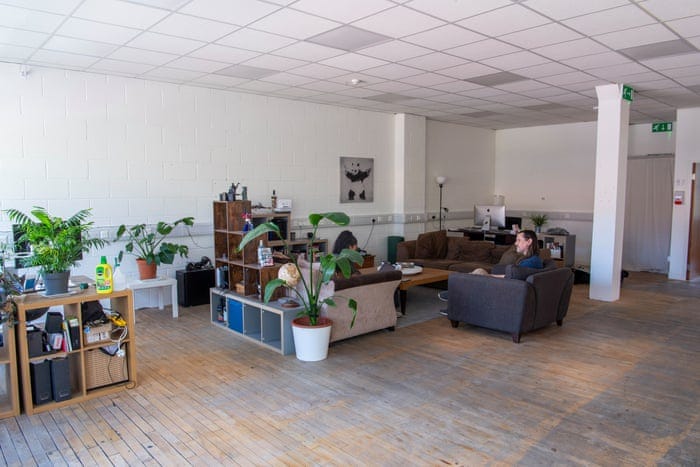
London doesn’t have zoning in the American sense, but relies on a system of “use classes” which are much broader and more flexible than our strict rules. It is also relatively easy to get temporary permissions. This has allowed a cottage industry of groups like SET to develop novel ways to occupy vacant space, sometimes for years at a time. In 2021, SET was allowed to occupy an abandoned office tower in Woolwich. The group managed to establish 250 studios in the office tower and rented them to artists at far below market value for the four-year duration of the lease. The property owners also benefited by having tenants who paid for utilities and a modicum of rent.
London also has a class of meanwhile-use specifically for housing called property guardianship, in which people can actually live in transitioning properties at low cost. My best friend in London lives in a former nursing home, which reverted to government ownership after its operator went bankrupt. Maybe one day the local Council will redevelop the property, but until then, they get an affordable place to live, although they do have to share a kitchen with 20 people.
Of course, the impact of these temporary operations often depends on the values of the people occupying them. When I lived briefly in Brixton, locals complained constantly about Pop, a market and venue made of shipping containers sitting on a brownfield site that the local government leased for one pound. Pop is for-profit, and by some accounts, its founder manipulated local community groups and entrepreneurs to essentially build a mall that pays no rent. On the other hand, a large number of local businesses call this mall home, and many are upset that the site finally appears ready for development. To me, I’d rather my community have a debate about how this space should be used than have it simply sit vacant.
Could something like meanwhile-use ever happen here? In a way, American cities are already setting the groundwork. One of the biggest catalysts in the UK was the consolidation of different commercial categories. In 2020, the UK government basically stopped caring if something was a store, a gym, or a cafe and just started calling all these things “commercial.” Where previously, if a gym went out of business, it could only be replaced by another “indoor sports/fitness facility”; now it could be replaced by a nursery or a cafe. In an attempt to refill COVID-era vacancies, San Fransico drastically broadened its permitted commercial uses in 2023, and in 2024, New York stopped nitpicking a whole host of commercial uses with its City of Yes reforms. All this gives a lot more flexibility to what types of businesses and organizations can go where, but it doesn’t exactly solve the problem of what to do with properties in transition. The US legal culture around premises liability is significantly more hostile to informal arrangements than the UK. We would need new laws and new incentives to both allow and encourage landlords to use vacant property. But the status quo of buildings sitting empty for years, even ones like Crest with active and engaged owners, shouldn’t be acceptable to any of us. More than that, meanwhile-use often reveals the possibility of spaces that more intentional planning misses. There was something undeniably fun about seeing a grey office tower cubicle farm turned quite easily into a creative space. Today’s parking lot is tomorrow’s bar. A building is just a container, and you should be able to fill it with whatever makes sense.
No posts
Comments
Nothing yet. Say the first thing.
Sign in to join the conversation.