
The next Street Stack walking tour will be in NYC this September. Details to come, but space will be more limited this time, and paid subscribers will get priority. It’s never too late to upgrade and help fund the large amount of time and effort I put into Street Stack.
I regret to say I’ve failed you all. Despite this being a Substack about urban planning, I’ve never discussed in detail an actual capital “P” urban plan. A good chance to correct this arose when my second-favorite city, London, released the Draft London Plan a couple of weeks back. If you are an actual planner, then this will be boring. If you are, like most of my readers, not a planner, then this will still be boring, but you will be smarter at the end. London, like many cities around the world, creates a comprehensive plan that establishes standards and targets for areas such as housing and economic development. Each borough council then develops a local plan to conform to the comprehensive plan. To vastly oversimplify it, if the Greater London Authority (the governmental body responsible for the city as a whole) studies Lambeth and determines that it can build 2,000 new homes, then the Lambeth Council comes up with a plan for where it’s going to put them. Think of the whole thing as a Russian nesting doll, with national, city-wide, and local plans all living within one another and getting more specific the farther down you drill.
Ideally, the output of these layers determines the best place for each thing a city wants and needs. You can actually reduce a lot of planning to “where do we put x to get y.” To touch on two things about the draft plan in this respect: First, it opens up previously protected parts of the city to housing development, and second, it says a lot about data centers (ahem *centres), a topic I’ve avoided like the plague but fear I should care more about. I was surprised to learn that the UK’s biggest cluster of data centers isn’t in a field somewhere but in greater London. The city’s influential financial sector is already clamoring for centers to support vital tasks like “high frequency trading.” Unlike a nuclear power plant or dump, the close proximity of centers to end users matters. A difference of milliseconds in processing time for a trade could add up to millions of ££££££ people! Of course, there is value in maybe using that land for houses or schools. The GLA already estimates that data center construction is slowing housing delivery throughout the city
The Draft plan is an initial attempt to wrangle a type of development which will sadly become more common. It directs local councils to identify areas that can handle centers, and to make sure those are not sites that would be better suited to housing. It covers obvious things like ensuring sufficient electricity and water, but also indicates preference should be given to schemes that use innovative cooling methods and recover some of the tremendous heat data centers create for alternative uses (for example, heating nearby homes). My home state of New York just put a moratorium on new data center construction until comprehensive guidelines can be created, and London is making some of the first efforts to do just that at a metropolitan scale.
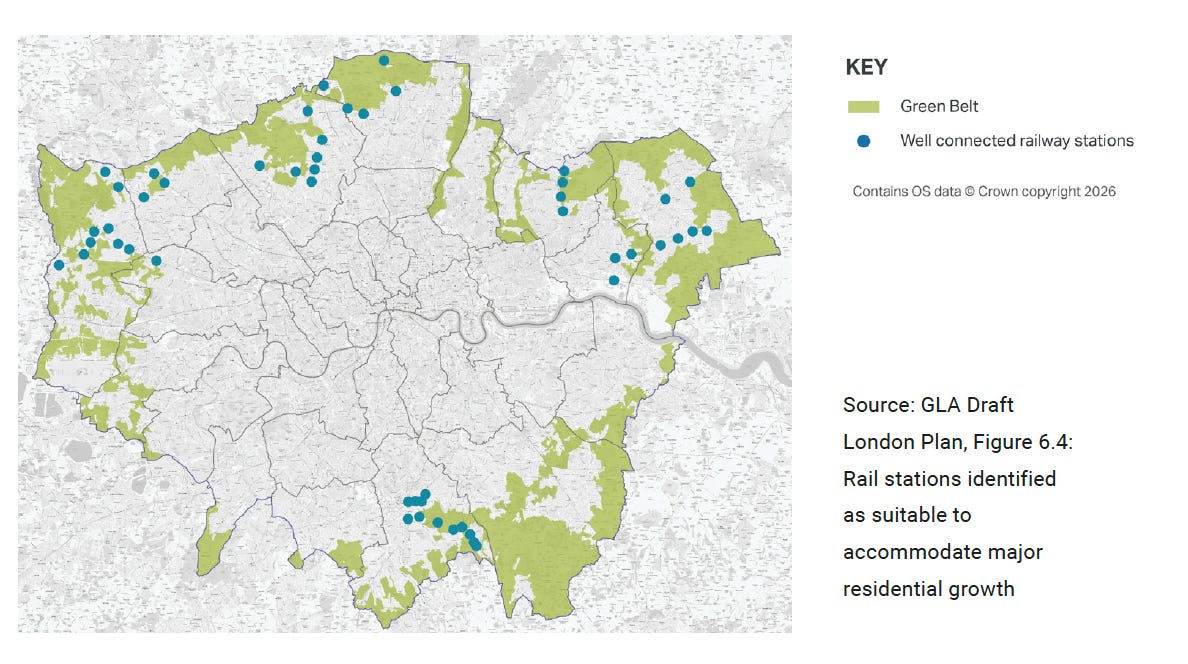
Turning to housing, the plan has a lot of it, less than you would need, and more than I can go into detail about here. I’ll zero in on one point, which is building in London’s Green Belt. The Green Belt is a ring surrounding the city in which development is forbidden or severely restricted. It’s existed in some form since the mid 1900’s, although its exact boundary has fluctuated with time. The rationale was to prevent the city from endlessly sprawling into the English countryside. Many cities around the world have a similar growth boundary to encourage density within transit linked boarders, to ensure cities don’t get stuck providing expensive transit and services to huge areas, and to protect rural hinterlands. If you’re picturing a firm line with city on one side and unspoiled country on the other, then the reality is a little more fuzzy. Large towns and villages that predate the belt fall around its boundaries, golf courses and hospital parking lots dot its land, and over 80% of it is privately owned.
The Draft Plan encourages, for the first time, targeted development in the Green Belt under “exceptional” circumstances — basically large amounts of affordable housing. For example, in Croydon, South London, the GLA estimated that 5,600 homes could be built in a portion of the Green Belt that is well served by transit. Croydon Council has already announced it will oppose the provision. Environmentalists are up in arms at the prospect of losing some of the capital's only wild spaces.
It’s worth noting that something being in the plan doesn’t mean it’s going to happen. The GLA is an elected body that has authority over councils, also elected, that cover smaller areas. Both have their power limited by laws and budgets and the rights of the private sector and people. The GLA saying 5,600 houses should go somewhere doesn’t make them built; the government is essentially making a box that they hope the private sector fills in. People directly influence planning by voting for officials and participating in public hearings or comment periods, but their understanding of the process and their access to the people doing it will be heavily mediated by their standing and capacity. They may have even less access to the developers who end up putting the plans into action. The vast majority of the people the plan is for don’t know it exists and didn’t participate in its creation. In understanding a plan, it’s important to understand its content and also the positionality of its authors.
I realize that the vast majority of you don’t live in London, but the two issues sum up several core tensions of planning everywhere. In solving one problem, you may ignore (or create) another. A data center can power a financial sector which, for better and worse, is the economic engine of your city; at the same time, they use up valuable land for housing and suck up natural resources. We can build housing, but at the expense of natural areas. The choices aren’t as stark as that (Croyden’s opposition to building in the Greenbelt is partially that the city should focus on redeveloping unused industrial land), but there are tradeoffs to everything. Debates about the Elizabeth Street Garden or Sunset Dunes follow this pattern. The design theorist Horst Rittel described something called a “wicked problem,” a problem with no discernible stopping point, where there is no “true or false,” only “better or worse.” Anyone who works in city-making needs to be comfortable with this basic ambiguity.
As an aside, while we’re on the UK, Diana Lind has an excellent breakdown on Andy Burnham as the former Mayor of Manchester becomes Prime Minister. Burnham’s promise is to take power over a broad swath of government functions away from national authorities in London and put it in the hands of local governments and municipalities. Interestingly, although this is often phrased in terms of getting power away from London, it may end up benefiting the city. While it creates much of the county's economic activity, London depends heavily on the national government for funding, a total outlier in terms of big cities around the world.
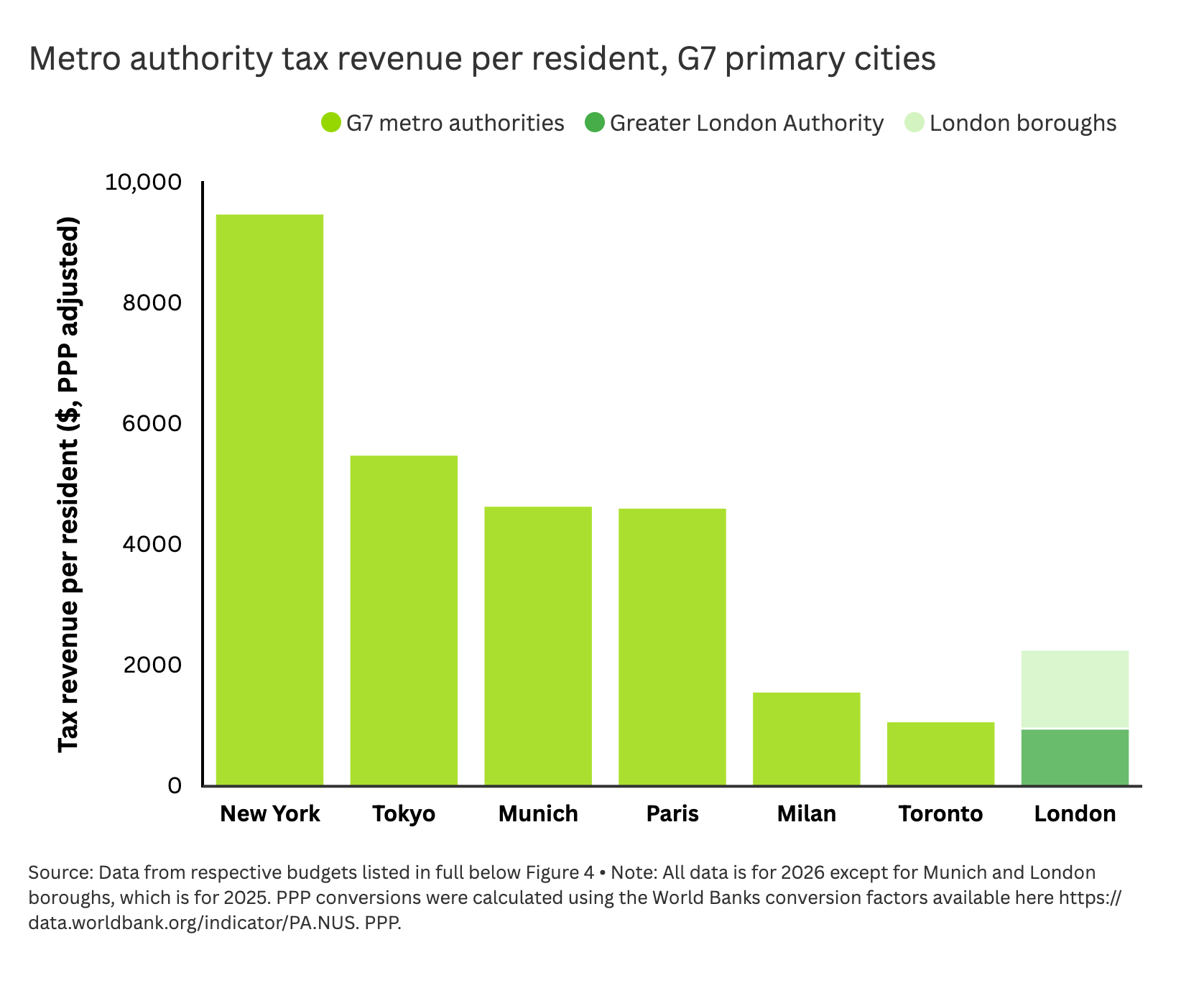
London’s mayor has argued that the City can’t deliver its housing targets without more funding for infrastructure like transit, funding it must currently ask the British government for.
No posts
Comments
Nothing yet. Say the first thing.
Sign in to join the conversation.