
A city’s music is like its body. It emerges organically from the smallest cells of individuals, families, clans, and neighborhoods, forming a teeming musical biome. Within this ecosystem, iconic musical styles form: Broadway in New York. Motown in Detroit. Jazz in New Orleans. These and more are the outcome of millions of microscopic musical interactions, yielding the embodied creativity of a city.
When I came to Dallas, I decided to satisfy my curiosity with a professional side quest: to uncover the stories of Dallas’s Jewish music.
In my first year, I discovered two Jewish melodies which originated here in Cowtown: The “HaMotzi Song,” written by renowned classical composer Samuel Adler while serving as music director at Temple Emanuel in 1955; and “The Dinosaur Song,” first adapted three decades ago by Dallas JCC songleader Mimi Greisman from a 1989 Disney channel special.
On all accounts, it would appear that Dallas is a good place to write Jewish children’s music. Now that I teach Preschool, 3rd, 5th, and 6th grades plus all-school music and worship each week, I am trying to follow suit. Recently I adapted the traditional “Thirteen Attributes” melody into English, attempting to break down this complex and profound liturgical staple to its essential emotional nutrients for kids.
You can listen and let me know what you think:
0:00
-0:48
But even greater mysteries came from the musical customs of my home synagogue.
The first was an enigmatic ein kamocha, quite different from the most well-known version by Cantor Salomon Sulzer (1804-1890), which is the defining melody for that prayer all over the Ashkenazi world.
This alternative melody broke the mold, and most of the synagogue members that I asked could not identify where it came from. That is, until I spoke to one of our beloved bar mitzvah tutors, who confirmed that the melody was taught to him by his childhood hazzan at Beth Sholom in Roslyn, NY — Cantor Morton Kula (1929-2011).
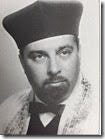
Morton Kula was born in Grodno, Poland in 1929 and immigrated to the USA at nine years of age. He graduated with a B.A. in Music from NYU, and went on to become one of the first graduates of the Cantors Institute at JTS (now the H.L. Miller Cantorial School). He served Beth Sholom in Roslyn Heights (1954-1972) and then Adath Jeshurun in Minneapolis (1972-1994), where he later became Hazzan emeritus. A musicologist and Zionist, he was known among his cantorial colleagues for his outgoing and warm personality. He and his beloved wife Charlotte had six sons, many of whom went on to serve the Jewish community.
Confirmed by his son, Rabbi Mark Kula, this is his Ein Kamocha, as sung in Dallas:
0:00
-0:47
Melodies like this highlight the immense influence of cantors as composers and musical curators. Like in the hundreds of Jewish villages in medieval Germany, synagogues are often defined by highly-localized traditions bequeathed by their community’s lineage of cantors. In this case, my shul carries the Kula legacy via the musical goodwill of one of his former bar mitzvah students who went on to become a service leader and synagogue president. Cantor Kula’s melody now stands as a special sonic marker of our community.
Yet another Dallas Jewish music mystery was posed by the melody that my community sings for the first paragraph of the Shabbat amidah. At first, I was quite taken aback by the unexpected melody, which I had never heard in any other synagogue.
Or at least I thought that I hadn’t.
My first hypothesis was that it had originated with the older Conservative synagogue in town, whose community was founded a century-and-a-half earlier than my own. I asked around, but no one seemed to know where the melody came from. It was like asking fish for the origins of water.
But again thanks to one of my keen bar/bat mitzvah tutors, the answer emerged:
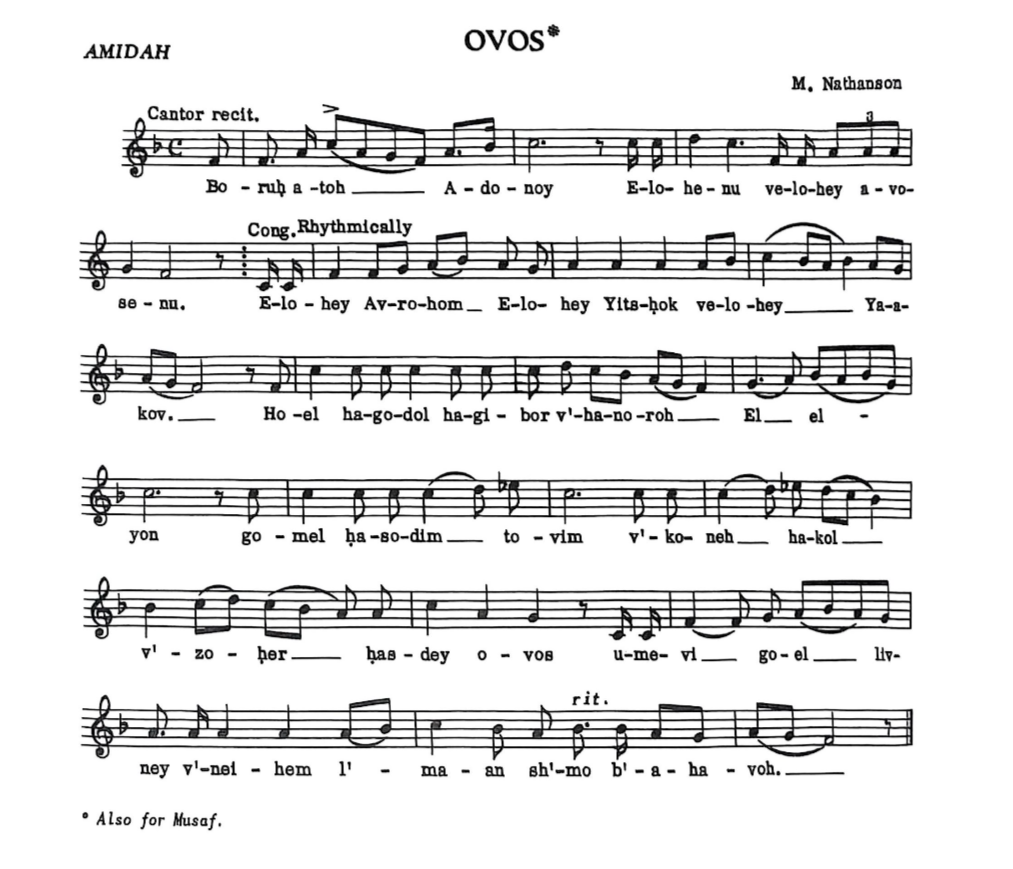
This tune was the avot of Cantor Moshe Nathanson (1899-1981), first published in Zamru Lo, Volume 2 (1955) — the first collection of congregational melodies published by the then-infant Cantors Assembly.
Some will also recognize the melody, beginning in the second line of music, from somewhere else:
Yes, this is the opening melody from the ubiquitous birkat hamazon tune, written by Cantor Nathanson fifteen years beforehand.1
Born in Jerusalem, Moshe Nathanson was a beacon of Hebrew culture and Israeli song in America, serving as the cantor of Mordechai Kaplan’s Society for the Advancement of Judaism from 1924 to 1870 and spreading Zionism through music to an eager audience of young American Jews.2 The origin story of his famous birkat hamazon was recently recounted by journalist Jonathan Mark in a retrospective on two famous shul tunes:
“One day, after lunch, the story goes, one bunk started singing the Bentching’s Oseh Shalom verses to the lively Woodcutter’s Song from the Hansel and Greta operetta. In that spirit, [Moshe] Nathanson tried writing a lively camper-friendly melody for the first paragraph of Bentching. Campers took to it. It was published in 1939, but Cantor Zim said Nathanson’s melody “was already familiar” from camp, placing the date of Nathanson’s composition in the summer of 1938.
When Camp Achvah closed, its cultural baton — and its Bentching — was passed to the Modern Orthodox Camp Massad, which in 1941 became the second Hebrew camp. In 1947, the Conservative movement started Camp Ramah, the third Hebrew camp, with many staffers coming from Massad. The Bentching came, too.”
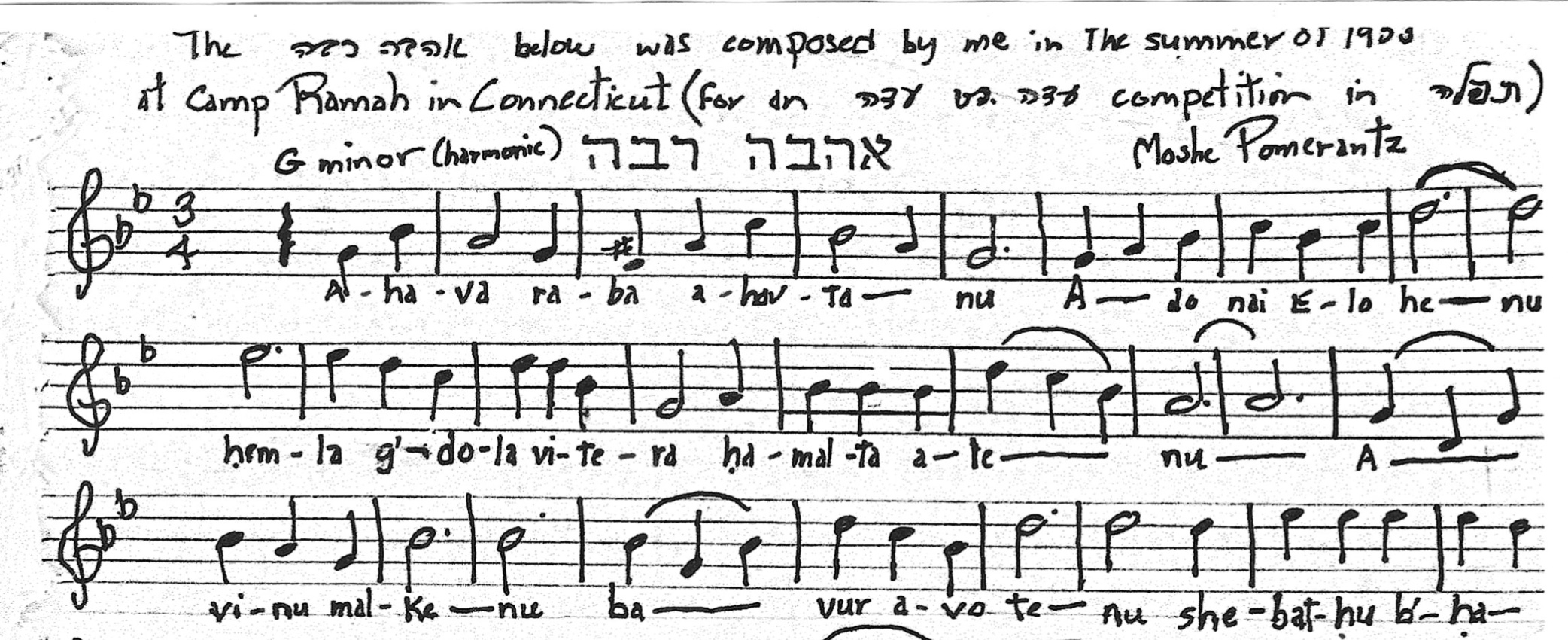
From Mark’s conversations with Cantor Paul Zim, it would appear that the spread of the birkat hamazon was linked strongly to its composition and popularity among the first Zionist summer camps in America —Achva, Massad, and Ramah — from whence it spread throughout American Jewish camps and synagogues. This transmission story tracks for other well-known tunes which originated at these camps, including the famous “Bim Bam” song (written by Naftali Frankel at Camp Massad in 1949) and Rabbi Moshe Pomerantz’s Ahavah Rabbah, written at Camp Ramah New England (then located in Connecticut) in 1953.3
Nathanson's popular and folk-tune laden approach to bentching may seem campy (in more ways than one), but it is validated by historical precedent. As Eric Werner argued in A Voice Still Heard, Western Ashkenazic settings of the prayer leaned heavily on secular German folk songs, such as “Kein Feuer, Kein Kohle” (1807) and a German children’s song later reproduced in Humperdink’s Hänsel und Gretel.

Researching the many European and North American notations of birkat hamazon, Cantor Eric Contzius’ confirmed the continuity of the major modality and use of these German folk melodies across one hundred years of Western Ashkenazi sources.4 Protesting this historically permeable barrier between sacred and secular, the prudish Werner opined that “with these melodies we find ourselves on the brink of vulgarity.”
Maybe so. But that depends on whether you believe the source of a melody renders it vulgar — or its use. One could make the argument that Nathanson’s birkat hamazon medley of novel compositions and old tunes is still rendered for “vulgar” entertainment, especially in camp settings.5 On the other hand, the tune has also been an unequivocally effective tool for the learning of grace after meals across the Jewish world.
As for me, I’m just nostalgic for the days when impish campers quoted catches of Englebert Humperdink. Which, by the way, still comes through beautifully every time you sing “aleinu v’al kol yisr'ael v’imru amen.”
Tracking the musical genealogies of these two melodies from Jewish Dallas certainly makes for good conversation. But more importantly, it raises the curtain on a communal history of preserving well-loved musical traditions introduced by beloved leaders. That is a history worth learning from.
Despite the satisfaction of stamping “case closed” on their identity files, I confess that some of these former mysteries still leave me with unanswered questions:
...Is the way we sing Cantor Kula’s tune the way he originally composed it?
…Which came first: Nathanson’s avot or his birkat hamazon?
…How is it that the synagogues of Dallas came to sing Nathanson’s avot, a melody rarely used for that context?
For now, I’ll just have to take a hint from Iris DeMent — and let the mystery be.
Cantor Nathanson’s melody for the Jewish “grace after meals” was not his only contribution to today’s liturgical tunes. His publications popularized a number of melodies still well-known today, including the famous hasidic-style yismehu (arranged by Nathanson), the waltzy, minor “haleluhu betzilzelei shama” for Psalm 150, and the Torah service’s av harachamim (adapted from a choral piece by Russian cantor Abraham Dunajewsky (1843-1911), all known in Jewish Sabbath services across North America (and in Anglo-Jewish tradition for Festivals).
See Eli Sperling and Edwin Seroussi, “Mordecai and Judith Kaplan, Avraham Zvi Idelsohn, and Moshe Nathanson—Voices of Palestine” in Singing the Land: Hebrew Music and Early Zionism in America (University of Michigan Press, 2024): 103-136; Nathanson is also recognized by many scholars as the composer of the words to hava nagila.
The “camp-to-synagogue” pipeline is a well-known phenomenon in American Judaism, owing to the success of Jewish summer camps in socializing and setting trends for American Jews. For a first-hand account of the transmission of the USY Bencher from summer camps to Conservative synagogues, listen to my interview with B’Kol Echad editor, Cantor Jeff Shiovitz.
No posts
Comments
Nothing yet. Say the first thing.
Sign in to join the conversation.