
Martha Stewart decided to mention Meghan, Duchess of Sussex, during an interview last week, and the online discourse that followed (IMO) far outstripped the actual comments that were made. Because the woman whose name led the subsequent headlines was the least active player in the entire series of events.
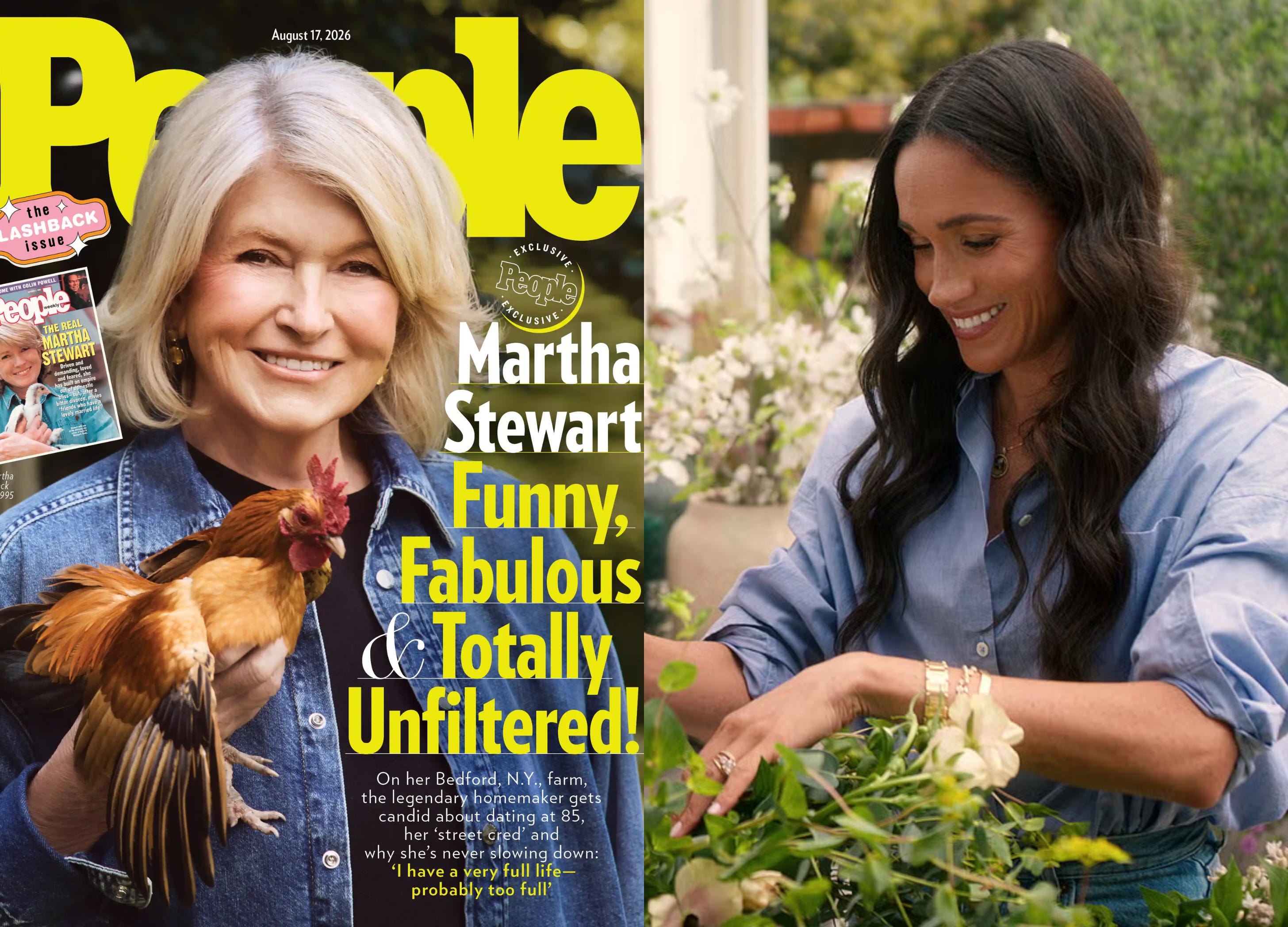
Still, buried inside this episode, there might be a larger conversation that’s worth having. Even when she’s entirely absent, the Duchess of Sussex still sparks conversation and argument alike. Why?
Speaking to PEOPLE Magazine, Martha had this to say about Meghan’s foray into the lifestyle space with her Emmy-nominated Netflix series, With Love, Meghan:
“If you’re an actress, it’s hard to then transition to a princess and then from a princess into a homemaking guru on a television show. It doesn’t sort of follow. So go from there.”
The question was, in a way, pre-loaded. The interviewer framed it as a question about Meghan “stepping into [Martha’s] space with her own cooking show” - leading with a kind of territorial slant that is already less than gracious.
And Martha’s response, too, is steeped in the sort of sly cattiness that c*nty New Englander women of a certain age think they pull off very well, but usually just reveals their disdain for other people’s life choices instead.
You can agree or disagree with Martha’s premise here, and I actually don’t disagree that, yes, it would be difficult to make such massive life shifts with an audience of millions in the space of four or five years! And someone like Martha being asked this question—and giving the response that she does—plays into why that would be so difficult in the first place.
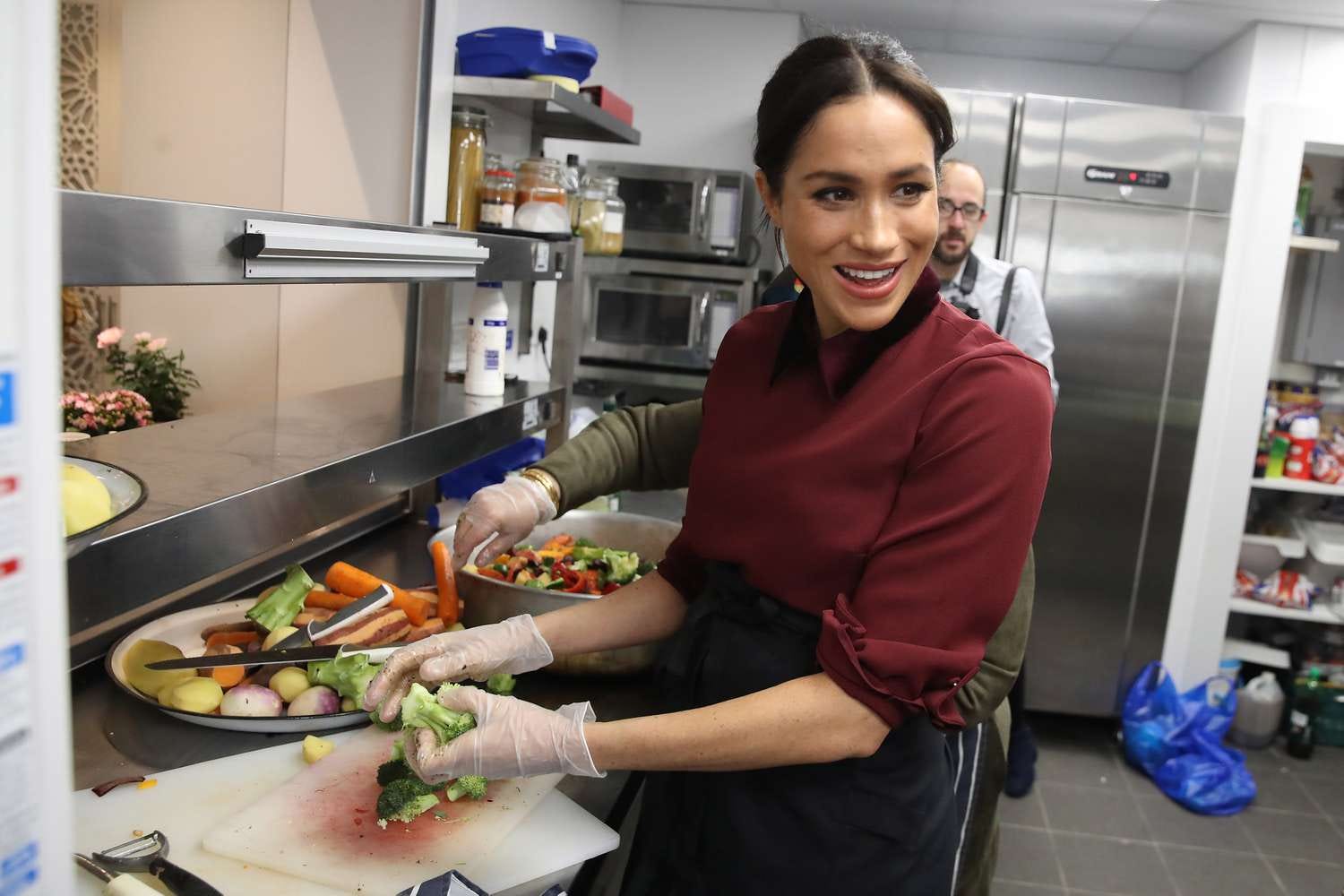
Stewart has said versions of this before, telling Yahoo News Australia last year that “I hope she knows what she’s talking about. Authenticity, to me, is everything, and to be authentic and knowledgeable about your subject matter is extremely important.”
To me, that was a slightly more diplomatic way of raising the point that Martha is. . . shall we call it a “Meghan Skeptic?”
But this time around, the comments were read—and, I think, given—with less generosity. Because Martha’s comments about the challenges that Meghan would face as an actress turned princess turned cooking show host are not what became the story.
Earlier in the interview, Martha also offered an anecdote about Meghan, almost as an aside. While describing her own cocktail party habits (“last in, first out”), Martha just happened to mention that she’d recently been a guest at a California dinner where Meghan was also present:
“I don’t like cocktail parties terribly much. I don’t like standing around. If it’s a dinner, I like to get there when people are about to sit down. And then I like to leave shortly after dessert is served. But I have a good time while I’m there. I had dinner with Meghan Markle the other night. We were both guests at a dinner party in California. And she had just gotten back from the palace. I didn’t talk to her really more than to say a couple words, but I know she was talking about it.”
To me, the two halves of that comment make exactly zero sense in relation to one another. Are you saying that Meghan is the opposite type of partygoer to you? A joiner? A conversationalist?
. . .okay!
That’s just an odd thing to reach for, unprompted. Unless, that is, you understand (as Stewart surely does after fifty years of managing media coverage) what name-dropping Meghan can do for your own circulation. I guarantee that enough editors have Google alerts set up for the Duchess of Sussex that the choice to mention her has become a simple numbers game for celebrities with enough media training.
Within a day, Martha’s PEOPLE profile had morphed into a story about Meghan supposedly holding court at a Montecito dinner table, apparently name-dropping the royal family for anyone who would listen. All about Meghan, as usual, the comments section put it (and that’s the politest possible way I can paraphrase for you).
Now, none of that is actually baked into what Stewart said. By all accounts, Meghan was never even at “the palace” during their recent Europe trip. She and Prince Harry met with King Charles and Queen Camilla at Highgrove House, and even an American duchess would know the distinction there. Martha even admitted that she herself had barely spoken to Meghan.
Right away, my royal commentator brain is telling me that Ms. Stewart is doing some embellishing that would make even the official Court Jeweler blush.
It was, as it always is, the frenzy that supplied the rest: of course Meghan was bragging, touting her royal status.
And then came the rebuttal. The host, still unnamed, of the dinner table rang PEOPLE to say that Stewart’s account was “simply untrue,” and that Meghan had only mentioned that her family “had a great time” on their recent European vacation—which also included a lengthy stay in Portugal.
At this point, we have a second story to write, and a way to loop in the royal editors—thank GOD—and provide them with a byline during what is otherwise known as “silly season.” With the principal royals on their own summer breaks, this is the time to feed on any and every Meghan story that’s on offer.
Reply and tell me: is there anyone else (royal or not) who makes news simply by being named in someone else's sentence? I'm struggling to think of a second example!
So we’re now several layers deep in a disagreement about whether (checks notes) a wealthy woman talking about her vacation during a dinner party.
Most public figures make news when they do something: release an album, file a lawsuit, pop the hard launch into the Instagram feed. Meghan belongs to a much more exclusive category of people who can make global news when someone else so much as says their name in a sentence. She may even be the only woman alive for whom a secondhand, secondary anecdote can spin its own multi-day news cycle. And, of course, the public can be relied upon to fill in the portrayal of arrogance that Meghan herself has never actually displayed.
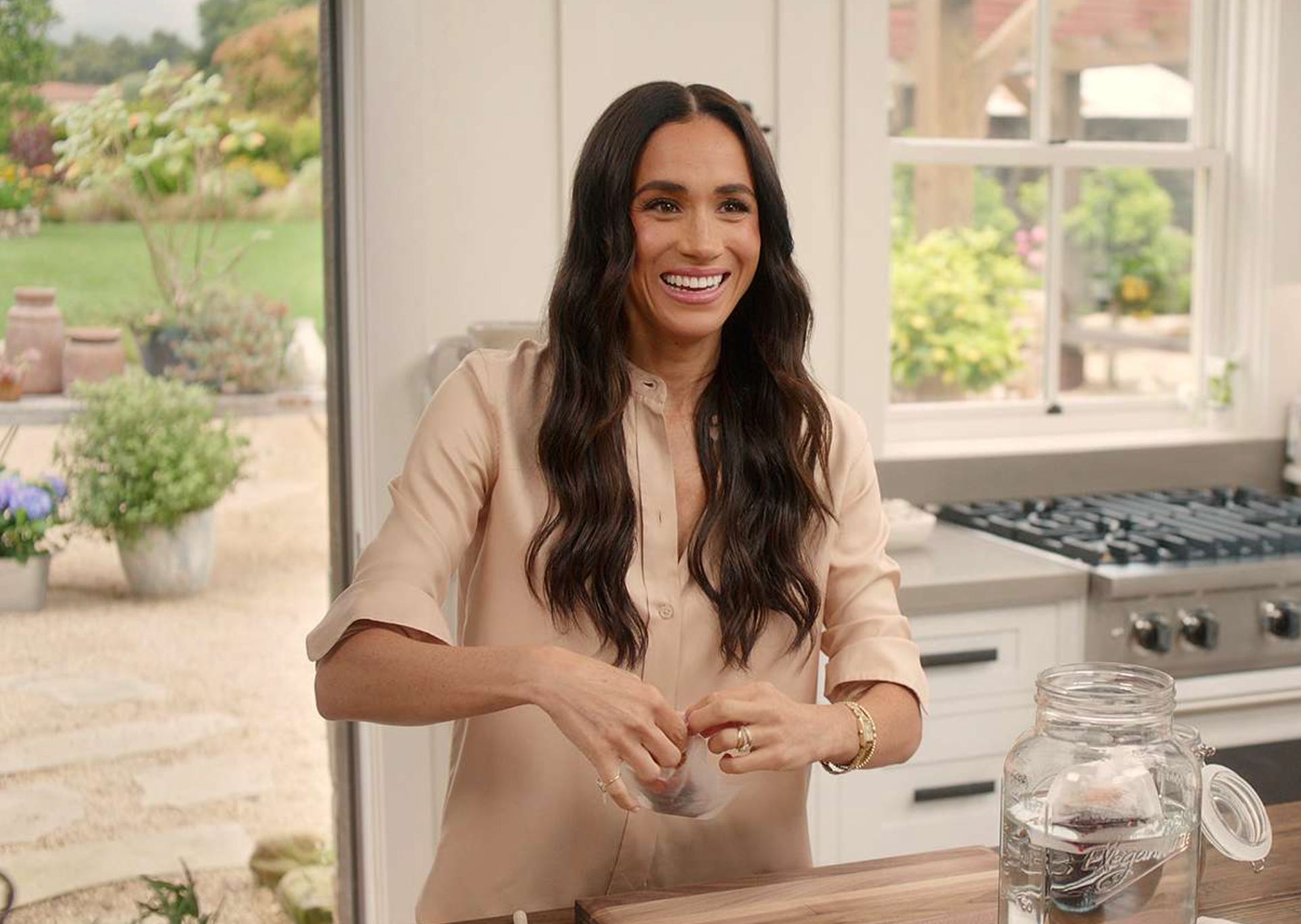
And because it’s Meghan, the smallest ambiguity reliably gets read as a moral event. There is nothing she can say, or decline to say, that isn’t eligible to be read in the least generous possible light. As we recently discussed, the reading of Meghan is usually decided before events even play out. It was true in her earliest press coverage, in the allegations of her “bullying” palace staff, and, now, in name drops from other celebrities wanting to boost their own visibility.
What makes the Sussex discourse genuinely strange, though, is that the pre-decided reading runs in both directions. Look at the distance between Martha Stewart’s initial comments, the host’s rebuttal, and the online discourse. Stewart said Meghan “was talking about” her time in the UK. The host said that Meghan merely remarked that her family “had a great time.” Those aren’t necessarily opposing claims, and they could definitely be the byproduct of two people describing the same event with two different impressions of the evening—not to mention two different motives for discussing the dinner party in the first place.
But one camp needs Martha’s version to be correct, and then some, because they need Meghan to be a name-dropping narcissist. And the other camp—her devoted supporters—needs it to be taken literally, because they thrive when they can treat Meghan as a martyr.
Neither side, to tell you the truth, would last long if we all simply agreed on the boring, nuanced truth: people sometimes misspeak, or don’t put that much thought into what they say—even if it’s about Meghan.
You can see the same impulse take hold in (another) secondary market: in commentary, when those simply reporting on the ecosystem around Meghan are routinely flayed for phrasing mistakes or human error. While there are ample instances where bad-faith, vile, and borderline defamatory comments are intentionally entered into the record, there are also plenty of instances where “believe the worst” is deployed in Meghan’s defense.
My lovely co-host, Meredith Constant, was called racist last week. . . over a title distinction. While covering Stewart’s comments, Meredith noted that “princess” is technically the wrong word: Meghan holds a Duchess title, as the wife of a royal Duke, and anyone actually close enough to be discussing her business wouldn’t reach for “princess” as a descriptor. It’s a sharp observation about distance, stemming from the way that British aristos are styled in conversation. While Meghan is a princess, by marriage (the way that Catherine is and Diana was), she is not styled as such in the general record because of the way royal titles deny women who are non-blood-royals the use of the term “Princess” ahead of their first names.
To some, that was perfectly plain when taken alongside Meredith’s other commentary on the subject. But for others, the momentary slip was enough to read as denying a biracial woman her due.
I have encountered similar discourse in response to my own commentary on Meghan and Harry, particularly regarding their business ventures and high-profile connections. Here, too, some bad-faith commenters will probably still reach for the least generous version of events and stop there. Such backlash (which, frankly, ignores the fact that I was one of the first mainstream online commentators to call the overtly racist coverage of Meghan exactly what it was) makes it difficult to continue wading into the discourse.
I don’t think we can keep having these conversations, or correcting the record at large, if an imprecise sentence becomes cause for condemnation. We need room to breathe, room to fumble a title (we’re human!), room to make an ordinary remark without a jury convening over it. And it truly does seem to be the Sussexes, at this point, whose supporters and detractors alike are ready to back you into a corner over an offhand remark or common sense reading of a situation.
I can’t always report on Meghan as purely a victim of the discourse, because that is its own kind of disingenuity. In reverse, that’s the same type of coverage that once got me labeled a “Meghan Cheerleader,” and written off in the other direction: my relatively rare instances of coming to the defense of Catherine, Princess of Wales (for issues like body doubles and unfounded claims about her health) have likewise resulted in claims that I’ve now been “bought by the Palace.”
Sometimes (and stop me if you’ve heard this before), multiple things can simply be true at once. Sometimes, both Meghan and Kate have gotten a sh*t end of the “royal life” stick. Sometimes, the Sussexes are both unfairly lambasted and capable of making their own media moves, which are also open for critique.
Meghan and Harry are no longer the underdogs that they once were. Their fans will be the first to tell you that. . . as long as it’s in rebuttal to a headline calling them Z-listers or “Hollywood pariahs.” They command both production budgets and an outsized degree of media attention. They are active participants in the environment they now live in, and they are often subject to uncharitable readings of their motives. Meghan is a shrewd operator, and the Sussex team manages their business as ruthlessly as any studio.
None of that, though, explains this story, and Martha’s mention of Meghan in a moment that was ostensibly meant to be the 85-year-old powerhouse’s own time to shine. Meghan has become a springboard, a surface so reliable that we can be counted upon to fill in the blanks ourselves. And then argue, argue about the argument, and argue about who is arguing in good or bad faith.
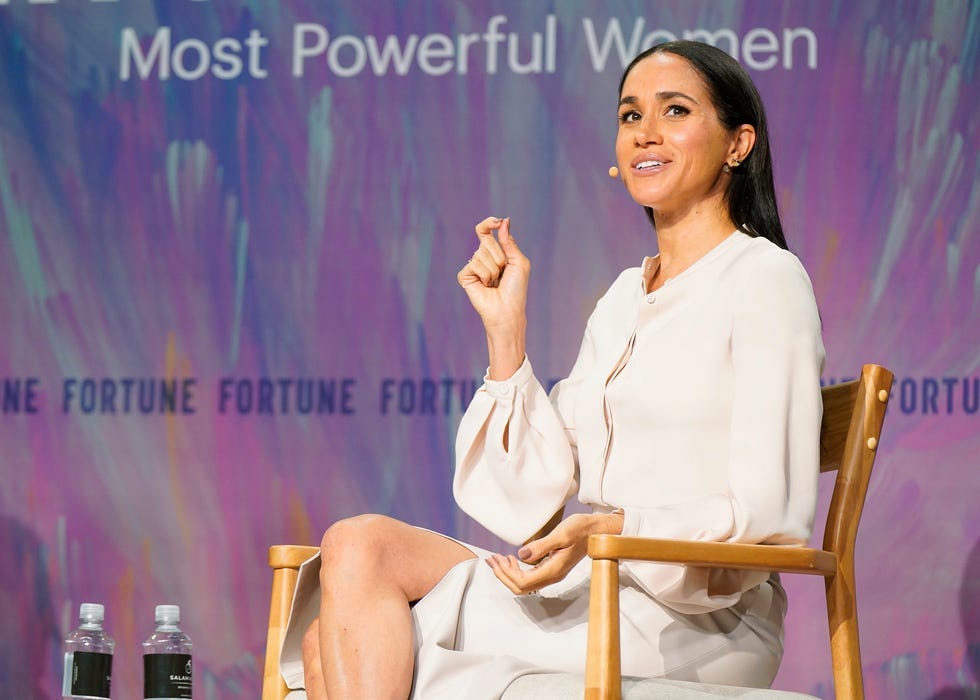
At Fortune’s virtual Most Powerful Women summit in 2020, Meghan remarked: “The moment that you’re able to be liberated from all of these other opinions, of what you know to be true, then I think it’s very easy to just live with truth and live with authenticity, and that is how I choose to move through the world.”
Most of the discourse isn’t about her at this point. Which is why it’s probably just as well that the Duchess of Sussex has also revealed that she tunes all of it—supportive and derogatory—out. At both the 2020 summit and again in 2025, while speaking to Jamie Kern Lima, Meghan shared a quote from artist Georgia O’Keeffe that she keeps nearby: “I have already settled it for myself, so flattery and criticism go down the same drain, and I am quite free.”
I wrote at the time:
The people tearing others down in her name—piling on strangers, attacking nuanced discussion, policing every word—aren’t doing it for Meghan. She’s not asking for it. She’s not rewarding it. She’s not even seeing it.
They’re doing it for themselves.
Maybe to feel important. Maybe to feel protective. Maybe to prove their loyalty to someone they admire. And sure, maybe to move the needle of public conversation to a more just place. But it’s still a form of projection—not a reflection of Meghan’s actual posture toward the world, which is, by her own admission, tuned out and focused both inward and forward.
And crucially, if Meghan can choose to move lightly through both the praise and the criticism, then so can the rest of us.
So if there's a lesson in any of this, it’s to remember that often, when we bring Meghan up in conversation (whether at a Montecito dinner party or in an online forum). . . what we’re litigating isn't really about Meghan. It's about us: our beliefs, our positions in life, and how little control we really have over the world.
No posts
Comments
Nothing yet. Say the first thing.
Sign in to join the conversation.