
Alexandra of Denmark—Princess of Wales for nearly four decades before becoming Queen Consort to King Edward VII—contracted rheumatic fever in 1867. She was left with a permanent limp and worsening deafness that eventually cut her off from conversation in crowded rooms. The press did not report this as an illness with consequences, but rather reported her gait as a style choice.
Fashion magazines wrote about it; fashionable women copied it. They called it the Alexandra limp, and shops even sold shoes with mismatched heels so that you could achieve it without experiencing permanent disfigurement.
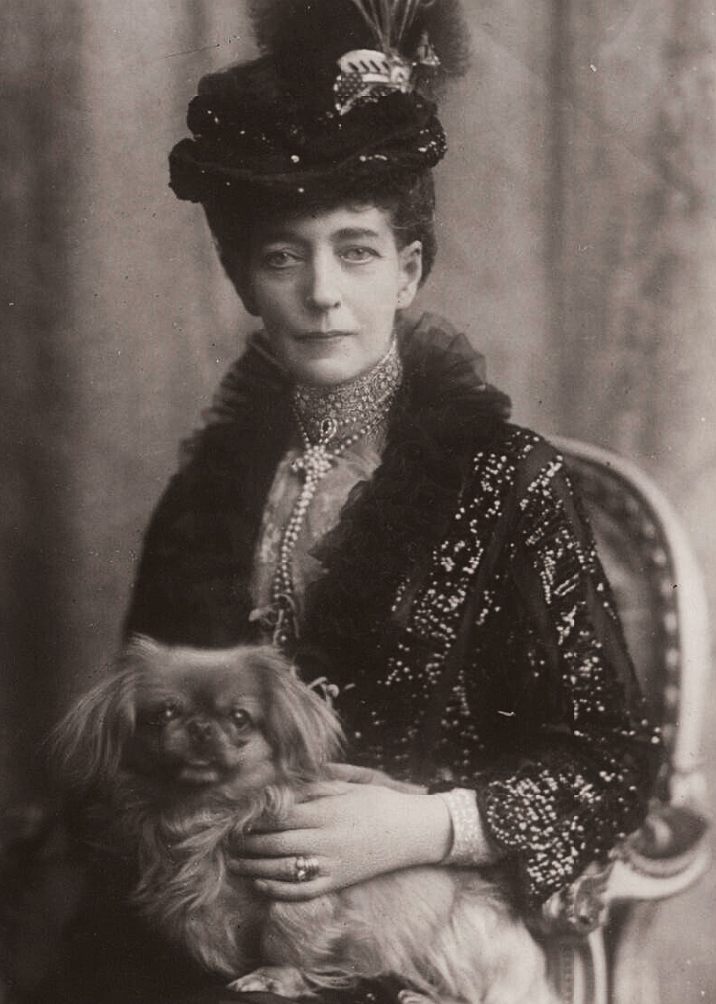
This was a woman in chronic pain, going progressively deaf inside the most watched marriage in Europe, and the public response to her was, largely, to reduce her to the way she walked.
Alexandra was also, by every serious account, politically shrewd and one of the most disciplined public performers the royal institution has ever had. None of that sparked emulation among the women of Britain, or took up space in the nation’s shop windows. Her disabled body, othered and distilled down to a “trend,” did.
Nearly 160 years later, we’re still propping up the Princess of Wales as if she were a mannequin to be studied.
“Princess Kate leaves fans in awe with often overlooked skill,” reads one headline from Hello! Magazine. The article in question discusses a ceremony at the Cenotaph in central London in April 2026 to mark Anzac Day, when Australians and New Zealanders who have lost their lives in armed conflict are commemorated. The event saw the Princess of Wales, a few months after announcing her remission from cancer, lay a wreath as a mark of respect.
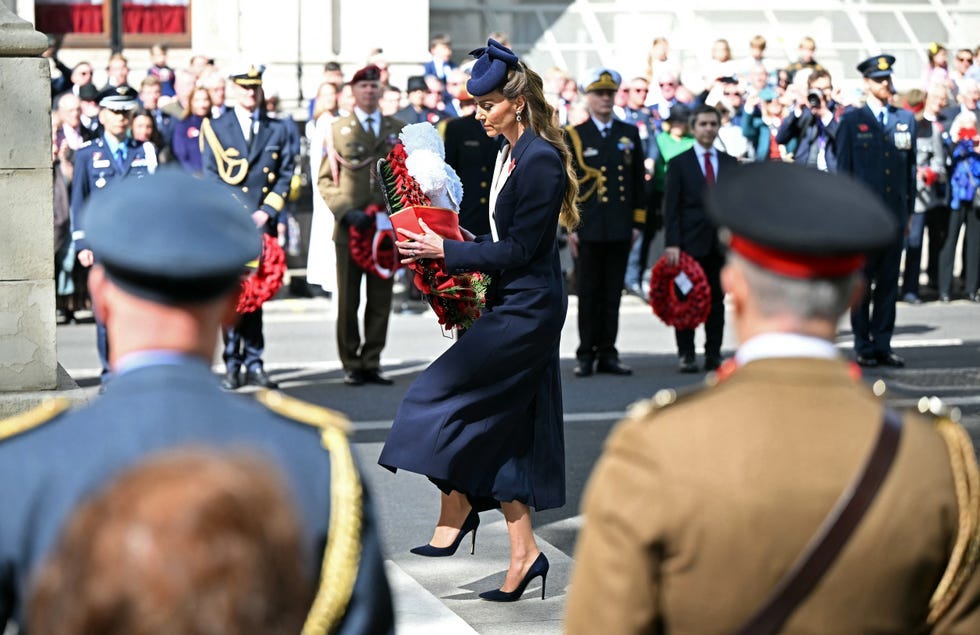
According to the outlet, “Many praised Kate for her lone appearance, and lots heaped compliments on her immaculate and elegant outfit, but a select few couldn’t help but notice her effortless skill - how she walks in towering heels.”
The distance between the Alexandra limp and this article’s waxing poetic, “Despite the sizable heel height, she managed to step up onto the cenotaph to lay the wreath with ease,” is not as far as 159 years should make it.
It’s not the first, and I’m sure it won’t be the last, time that the Princess of Wales has been lauded for the tiniest possible “achievement.” Driving a car herself, pulling her hair back, being an 11-year-old in a musical, possibly purchasing antiques for her family’s new country manor. Every tiny detail we can glean about this woman becomes evidence of her aptitude—and none of it actually matters by any measurable standard.
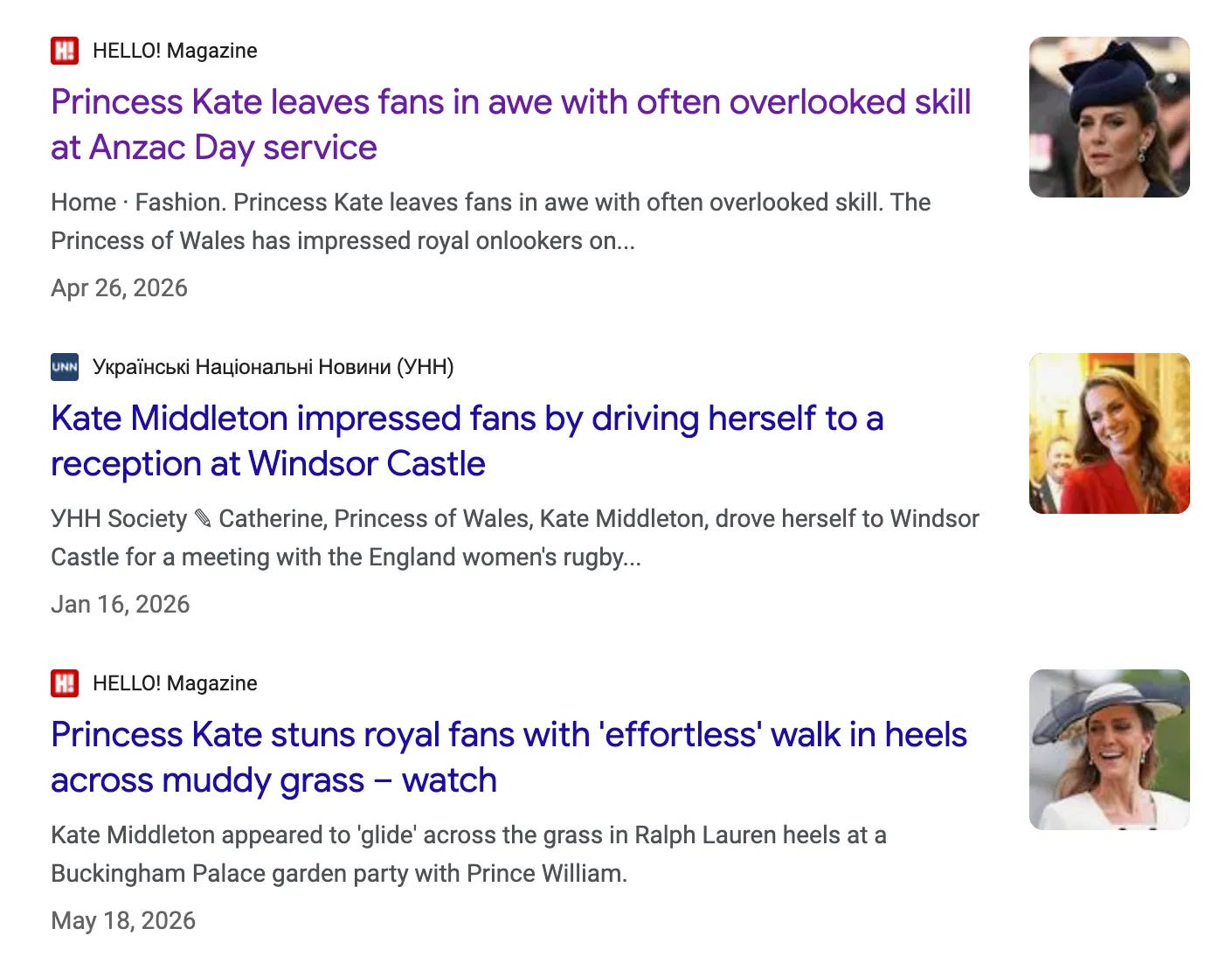
Never mind the fact that the Princess of Wales recently completed the Three Peaks Challenge, scaling the three highest mountains across the UK, on foot, within 24 hours. No, we should all marvel at her poise, her restraint, her… ankles1?
Meanwhile, both Catherine’s husband, Prince William, and her (alleged) rival, Meghan, Duchess of Sussex, have made headlines in recent weeks for Emmy nominations. Meghan is an actual nominee: the second season of With Love, Meghan is up for Outstanding Lifestyle Series at the Daytime Emmys. Whatever you think of the show (and I have thought many things about it), the achievement is tied to a piece of work that Meghan conceived, made, defended.
William, while not himself a nominee, is the centerpiece of Eugene Levy’s episode “Living the Royal Life in the U.K.” from The Reluctant Traveler, which is up for Outstanding Writing for a Nonfiction Program. Levy’s series is up for Outstanding Hosted Nonfiction Series or Special. The Prince of Wales only had to scooter up to Windsor Castle (ostensibly, his workplace) and sit for an interview, and he received, in the retelling, an unearned credential.2 The headline in almost every outlet was some version of Prince William lands Emmy nomination.
The most egregious of these? Hello!’s “Prince William quietly celebrates two Emmy nominations – after Meghan Markle also scooped the honour.”
Just like the disparaging of Meghan Markle, the infantilization of Kate Middleton is nothing new—but I do think we should rekindle the conversation about it.
Even if you’re a devoted fan of Kate (or, honestly, especially in that case), the media’s habitual coddling of her should enrage you. She is never competent; she is lovely. She is never rigorous; she is committed. She is never making an argument; she is raising awareness.
Comments
Nothing yet. Say the first thing.
Sign in to join the conversation.