
On Monday, the UK’s Journalists’ Charity unveiled a “prestigious new awards initiative” named after, and supported by, the charity’s Patron, Her Majesty The Queen.
The Queen Camilla Future of Journalism Awards, now open for applications, will “offer applicants working across print, broadcast, digital, and socials the opportunity to invest in their career development, promoting individual growth and in turn supporting the future of journalism.” Recipients will benefit from a cash prize of up to £2500 for training, equipment, travel, or accommodation, alongside mentoring or coaching.
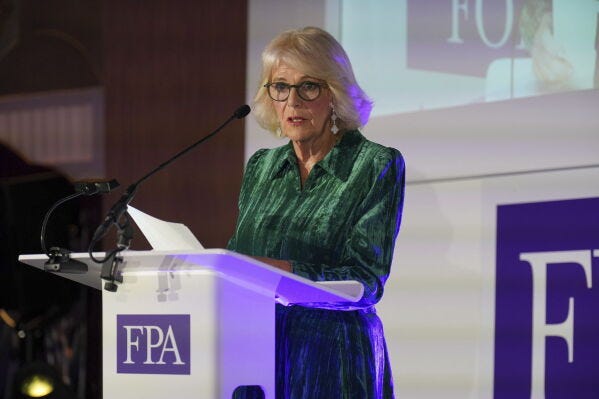
Each year, 25 winners aged 18-30 will receive up to £2500 towards career development, which can be used for training, equipment, relocation, and transport. There’s also an offer of expert-led mentoring or coaching, as well as promised ongoing support from the JC.
Reading the fine print of the announcement, however, makes one detail stand out to me: the Awards are “operated, funded and controlled by the Journalists’ Charity – there is no Royal funding in place.”
What Queen Camilla now contributes is her name. And if you have followed her story for the last thirty years, you will recognize that as… not a small contribution. The name, like her title, is her whole asset, and her name now being something that a charity (one for journalists, no less) would want to borrow is a remarkable testament to her trajectory.
Made an honorary member of the Foreign Press Association a couple of years ago, Camilla told a ballroom of foreign correspondents that she had “even been the subject of one or two stories myself over the years.” It got a laugh, but it was probably the single most honest thing said that evening.
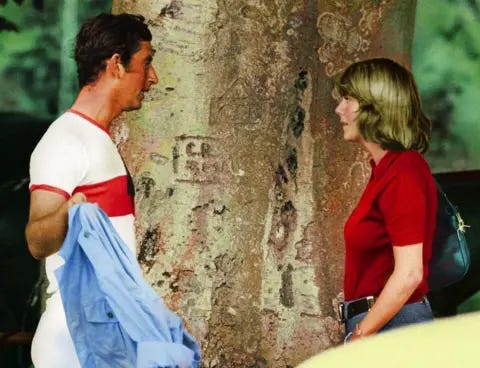
The easy take would be to call all of this supremely ironic: the woman the tabloids once cast as the villain of the age is now installed as patron to the next generation of the people who will write the stories.
But irony is the wrong word for this take to end on. The better one, in my opinion, is inevitable. To see why, you have to go back to the queen whose patronage made this charity official in the first place.
The Journalists’ Charity was founded by Charles Dickens in 1864, and was granted its Royal Charter in 1890 by none other than Queen Victoria. Aside from being King Charles III’s great-great-great-grandmother, Victoria was also the first monarch to understand that the press was not a threat to be survived, but rather a medium to be used. And its key players—the modern era’s first royal reporters—were to be courted, not shunned.
(I previously wrote about this development in royal reporting as part of my four-part Substack series, The Royal Beat! The series traced royal coverage all the way from the Renaissance to the Internet Age.)
Historians have something of a sobriquet for Victoria. She, along with her consort, Prince Albert, were the first media monarchs, as her record-breaking reign ran alongside the birth of the professional royal correspondent. It’s an arc that historian John Plunkett traces from the freelance “penny-a-liners” (paid by the line or installment for whatever they could file, much like Dickens himself) to the salaried “special correspondents” (sent to cover the Crown as a permanent beat).
The machinery around the role was new, too: newspaper taxes were largely repealed between 1855 and 1861, literacy was climbing toward near-universal by the century’s end, and mass-circulation dailies were suddenly ravenous for something splashy to put on the front page every single morning.
Victoria’s answer to that hunger was wise: feed it a version of herself that she preferred. Coverage of the queen painted her as the devoted wife and mother of nine before eventually pivoting to depict the grieving widow, swathed in black crepe and barely leaving her palace apartments. As a result, the queen stood as the nation’s moral center… at least in print. And she let the papers carry that watered-down portrayal into every parlor in Britain because it served her. Even if the press knew of her true feelings (she could be opinionated, rash, and harsh, particularly to her daughters), they obliged and printed the most acceptable version of the monarch.
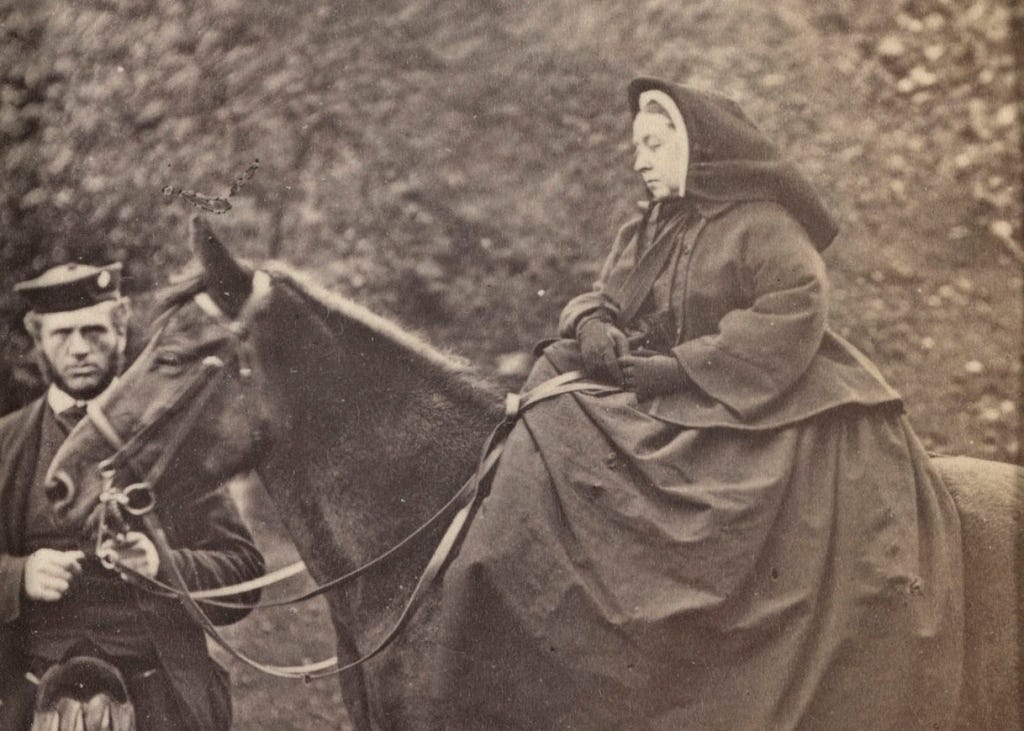
Even when Victoria was embroiled in episodes that could genuinely have turned public sentiment against her—like showering her Scottish manservant, John Brown, with attention and favor to the point that people in her orbit mockingly called the queen “Mrs. Brown”—a calculated effort was made to balance the scales. Even in these earliest days of the royal beat, journalists knew that an endless royal saga sold copies, and their access to the heart of the institution was critical in keeping the story flowing.
And, in turn, the palace learned that those same papers could be useful in marketing the monarchy itself.
So we ended up not with intrusion, but access. Not warfare, but co-dependence. That bargain is the backbone to all royal coverage ever since—no matter how the principal players might feel about it on a more personal level.
Which brings us back to the 21st century, and to the most gifted student that school has ever produced.
In the summer of 1997, Camilla Parker-Bowles was all-but radioactive. Princess Diana was dead, public feeling about the royal family was raw, and “the other woman” in Charles and Diana’s marriage was, by most measures, the most hated figure in British public life. Faced with a genuine reputational emergency, the monarchy—by now, solidly hardened into “The Firm,” as Prince Philip once labeled it—responded the way that modern institutions do.
It brought in a consultant.
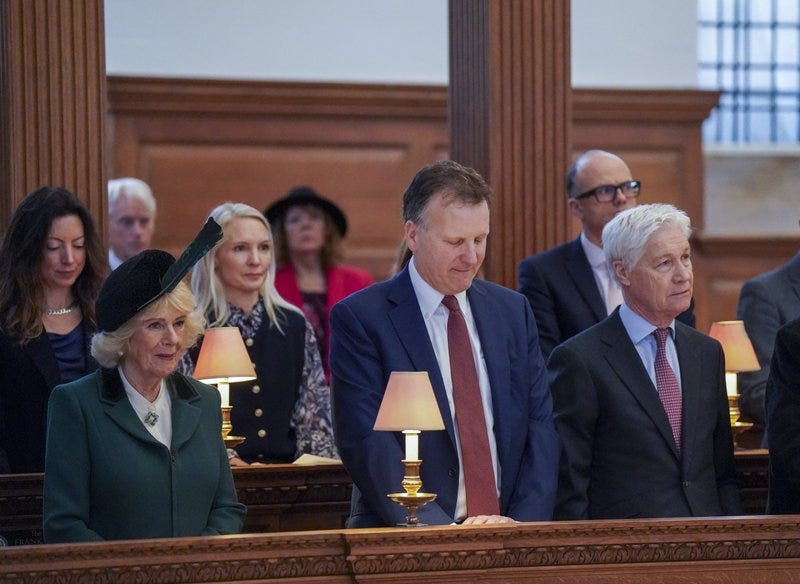
Mark Bolland, then Charles’s deputy private secretary, was described at the time as a “new” kind of royal press advisor. In plainer language, he was a spin doctor. His strategy to rehabilitate Charles (and by necessity, if the pair were ever to live together publicly, Camilla) was slow, deliberate, and remarkably effective. The next eight years would be marked by controlled sightings, quiet dinners with editors, and a carefully managed media thaw.
By the end of Bolland’s tenure, then-Prince Charles’s approval ratings had clawed their way from roughly twenty percent after Diana’s death to around seventy-five percent. And Mrs. Parker-Bowles, once “the other woman,” was on a path that would end, eventually, with a crown on her head.
The press even gave the effort a name: Operation Parker-Bowles, or Operation PB. It worked so entirely that the couple’s pre-wedding pledge, issued by Clarence House in 2005—that Camilla would only ever be styled “Princess Consort,” never as Charles’ queen—was later dropped with only a moment of public side-eyeing.
By 2022, the late Queen Elizabeth II was writing that it was her “sincere wish” that Camilla be known as Queen Consort once it was Charles’ turn to take the throne. And thus, the campaign that once began as damage control to rehabilitate a royal mistress ended with a clear-cut endorsement from the throne itself.
There has been no cleaner course-correction in modern royal history.
Now, as a journalism charity attaches Camilla’s name to a prize for young reporters, it is not just honoring a key figure in British public life. The woman that the papers spent a decade treating as a scandal is now symbolically linked to the profession’s future.
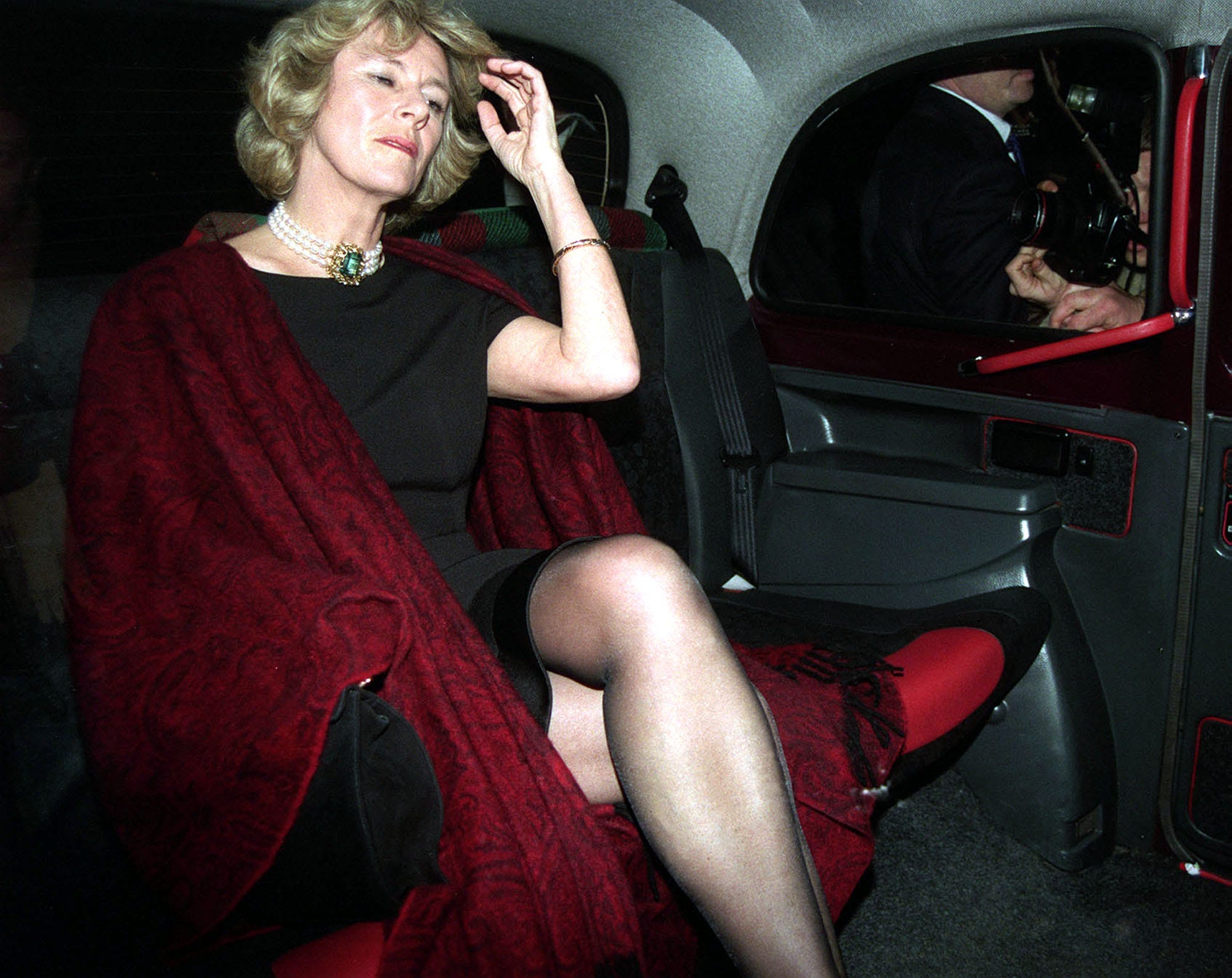
And I would argue that “Mrs. PB”—like “Mrs Brown” 150 years earlier—didn’t get there in spite of royal reputations being created through coverage, but because of it. I would hazard a guess that she understands the game in its current form better than many of the bright-eyed future reporters that she is now helping to fund.
After all, canonization, if and when it comes, tends to land upon the person who understands best what it means to “keep the faith.”
Of course, not everyone reads the “invisible contract” between the monarchy and the media with such generosity.
Camilla’s stepson, Prince Harry, has been the loudest dissenter. And his complaints are worth taking seriously even if you take nothing else in his portrayal of royal life at face value.
Harry has said that he felt “sacrificed” on Camilla’s “personal PR altar.” He has described his family’s whole arrangement with the British press as “getting into bed with the devil.” And he warned that her willingness to cultivate that press made her, in his words, “dangerous”—that there would be “bodies left in the street because of it.”
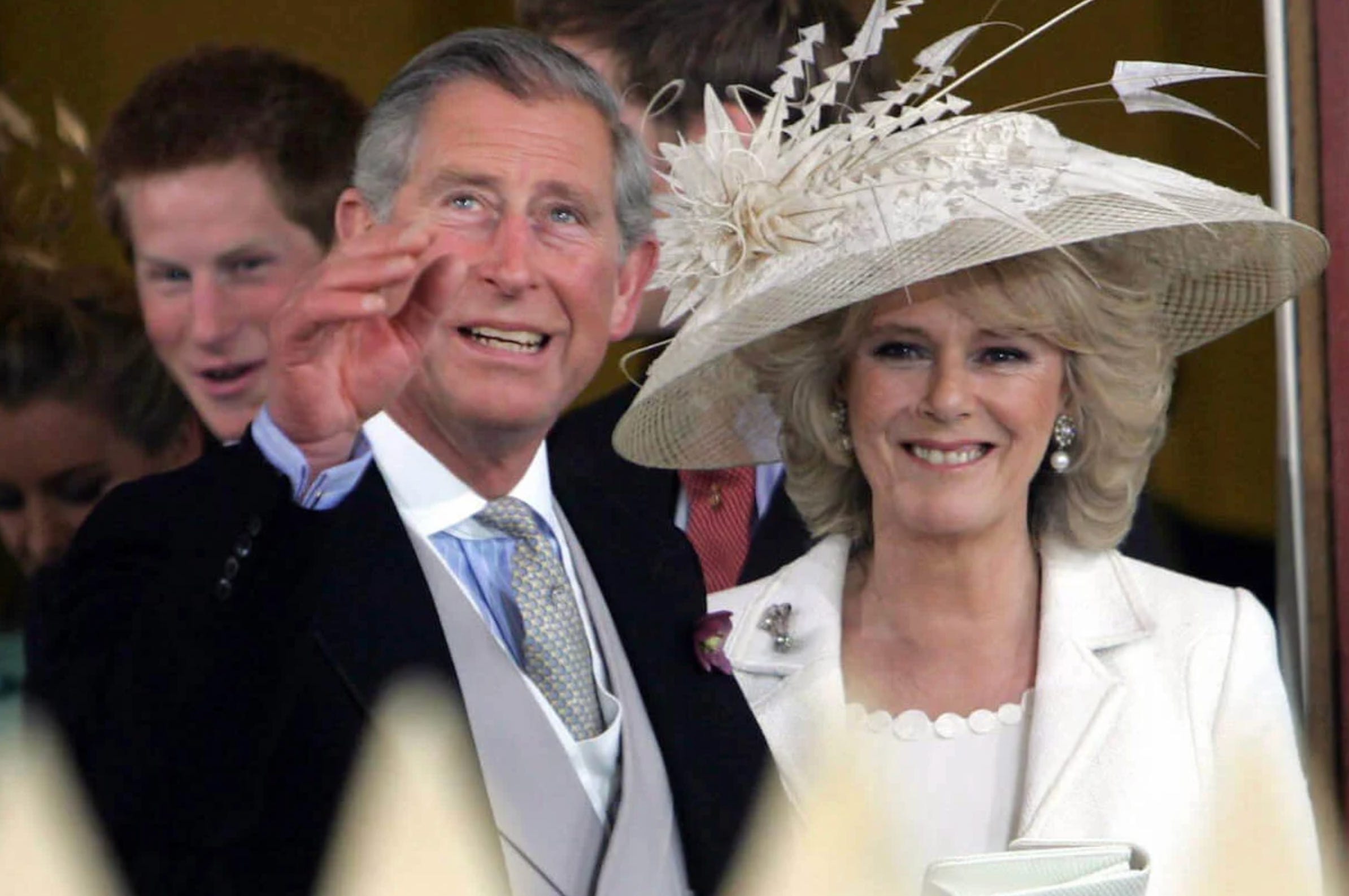
Strip away the family grievance, and Harry has, in fact, named the mechanism correctly. Where he goes slightly wrong is in treating it as Camilla’s personal invention, a betrayal engineered specifically against him. It isn’t.
It also isn’t a new bed-sharing arrangement by any stretch of the imagination. The strategy Harry has named (feed the press a story it can sell, and let it sell you back to the public in return) is not Camilla’s, nor Mark Bolland’s.
It is Victoria’s, inherited and refined for the 21st century.
Queen Camilla, Patroness of Journalists, is not a naïve friend to modern reporting, but she is its most accomplished subject. She learned the trade of being written about so thoroughly that she now has a nominal stake in who gets to do the writing.
The 25 young people who could now benefit from the journalism award funded in Queen Camilla’s name are real, and will very likely result in improvements to the media space. Likewise, the barrier to entry that the award lowers is real. It just also happens to play on the modern monarchy’s oldest instinct.
Get the press onside, be visibly generous to it, and reap the reputational rewards.
No posts
Comments
Nothing yet. Say the first thing.
Sign in to join the conversation.